
From Engineer to Manager Navigating a Successful Transition
- Slides: 50
From Engineer to Manager: Navigating a Successful Transition John T. Bozewicz ASME Management Division
John Bozewicz Email: bozewiczj@asme. org • 25+ years Management Experience • Senior Manager – 800+ Employees; 24 Managers • Past Chair, ASME Management Division 2
Objectives ØNot “Management 101” ØLessons Learned from My Experience ØOffer Recommendations to Assist in Your Transition
What You Should Take Away from Today’s Session: 1 or 2 Points!!
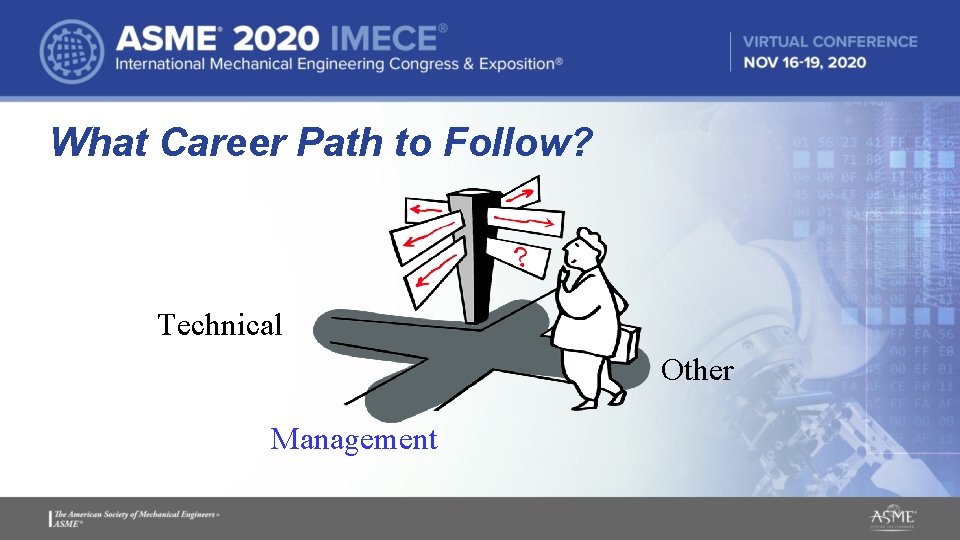
What Career Path to Follow? Technical Other Management
So You Want to Be a Manager? Ø Identify some reasons why you are interested in becoming a manager Ø What’s your most significant reason?
Management Traits ØTraits of a good manager – think of things your current manager does well Ø Traits of a poor manager – think of things your current manager does not do well “I won’t be like them”
A Perspective on Management ØManagement is a practice that has to be a blend of: ØCraft (Experience) – a large amount ØArt (Insight) – a smaller amount ØScience (Analysis) – some amount ØManagement is not a science – most management is craft – meaning that it relies on experience ØManagement is not a profession – it can not be taught in advance of practice (as opposed to engineering); situational context is important ØFrom: Managers Not MBAs by Henry Mintzberg, 2004
“General” Management… to “Engineering” Management
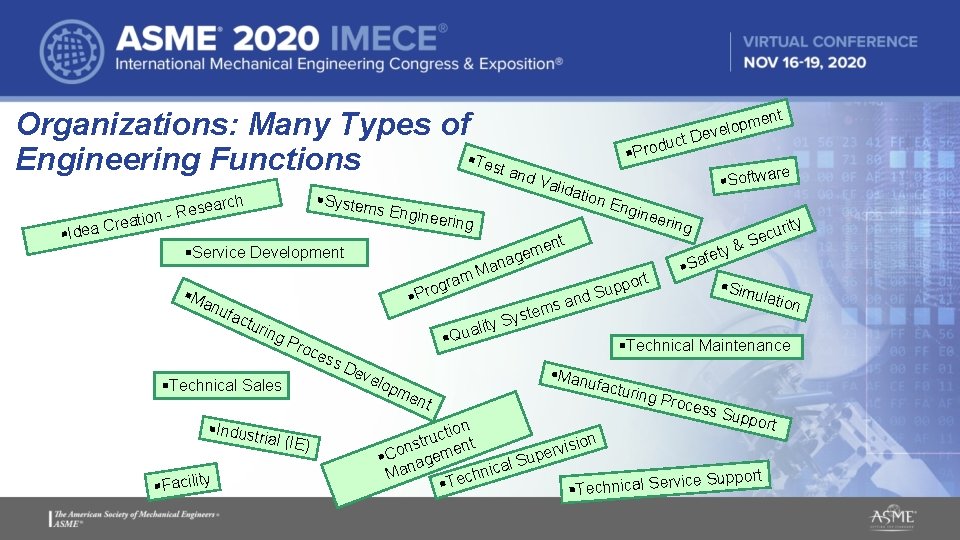
Organizations: Many Types of §Tes Engineering Functions t an d §Ide a Crea §System search e R tion anu fac eering ng §Indus §Facility ) opm ent e datio §Softwar n En gine erin ent m e ag rt uppo S d n ms a g rity u Sec & ety f a §S §Sim ste ty Sy li eve l trial (IE M ram §Qua Pro ces s. D §Technical Sales Vali an og §Pr turi uct §Prod s Engin §Service Development §M ent lopm Deve ulatio §Technical Maintenance §Man ufactu ring P roces s Sup port n o i t truc nt s sion i n v e r o e §C agem l Sup a n c i a hn M ice Support §Technical Serv n
Major Trends Impacting Organizations ØStrong Competition Driving Need for: • Higher Quality Levels • Lower Costs • Shorter Product Life Cycles • Faster Time to Market • Higher Product Diversity ØDispersed Resources (Global Organizations and Suppliers) ØBusiness Tasks Increasing in Complexity and Technical Content ØContinued Progress in Information and Systems Technology ØRapid Pace of Industrial Change (consolidations, etc. ) ØGlobal Pandemic!
A Natural Evolution to “Professional” Engineering Manager s Ø Technical Managers are needed to manage engineers and complex, technical businesses Ø “Engineering Managers” have a greater role in strategic and tactical management of the organization Ø “Professional” Engineering Manager should be a respected term and position within an organization Ø …. but what actually is meant by “Engineering Management”?
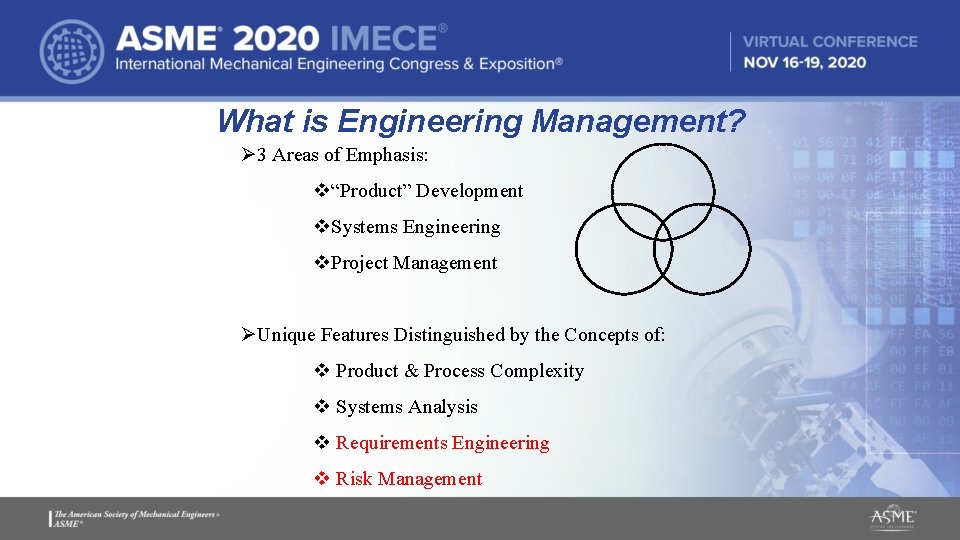
What is Engineering Management? Ø 3 Areas of Emphasis: v“Product” Development v. Systems Engineering v. Project Management ØUnique Features Distinguished by the Concepts of: v Product & Process Complexity v Systems Analysis v Requirements Engineering v Risk Management
Transition to Engineering Manager: How Do I Get There?
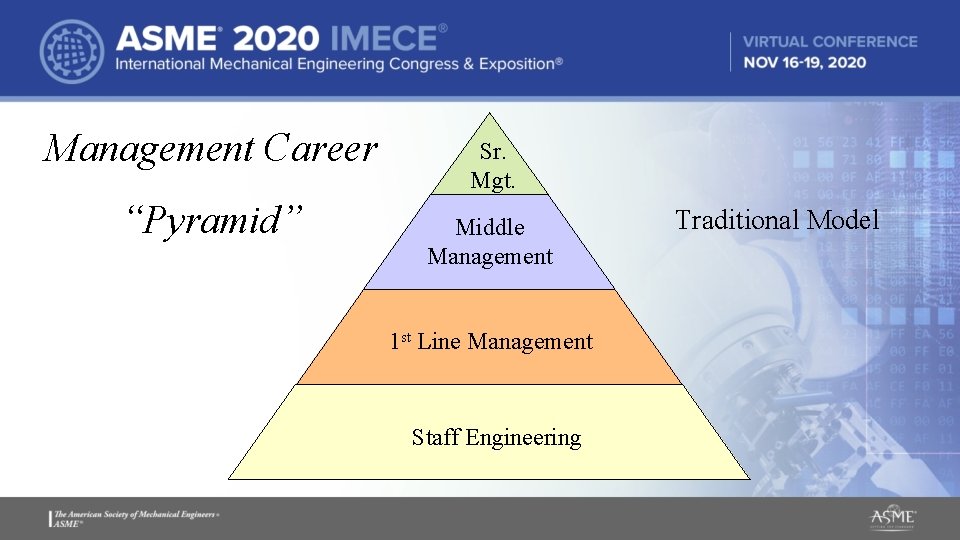
Management Career “Pyramid” Sr. Mgt. Middle Management 1 st Line Management Staff Engineering Traditional Model
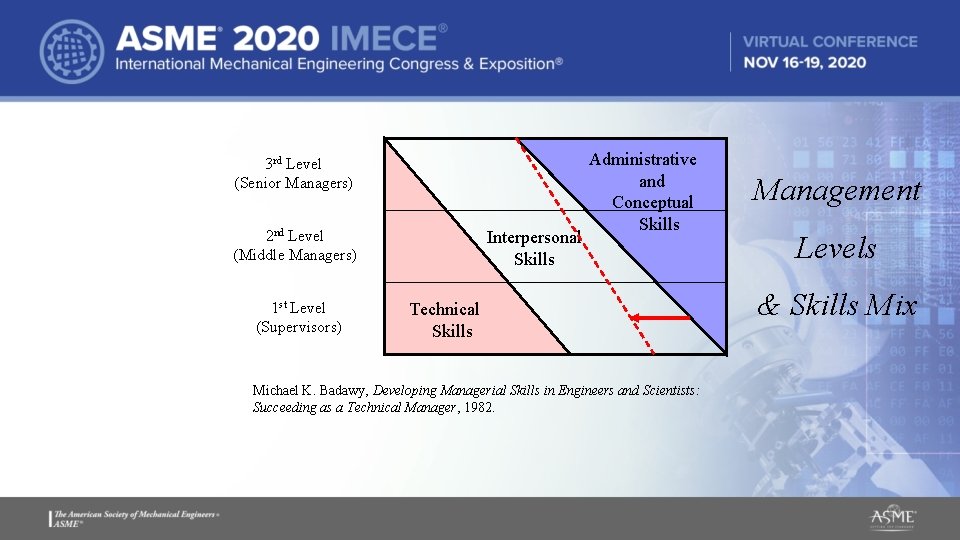
3 rd Level (Senior Managers) 2 nd Level (Middle Managers) 1 st Level (Supervisors) Interpersonal Skills Administrative and Conceptual Skills Technical Skills Michael K. Badawy, Developing Managerial Skills in Engineers and Scientists: Succeeding as a Technical Manager, 1982. Management Levels & Skills Mix
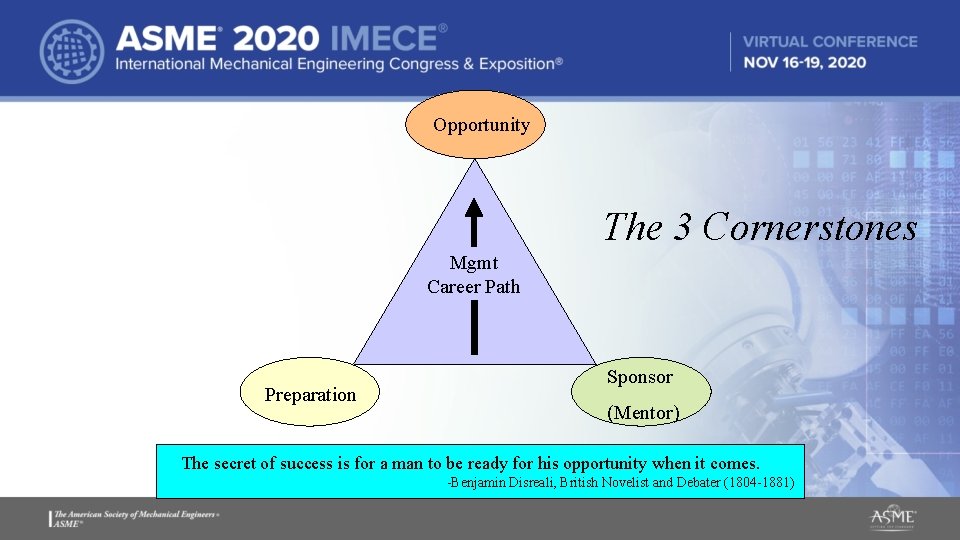
Opportunity The 3 Cornerstones Mgmt Career Path Preparation Sponsor (Mentor) The secret of success is for a man to be ready for his opportunity when it comes. -Benjamin Disreali, British Novelist and Debater (1804 -1881)
Preparing for a Successful Transition
Keys to a Successful Transition ØTechnical Competence ØCommunications ØBusiness Skills ØManagement Skills v. Motivation v. Performance Evaluation ØPeople (or Interpersonal) Skills – A Special Challenge
Keys to a Successful Transition ØTechnical Competence ØCommunications ØBusiness Skills ØManagement Skills v. Motivation v. Performance Evaluation ØPeople (or Interpersonal) Skills – A Special Challenge
Keys to a Successful Transition ØTechnical Competence ØCommunications ØBusiness Skills ØManagement Skills v. Motivation v. Performance Evaluation ØPeople (or Interpersonal) Skills – A Special Challenge
Communications
Communications Skills ØWritten – especially grammar – learn to get your points across clearly and succinctly Ø Speaking – look for all opportunities to gain experience üLearn to present material clearly – developing/presenting clear arguments and learn to anticipate questions üTraining – e. g. , Toastmaster’s
Communications Skills ØOffice Communications ü Use personal interaction on sensitive matters – phone or in-person communications are much more effective üDon’t Hide Behind E-Mail!! üWatch your Emotions – employ the 24 Hour Rule!!! (Think before you send!)
Communications Skills Ø Email – Read/Act/File/Delete Ø Presentations – get to the point – brevity and clarity -- stay within time limits & allow for Q’s – respect time limits – limit info on each slide • To Senior Management: Add Exec Summary or BLUF (Bottom Line Up Front) Ø Proofread/Spellcheck – poor spelling and grammar are noticed!!
Communications Skills ØMeetings – Organized – Agenda – Actions with Timelines Follow-up ØPlan of Actions and Milestones/Schedules *Commitments – Plan/Actions/Due Dates/Actionee(s)
Communications Skills Listening – the art of ………. making sense of what you’re hearing Become a great Listener!
Communications: Final Thoughts ØEmotional and sensitive issues -- best choice is face -to-face (visual) communications ØGet out of the office!! v. Meetings with staff – in their environment v. Management-by-Walking-Around (MBWA)
Keys to a Successful Transition ØTechnical Competence ØCommunications ØBusiness Skills ØManagement Skills v. Motivation v. Performance Evaluation ØPeople (or Interpersonal) Skills – A Special Challenge
Business Skills ØAccounting ØFinancial Management & Operations ØOrganizational Dynamics ØContract Management & Performance ØRelationship Building ØNegotiating Strategies/Tactics ØSpeaking & Presentation Skills ØOther…e. g. , Sales/Marketing, Logistics, Planning
Keys to a Successful Transition ØTechnical Competence ØCommunications ØBusiness Skills ØManagement Skills v. Motivation v. Performance Evaluation ØPeople (or Interpersonal) Skills – A Special Challenge
Management Skills: Motivation
Motivation Ø Managers are responsible for motivating employees Ø 3 Factors influence Employee Motivation üWill efforts be recognized in performance reviews? üWhat is the performance-reward relationship? üDo employees receive awards they really want?
Motivation Ø Study: Most Powerful Motivator – Recognition Ø Another Study: Most Motivating Incentive -- “Thank You” from Manager but almost 60% indicated their Managers never expressed thanks Ø Recognition programs cost little or no money - very effective in lean times
Motivation Generation factor – values tend to reflect period in which an individual grew up ØPre-Boomers (entered workforce prior to mid-1960 s) üValues: hard work and authority ØBoomers (mid-1960 s to mid-1980 s) üValues: achievement, recognition and material success ØGen-X (mid-1980 s to 2000) üValues: sense of balance, friendship, happiness, pleasure ØGen-Y or Nexters (2000 to present) üValues: comfortable life, freedom, self-reliance
Keys to a Successful Transition ØTechnical Competence ØCommunications ØBusiness Skills ØManagement Skills v. Motivation v. Performance Evaluation ØPeople (or Interpersonal) Skills – A Special Challenge
Performance Evaluation ØPerformance Reviews - most difficult part of a Manager’s job üDifficult to discuss weaknesses with employees üEmployees have inflated sense of their own performance üEmployees become defensive when receiving negative feedback - and possibly exhibit aggressive behavior
Ø Feedback üCriticize Behaviors, Not People – be specific and impersonal üWatch Emotions – feedback must be very descriptive and not personally judgmental – keep it focused on the job – don’t criticize an employee personally üMake sure the employee can do something about a negative behavior – no value in criticizing an action that the employee has no control over
Performance Evaluation v. Employees should be aware of where they stand throughout the year - not find out at review time! The Best Surprise is No Surprise!
Performance Evaluation: YAR ØYearly Accomplishment Report (YAR) ØShort synopsis - in the 1 -2 page range but no more than 2 pages ØUse it to refresh my memory and support my staff’s performance ratings - also to prepare for face-to-face performance reviews Ø 8 Topic areas to cover - a bulleted format under each topic works very well
Performance Evaluation: YAR 1. Organizational Responsibility - people managed, unit funding level, etc. 2. Fiscal Year Business Metrics for your respective units - Fiscal Year financial performance (direct, overhead, etc. ), new customers or enhanced funding levels from existing customers, lost customers or decreasing funding areas
Performance Evaluation: YAR 3. Significant Fiscal Year Accomplishments (identify the one you feel was your Most Significant accomplishment for the year) 4. Identify areas where you think you fell short in the Fiscal Year
Performance Evaluation: YAR 5. Support for Organizational Initiatives, i. e. at the Corporate-level (e. g. , Strategic Planning support or other special team support) 6. Ancillary Efforts (noteworthy participation with groups/events, etc. outside the normal realm of business that was of benefit to you as managers or engineers or reflected positively on the organization, e. g. , technical society involvement)
Performance Evaluation: YAR 7. Next Fiscal Year Unit Goals - Identify 3 -5 Major Goals for your unit for the next Fiscal Year (can be financial, people-related, facility-related, etc. ) 8. Next Fiscal Year Personal Development - Identify 3 Areas in which you would like to develop your skills in the next Fiscal Year
Keys to a Successful Transition ØTechnical Competence ØCommunications ØBusiness Skills ØManagement Skills v. Motivation v. Performance Evaluation ØPeople (or Interpersonal) Skills – A Special Challenge
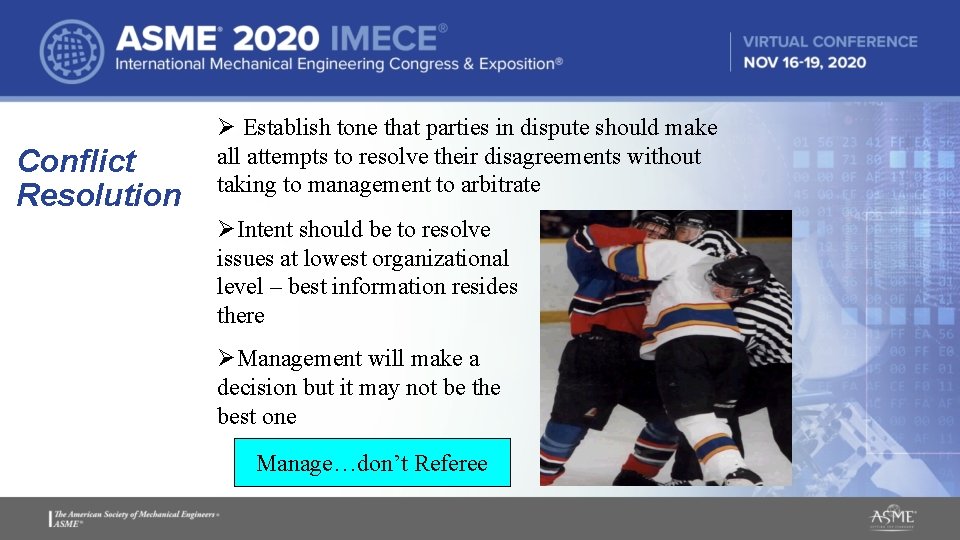
Conflict Resolution Ø Establish tone that parties in dispute should make all attempts to resolve their disagreements without taking to management to arbitrate ØIntent should be to resolve issues at lowest organizational level – best information resides there ØManagement will make a decision but it may not be the best one Manage…don’t Referee
Informal Keys to Preparing for a Successful Transition Ø Always be Professional in Appearance and Action – people may not always agree with you but they will respect you ØBe Responsive & Trustworthy – Promise and Deliver Ø Treat Administrative personnel (secretaries, administrative assistants, etc. ) with respect – they have an informal network in the organization - they can provide great assistance or make your life miserable
Informal Keys to Preparing for a Successful Transition Ø Practice Patience –refrain from hasty judgement ØRealize and Understand that there are constraints to all aspects of a large organization ØRealize that Administrative Requirements are part of the job – can’t away from them – just respond by due dates and move on!
Summary ØBe Honest with Yourself and Your Employees ØBe a Decision Maker – Make the “Tough Choices” ØBe a Leader, Coach and Teacher It’s all about People…
Are You Up For It? Successfully meeting the many challenges a manager faces…can be very rewarding!!