
From DNA to Trait The Central Dogma flow
- Slides: 29
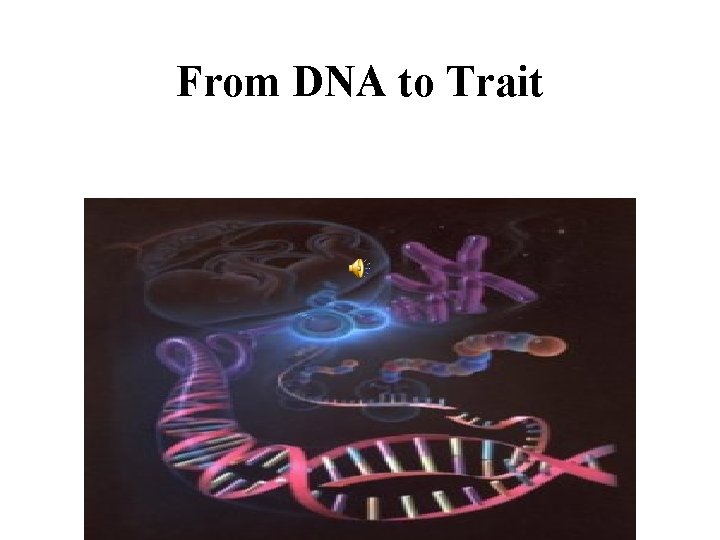
From DNA to Trait
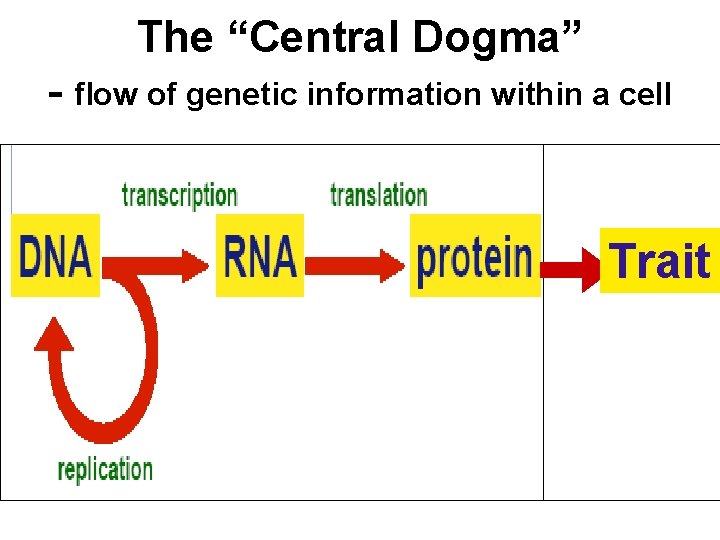
The “Central Dogma” - flow of genetic information within a cell Trait
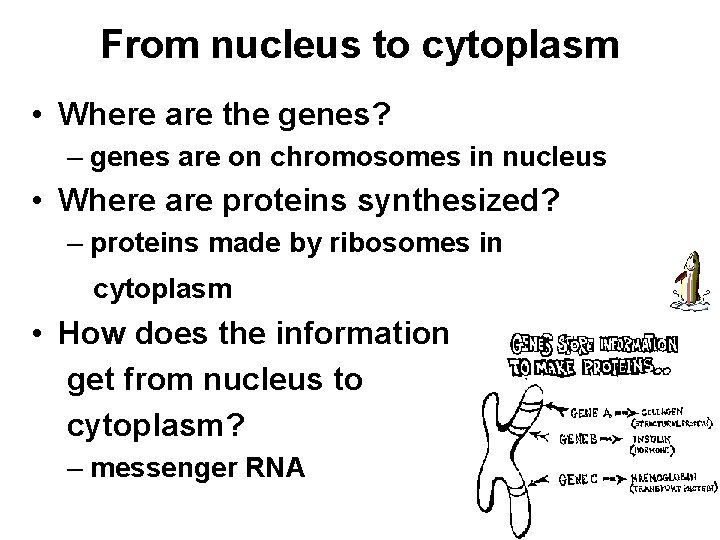
From nucleus to cytoplasm • Where are the genes? – genes are on chromosomes in nucleus • Where are proteins synthesized? – proteins made by ribosomes in cytoplasm • How does the information get from nucleus to cytoplasm? – messenger RNA
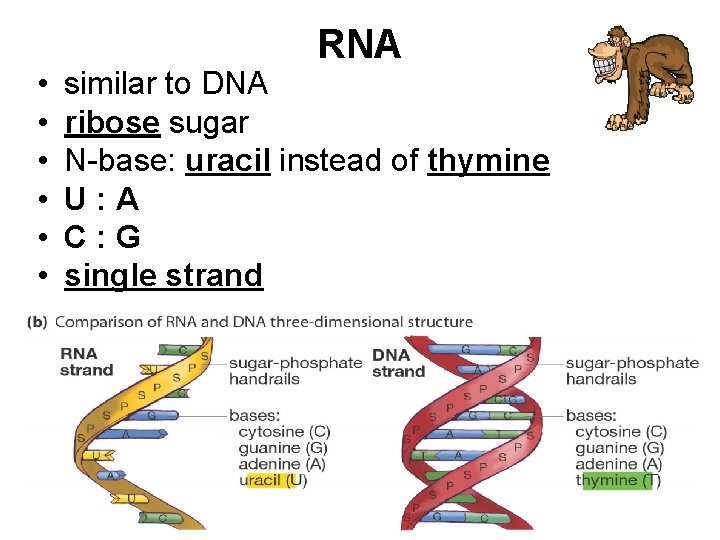
• • • RNA similar to DNA ribose sugar N-base: uracil instead of thymine U: A C: G single strand
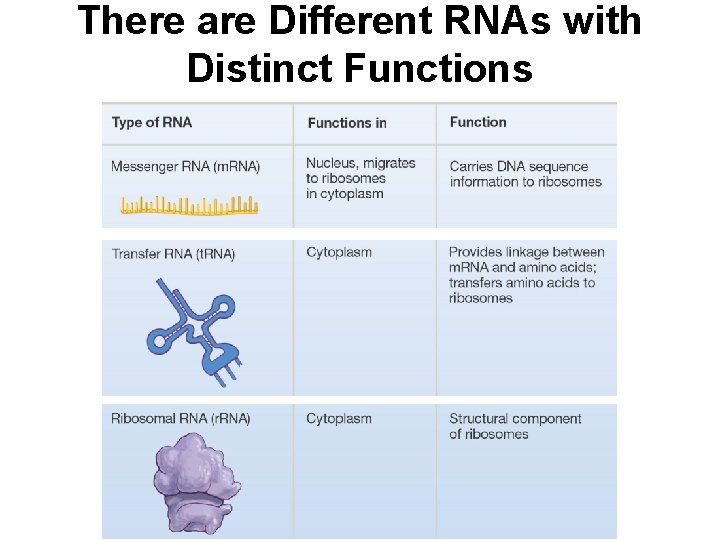
There are Different RNAs with Distinct Functions
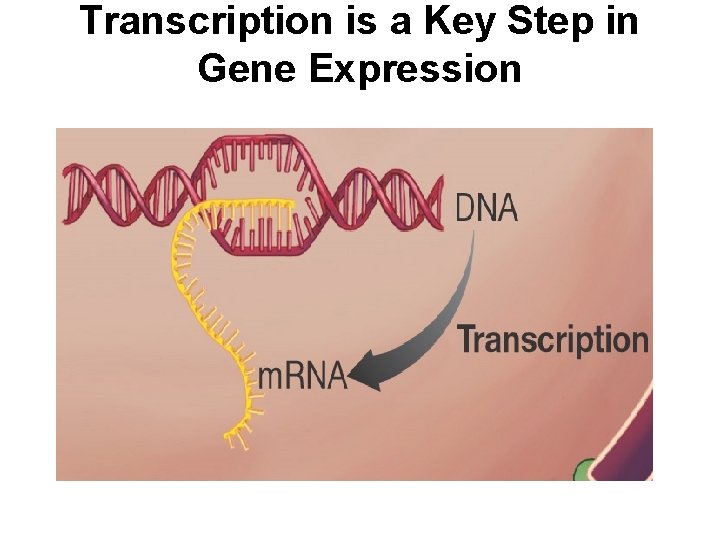
Transcription is a Key Step in Gene Expression
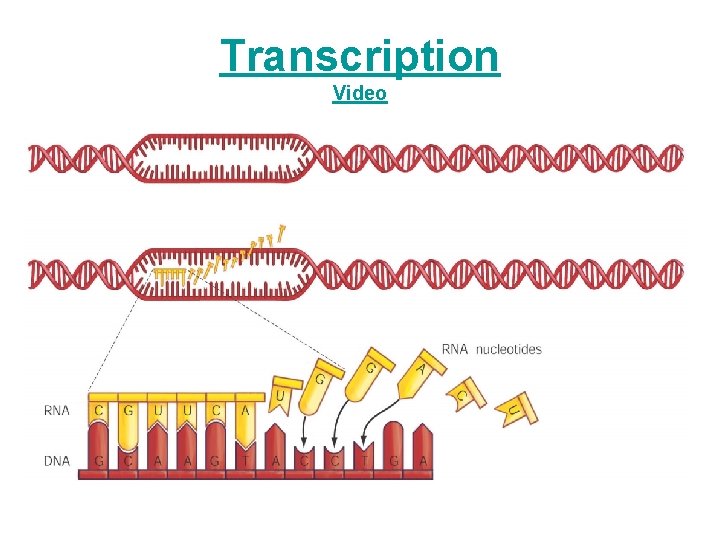
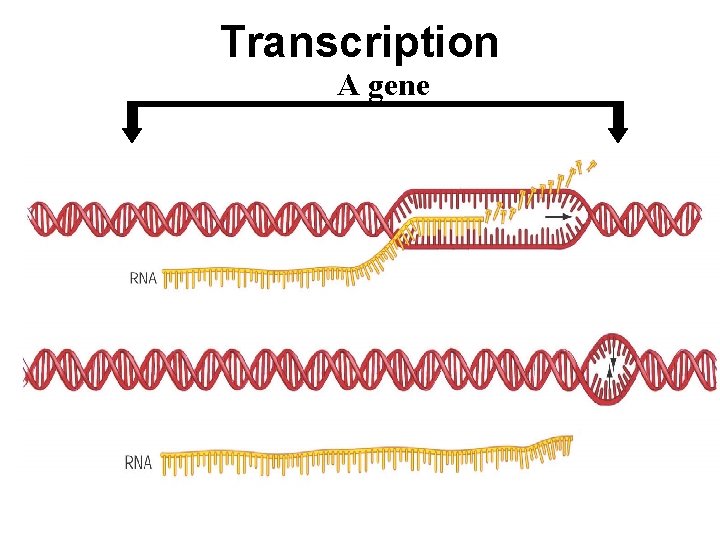
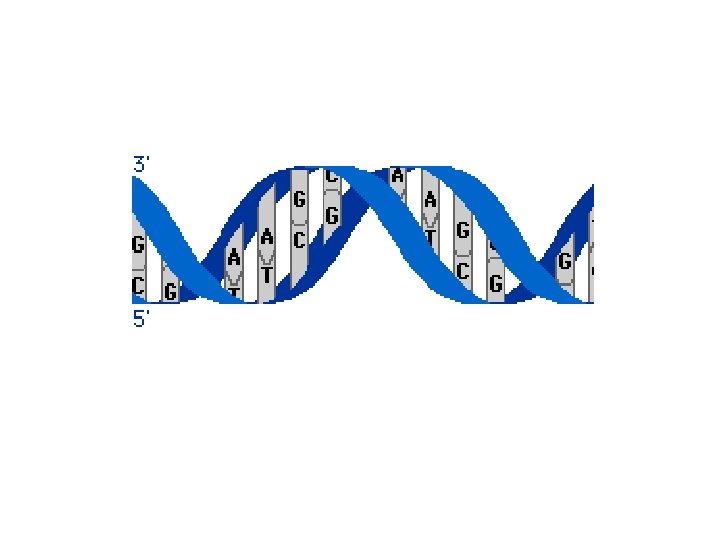
Transcription • Occurs in the nucleus • 1 DNA strand is template strand • Synthesis of complementary RNA strand – messenger RNA (m. RNA) • Enzyme – RNA polymerase
Transcription Video
Transcription A gene
Protein Synthesis • Proteins are made up of one or more polypeptides, each of which consists of a specific sequence of amino acids linked together by peptide bonds. • There are 20 types of amino acids that make up proteins. • The sequence of these amino acids (originally determined in the DNA code) determines the structure and function of the proteins.
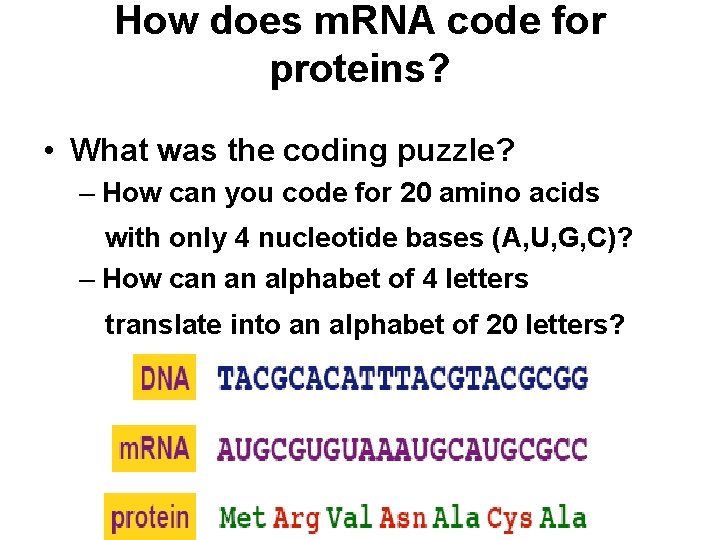
How does m. RNA code for proteins? • What was the coding puzzle? – How can you code for 20 amino acids with only 4 nucleotide bases (A, U, G, C)? – How can an alphabet of 4 letters translate into an alphabet of 20 letters?
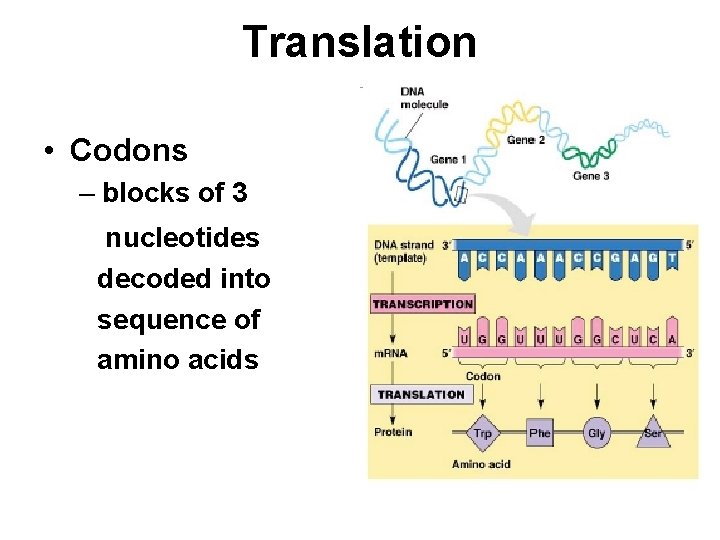
Translation • Codons – blocks of 3 nucleotides decoded into sequence of amino acids
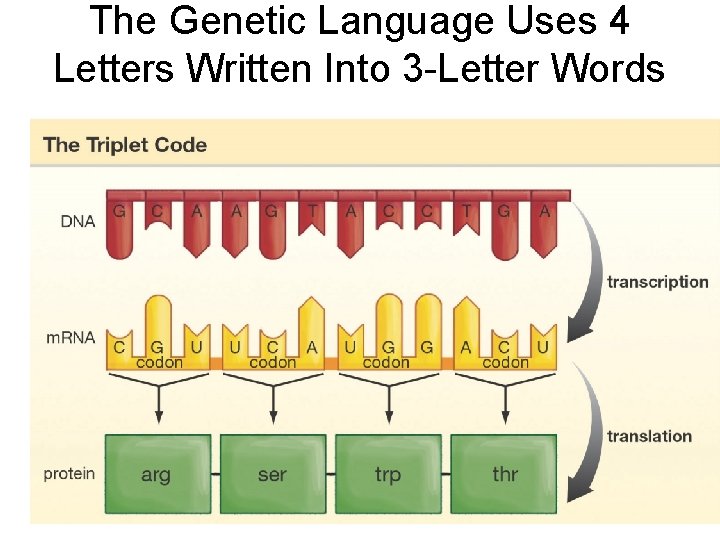
The Genetic Language Uses 4 Letters Written Into 3 -Letter Words
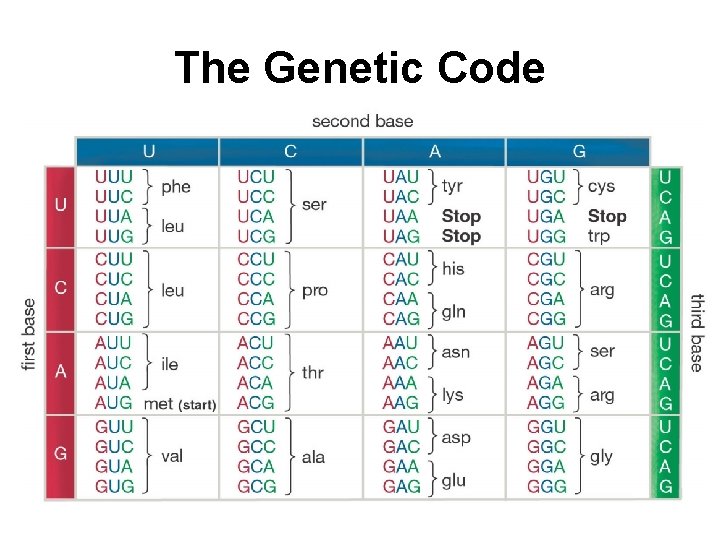
The Genetic Code
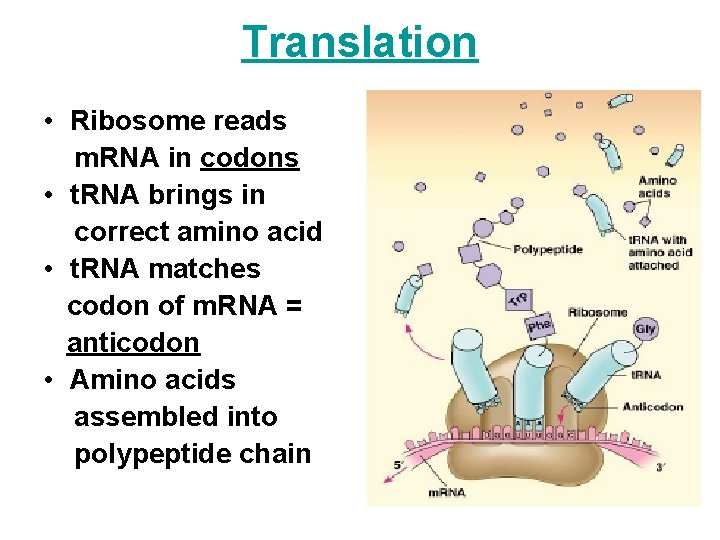
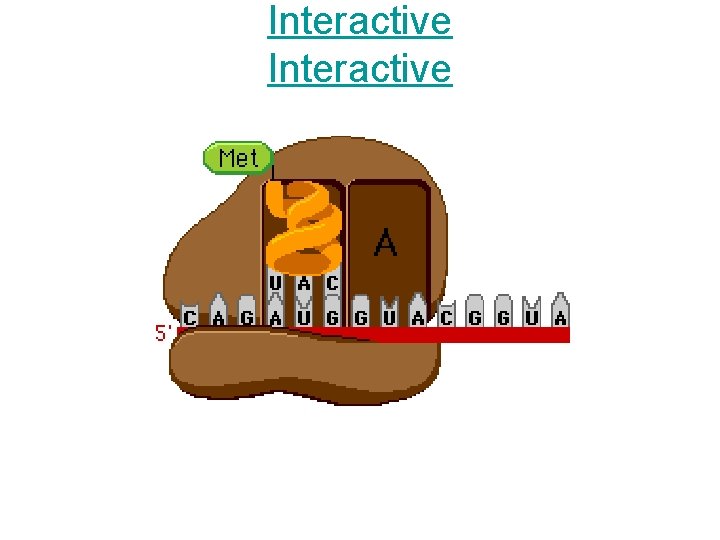
Translation • Ribosome reads m. RNA in codons • t. RNA brings in correct amino acid • t. RNA matches codon of m. RNA = anticodon • Amino acids assembled into polypeptide chain
Interactive
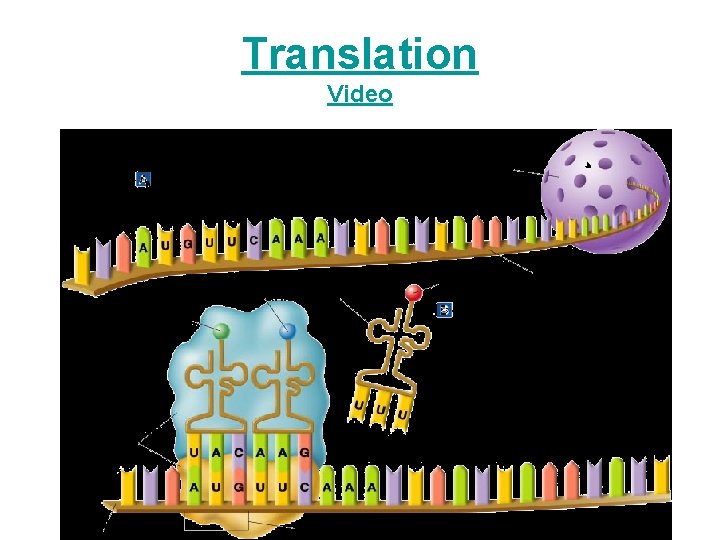
Translation Video Nucleus Messenger RNA is transcribed in the nucleus. Phenylalanine t. RNA Methionine Ribosome m. RNA Lysine m. RNA
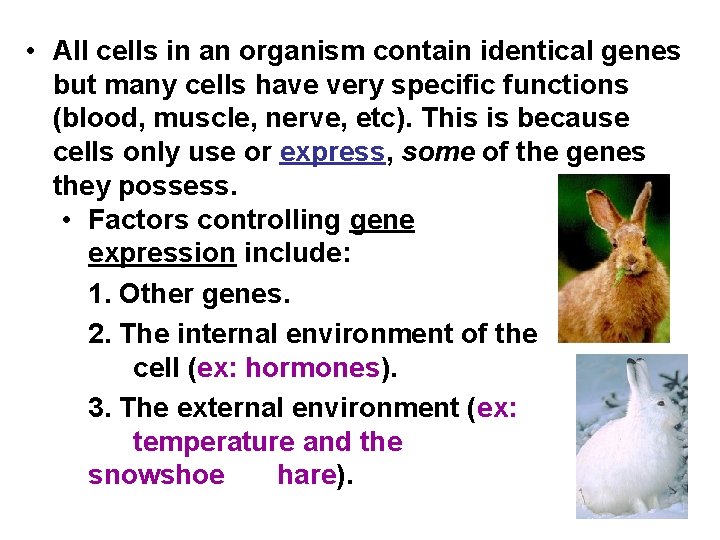
• All cells in an organism contain identical genes but many cells have very specific functions (blood, muscle, nerve, etc). This is because cells only use or express, some of the genes they possess. • Factors controlling gene expression include: 1. Other genes. 2. The internal environment of the cell (ex: hormones). 3. The external environment (ex: temperature and the snowshoe hare).
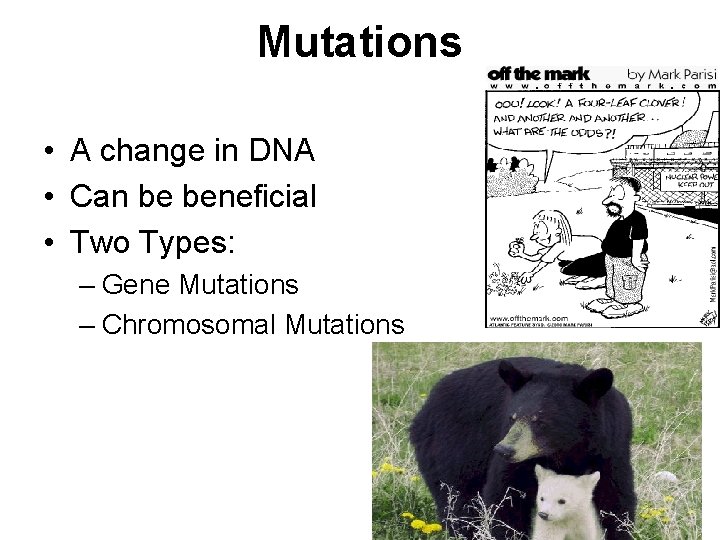
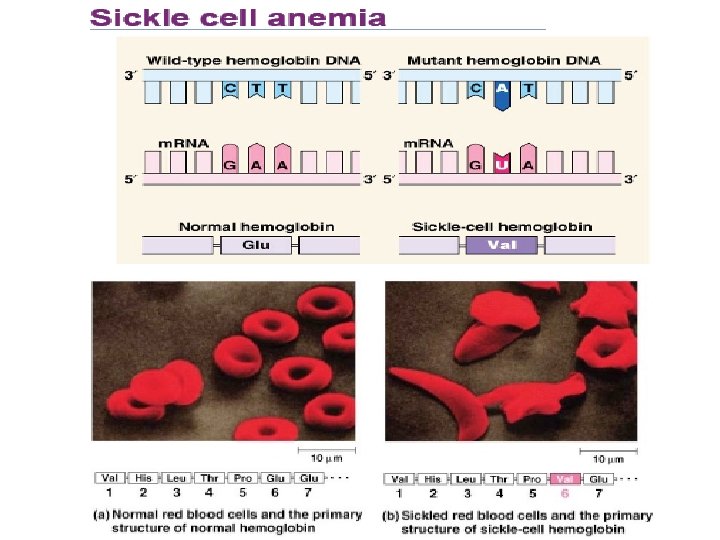
Mutations • A change in DNA • Can be beneficial • Two Types: – Gene Mutations – Chromosomal Mutations
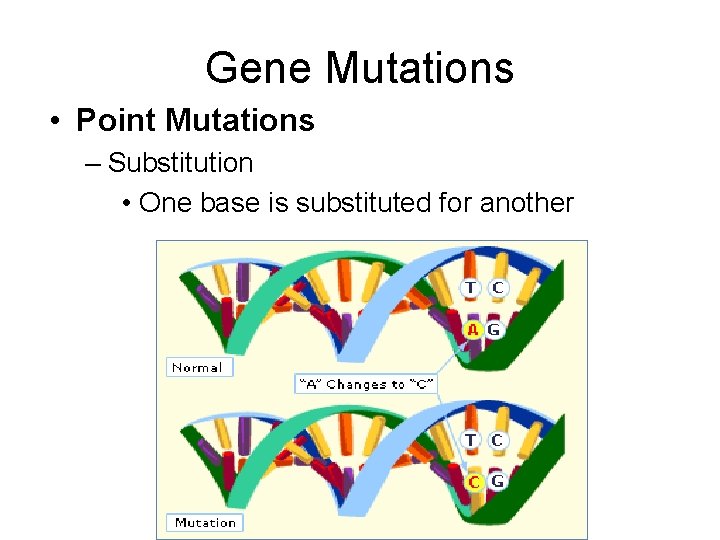
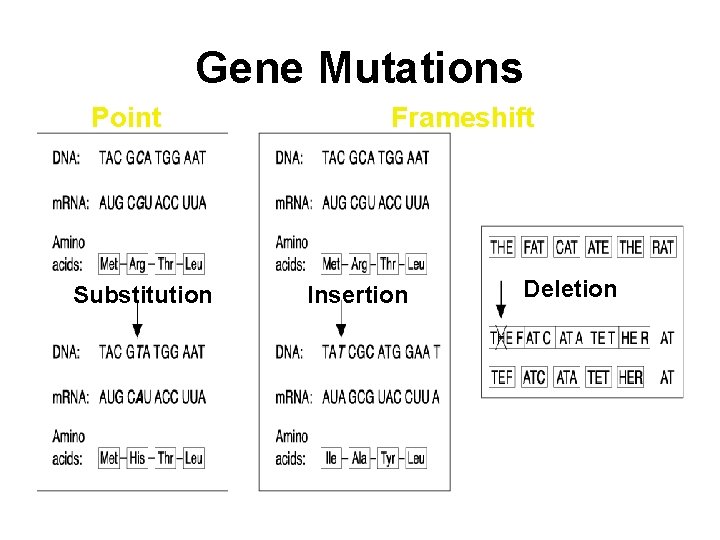
Gene Mutations • Point Mutations – Substitution • One base is substituted for another
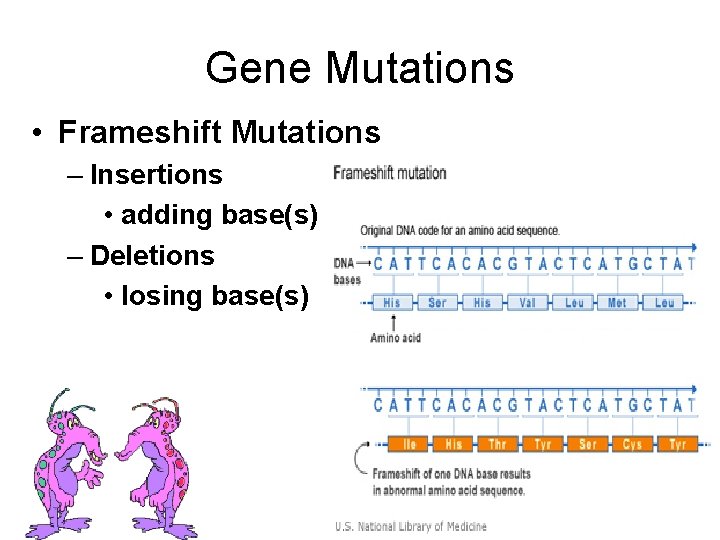
Gene Mutations • Frameshift Mutations – Insertions • adding base(s) – Deletions • losing base(s)
Gene Mutations Point Substitution Frameshift Insertion Deletion
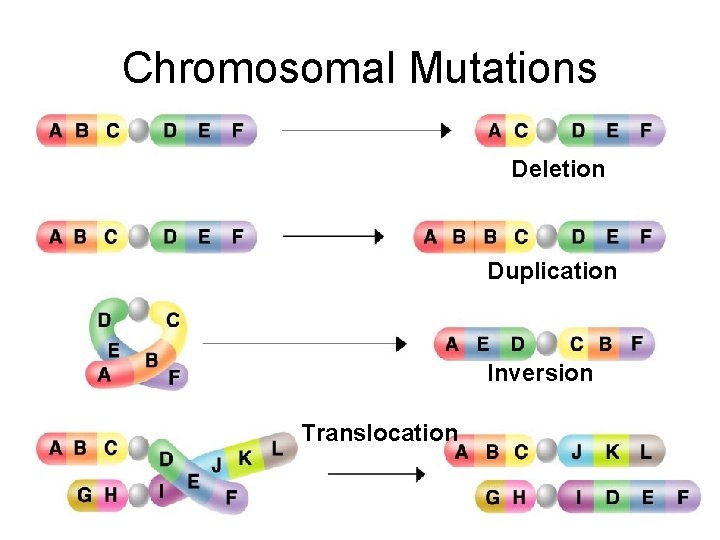
Chromosomal Mutations Deletion Duplication Inversion Translocation
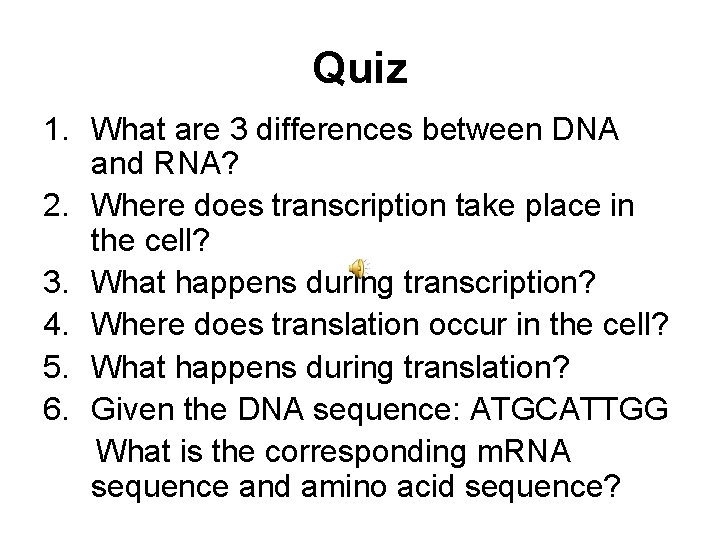
Quiz 1. What are 3 differences between DNA and RNA? 2. Where does transcription take place in the cell? 3. What happens during transcription? 4. Where does translation occur in the cell? 5. What happens during translation? 6. Given the DNA sequence: ATGCATTGG What is the corresponding m. RNA sequence and amino acid sequence?