
From Craps to Candy Crush Problem Gambling Behaviors
From Craps to Candy Crush Problem Gambling Behaviors in Adolescents
What is Gambling? Anytime you make a wager on something with the possibility of losing something of value. What has value? • • • Money Time Freedom Relationships Health
Types of Gambling • Card games • Casino games (slots, roulette) • Lotteries • Bingo • Raffles • Internet gambling • Stock market • Betting (sports, animal fights, games of skill) • Online gaming
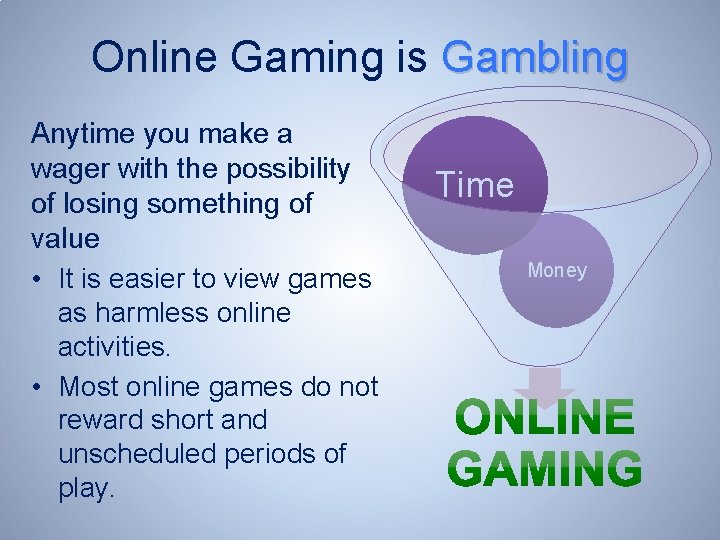
Online Gaming is Gambling Anytime you make a wager with the possibility of losing something of value • It is easier to view games as harmless online activities. • Most online games do not reward short and unscheduled periods of play. Time Money
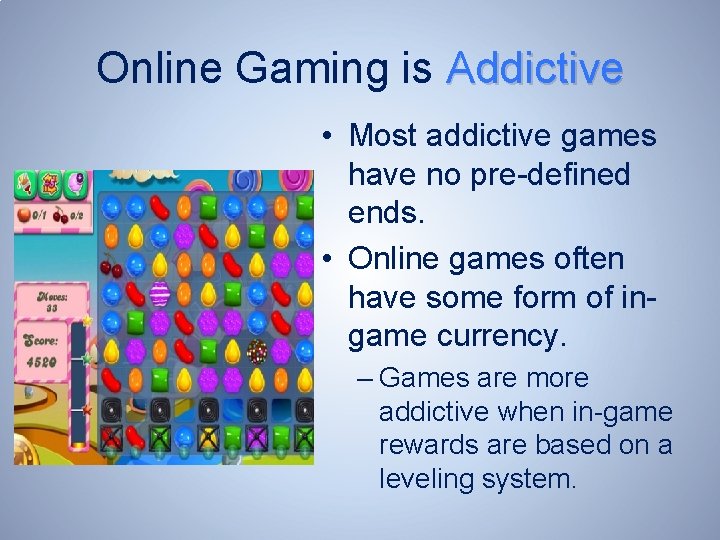
Online Gaming is Addictive • Most addictive games have no pre-defined ends. • Online games often have some form of ingame currency. – Games are more addictive when in-game rewards are based on a leveling system.
Online Gaming is Addictive • The more addictive games often encourage play and collaboration with gamers worldwide. – Social connections – Virtual world – Status
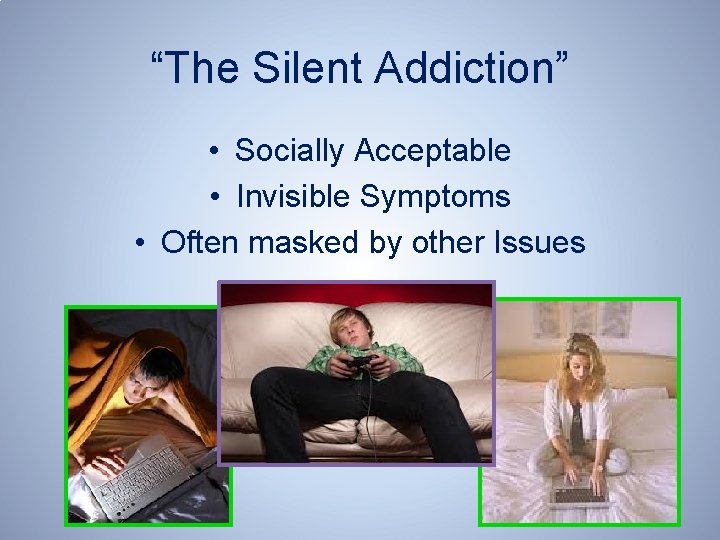
“The Silent Addiction” • Socially Acceptable • Invisible Symptoms • Often masked by other Issues
Risk Factors for Problem Gambling: • • Family Predisposition Family/Friends that Gamble Gambling at a Young Age Other Addiction Community/Media Highly Competitive Personality Low Self-Esteem Boredom
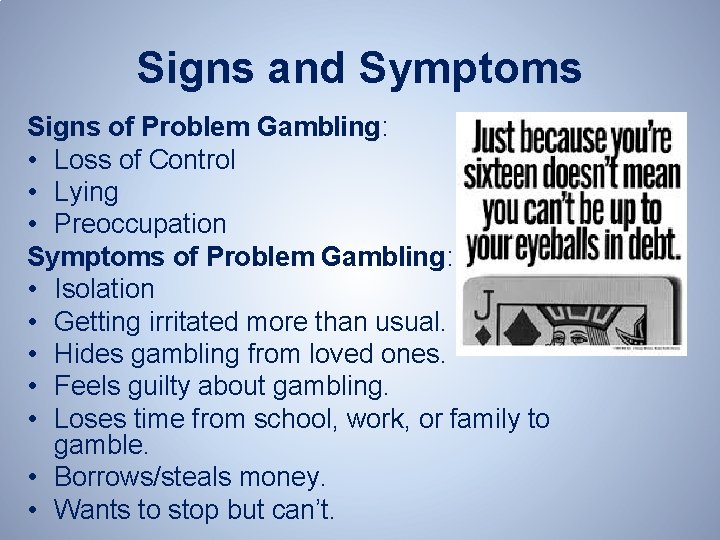
Signs and Symptoms Signs of Problem Gambling: • Loss of Control • Lying • Preoccupation Symptoms of Problem Gambling: • Isolation • Getting irritated more than usual. • Hides gambling from loved ones. • Feels guilty about gambling. • Loses time from school, work, or family to gamble. • Borrows/steals money. • Wants to stop but can’t.
ADOLESCENT GAMBLING The FAMILY may notice: The SCHOOL may The COMMUNITY notice: may notice: • Frequent late night calls • Secrecy • Missing money • Family violence • Tardiness • Truancy • Grades falling • Stealing • Mood swings • Criminal activity • Vandalism • Gang activity • Theft • Threatening calls • Robbery • Assault with deadly weapon • Insurance fraud
Case Study • Dave and Rob • Could you identify any signs/symptoms of problem gambling? • What do you think Dave’s family noticed? – His school? – His peers? • How could you support Dave as a student? What would you do? – What about Rob?
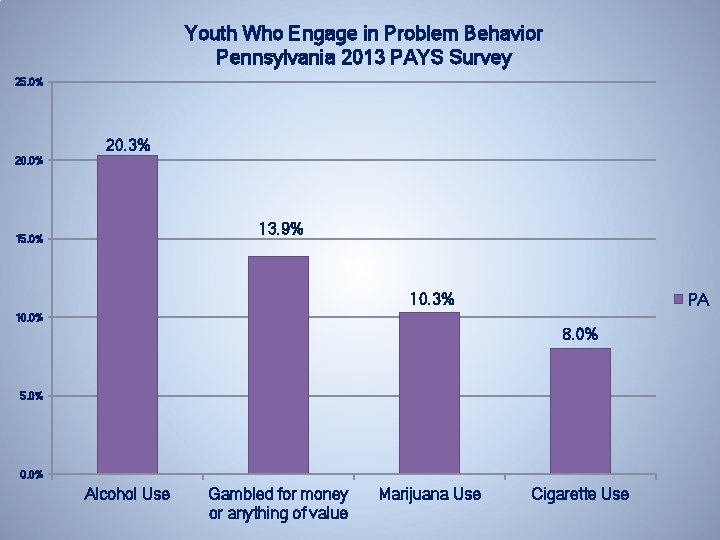
Youth Who Engage in Problem Behavior Pennsylvania 2013 PAYS Survey 25. 0% 20. 3% 20. 0% 13. 9% 15. 0% 10. 3% PA 10. 0% 8. 0% 5. 0% 0. 0% Alcohol Use Gambled for money or anything of value Marijuana Use Cigarette Use
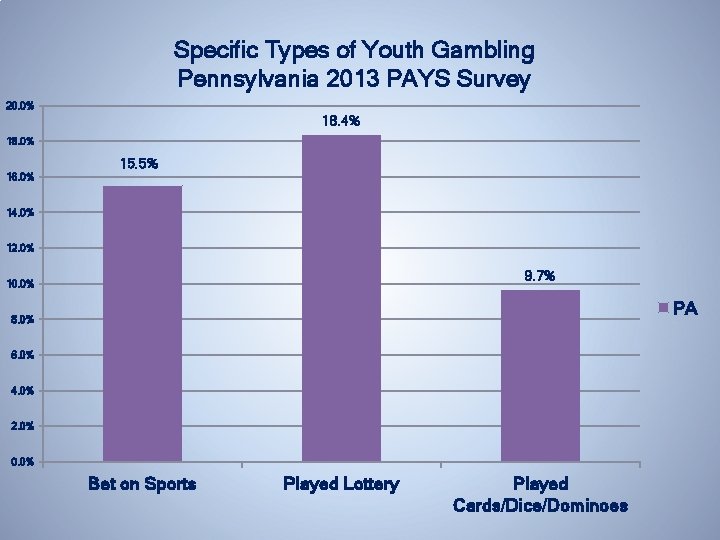
Specific Types of Youth Gambling Pennsylvania 2013 PAYS Survey 20. 0% 18. 4% 18. 0% 15. 5% 16. 0% 14. 0% 12. 0% 9. 7% 10. 0% PA 8. 0% 6. 0% 4. 0% 2. 0% 0. 0% Bet on Sports Played Lottery Played Cards/Dice/Dominoes
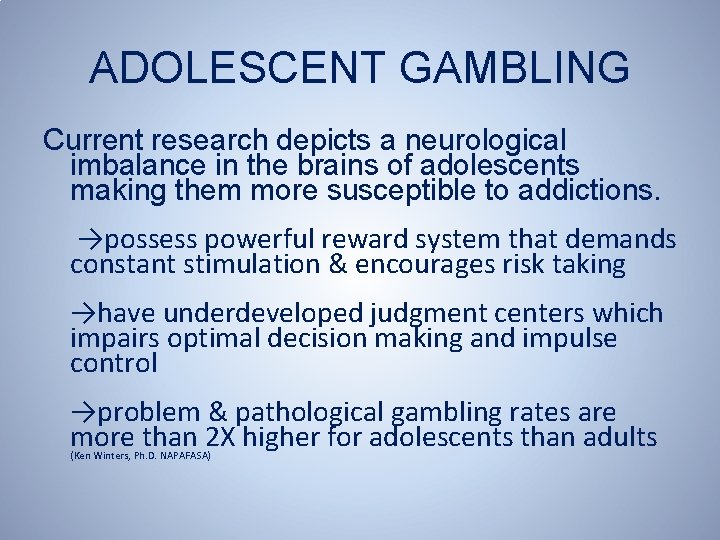
ADOLESCENT GAMBLING Current research depicts a neurological imbalance in the brains of adolescents making them more susceptible to addictions. →possess powerful reward system that demands constant stimulation & encourages risk taking →have underdeveloped judgment centers which impairs optimal decision making and impulse control →problem & pathological gambling rates are more than 2 X higher for adolescents than adults (Ken Winters, Ph. D. NAPAFASA)
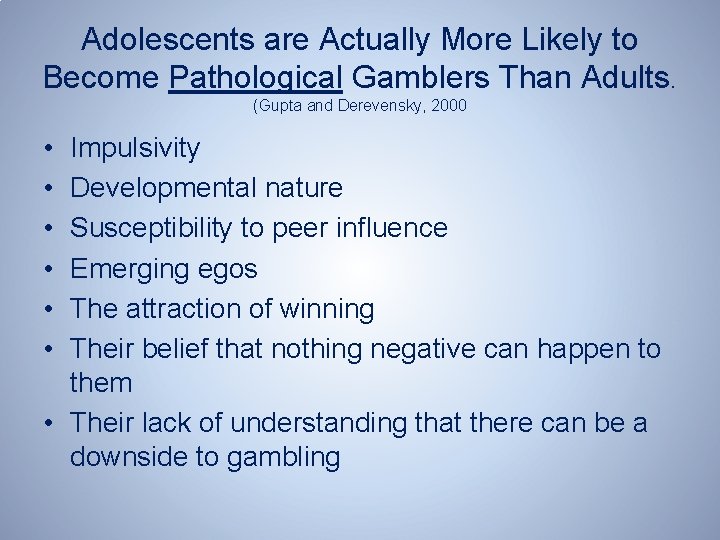
Adolescents are Actually More Likely to Become Pathological Gamblers Than Adults. (Gupta and Derevensky, 2000 • • • Impulsivity Developmental nature Susceptibility to peer influence Emerging egos The attraction of winning Their belief that nothing negative can happen to them • Their lack of understanding that there can be a downside to gambling
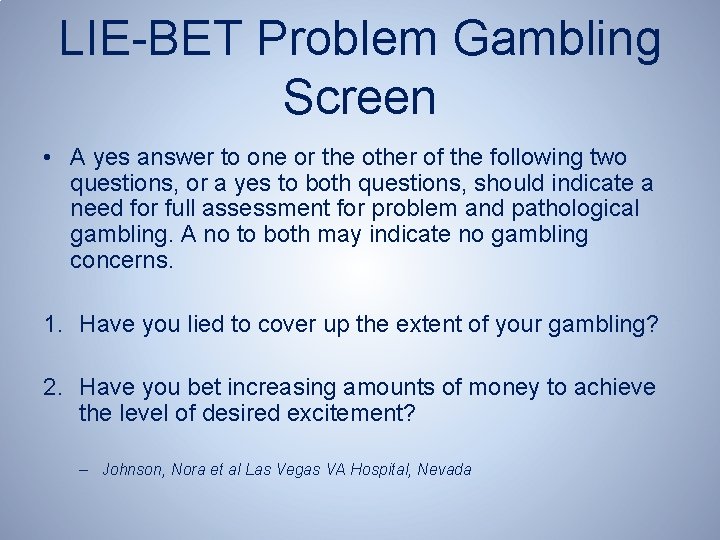
LIE-BET Problem Gambling Screen • A yes answer to one or the other of the following two questions, or a yes to both questions, should indicate a need for full assessment for problem and pathological gambling. A no to both may indicate no gambling concerns. 1. Have you lied to cover up the extent of your gambling? 2. Have you bet increasing amounts of money to achieve the level of desired excitement? – Johnson, Nora et al Las Vegas VA Hospital, Nevada
South Oaks Gambling Screen (SOGS) n Valid And Reliable Instrument n May Be Self Administered n Most Widely Used Screen n Available in 25 languages n Has been revised for use among adolescents (SOGS-RA)
Have the Conversation! • Talk to students about the types of gambling and the risks involved. • Provide information related to the signs and symptoms of problem gambling. • Offer support and resources for students who identify as a problem gambler. Gambling is not a risk free activity!
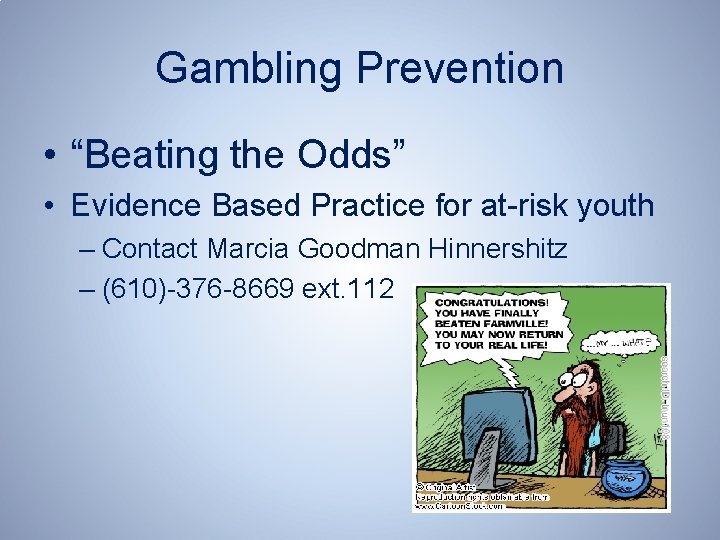
Gambling Prevention • “Beating the Odds” • Evidence Based Practice for at-risk youth – Contact Marcia Goodman Hinnershitz – (610)-376 -8669 ext. 112

Problem Gambling Resources Helpline Numbers 1 -800 -GAMBLER Pennsylvania Problem Gambling Hotline (877) 565 -2112 Caron Counseling (610) 743 -6571 www. gamblersanonymous. org http: //www. olganon. org/
- Slides: 20