
From Barriers to Building Blocks Using Group Therapy
From Barriers to Building Blocks: Using Group Therapy Techniques to Empower Disadvantaged Adolescents Tyler B. Collie, M. A. , NCC
● From Parkersburg, WV Who am I? ● M. A. - Clinical Mental Health Counseling ● WVU Upward Bound Student Success Counselor ● High School/College Transition
What are we talking about today? ● Barriers to Student Success ● Psychology of Development ● Using Group Therapy Techniques with Students
Discussion: What barriers to success have you observed in working with adolescents/young adults?
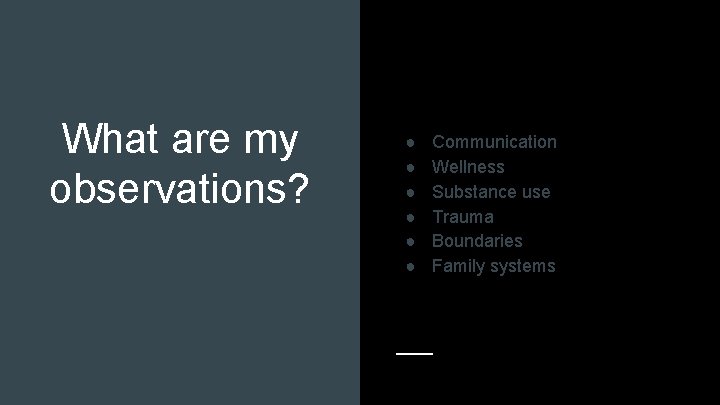
What are my observations? ● ● ● Communication Wellness Substance use Trauma Boundaries Family systems
What did we do? WVU Upward Bound Summer Program 2018 Growth Groups ● Theories ● Resources ● Structure

Theories
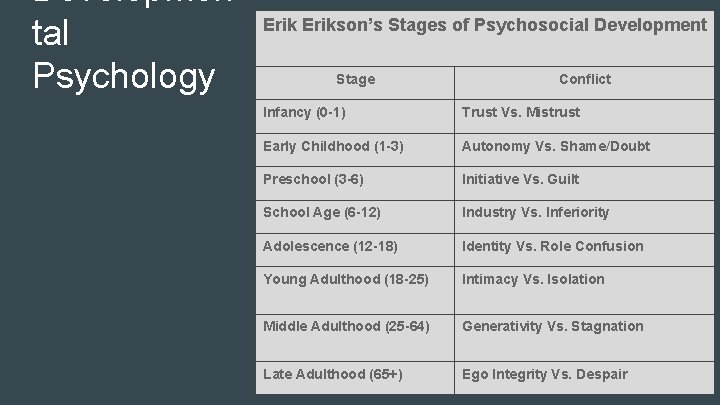
Developmen tal Psychology Erikson’s Stages of Psychosocial Development Stage Conflict Infancy (0 -1) Trust Vs. Mistrust Early Childhood (1 -3) Autonomy Vs. Shame/Doubt Preschool (3 -6) Initiative Vs. Guilt School Age (6 -12) Industry Vs. Inferiority Adolescence (12 -18) Identity Vs. Role Confusion Young Adulthood (18 -25) Intimacy Vs. Isolation Middle Adulthood (25 -64) Generativity Vs. Stagnation Late Adulthood (65+) Ego Integrity Vs. Despair
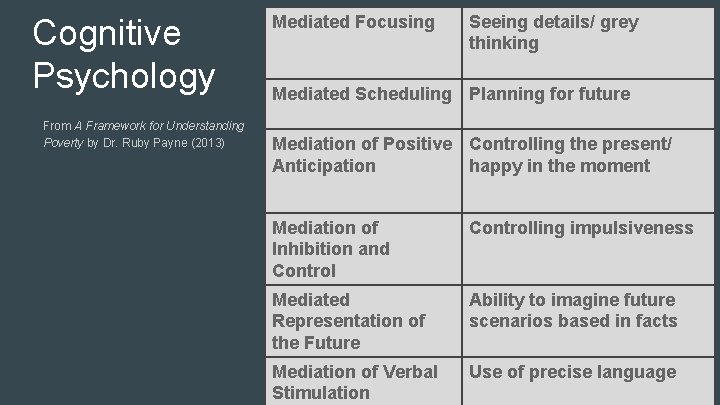
Cognitive Psychology From A Framework for Understanding Poverty by Dr. Ruby Payne (2013) Mediated Focusing Seeing details/ grey thinking Mediated Scheduling Planning for future Mediation of Positive Controlling the present/ Anticipation happy in the moment Mediation of Inhibition and Controlling impulsiveness Mediated Representation of the Future Ability to imagine future scenarios based in facts Mediation of Verbal Stimulation Use of precise language
Social Psychology “When we interact, we are impacting each other’s internal biological state and influencing the long-term construction of each other’s brains. This, in essence, is how love becomes flesh. ” (Cozolino, 2014)

Resources
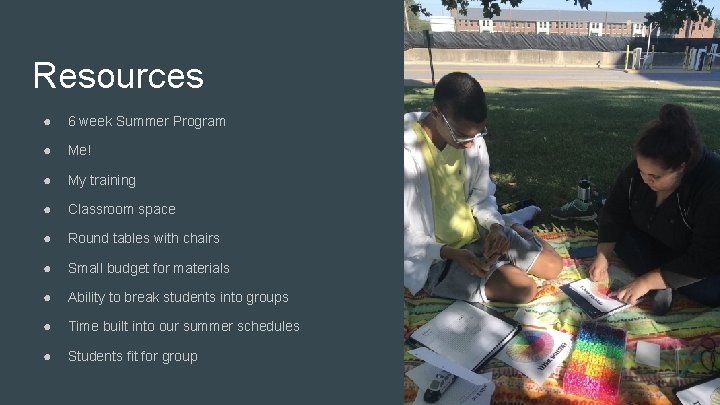
Resources ● 6 week Summer Program ● Me! ● My training ● Classroom space ● Round tables with chairs ● Small budget for materials ● Ability to break students into groups ● Time built into our summer schedules ● Students fit for group

Structure
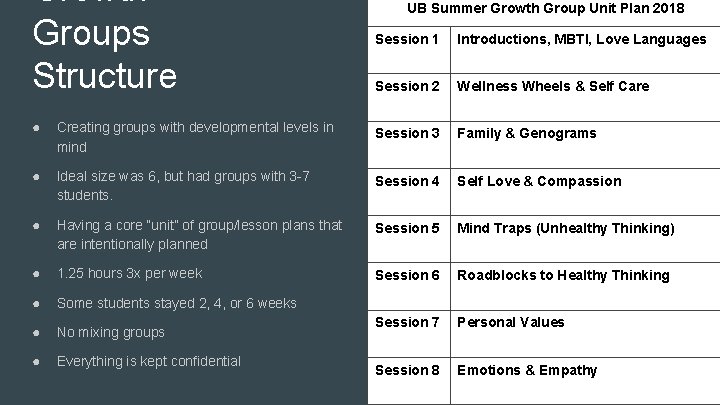
Growth Groups Structure Session 1 Introductions, MBTI, Love Languages Session 2 Wellness Wheels & Self Care ● Creating groups with developmental levels in mind Session 3 Family & Genograms ● Ideal size was 6, but had groups with 3 -7 students. Session 4 Self Love & Compassion ● Having a core “unit” of group/lesson plans that are intentionally planned Session 5 Mind Traps (Unhealthy Thinking) ● 1. 25 hours 3 x per week Session 6 Roadblocks to Healthy Thinking ● Some students stayed 2, 4, or 6 weeks ● No mixing groups Session 7 Personal Values ● Everything is kept confidential Session 8 Emotions & Empathy UB Summer Growth Group Unit Plan 2018
● Safe disclosure & interacting with boundaries & peers What were my objectives? ● Increase “grey thinking” and frustration tolerance ● Empathy development through practice of self acceptance ● Development of listening skills ● Learning about holistic wellness & self care ● Learning about emotions & emotional expression
Using Group Techniques
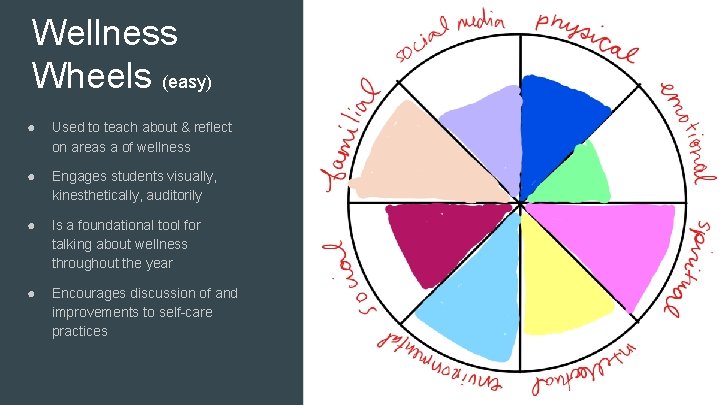
Wellness Wheels (easy) ● Used to teach about & reflect on areas a of wellness ● Engages students visually, kinesthetically, auditorily ● Is a foundational tool for talking about wellness throughout the year ● Encourages discussion of and improvements to self-care practices
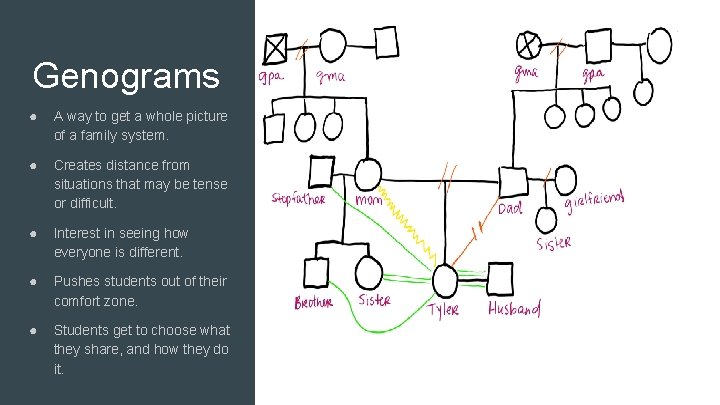
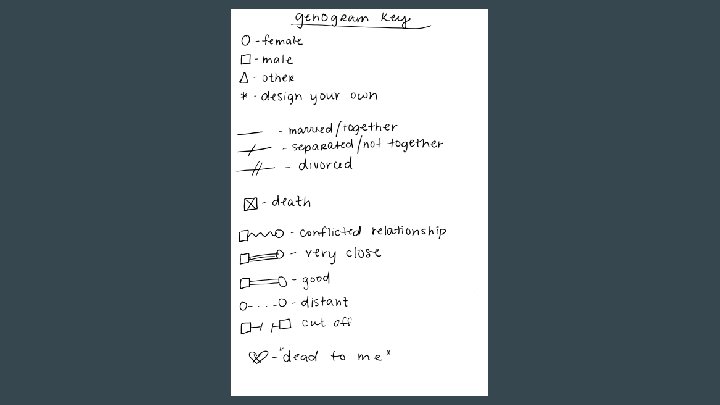
Genograms ● A way to get a whole picture of a family system. ● Creates distance from situations that may be tense or difficult. ● Interest in seeing how everyone is different. ● Pushes students out of their comfort zone. ● Students get to choose what they share, and how they do it.
● You can do the most important work for free Final Thoughts ● Rooting your activities in theory gives them depth ● Be intentional about planning activities ● Use your resources ● Do something different ● Create safe spaces

Questions?
- Slides: 21