
From Awareness To Improvement Changing Aviation Safety Culture
- Slides: 21
From Awareness To Improvement… “Changing Aviation Safety Culture”
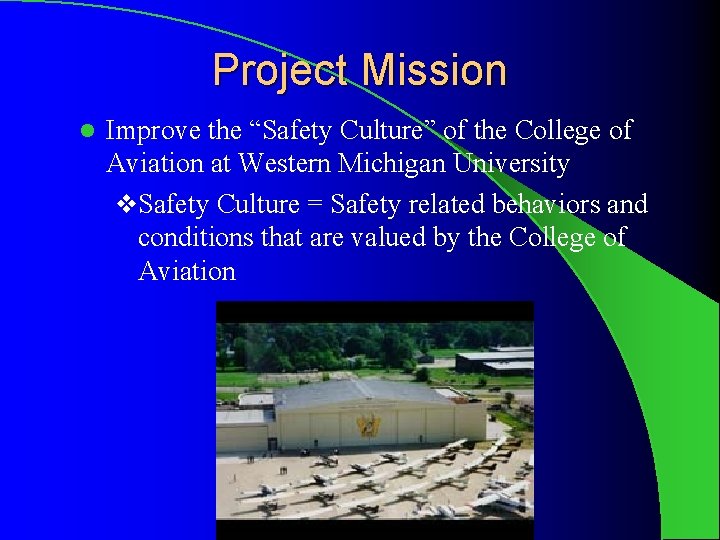
Project Mission l Improve the “Safety Culture” of the College of Aviation at Western Michigan University v. Safety Culture = Safety related behaviors and conditions that are valued by the College of Aviation
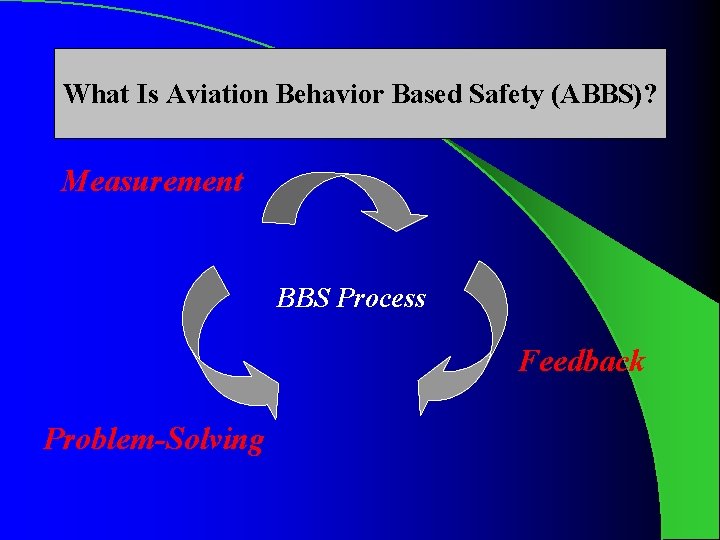
What Is Aviation Behavior Based Safety (ABBS)? Measurement BBS Process Feedback Problem-Solving
ABBS Does NOT Replace: l Training—the knowledge to be safe l Equipment—the tools to be safe l Engineering Solutions—hazard recognition and elimination l Support—commitment & follow through
BBS In Industry l BBS systems have been successfully implemented in thousands of organizations around the world – – – l Manufacturing Construction Health Care Office Settings Utilities Increasing the frequency of critical safe behaviors and conditions resulted in decreased accident rates across all settings v References available upon request
Contrast: Traditional Safety Programs & Behavior Based Safety
Traditional Approaches l Traditionally, companies have focused on “Accident Rate” safety measures such as: – NTSB recordable accident rates – ASRS incident reports – NTSB accident reports l Focusing on Accident Rates has several disadvantages
Accident Rate Disadvantages 1. 2. 3. 4. Reactive—An injury must occur before the system can react Not specific—Do not indicate exactly what needs to be done on-the-job to maintain or improve safety Low impact—Hard to change at-risk behaviors that are at “habit strength” Negative—focusing on accident rates highlights worst aspect of work
BBS—Focuses On… l Identification of Systems Factors—factors that influence an individual’s ability perform safely – Training – Equipment – Support l Problem solving—elimination or reduction of influence from systems factors
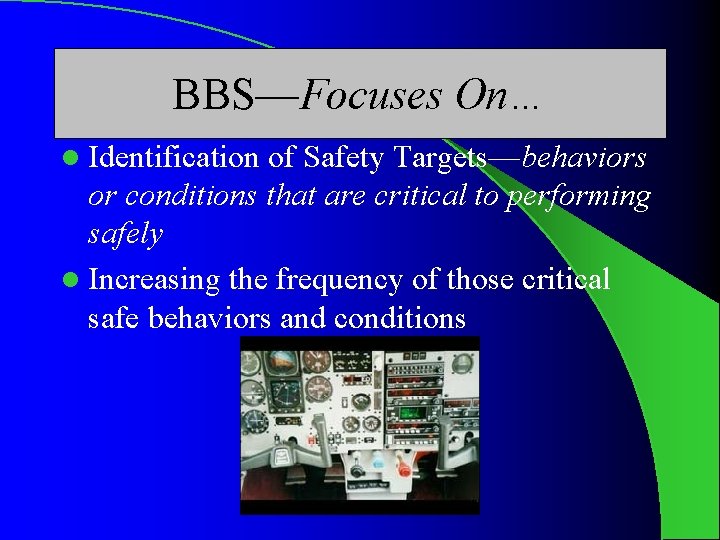
BBS—Focuses On… l Identification of Safety Targets—behaviors or conditions that are critical to performing safely l Increasing the frequency of those critical safe behaviors and conditions
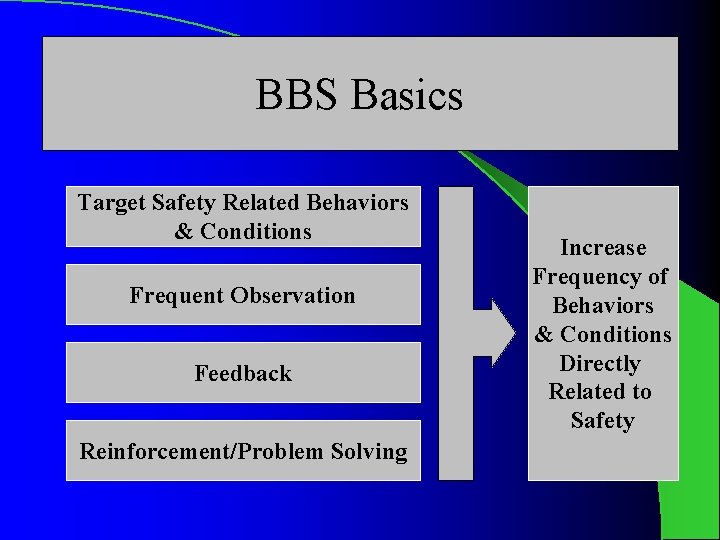
BBS Basics Target Safety Related Behaviors & Conditions Frequent Observation Feedback Reinforcement/Problem Solving Increase Frequency of Behaviors & Conditions Directly Related to Safety
The BBS Process Is Proactive—by providing measures of safety targets on-the-job that can be used to avoid injuries ü Is Specific—safety target data indicates exactly what can be done to maintain and improve safety ü Can Change Attitudes & Culture—higher impact on at-risk behaviors that are at “habit strength” ü Is Positive—safety achievements and improvements are the focus ü
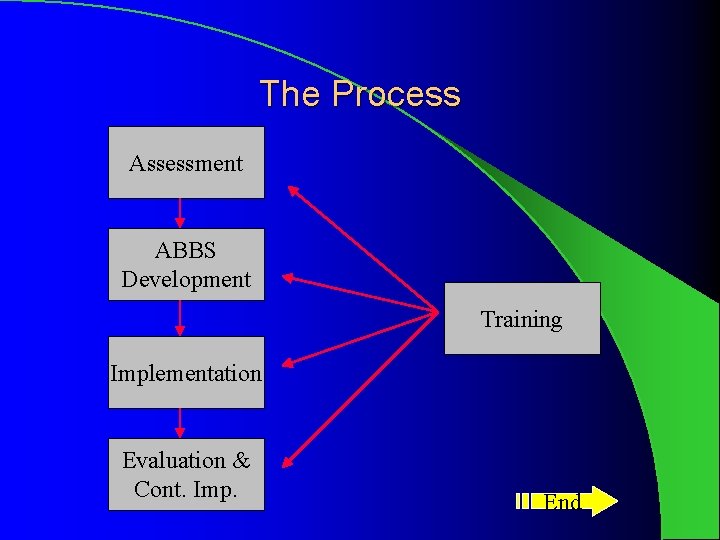
The Process Assessment ABBS Development Training Implementation Evaluation & Cont. Imp. End
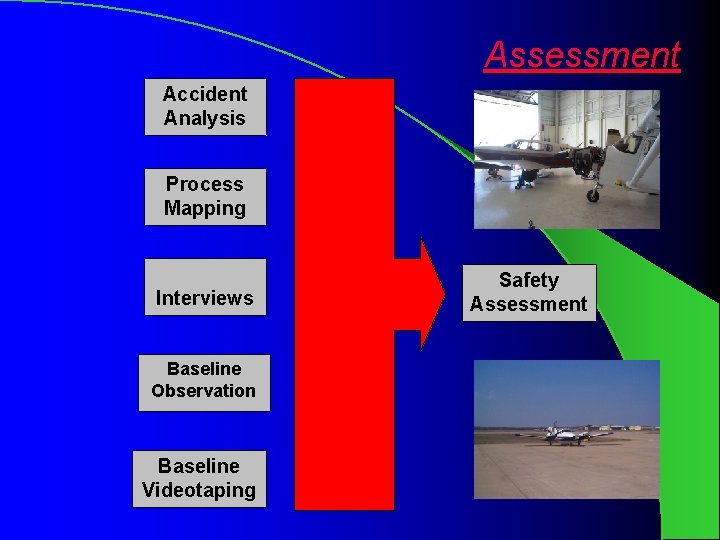
Assessment Accident Analysis Process Mapping Interviews Baseline Observation Baseline Videotaping Safety Assessment
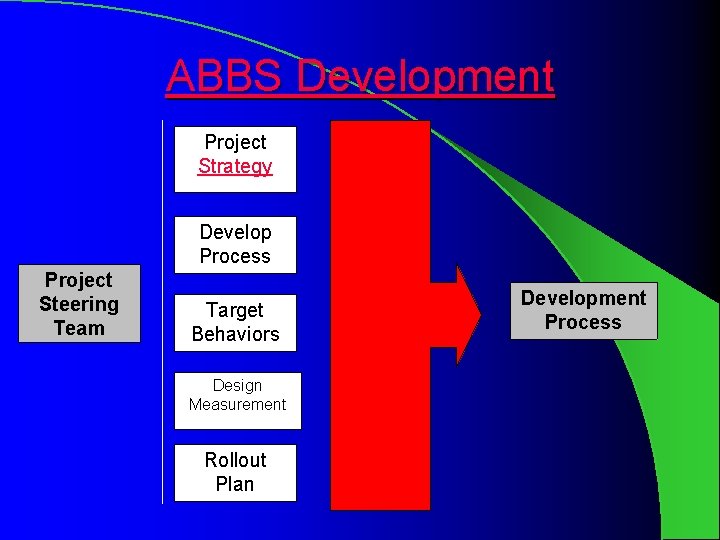
ABBS Development Project Strategy Develop Process Project Steering Team Target Behaviors Design Measurement Rollout Plan Development Process
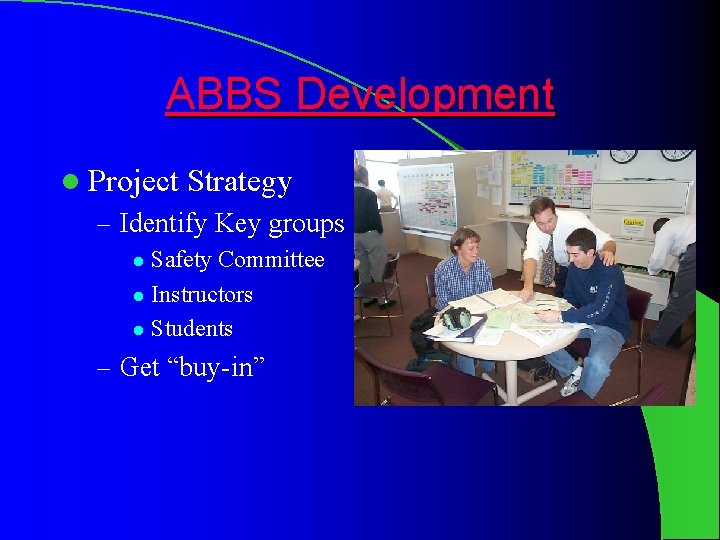
ABBS Development l Project Strategy – Identify Key groups Safety Committee l Instructors l Students l – Get “buy-in”
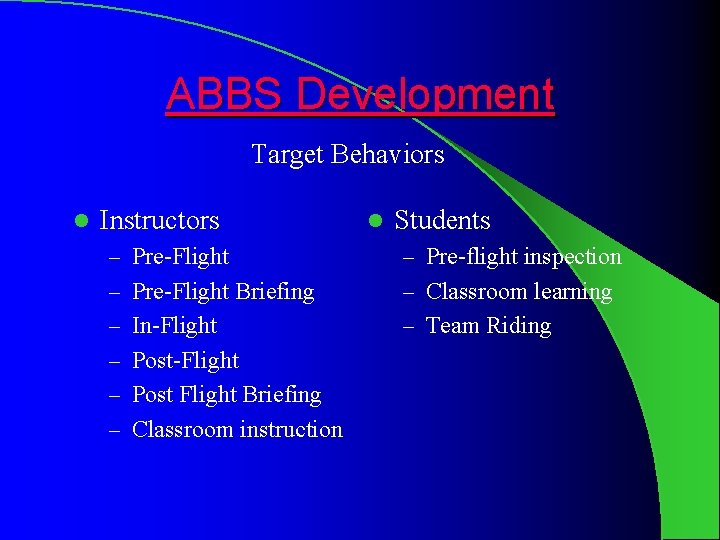
ABBS Development Target Behaviors l Instructors l Students – Pre-Flight – Pre-flight inspection – Pre-Flight Briefing – Classroom learning – In-Flight – Team Riding – Post-Flight – Post Flight Briefing – Classroom instruction
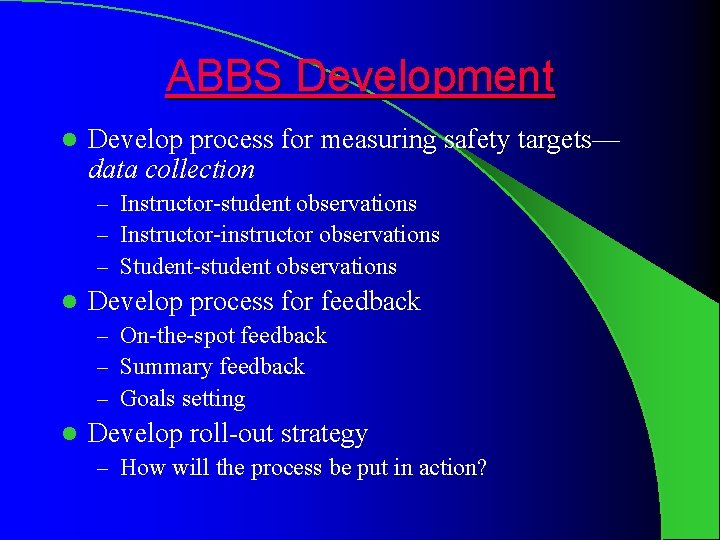
ABBS Development l Develop process for measuring safety targets— data collection – Instructor-student observations – Instructor-instructor observations – Student-student observations l Develop process for feedback – On-the-spot feedback – Summary feedback – Goals setting l Develop roll-out strategy – How will the process be put in action?
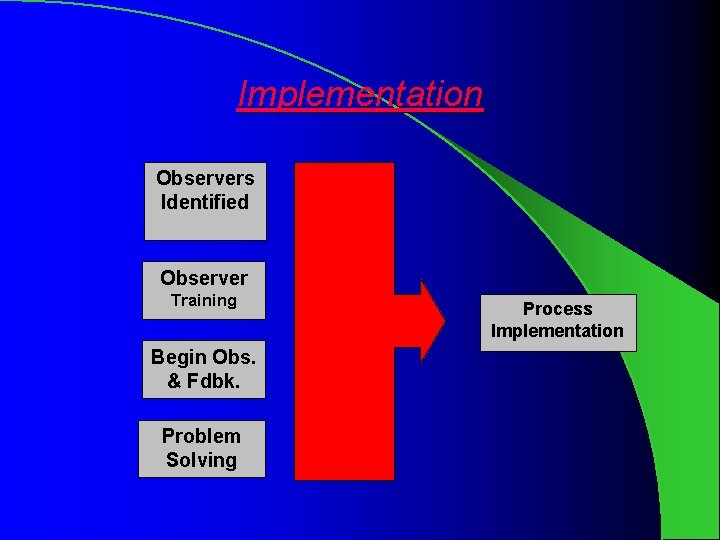
Implementation Observers Identified Observer Training Begin Obs. & Fdbk. Problem Solving Process Implementation
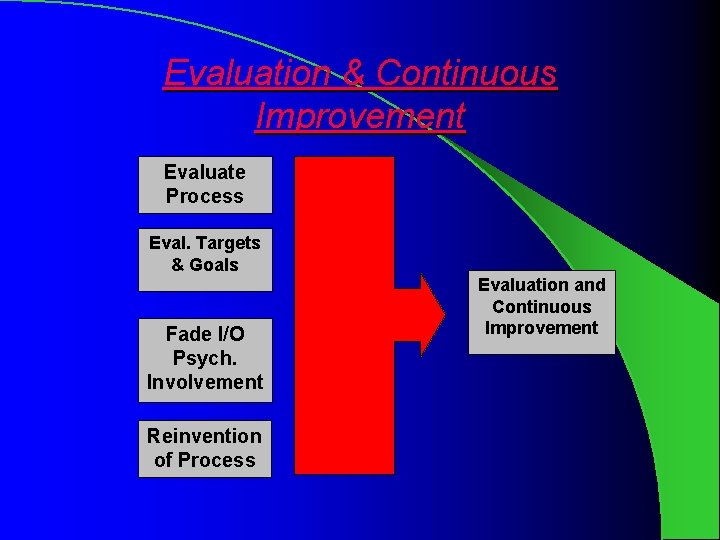
Evaluation & Continuous Improvement Evaluate Process Eval. Targets & Goals Fade I/O Psych. Involvement Reinvention of Process Evaluation and Continuous Improvement
Behavior Based Safety “Building From The Ground up” Contact Person: Bill Rantz, MA william. rantz@wmich. edu Psychology Department Collaborators: Ryan Olson, MA John Austin, Ph. D. john. austin@wmich. edu Alyce Dickinson, Ph. D. alyce. dickinson@wmich. edu