
Frogs Vertebrates Have a backbone l Include fishes
Frogs
Vertebrates Ø Have a backbone l Include: fishes, reptiles, amphibians, birds and mammals Ø Integument makes hair, scales, or feathers Ø Bony or cartilaginous endoskeleton Ø Movement by muscle attachment Ø Closed circulatory system Ø Two sexes (most)
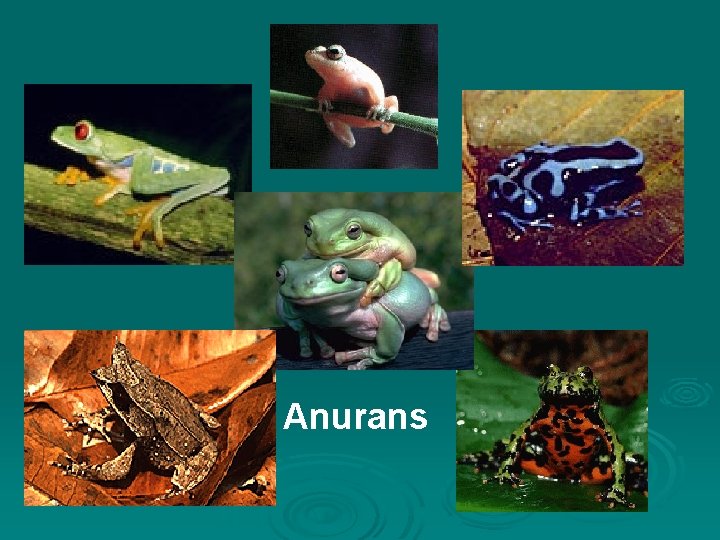
Anurans
Anurans Ø Kingdom: Ø Phylum: Animalia Chordata (has a backbone) Ø Class: Amphibia Ø Order: Anura “Without a tail” Ø Frogs, toads
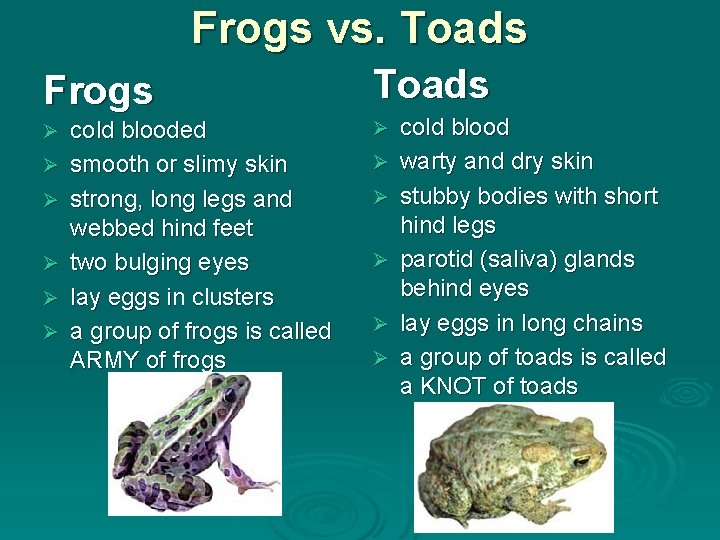
Frogs vs. Toads Frogs Ø Ø Ø cold blooded smooth or slimy skin strong, long legs and webbed hind feet two bulging eyes lay eggs in clusters a group of frogs is called ARMY of frogs Toads Ø Ø Ø cold blood warty and dry skin stubby bodies with short hind legs parotid (saliva) glands behind eyes lay eggs in long chains a group of toads is called a KNOT of toads
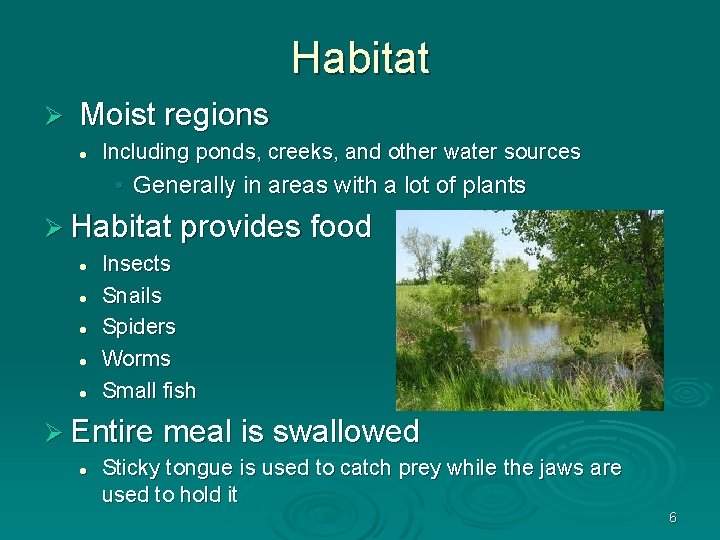
Habitat Ø Moist regions l Including ponds, creeks, and other water sources • Generally in areas with a lot of plants Ø Habitat provides food l l l Insects Snails Spiders Worms Small fish Ø Entire meal is swallowed l Sticky tongue is used to catch prey while the jaws are used to hold it 6
5 Characteristics of Modern Amphibians 1. 2. 3. 4. 5. Legs Lungs Cutaneous Respiration Double-loop Circulation (Closed) Partially divided heart
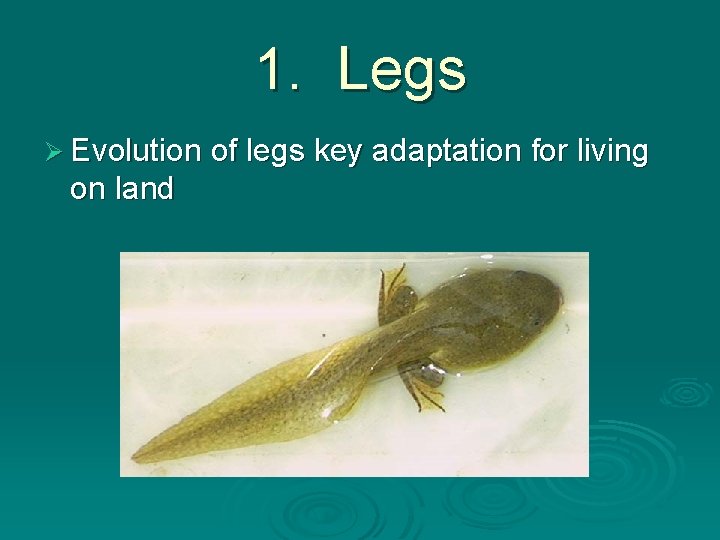
1. Legs Ø Evolution of legs key adaptation for living on land
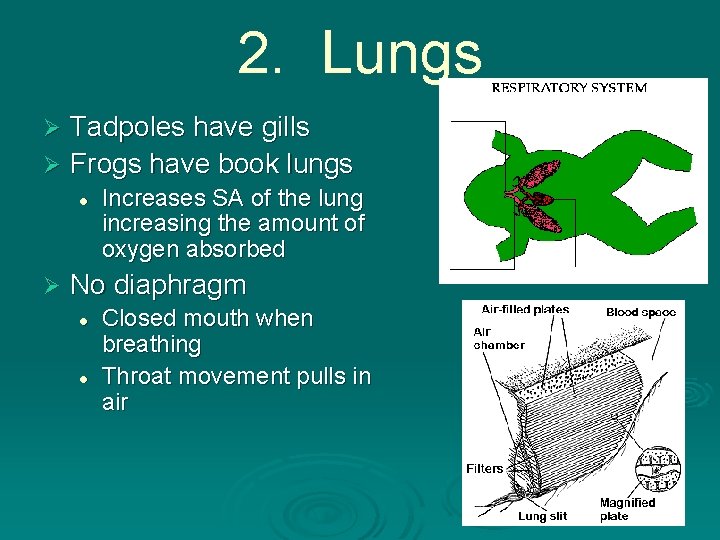
2. Lungs Tadpoles have gills Ø Frogs have book lungs Ø l Ø Increases SA of the lung increasing the amount of oxygen absorbed No diaphragm l l Closed mouth when breathing Throat movement pulls in air
3. Cutaneous Respiration Ø “Skin breathing” Ø Supplement oxygen is taken in by respiring directly through the moist skin l Important during winter when they burrow into the bottom of mud of ponds (cease all lung breathing)
4. Double-Loop Circulation Ø Two separate loops l l Pulmonary Circulation- carries blood between the heart and lungs Systemic Circulation- oxygenated blood to the body & deoxygenated blood back to the heart Ø Advantage: oxygenated blood is pumped to the tissue at a higher pressure & faster rate
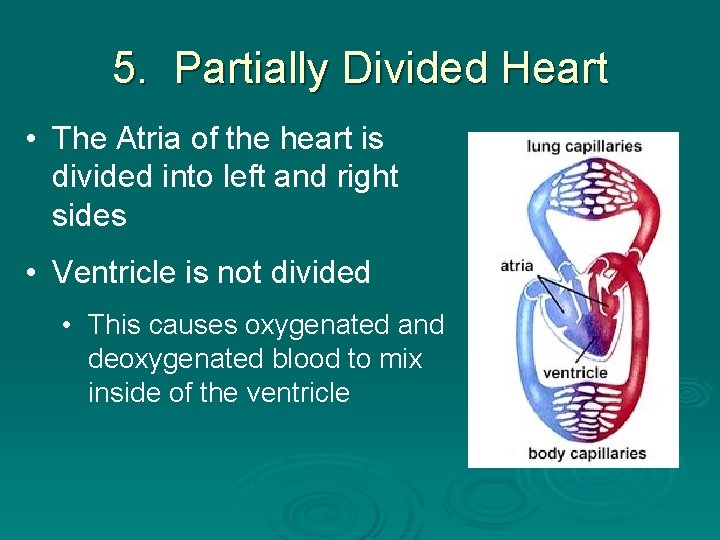
5. Partially Divided Heart • The Atria of the heart is divided into left and right sides • Ventricle is not divided • This causes oxygenated and deoxygenated blood to mix inside of the ventricle
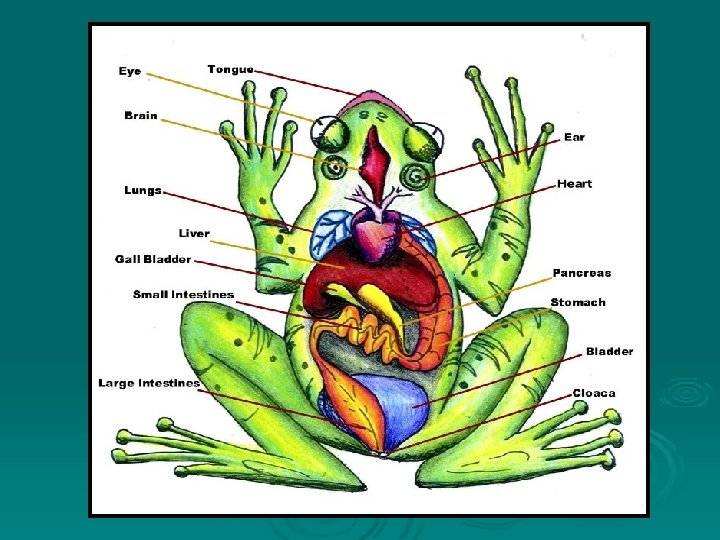
Excretory System Ø Represented by a pair of kidneys & urinary bladder Ø Kidneys-organs that filter blood, remove urea and convert it into urine Ø Urine is collected through ureters and stored in the bladder until excreted 14
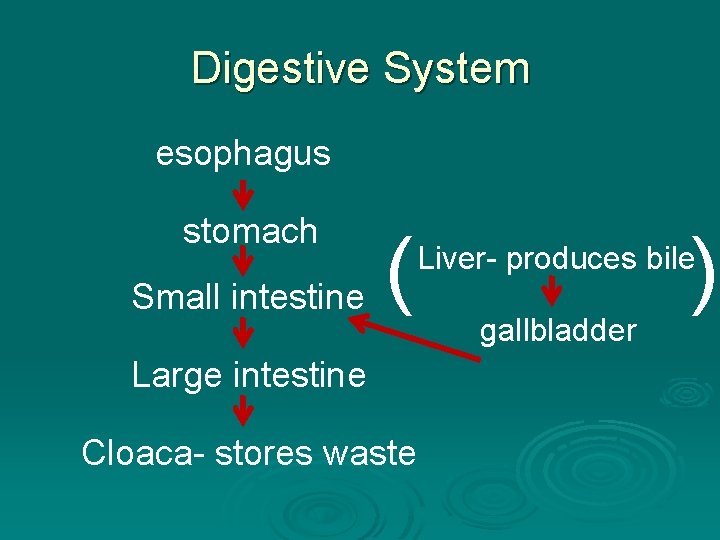
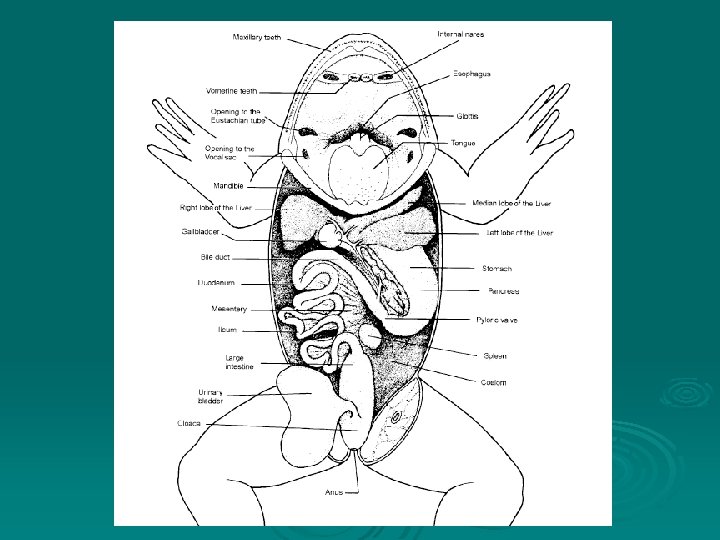
Digestive System esophagus Small intestine ( ( stomach Liver- produces bile Large intestine Cloaca- stores waste gallbladder
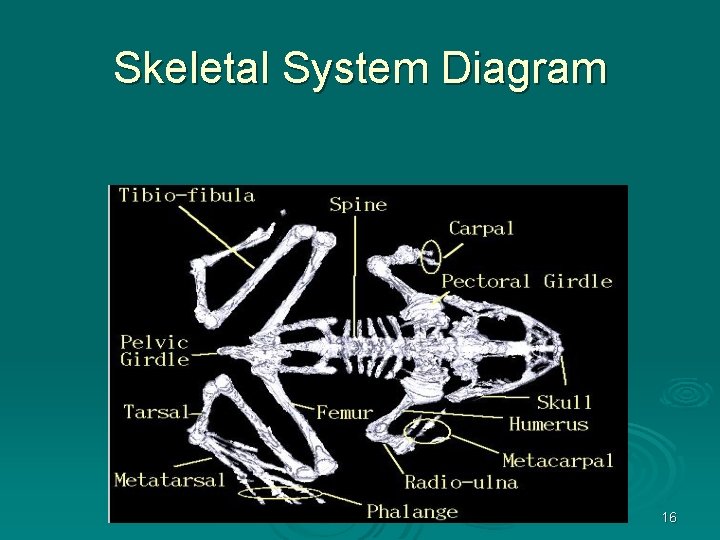
Skeletal System Diagram 16
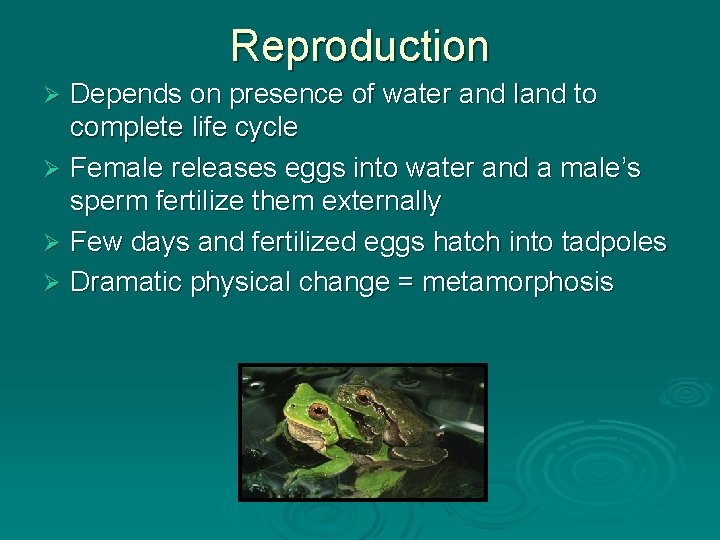
Reproduction Depends on presence of water and land to complete life cycle Ø Female releases eggs into water and a male’s sperm fertilize them externally Ø Few days and fertilized eggs hatch into tadpoles Ø Dramatic physical change = metamorphosis Ø
- Slides: 18