
Frog buccal breathing Air flow Buccal cavity This
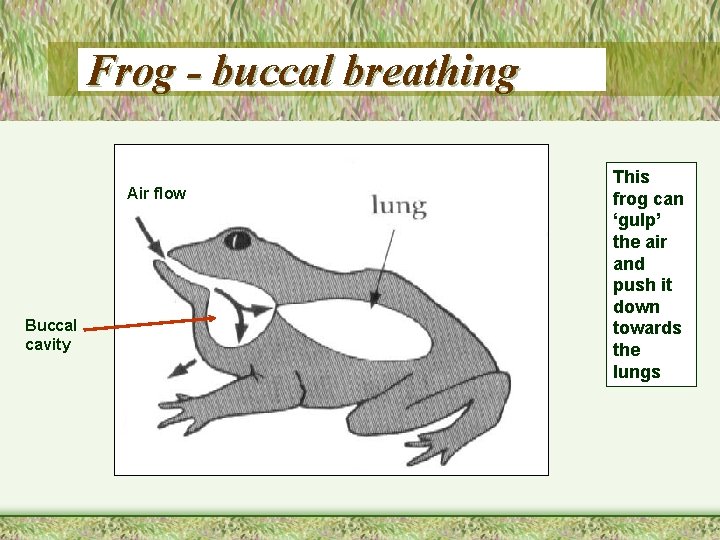
Frog - buccal breathing Air flow Buccal cavity This frog can ‘gulp’ the air and push it down towards the lungs
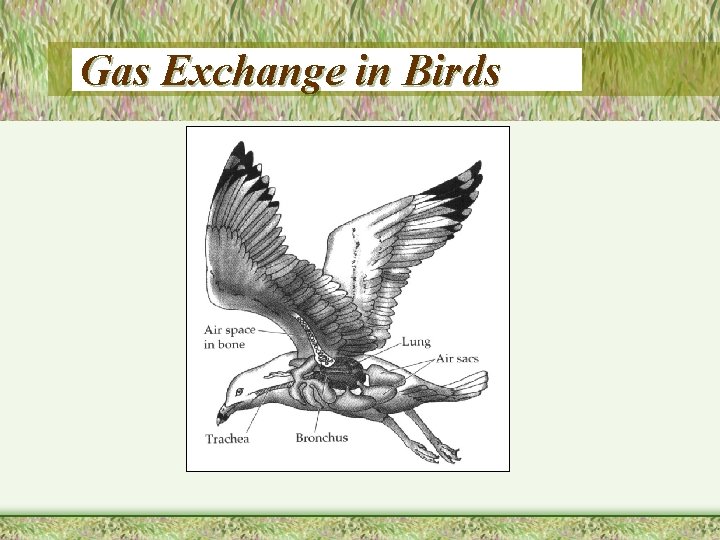
Gas Exchange in Birds
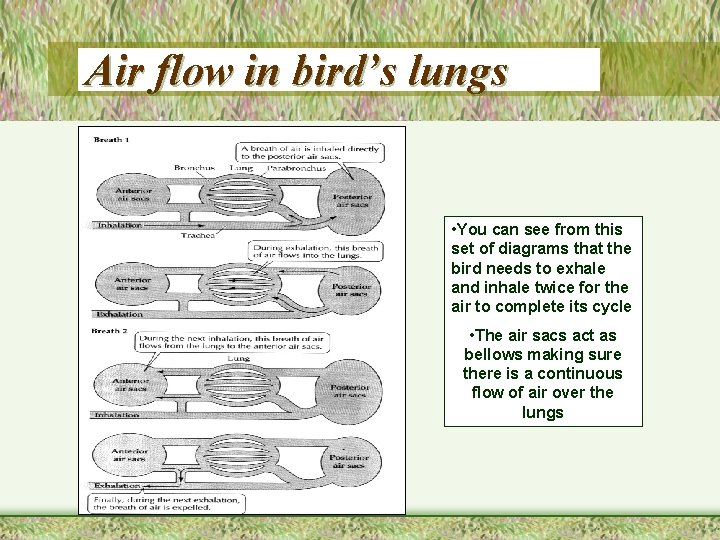
Air flow in bird’s lungs • You can see from this set of diagrams that the bird needs to exhale and inhale twice for the air to complete its cycle • The air sacs act as bellows making sure there is a continuous flow of air over the lungs
Diving aquatic mammals Diving mammals can stay underwater for an hour or more they do this by…. . • Storing a great deal of oxygen in their blood, spleen and muscle • Conserve the amount of oxygen used by slowing down pulse rate and diverting oxygenated blood from areas of the body that don’t need it so much, like some muscle groups. Areas that still need a good supply of oxygen are the brain, eyes, spinal cord, adrenal gland placenta (in pregnant seals, whales or dolphins) • Can utilize anaerobic respiration more efficiently when oxygen levels are low.
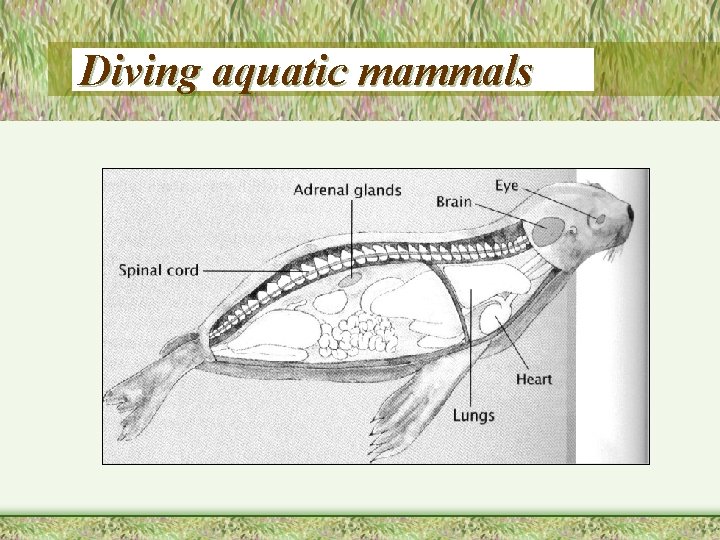
Diving aquatic mammals
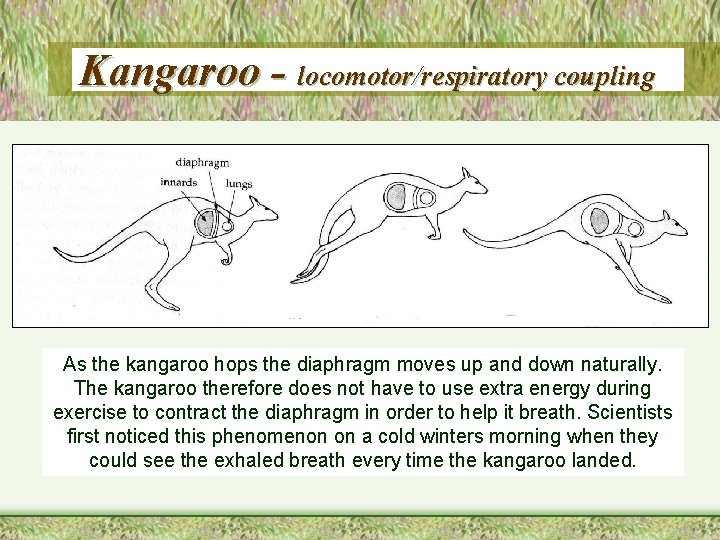
Kangaroo - locomotor/respiratory coupling As the kangaroo hops the diaphragm moves up and down naturally. The kangaroo therefore does not have to use extra energy during exercise to contract the diaphragm in order to help it breath. Scientists first noticed this phenomenon on a cold winters morning when they could see the exhaled breath every time the kangaroo landed.
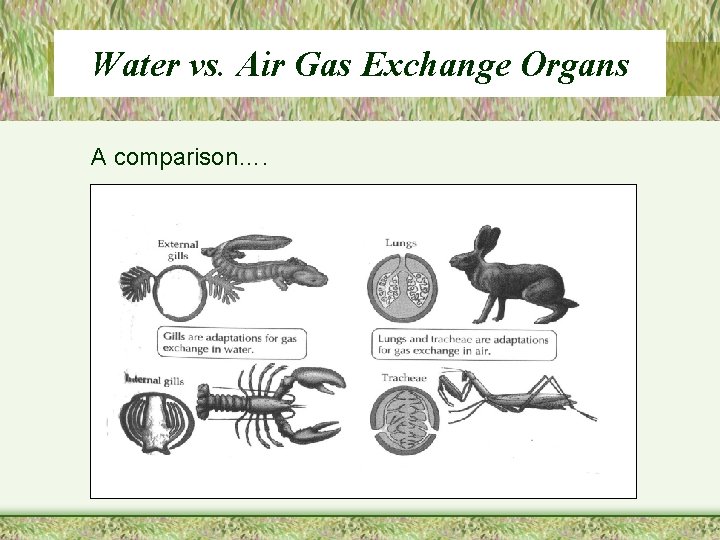
Water vs. Air Gas Exchange Organs A comparison….
Can you remember what do all gas exchange systems require? • Adequate surface area compared to volume. • Moist membranes for gas exchange to occur. • A concentration gradient to allow diffusion to take place. • And for larger animals - a good blood supply.

The End
- Slides: 9