
Friendship Love Commitment Michael Itagaki Sociology 275 Marriage

- Slides: 25
Friendship, Love & Commitment Michael Itagaki Sociology 275, Marriage and Family
The Importance of Love n Love is essential. u Love n n is both a feeling and an activity. The paradox of love Perfection vs. Meaning
Love and American Families n n Foundation for marriage, criterion for spousal selection. Character of love. u Love is the criterion for choosing a spouse. u Love is uncontrollable and irrational. n Homogamy u The tendency to marry people much like oneself.
Friendship, Love and Commitment n Friendship u Foundation n Love u Draws n people together, sustains them Commitment u Stable n for love and commitment factors that maintain the relationship Love and commitment are related, but can exist without the other.
Friendship, Love and Commitment n Friendship and love bind us together u Best friends: similar to spouse and lover relationships u Lovers covet exclusiveness u Friendship appears to be the foundation for a strong love relationship.
Friendship, Love and Commitment n Gender differences and love u Differences in number and nature of friendships u Men are more open in cross-sex friendships u Men fall in love more quickly than women
Friendship, Love and Commitment n Gender exceptions: Love between equals u Peer marriage: Built on equity, equality and deep friendship. « Deep friendship • Valuing companionship • Produces intimacy and mutual respect
Central Attributes of Love n n n Trust Caring Honesty Friendship Respect Concern for the other’s well-being n n n Loyalty Commitment Acceptance of the other Supportiveness Wanting to be with the other Interest in the other
Central Attributes of Commitment n n n Loyalty Responsibility Living up to your word Faithfulness Trust Being there for the other in good and bad times n n n Devotion Reliability Giving your best effort Supportiveness Perseverance Concern about the other’s well-being
Feelings Identifying Love Rubin’s four feelings identifying love: 1. 2. 3. 4. Caring for the other Needing the other Trusting the other Tolerating the other
Friendship, Love and Commitment n Other Research on Love u Romantic love expressed by: « Verbally/physically expressing affection « Self disclosing « Giving material/non-material evidence u In love? More positive world view
Behaviors Expressing Love Swensen’s expressions of romantic love: 1. Verbally expressing affection 2. Self-disclosing, revealing intimate facts 3. Offer emotional support 4. Expressing nonverbal feelings (happiness, etc…) 5. Giving material evidence: gifts, favors 6. Physically expressing love
Important Factors in Commitment 1. 2. 3. Balance of costs to benefits Normative inputs: Values about love Structural constraints: Roles and expectations
Observations, Research on Commitment 1. 2. 3. 4. Commitments are more likely to endure in marriage Commitments are more likely to endure in heterosexual relationships Enduring marriage is not always a happy one Overlap between love and commitment
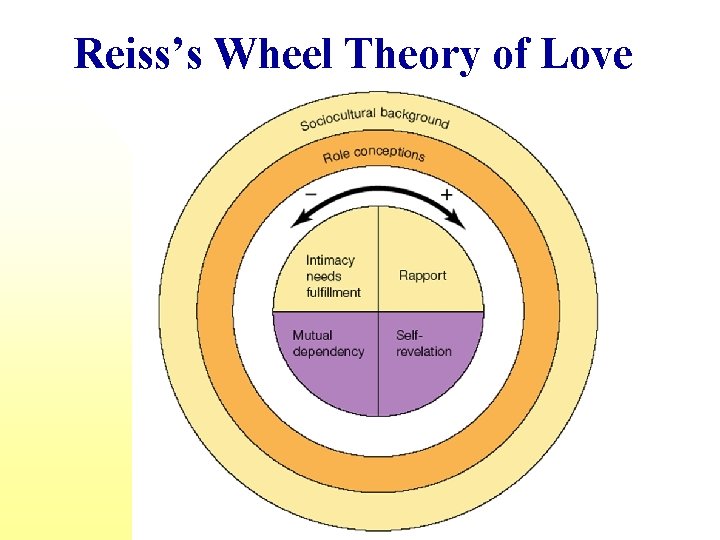
Wheel Theory of Love develops and is maintained through four processes: 1. Rapport 2. Self-revelation 3. Mutual dependency 4. Fulfillment of intimacy needs
Reiss’s Wheel Theory of Love
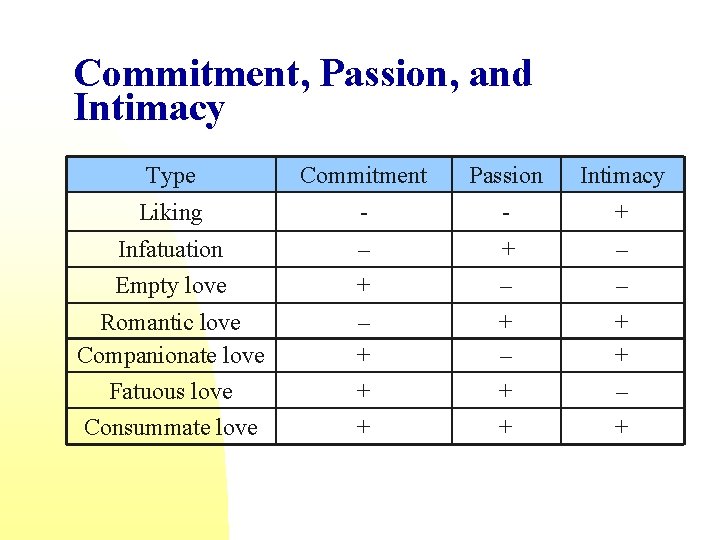
Triangular theory of love n Views love as consisting of three components: u Intimacy
Ten Signs of Intimacy 1. 2. 3. 4. 5. Wanting to promote your partner’s welfare. Feeling happiness with your partner. Holding your partner in high regard. Being able to count on your partner in time of need. Being able to understand each other.
Ten Signs of Intimacy 6. 7. 8. 9. 10. Sharing yourself and your possessions with your partner. Receiving emotional support from your partner. Giving emotional support to your partner. Being able to communicate with your partner about intimate things. Valuing your partner’s presence in your life.
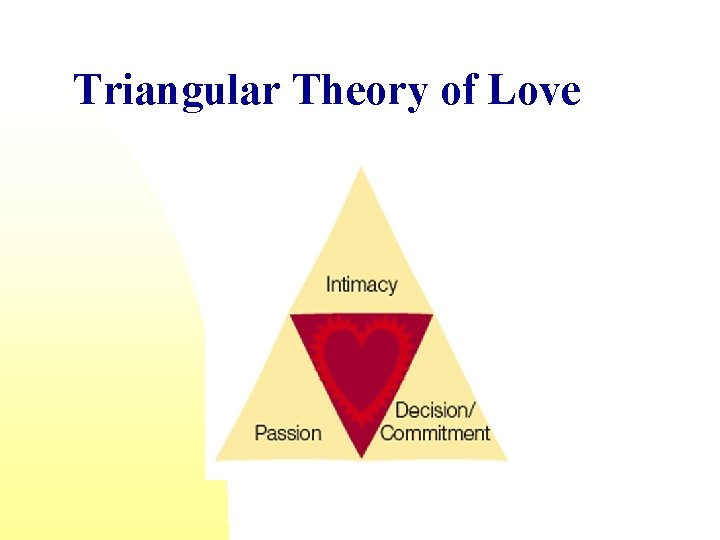
Triangular theory of love n Views love as consisting of three components: u Intimacy u Passion u Decision/commitment
Triangular Theory of Love
Commitment, Passion, and Intimacy Type Commitment Passion Intimacy Liking - - + Infatuation – + – Empty love + – – Romantic love Companionate love Fatuous love Consummate love – + + + + – +
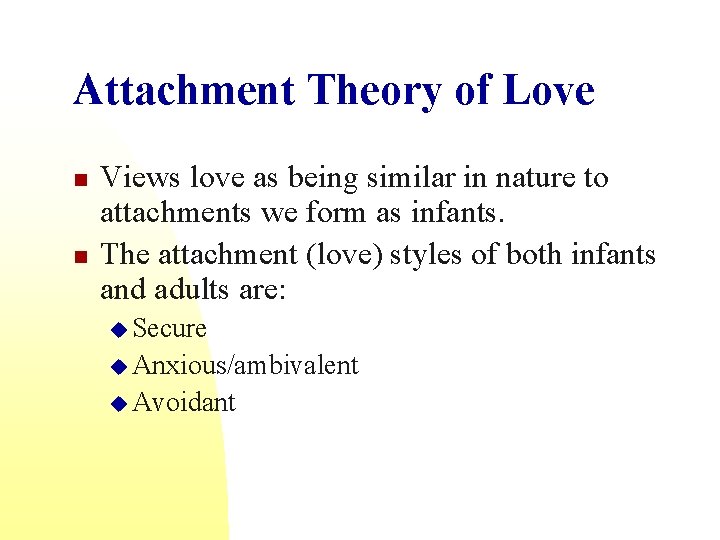
Attachment Theory of Love n n Views love as being similar in nature to attachments we form as infants. The attachment (love) styles of both infants and adults are: u Secure u Anxious/ambivalent u Avoidant
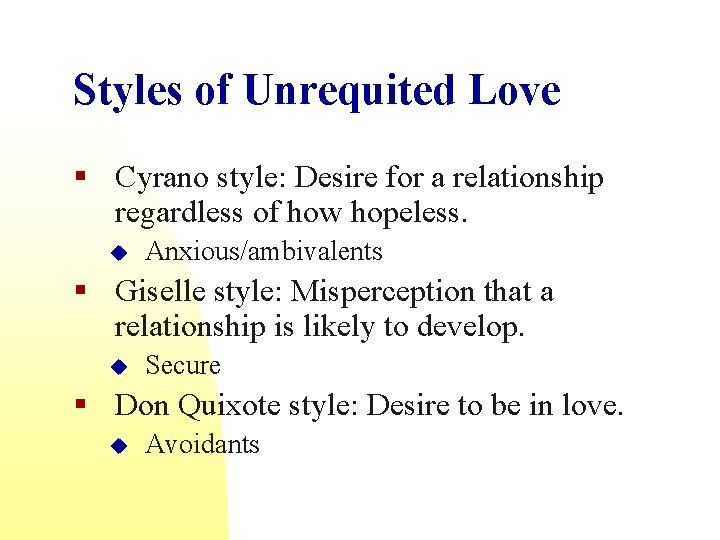
Styles of Unrequited Love § Cyrano style: Desire for a relationship regardless of how hopeless. u Anxious/ambivalents § Giselle style: Misperception that a relationship is likely to develop. u Secure § Don Quixote style: Desire to be in love. u Avoidants
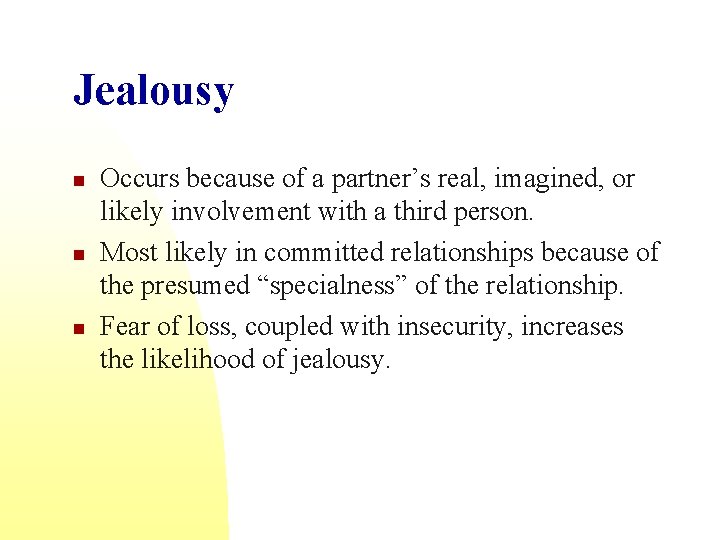
Jealousy n n n Occurs because of a partner’s real, imagined, or likely involvement with a third person. Most likely in committed relationships because of the presumed “specialness” of the relationship. Fear of loss, coupled with insecurity, increases the likelihood of jealousy.