
Friendly Friends and Favoritism Boundaries Hierarchy and Relationships
Friendly, Friends, and Favoritism: Boundaries, Hierarchy, and Relationships Among Learners and Faculty Natascha Lautenschläger, MD, MSPH Hayam Shaker, MD Viviane Sachs, MD
Disclosures • none
Objectives • Recognize and define favoritism. • Review the dangers, consequences and detrimental learning, these relationships can have in the future. • Practice recognizing and potential boundary setting when professional relationships may begin to blur.
Favoritism When decisions are based on personal feelings and/or relationships and not on objective criteria such as assessments of ability, knowledge, skills.
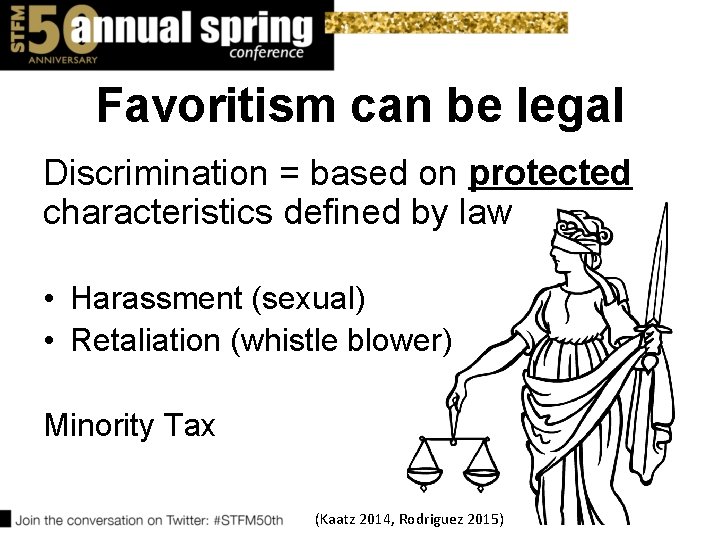
Favoritism can be legal Discrimination = based on protected characteristics defined by law • Harassment (sexual) • Retaliation (whistle blower) Minority Tax (Kaatz 2014, Rodriguez 2015)
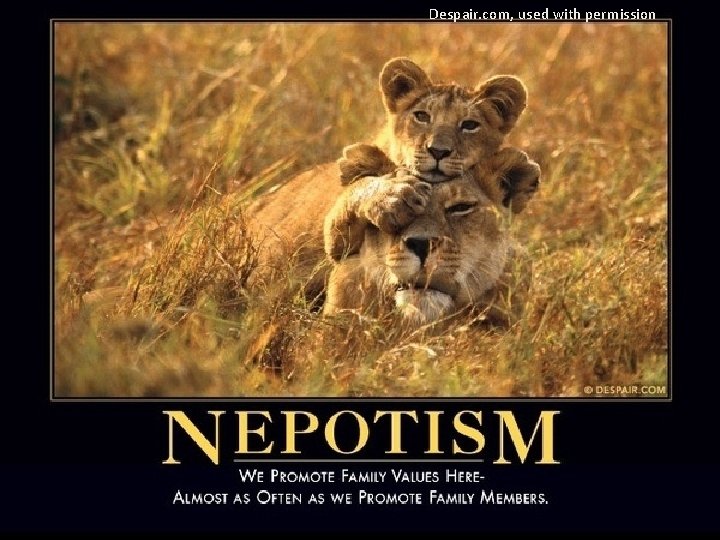
Despair. com, used with permission
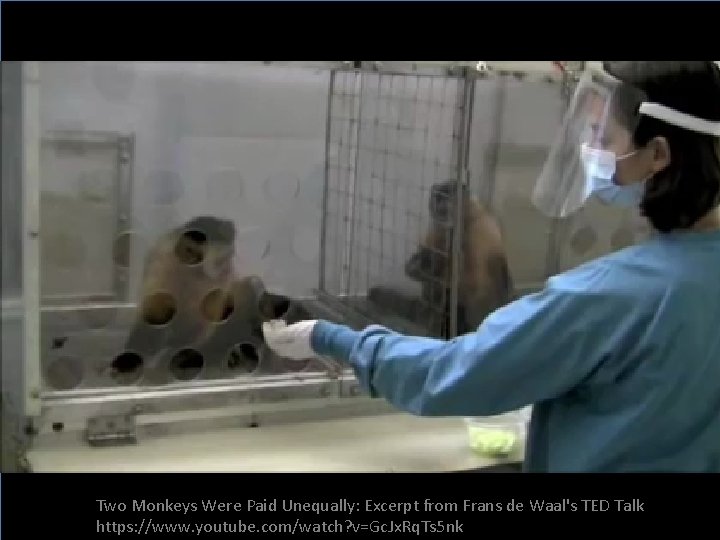
Two Monkeys Were Paid Unequally: Excerpt from Frans de Waal's TED Talk https: //www. youtube. com/watch? v=Gc. Jx. Rq. Ts 5 nk
Ingredients for Favoritism Pie • • Supervisors / Hierarchy Power Preferential treatment Personal Social / professional group Person or smaller unit within Excluded person / smaller unit Them - Us
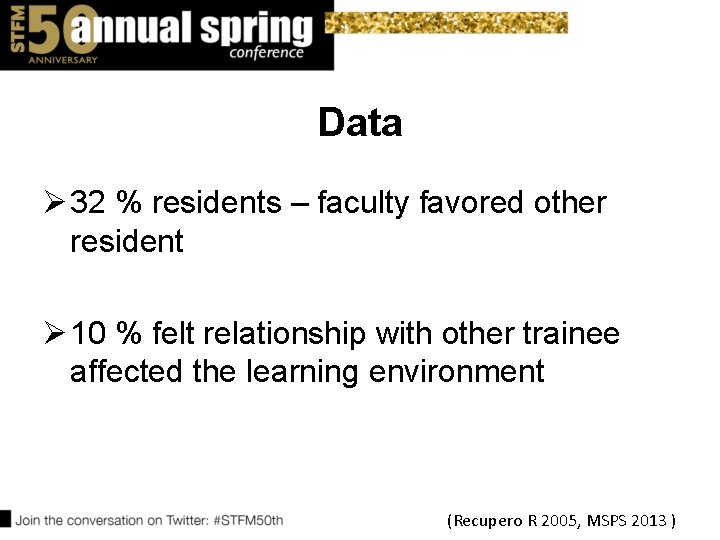
Data Ø 32 % residents – faculty favored other resident Ø 10 % felt relationship with other trainee affected the learning environment (Recupero R 2005, MSPS 2013 )
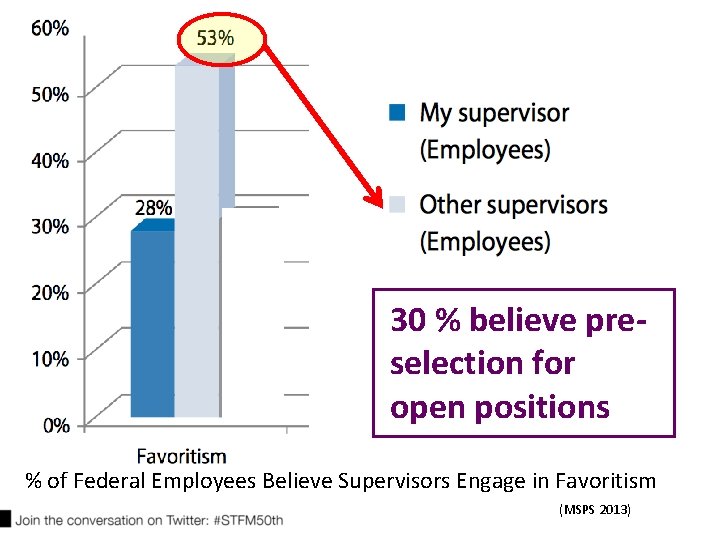
30 % believe preselection for open positions % of Federal Employees Believe Supervisors Engage in Favoritism (MSPS 2013)
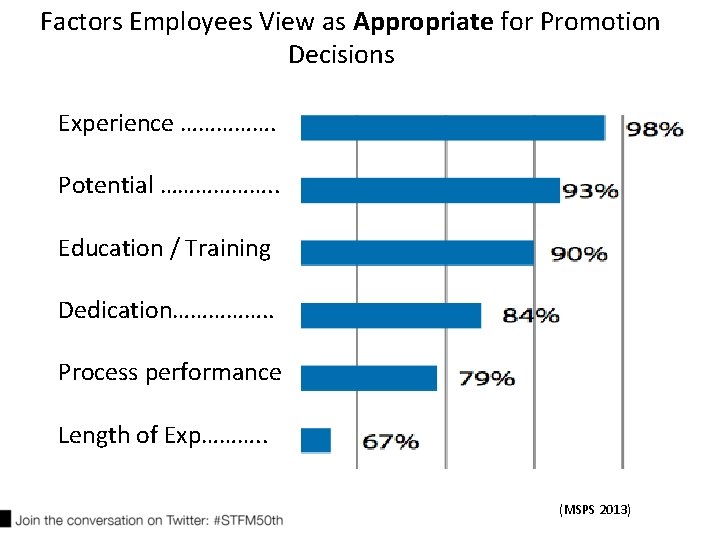
Factors Employees View as Appropriate for Promotion Decisions Experience ……………. Potential ………………. . Education / Training Dedication……………. . Process performance Length of Exp………. . (MSPS 2013)
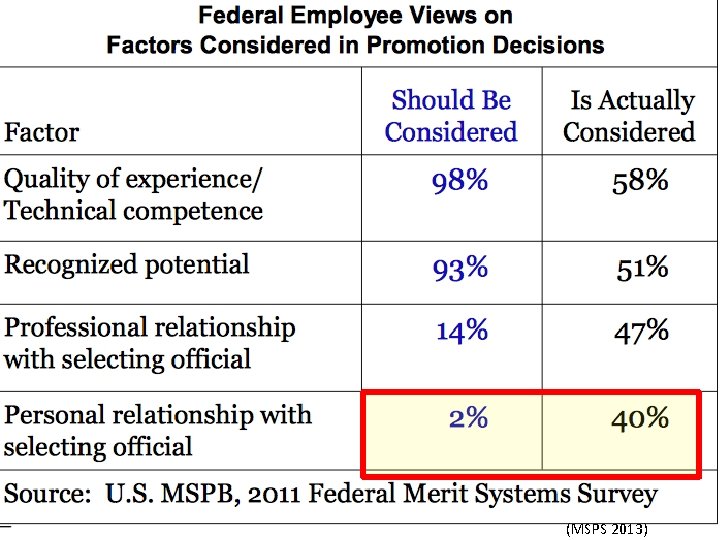
(MSPS 2013)
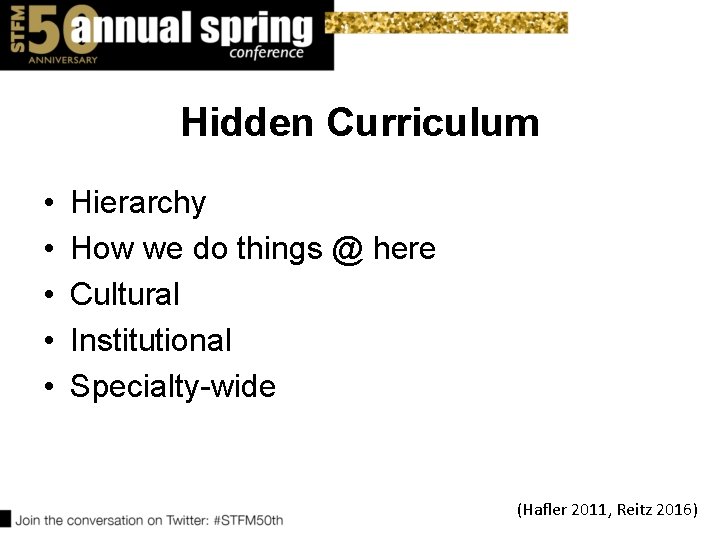
Hidden Curriculum • • • Hierarchy How we do things @ here Cultural Institutional Specialty-wide (Hafler 2011, Reitz 2016)
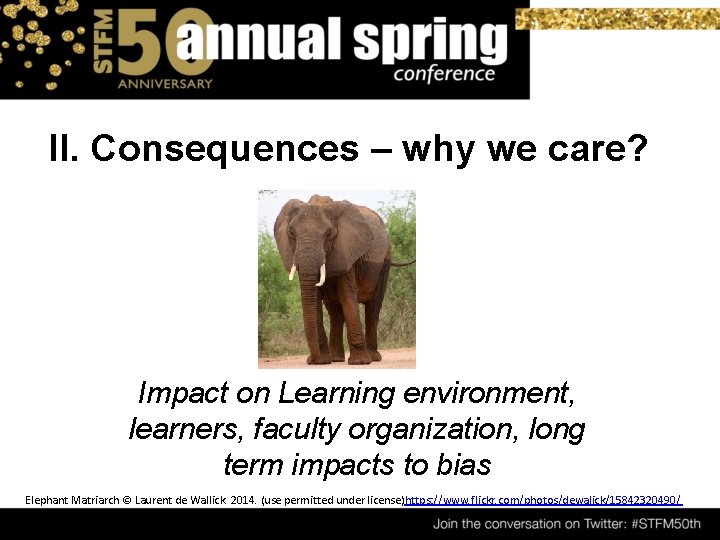
II. Consequences – why we care? Impact on Learning environment, learners, faculty organization, long term impacts to bias Elephant Matriarch © Laurent de Wallick. 2014. (use permitted under license)https: //www. flickr. com/photos/dewalick/15842320490/
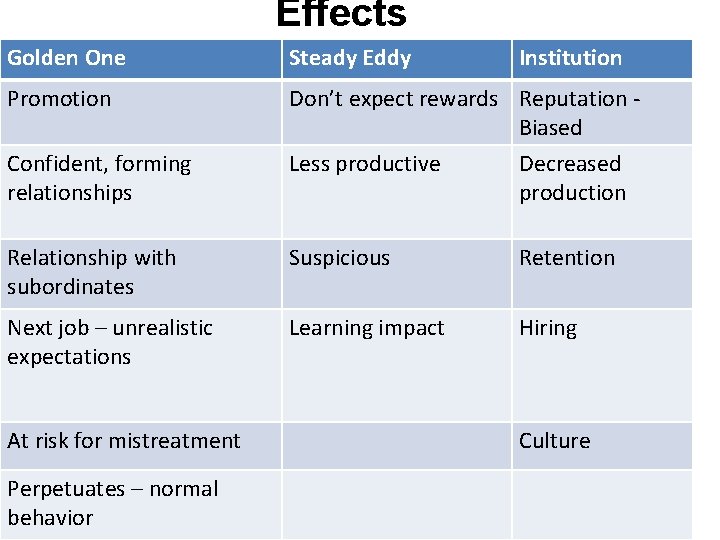
Effects Golden One Steady Eddy Promotion Don’t expect rewards Reputation Biased Less productive Decreased production Confident, forming relationships Institution Relationship with subordinates Suspicious Retention Next job – unrealistic expectations Learning impact Hiring At risk for mistreatment Perpetuates – normal behavior Culture
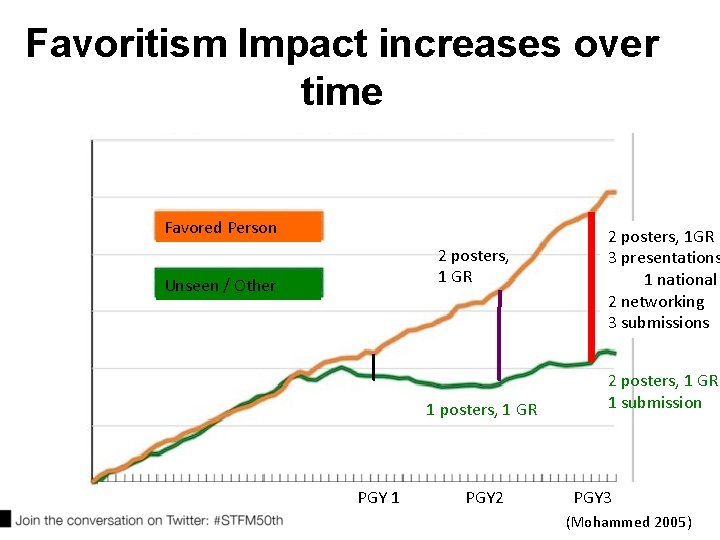
Favoritism Impact increases over time • Effect increases over time Favored Person 2 posters, 1 GR Unseen / Other 1 posters, 1 GR PGY 1 PGY 2 2 posters, 1 GR 3 presentations 1 national 2 networking 3 submissions 2 posters, 1 GR 1 submission PGY 3 (Mohammed 2005)
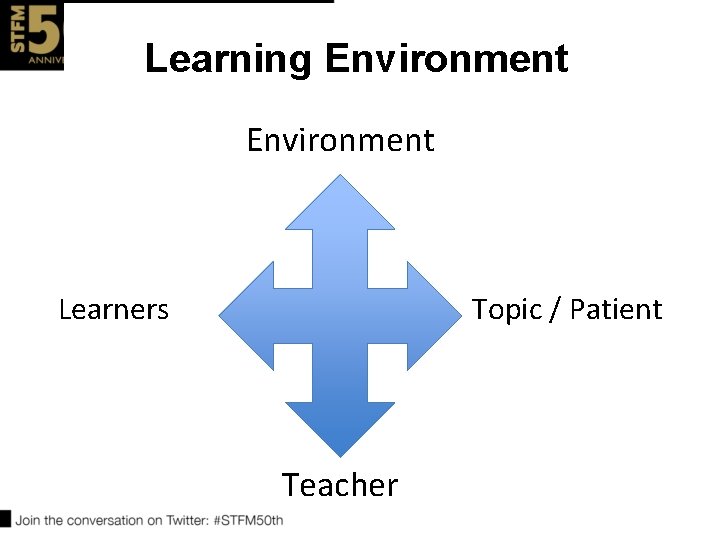
Learning Environment Learners Topic / Patient Teacher
Bias growth and Reputation • http: //www. yourhospitalnamehere. org/abo ut-us/leadership/ Look at the leadership make up – is it homogeneous? (Railey 2016)

IT’S ALL FINE UNTIL IT’S NOT FINE
III. What to do about it? Setting boundaries, self reflection, defining roles, discussing ambiguities and the hidden curriculum
STAND IN YOUR TRUTH
Stand in Your Truth • Normal to have attraction / not like • Implicit bias: Project Implicit – https: //implicit. harvard. edu/implicit/ – Program reputation • Recognize intent & complexities Habit we can improve (Carnes 2015)
Action Steps: You • Ask: Is this in the best interest of learner / lower rank – Who am I seeing, not seeing? • Change players: What if? • Is this a pattern? Track it (Plaut 2011, MSPS 2013)
Action Steps: You • • Get a 2 nd opinion Notice Risks Transparency and communication Teach the hidden curriculum – At your site, part of the country – At our specialty (Plaut 2011, Reitz, 2016, MSPB 2013)
Action Steps: The Other • Develop your skill set / Proactive • Keep record of your accomplishments – Start a CV draft at internship – med school • Learn the hidden curriculum • Use professional symbols / code • Challenge with humor (Pingleton 2016)
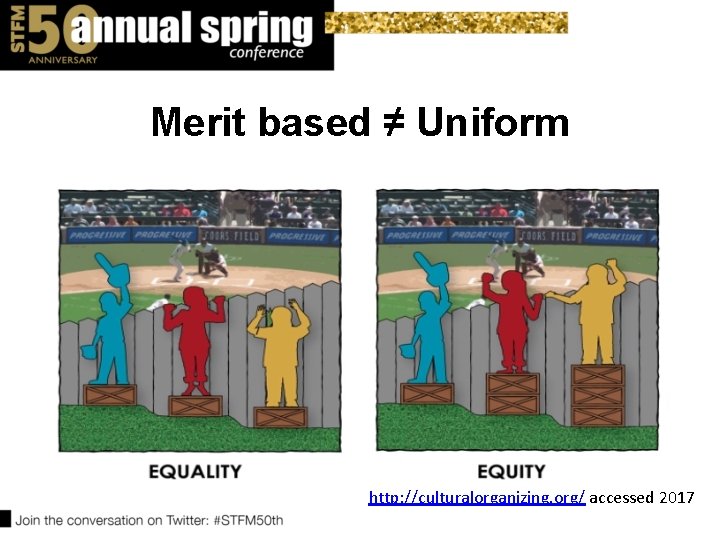
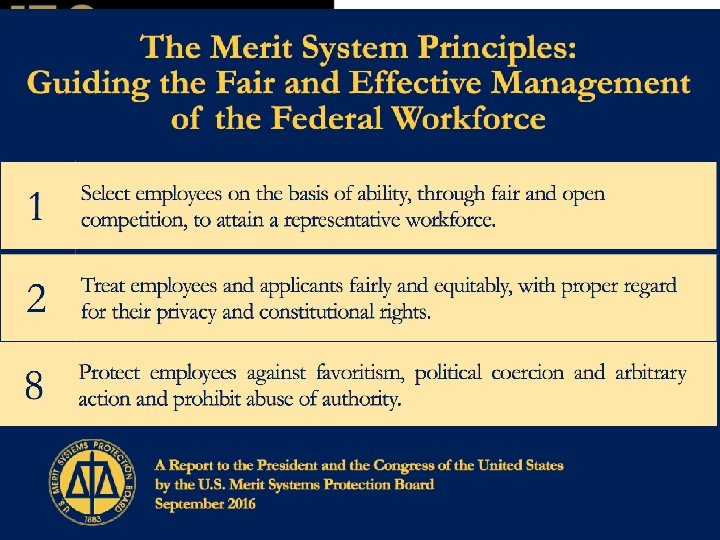
Merit based ≠ Uniform http: //culturalorganizing. org/ accessed 2017
Action Steps: Program • Merit based and Measurable systems – Train staff (all of them) • Develop training and discussion for new and experienced faculty / leaders • Encourage transparency • Encourage feedback dialogue (Plaut 2011, MSPS 2013, Railey 2016)
Action Steps: STFM and Family Medicine • Specialty-wide goals and ideals • Clarify and limit risky boundaries in profession – Partner with other specialties – Define primary and 2 ndary roles • Incorporate boundaries and training into wellness curriculum (Plaut 2011, Reitz 2016, MSPS 2013)
Learning Pearls • Favoritism is a result of blurring boundaries and inappropriate closeness and involved judgment based on personal preferences. • Impacts the person, the group, the institution and can have long lasting effects. • Stand in your truth – recognize our own tendencies, then assess and act. • Discuss and teach – invite the elephant into the room.
Welcome the Elephant in the Room You may be pleasantly surprised.
Contacts: (Please email if questions, interest in partnering for future presentations / research) Natascha Lautenschläger, MD, MSPH Assistant Program Director, Hendersonville Family Medicine Residency (MAHEC) Blue Ridge Health Center, Hendersonville, NC CMIO and Vice Chief of Staff, Pardee Hospital natascha. lautenschlaeger@unchealth. unc. edu Hayam Shaker, MD Faculty and Medical Student Director, Hendersonville Family Medicine Residency (MAHEC), Hendersonville, NC Associate Professor, UNC Chapel Hill School of Medicine hshaker@brchs. com Viviane Sachs, MD Faculty, Oklahoma University Family Medicine Residency (Tulsa) Assistant Professor, Department of Family and Community Medicine, OU School of Community Medicine Global Health Viviane-Sachs@ouhsc. edu
References Baird J, Bracken K, Grierson LEM. The relationship between perceived preceptor power use and student empowerment during clerkship rotations: a study of hidden curriculum Medical Education 2016; 50: 778– 785 Carnes m, et al. Why is John more likely to become department chair then Jennifer? Transactions of the American Clinical and Climatological Association. 2015; 126: 197 -208 Hafler JP, et al. Decoding the learning environment of medical education: A hidden curriculum perspective for faculty development. Acad Med. 2011; 86: 440 -444. Mohamed M, et al. Protecting the residency training environment: A residence perspective on the ethical boundaries in the faculty resident relationship. Academic Psychiatry 2005: 29(4): 368 -373 Pingleton SK, et al. Silent bias: challenges, obstacles, and strategies for leadership development and academic medicine– Lessons from oral histories of women professors at the University of Kansas. Academic Medicine 2016; 91(8): 1151 -1157 Plaut SM Baker D. Teacher–student relationships in medical education: Boundary considerations. Medical Teacher 2011; 33: 828 -833 Railey MT, Railey KM, Hauptman PJ. Reducing Bias in Academic Search Committees. JAMA 2016; 2595 -2596. Reitz R. balancing the rolls of family medicine residency faculty: A grounded theory study. Family medicine 2016; 48(5): 359 -365
Recupero R et al. Supervisor-trainee relationship boundaries in medical education. Med Teach 2005; 27(6): 484 -488 Rodriguez J, et al. Addressing disparities in academic medicine: what of the minority tax? BMC Medical Education 2015: 6 Schneider EF, et al. Faculty Perceptions of Appropriate Faculty Behaviors in Social Interactions with Student Pharmacists. A J Pharm Ed. 2011; 75(4) PAGES. US Merit Systems Protection Board. Preserving the Integrity of the Federal Merit Systems: Understanding and Addressing Perceptions of Favoritism. A Report to the President and the Congress of the United States by the U. S. Merit Systems Protection Board. December 2013. Rodriguez J, et al. Addressing disparities in academic medicine: what of the minority tax? BMC Medical Education 2015: 6 Uniform Code of Military Justice (UCMJ). Accessed April 2017 Article 134 Waal, Frans De. TED Talk Two Monkeys Were Paid Unequally: Excerpt from Frans de Waal's TED Talk https: //www. youtube. com/watch? v=Gc. Jx. Rq. Ts 5 nk
Photo and Image Credits #7 Nepotism. © www. despair. com (used with permission from company May 2017) #16 Elephant Matriarch © Laurent de Wallick. 2014. (use permitted under license)https: //www. flickr. com/photos/dewalick/ 15842320490/ #28: © Cultural Organizing. (use permitted under license) http: //culturalorganizing. org/ accessed 2017
Please evaluate this presentation using the conference mobile app! Simply click on the "clipboard" icon on the presentation page.
Fiduciary Relationships Duty of care, loyalty, good faith, confidentiality, prudence, disclosure / complete candor Power and obligation to act for another which requires total trust, good faith, honesty. (Mohammed 2005, law. cornell. edu)
Variations 1. Intentional Favoritism 1. Unintentional Favoritism 2. Misperceived favoritism – by whom? (MSPS 2013)
- Slides: 38