
Friday 412 Jamie Lee on the CM process



- Slides: 61
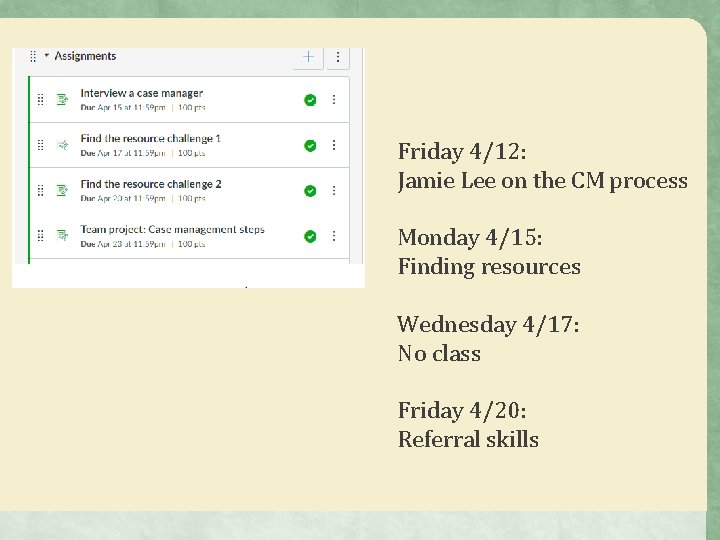
Friday 4/12: Jamie Lee on the CM process Monday 4/15: Finding resources Wednesday 4/17: No class Friday 4/20: Referral skills
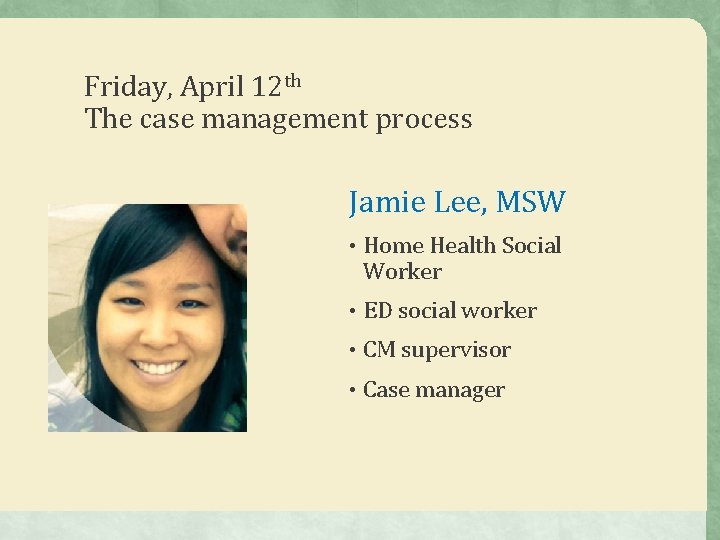
Friday, April 12 th The case management process Jamie Lee, MSW • Home Health Social Worker • ED social worker • CM supervisor • Case manager
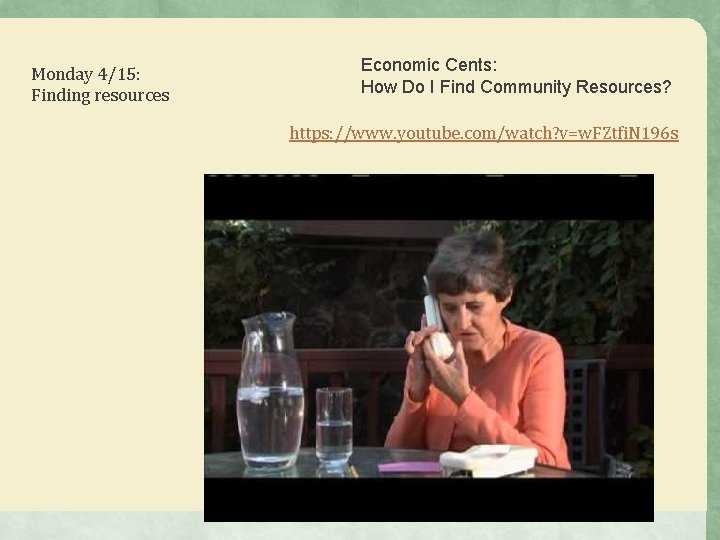
Monday 4/15: Finding resources Economic Cents: How Do I Find Community Resources? https: //www. youtube. com/watch? v=w. FZtfi. N 196 s
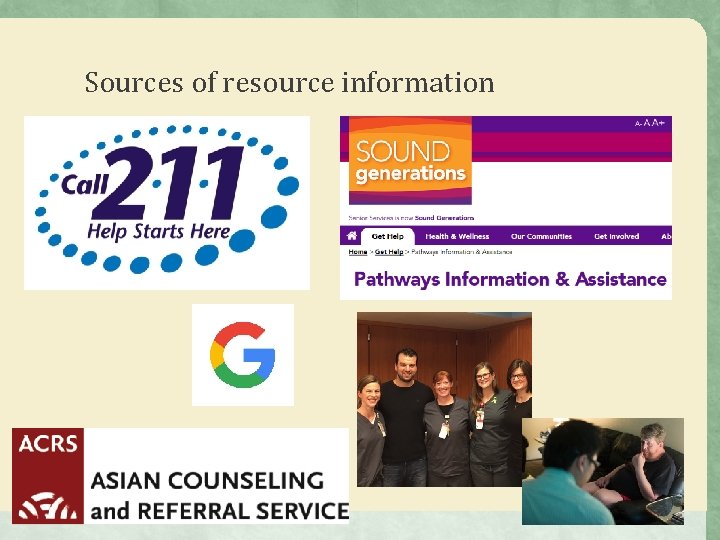
Sources of resource information
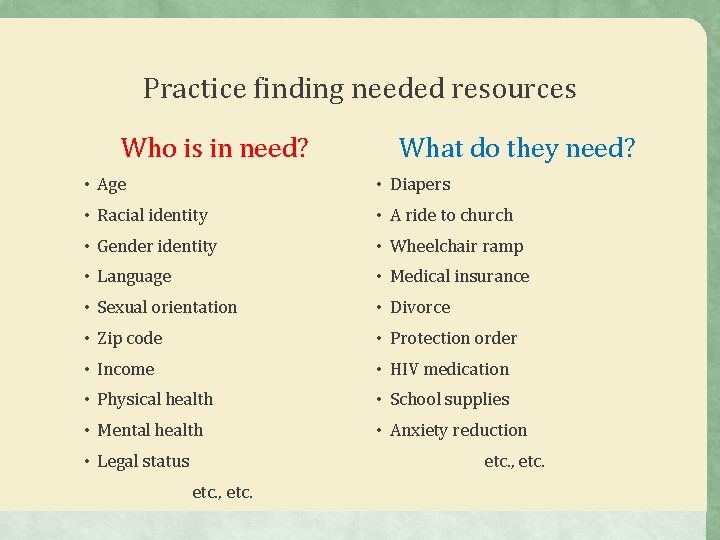
Practice finding needed resources Who is in need? What do they need? • Age • Diapers • Racial identity • A ride to church • Gender identity • Wheelchair ramp • Language • Medical insurance • Sexual orientation • Divorce • Zip code • Protection order • Income • HIV medication • Physical health • School supplies • Mental health • Anxiety reduction • Legal status etc. , etc.
Eligibility for services Wednesday 4/17
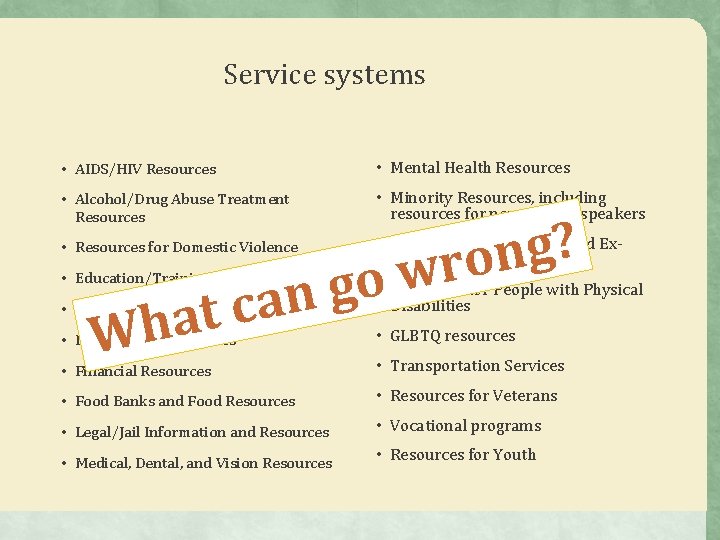
Service systems • AIDS/HIV Resources • Mental Health Resources • Alcohol/Drug Abuse Treatment • Minority Resources, including • Resources for Domestic Violence • Resources for Offenders and Ex- resources for non-English speakers Resources o g n a c t • Education/Training a h W • Resources for the Elderly ? g n wro Offenders • Resources for People with Physical Disabilities • Employment Resources • GLBTQ resources • Financial Resources • Transportation Services • Food Banks and Food Resources • Resources for Veterans • Legal/Jail Information and Resources • Vocational programs • Medical, Dental, and Vision Resources • Resources for Youth
Friday 4/20 Referral skills
Service systems • AIDS/HIV Resources • Mental Health Resources • Alcohol/Drug Abuse Treatment • Minority Resources, including • Resources for Domestic Violence • Resources for Offenders and Ex- resources for non-English speakers Resources o g n a c t • Education/Training a h W • Resources for the Elderly ? g n wro Offenders • Resources for People with Physical Disabilities • Employment Resources • GLBTQ resources • Financial Resources • Transportation Services • Food Banks and Food Resources • Resources for Veterans • Legal/Jail Information and Resources • Vocational programs • Medical, Dental, and Vision Resources • Resources for Youth
“Help” that didn’t work? • Staff who didn’t know what they were talking about • You weren’t eligible • They didn’t tell you what you’d need • Turns out you’d have to pay (a lot) • Wrong day, wrong time, wrong location • They don’t provide that service • They weren’t expecting you • They needed paperwork/information that you didn’t have • Couldn’t find the place
Things to consider about resources • Outdated information • Eligibility criteria • Limits on resources • Costs • Insurance requirements • Location • Client ability to understand & use the resource
Practice finding needed resources : 2 e g n e l l a h c s e e t c a r u m o s m e a r e t r r o u F o y e us
CM principles (SAMHSA TIP 27, ch. 2) 1. Case management offers the client a single point of contact with the health and social services systems. 2. Case management is client-driven and driven by client need. 3. Case management involves advocacy. 4. Case management is community-based. 5. Case management is pragmatic. 6. Case management is both anticipatory and reactive. 7. Case management must be flexible. 8. Case management is culturally sensitive.
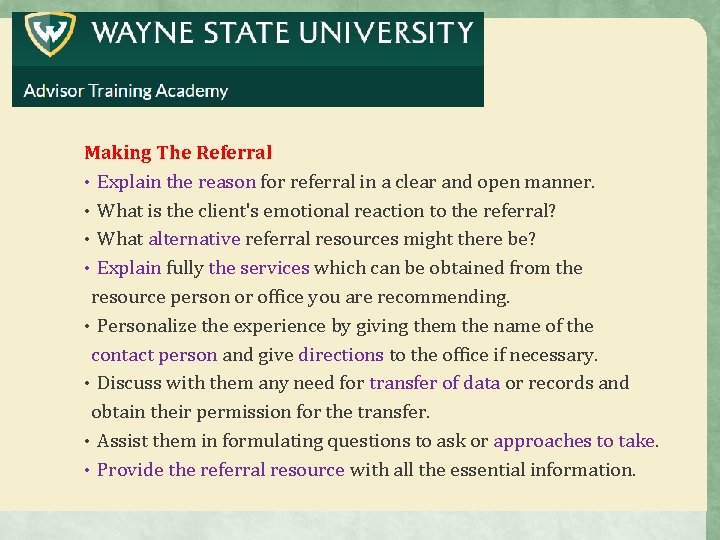
Making The Referral • Explain the reason for referral in a clear and open manner. • What is the client's emotional reaction to the referral? • What alternative referral resources might there be? • Explain fully the services which can be obtained from the resource person or office you are recommending. • Personalize the experience by giving them the name of the contact person and give directions to the office if necessary. • Discuss with them any need for transfer of data or records and obtain their permission for the transfer. • Assist them in formulating questions to ask or approaches to take. • Provide the referral resource with all the essential information.
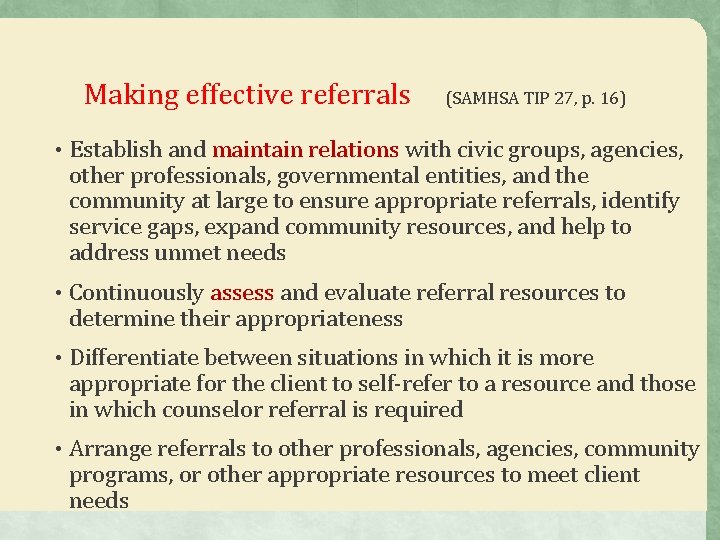
Making effective referrals (SAMHSA TIP 27, p. 16) • Establish and maintain relations with civic groups, agencies, other professionals, governmental entities, and the community at large to ensure appropriate referrals, identify service gaps, expand community resources, and help to address unmet needs • Continuously assess and evaluate referral resources to determine their appropriateness • Differentiate between situations in which it is more appropriate for the client to self-refer to a resource and those in which counselor referral is required • Arrange referrals to other professionals, agencies, community programs, or other appropriate resources to meet client needs
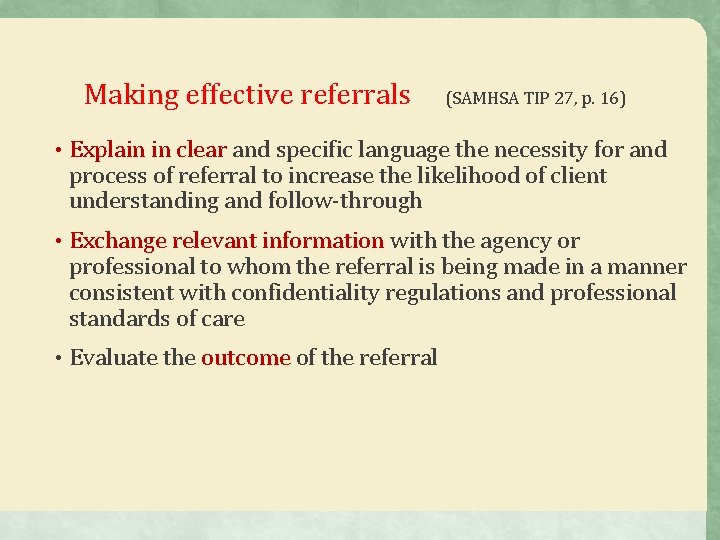
Making effective referrals (SAMHSA TIP 27, p. 16) • Explain in clear and specific language the necessity for and process of referral to increase the likelihood of client understanding and follow-through • Exchange relevant information with the agency or professional to whom the referral is being made in a manner consistent with confidentiality regulations and professional standards of care • Evaluate the outcome of the referral
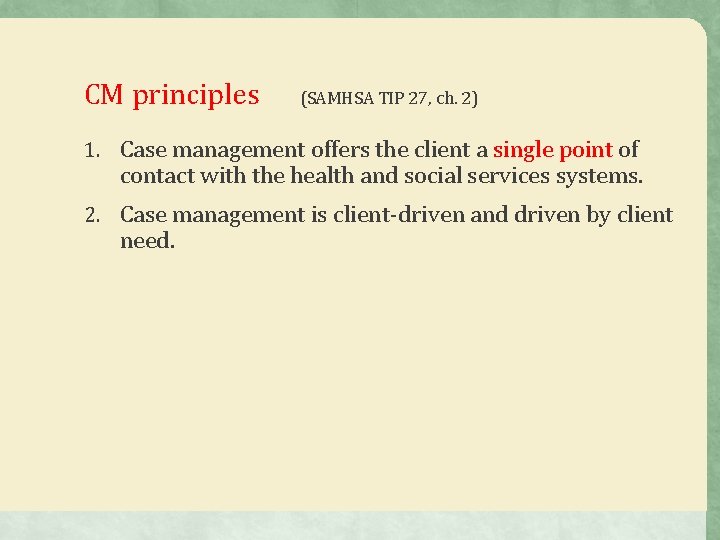
CM principles (SAMHSA TIP 27, ch. 2) 1. Case management offers the client a single point of contact with the health and social services systems. 2. Case management is client-driven and driven by client need.
Deciding Whether To Refer • What is the problem? • Am I qualified to offer the needed assistance? • What office or person may be able to offer the needed assistance?
CM principles (SAMHSA TIP 27, ch. 2) 4. Case management is community-based. 5. Case management is pragmatic. 6. Case management is both anticipatory and reactive.
Making The Referral • Explain the reason for referral in a clear and open manner. • What is the client's emotional reaction to the referral? Making effective referrals (SAMHSA TIP 27, p. 16) • Explain in clear and specific language the necessity for and process of referral to increase the likelihood of client understanding and follow-through
Making The Referral • Explain fully the services which can be obtained from the resource person or office you are recommending. • Personalize the experience by giving them the name of the contact person and give directions to the office if necessary. • Discuss with them any need for transfer of data or records and obtain their permission for the transfer. Making effective referrals (SAMHSA TIP 27, p. 16) • Exchange relevant information with the agency or professional to whom the referral is being made in a manner consistent with confidentiality regulations and professional standards of care
Making effective referrals • Evaluate the outcome of the referral (SAMHSA TIP 27, p. 16)
Follow up • Did the client request assistance of resource? (Did they go? ) • What is the client’s evaluation of the help received from the referral resource? • Was the resource selected the appropriate one for them? (Did it work? )
Follow up • Did the client request assistance of resource? (Did they go? ) • What is the client’s evaluation of the help received from the referral resource? • Was the resource selected the appropriate one for them? (Did it work? )
Making The Referral • Explain the reason for referral in a clear and open manner. • What is the client's emotional reaction to the referral? • What alternative referral resources might there be? • Explain fully the services which can be obtained from the resource person or office you are recommending. • Personalize the experience by giving them the name of the contact person and give directions to the office if necessary. • Discuss with them any need for transfer of data or records and obtain their permission for the transfer. • Assist them in formulating questions to ask or approaches to take. • Provide the referral resource with all the essential information.
Goal 3: articulate the steps in the case management process
Purpose/ goals of case management
The role of the CM? Goals? Focus? Summers ch. 2 Jamie Lee, MSW
Case management is a structured, planned process of care coordination and resource acquisition within a therapeutic relationship to make tangible changes which help individuals meet their goals & improve their quality of life
The role of the CM Advocacy Client education Coordination of care Problem-solving Motivation
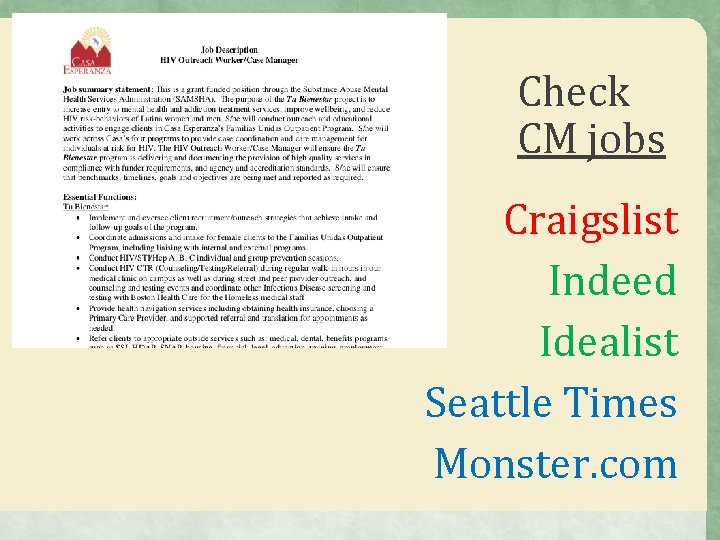
Check CM jobs Craigslist Indeed Idealist Seattle Times Monster. com
CM jobs Duties Clients Education requirements Pleasant aspects of the job Unpleasant aspects
CM jobs Teamwork Competencies Similarities Differences
What CM jobs did you find? What do they do? • How is it different from other jobs? • Does it sound like what we studied? • What confusing terms did they use? • What skills would you need? • Does it sound fun? Stressful? • What kind of documentation would it require? • What cross-cultural issues might come up? • Could you do it? • Pay? • Benefits? • Hours? • Part of a team? • What sort of attitude do they want? • In office / out? • Good job?
The CM process
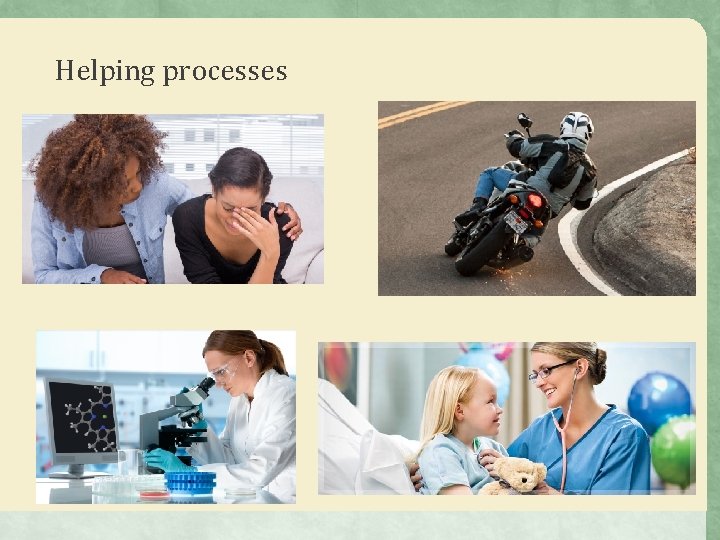
Helping processes
What are the steps in the helping process?
What are the steps in the CM process?
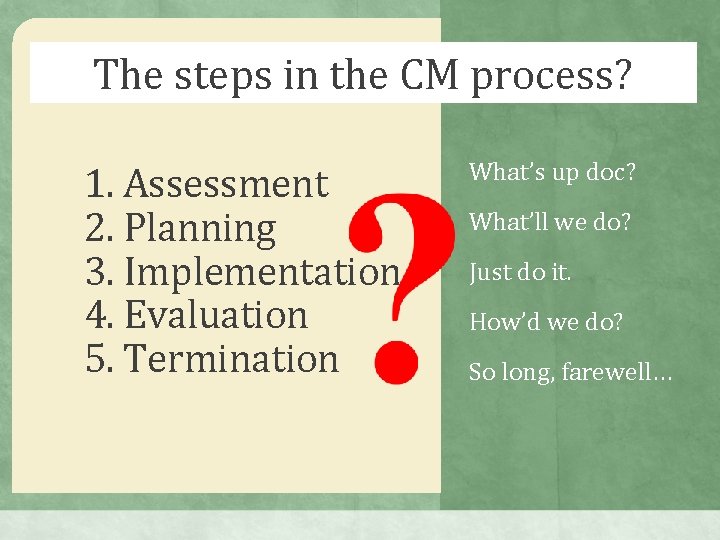
The steps in the CM process? 1. Assessment 2. Planning 3. Implementation 4. Evaluation 5. Termination What’s up doc? What’ll we do? Just do it. How’d we do? So long, farewell…
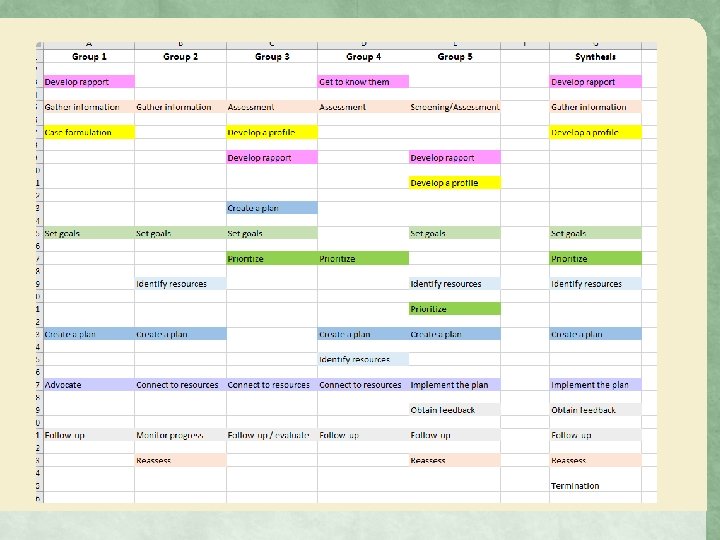
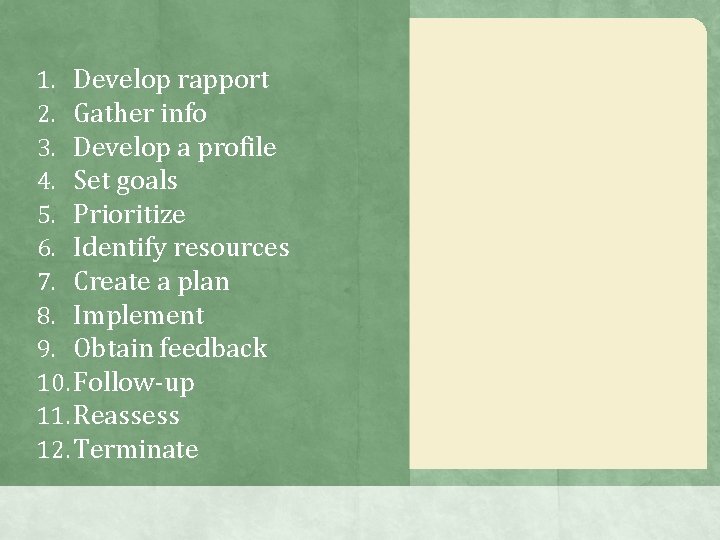
1. Develop rapport 2. Gather info 3. Develop a profile 4. Set goals 5. Prioritize 6. Identify resources 7. Create a plan 8. Implement 9. Obtain feedback 10. Follow-up 11. Reassess 12. Terminate
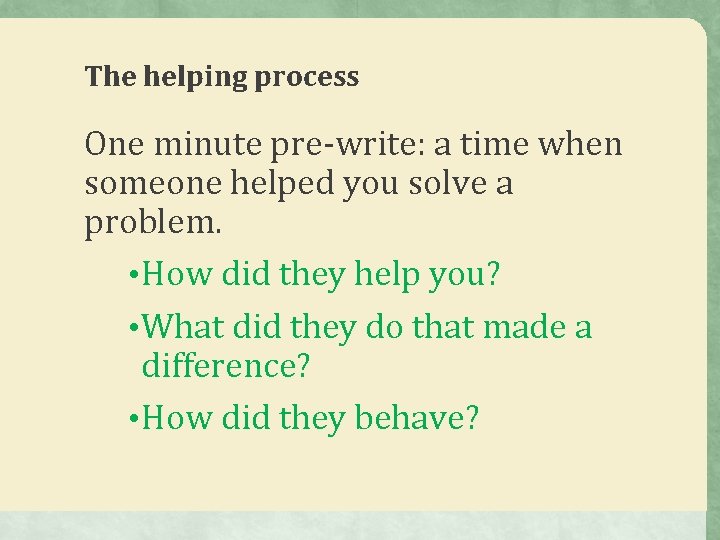
The helping process One minute pre-write: a time when someone helped you solve a problem. • How did they help you? • What did they do that made a difference? • How did they behave?
The helping process One minute pre-write: a time when someone tried to help or fix a problem for you , but didn’t. • What did they do? • Why did their behavior not help? • How did they behave?
The helping process • How did you make sure your child/sibling/parent got their needs met? • List together: skills, timing issues, type of relationship, type of help, advice giving, doing it for you…
Goal 4: learn to collaborate with professionals from other disciplines as part of interdisciplinary teams
IPC teammates in social services & bx healthcare
Chapter 3
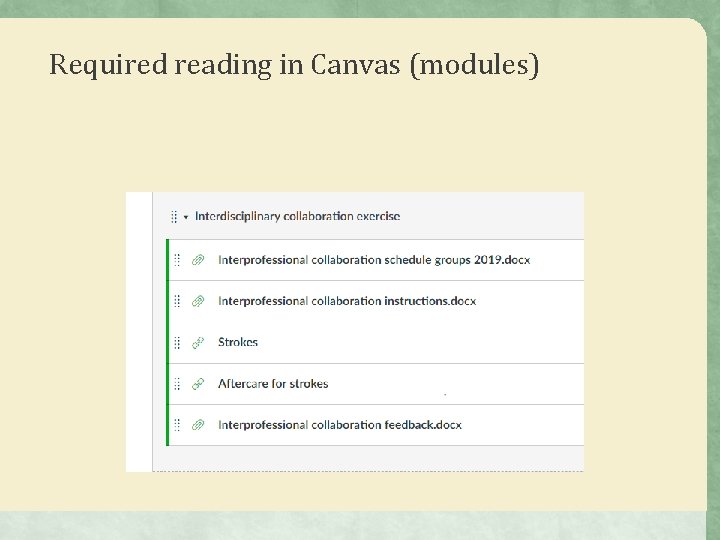
Required reading in Canvas (modules)
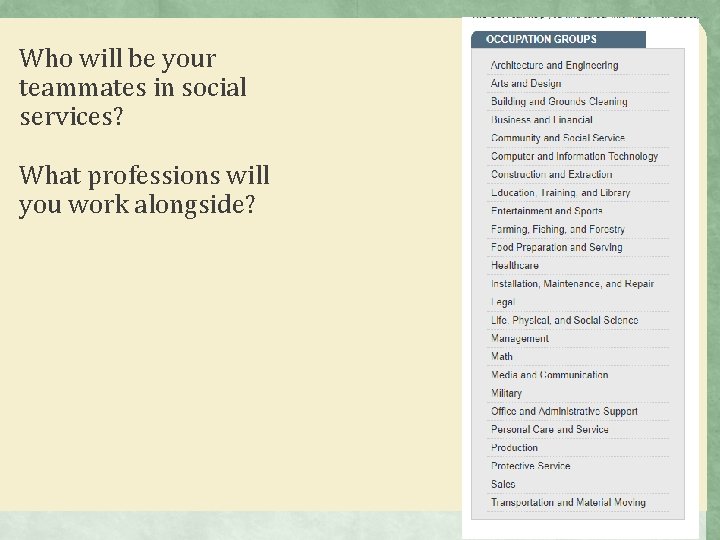
Who will be your teammates in social services? What professions will you work alongside?
Who will be your teammates in social services? What professions will you work alongside?
Workplace problems • Duplication of work • Poor disease management • Disagreements about treatment • Competing priorities • Frustration • Failure to communicate at transitions • Treatment errors • Staff turnover • Limited MD time • Expensive urgent care • Powerful people not understanding the client’s situation
Interprofessional teamwork requires • Clear goals • Differentiated roles • Knowing one another’s roles • Shared identity and values • Interdependence & trust • Shared responsibility
What gets in the way of teamwork? • Power struggles • Failure to teach the skills • Shortage of some providers • Rushing • Distance • Poor communication skills • Lack of relationship between providers • Poor understanding of roles
Case study: Mrs. Ramos
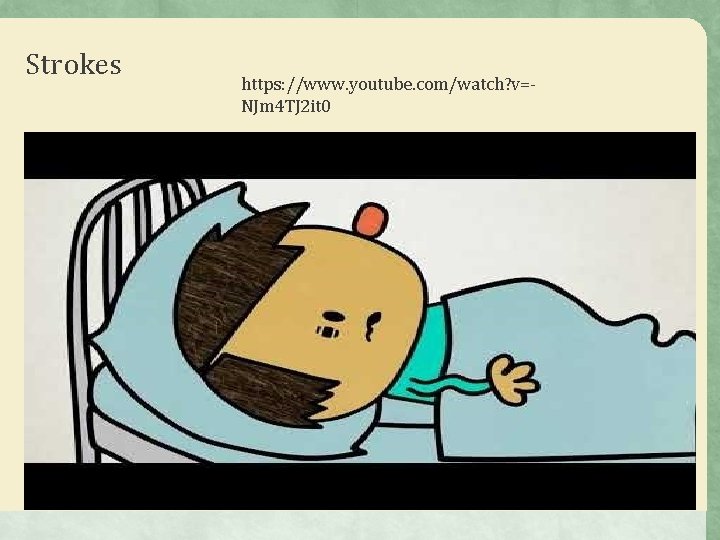
Strokes https: //www. youtube. com/watch? v=NJm 4 TJ 2 it 0
Aftercare for strokes https: //www. youtube. com/watc h? v=GHJL 42 x. Fuz 8
Finding needed resources How can you find good help for your client? Where can you get the information you need? 4 ideas from each group
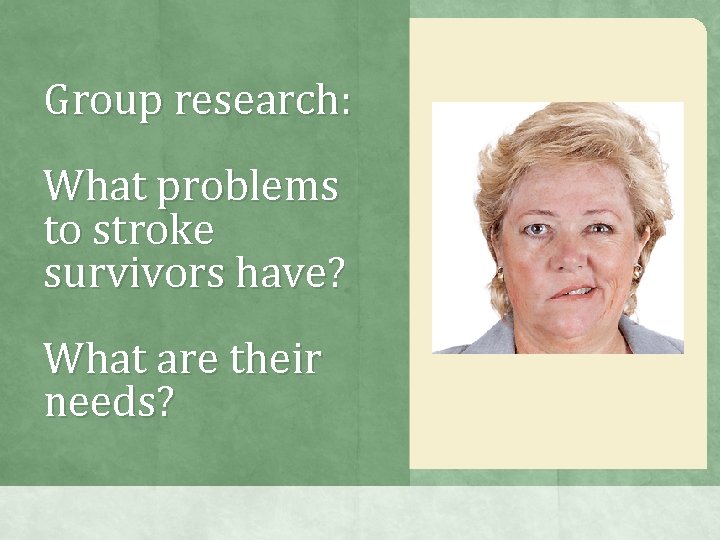
Group research: What problems to stroke survivors have? What are their needs?
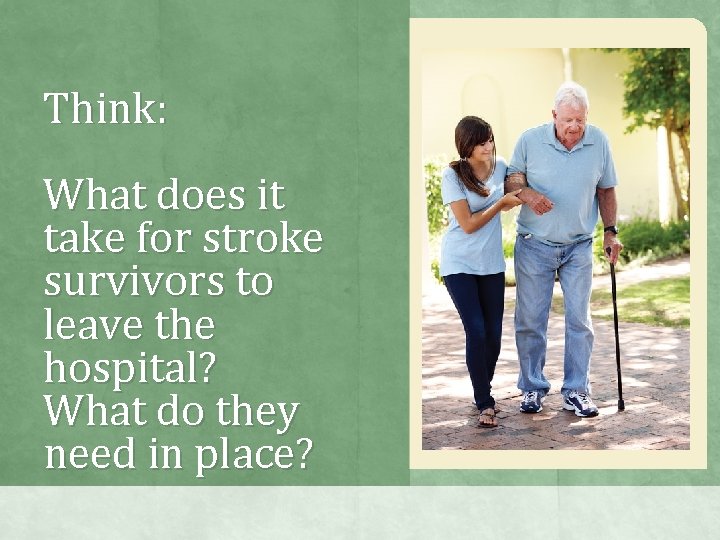
Think: What does it take for stroke survivors to leave the hospital? What do they need in place?
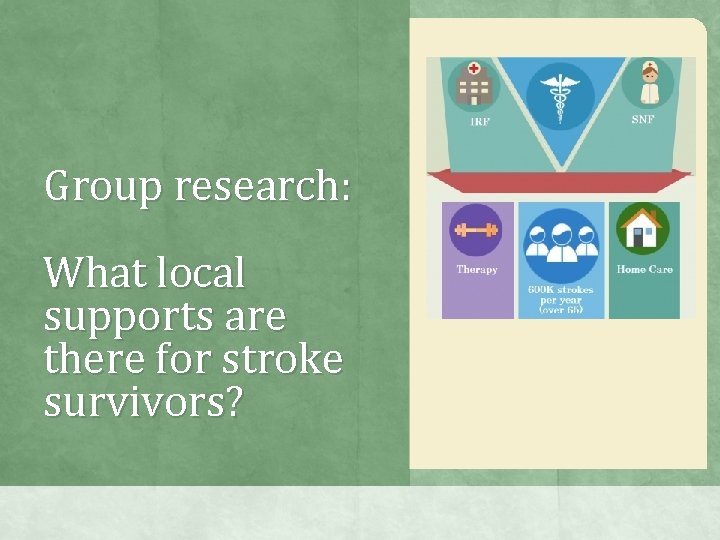
Group research: What local supports are there for stroke survivors?