
Friction Behavior of DLC film with Environmental Changes
Friction Behavior of DLC film with Environmental Changes S. J. Park*, K. -R. Lee*, D. -H. Ko+, K. Y. Eun* * Korea Institute of Science & Tech. Future Technol. Research Division + Yonsei University Dept. of Ceramic Eng. Copyright, 1997 © Dale Carnegie & Associates, Inc.
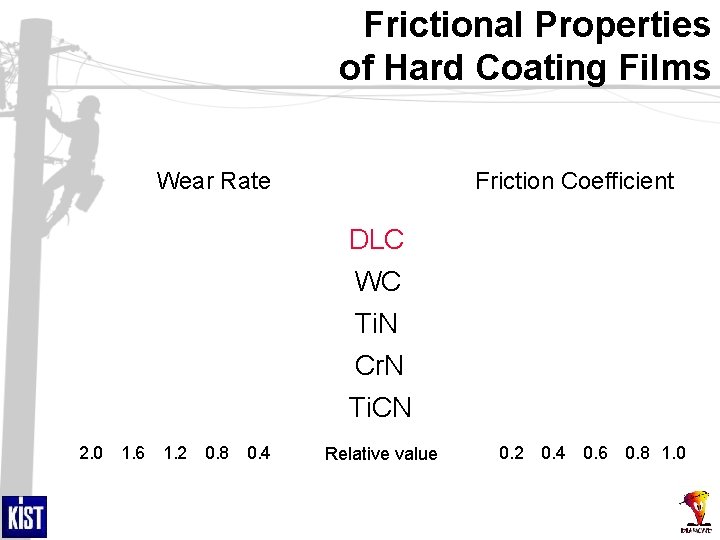
Frictional Properties of Hard Coating Films Wear Rate Friction Coefficient DLC WC Ti. N Cr. N Ti. CN 2. 0 1. 6 1. 2 0. 8 0. 4 Relative value 0. 2 0. 4 0. 6 0. 8 1. 0
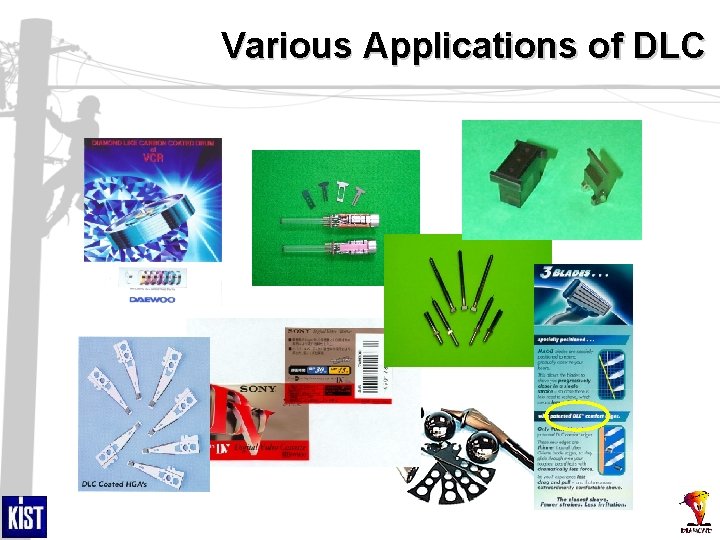
Various Applications of DLC
Disadvantages of Pure DLC Film • High internal compressive stresses(~ 9 GPa) result in poor adhesion. • The friction behavior depends on environment (especially dependent on humidity)
Previous Works • K. Y. Eun et al, Surf. Coat. Technol. 86 -87 (1996) 569 – High and unstable friction coefficient of DLC films in vacuum – Formation of roll-shaped polymeric debris in vacuum • S. H. Yang et al, Wear 252 (2001) 70 – Increase of friction coefficient with the increase of humidity – Agglomeration of small debris
Purposes of This Work • To test the friction behavior of DLC film in various environment, especially such as humidity • To find the reason of dependence of humidity in DLC films in the point of tribochemical reaction
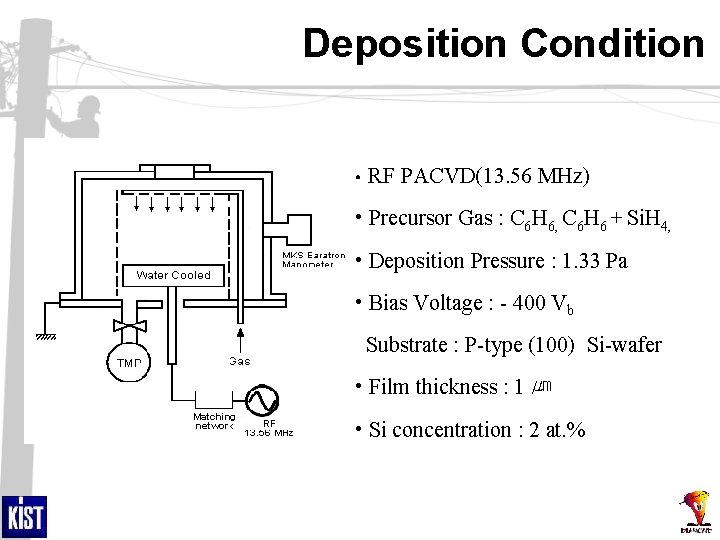
Deposition Condition • RF PACVD(13. 56 MHz) • Precursor Gas : C 6 H 6, C 6 H 6 + Si. H 4, • Deposition Pressure : 1. 33 Pa • Bias Voltage : - 400 Vb Substrate : P-type (100) Si-wafer • Film thickness : 1 ㎛ • Si concentration : 2 at. %
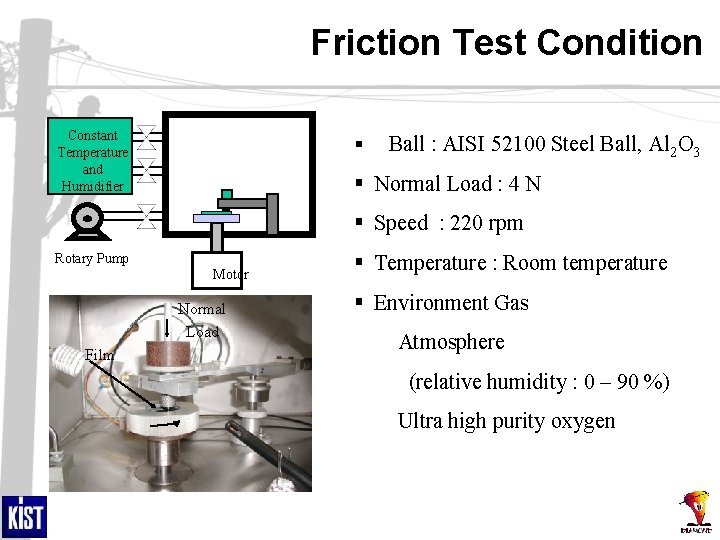
Friction Test Condition Constant Temperature and Humidifier § Ball : AISI 52100 Steel Ball, Al 2 O 3 § Normal Load : 4 N § Speed : 220 rpm Rotary Pump Motor Normal Load Film § Temperature : Room temperature § Environment Gas Atmosphere (relative humidity : 0 – 90 %) Ultra high purity oxygen
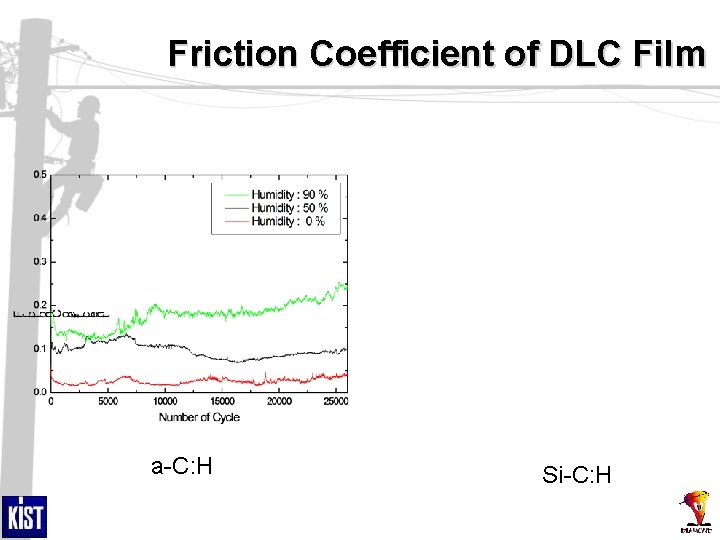
Friction Coefficient of DLC Film a-C: H Si-C: H
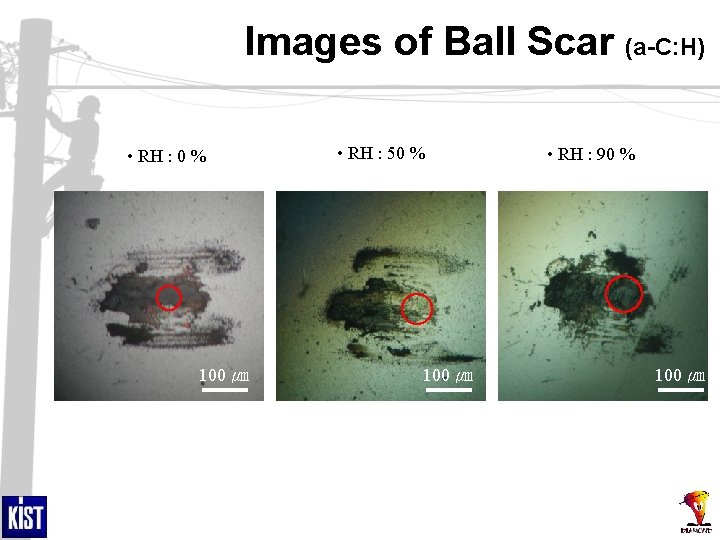
Images of Ball Scar (a-C: H) • RH : 0 % 100 ㎛ • RH : 50 % 100 ㎛ • RH : 90 % 100 ㎛
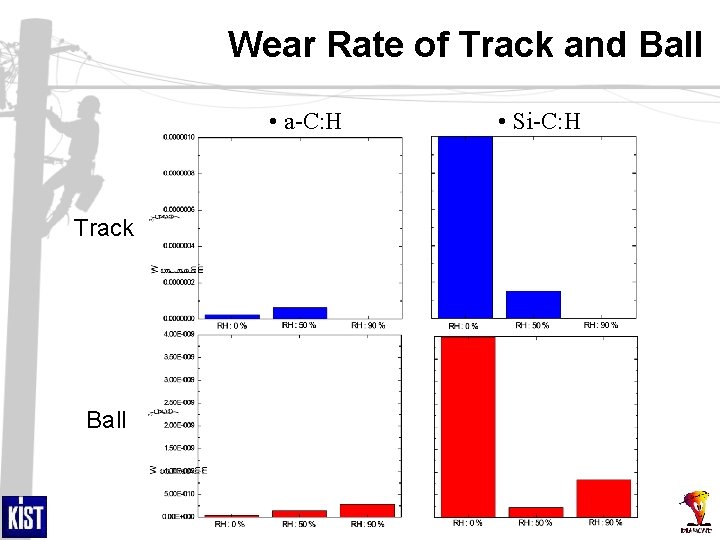
Wear Rate of Track and Ball • a-C: H Track Ball • Si-C: H
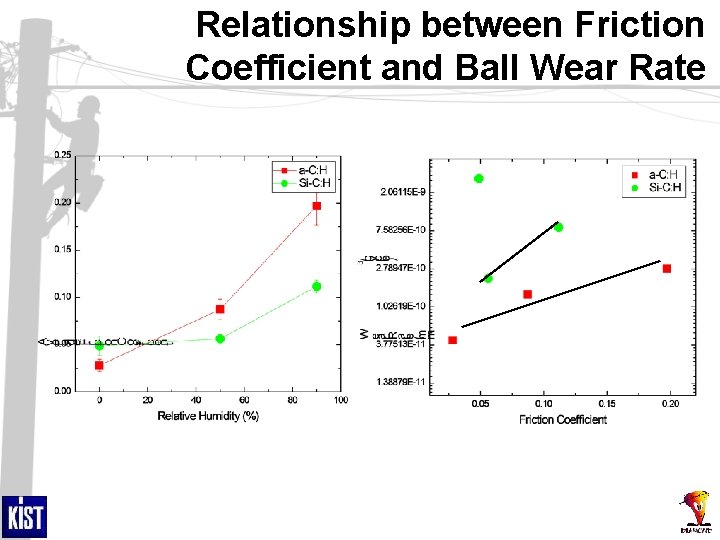
Relationship between Friction Coefficient and Ball Wear Rate
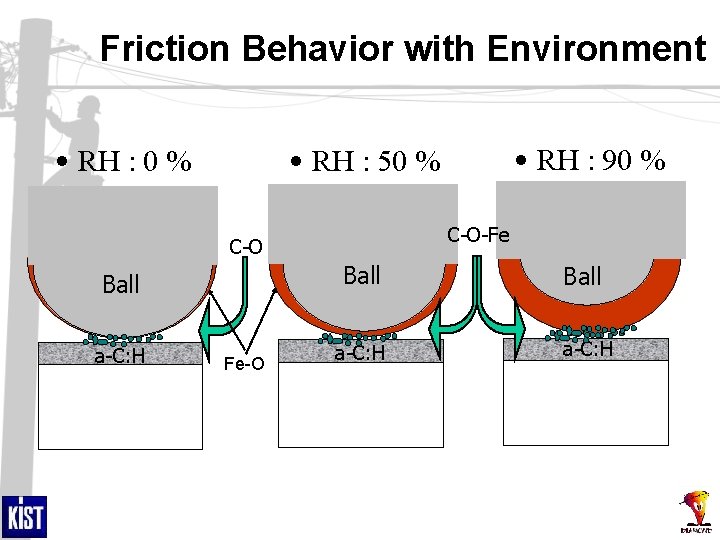
Friction Behavior with Environment • RH : 0 % • RH : 90 % • RH : 50 % C-O-Fe C-O Ball a-C: H Fe-O Ball a-C: H
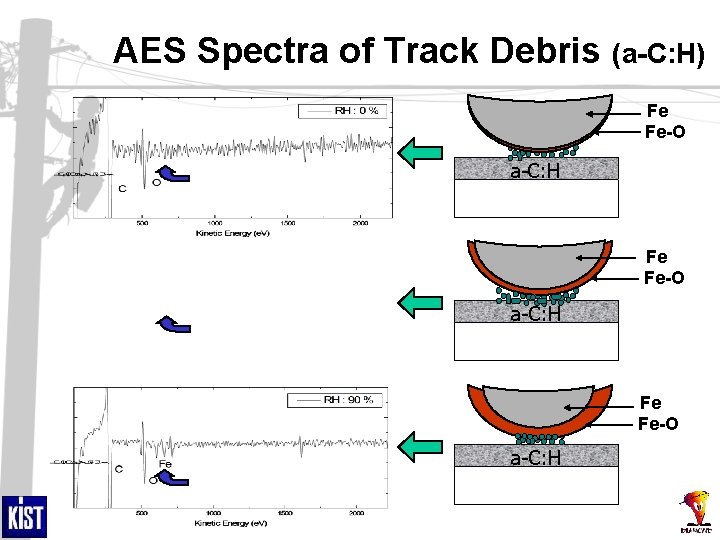
AES Spectra of Track Debris (a-C: H) Fe Fe-O a-C: H
Friction Coefficient in Oxygen Environment
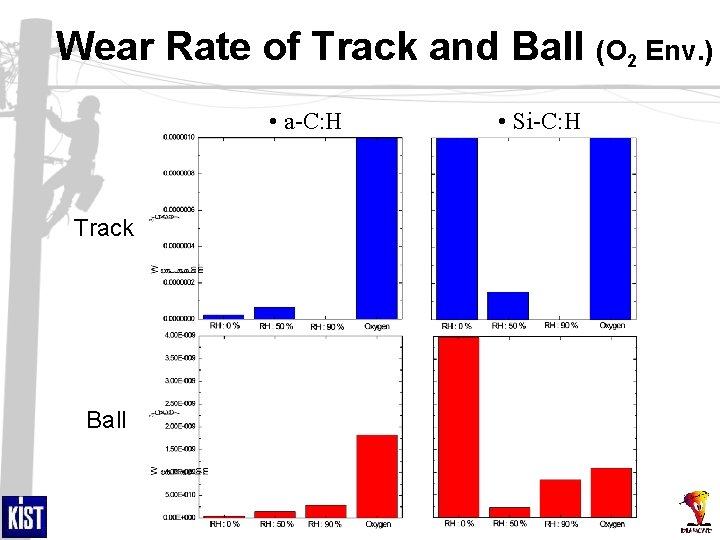
Wear Rate of Track and Ball (O 2 Env. ) • a-C: H Track Ball • Si-C: H
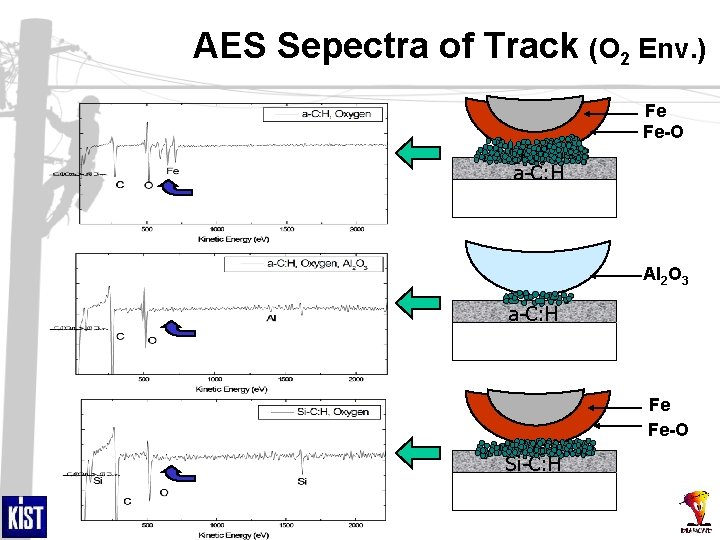
AES Sepectra of Track (O 2 Env. ) a-C: H Fe Fe-O Al 2 O 3 a-C: H Fe Fe-O Si-C: H
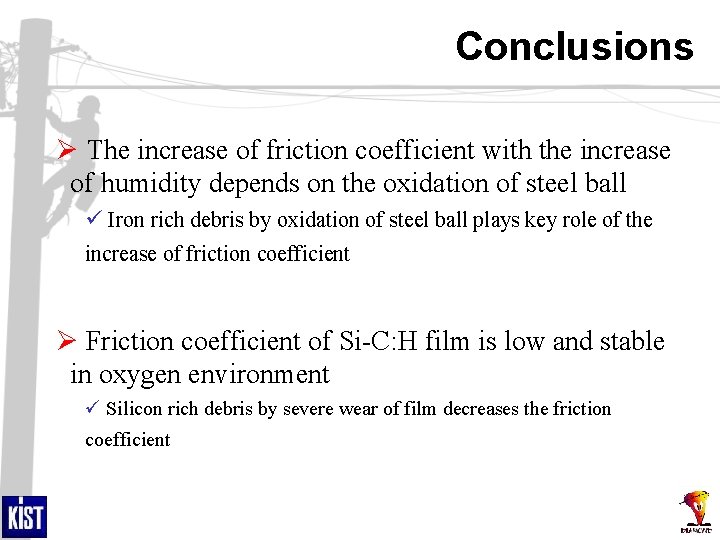
Conclusions Ø The increase of friction coefficient with the increase of humidity depends on the oxidation of steel ball ü Iron rich debris by oxidation of steel ball plays key role of the increase of friction coefficient Ø Friction coefficient of Si-C: H film is low and stable in oxygen environment ü Silicon rich debris by severe wear of film decreases the friction coefficient
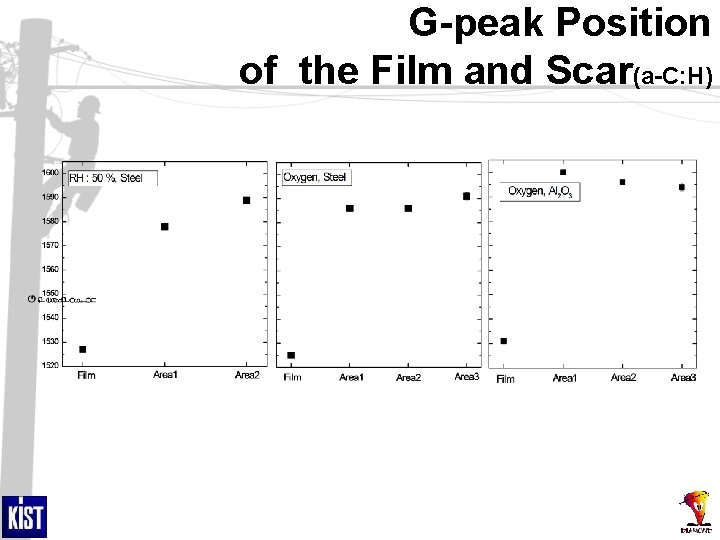
G-peak Position of the Film and Scar(a-C: H)
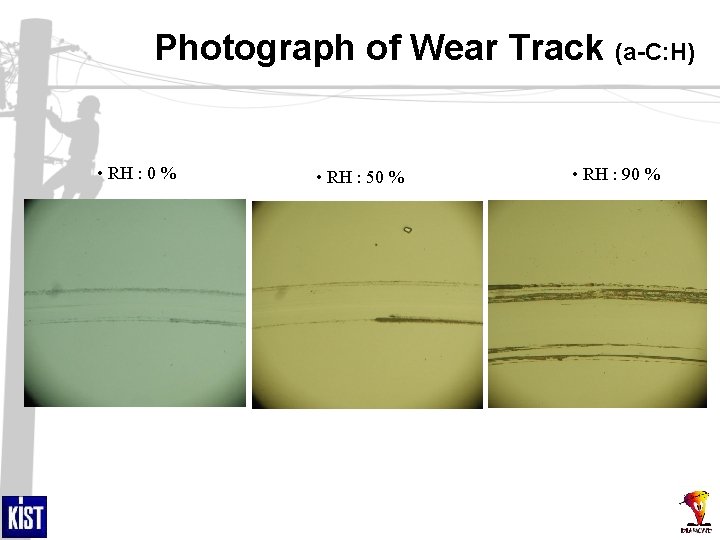
Photograph of Wear Track • RH : 0 % • RH : 50 % (a-C: H) • RH : 90 %
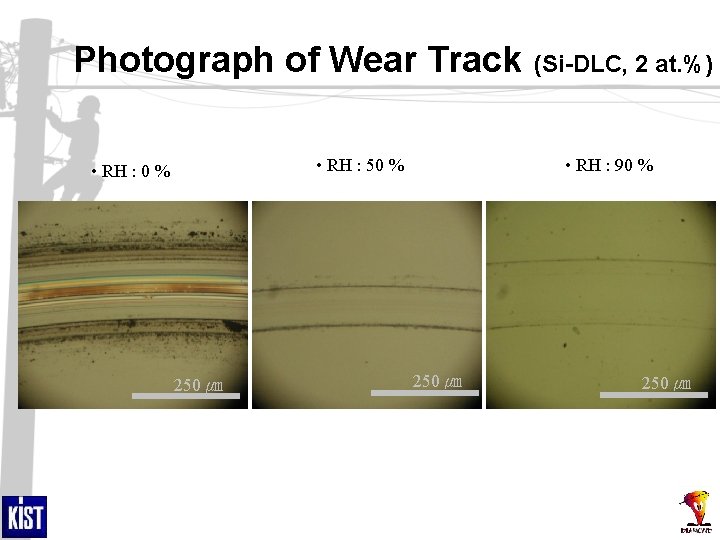
Photograph of Wear Track • RH : 50 % • RH : 0 % 250 ㎛ (Si-DLC, 2 at. %) • RH : 90 % 250 ㎛
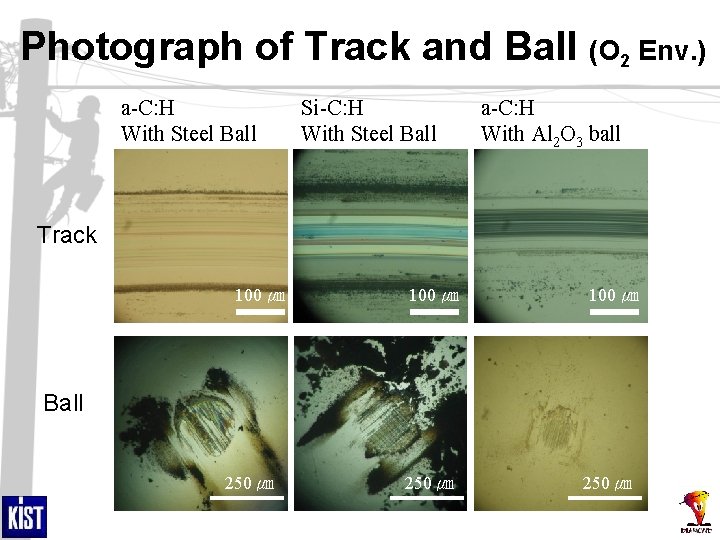
Photograph of Track and Ball (O 2 Env. ) a-C: H With Steel Ball Si-C: H With Steel Ball a-C: H With Al 2 O 3 ball Track 100 ㎛ Ball 250 ㎛
- Slides: 22