
Friction ACTIVITY Types of Fingerprints Arches Loops Whorls
- Slides: 32
Friction
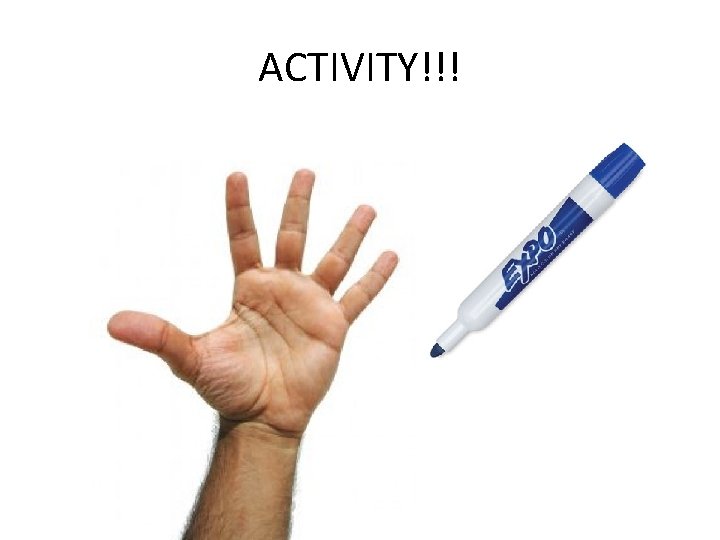
ACTIVITY!!!
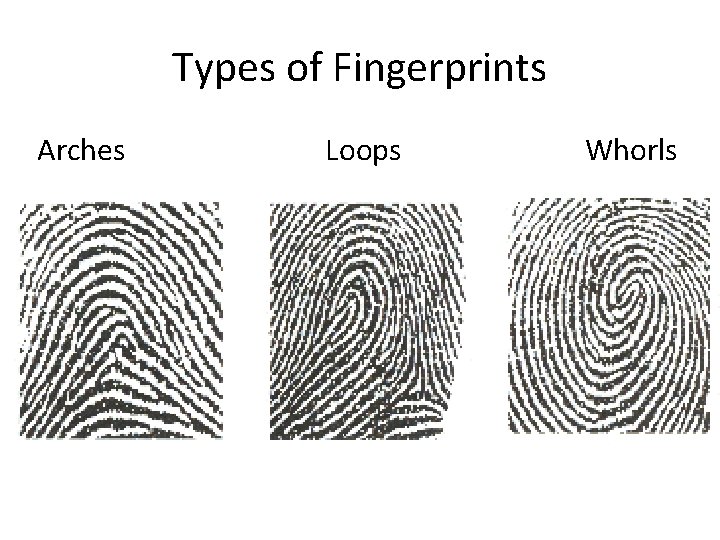
Types of Fingerprints Arches Loops Whorls
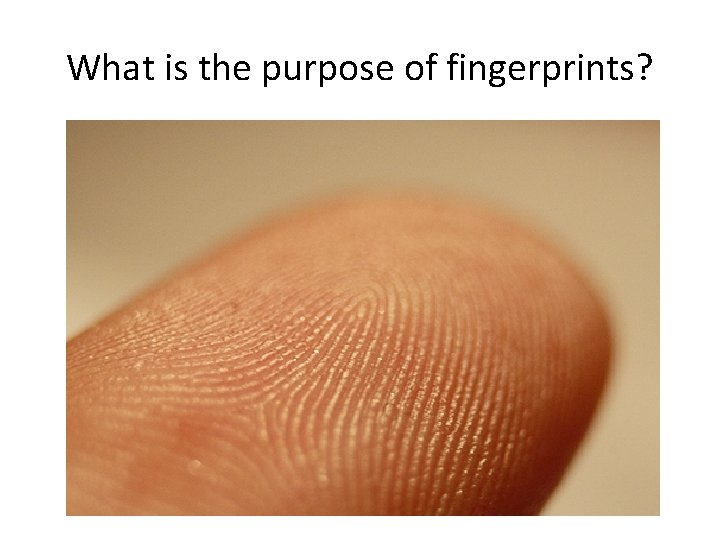
What is the purpose of fingerprints?
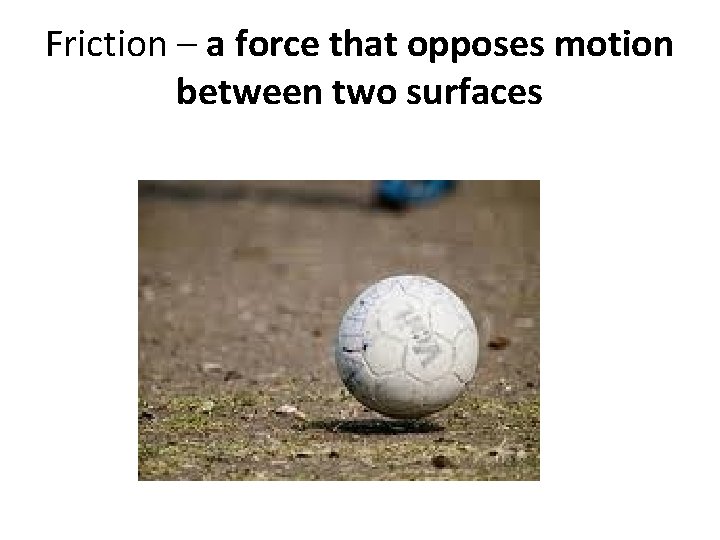
Friction – a force that opposes motion between two surfaces
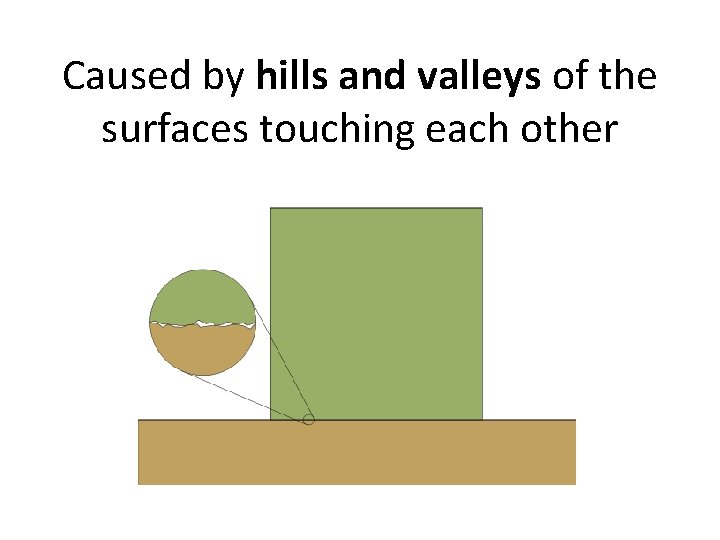
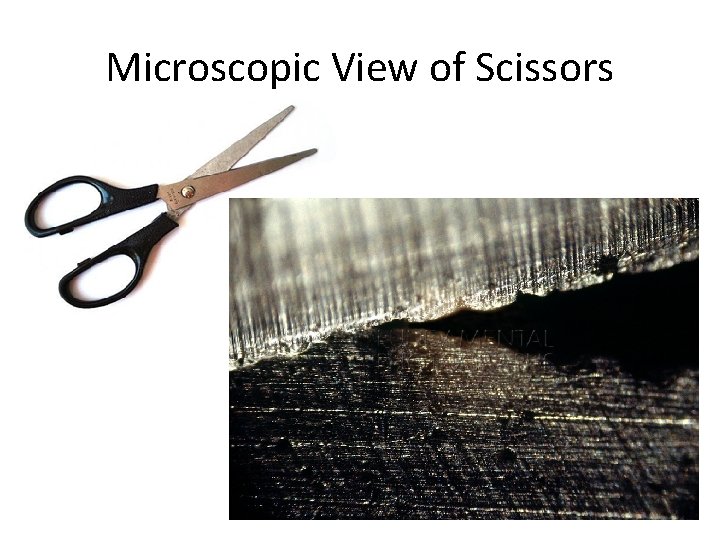
Caused by hills and valleys of the surfaces touching each other
Microscopic View of Scissors
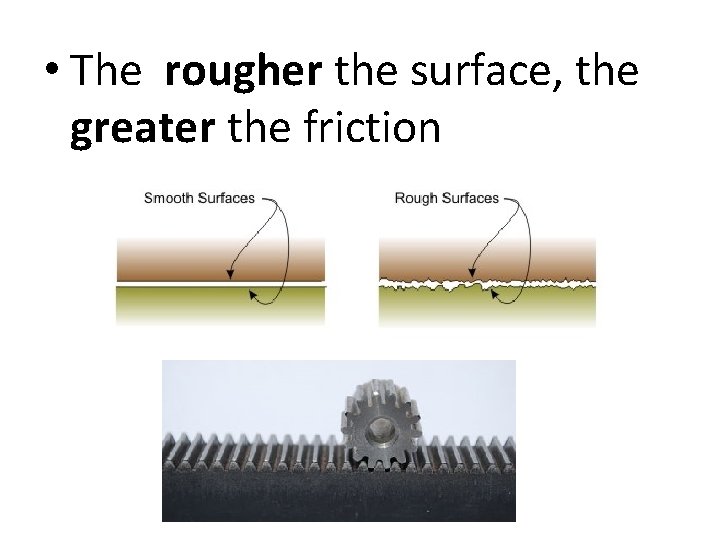
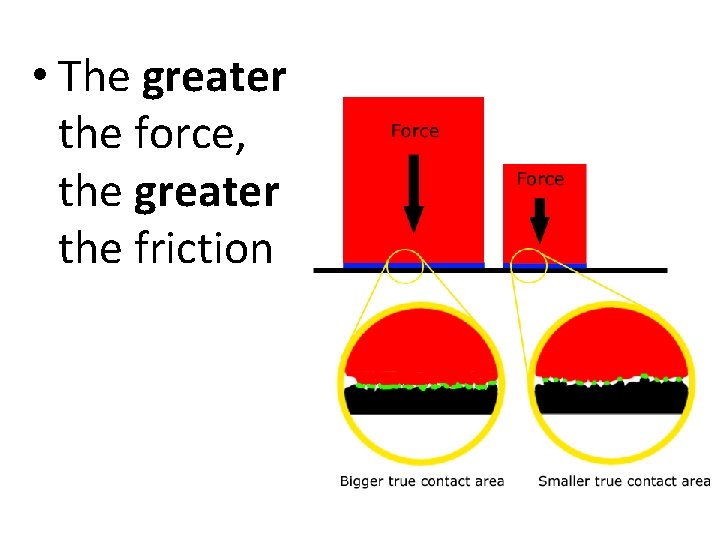
Amount of Friction Depends on roughness of surface and force pressing them together
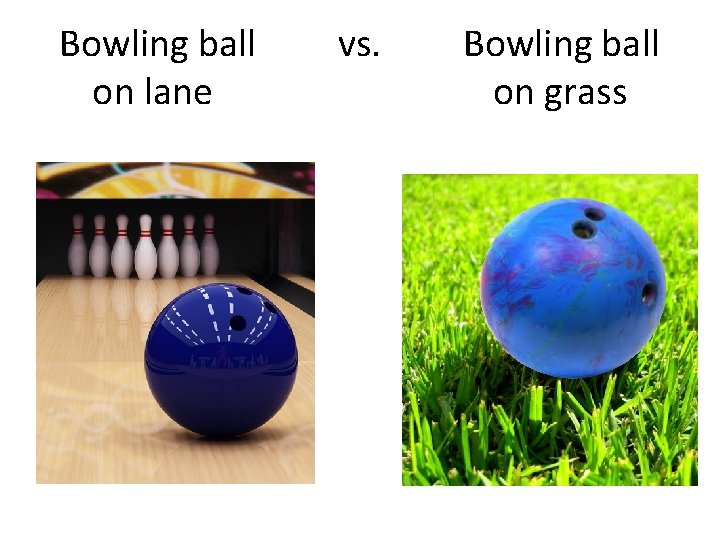
• The rougher the surface, the greater the friction
Bowling ball on lane vs. Bowling ball on grass
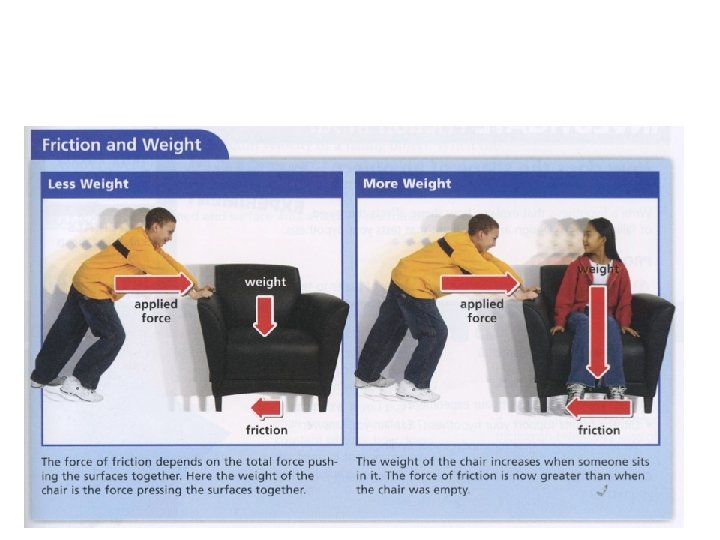
• The greater the force, the greater the friction
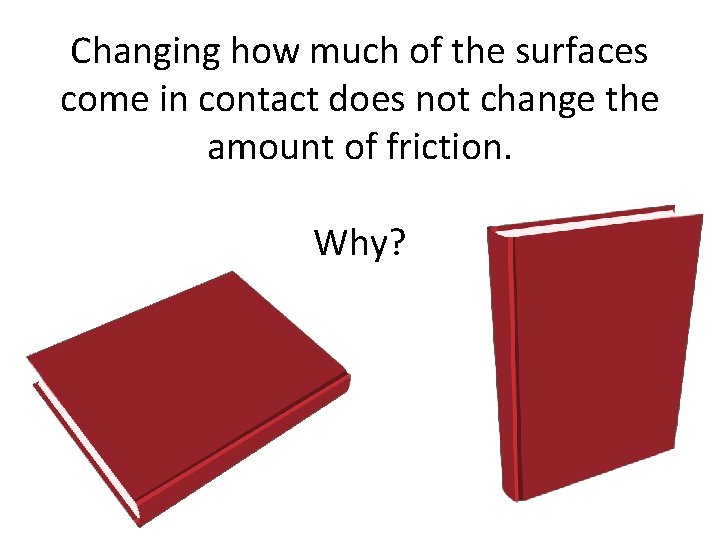
Changing how much of the surfaces come in contact does not change the amount of friction. Why?
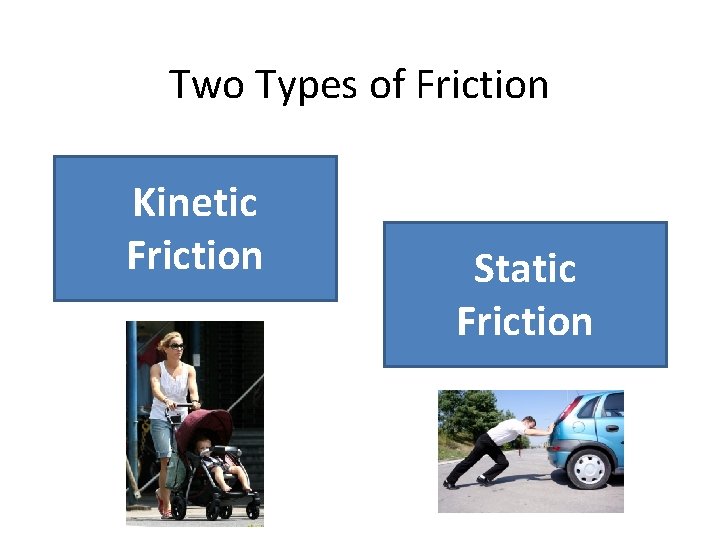
Two Types of Friction Kinetic Friction Static Friction
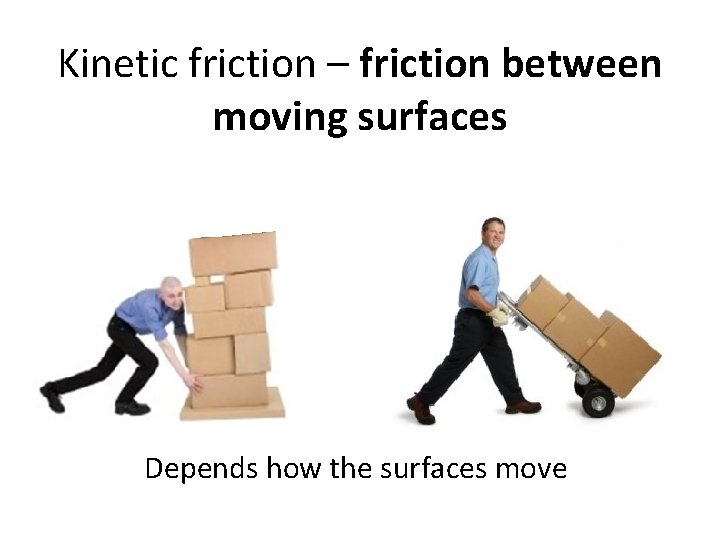
Kinetic friction – friction between moving surfaces Depends how the surfaces move
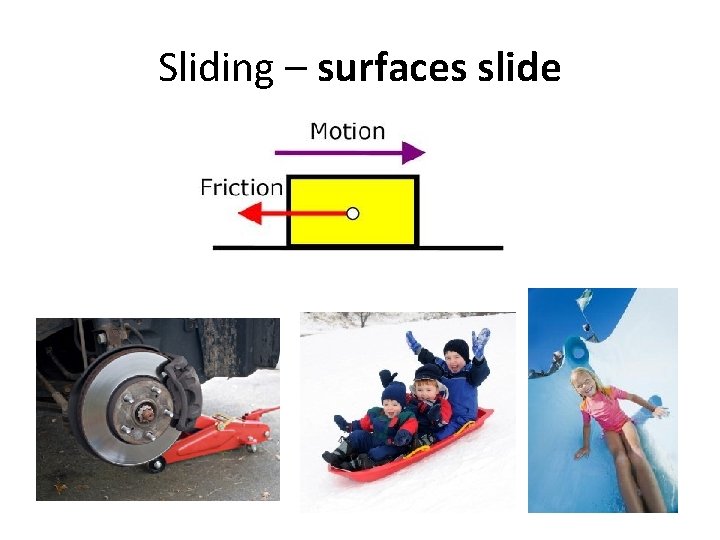
Sliding – surfaces slide
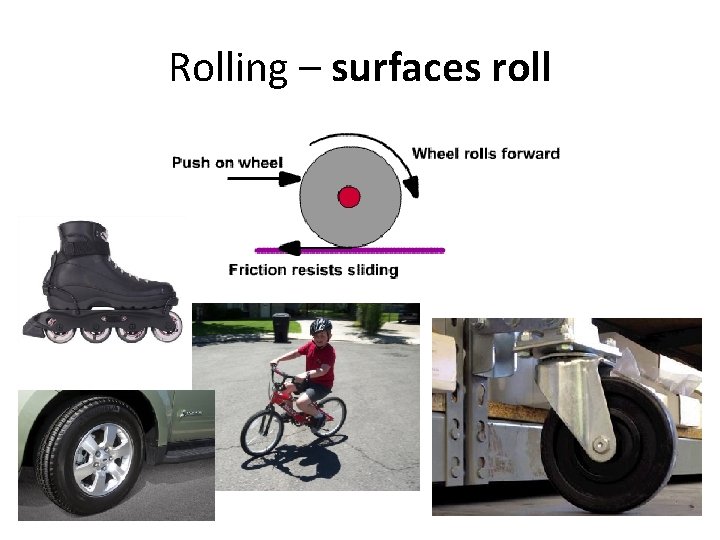
Rolling – surfaces roll
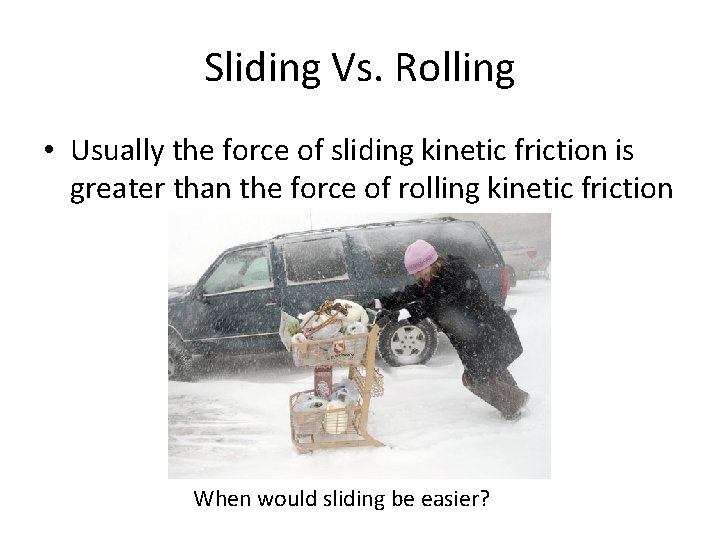
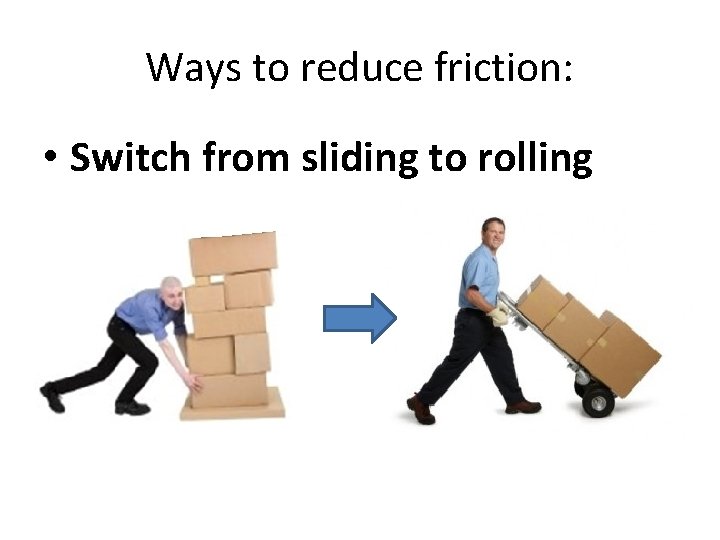
Sliding Vs. Rolling • Usually the force of sliding kinetic friction is greater than the force of rolling kinetic friction When would sliding be easier?
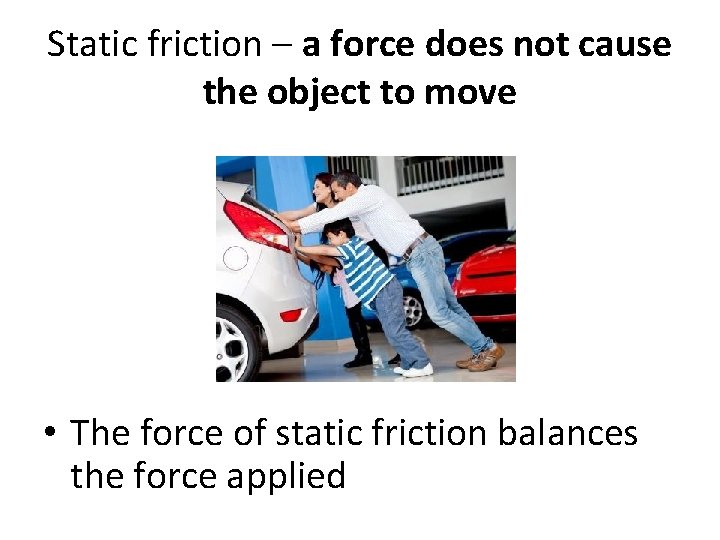
Static friction – a force does not cause the object to move • The force of static friction balances the force applied
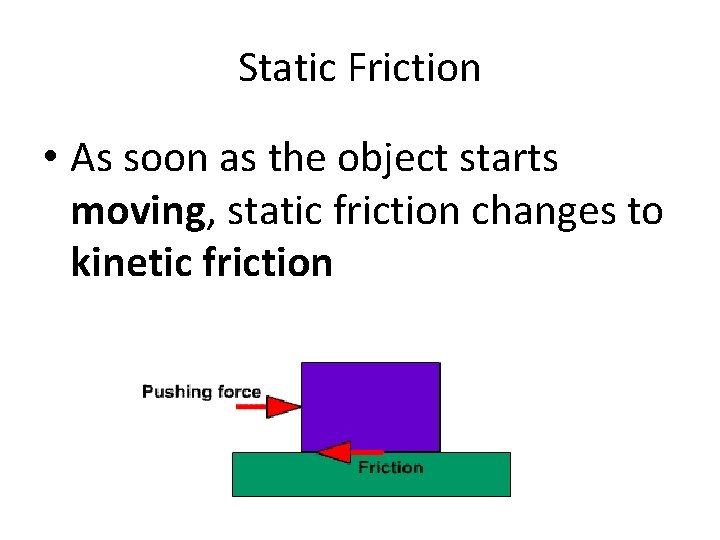
Static Friction • As soon as the object starts moving, static friction changes to kinetic friction
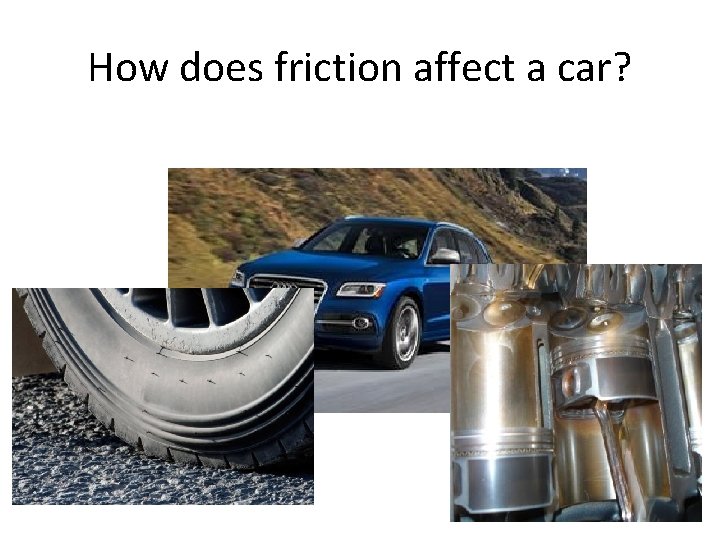
How does friction affect a car?
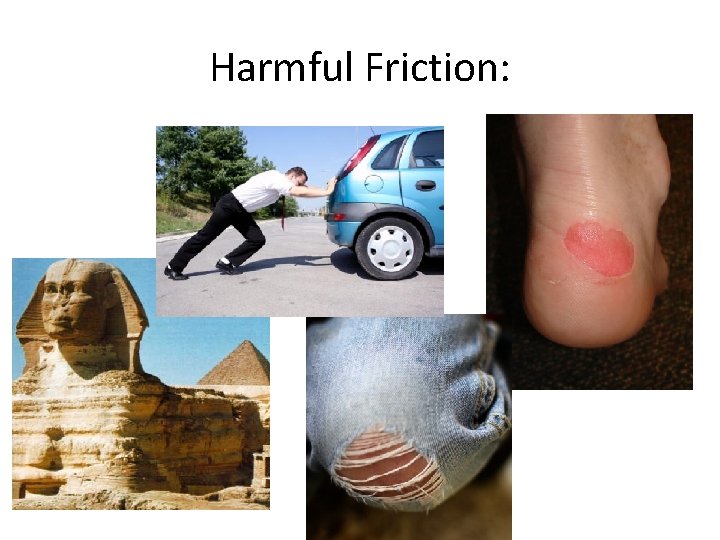
Harmful Friction:
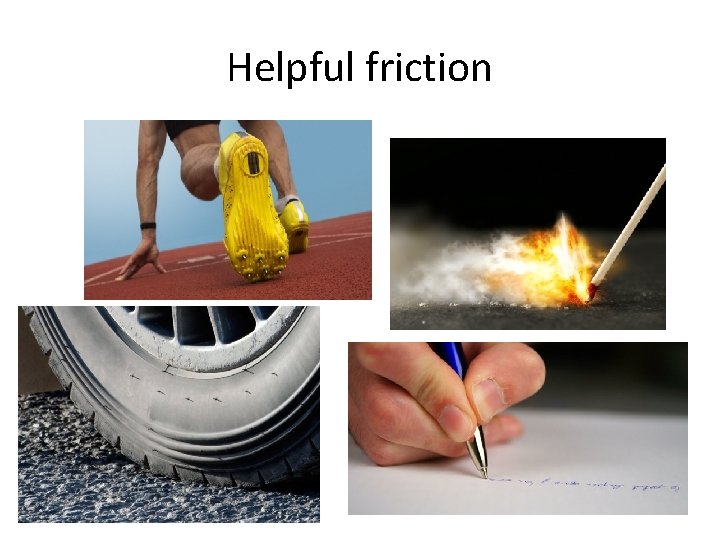
Helpful friction
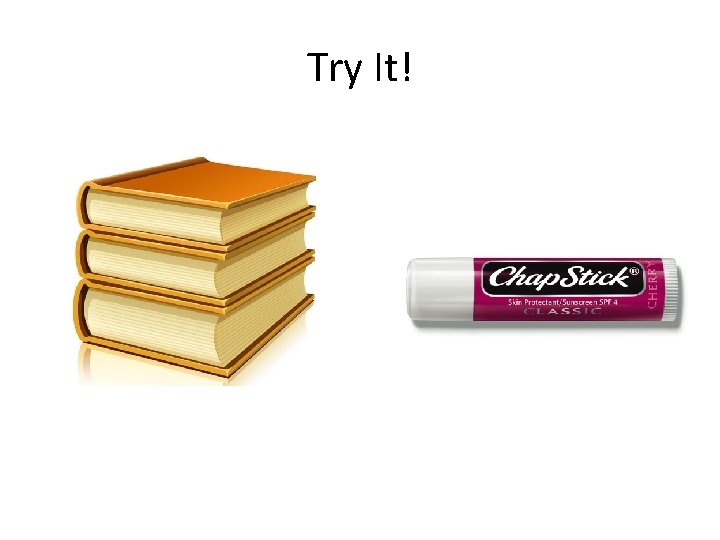
Try It!
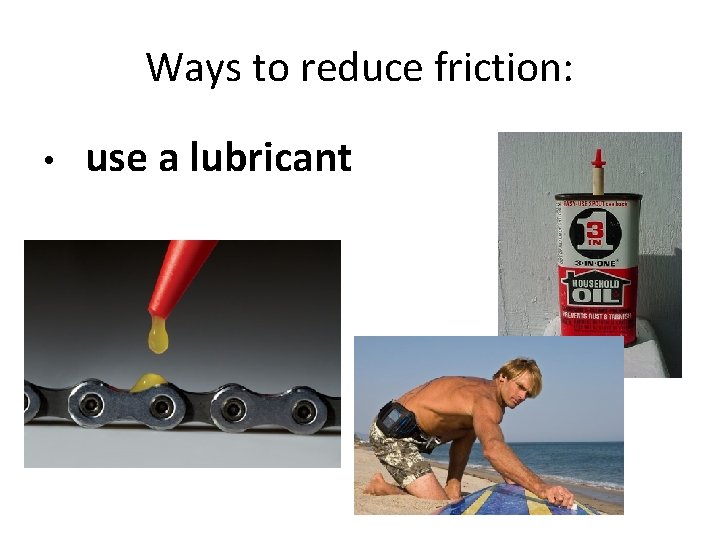
Ways to reduce friction: • use a lubricant
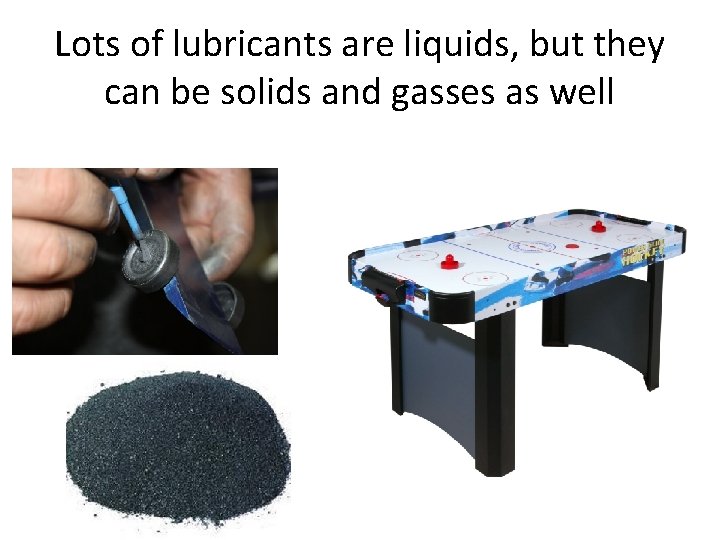
Lots of lubricants are liquids, but they can be solids and gasses as well
Ways to reduce friction: • Switch from sliding to rolling
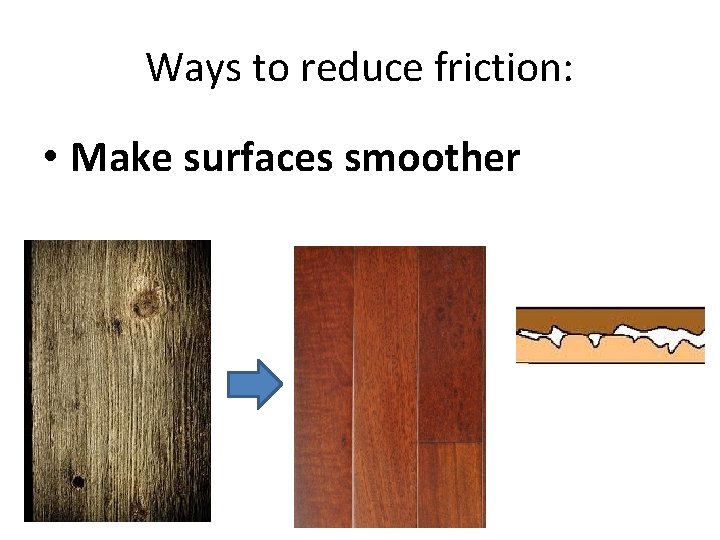
Ways to reduce friction: • Make surfaces smoother
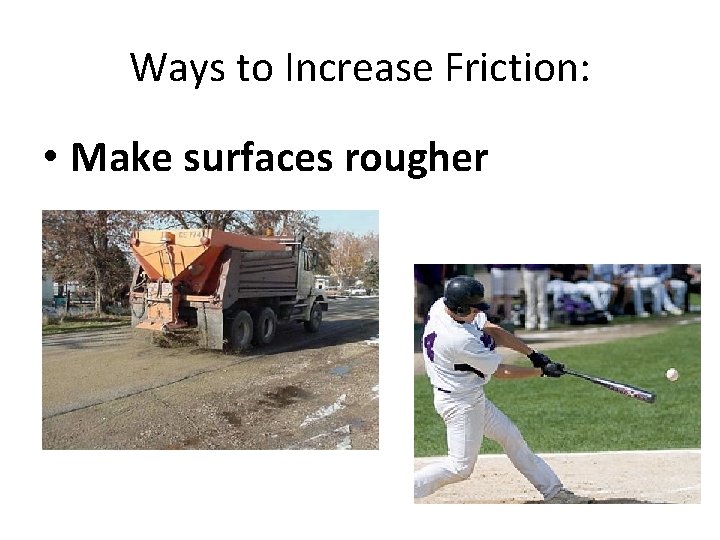
Ways to Increase Friction: • Make surfaces rougher
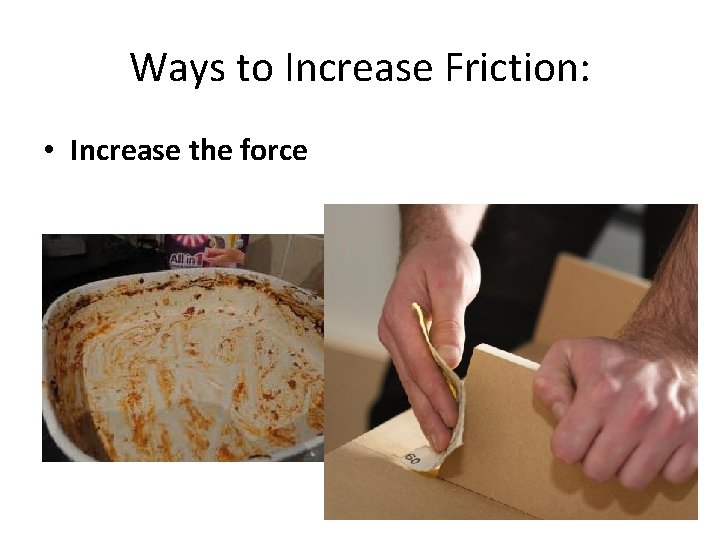
Ways to Increase Friction: • Increase the force
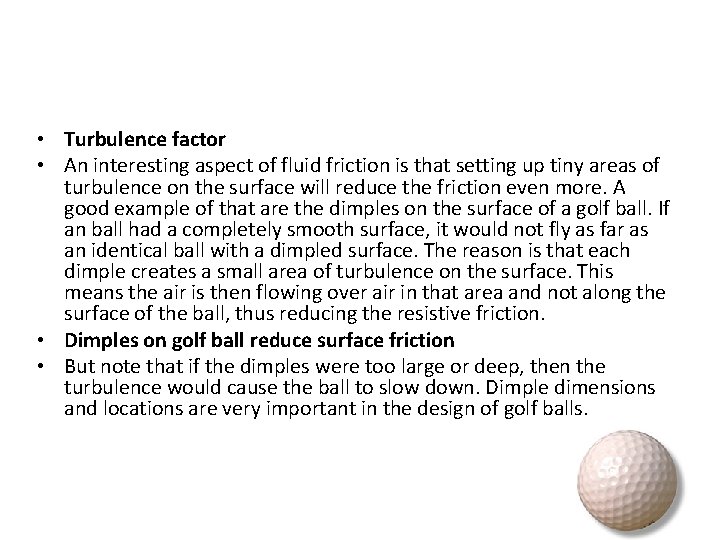
• Turbulence factor • An interesting aspect of fluid friction is that setting up tiny areas of turbulence on the surface will reduce the friction even more. A good example of that are the dimples on the surface of a golf ball. If an ball had a completely smooth surface, it would not fly as far as an identical ball with a dimpled surface. The reason is that each dimple creates a small area of turbulence on the surface. This means the air is then flowing over air in that area and not along the surface of the ball, thus reducing the resistive friction. • Dimples on golf ball reduce surface friction • But note that if the dimples were too large or deep, then the turbulence would cause the ball to slow down. Dimple dimensions and locations are very important in the design of golf balls.