
Freshwater Phytoplankton Key for the Northeast By Rachael
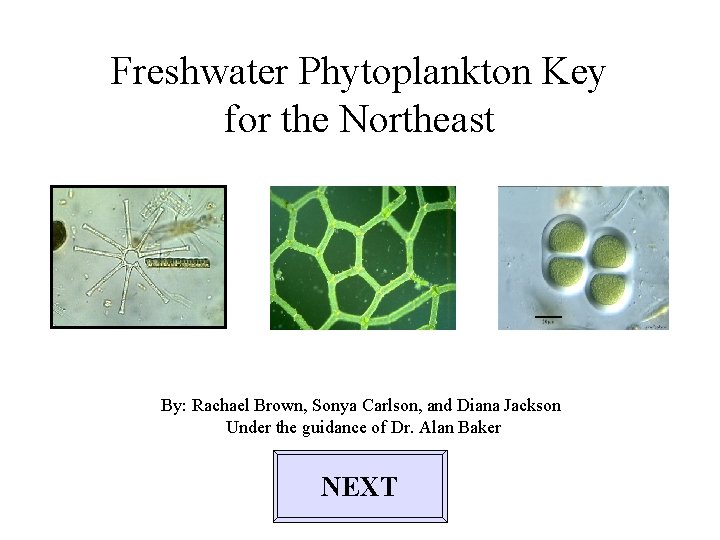
Freshwater Phytoplankton Key for the Northeast By: Rachael Brown, Sonya Carlson, and Diana Jackson Under the guidance of Dr. Alan Baker NEXT

Introduction: This photographic key is intended to aid in identification of freshwater algae to the Genus level. Proceed through this key by clicking on the picture that most resembles your organism. Buttons to know: Home: Go to the beginning page at any time Back: Go to the last page viewed Forward: Go to the next page in the key To Start Key Click Here START
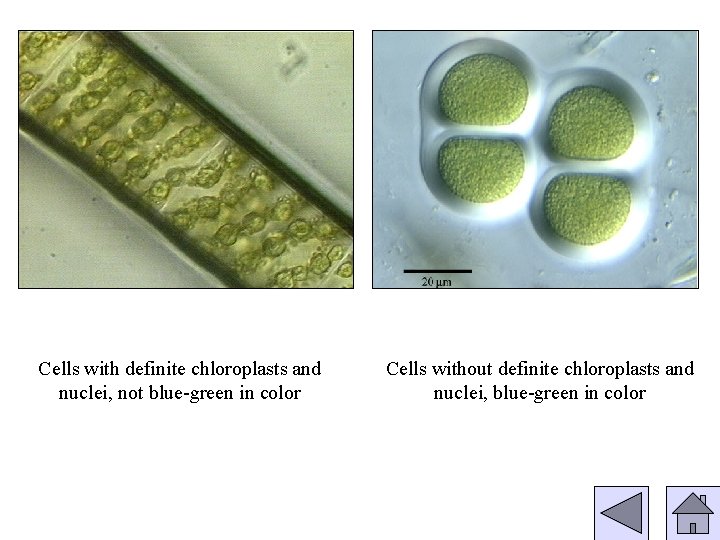
Cells with definite chloroplasts and nuclei, not blue-green in color Cells without definite chloroplasts and nuclei, blue-green in color
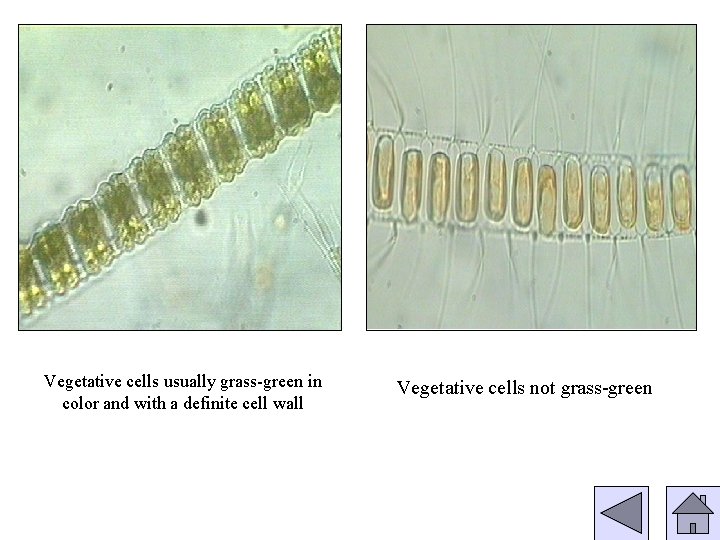
Vegetative cells usually grass-green in color and with a definite cell wall Vegetative cells not grass-green
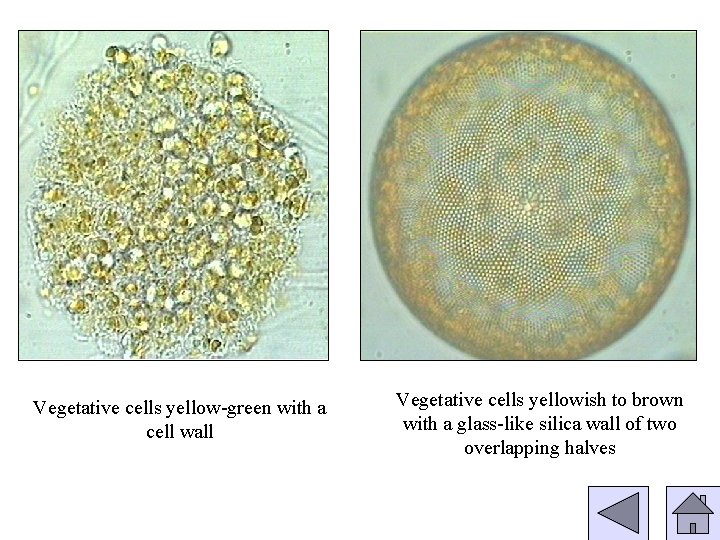
Vegetative cells yellow-green with a cell wall Vegetative cells yellowish to brown with a glass-like silica wall of two overlapping halves

Class: Chrysophyceae
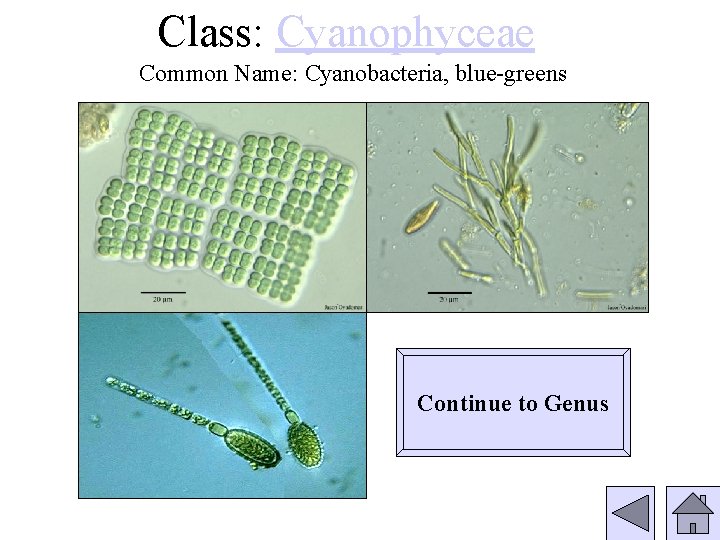
Class: Cyanophyceae Common Name: Cyanobacteria, blue-greens Continue to Genus
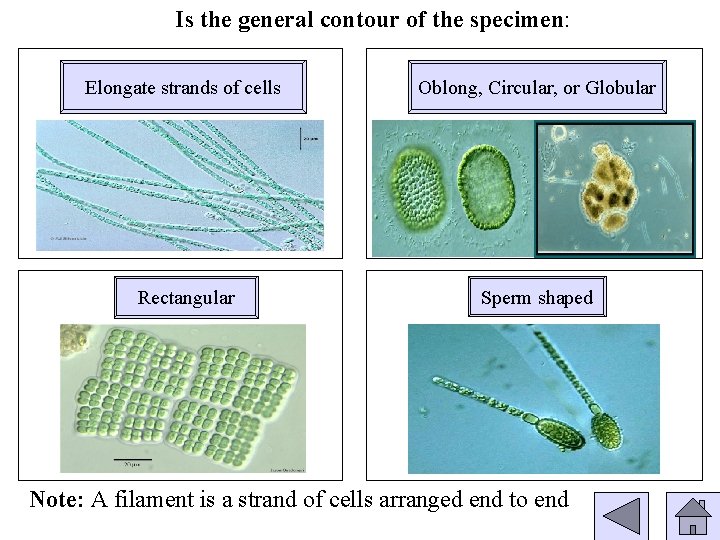
Is the general contour of the specimen: Elongate strands of cells Oblong, Circular, or Globular Rectangular Sperm shaped Note: A filament is a strand of cells arranged end to end
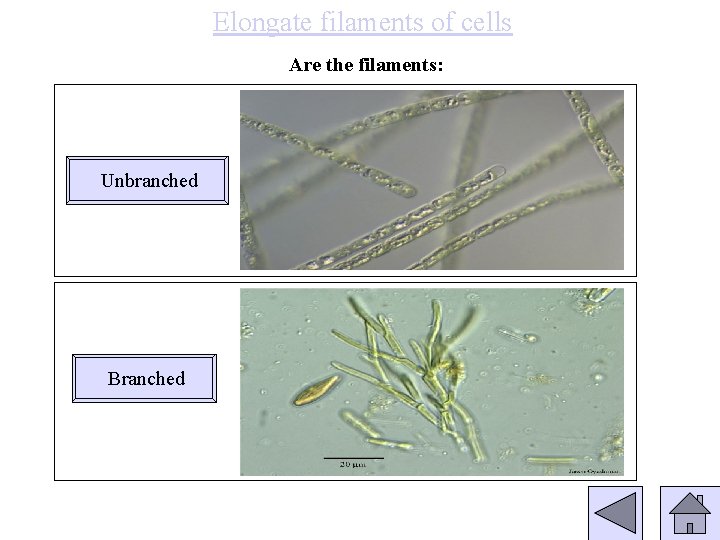
Elongate filaments of cells Are the filaments: Unbranched Branched
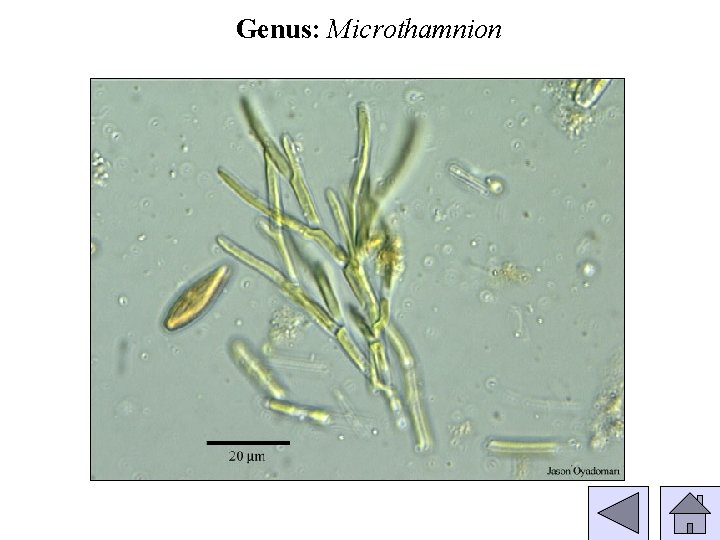
Genus: Microthamnion
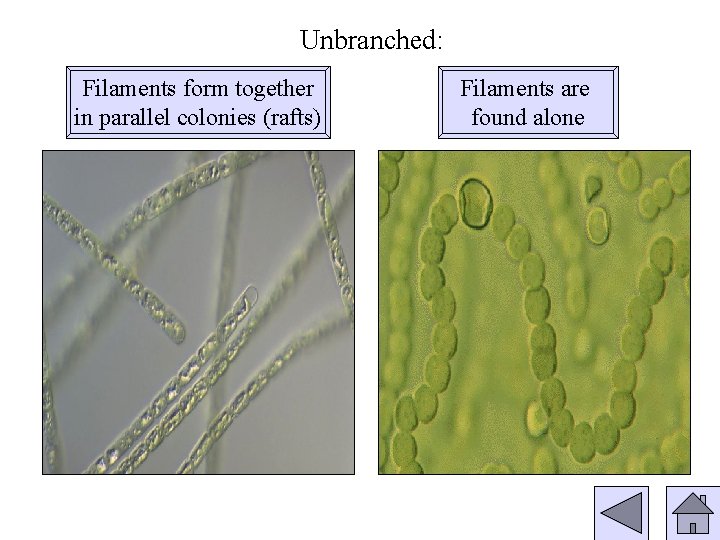
Unbranched: Filaments form together in parallel colonies (rafts) Filaments are found alone
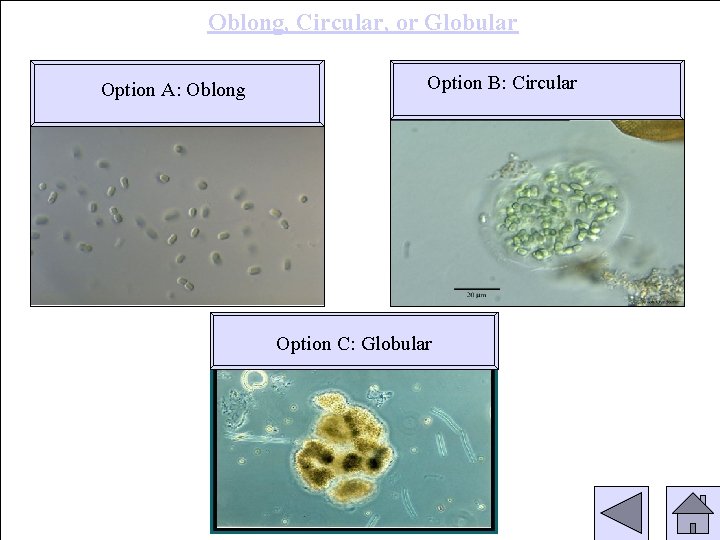
Oblong, Circular, or Globular Option A: Oblong Option B: Circular Option C: Globular
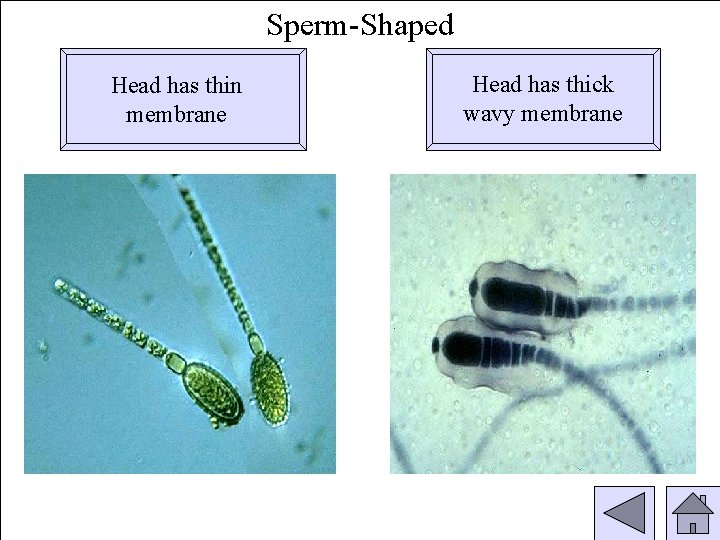
Sperm-Shaped Head has thin membrane Head has thick wavy membrane

Genus: Aphanocapsa
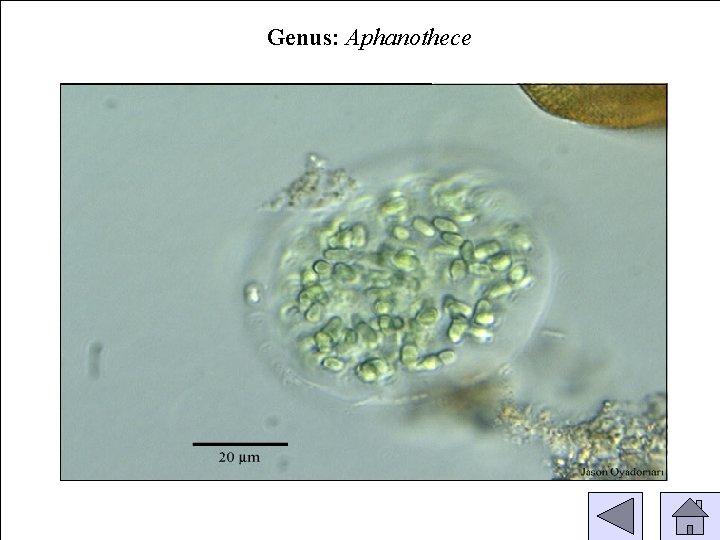
Genus: Aphanothece

Genus: Chroococcus
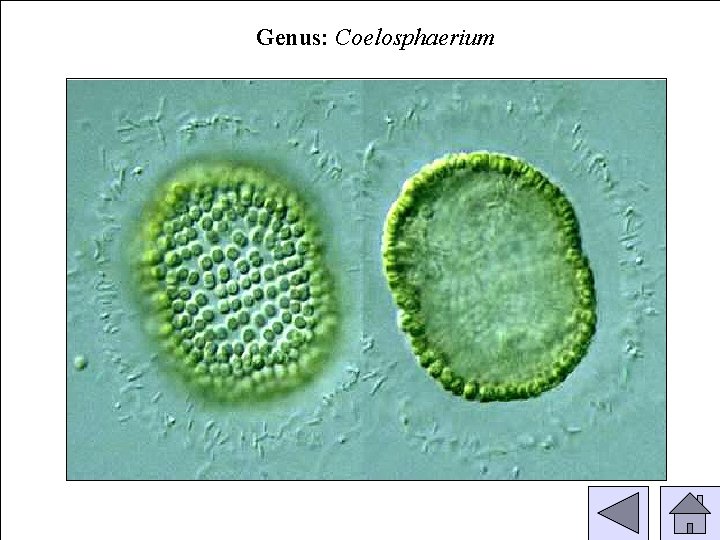
Genus: Coelosphaerium
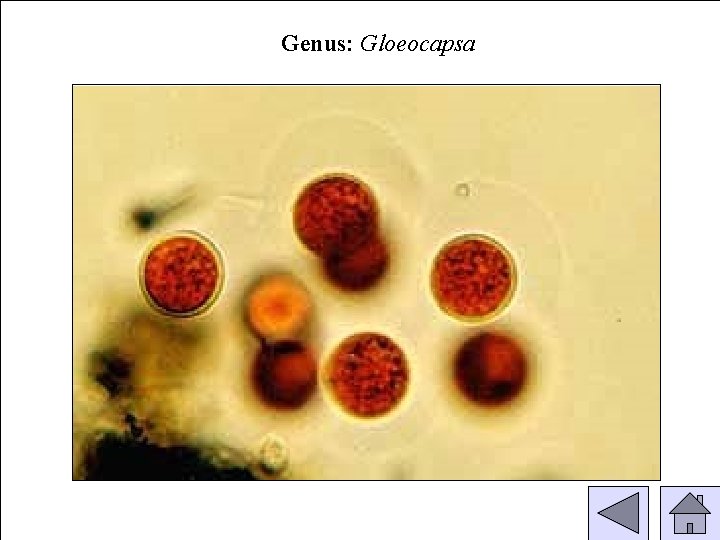
Genus: Gloeocapsa
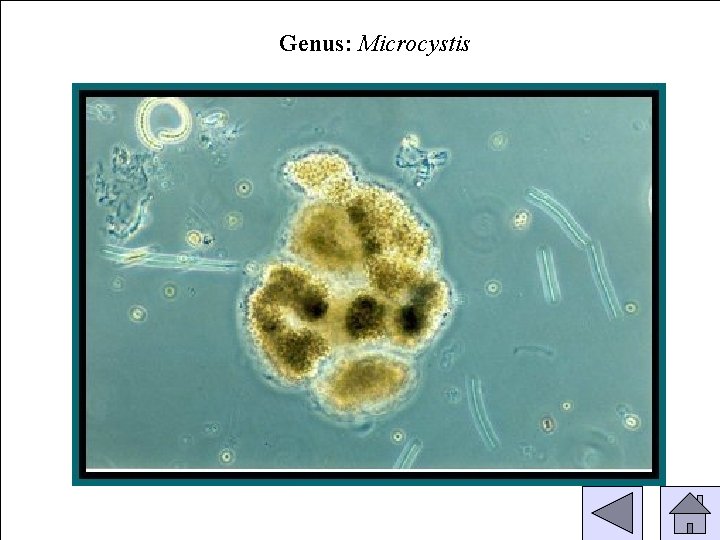
Genus: Microcystis
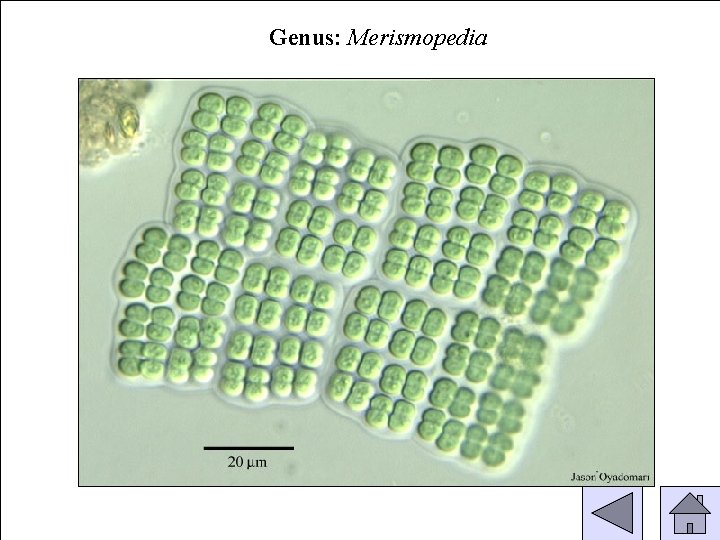
Genus: Merismopedia
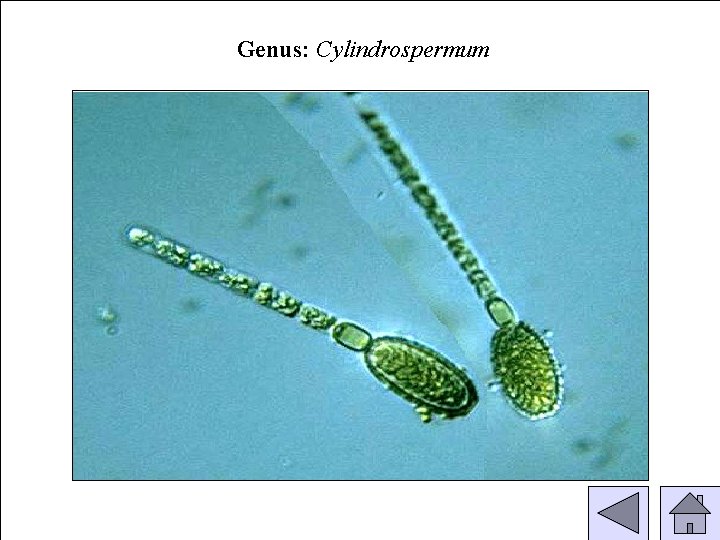
Genus: Cylindrospermum
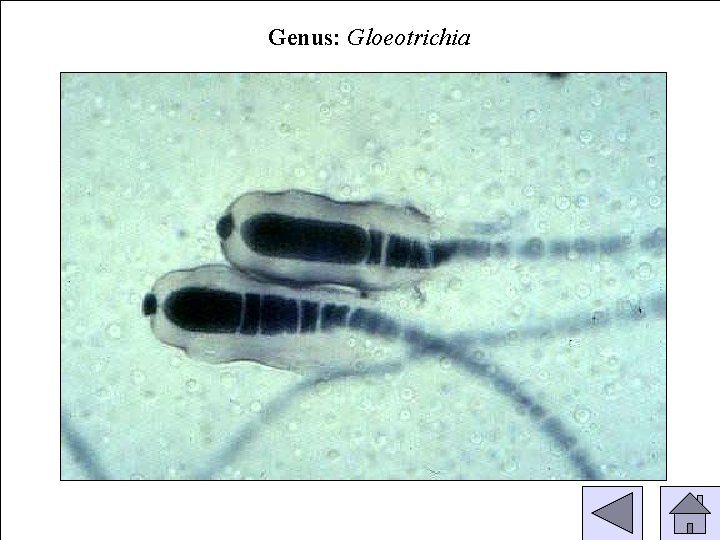
Genus: Gloeotrichia
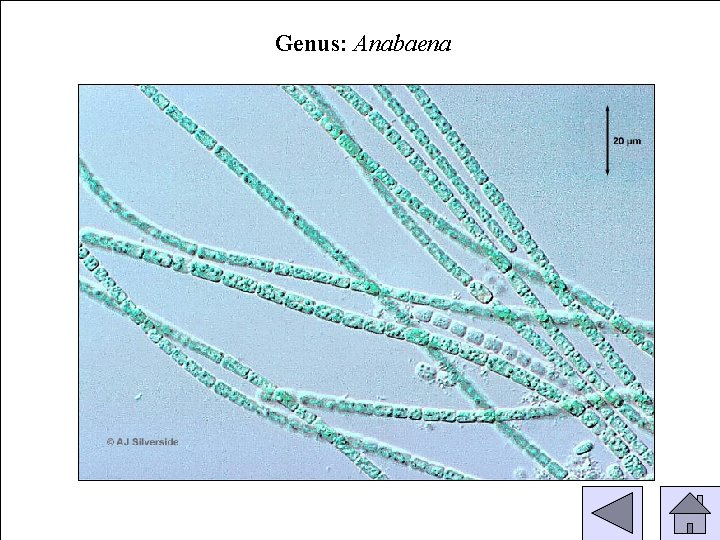
Genus: Anabaena
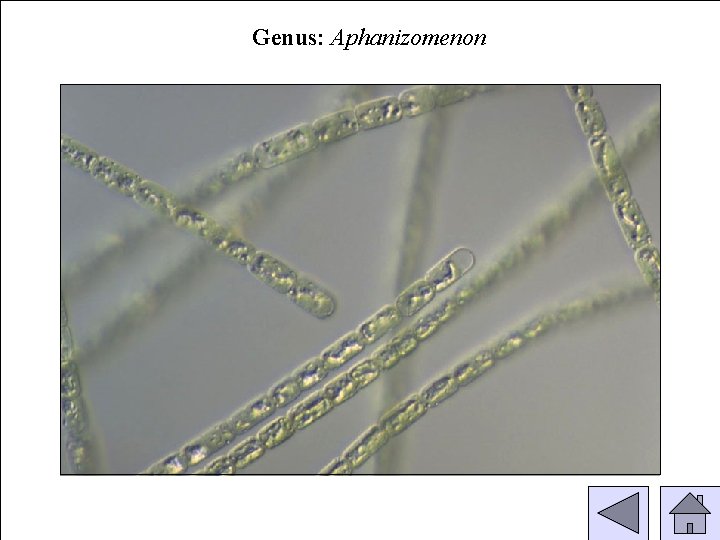
Genus: Aphanizomenon

Genus: Calothrix
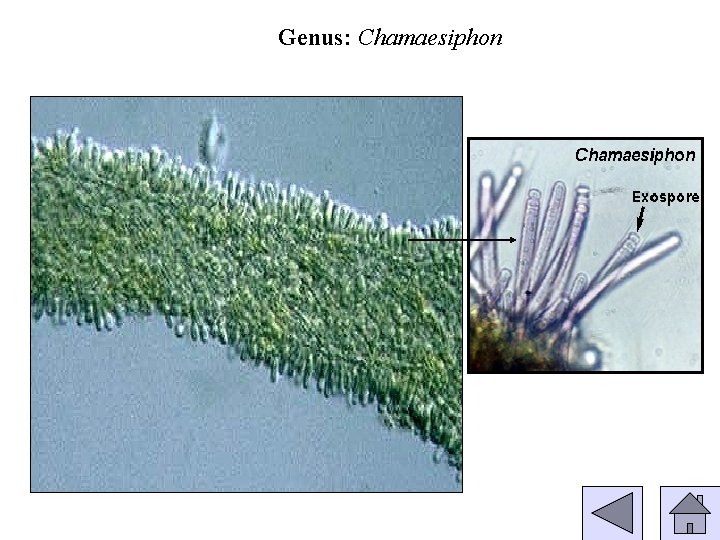
Genus: Chamaesiphon
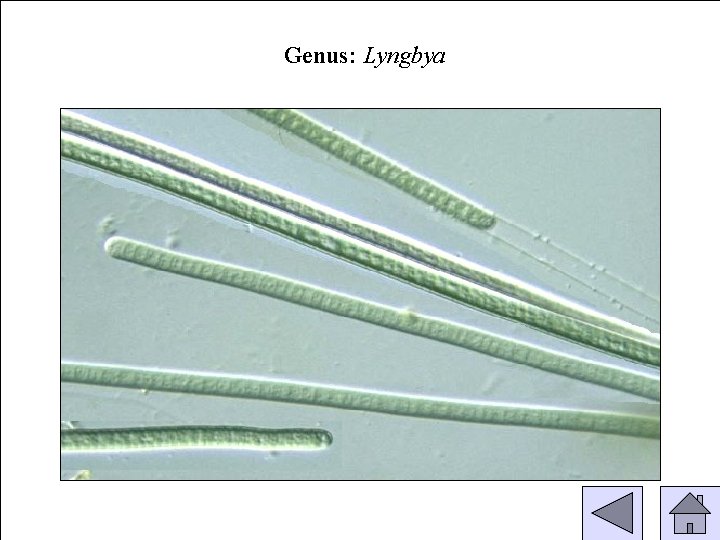
Genus: Lyngbya
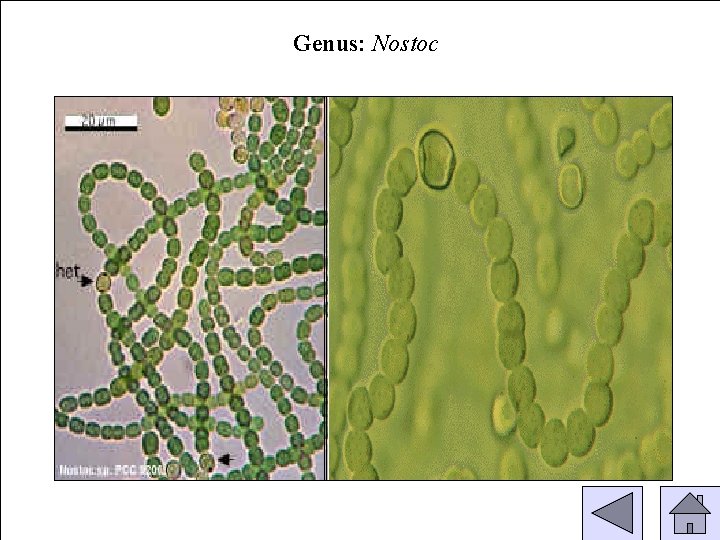
Genus: Nostoc
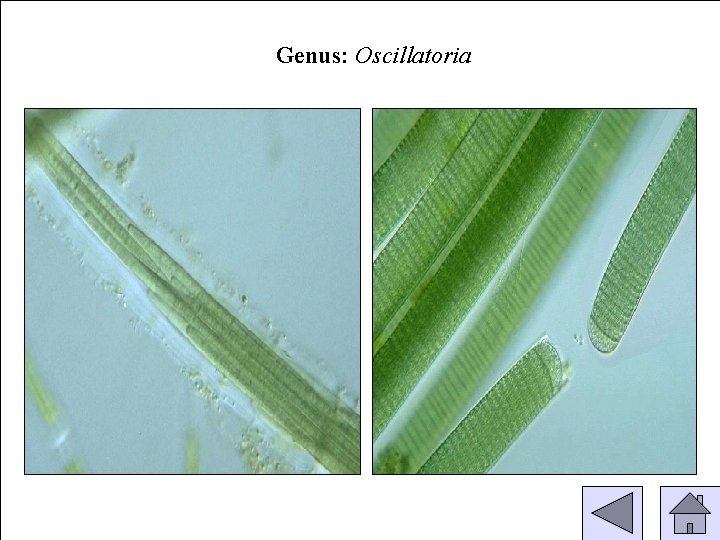
Genus: Oscillatoria
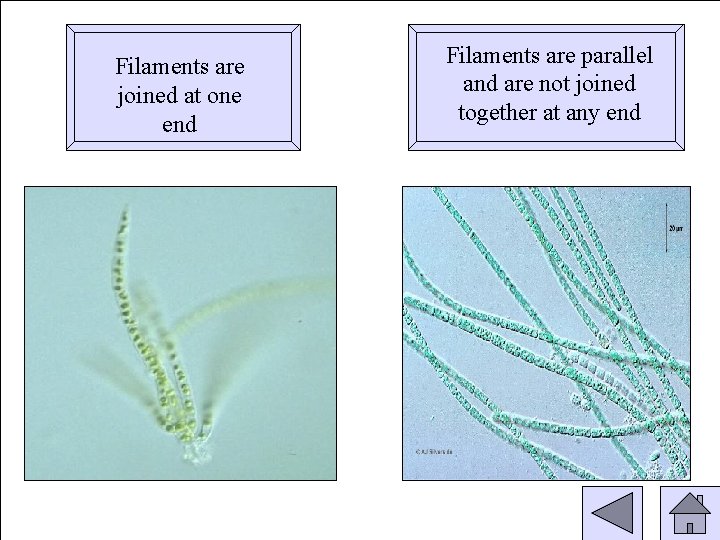
Filaments are joined at one end Filaments are parallel and are not joined together at any end
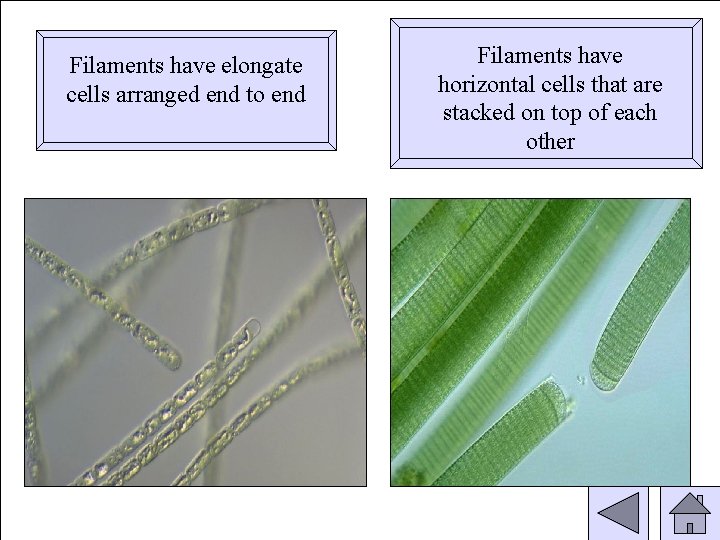
Filaments have elongate cells arranged end to end Filaments have horizontal cells that are stacked on top of each other
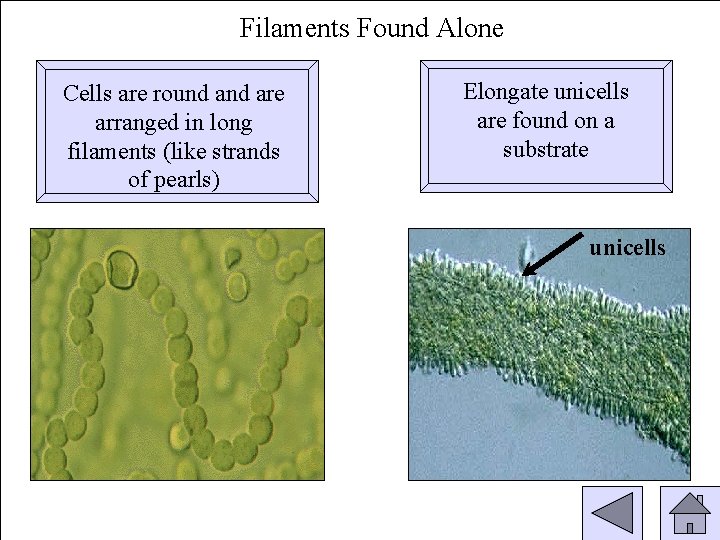
Filaments Found Alone Cells are round are arranged in long filaments (like strands of pearls) Elongate unicells are found on a substrate unicells
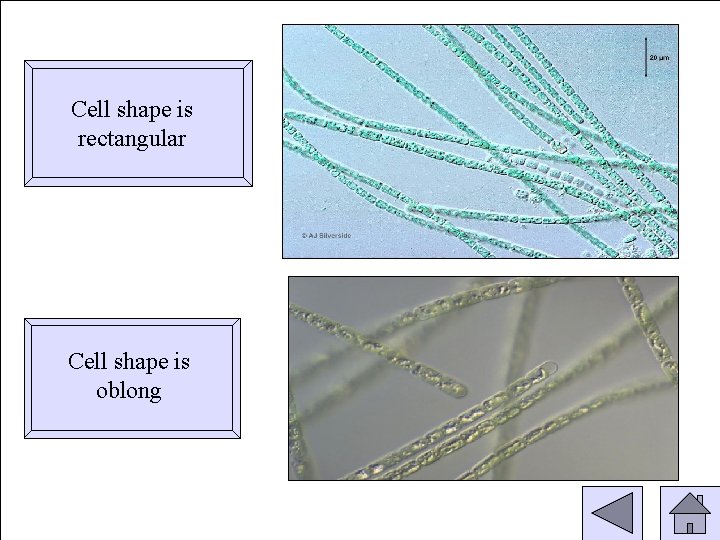
Cell shape is rectangular Cell shape is oblong
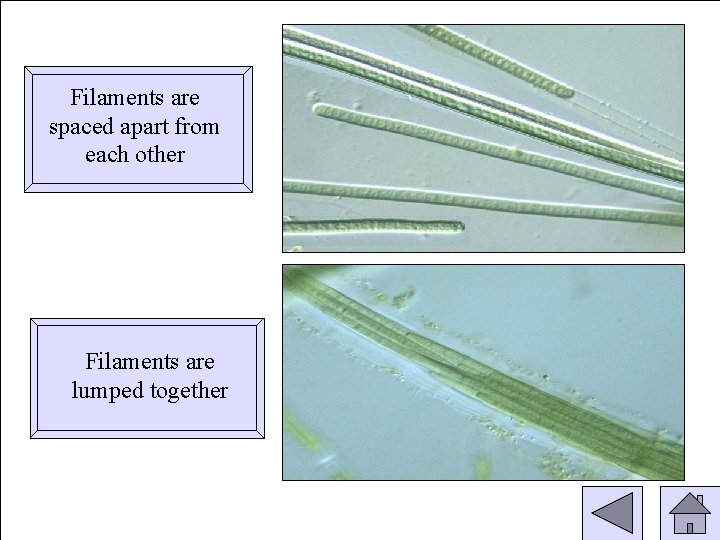
Filaments are spaced apart from each other Filaments are lumped together
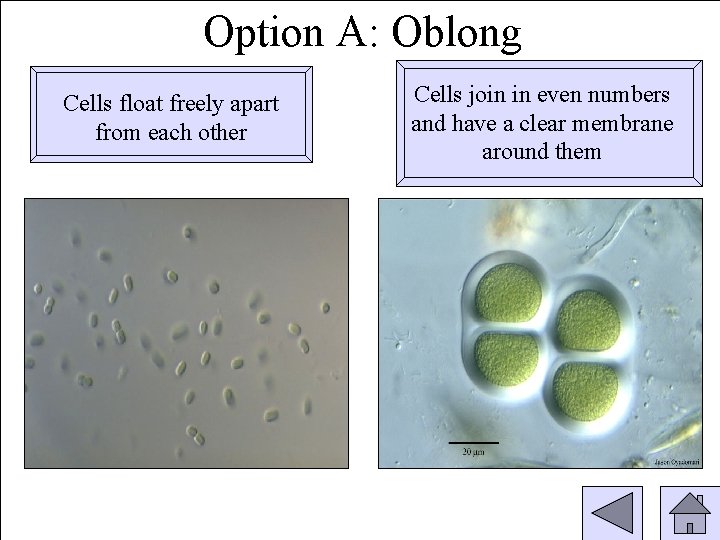
Option A: Oblong Cells float freely apart from each other Cells join in even numbers and have a clear membrane around them
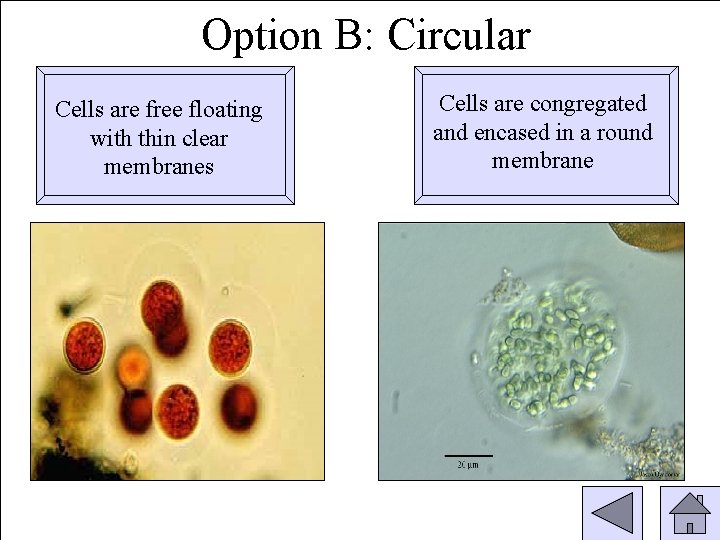
Option B: Circular Cells are free floating with thin clear membranes Cells are congregated and encased in a round membrane
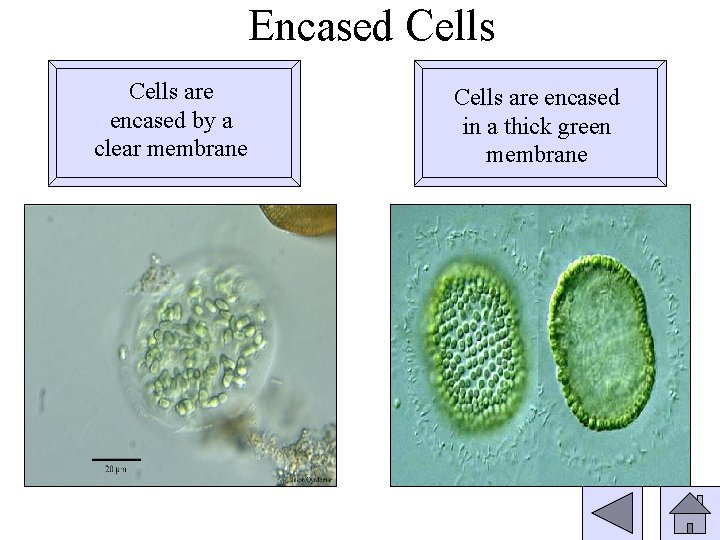
Encased Cells are encased by a clear membrane Cells are encased in a thick green membrane
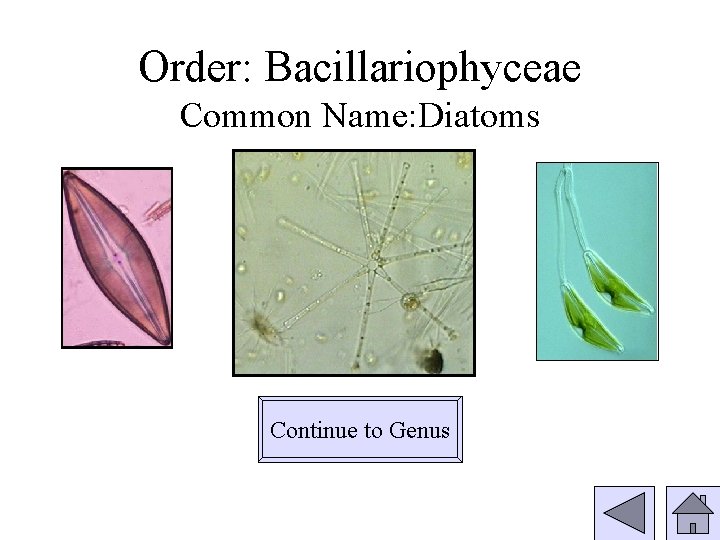
Order: Bacillariophyceae Common Name: Diatoms Continue to Genus
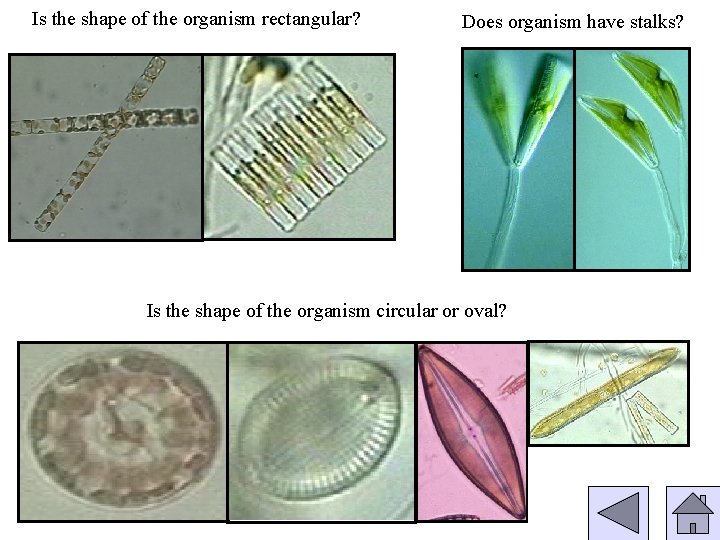
Is the shape of the organism rectangular? Does organism have stalks? Is the shape of the organism circular or oval?
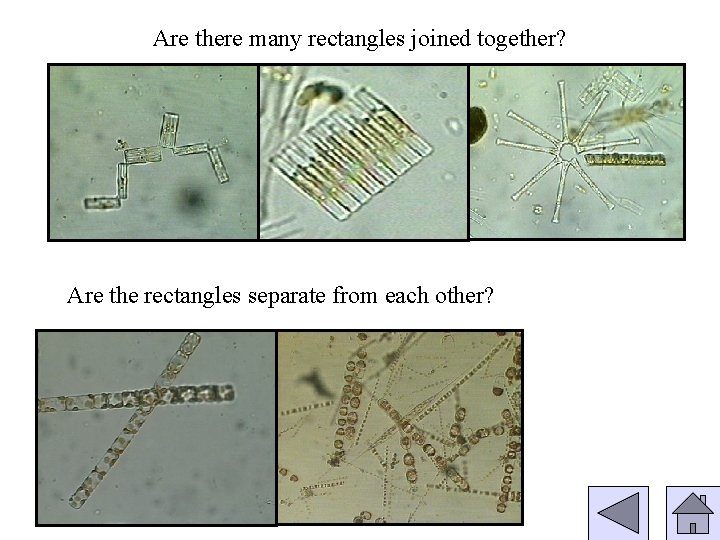
Are there many rectangles joined together? Are the rectangles separate from each other?
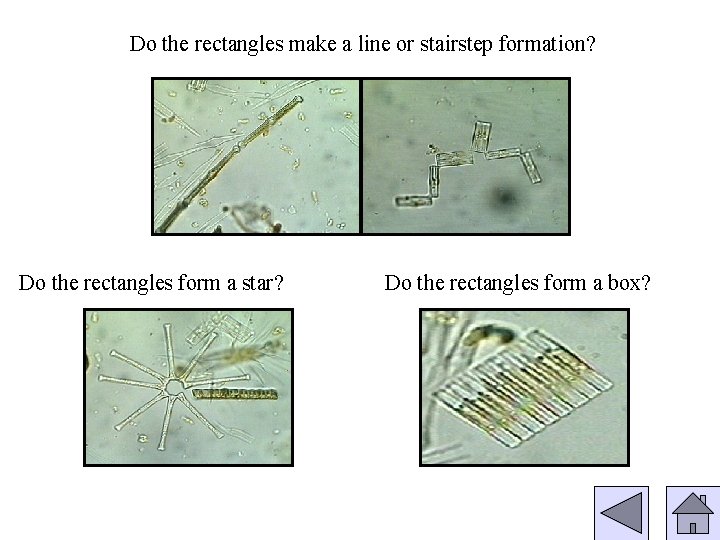
Do the rectangles make a line or stairstep formation? Do the rectangles form a star? Do the rectangles form a box?
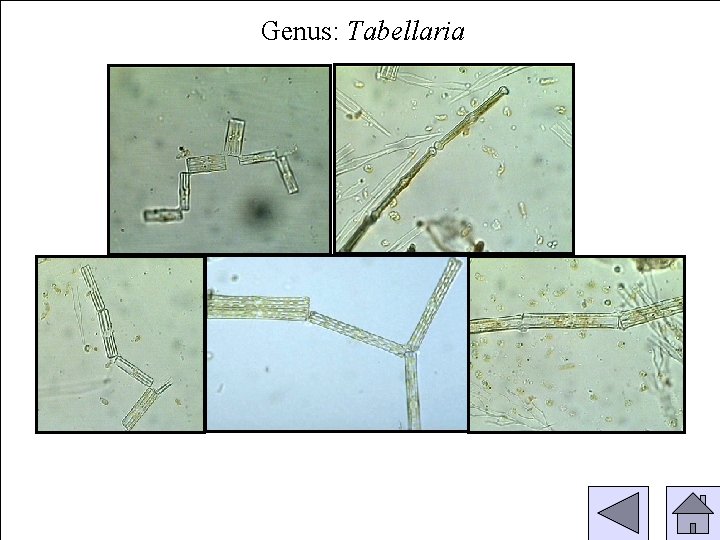
Genus: Tabellaria
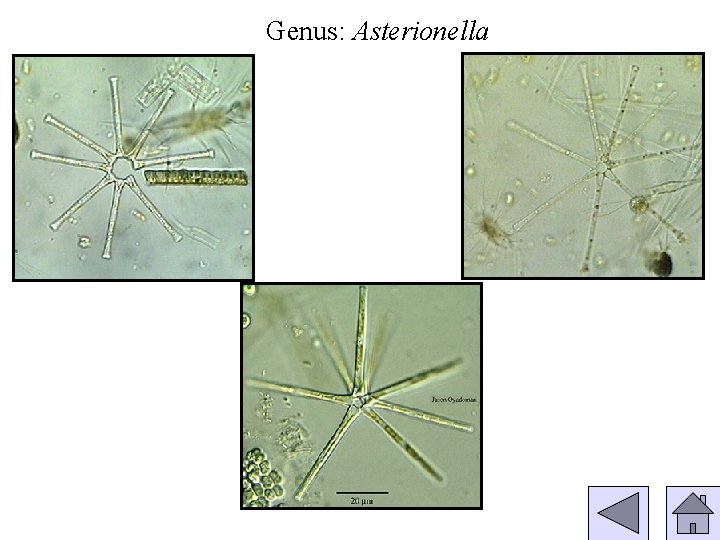
Genus: Asterionella
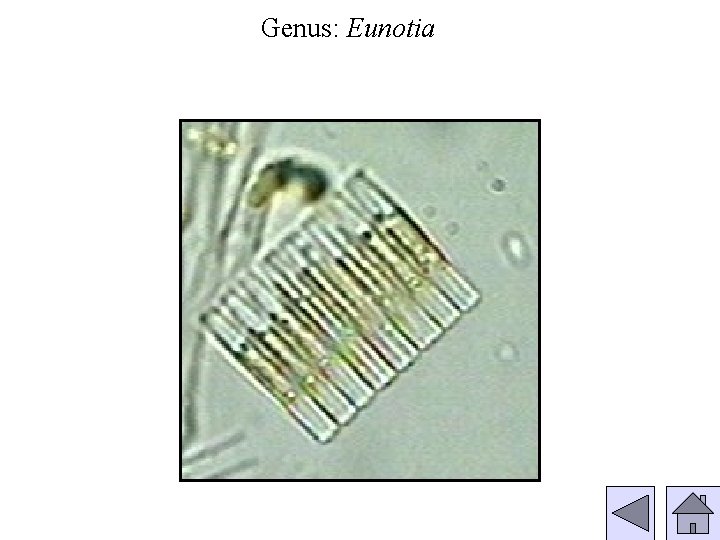
Genus: Eunotia
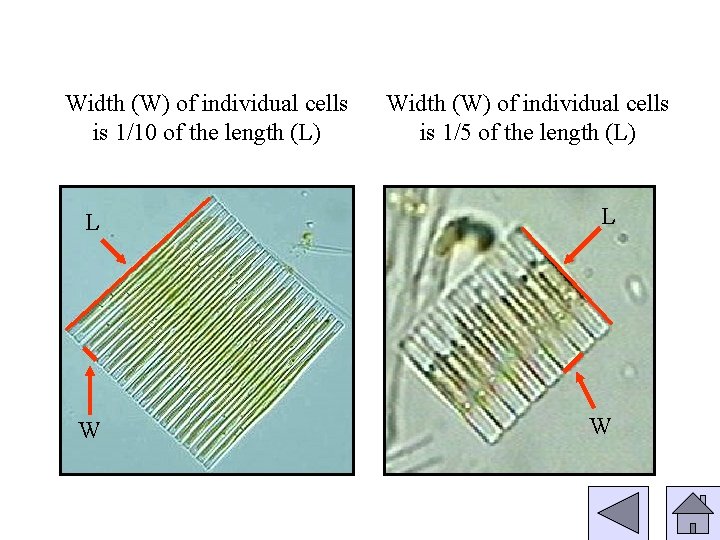
Width (W) of individual cells is 1/10 of the length (L) Width (W) of individual cells is 1/5 of the length (L) L L W W
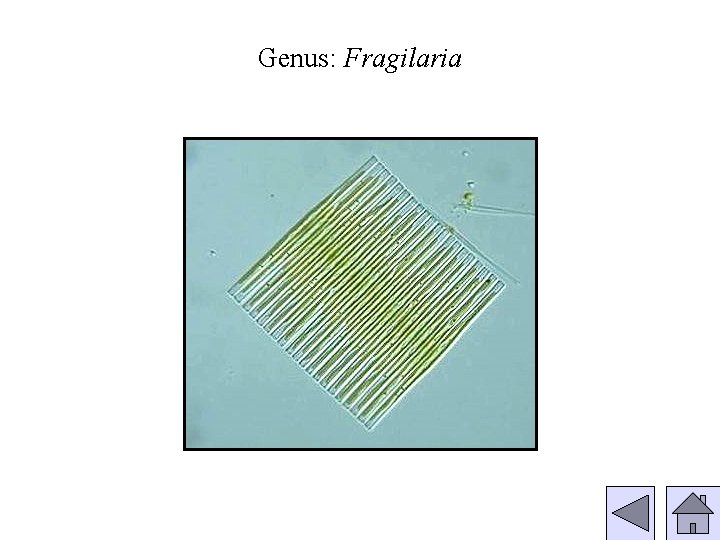
Genus: Fragilaria
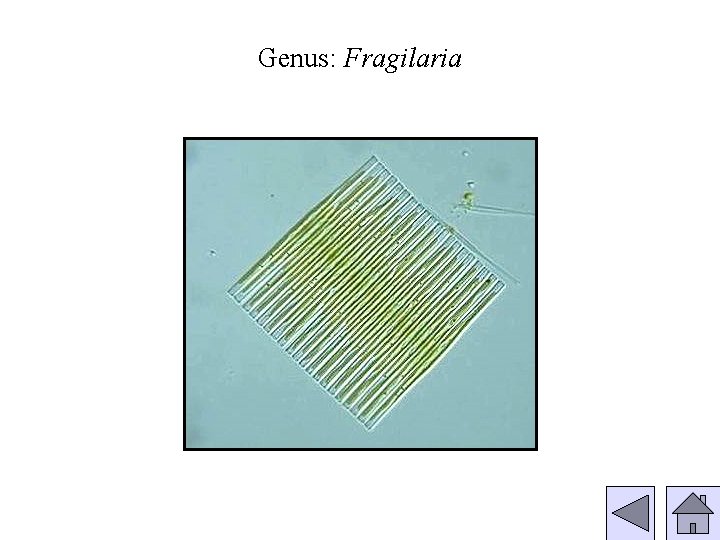
Genus: Fragilaria
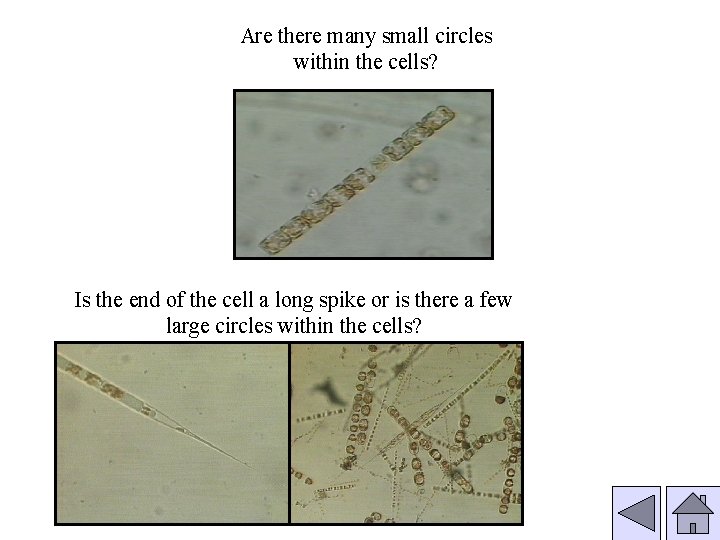
Are there many small circles within the cells? Is the end of the cell a long spike or is there a few large circles within the cells?
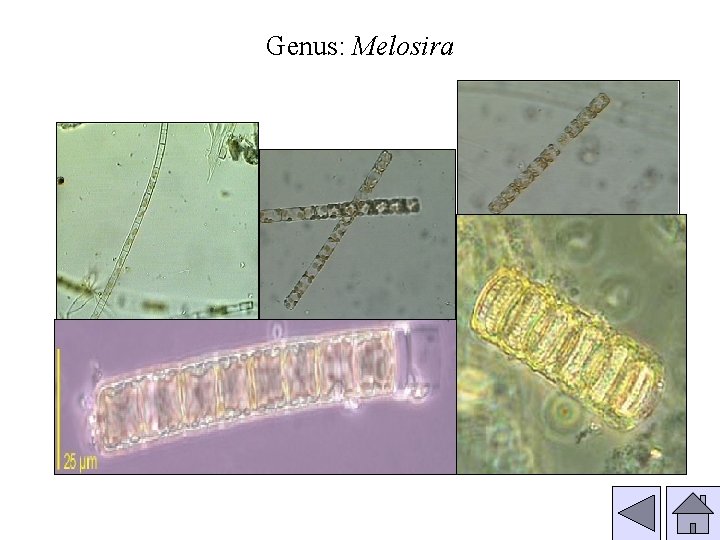
Genus: Melosira
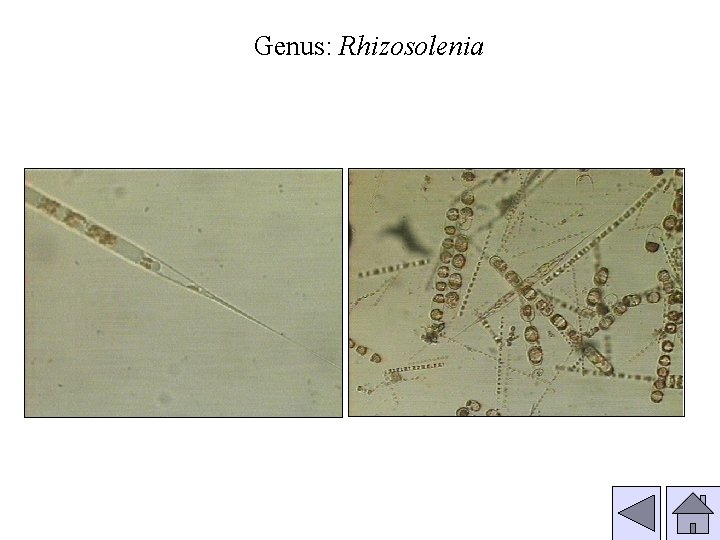
Genus: Rhizosolenia
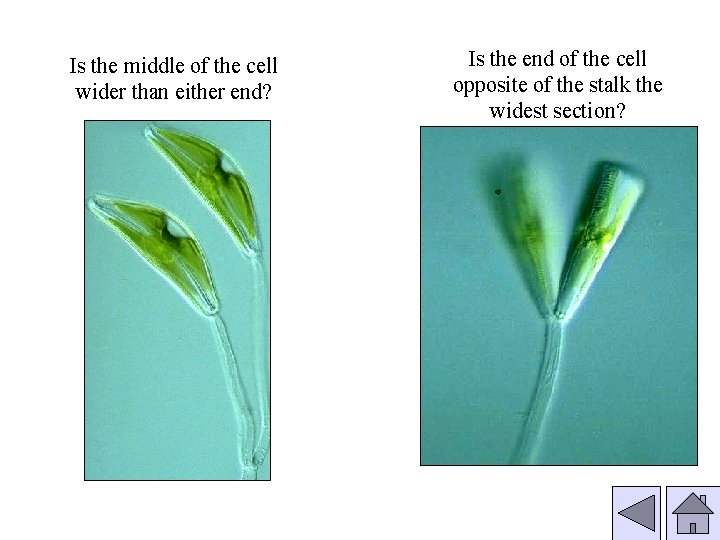
Is the middle of the cell wider than either end? Is the end of the cell opposite of the stalk the widest section?
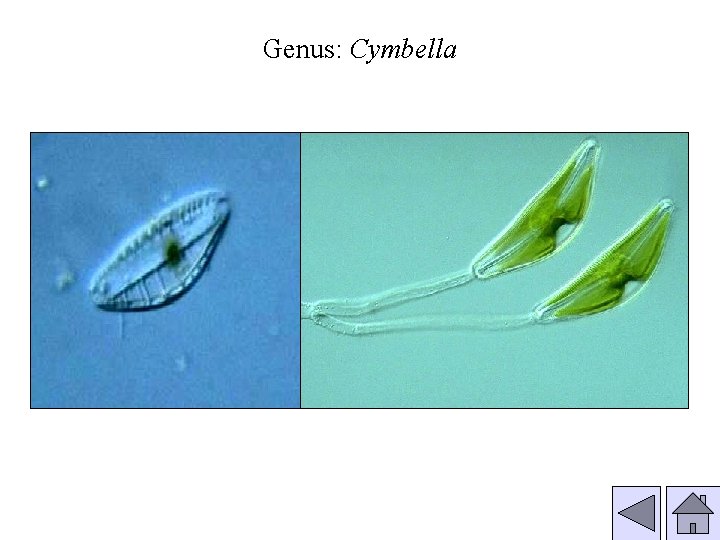
Genus: Cymbella
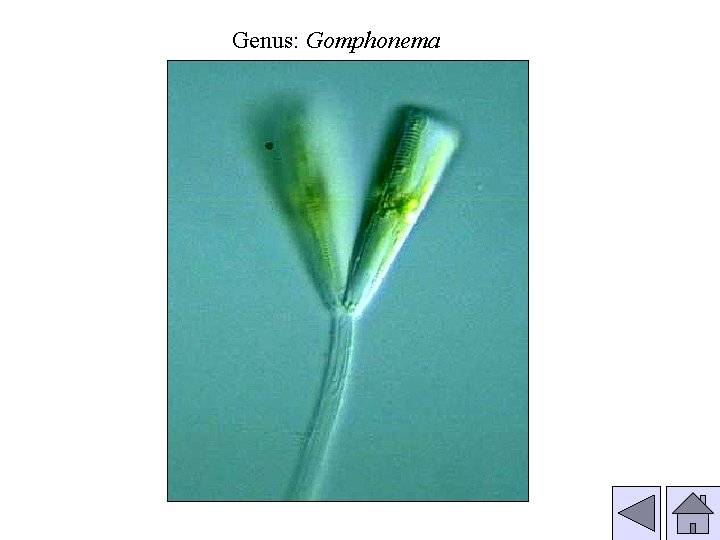
Genus: Gomphonema
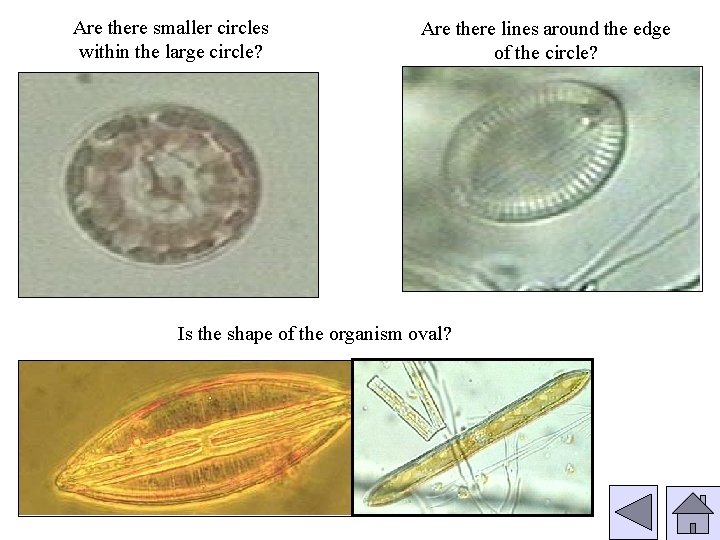
Are there smaller circles within the large circle? Are there lines around the edge of the circle? Is the shape of the organism oval?
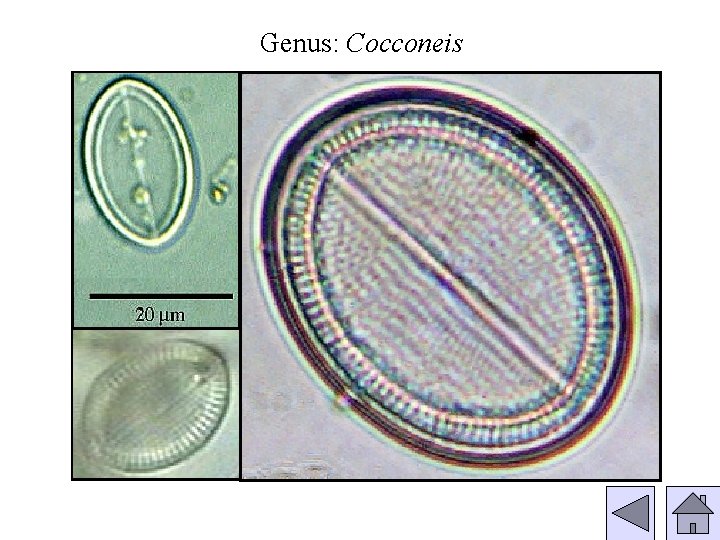
Genus: Cocconeis
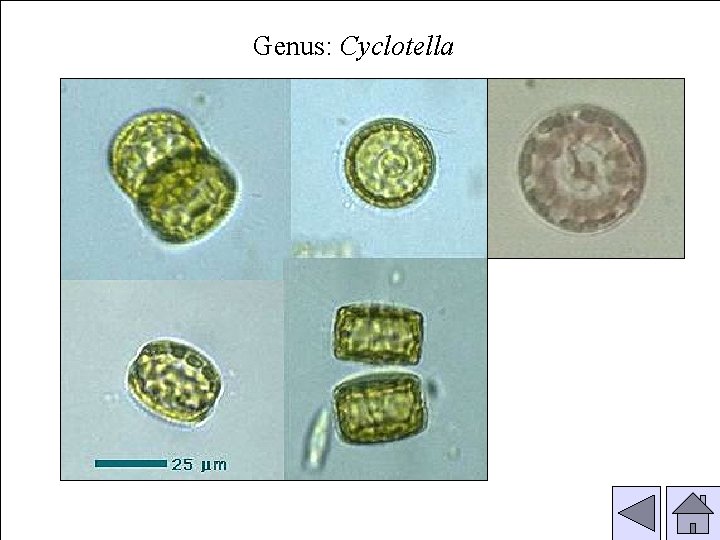
Genus: Cyclotella
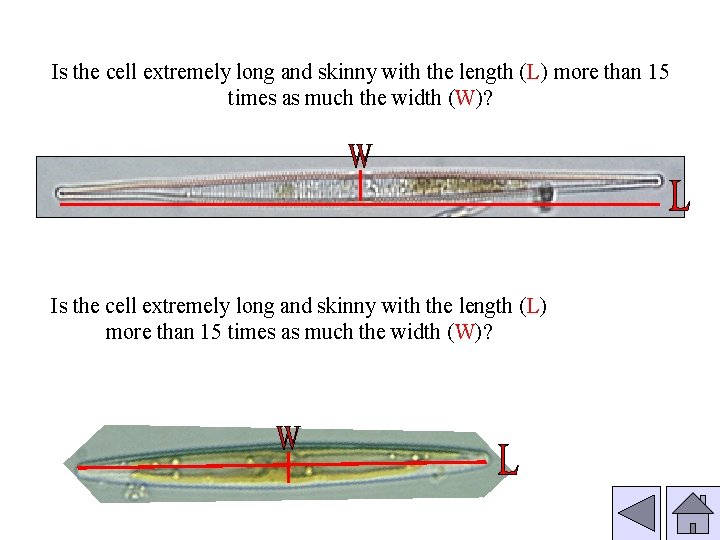
Is the cell extremely long and skinny with the length (L) more than 15 times as much the width (W)?
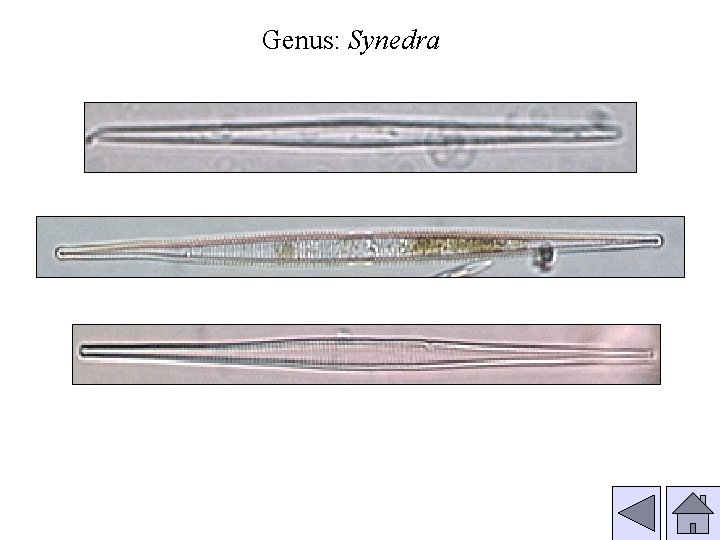
Genus: Synedra
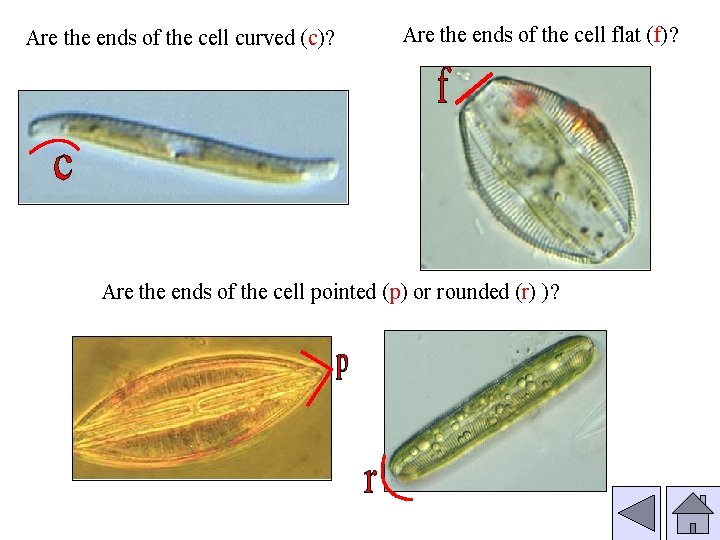
Are the ends of the cell curved (c)? Are the ends of the cell flat (f)? Are the ends of the cell pointed (p) or rounded (r) )?
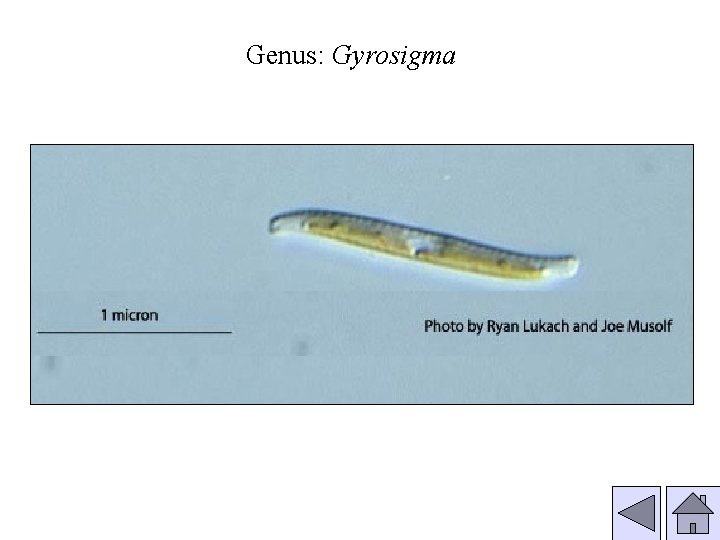
Genus: Gyrosigma
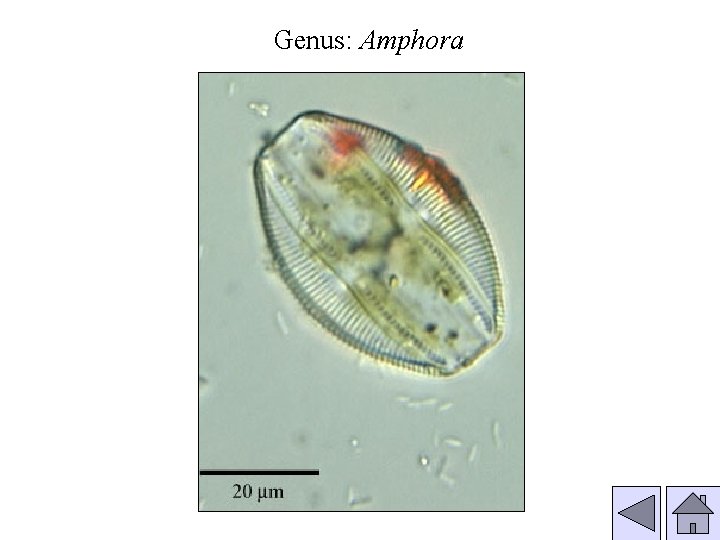
Genus: Amphora
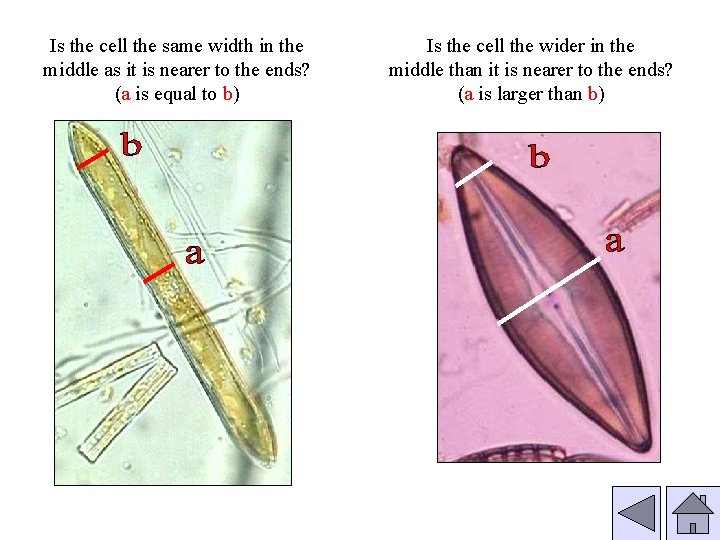
Is the cell the same width in the middle as it is nearer to the ends? (a is equal to b) Is the cell the wider in the middle than it is nearer to the ends? (a is larger than b)
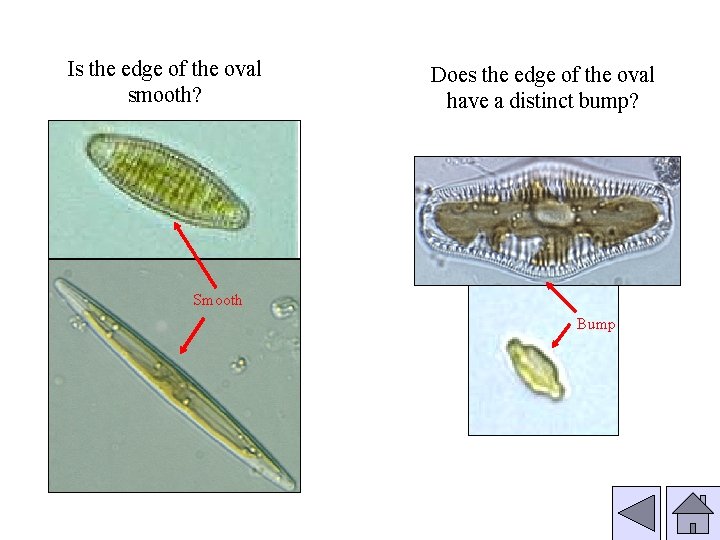
Is the edge of the oval smooth? Does the edge of the oval have a distinct bump? Smooth Bump
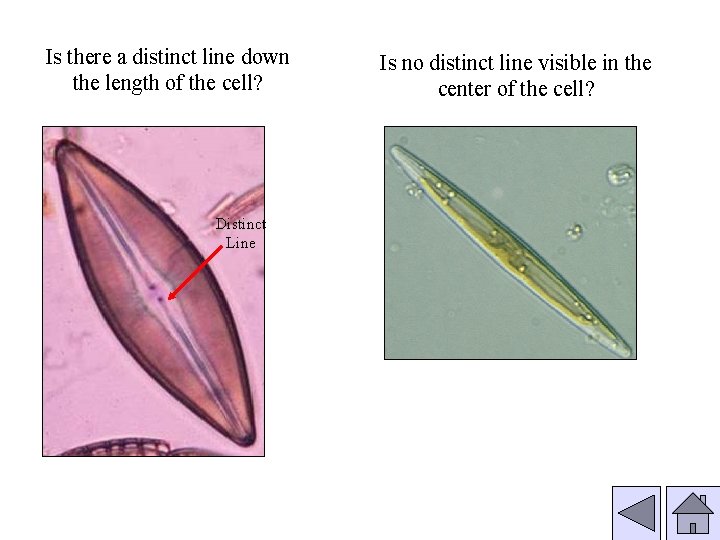
Is there a distinct line down the length of the cell? Distinct Line Is no distinct line visible in the center of the cell?
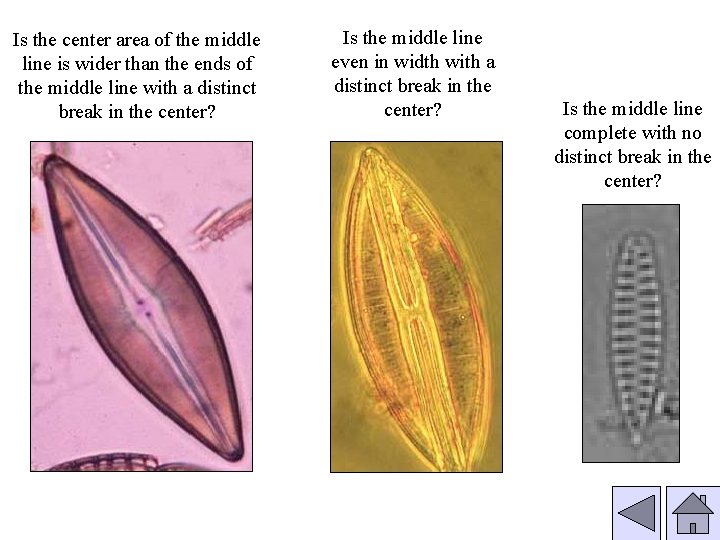
Is the center area of the middle line is wider than the ends of the middle line with a distinct break in the center? Is the middle line even in width with a distinct break in the center? Is the middle line complete with no distinct break in the center?
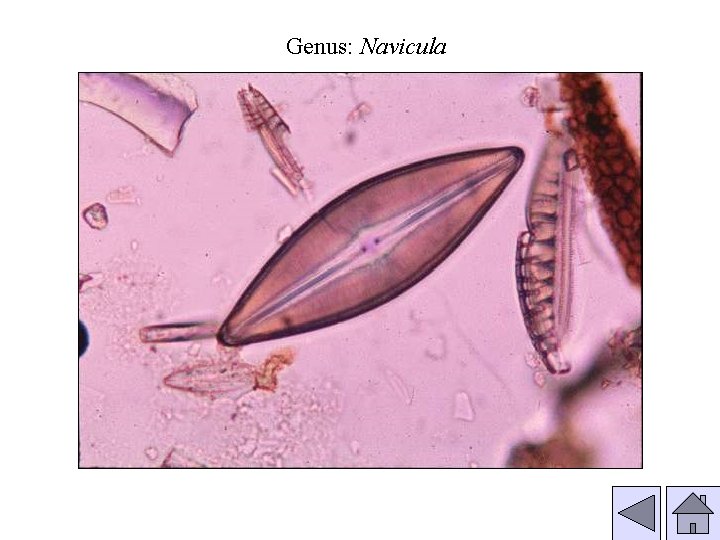
Genus: Navicula
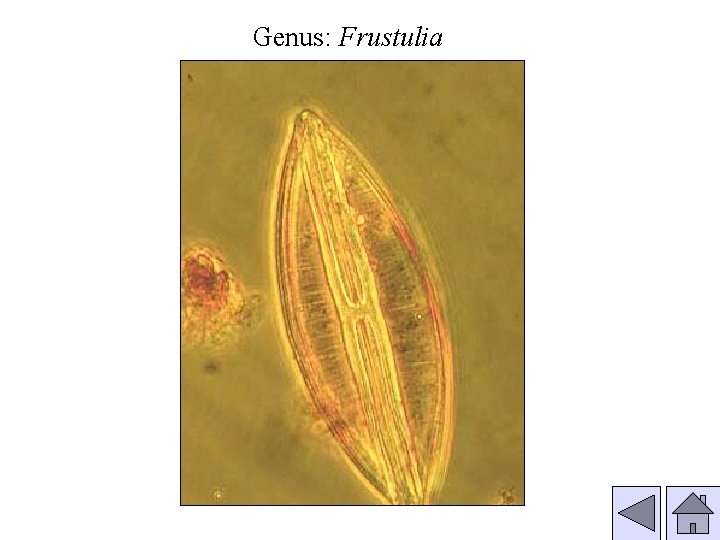
Genus: Frustulia
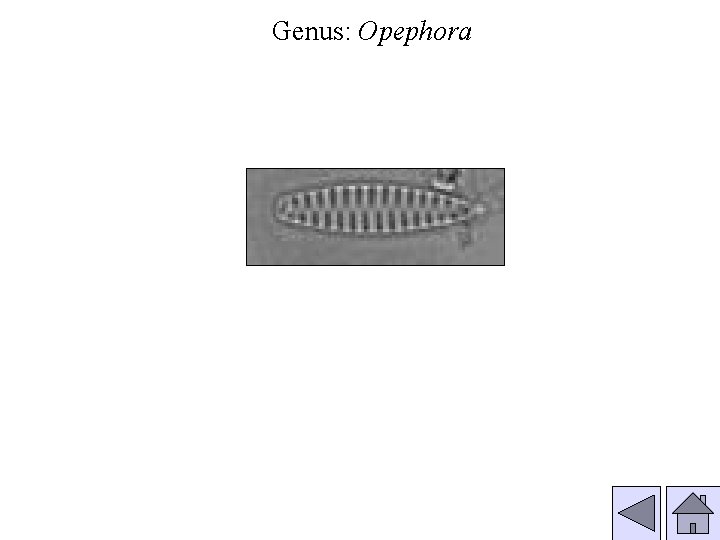
Genus: Opephora
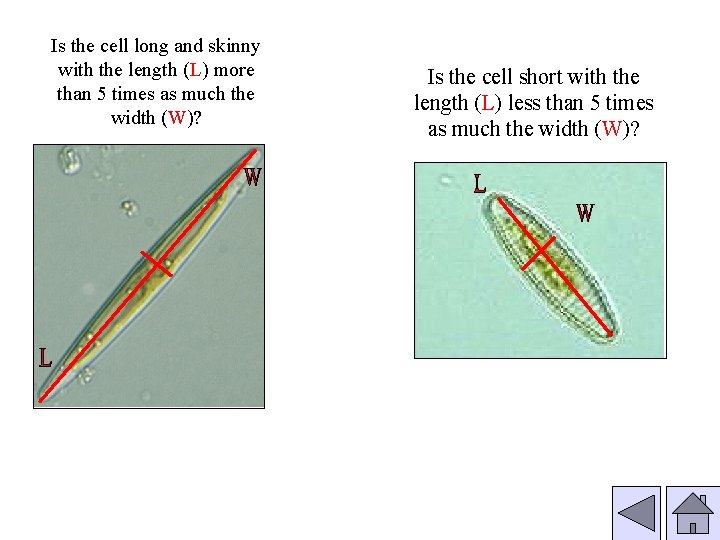
Is the cell long and skinny with the length (L) more than 5 times as much the width (W)? Is the cell short with the length (L) less than 5 times as much the width (W)?
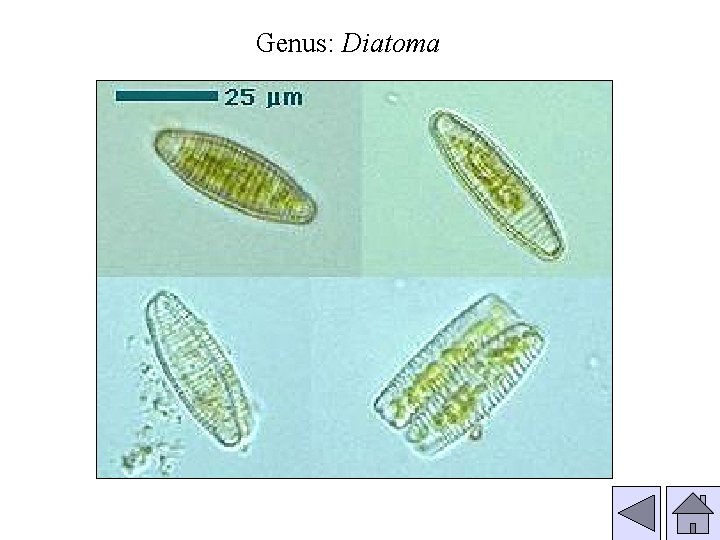
Genus: Diatoma
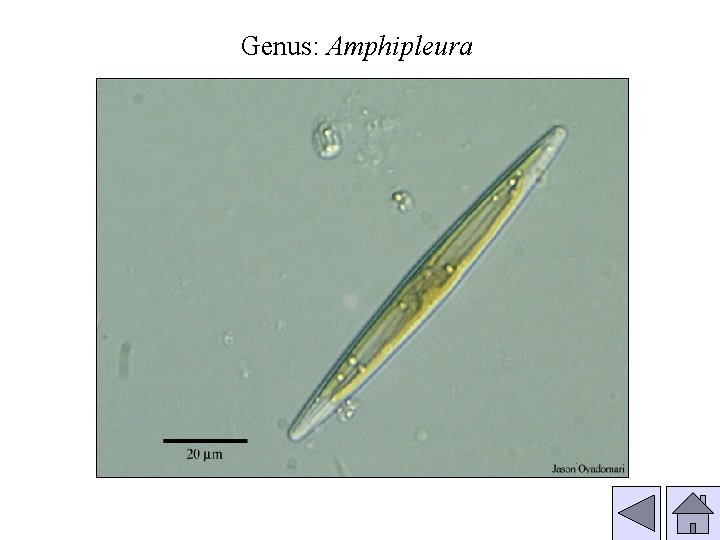
Genus: Amphipleura
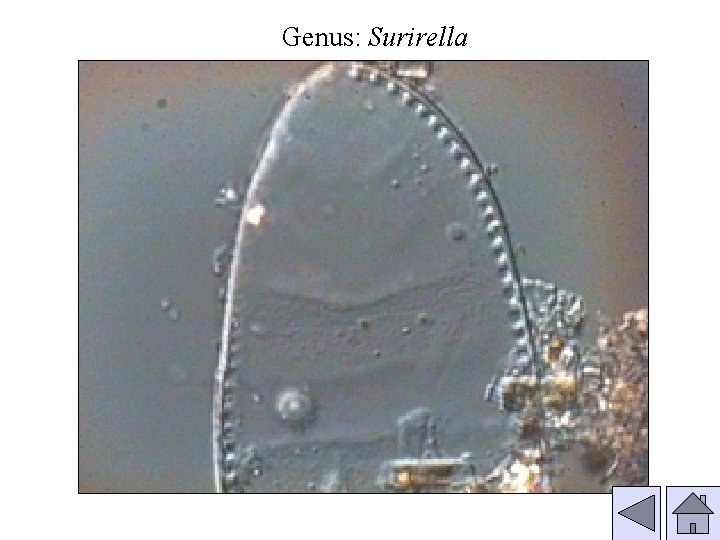
Genus: Surirella
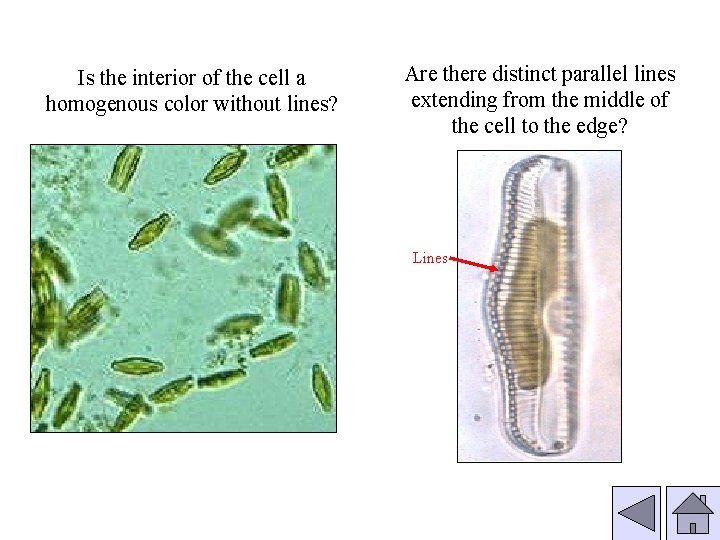
Is the interior of the cell a homogenous color without lines? Are there distinct parallel lines extending from the middle of the cell to the edge? Lines
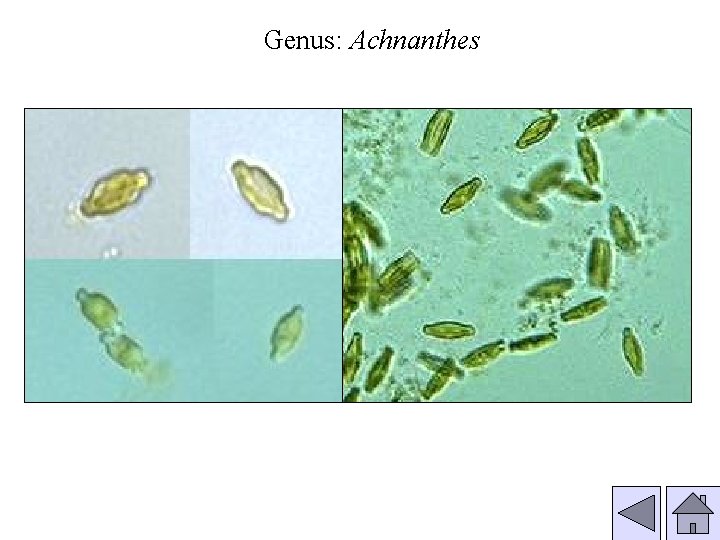
Genus: Achnanthes
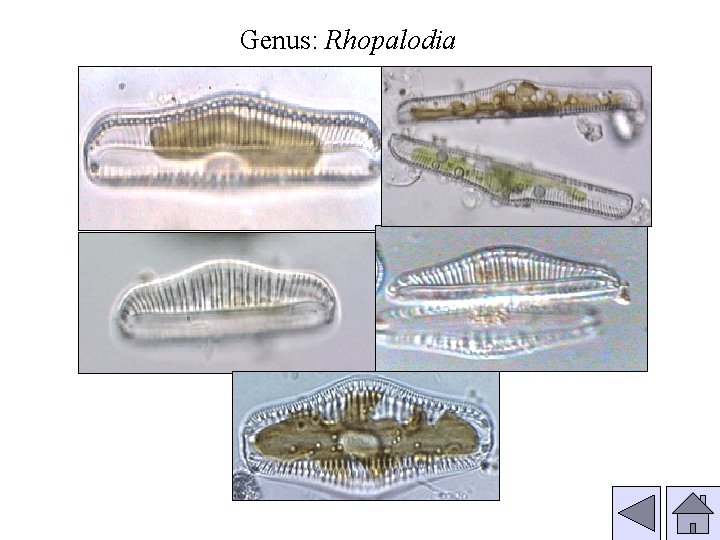
Genus: Rhopalodia
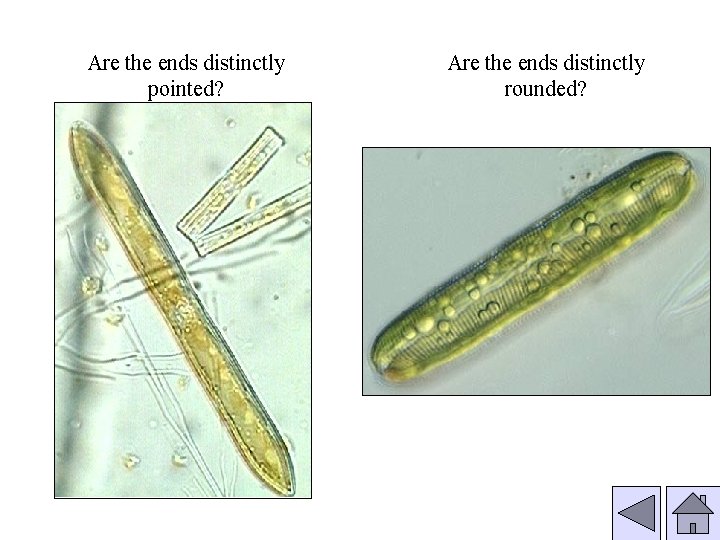
Are the ends distinctly pointed? Are the ends distinctly rounded?
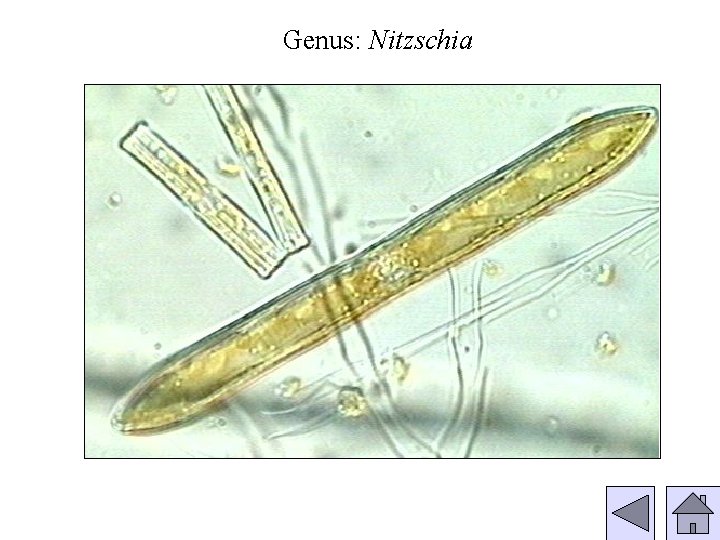
Genus: Nitzschia
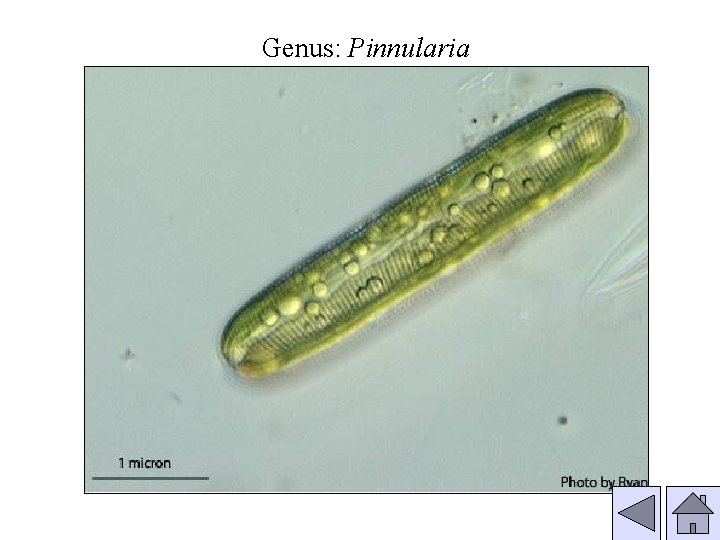
Genus: Pinnularia

Actinastrum

Ankistrodesmus
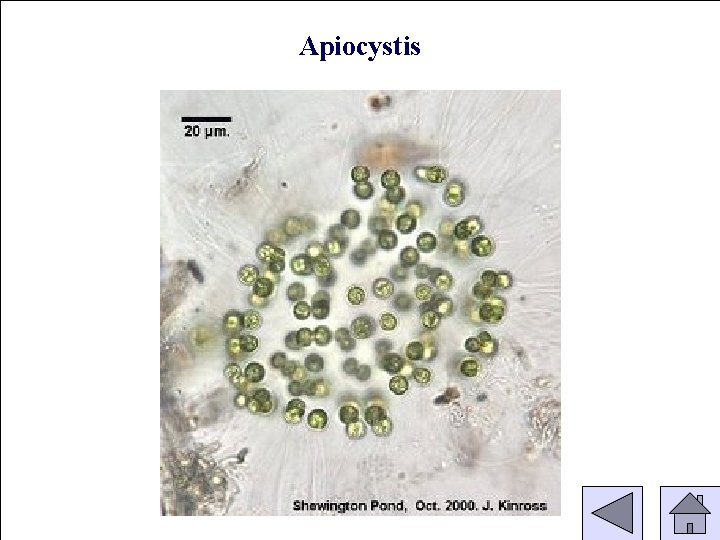
Apiocystis
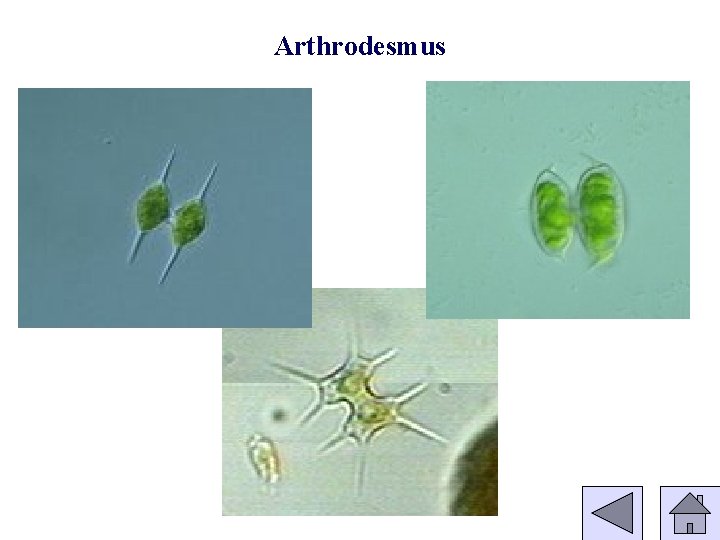
Arthrodesmus
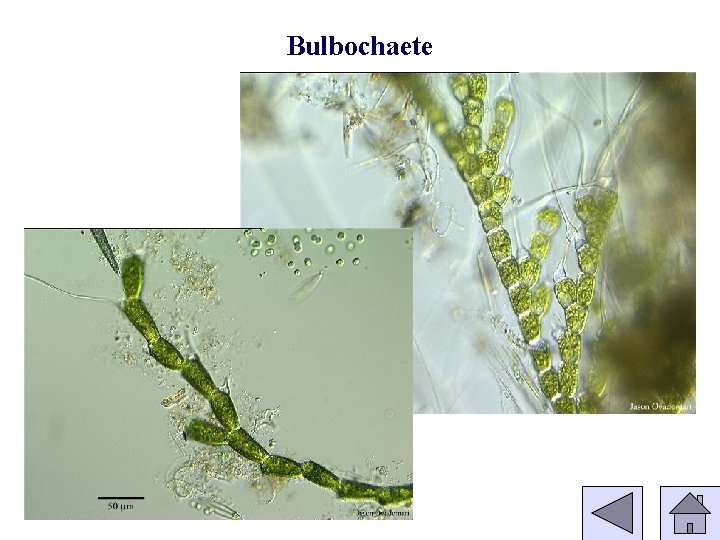
Bulbochaete
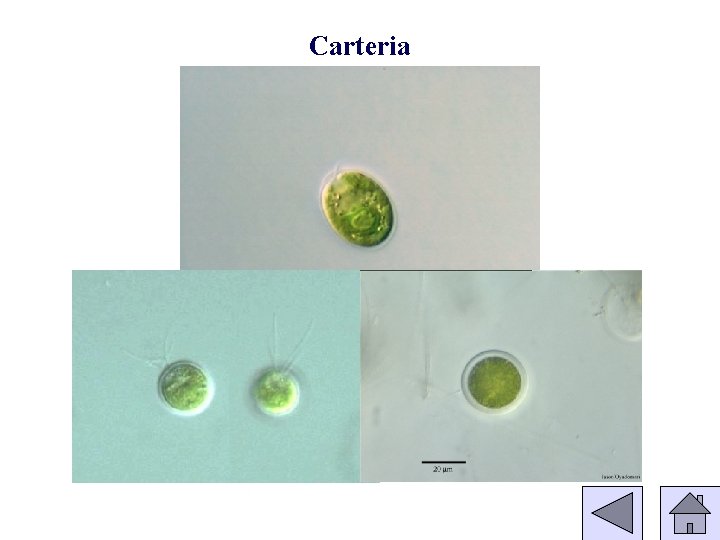
Carteria

Centritractus
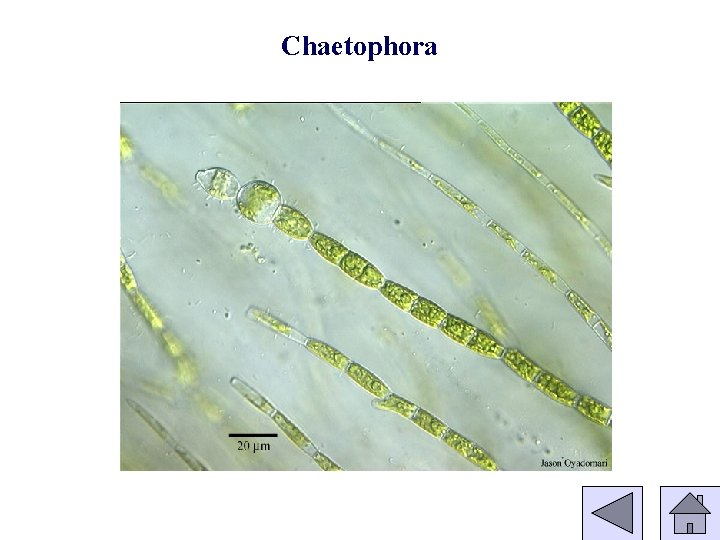
Chaetophora

Chaetosphaeridium
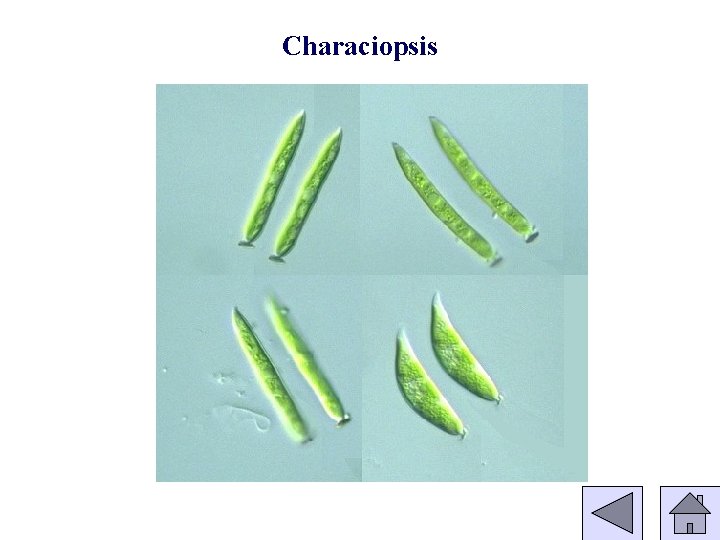
Characiopsis
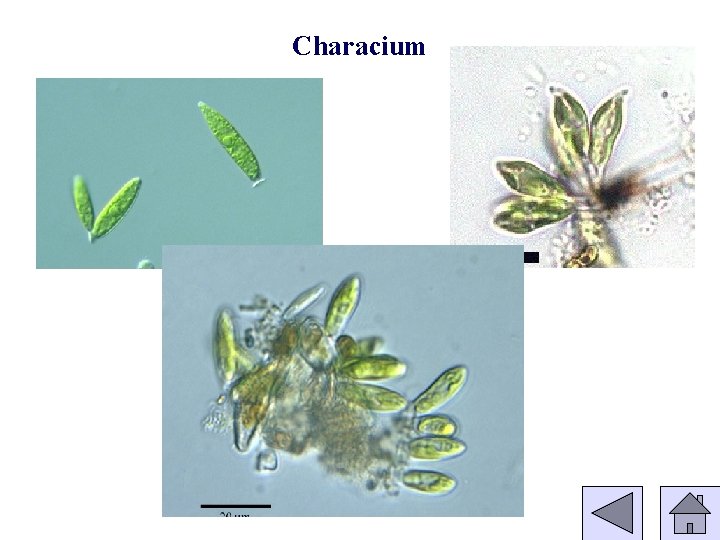
Characium
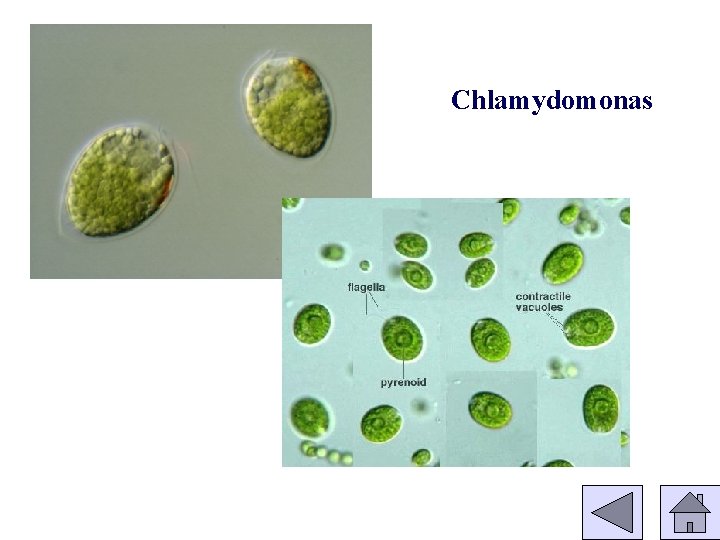
Chlamydomonas
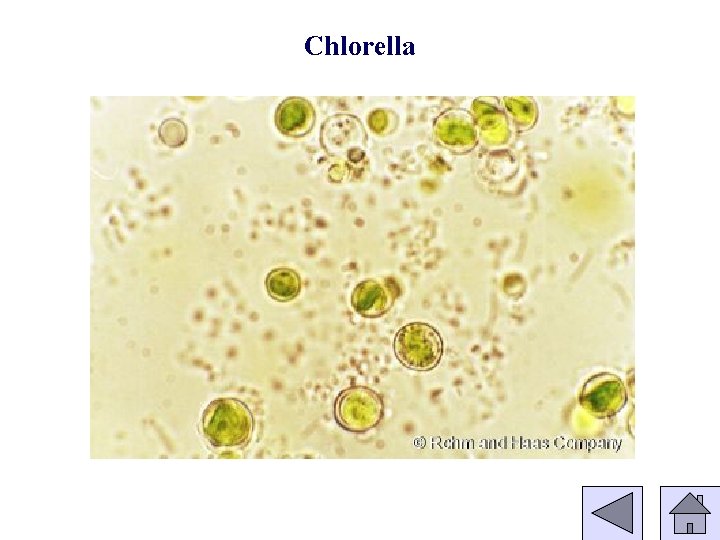
Chlorella

Chlorococcum

Cladophora
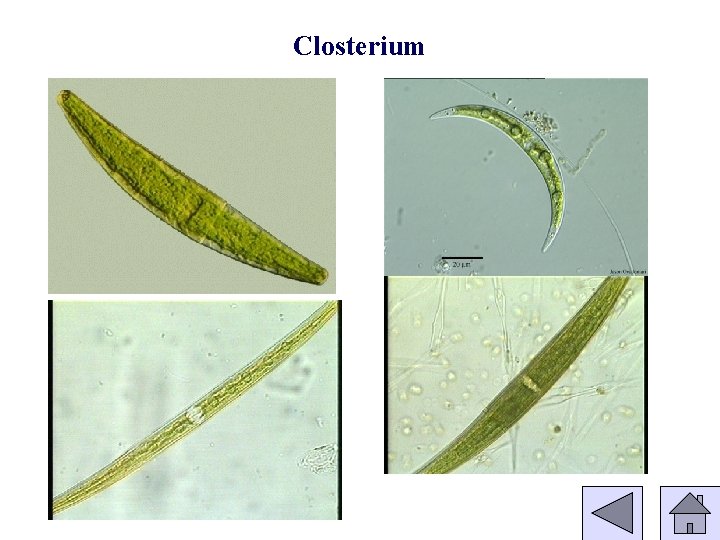
Closterium
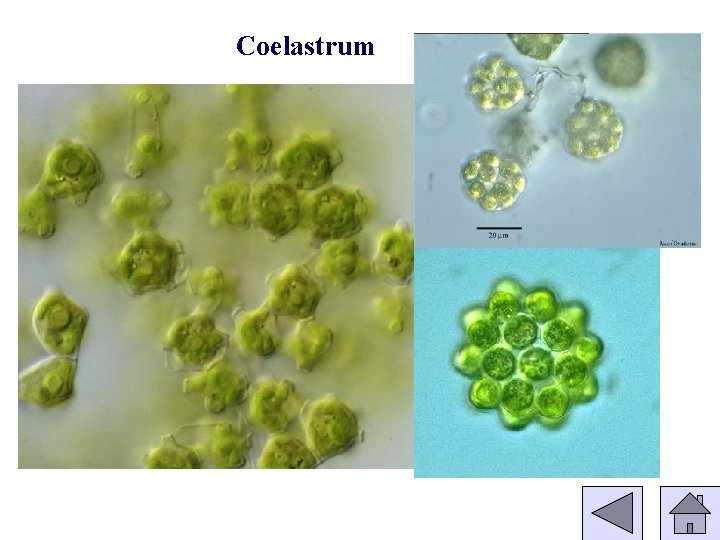
Coelastrum
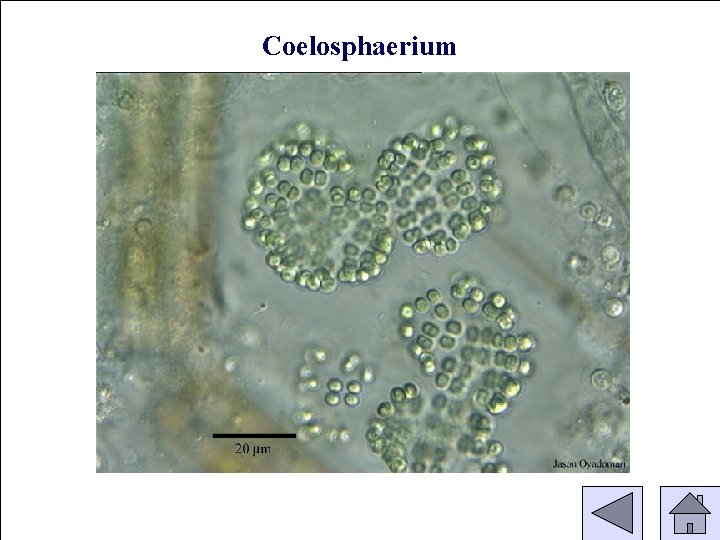
Coelosphaerium

Coleochaete
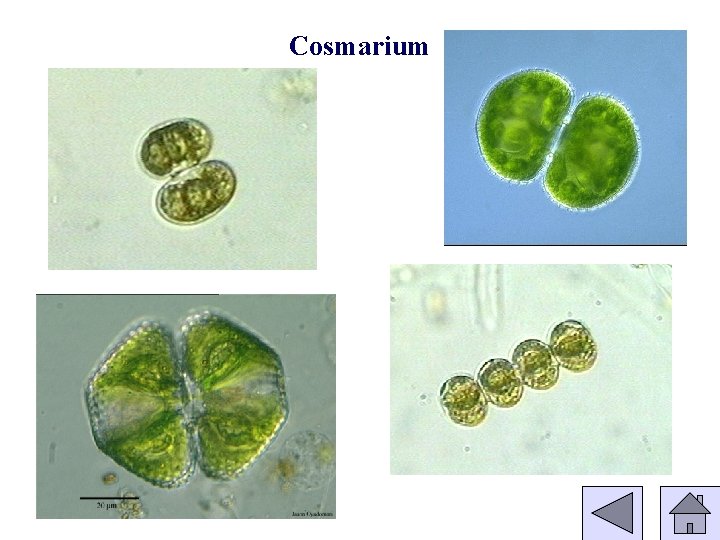
Cosmarium
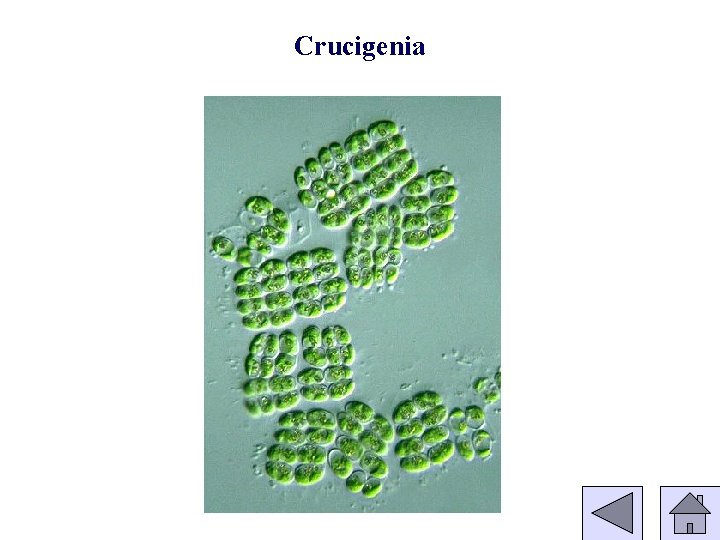
Crucigenia
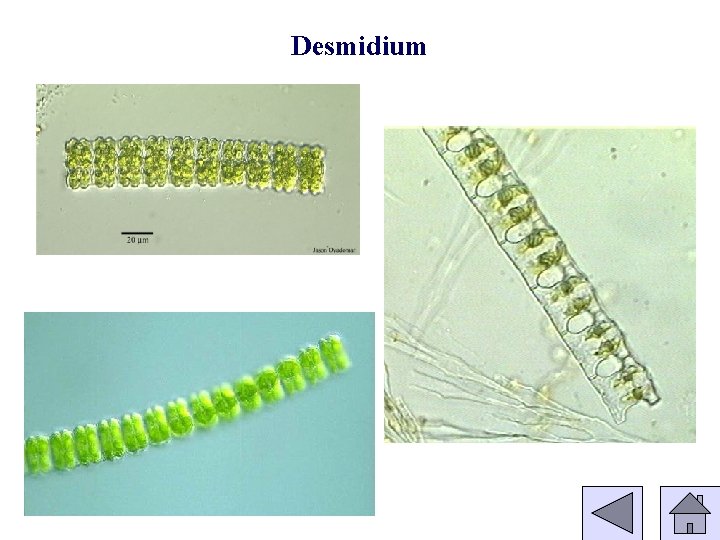
Desmidium
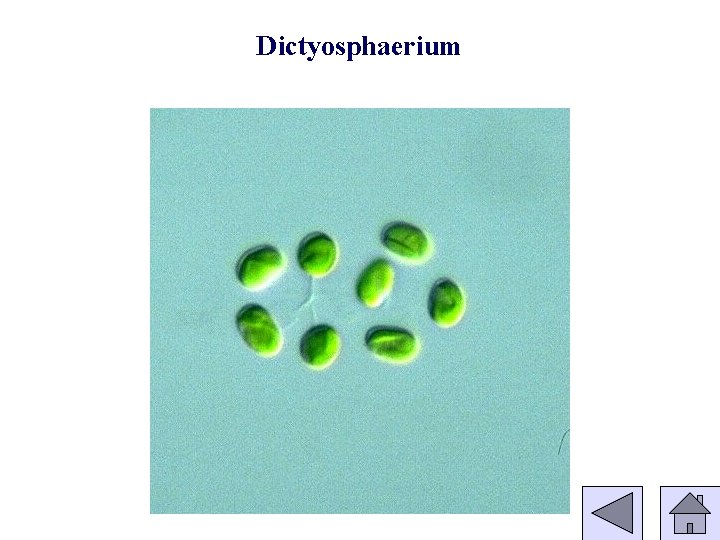
Dictyosphaerium
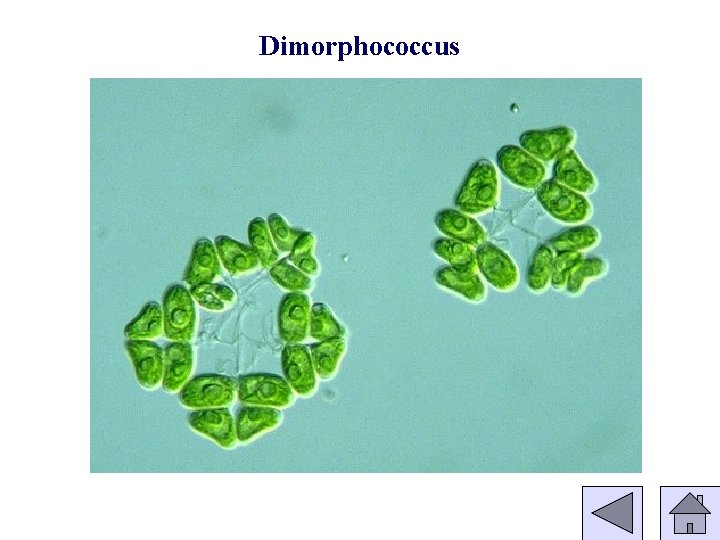
Dimorphococcus
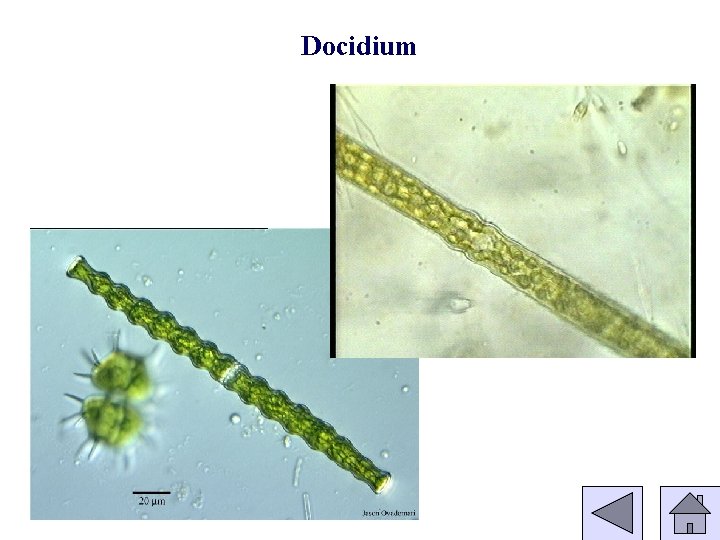
Docidium
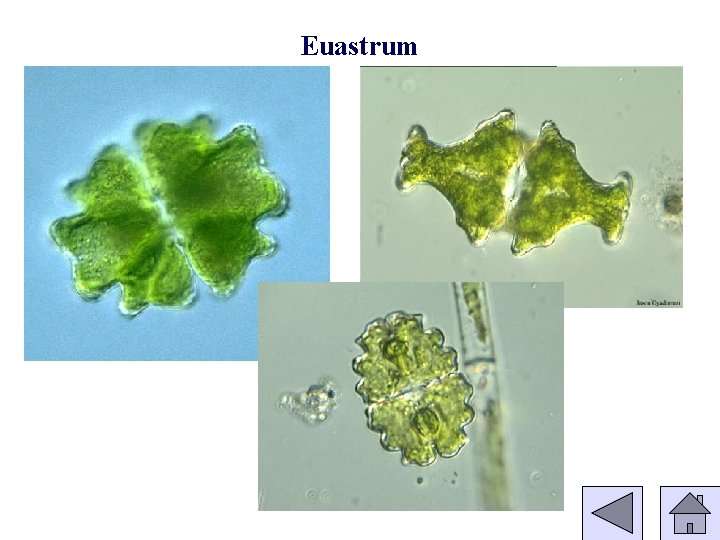
Euastrum
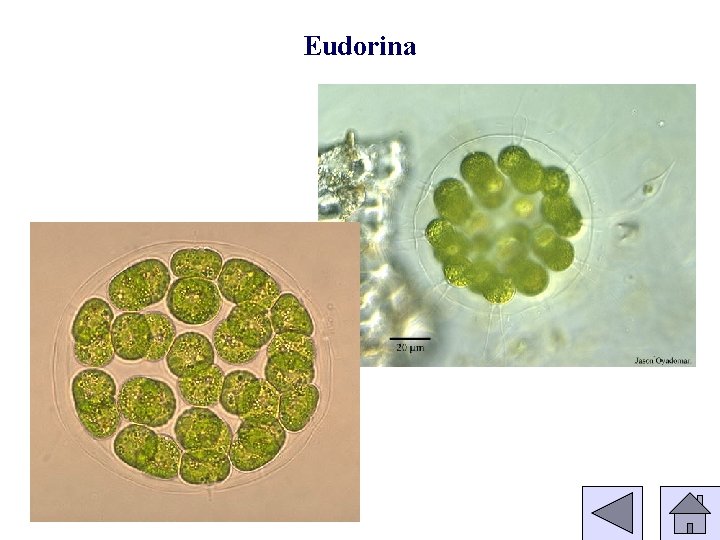
Eudorina
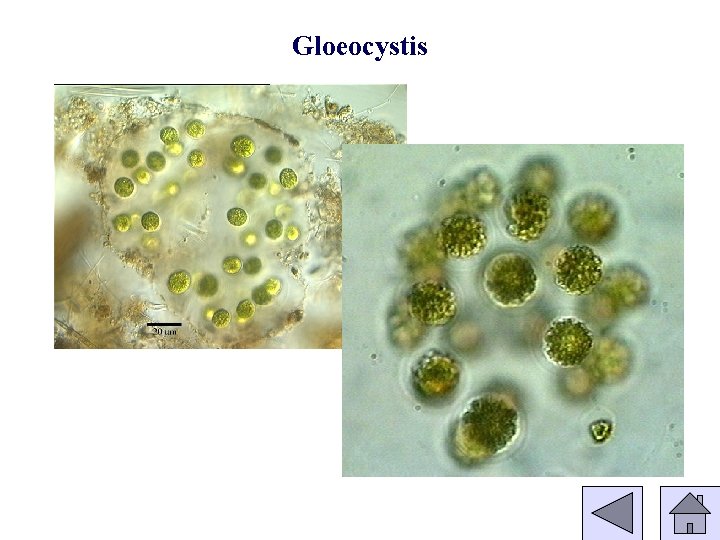
Gloeocystis
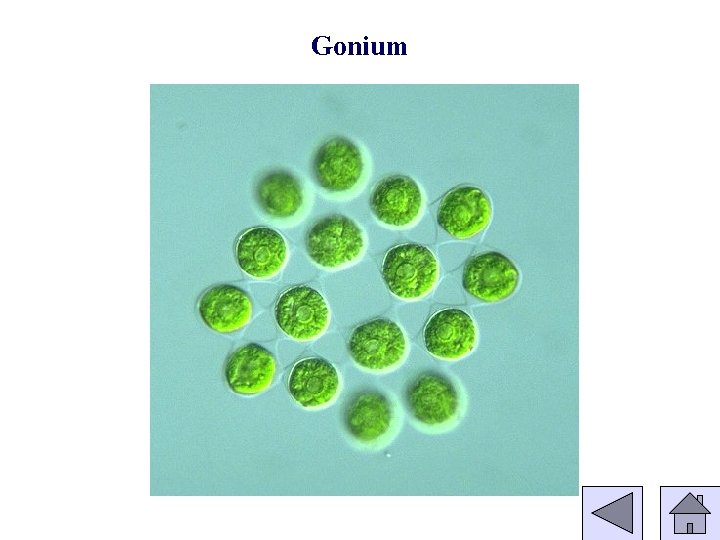
Gonium
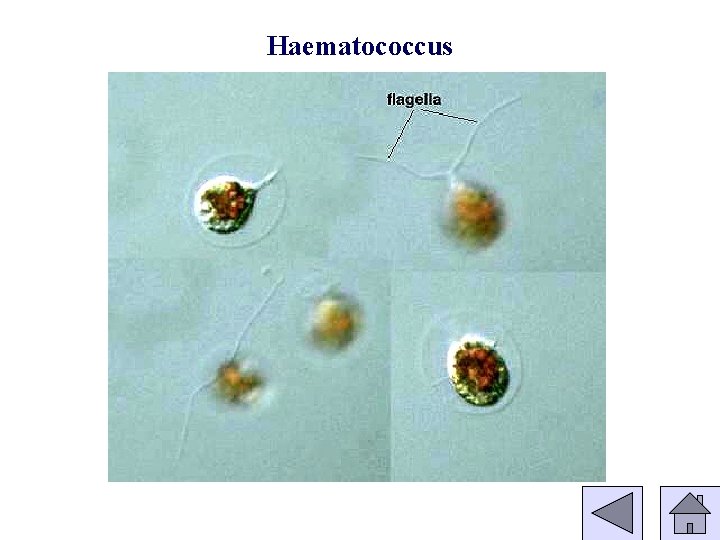
Haematococcus
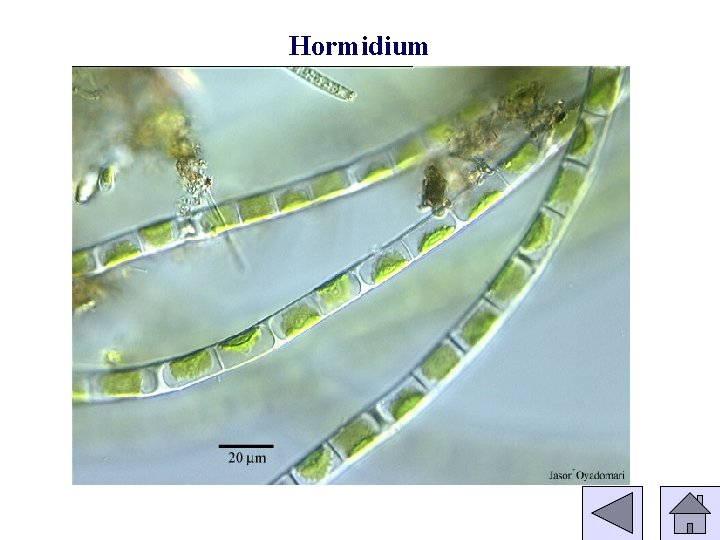
Hormidium
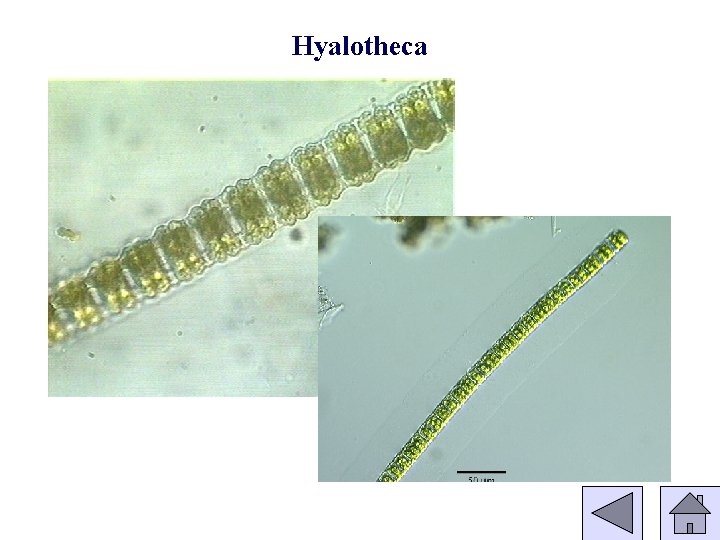
Hyalotheca
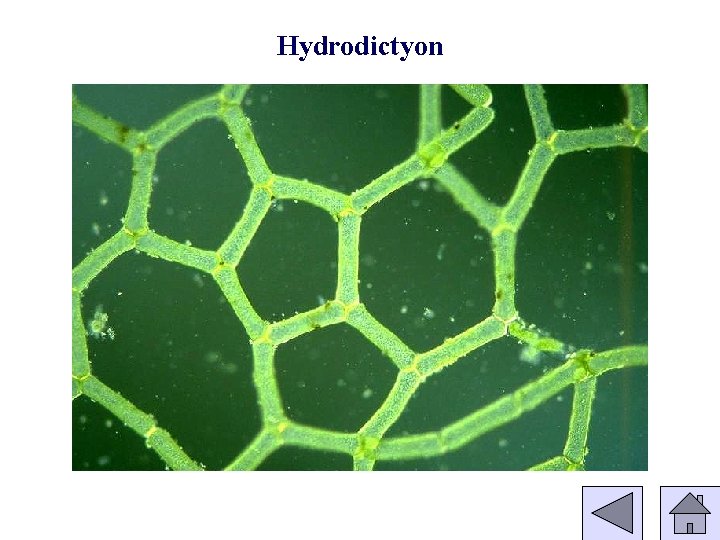
Hydrodictyon
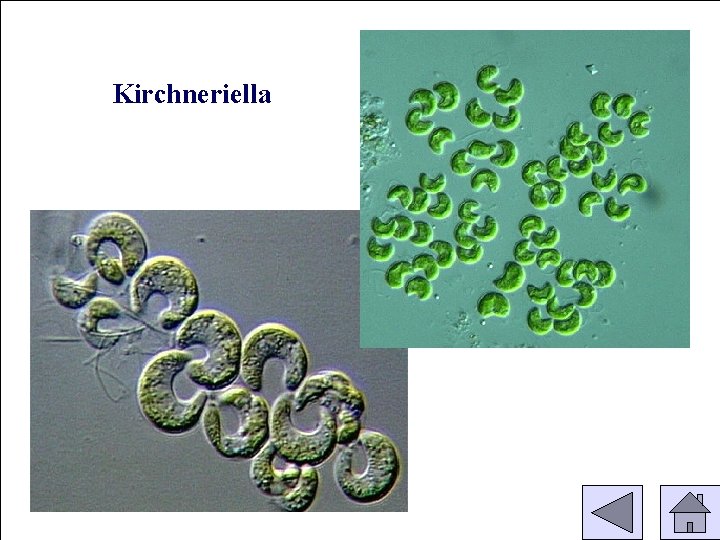
Kirchneriella
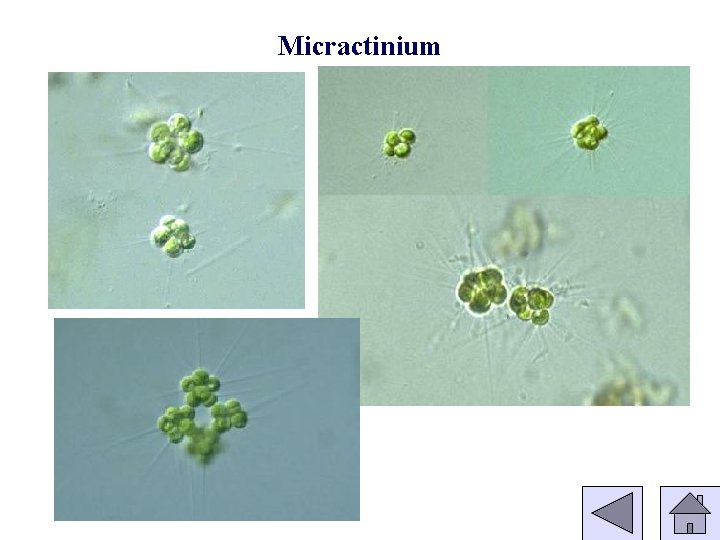
Micractinium
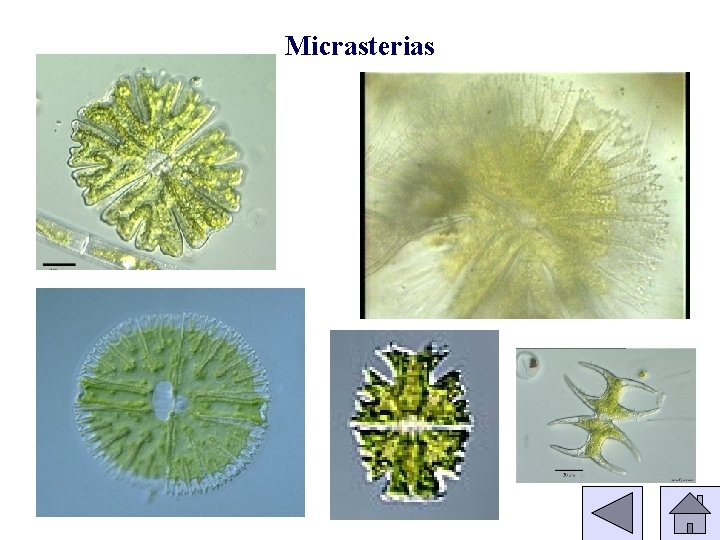
Micrasterias
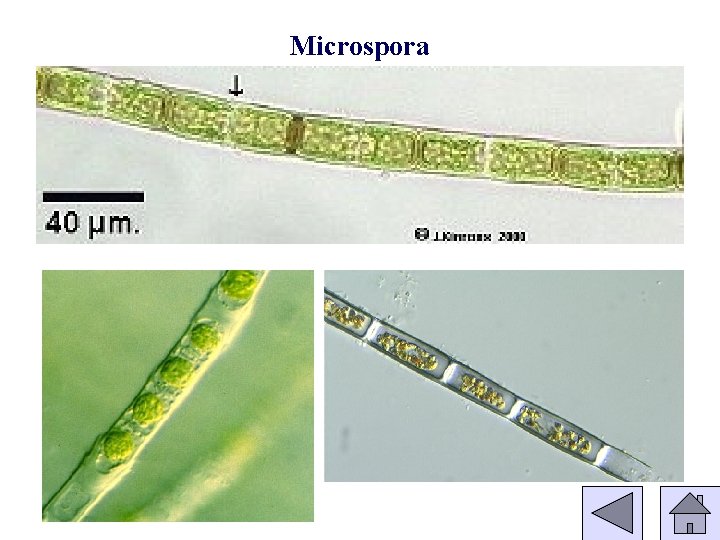
Microspora
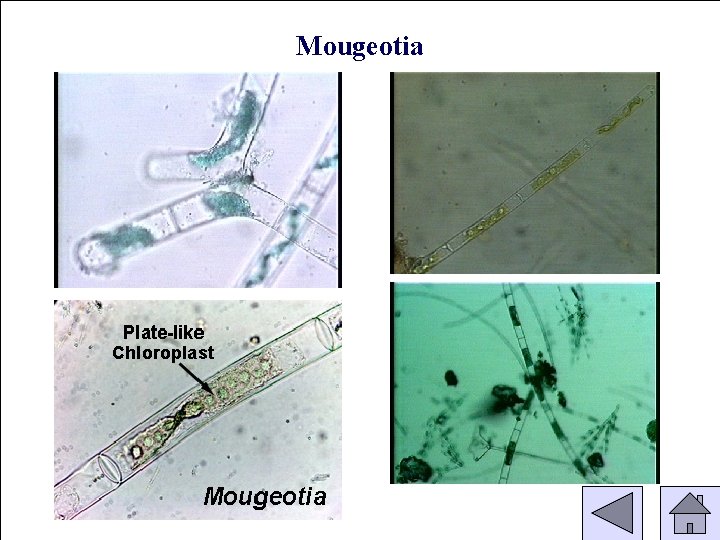
Mougeotia (Conjugating)
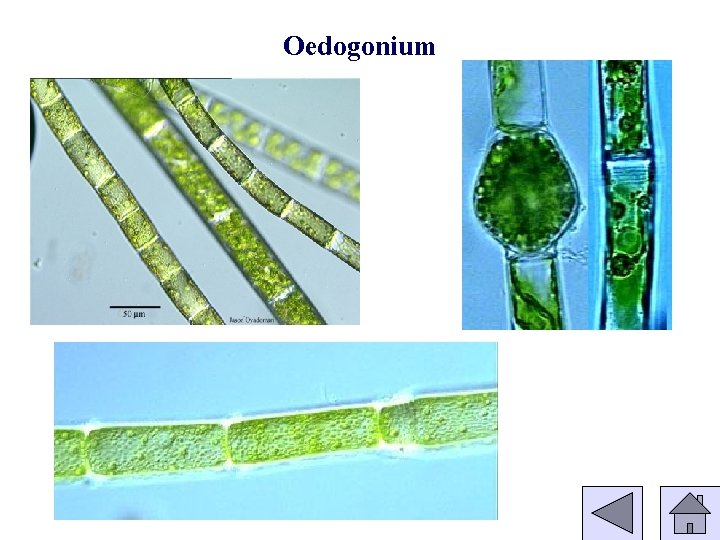
Oedogonium
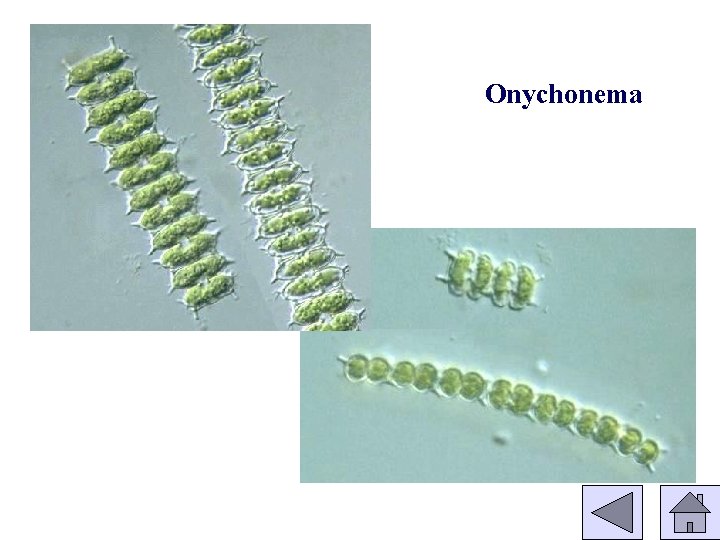
Onychonema
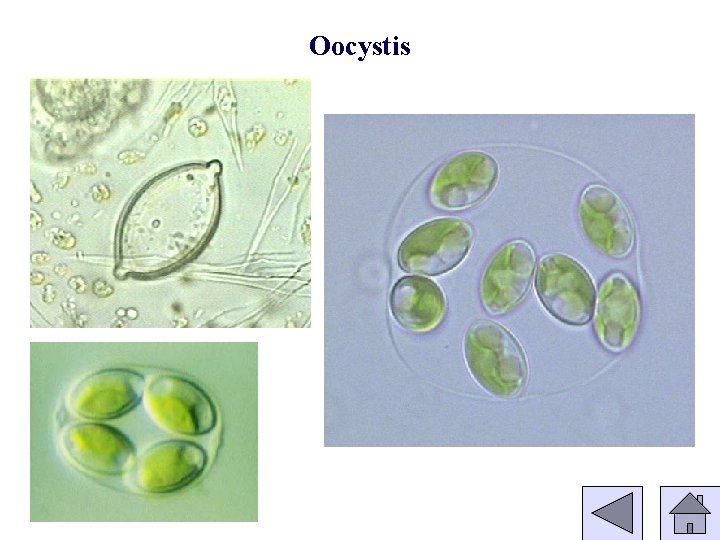
Oocystis
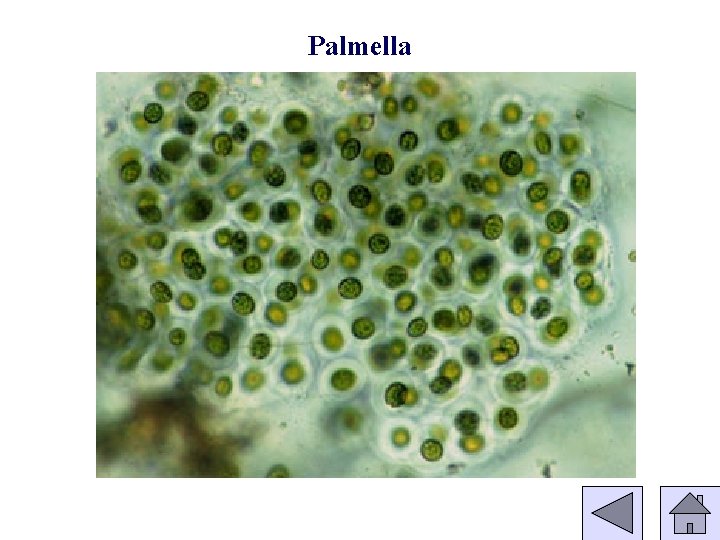
Palmella
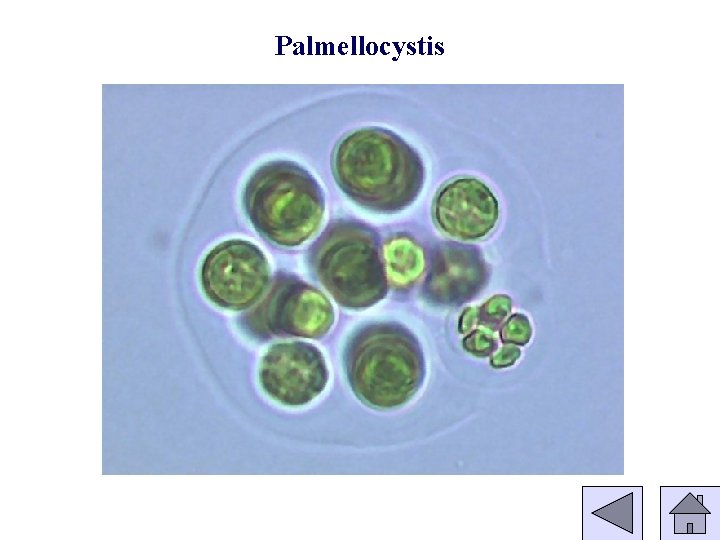
Palmellocystis
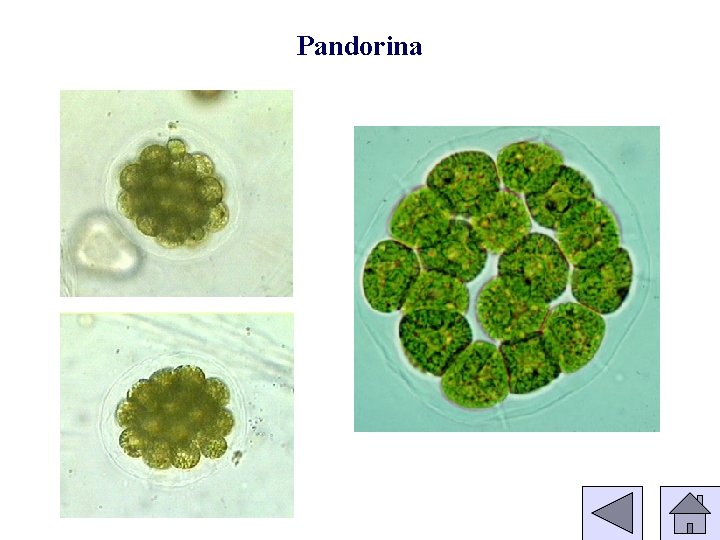
Pandorina
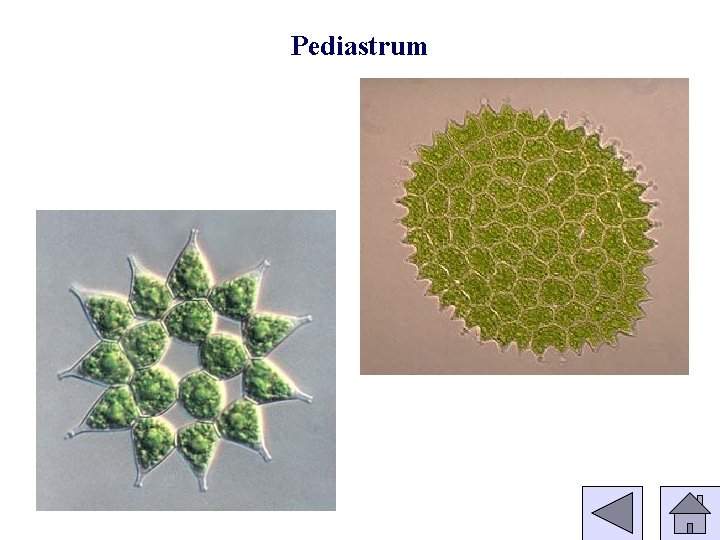
Pediastrum
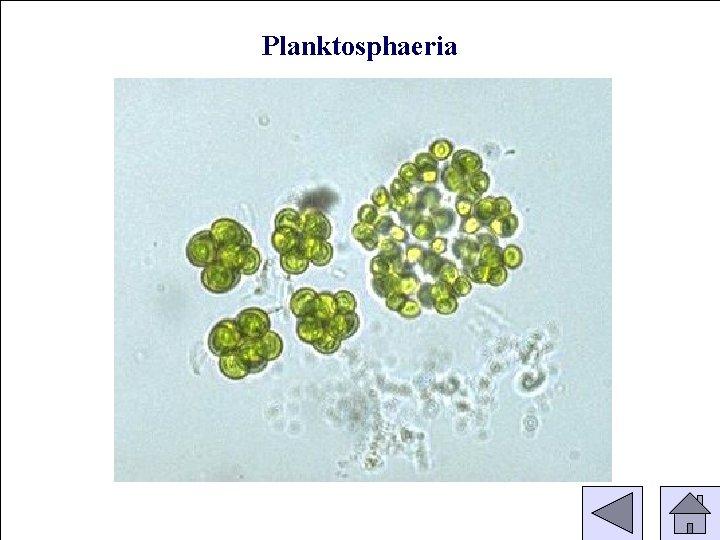
Planktosphaeria
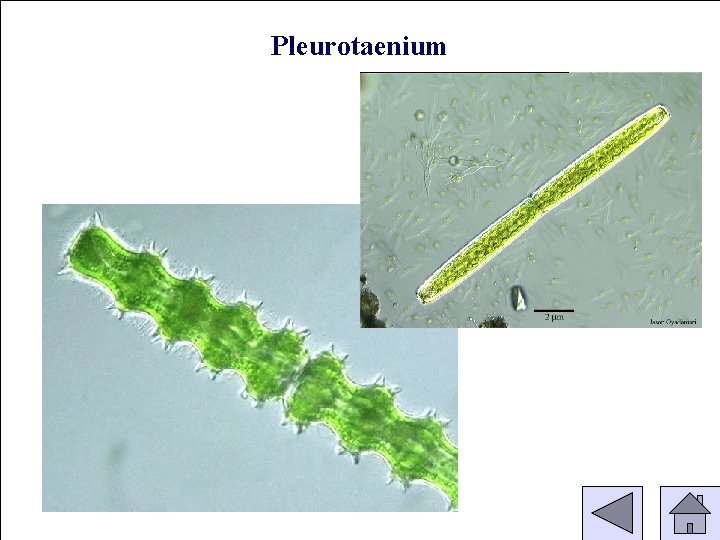
Pleurotaenium
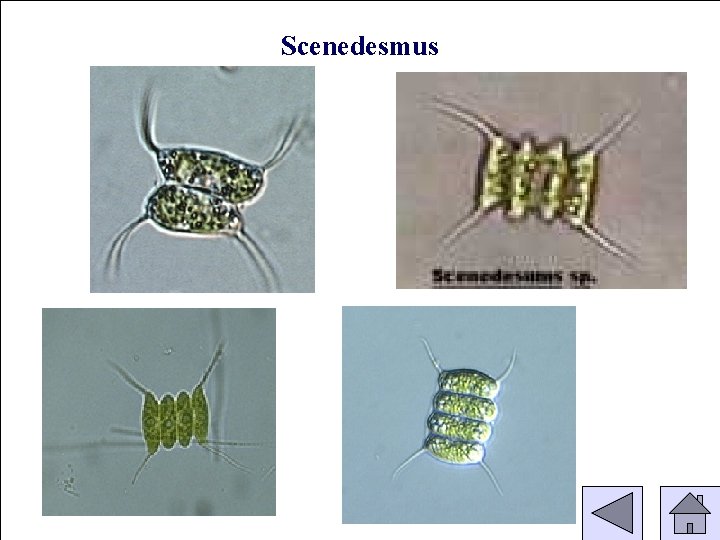
Scenedesmus
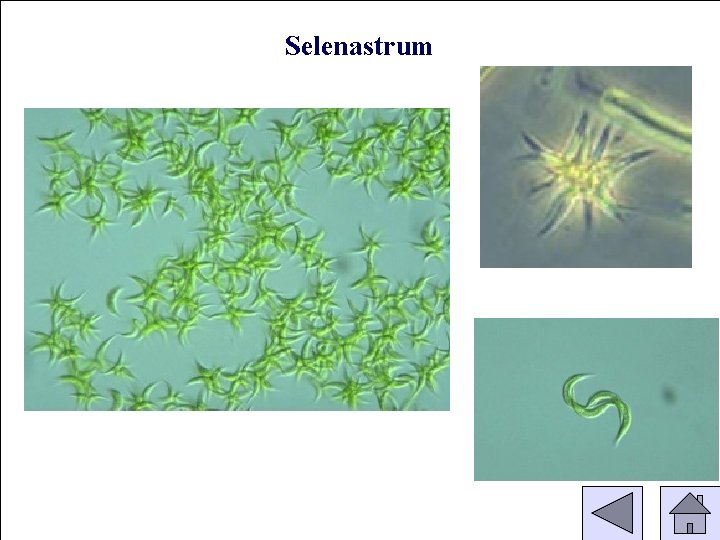
Selenastrum
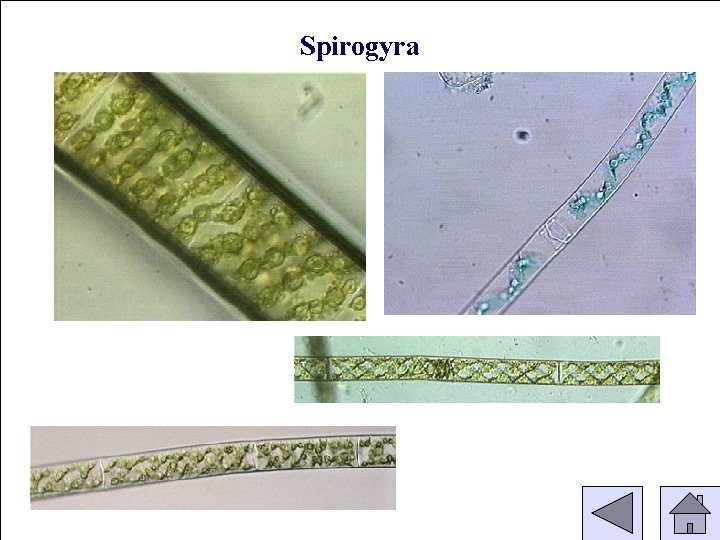
Spirogyra
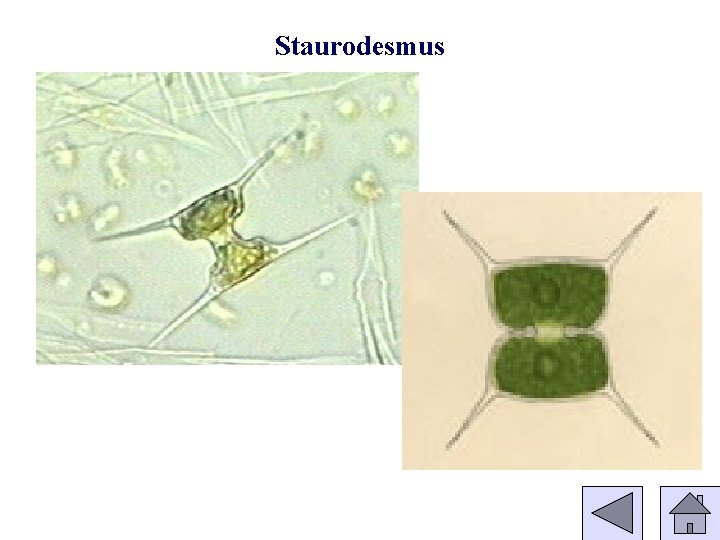
Staurodesmus
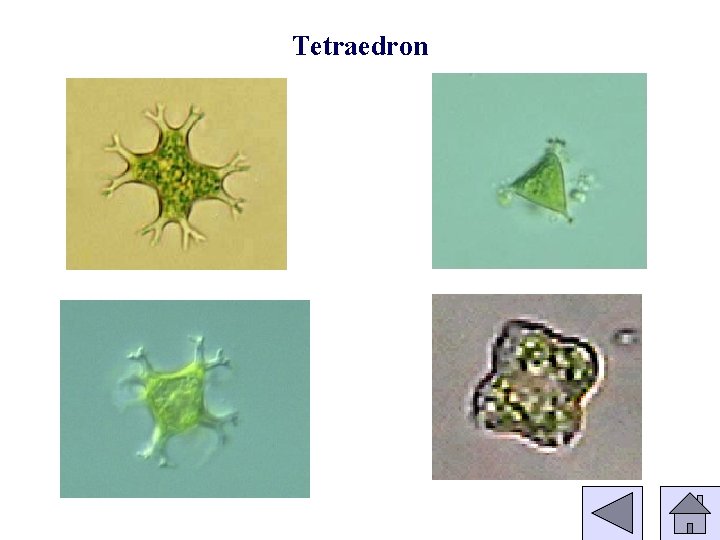
Tetraedron
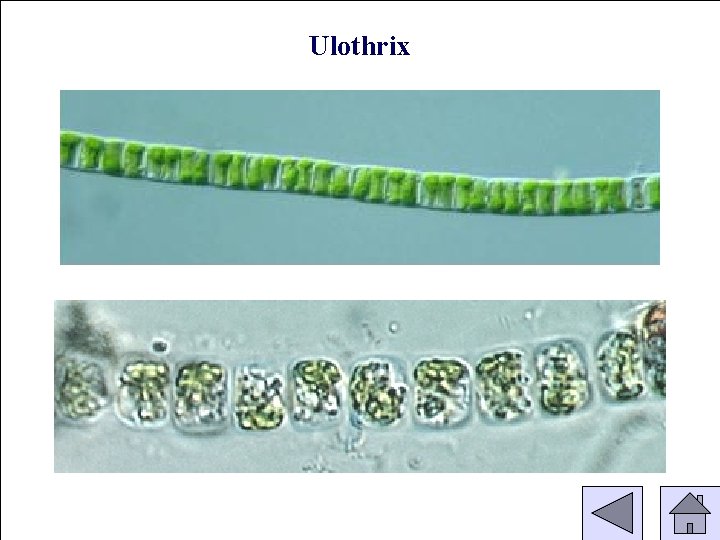
Ulothrix
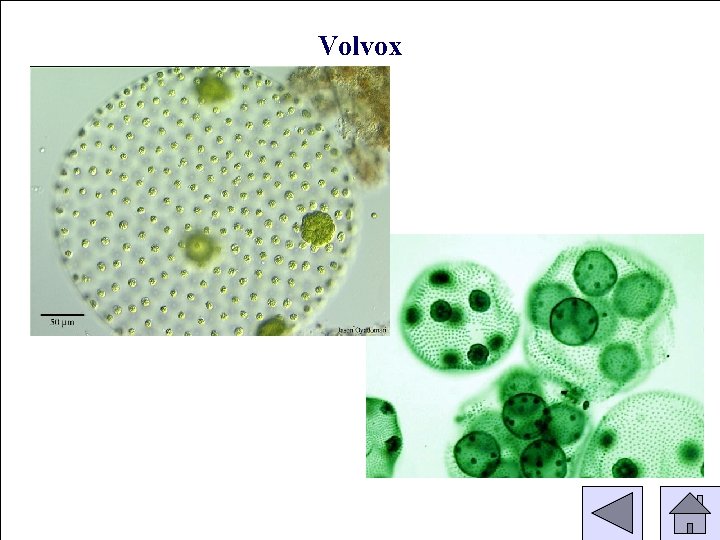
Volvox
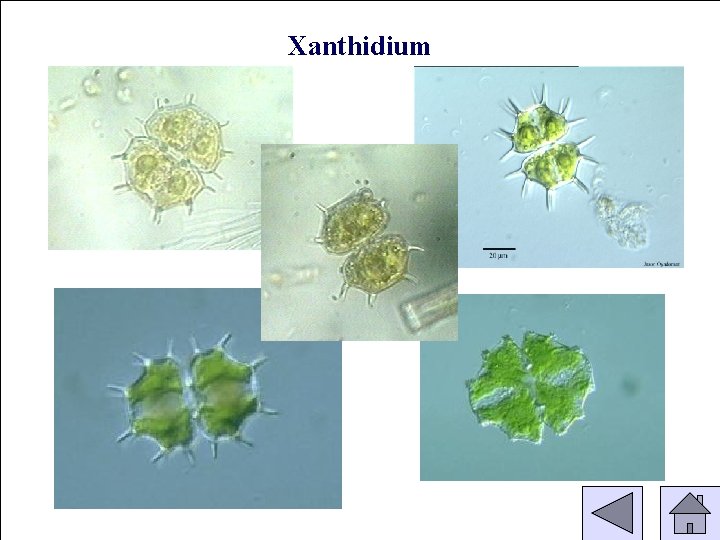
Xanthidium
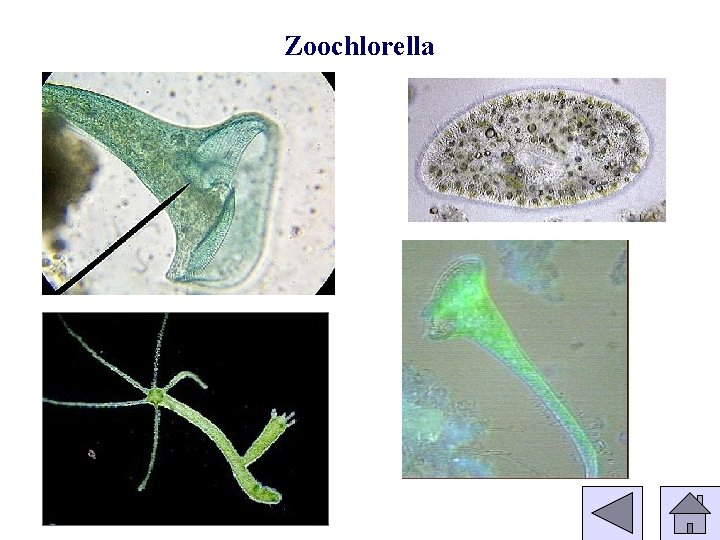
Zoochlorella
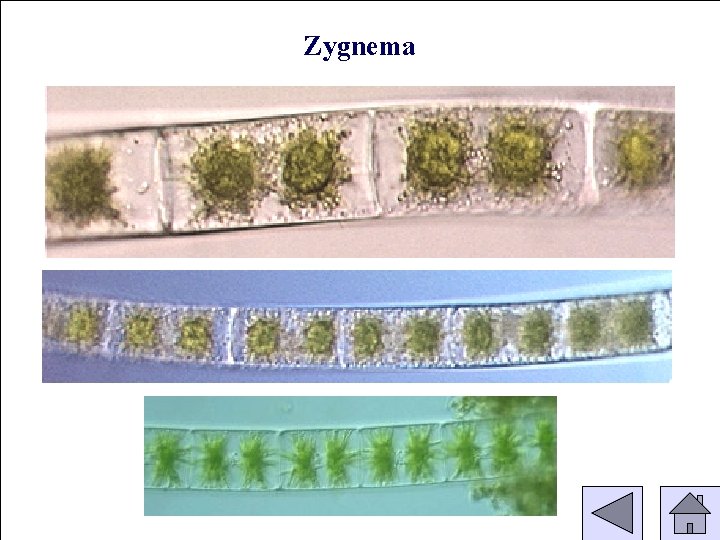
Zygnema
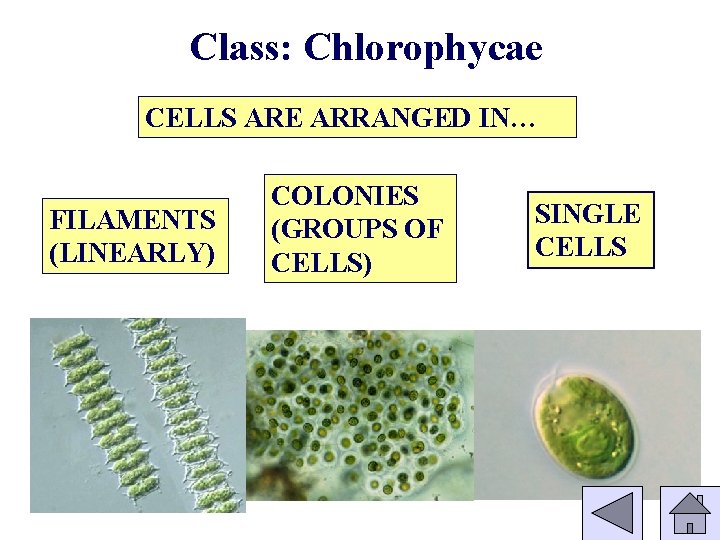
Class: Chlorophycae CELLS ARE ARRANGED IN… FILAMENTS (LINEARLY) COLONIES (GROUPS OF CELLS) SINGLE CELLS
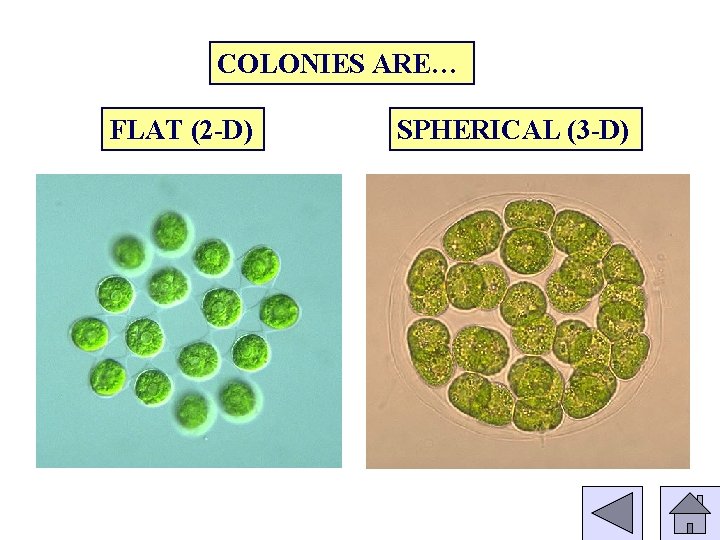
COLONIES ARE… FLAT (2 -D) SPHERICAL (3 -D)
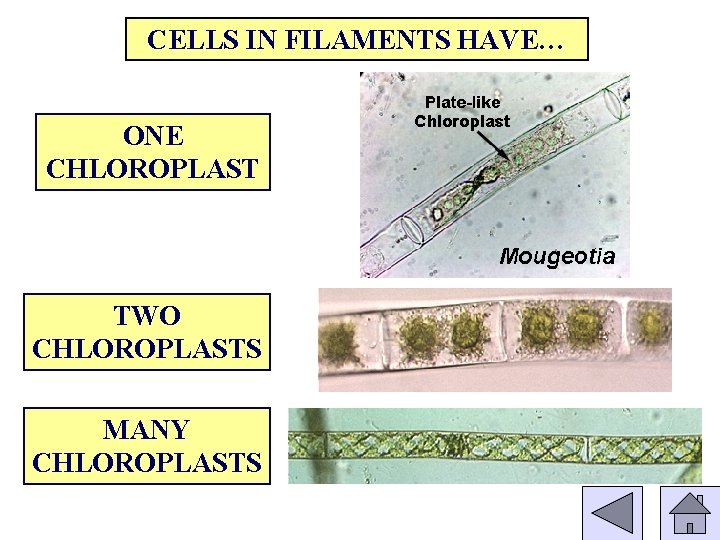
CELLS IN FILAMENTS HAVE… ONE CHLOROPLAST TWO CHLOROPLASTS MANY CHLOROPLASTS
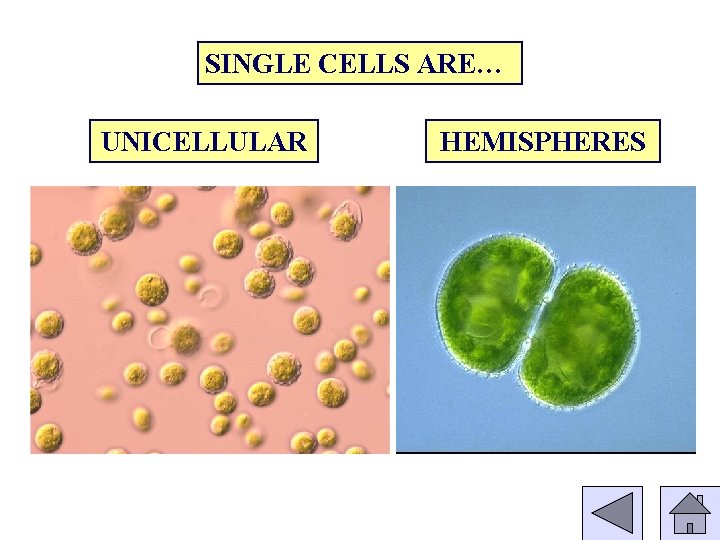
SINGLE CELLS ARE… UNICELLULAR HEMISPHERES
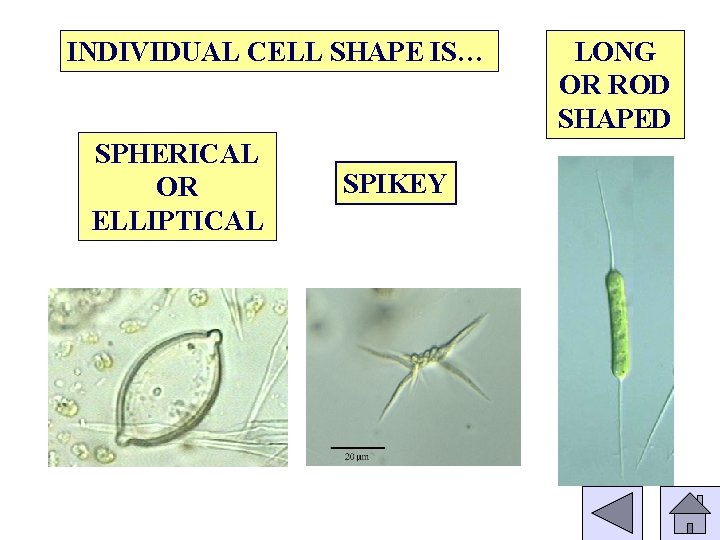
INDIVIDUAL CELL SHAPE IS… SPHERICAL OR ELLIPTICAL SPIKEY LONG OR ROD SHAPED
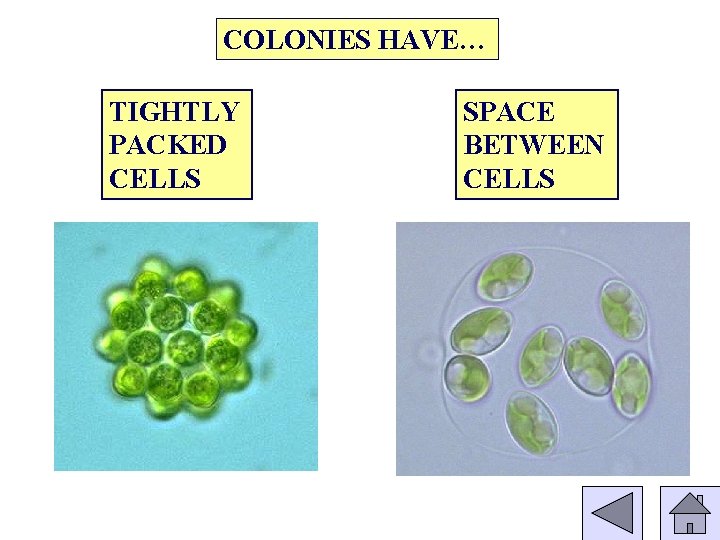
COLONIES HAVE… TIGHTLY PACKED CELLS SPACE BETWEEN CELLS
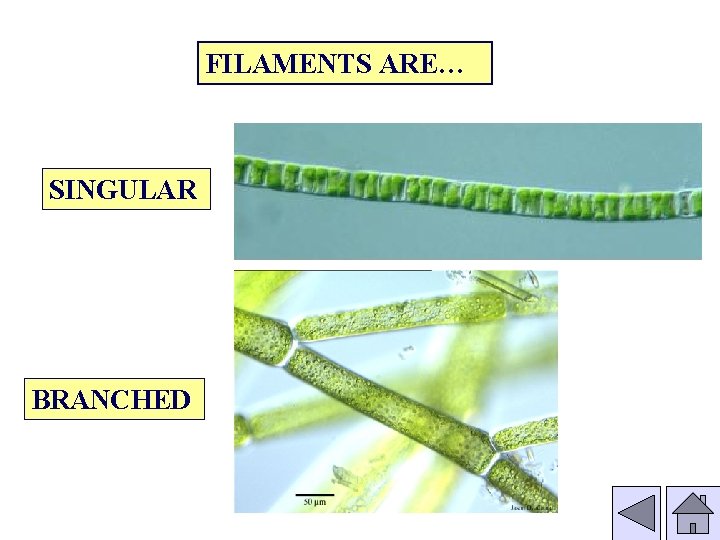
FILAMENTS ARE… SINGULAR BRANCHED
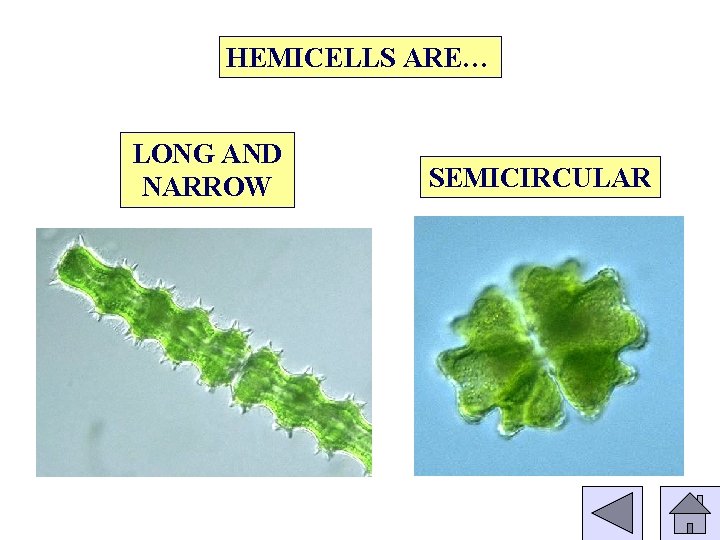
HEMICELLS ARE… LONG AND NARROW SEMICIRCULAR
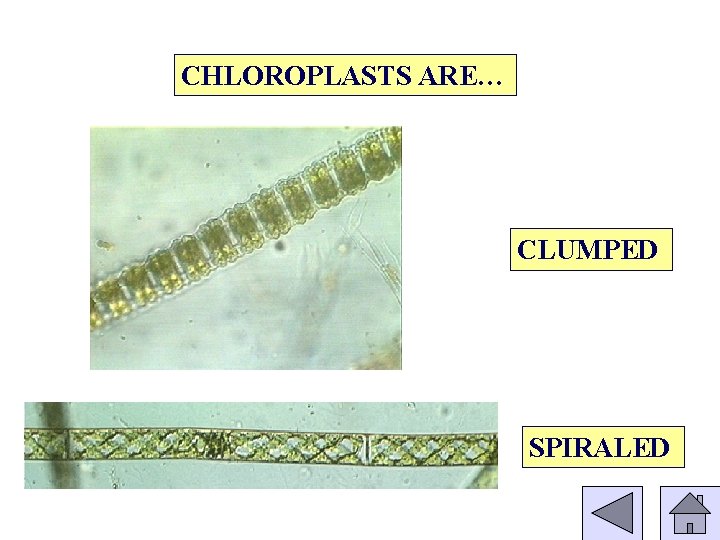
CHLOROPLASTS ARE… CLUMPED SPIRALED
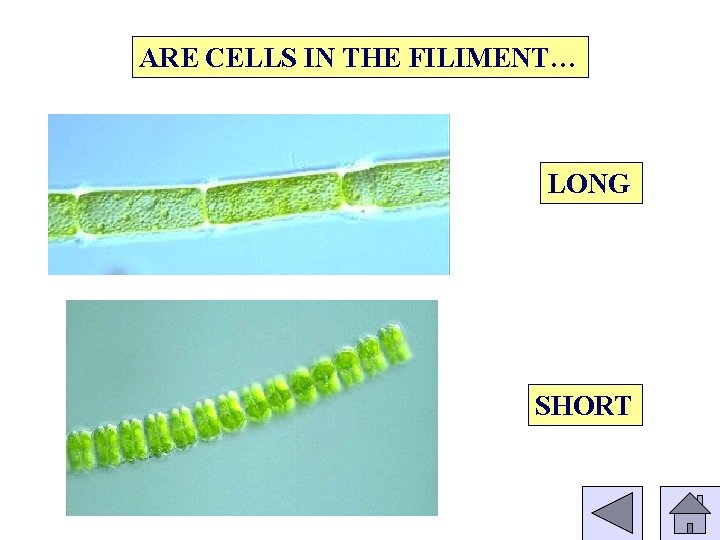
ARE CELLS IN THE FILIMENT… LONG SHORT
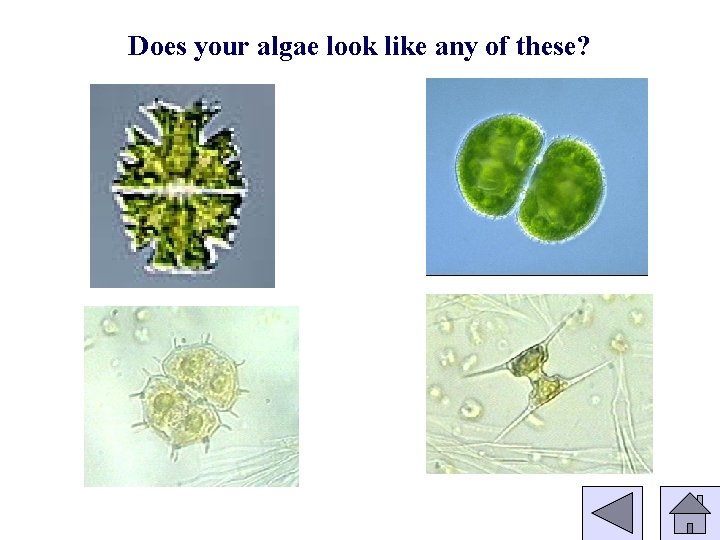
Does your algae look like any of these?
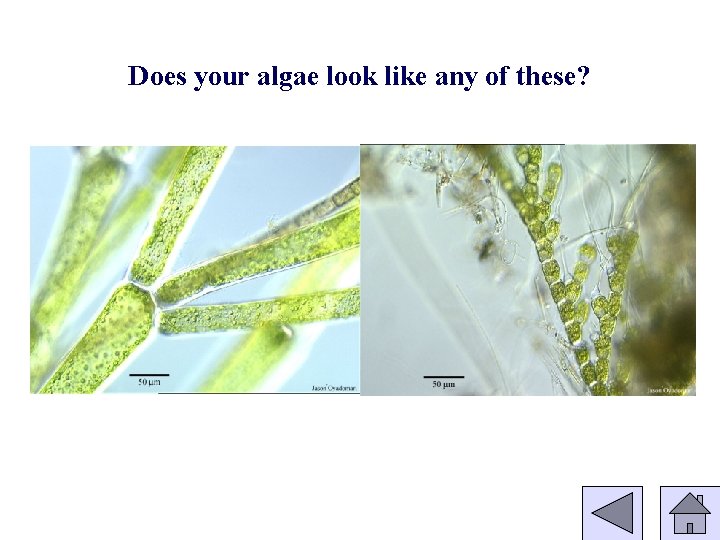
Does your algae look like any of these?
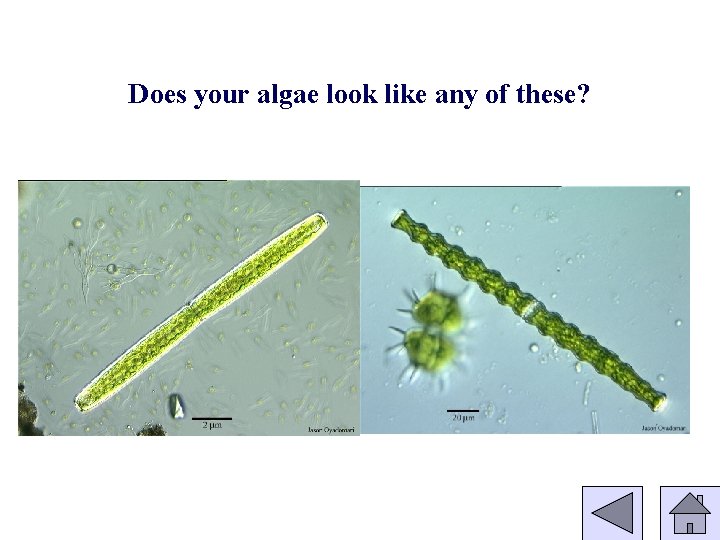
Does your algae look like any of these?
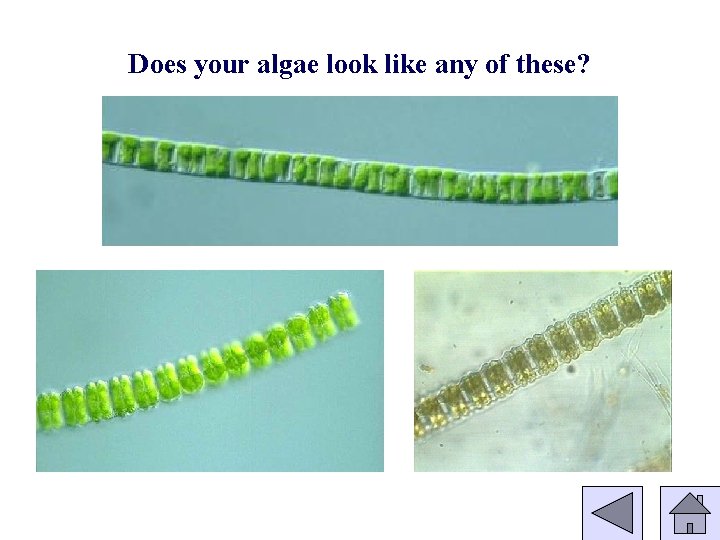
Does your algae look like any of these?
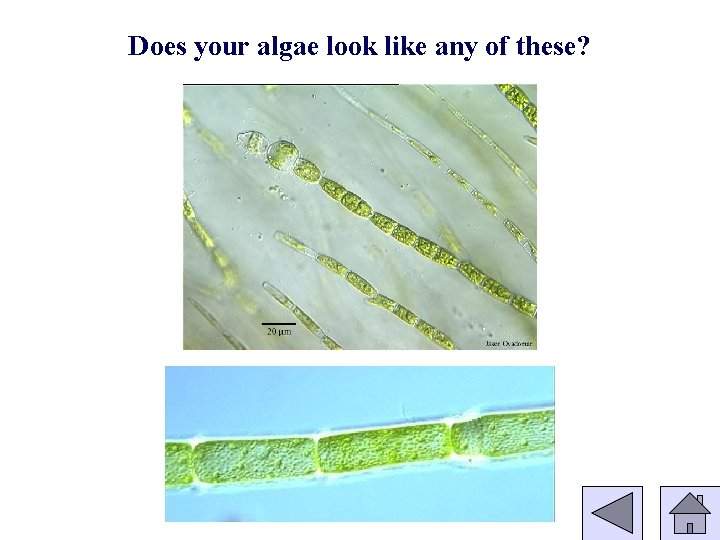
Does your algae look like any of these?
- Slides: 150