
Freshwater Ecosystems Ch 6 part 2 Freshwater ecosystems

- Slides: 24
Freshwater Ecosystems Ch. 6, part 2
Freshwater ecosystems Include standing water - lentic And flowing water - lotic
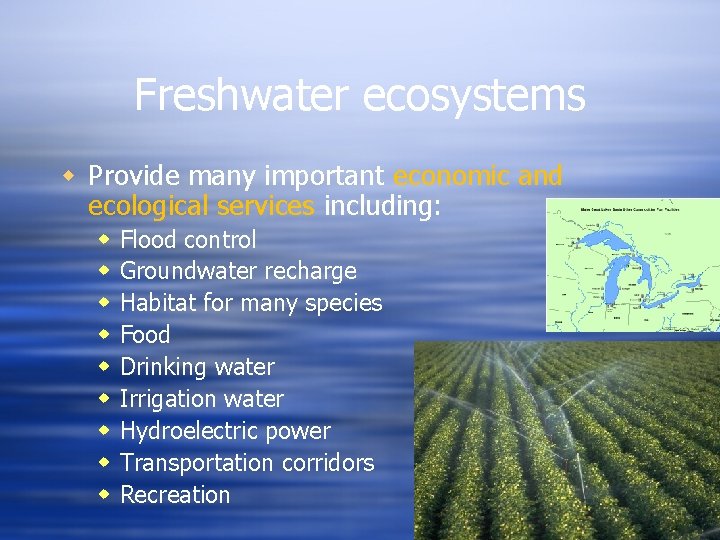
Freshwater ecosystems Provide many important economic and ecological services including: Flood control Groundwater recharge Habitat for many species Food Drinking water Irrigation water Hydroelectric power Transportation corridors Recreation
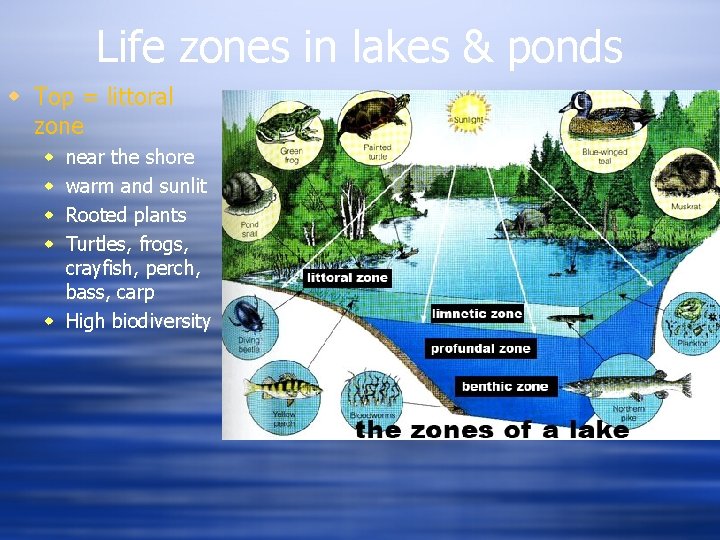
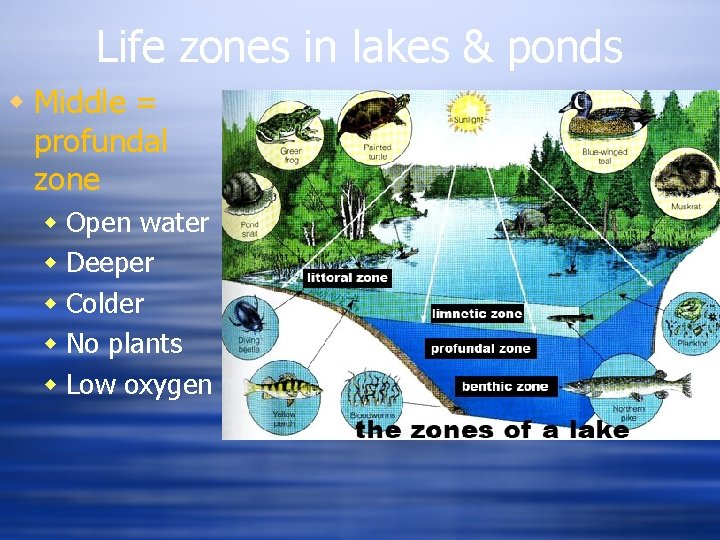
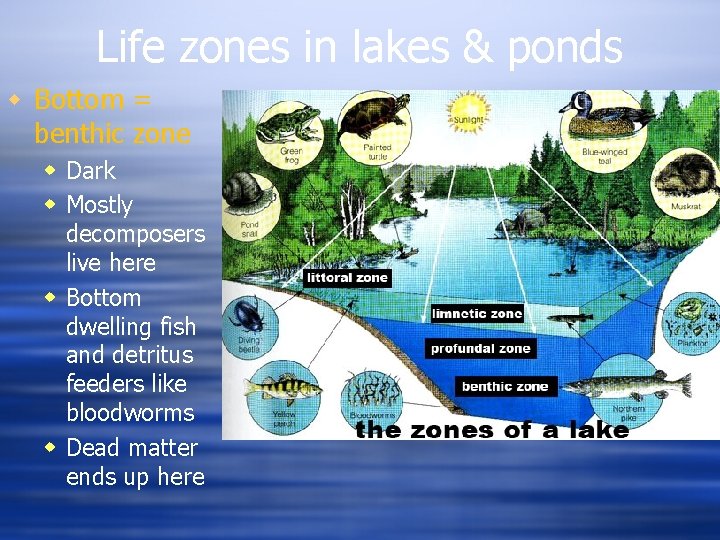
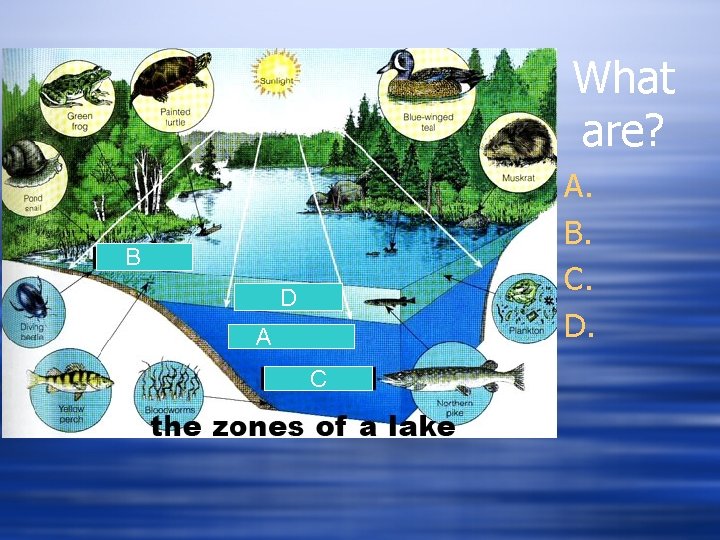
Life zones in lakes & ponds Top = littoral zone near the shore warm and sunlit Rooted plants Turtles, frogs, crayfish, perch, bass, carp High biodiversity
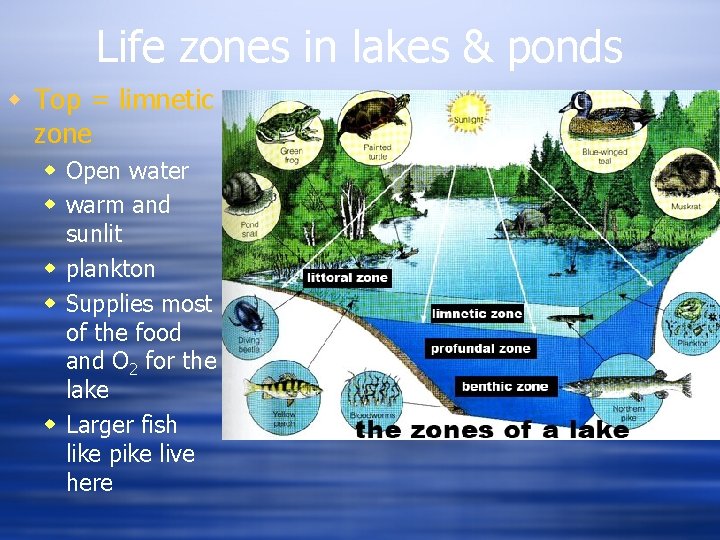
Life zones in lakes & ponds Top = limnetic zone Open water warm and sunlit plankton Supplies most of the food and O 2 for the lake Larger fish like pike live here
Life zones in lakes & ponds Middle = profundal zone Open water Deeper Colder No plants Low oxygen
Life zones in lakes & ponds Bottom = benthic zone Dark Mostly decomposers live here Bottom dwelling fish and detritus feeders like bloodworms Dead matter ends up here
What are? A. B. C. D. B D A C
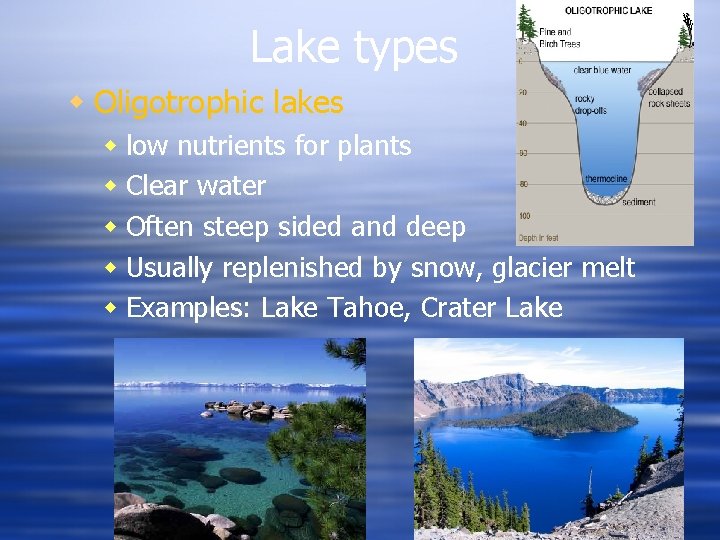
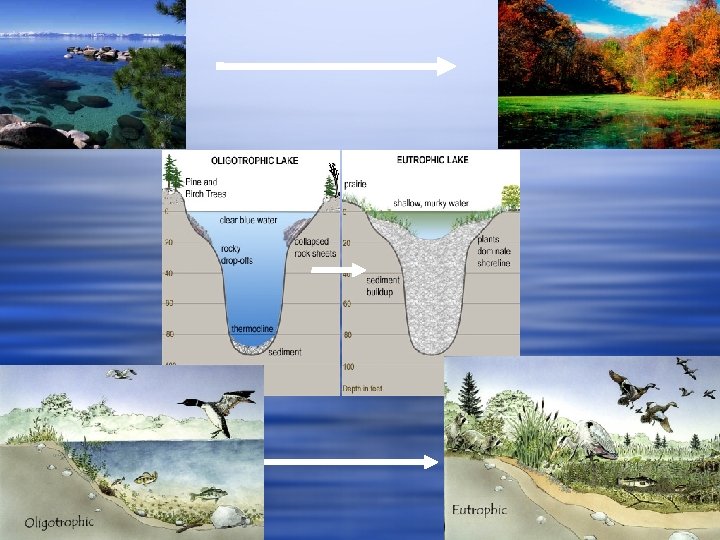
Lake types Oligotrophic lakes low nutrients for plants Clear water Often steep sided and deep Usually replenished by snow, glacier melt Examples: Lake Tahoe, Crater Lake
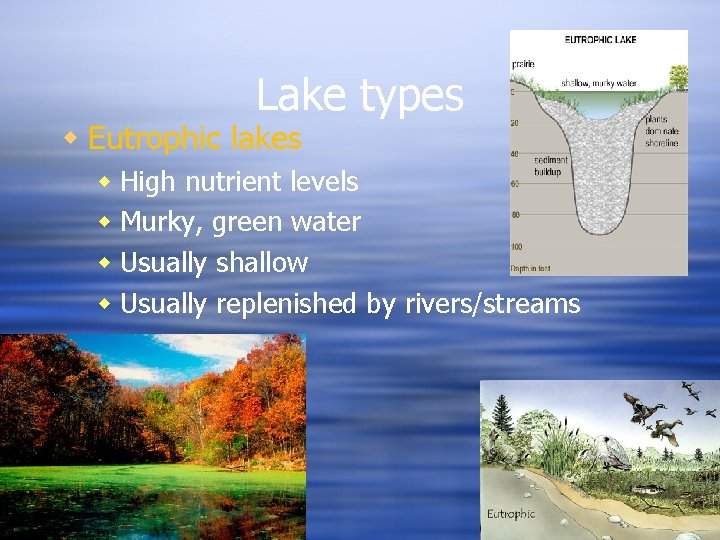
Lake types Eutrophic lakes High nutrient levels Murky, green water Usually shallow Usually replenished by rivers/streams
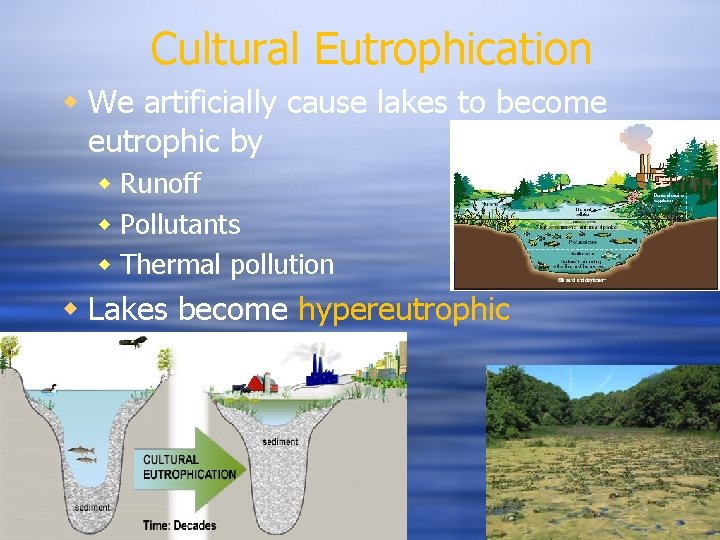
Cultural Eutrophication We artificially cause lakes to become eutrophic by Runoff Pollutants Thermal pollution Lakes become hypereutrophic
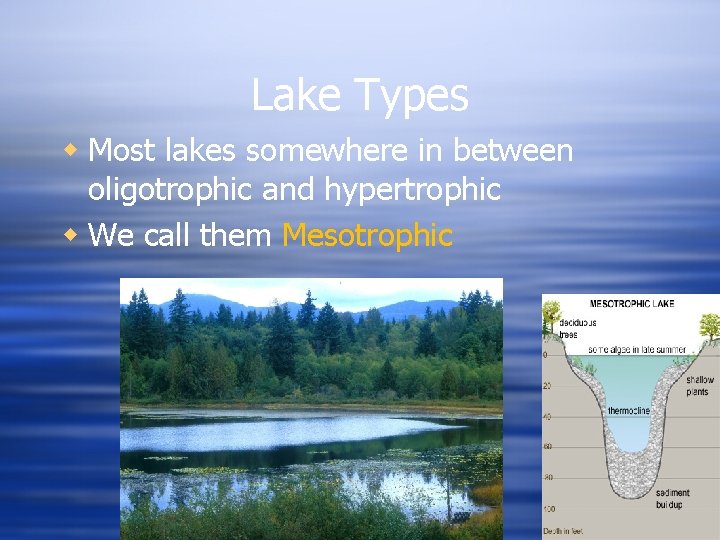
Lake Types Most lakes somewhere in between oligotrophic and hypertrophic We call them Mesotrophic
Where does each lake type fall on the line? Low nutrients Very high nutrients
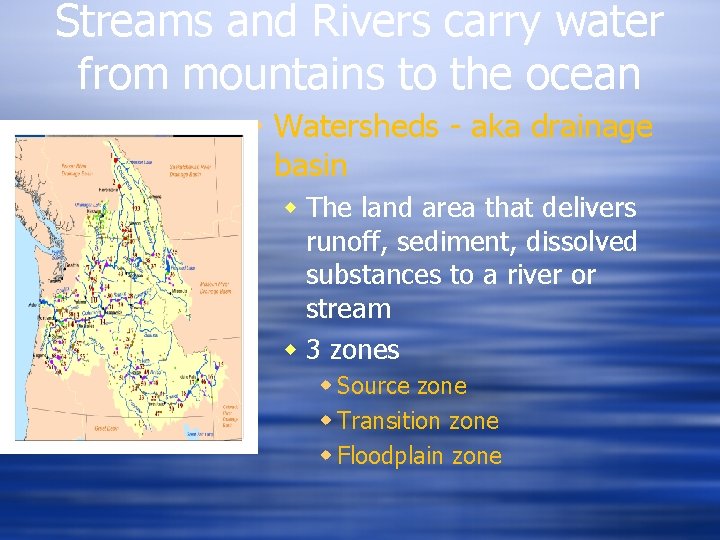
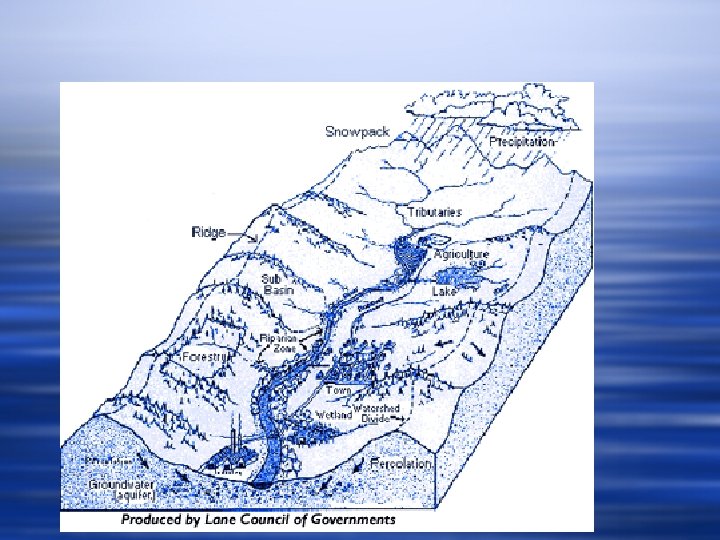
Streams and Rivers carry water from mountains to the ocean Watersheds - aka drainage basin The land area that delivers runoff, sediment, dissolved substances to a river or stream 3 zones Source zone Transition zone Floodplain zone
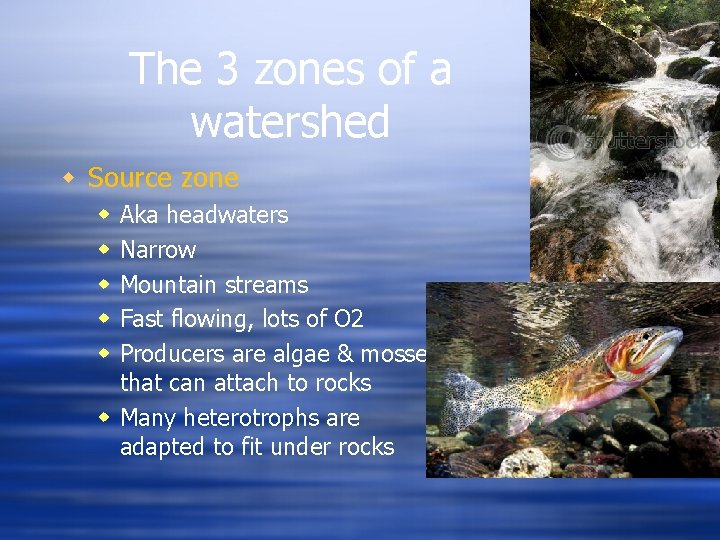
The 3 zones of a watershed Source zone Aka headwaters Narrow Mountain streams Fast flowing, lots of O 2 Producers are algae & mosses that can attach to rocks Many heterotrophs are adapted to fit under rocks
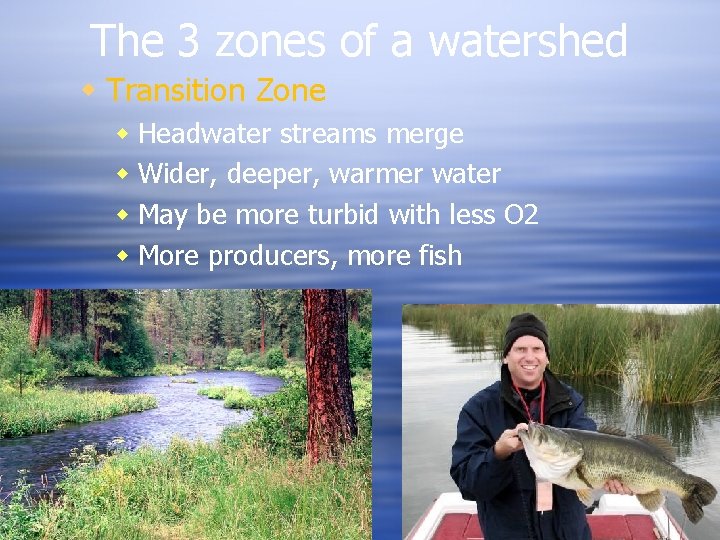
The 3 zones of a watershed Transition Zone Headwater streams merge Wider, deeper, warmer water May be more turbid with less O 2 More producers, more fish
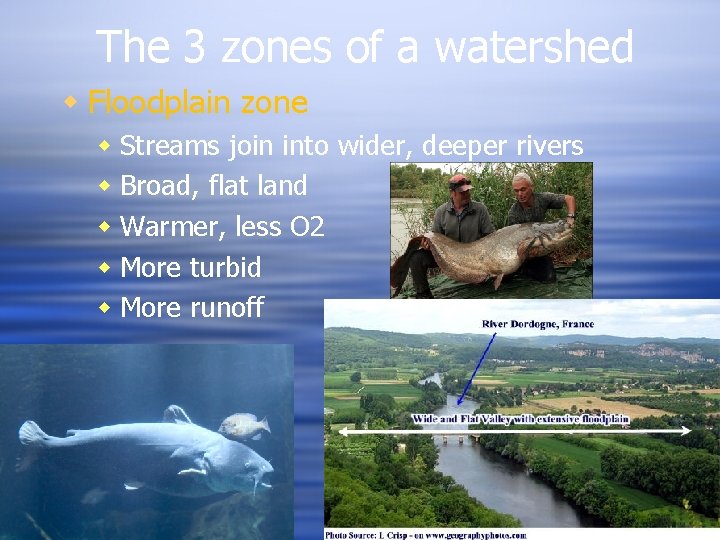
The 3 zones of a watershed Floodplain zone Streams join into wider, deeper rivers Broad, flat land Warmer, less O 2 More turbid More runoff
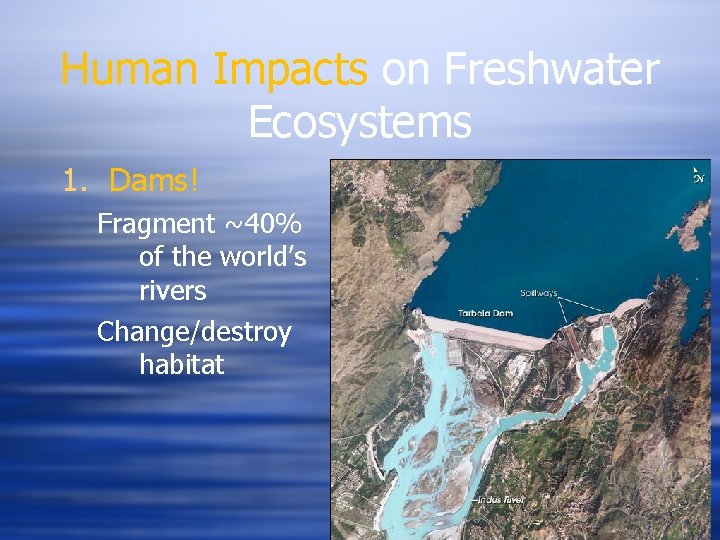
Human Impacts on Freshwater Ecosystems 1. Dams! Fragment ~40% of the world’s rivers Change/destroy habitat
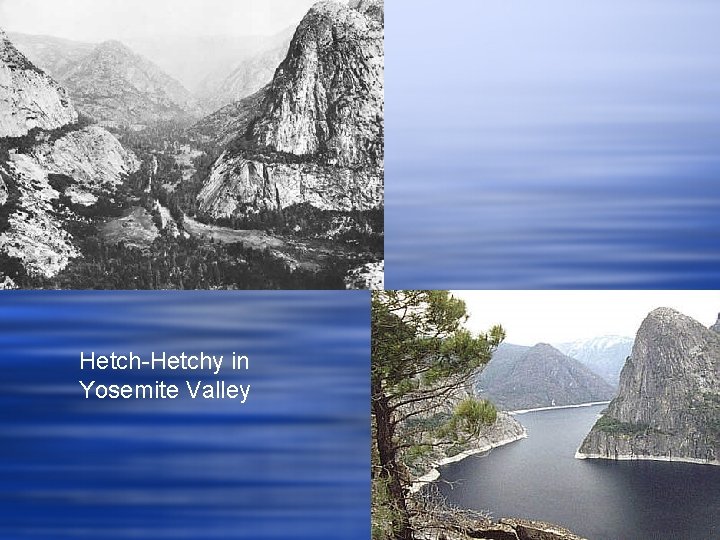
Hetch-Hetchy in Yosemite Valley
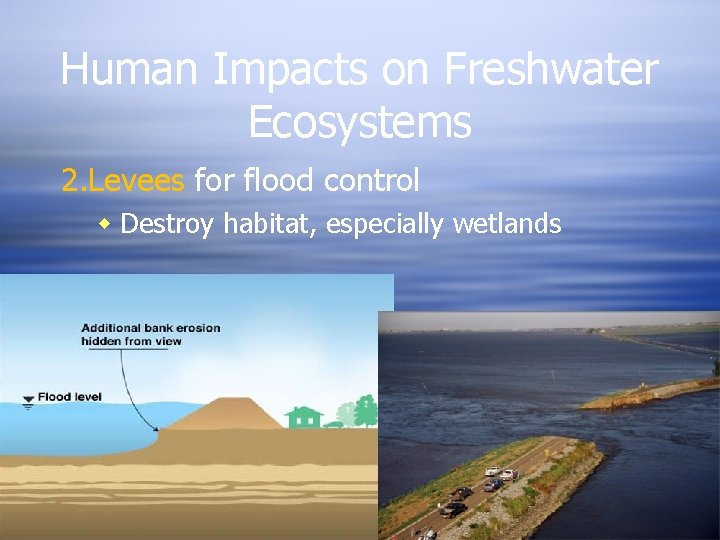
Human Impacts on Freshwater Ecosystems 2. Levees for flood control Destroy habitat, especially wetlands
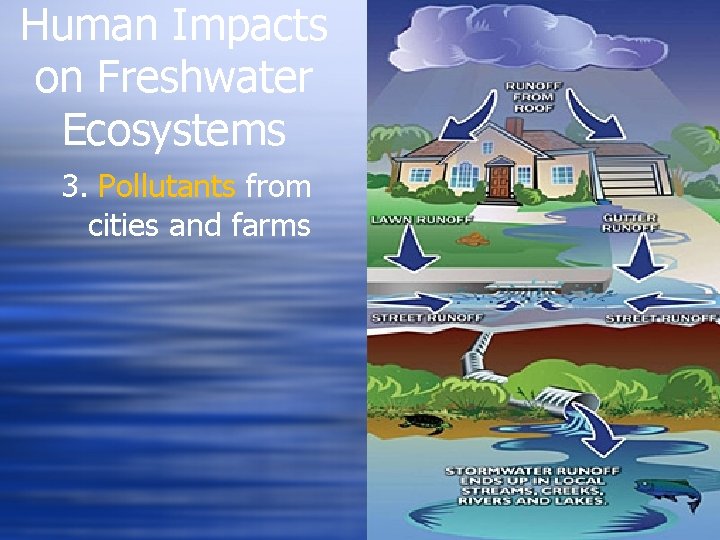
Human Impacts on Freshwater Ecosystems 3. Pollutants from cities and farms
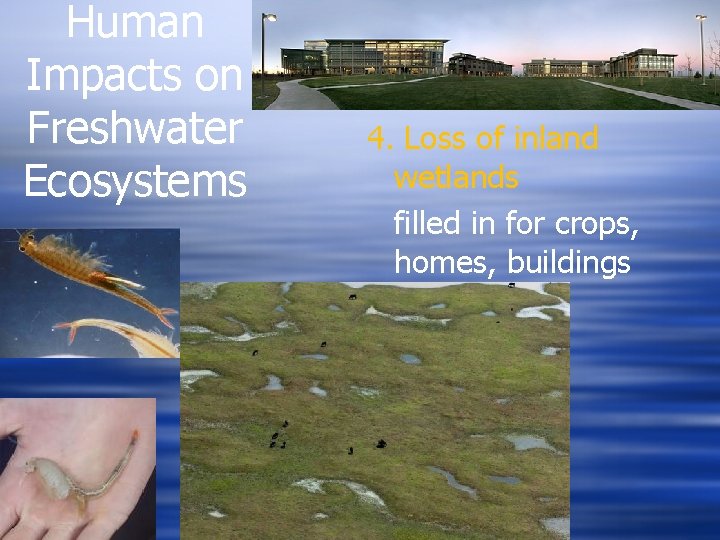
Human Impacts on Freshwater Ecosystems 4. Loss of inland wetlands filled in for crops, homes, buildings