
Freshwater AQUATIC ECOSYSTEMS SALINITY The types of organisms
- Slides: 20
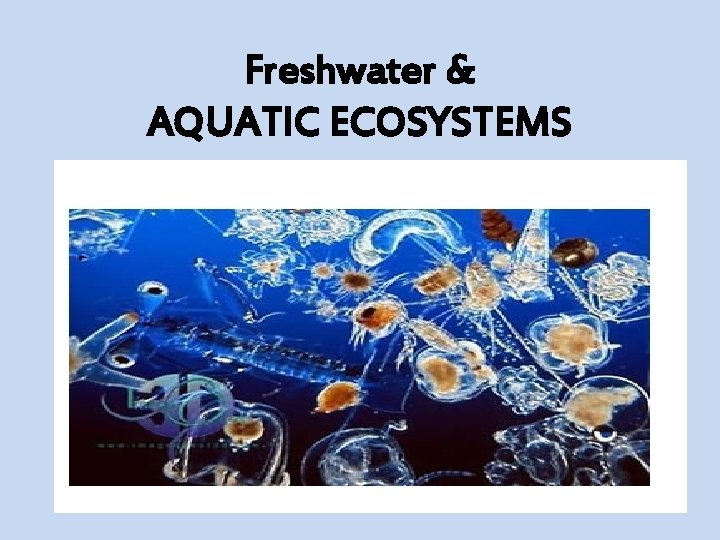
Freshwater & AQUATIC ECOSYSTEMS
SALINITY • The types of organisms in an aquatic ecosystem depend upon the water’s salinity. • Salinity: amount of dissolved salts in the water. • Two Main Aquatic Ecosystems: Freshwater (low salinity - lakes) and Marine (high salinity ocean)
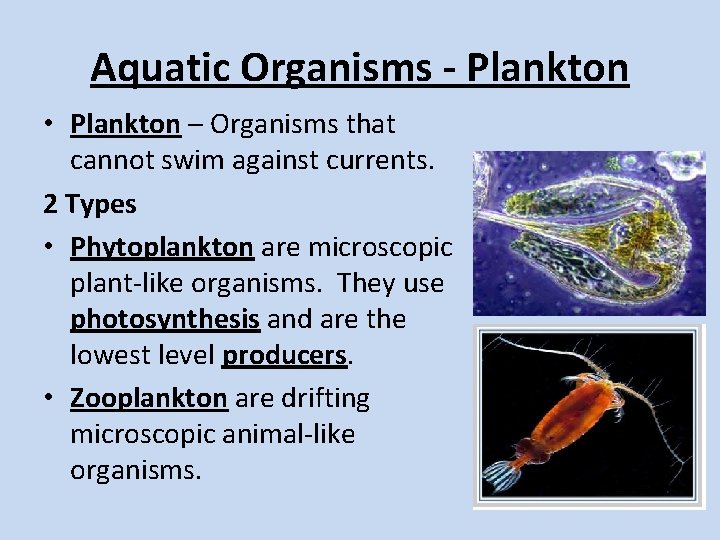
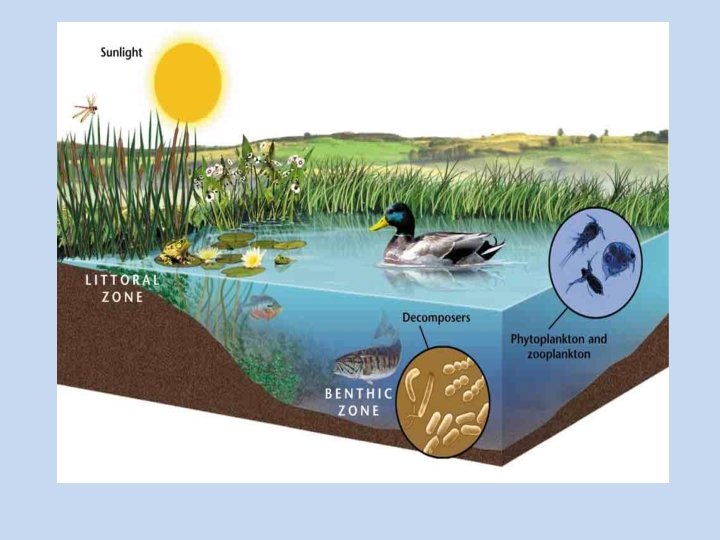
Aquatic Organisms - Plankton • Plankton – Organisms that cannot swim against currents. 2 Types • Phytoplankton are microscopic plant-like organisms. They use photosynthesis and are the lowest level producers. • Zooplankton are drifting microscopic animal-like organisms.
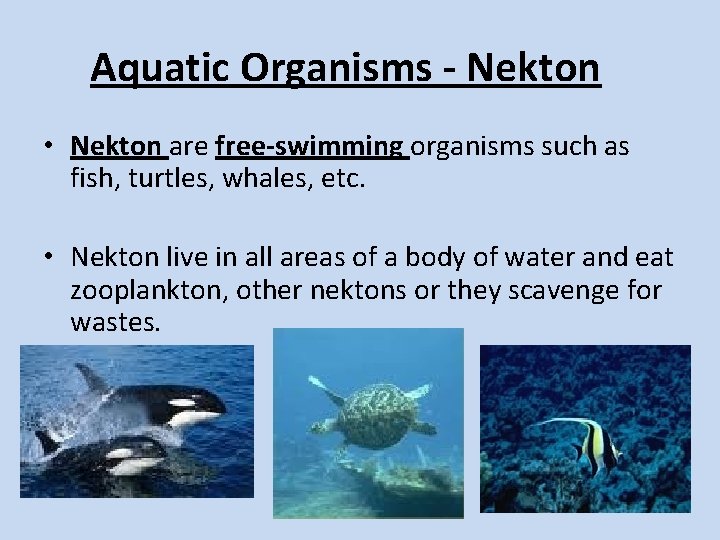
Aquatic Organisms - Nekton • Nekton are free-swimming organisms such as fish, turtles, whales, etc. • Nekton live in all areas of a body of water and eat zooplankton, other nektons or they scavenge for wastes.
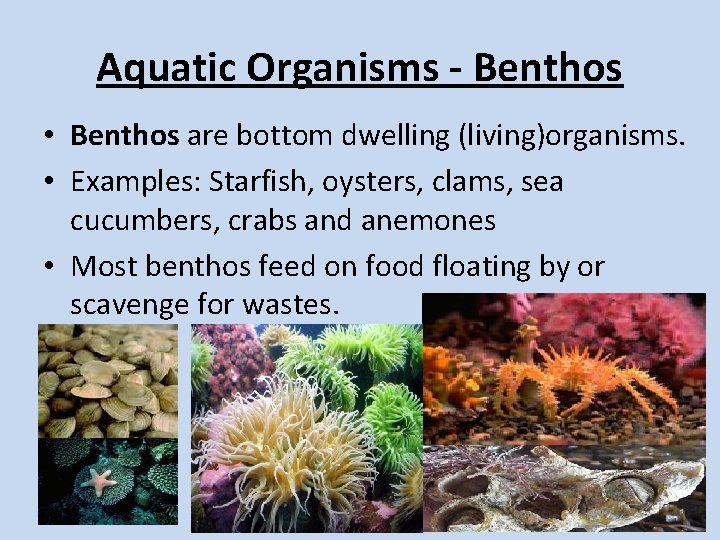
Aquatic Organisms - Benthos • Benthos are bottom dwelling (living)organisms. • Examples: Starfish, oysters, clams, sea cucumbers, crabs and anemones • Most benthos feed on food floating by or scavenge for wastes.
REVIEW 1. What is salinity and which ecosystem has the highest level? ________________________________ 2. What is the role of phytoplankton? ________________________ 3. Where do benthos live? ____________________________ 4. Give an example of nekton. ___________________________
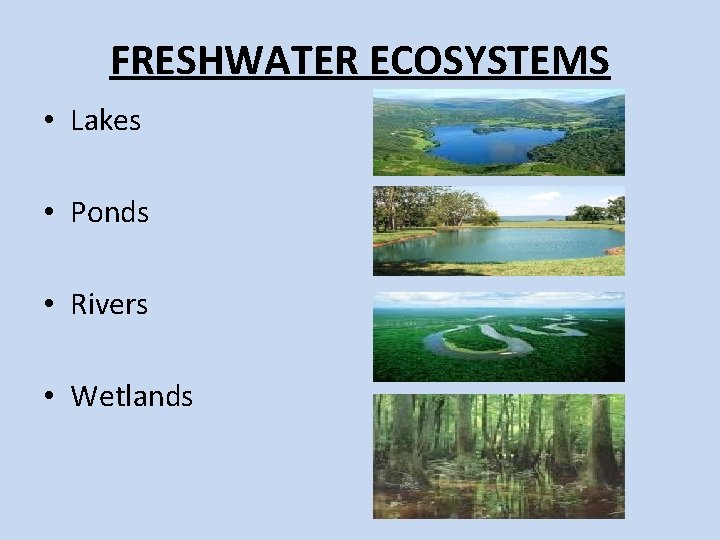
FRESHWATER ECOSYSTEMS • Lakes • Ponds • Rivers • Wetlands
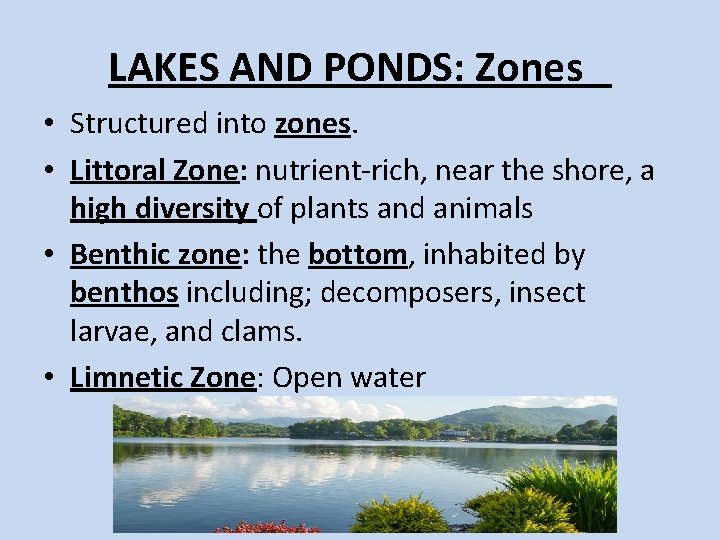
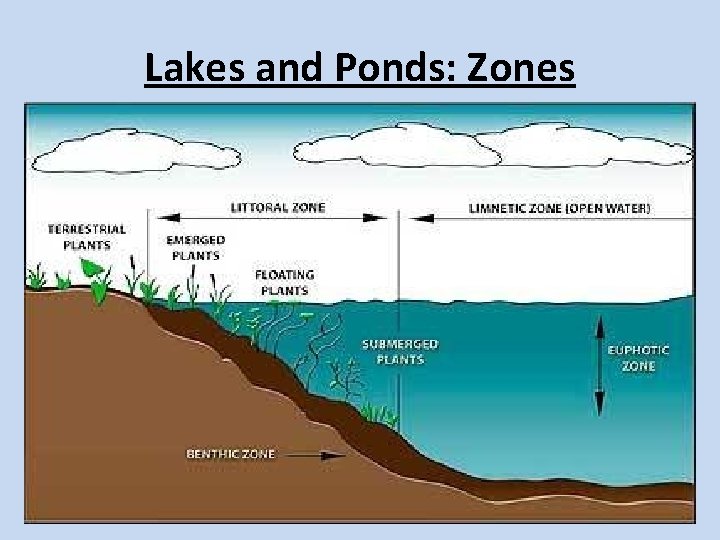
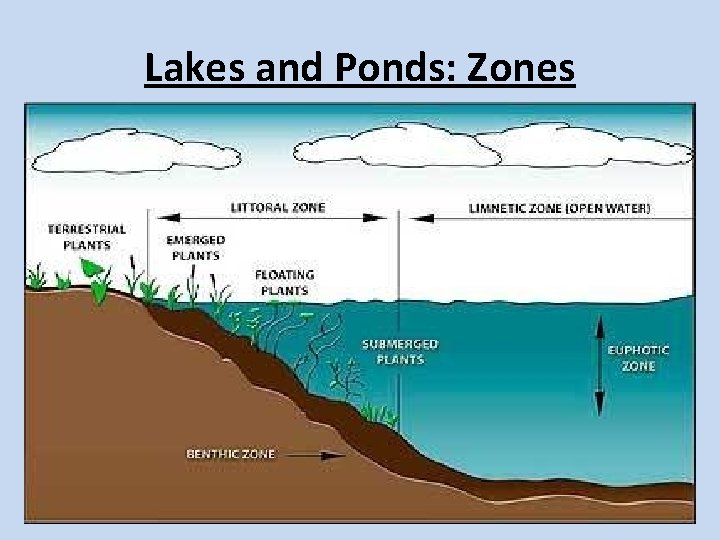
LAKES AND PONDS: Zones • Structured into zones. • Littoral Zone: nutrient-rich, near the shore, a high diversity of plants and animals • Benthic zone: the bottom, inhabited by benthos including; decomposers, insect larvae, and clams. • Limnetic Zone: Open water
Lakes and Ponds: Zones
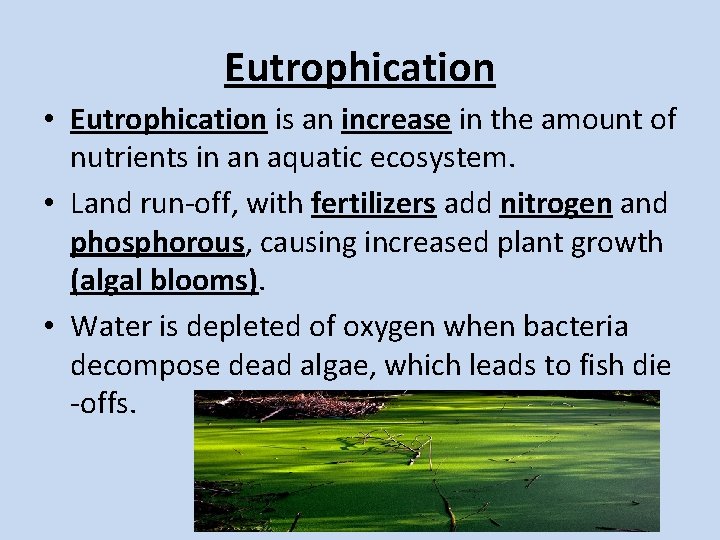
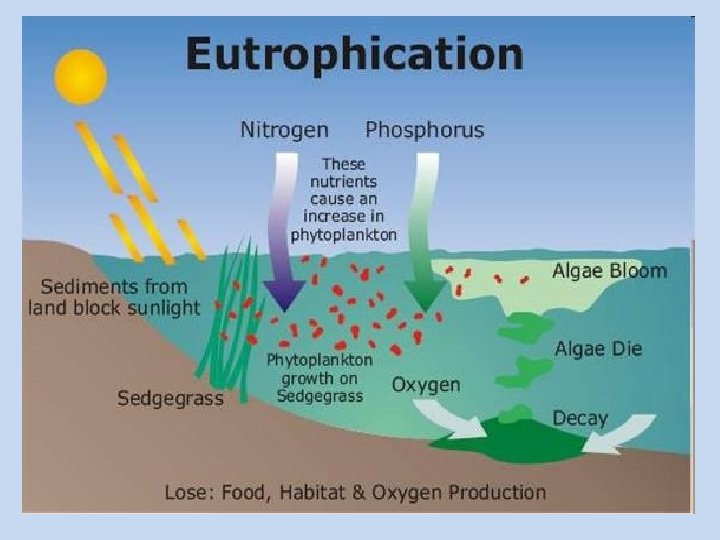
Eutrophication • Eutrophication is an increase in the amount of nutrients in an aquatic ecosystem. • Land run-off, with fertilizers add nitrogen and phosphorous, causing increased plant growth (algal blooms). • Water is depleted of oxygen when bacteria decompose dead algae, which leads to fish die -offs.
REVIEW 1. Where is the littoral zone located? ________________________ 2. What lives in the benthic zone? _________________________ 3. What is eutrophication? ____________________________ 4. What causes eutrophication. __________________________
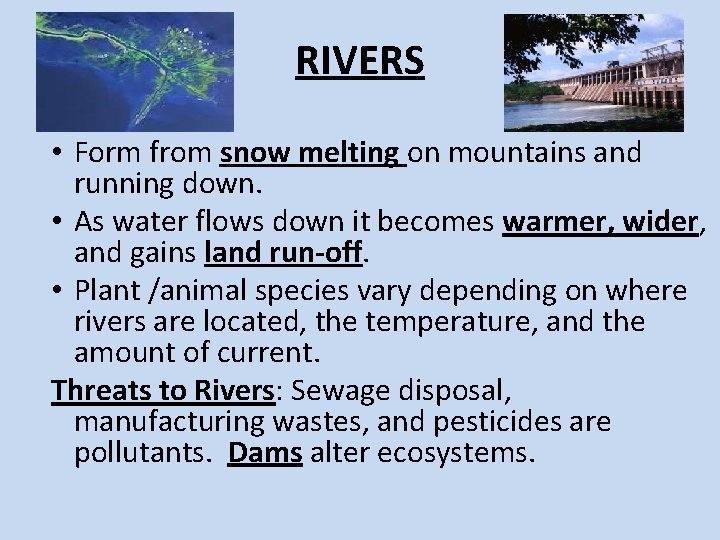
RIVERS • Form from snow melting on mountains and running down. • As water flows down it becomes warmer, wider, and gains land run-off. • Plant /animal species vary depending on where rivers are located, the temperature, and the amount of current. Threats to Rivers: Sewage disposal, manufacturing wastes, and pesticides are pollutants. Dams alter ecosystems.
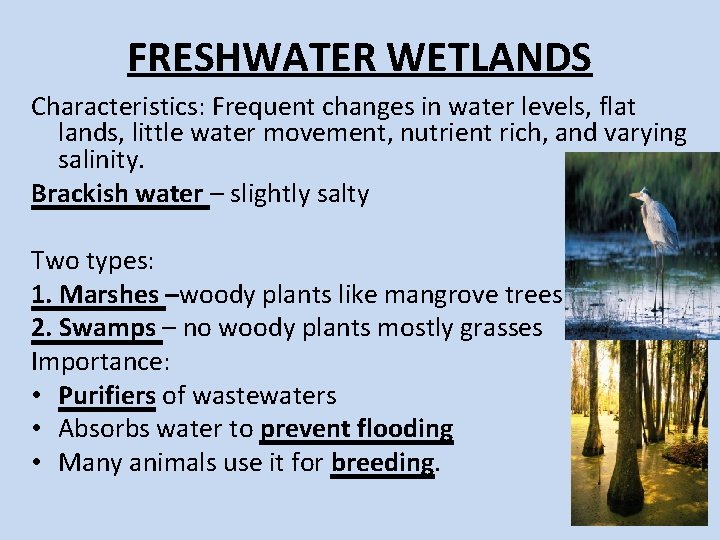
FRESHWATER WETLANDS Characteristics: Frequent changes in water levels, flat lands, little water movement, nutrient rich, and varying salinity. Brackish water – slightly salty Two types: 1. Marshes –woody plants like mangrove trees 2. Swamps – no woody plants mostly grasses Importance: • Purifiers of wastewaters • Absorbs water to prevent flooding • Many animals use it for breeding.
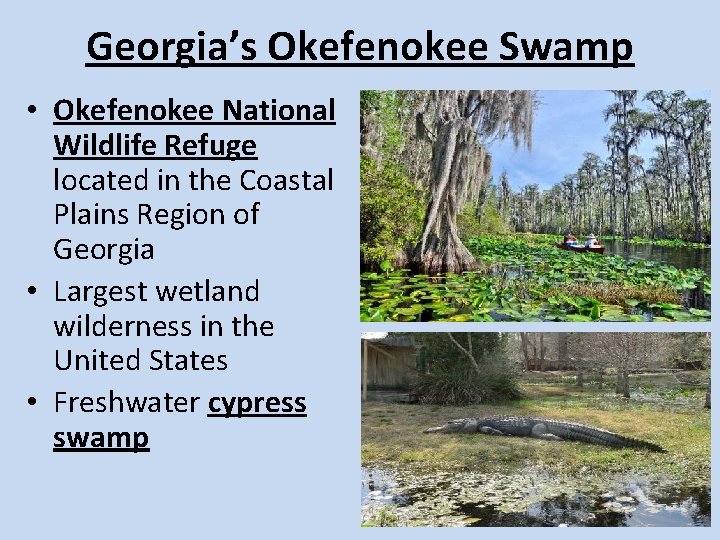
Georgia’s Okefenokee Swamp • Okefenokee National Wildlife Refuge located in the Coastal Plains Region of Georgia • Largest wetland wilderness in the United States • Freshwater cypress swamp
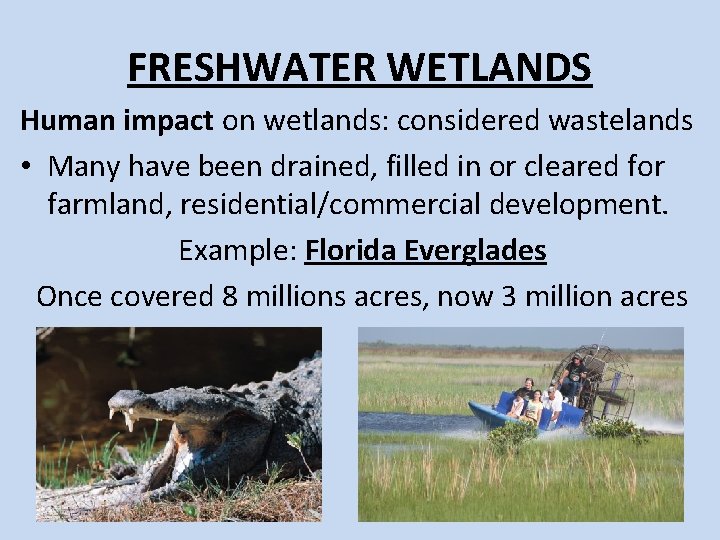
FRESHWATER WETLANDS Human impact on wetlands: considered wastelands • Many have been drained, filled in or cleared for farmland, residential/commercial development. Example: Florida Everglades Once covered 8 millions acres, now 3 million acres
REVIEW 1. How do rivers form? ______________________________ 2. What are some threats to rivers? _________________________ 3. What does brackish mean? ___________________________ 4. Why are wetlands important? __________________________
Task: Freshwater Lake Posters • Draw a cross section of a lake. • Include and label the following items: Littoral Zone, Benthic Zone, Limnetic Zone, Nekton, Plankton, Decomposers, and Benthos • Notate (Star) the area of the highest diversity of plant and animal life. • Textbook Page 140
Lakes and Ponds: Zones