
Freshwater and Freshwater Pollutants Whats in the Water




- Slides: 52
Freshwater and Freshwater Pollutants
What’s in the Water? v Dissolved organics and inorganics v Particulate organics and inorganics v Gases – oxygen and carbon dioxide v Anthropogenic inputs, effects
Water Pollution "any biological, chemical, or physical change in water quality that has a harmful effect on living organisms or makes water unsuitable for desired uses. " 44% of lakes, 37% of rives unsafe for recreation due to toxic water pollutants 32% of estuaries.
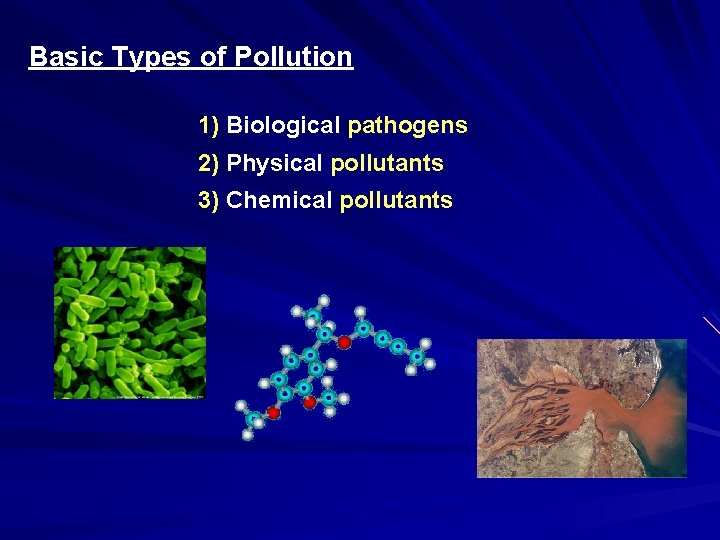
Basic Types of Pollution 1) Biological pathogens 2) Physical pollutants 3) Chemical pollutants
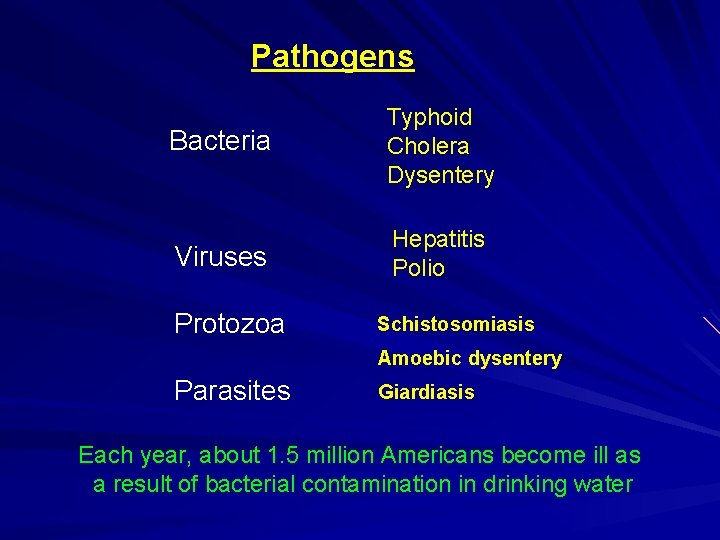
Pathogens Bacteria Typhoid Cholera Dysentery Viruses Hepatitis Polio Protozoa Schistosomiasis Amoebic dysentery Parasites Giardiasis Each year, about 1. 5 million Americans become ill as a result of bacterial contamination in drinking water
Physical Pollutants Sediment Heat electric power plants – O 2, thermal shock ½ of water withdrawn erosion, deforestation, agriculture chokes and fills lakes, reservoirs reduced photosynthesis
Chemical Pollutants
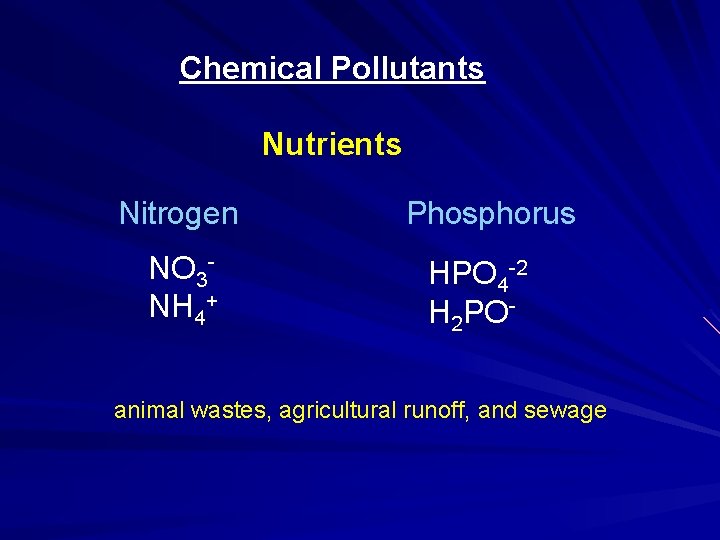
Chemical Pollutants Nutrients Nitrogen NO 3 NH 4+ Phosphorus HPO 4 -2 H 2 PO- animal wastes, agricultural runoff, and sewage
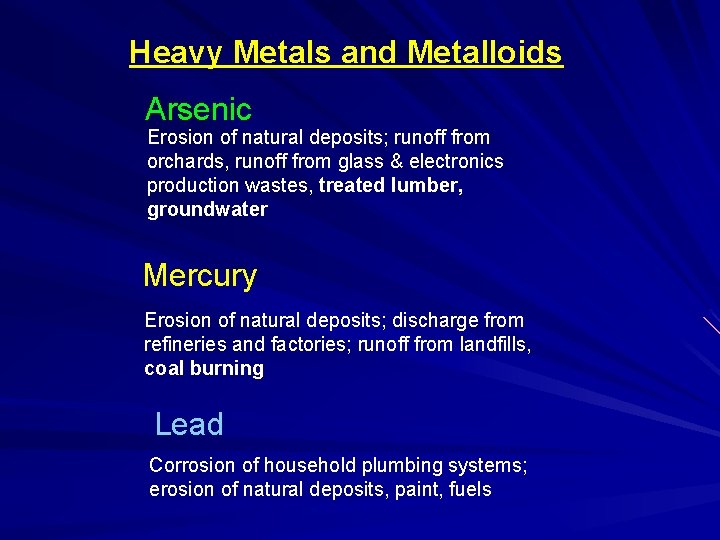
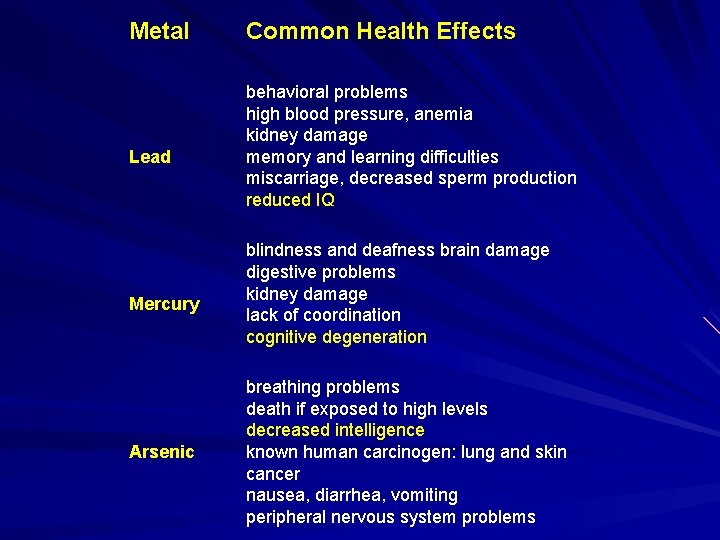
Heavy Metals and Metalloids Arsenic Erosion of natural deposits; runoff from orchards, runoff from glass & electronics production wastes, treated lumber, groundwater Mercury Erosion of natural deposits; discharge from refineries and factories; runoff from landfills, coal burning Lead Corrosion of household plumbing systems; erosion of natural deposits, paint, fuels
Metal Lead Mercury Arsenic Common Health Effects behavioral problems high blood pressure, anemia kidney damage memory and learning difficulties miscarriage, decreased sperm production reduced IQ blindness and deafness brain damage digestive problems kidney damage lack of coordination cognitive degeneration breathing problems death if exposed to high levels decreased intelligence known human carcinogen: lung and skin cancer nausea, diarrhea, vomiting peripheral nervous system problems
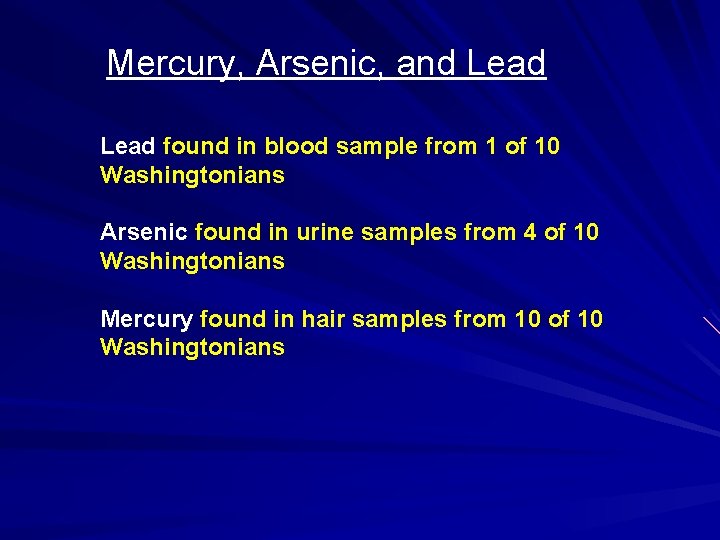
Mercury, Arsenic, and Lead found in blood sample from 1 of 10 Washingtonians Arsenic found in urine samples from 4 of 10 Washingtonians Mercury found in hair samples from 10 of 10 Washingtonians
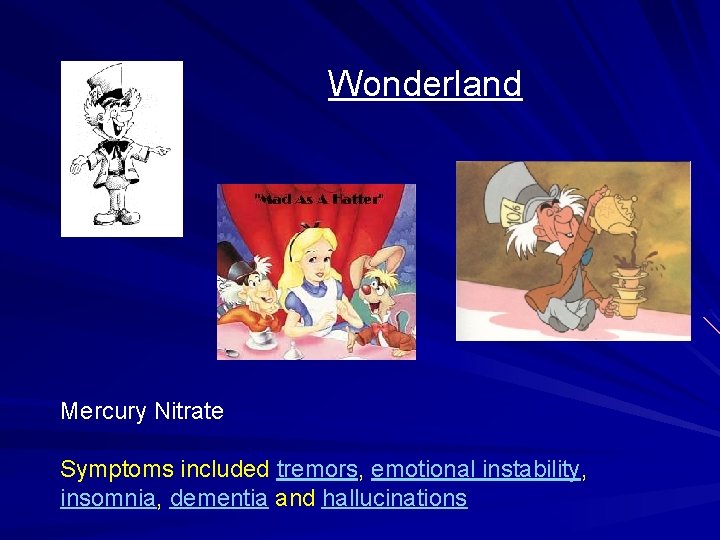
Wonderland Mercury Nitrate Symptoms included tremors, emotional instability, insomnia, dementia and hallucinations
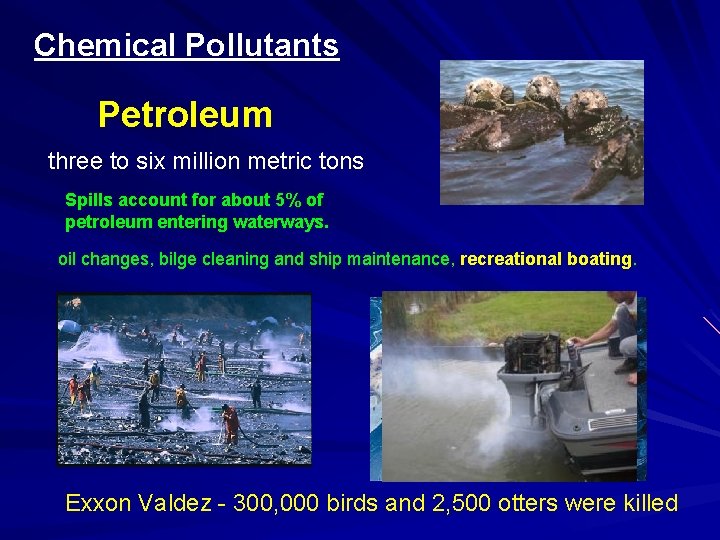
Chemical Pollutants Petroleum three to six million metric tons Spills account for about 5% of petroleum entering waterways. oil changes, bilge cleaning and ship maintenance, recreational boating. Exxon Valdez - 300, 000 birds and 2, 500 otters were killed
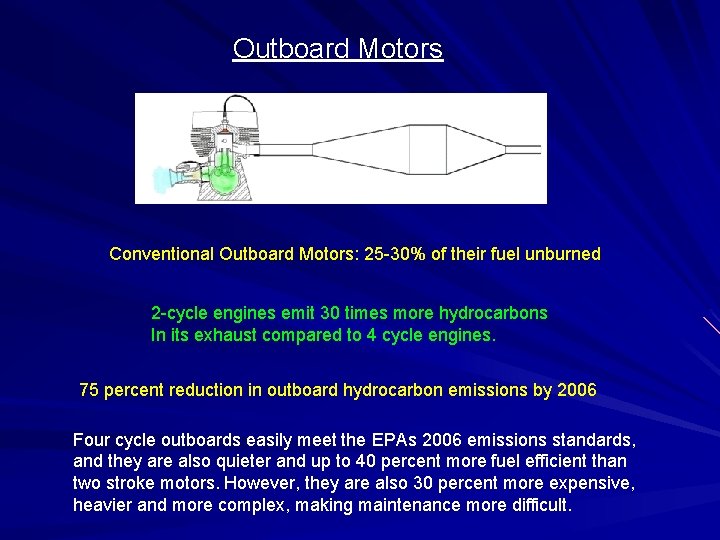
Outboard Motors Conventional Outboard Motors: 25 -30% of their fuel unburned 2 -cycle engines emit 30 times more hydrocarbons In its exhaust compared to 4 cycle engines. 75 percent reduction in outboard hydrocarbon emissions by 2006 Four cycle outboards easily meet the EPAs 2006 emissions standards, and they are also quieter and up to 40 percent more fuel efficient than two stroke motors. However, they are also 30 percent more expensive, heavier and more complex, making maintenance more difficult.
Organic Chemicals Pesticides Industry Solvents/Cleaning Flame Retardants DDT PCBs TCE /PCE PBDE Potentially highly toxic Persistent in the environment http: //www. npr. org/templates/story. php? story. Id=6100179
Where does it come from?
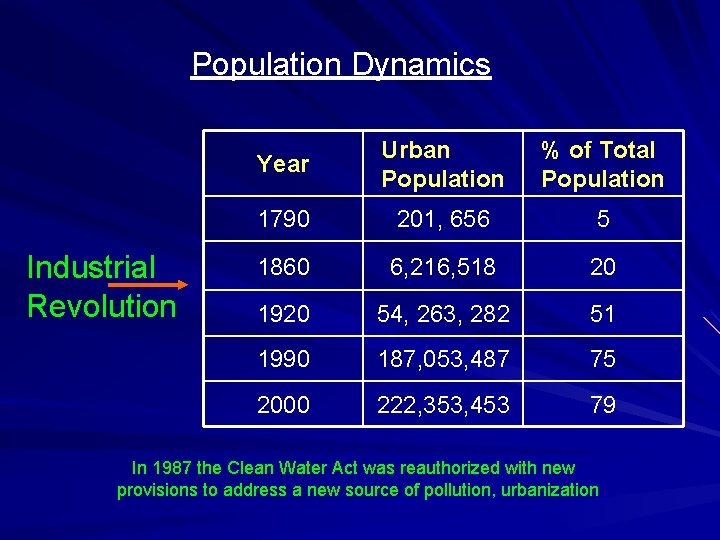
Population Dynamics Industrial Revolution Year Urban Population % of Total Population 1790 201, 656 5 1860 6, 216, 518 20 1920 54, 263, 282 51 1990 187, 053, 487 75 2000 222, 353, 453 79 In 1987 the Clean Water Act was reauthorized with new provisions to address a new source of pollution, urbanization
Two Basic Avenues of Water Pollution Non-point source pollution Diffuse sources Difficult to trace, regulate Point source pollution Specific entry point Industrial discharges Sewage treatment plants Landfills
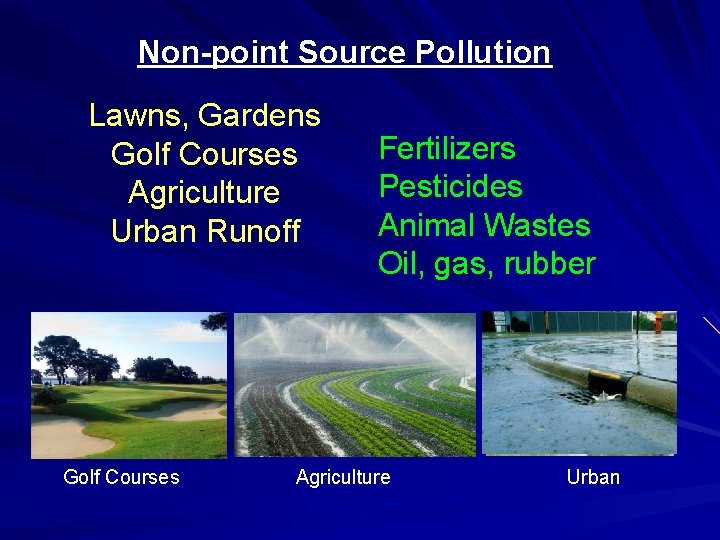
Non-point Source Pollution Lawns, Gardens Golf Courses Agriculture Urban Runoff Golf Courses Fertilizers Pesticides Animal Wastes Oil, gas, rubber Agriculture Urban
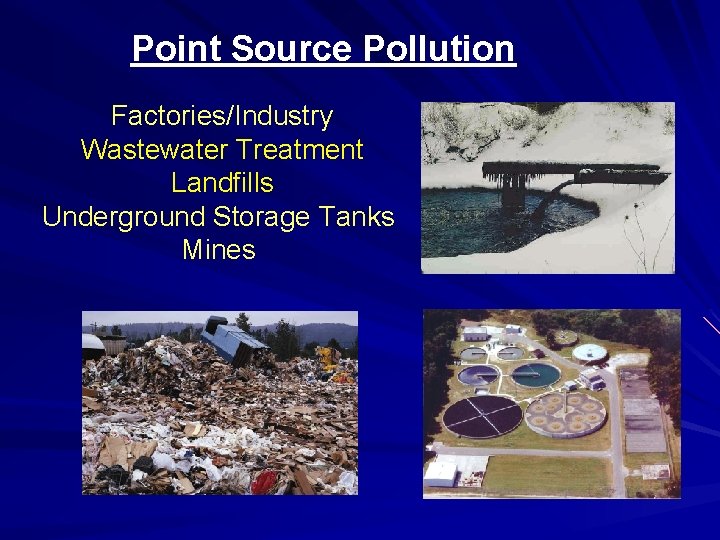
Point Source Pollution Factories/Industry Wastewater Treatment Landfills Underground Storage Tanks Mines
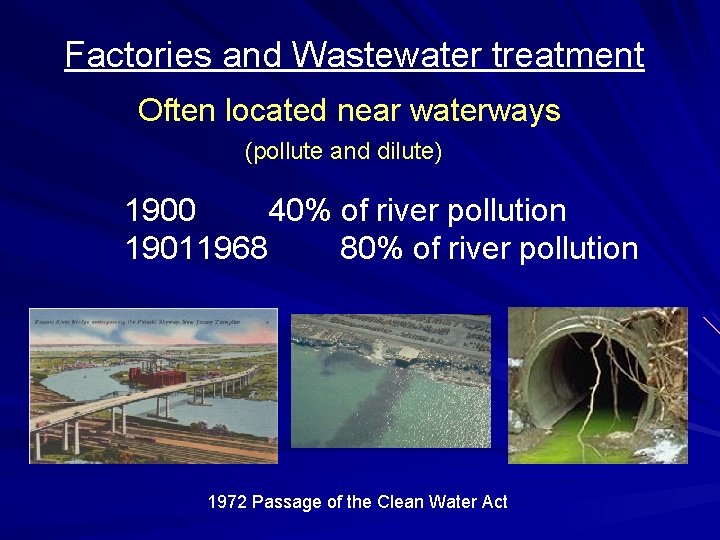
Factories and Wastewater treatment Often located near waterways (pollute and dilute) 1900 40% of river pollution 19011968 80% of river pollution 1972 Passage of the Clean Water Act
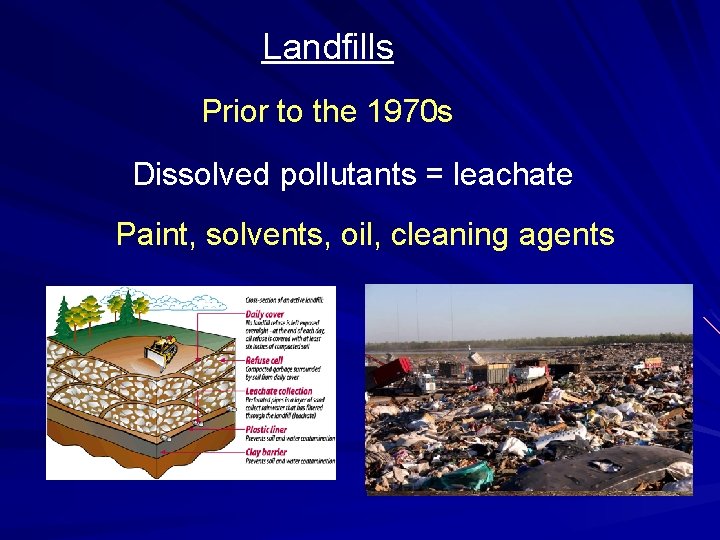
Landfills Prior to the 1970 s Dissolved pollutants = leachate Paint, solvents, oil, cleaning agents
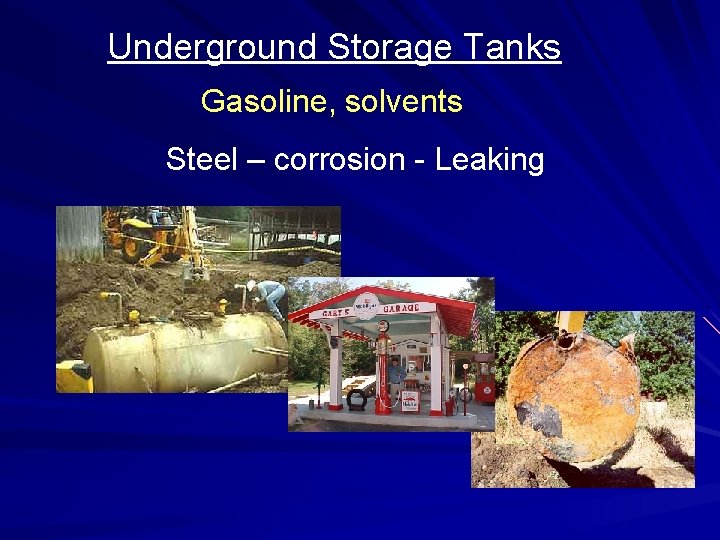
Underground Storage Tanks Gasoline, solvents Steel – corrosion - Leaking
Gainesville Butler Plaza was formerly the location of the Stengal Airfield, which was an old US Army Air Corps pilot training center that was founded in 1942. An oil house with underground storage tanks (USTs) included a 10, 000 gallon tank and a 4, 000 gallon tank containing 90 -octane fuel. After World War II, the training center was closed. Butler Plaza was built on top of the old hanger area in 1974. In 1985, the DEP Northeast District requested that the Operation Response Section conduct a groundwater contamination source identification study for volatile organic contamination (VOC) found in two private wells in a residential area. They were contaminated with trichloroethylene (TCE) and perchloroethylene (PCE). The supply wells were shut down and all areas were hooked to city water. Evaluation of groundwater monitoring data indicated that the Floridan aquifer had been impacted by VOC contamination in two areas. According to the groundwater investigation reports, the primary source of the chlorinated solvent-related groundwater contamination is in the vicinity of one of the old airfield hangers formerly located at a spot covered by the Butler Plaza.
Two Basic Avenues of Water Pollution Non-point source pollution Diffuse sources Difficult to trace, regulate Point source pollution Specific entry point Industrial discharges Sewage treatment plants Industry Landfills USTs
Example Point and Non-Point Pollution
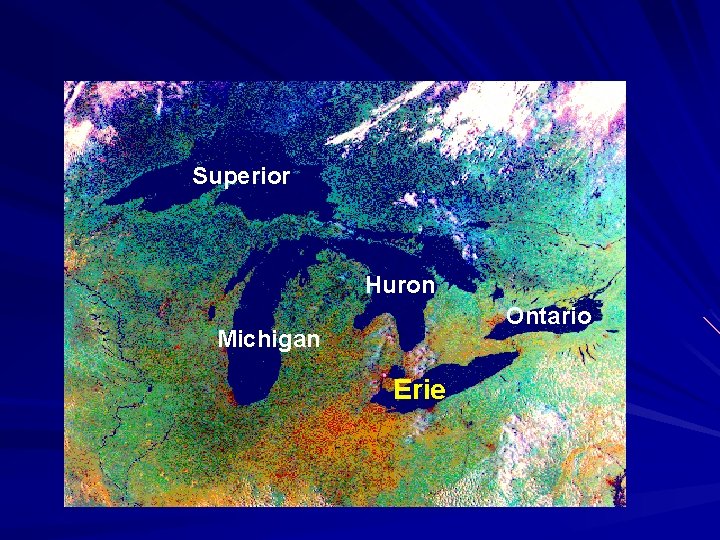
Superior Huron Ontario Michigan Erie
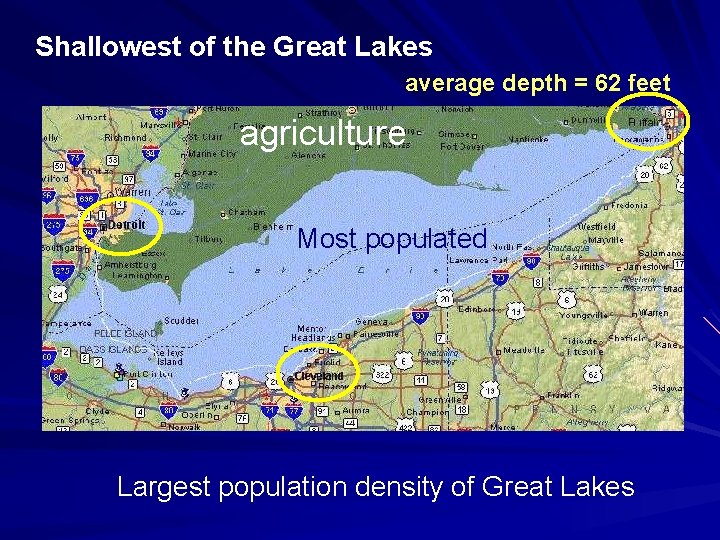
Shallowest of the Great Lakes average depth = 62 feet agriculture Most populated Largest population density of Great Lakes
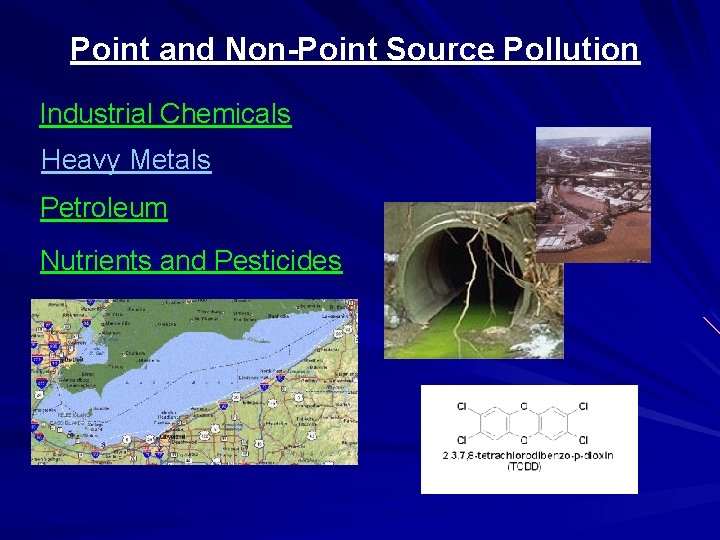
Point and Non-Point Source Pollution Industrial Chemicals Heavy Metals Petroleum Nutrients and Pesticides
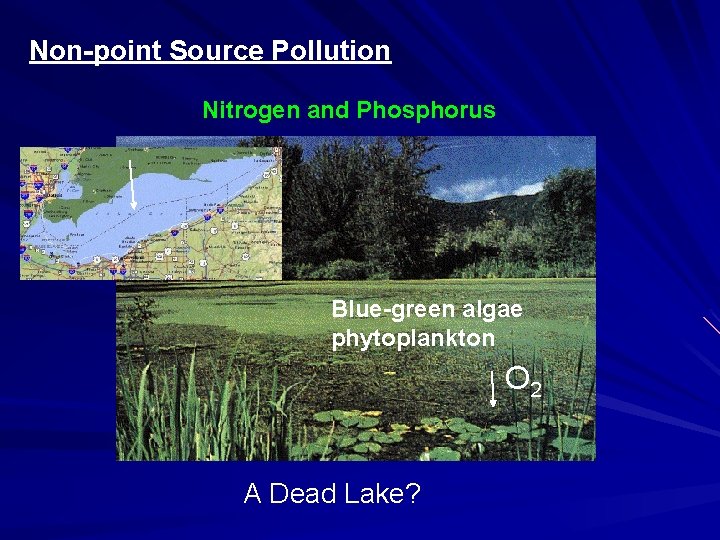
Non-point Source Pollution Nitrogen and Phosphorus Blue-green algae phytoplankton O 2 A Dead Lake?
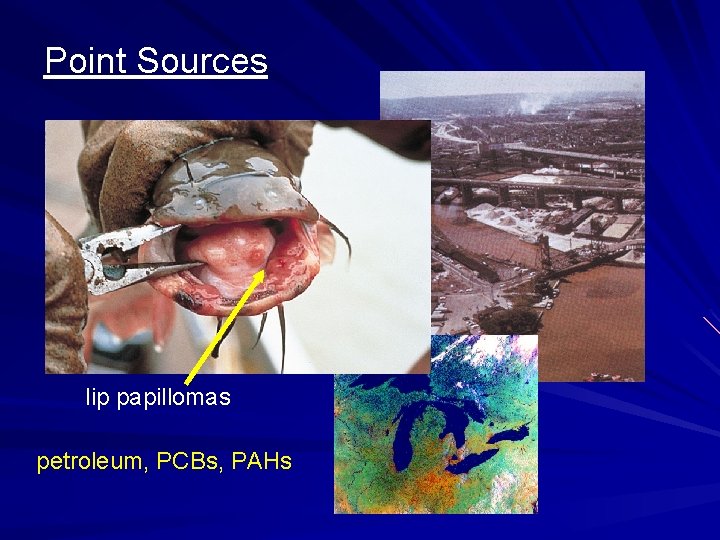
Point Sources lip papillomas petroleum, PCBs, PAHs
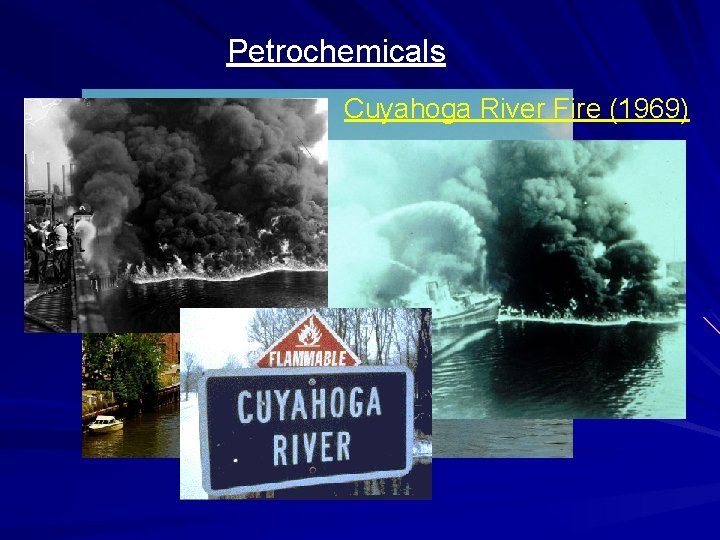
Petrochemicals Cuyahoga River Fire (1969)
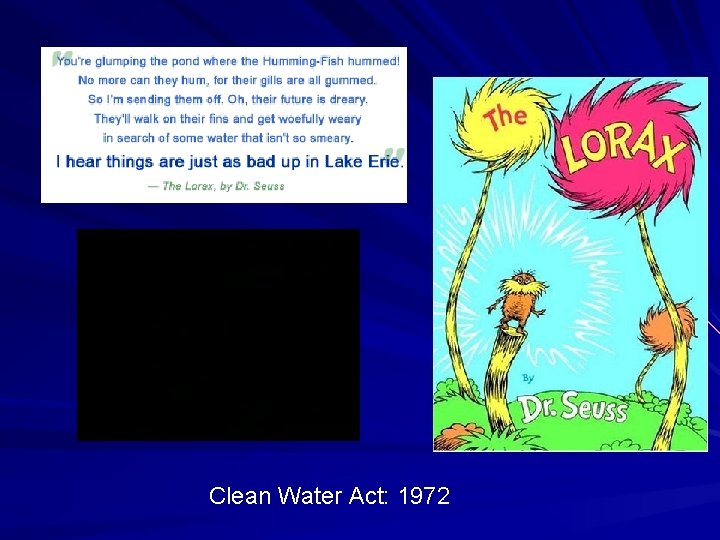
Clean Water Act: 1972
End of Lecture 22
Determining Water Quality
Basic Water Quality Parameters Biological Metals Nutrients Organic Chemicals Turbidity Temperature/Dissolved O 2 p. H Salinity
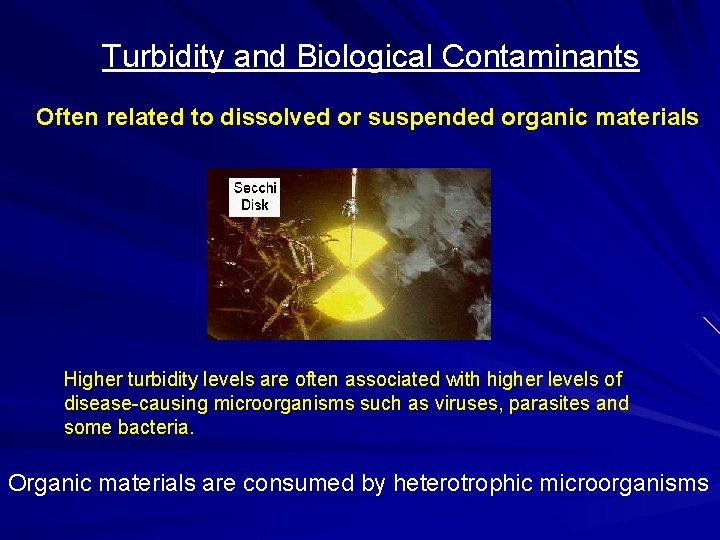
Turbidity and Biological Contaminants Often related to dissolved or suspended organic materials Higher turbidity levels are often associated with higher levels of disease-causing microorganisms such as viruses, parasites and some bacteria. Organic materials are consumed by heterotrophic microorganisms
Biological Oxygen Demand Due to microbial breakdown of organic materials in water BOD measures the rate of oxygen uptake by microorganisms in a sample of water at a fixed temperature (20°C) and over a given period of time in the dark. pristine rivers will have a 5 -day BOD below 1 mg/l. Moderately polluted rivers BOD values in the range of 2 to 8 mg/l. efficiently treated municipal sewage has a value of 20 mg/l. Untreated sewage varies, but average around 600 mg/l in Europe and as low as 200 mg/l in the U. S
p. H, Temperature, Oxygen, and Salinity
p. H
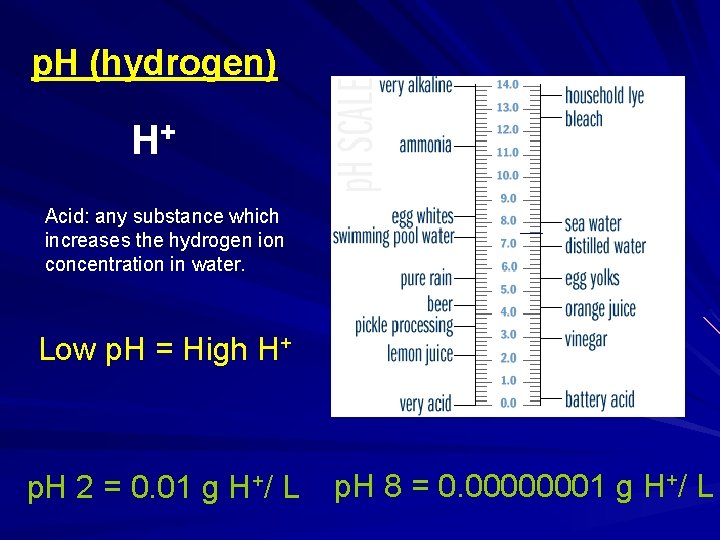
p. H (hydrogen) H+ Acid: any substance which increases the hydrogen ion concentration in water. Low p. H = High H+ p. H 2 = 0. 01 g H+/ L p. H 8 = 0. 00000001 g H+/ L
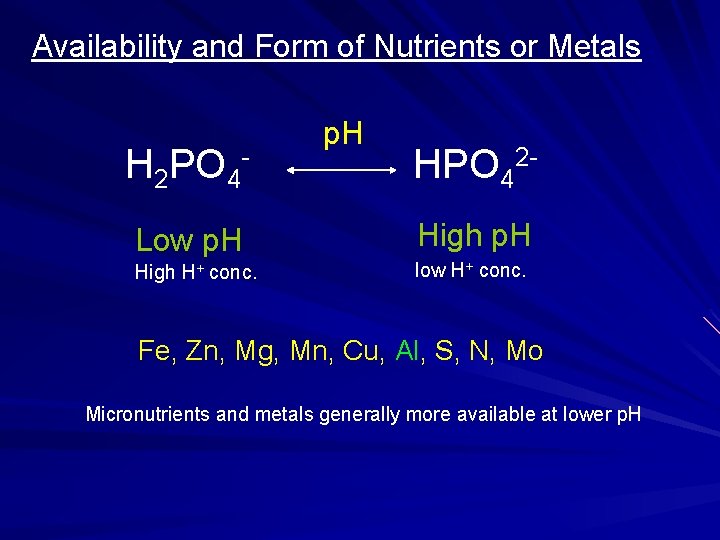
Availability and Form of Nutrients or Metals H 2 PO 4 - p. H HPO 42 - Low p. H High H+ conc. low H+ conc. Fe, Zn, Mg, Mn, Cu, Al, S, N, Mo Micronutrients and metals generally more available at lower p. H
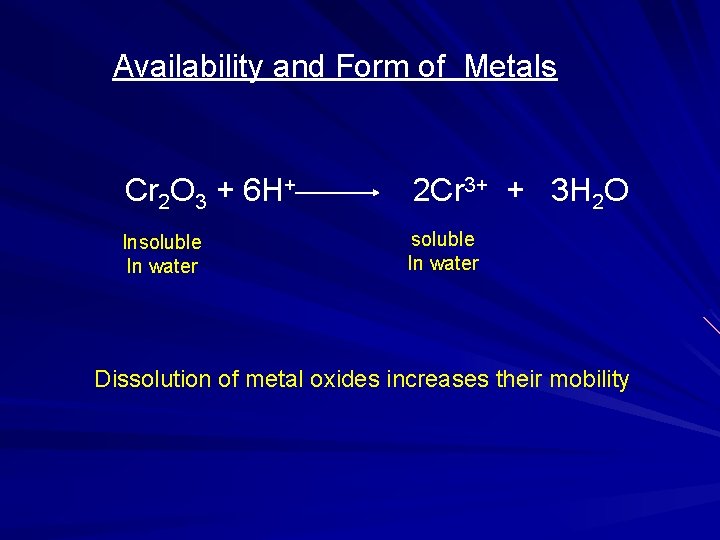
Availability and Form of Metals Cr 2 O 3 + 6 H+ 2 Cr 3+ + 3 H 2 O Insoluble In water Dissolution of metal oxides increases their mobility
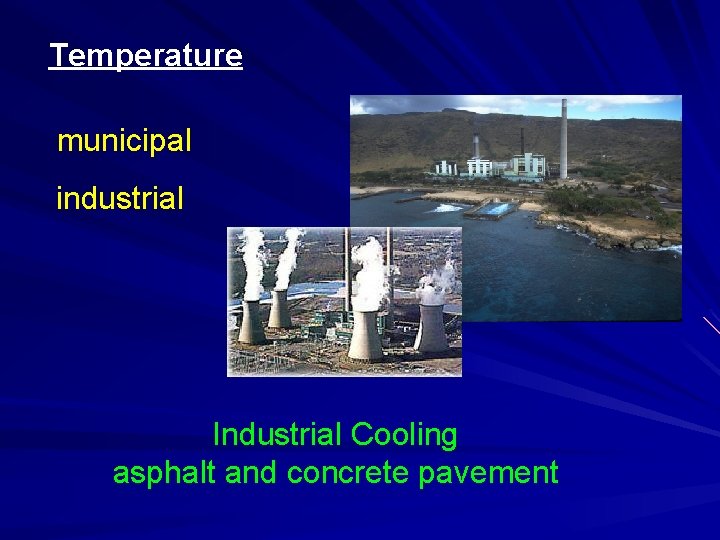
Temperature municipal industrial Industrial Cooling asphalt and concrete pavement
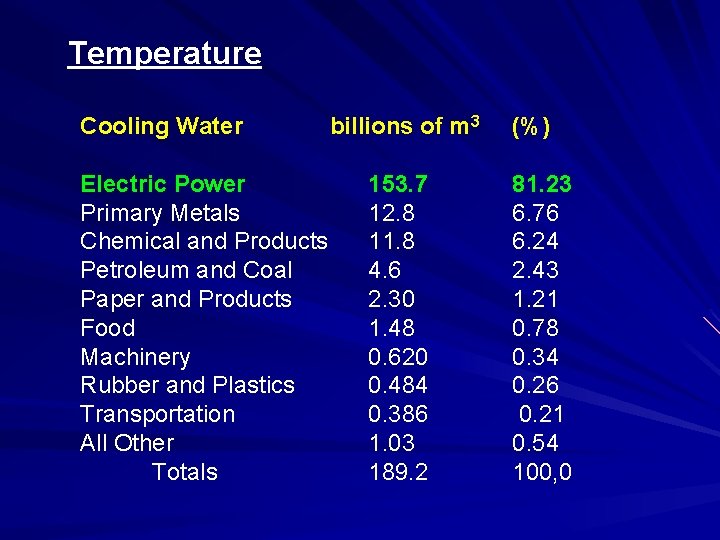
Temperature Cooling Water Electric Power Primary Metals Chemical and Products Petroleum and Coal Paper and Products Food Machinery Rubber and Plastics Transportation All Other Totals billions of m 3 153. 7 12. 8 11. 8 4. 6 2. 30 1. 48 0. 620 0. 484 0. 386 1. 03 189. 2 (%) 81. 23 6. 76 6. 24 2. 43 1. 21 0. 78 0. 34 0. 26 0. 21 0. 54 100, 0
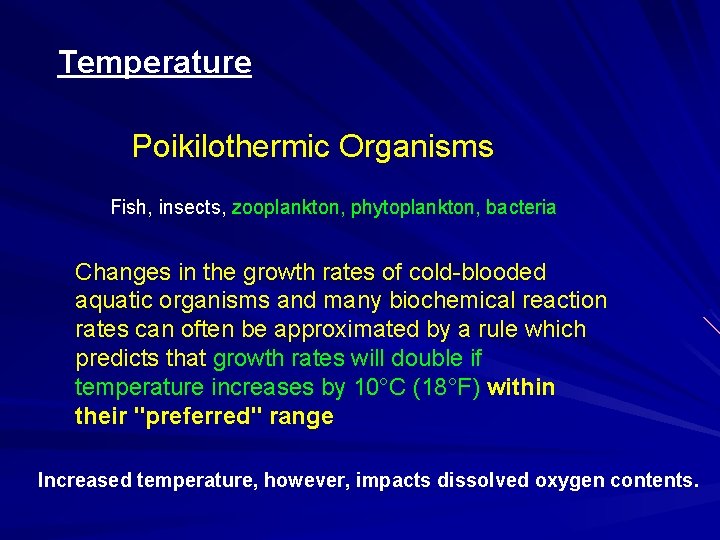
Temperature Poikilothermic Organisms Fish, insects, zooplankton, phytoplankton, bacteria Changes in the growth rates of cold-blooded aquatic organisms and many biochemical reaction rates can often be approximated by a rule which predicts that growth rates will double if temperature increases by 10°C (18°F) within their "preferred" range Increased temperature, however, impacts dissolved oxygen contents.
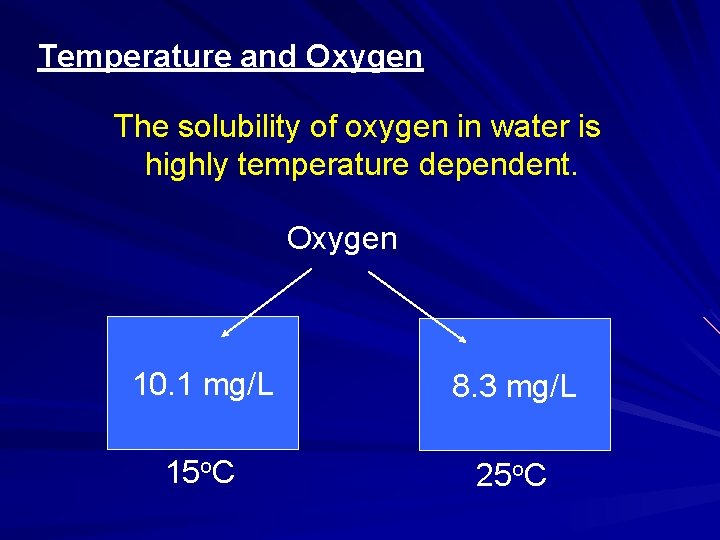
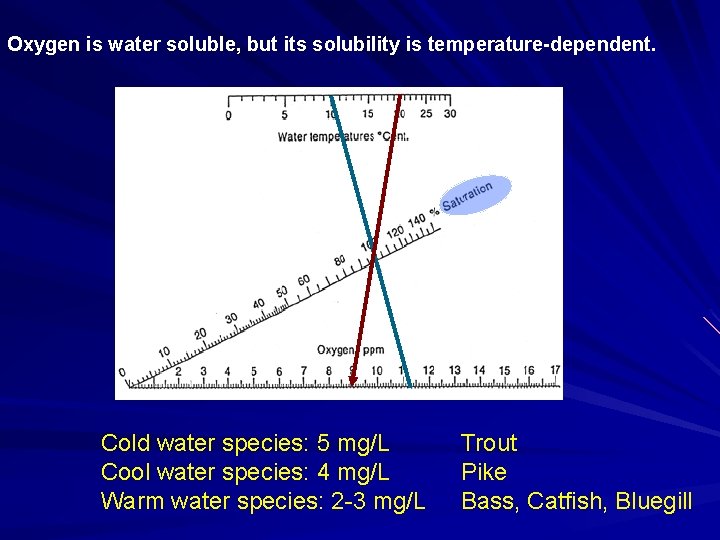
Temperature and Oxygen The solubility of oxygen in water is highly temperature dependent. Oxygen 10. 1 mg/L 8. 3 mg/L 15 o. C 25 o. C
Oxygen is water soluble, but its solubility is temperature-dependent. Cold water species: 5 mg/L Cool water species: 4 mg/L Warm water species: 2 -3 mg/L Trout Pike Bass, Catfish, Bluegill
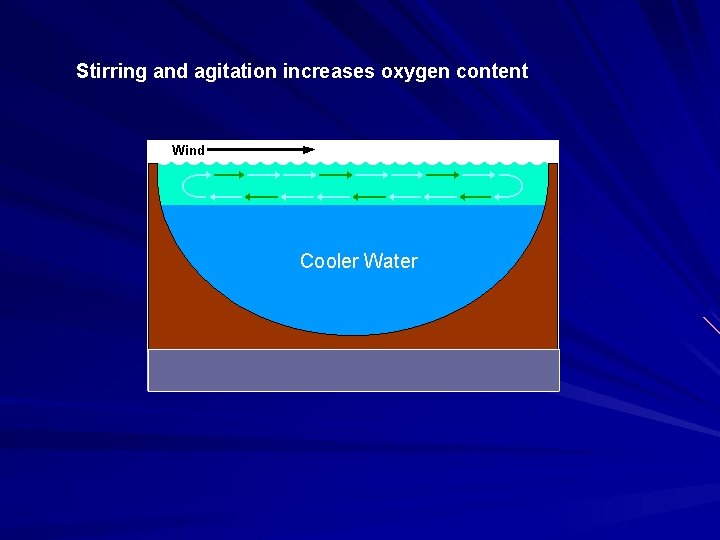
Stirring and agitation increases oxygen content Cooler Water
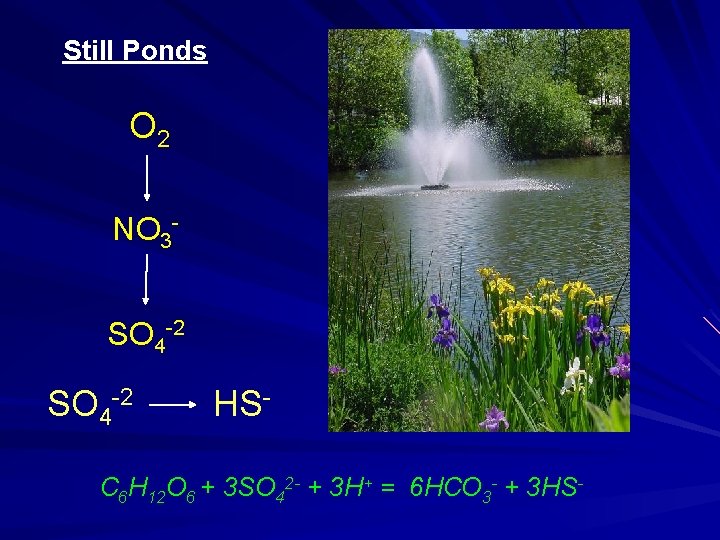
Still Ponds O 2 NO 3 SO 4 -2 HS- C 6 H 12 O 6 + 3 SO 42 - + 3 H+ = 6 HCO 3 - + 3 HS-
Oxygen is water soluble, but its solubility is temperature-dependent. In the atmosphere, about one out of 5 molecules is oxygen; in water, about one out of every 100, 000 molecules is oxygen. Oxygen enters the water body from the atmosphere and from photosynthesis near the surface Oxygen leaves the water column principally by organism respiration. Oxygen contents of water bodies generally is higher at the surface than at depth. Stirring and agitation increases water’s oxygen content