
Fresh and Saltwater Systems How water changes our
- Slides: 26
Fresh and Saltwater Systems How water changes our landscapes
The Water Cycle • • Smart Notebook Activity Complete Sheet Water Cycle Dance!! http: //www. edumediasciences. com/en/media/383 -water-cycle
How Rivers Work • https: //www. youtube. com/watch? v=dy. XE_Eo q 40 A&t=262 s • Answer the questions in your notes to follow along.
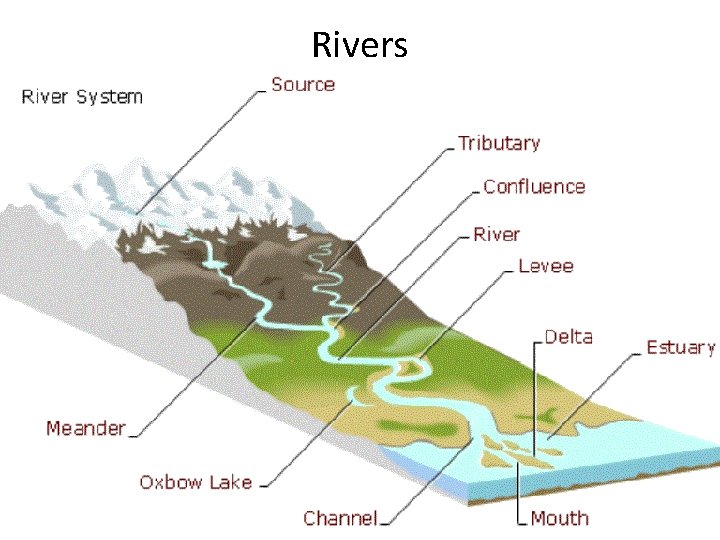
Rivers
V and U shaped Valleys • _Vertical Erosion__ is the process when water erodes downwards, creating V shape valleys. Downstream, Lateral Erosion takes place, where it erodes materials sideways. This happens in U Shaped valleys. • http: //www. edumedia-sciences. com/en/media/126 erosion-v-shaped-valley • http: //www. edumedia-sciences. com/en/media/66 erosion-u-shaped-valley
Things to Know about Rivers • 3 factors that affect stream processes – Volume of Water – Velocity (Speed) of Water – Type of Material – https: //youtu. be/ORZQUlk 8 vxg – How are deserts affected by Flash Floods?
Think about it! • Why do rivers meander in prairie areas and not in Mountains? • http: //www. edumedia-sciences. com/en/media/64 meander-formation
Think about it! • Does water take a long time or a short amount of time to change a landscape? • Why do Rivers Curve? https: //www. youtube. com/watch? v=8 a 3 rc. G 8 Wic&index=8&list=PLEl. B 7 n. LNHZvhfu. Bh. J 73 p 1 hnol 3 e 3 NBV 5 n
Google Earth • Look for the following features on Google Earth
Coursera Video Series • Watch 4 videos on Glaciers. Follow along to get the answers for the fill in the blanks.
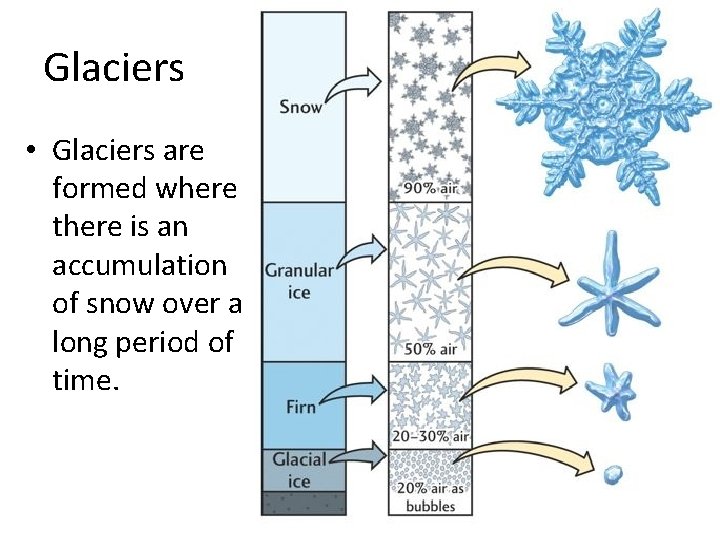
Glaciers • Glaciers are formed where there is an accumulation of snow over a long period of time.
Google Earth • Look for the following features on Google Earth
Surface Water • Lakes and ponds → standing water – In a pond sunlight reaches the bottom – In a lake sunlight does not reach the bottom • Wetlands → areas that are saturated with water • Rivers and streams → flowing water – speed, temperature, clarity varies – more dissolved oxygen than in standing water
Run-off and Erosion • There are many factors that determine whether rain soaks into the ground or runs off – amount of rain, time it takes to fall, slope of the land, amount of vegetation. • All of these things affect how much loss of soil or sediments occurs, called erosion. • As water flows downhill, sediments are eroded and carried downstream where they will be deposited – called deposition. • http: //www. edumedia-sciences. com/en/media/64 meander-formation
Think about it! • Why should we monitor sediment loading?
Importance of Sediment Monitoring • can carry toxic chemicals from run-off or sedimentborne toxic chemicals • decrease water depth and make navigation difficult. • Sediment can affect the delivery of water – wear out pumps and turbines, etc.
Stream Table Demonstration • Write 5 observations from the stream table demonstrations relating to the following scenarios: • Regular Stream Table, Increased Elevation, Increased flow rate – Regular Stream = small pieces, many paths for water to flow – Increased elevation = larger pieces, one main path for water to flow – Increased flow rate = Pools of Water, one main path, more erosion/deposition occurred. • How were they affected by Erosion? Where did the sediment get deposited?
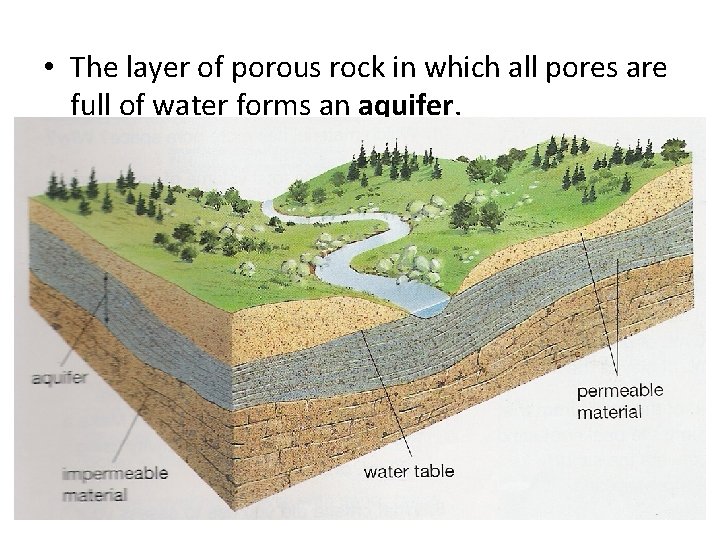
Groundwater • Groundwater sits just above bedrock – The top of the layer of saturated soil is called the WATER TABLE – The layer is called the Aquifer – the water table is closer to the surface in wet years… and deeper from the surface in drier years • It is similar to a surface river system… except underground • when a well is drilled pressure forces groundwater to the surface in the well
• The layer of porous rock in which all pores are full of water forms an aquifer.
Oceans – How do they Form • http: //www. edumediasciences. com/en/media/674 -mid-ocean-ridge • http: //www. edumediasciences. com/en/media/227 -volcanism • Describe how the Ocean Ridge Works • How do Ocean Trenches form? • Mid Atlantic Ridge in Iceland! https: //www. youtube. com/watch? v=f. FVCZk. Wh. P E 4&feature=youtu. be • Google Earth
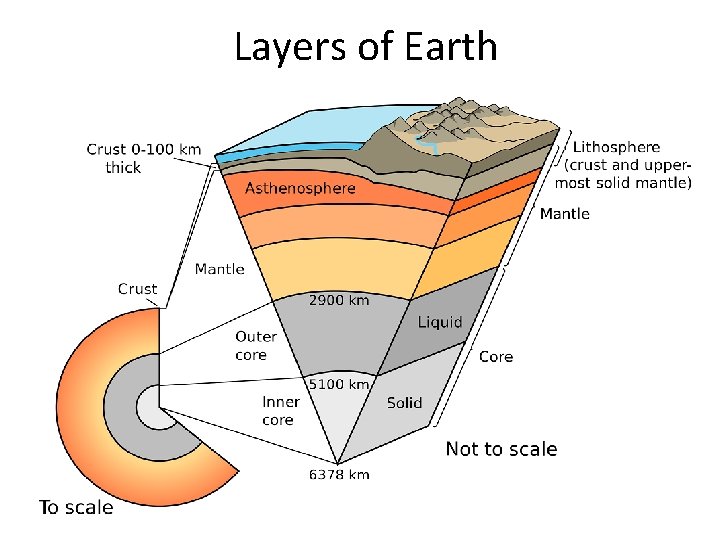
Layers of Earth
Mapping the Ocean Floor • Complete the activity on page 416 • Try to identify the following features: – Continental Shelf – Continental slope – Abyssal Plain – Continental Margin – Ocean Basin
How do Tides and Waves Work? • Complete the Tides Postcard Assignment – Use your textbook to get the answers!! – This will be due next class! https: //www. youtube. com/watch? v=5 oh. DG 7 Rq. Q 9 I - How tides work
Ocean Circulation • Answer the questions based on the videos • https: //www. youtube. com/watch? v=Uu. Gr. Bh. K 2 c 7 U (maybe? ) • https: //www. youtube. com/watch? v=Fu. OX 23 y. Xh Z 8 • https: //www. youtube. com/watch? v=YCorky. Be 66 o •
Ted ed • How Big is the ocean? • https: //www. youtube. com/watch? v=5 xtgt. JTC 2 go &feature=youtu. be • El Nino (Bill Nye) • https: //www. youtube. com/watch? v=19 Ipz. JWSRA c • Concentration Gradients • https: //www. youtube. com/watch? v=5 xtgt. JTC 2 go &feature=youtu. be
El Nino • https: //www. youtube. com/watch? v=d 6 s 0 T 0 m 3 F 8 s National Geographic • https: //www. youtube. com/watch? v=19 Ipz. JW SRAc Bill Nye