
Frequencyagile combs ultrahigh resolution saturation spectroscopy D A
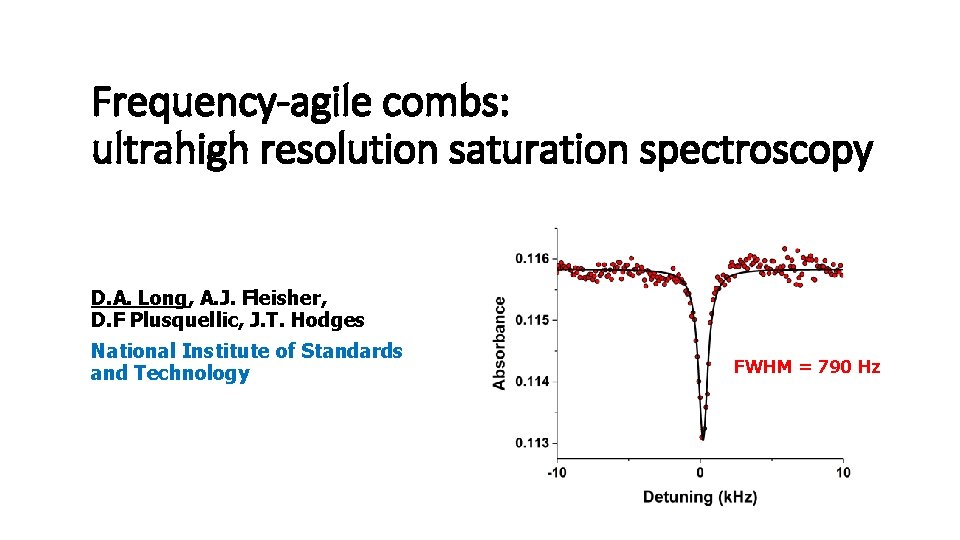
Frequency-agile combs: ultrahigh resolution saturation spectroscopy D. A. Long, A. J. Fleisher, D. F Plusquellic, J. T. Hodges National Institute of Standards and Technology FWHM = 790 Hz
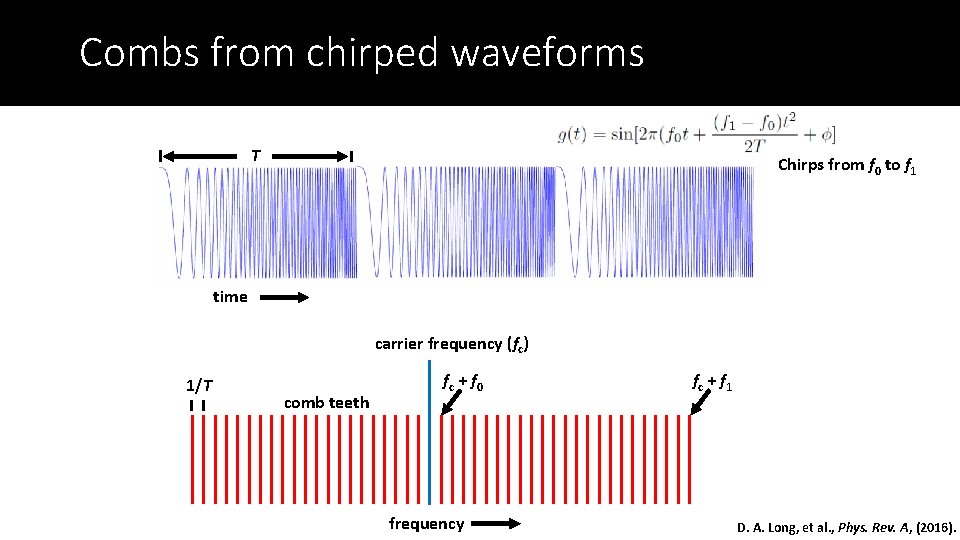
Combs from chirped waveforms T Chirps from f 0 to f 1 time carrier frequency (fc) 1/T comb teeth fc + f 0 frequency fc + f 1 D. A. Long, et al. , Phys. Rev. A, (2016).

Ultranarrowly spaced optical frequency combs 10, 000 comb teeth at a 200 k. Hz spacing PUMP PROBE D. A. Long, et al. , Phys. Rev. A, (2016).

Self-heterodyne spectroscopy Radio Frequency LO Detector Probe comb Laser PM AOM Absorption Cell Oven Optical Frequency Magnetic Shielding Optical Frequency
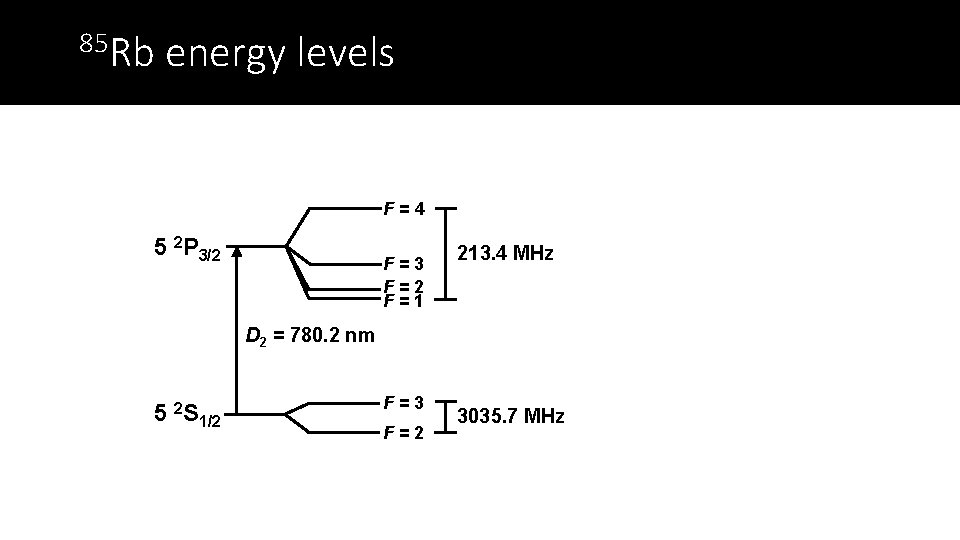
85 Rb energy levels F=4 5 2 P 3/2 F=3 F=2 F=1 213. 4 MHz D 2 = 780. 2 nm 5 2 S 1/2 F=3 F=2 3035. 7 MHz
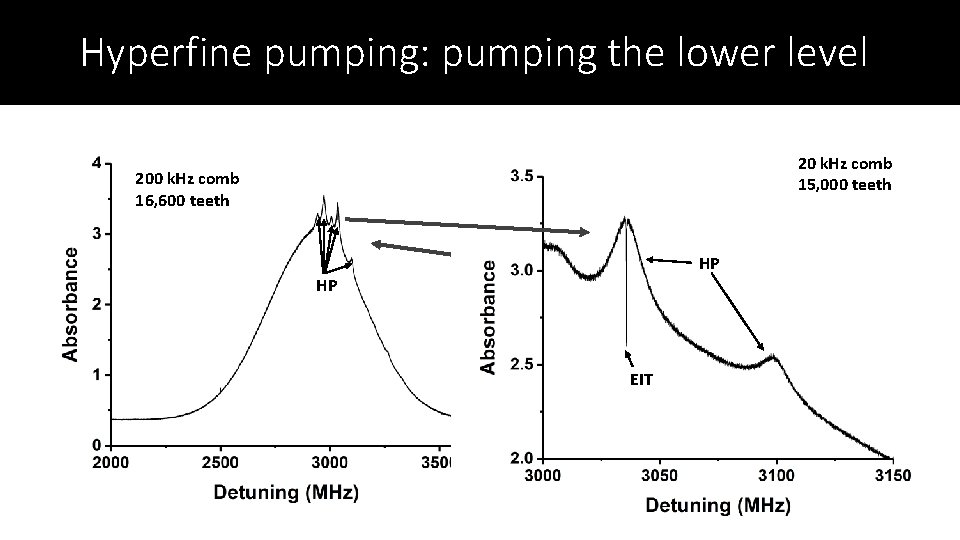
Hyperfine pumping: pumping the lower level 200 k. Hz comb 16, 600 teeth 85 Rb F″=3 HP HP 87 Rb F″=2 EIT k. Hzcomb 20020 k. Hz 15, 000 teeth 36, 000 teeth 85 Rb F″=2
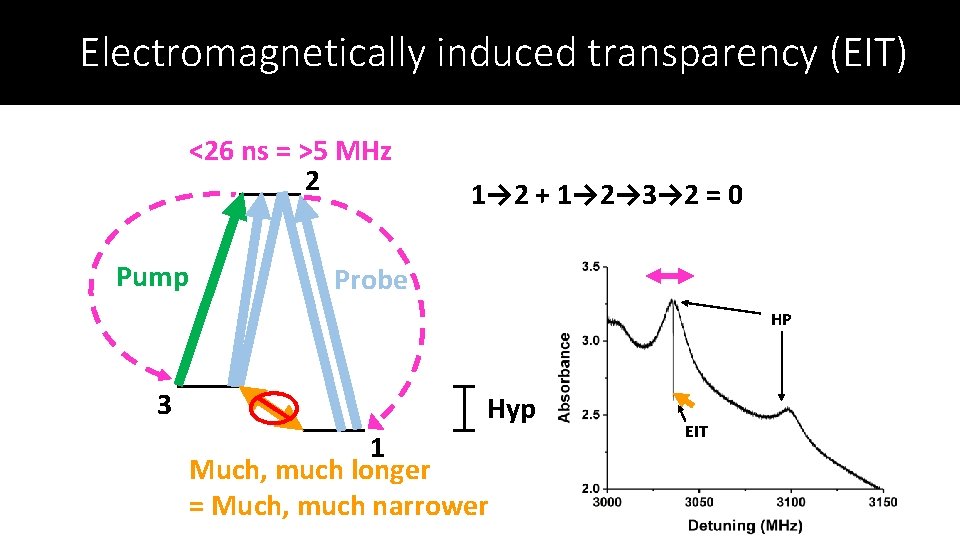
Electromagnetically induced transparency (EIT) <26 ns = >5 MHz 2 Pump 1→ 2 + 1→ 2→ 3→ 2 = 0 Probe HP 3 Hyperfine splitting 1 Much, much longer = Much, much narrower EIT
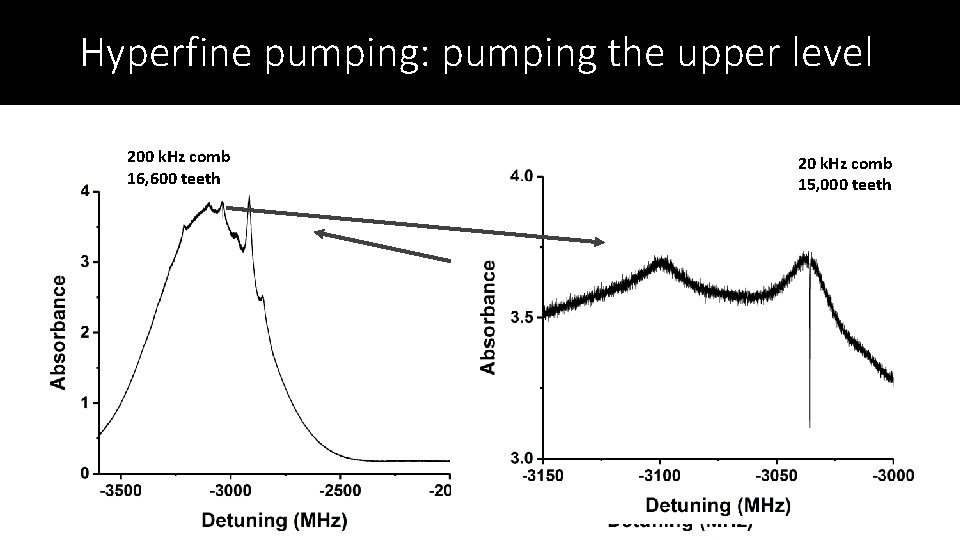
Hyperfine pumping: pumping the upper level 200 k. Hz comb 16, 600 teeth 85 Rb F″=3 k. Hzcomb 20020 k. Hz 15, 000 teeth 36, 000 teeth 85 Rb F″=2 87 Rb F″=1

Ultranarrowly spaced optical frequency combs 400 comb teeth at a 100 Hz spacing
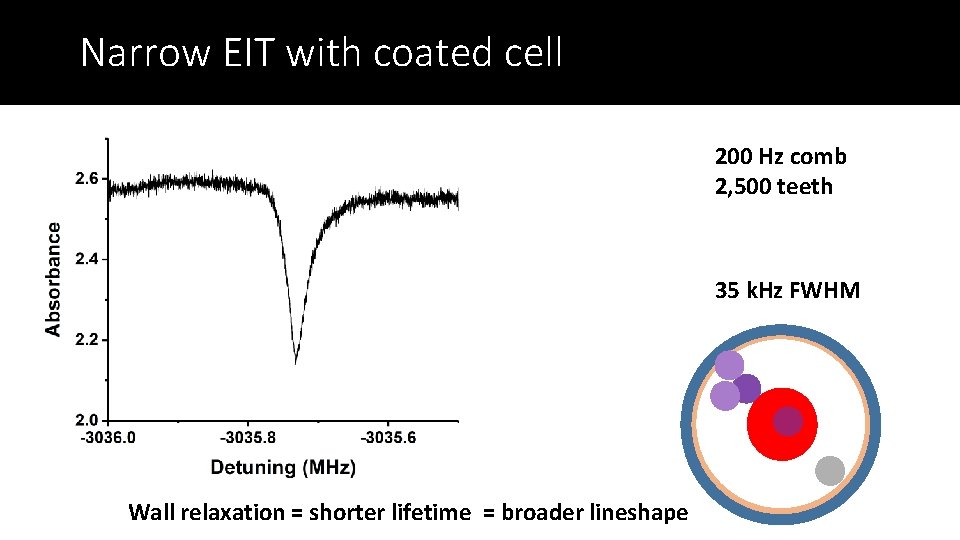
Narrow EIT with coated cell 200 Hz comb 2, 500 teeth 35 k. Hz FWHM Wall relaxation = shorter lifetime = broader lineshape
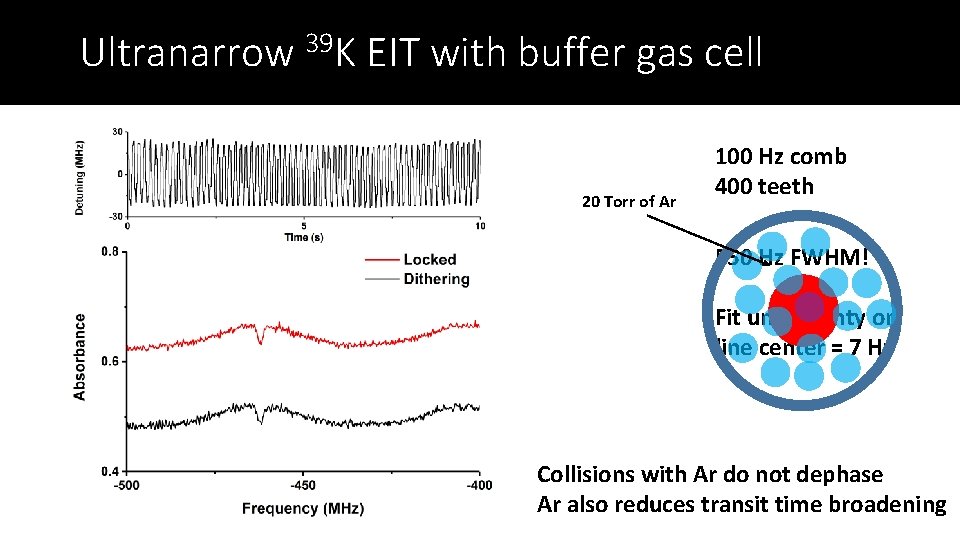
Ultranarrow 39 K EIT with buffer gas cell 20 Torr of Ar 100 Hz comb 400 teeth 550 Hz FWHM! Fit uncertainty on line center = 7 Hz Collisions with Ar do not dephase Ar also reduces transit time broadening
Conclusions • Driving electro-optic modulators with custom waveforms allows for agile and flat optical frequency combs • The strong carrier tone can be used as a pump to allow for multiplexed sub-Doppler spectroscopy • Hole burning, hyperfine pumping, and electromagnetically induced transparency (EIT) have been simultaneously observed in K and Rb • Ultranarrow features can be probed, even those orders of magnitude narrower than the laser linewidth
Acknowledgements NIST Greenhouse Gas Measurements and Climate Research Program

- Slides: 14