
Frequency Division Multiplex System Testing with ET 92


- Slides: 13
Frequency Division Multiplex System Testing with ET 92 Level Measurement in Tracking Mode Basic, Super & Master Group Voice Frequency Noise Level Measurement Pilot Level Measurement Psophometric Noise Measurement Impulsive Noise Measurement Frequency Response Test with MTTS END to END Measurements Micro Interruption Analysis Group Delay Distortion Jitter and Frequency Difference To learn more click on note! ELEKTR NIKA
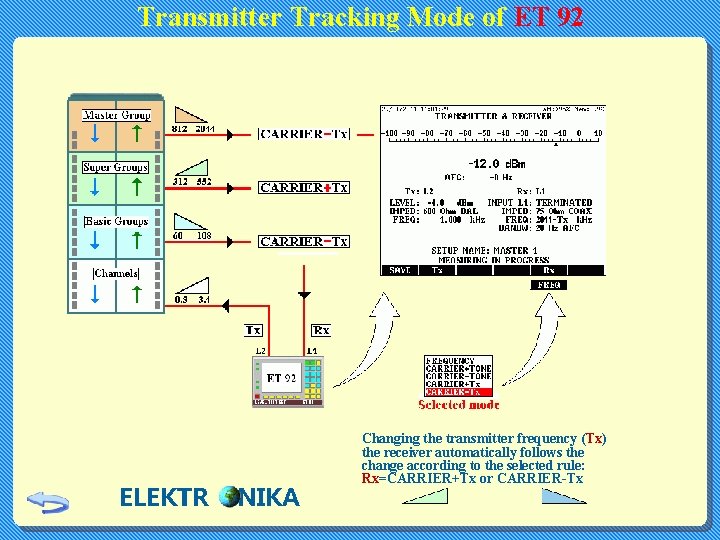
Transmitter Tracking Mode of ET 92 ELEKTR NIKA Changing the transmitter frequency (Tx) the receiver automatically follows the change according to the selected rule: Rx=CARRIER+Tx or CARRIER-Tx
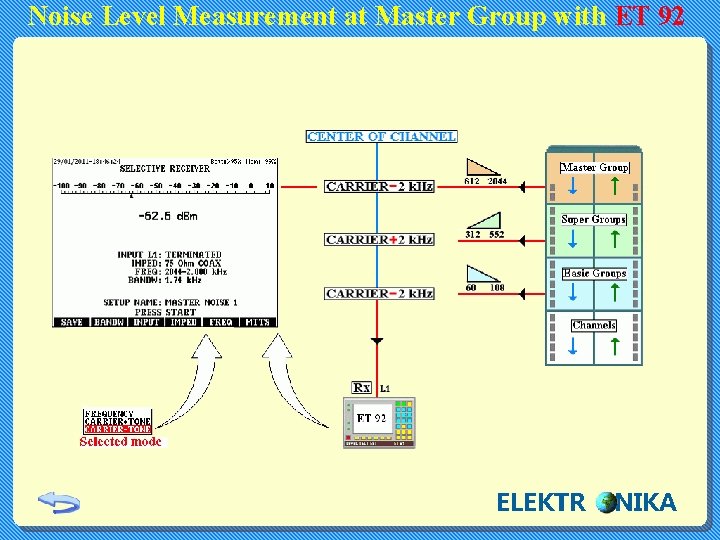
Noise Level Measurement at Master Group with ET 92 ELEKTR NIKA
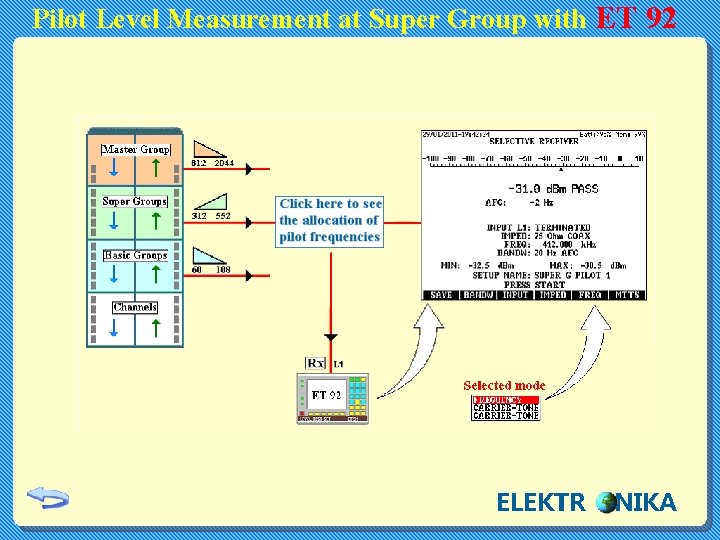
Pilot Level Measurement at Super Group with ET 92 ELEKTR NIKA
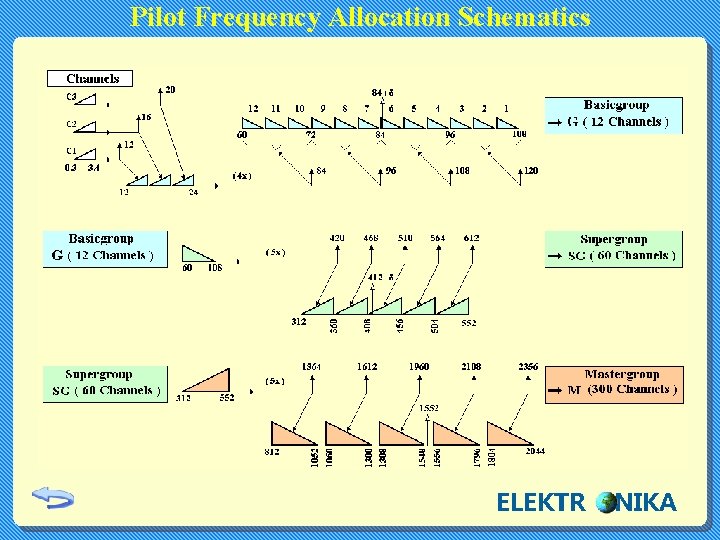
Pilot Frequency Allocation Schematics ELEKTR NIKA
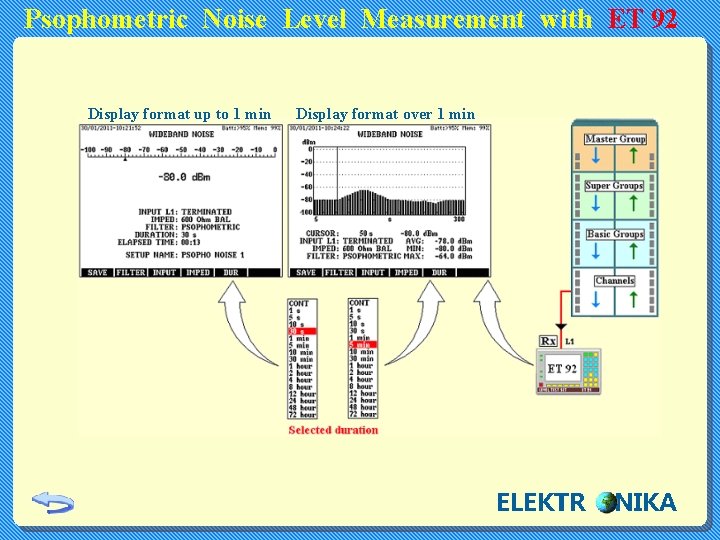
Psophometric Noise Level Measurement with ET 92 Display format up to 1 min Display format over 1 min ELEKTR NIKA
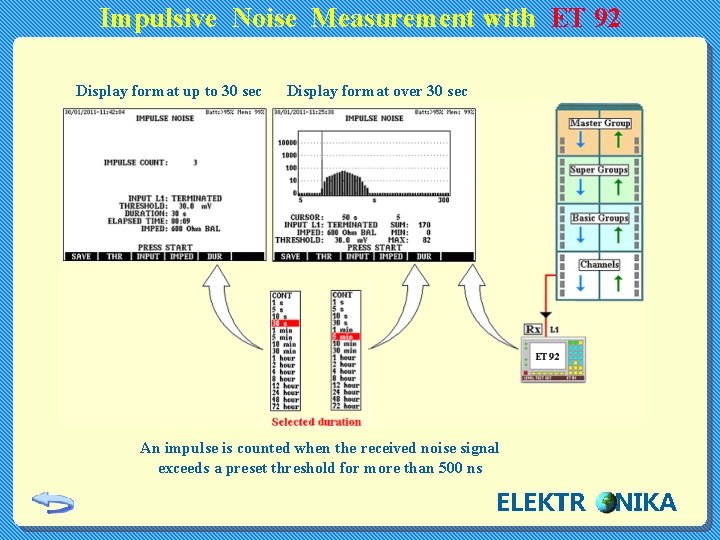
Impulsive Noise Measurement with ET 92 Display format up to 30 sec Display format over 30 sec An impulse is counted when the received noise signal exceeds a preset threshold for more than 500 ns ELEKTR NIKA
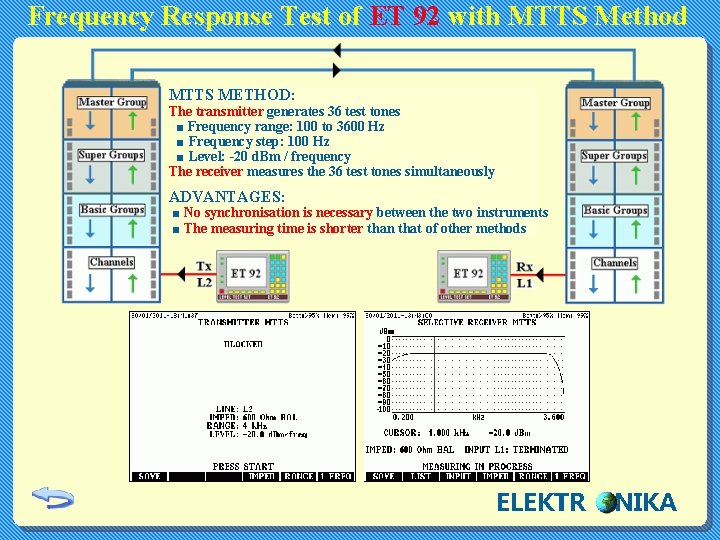
Frequency Response Test of ET 92 with MTTS Method MTTS METHOD: The transmitter generates 36 test tones ■ Frequency range: 100 to 3600 Hz ■ Frequency step: 100 Hz ■ Level: -20 d. Bm / frequency The receiver measures the 36 test tones simultaneously ADVANTAGES: ■ No synchronisation is necessary between the two instruments ■ The measuring time is shorter than that of other methods ELEKTR NIKA
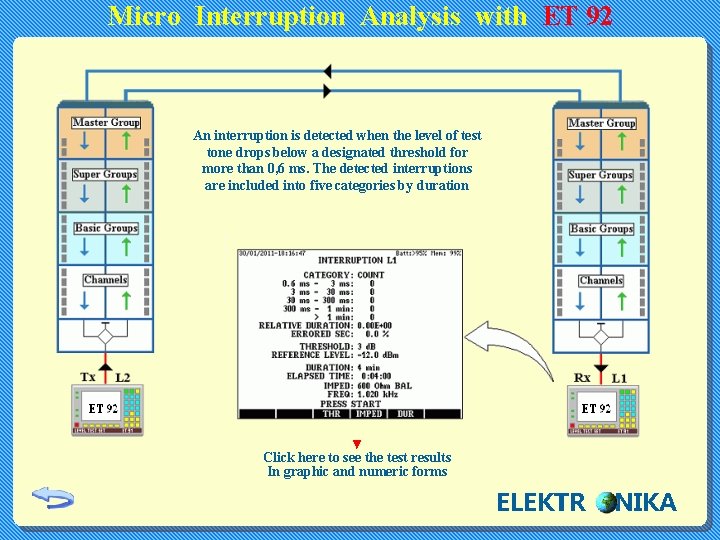
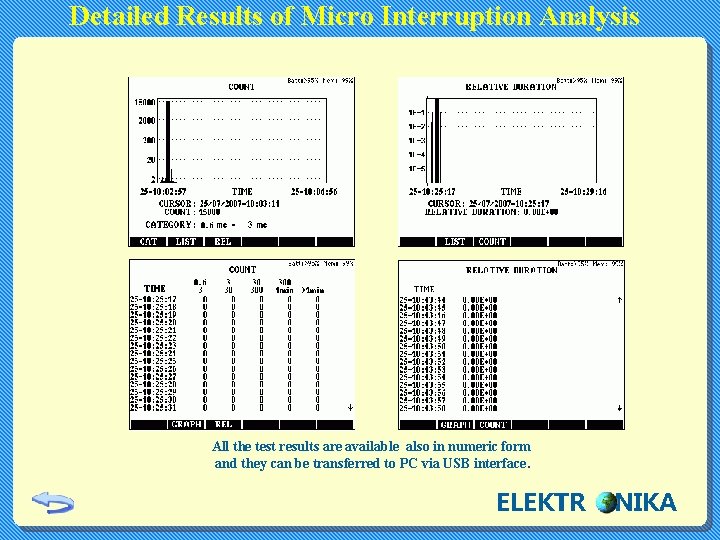
Micro Interruption Analysis with ET 92 An interruption is detected when the level of test tone drops below a designated threshold for more than 0, 6 ms. The detected interruptions are included into five categories by duration ▼ Click here to see the test results In graphic and numeric forms ELEKTR NIKA
Detailed Results of Micro Interruption Analysis All the test results are available also in numeric form and they can be transferred to PC via USB interface. ELEKTR NIKA
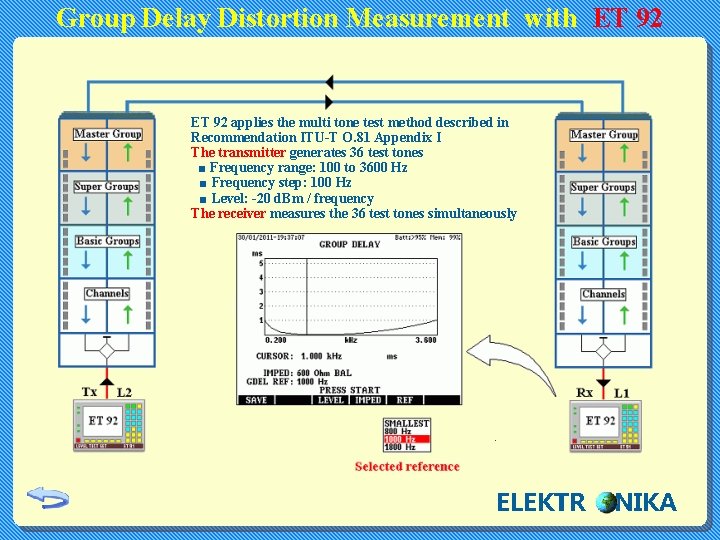
Group Delay Distortion Measurement with ET 92 applies the multi tone test method described in Recommendation ITU-T O. 81 Appendix I The transmitter generates 36 test tones ■ Frequency range: 100 to 3600 Hz ■ Frequency step: 100 Hz ■ Level: -20 d. Bm / frequency The receiver measures the 36 test tones simultaneously ELEKTR NIKA
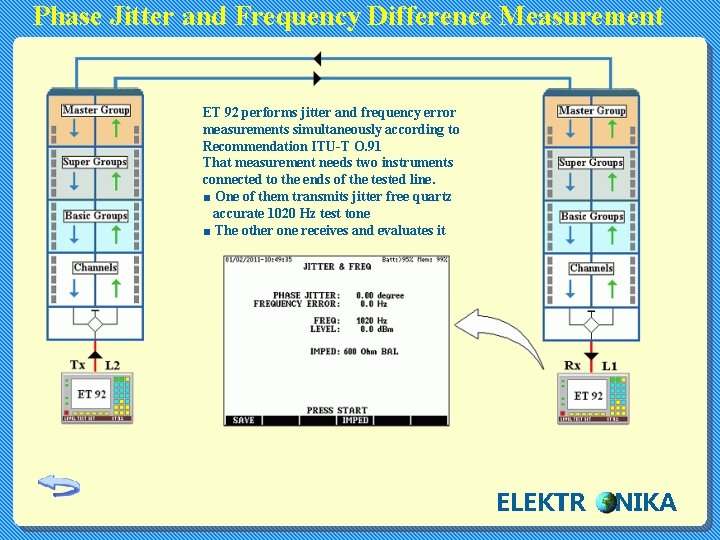
Phase Jitter and Frequency Difference Measurement ET 92 performs jitter and frequency error measurements simultaneously according to Recommendation ITU-T O. 91 That measurement needs two instruments connected to the ends of the tested line. ■ One of them transmits jitter free quartz accurate 1020 Hz test tone ■ The other one receives and evaluates it ELEKTR NIKA
THANK YOU FOR YOUR ATTENTION!