
French Revolution Louis XIV Louis XVI Financial Crisis


- Slides: 42
French Revolution
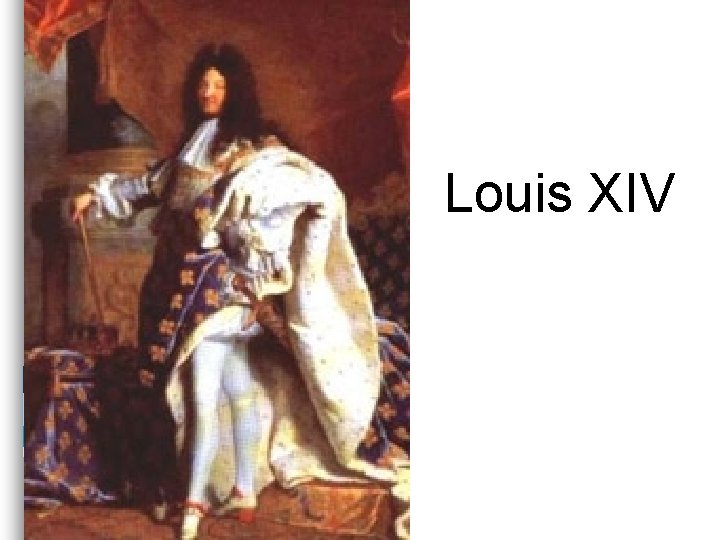
Louis XIV
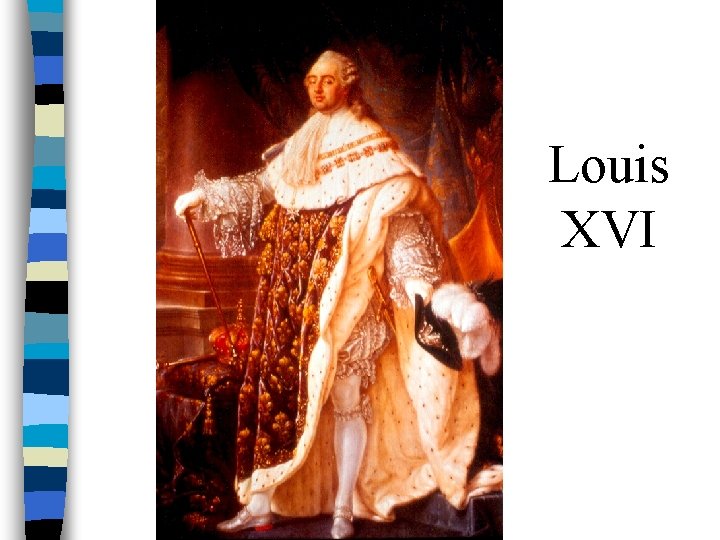
Louis XVI
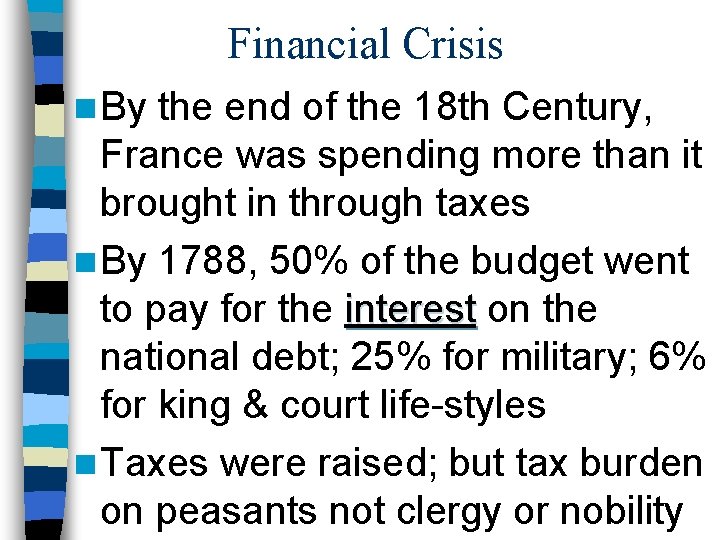
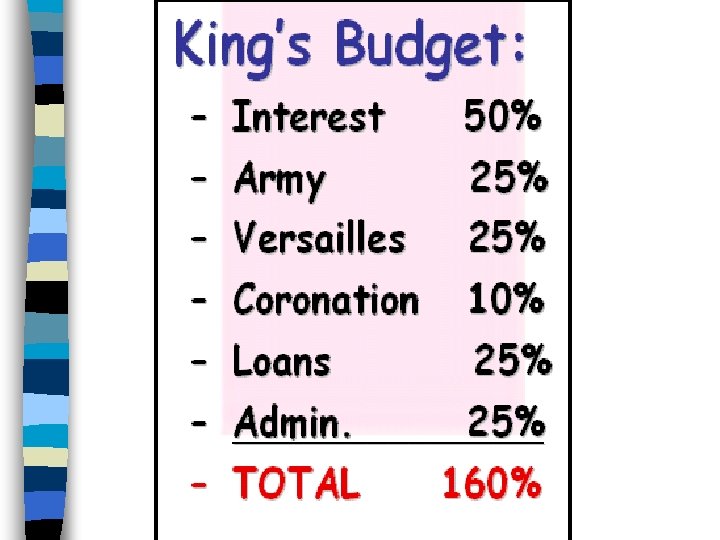
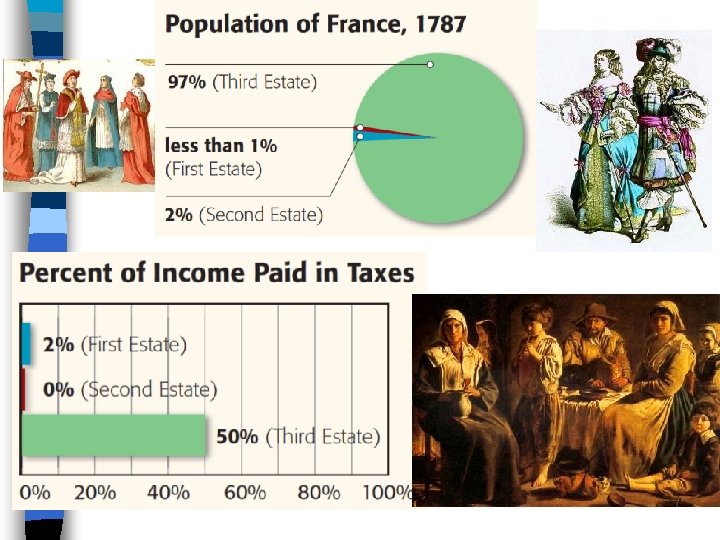
Financial Crisis n By the end of the 18 th Century, France was spending more than it brought in through taxes n By 1788, 50% of the budget went to pay for the interest on the national debt; 25% for military; 6% for king & court life-styles n Taxes were raised; but tax burden on peasants not clergy or nobility
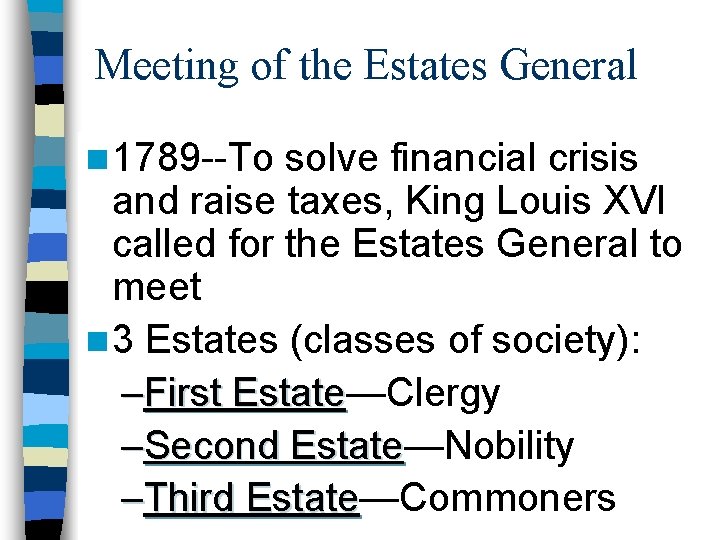
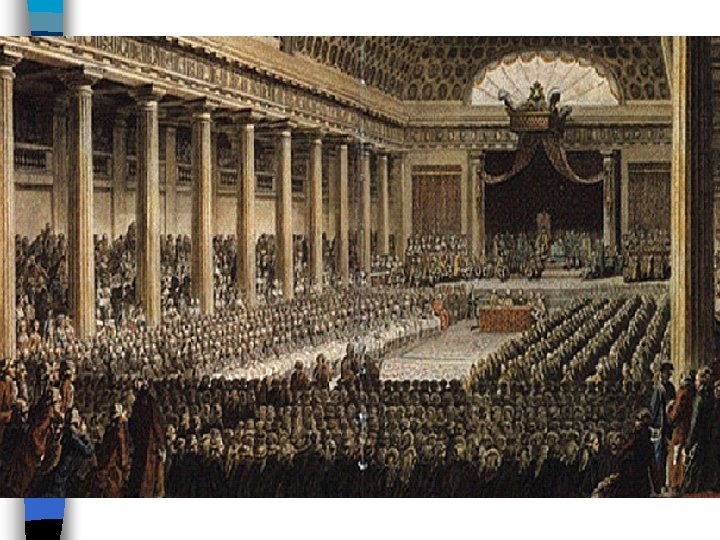
Meeting of the Estates General n 1789 --To solve financial crisis and raise taxes, King Louis XVI called for the Estates General to meet n 3 Estates (classes of society): –First Estate—Clergy Estate –Second Estate—Nobility Estate –Third Estate—Commoners Estate
The First Estate n The 1 st ESTATE – consisted of officials of the Catholic Church. - They owned 10% of land, but were less than 1% of population. - They were very rich (except for the priests). - They did not have to pay taxes, but gave a gift of 2% to the government.
The Second Estate The 2 nd Estate – consisted of nobility, who made up 2% of the total population. - Owned 20% of the land. - They held all of the important political, military, and religious positions in society.
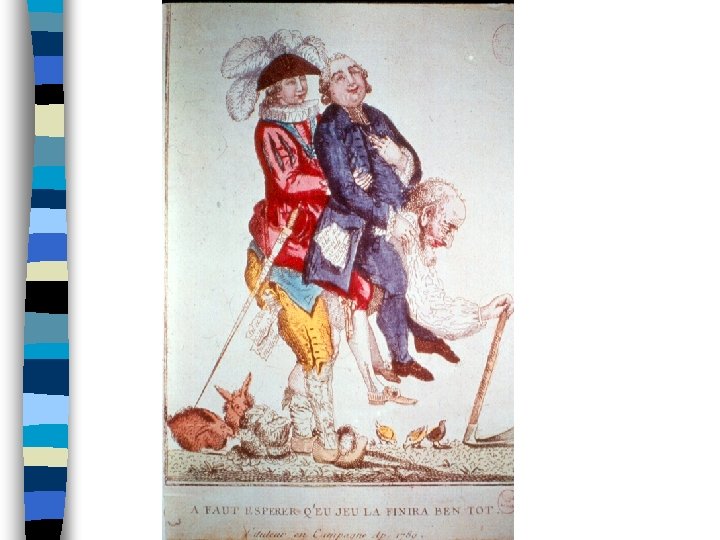
The Third Estate The 3 rd Estate – consisted of the middle class, urban lower class, and peasant farmers. - The 3 groups made up 98% of population. Forced to pay ½ of income to taxes. - Bourgeoisie (middle class) – were educated and wealthy. And they wanted more status and political power.
rd 3 The Estate was ready for change - even REVOLUTION!!!!
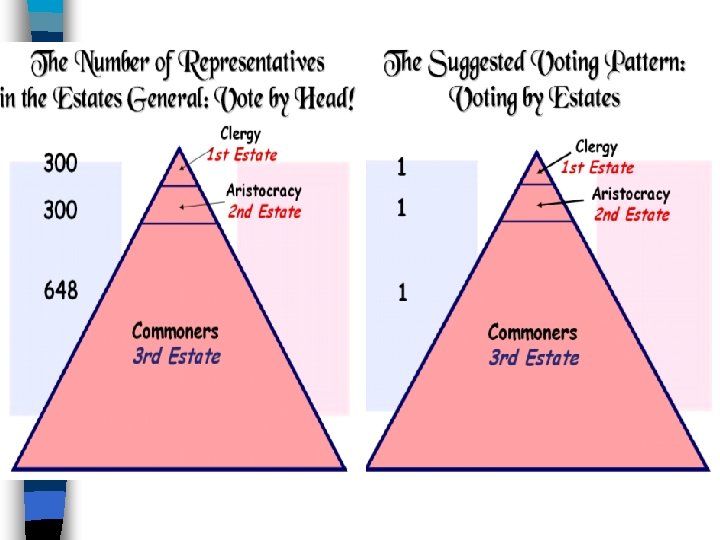
Meeting of the Estates General n Estates General voted as separate orders instead of individual votes. n The Third Estate refused to conduct business until they could meet as a single representative body. • This never happened.
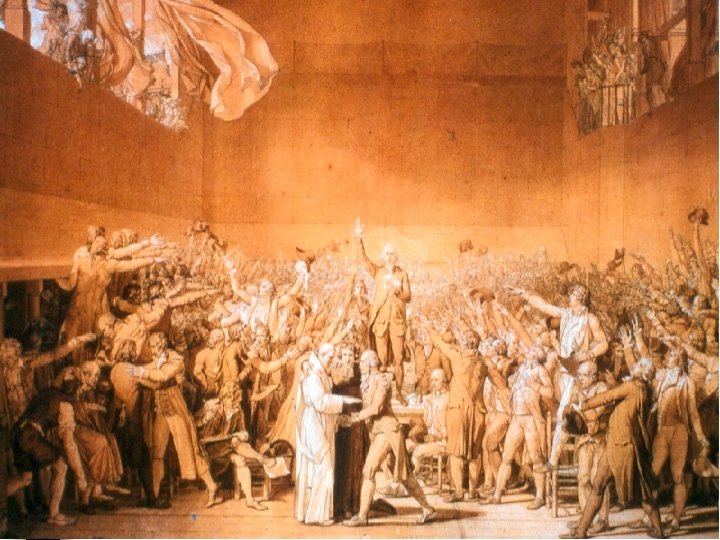
Meeting of the Estates General n The 3 rd Estate broke away and adopted the title National Assembly and said they were the “true” representative body of France. n July 20, 1789 National Assembly swore Tennis Court Oath—will not disband until new Oath constitution is written
The Tennis Court Oath n On June 20, 1789, the National Assembly was excluded from Versailles because of “repairs” so they met in an indoor tennis court. n There they swore the famous “Tennis Court Oath”, pledging never to disband until they had written a new constitution for France.
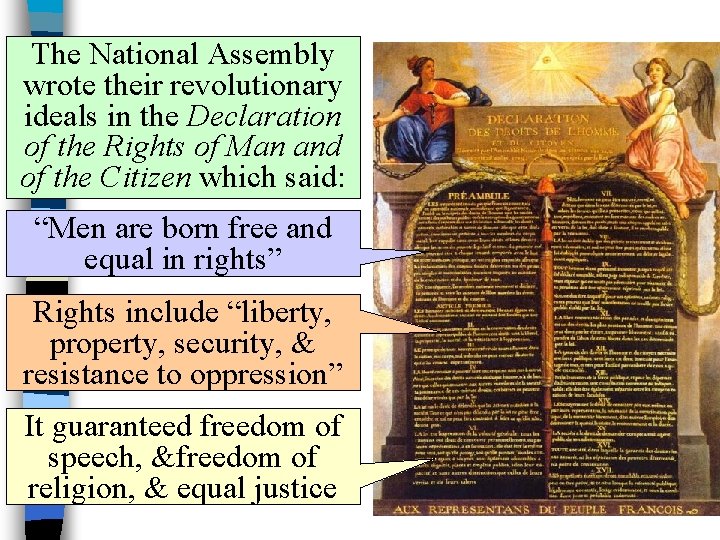
The National Assembly wrote their revolutionary ideals in the Declaration of the Rights of Man and of the Citizen which said: “Men are born free and equal in rights” Rights include “liberty, property, security, & resistance to oppression” It guaranteed freedom of speech, &freedom of religion, & equal justice
National Assembly n Established constitutional monarchy which king accepted in July 1791. n National Assembly had power to make laws, but king remained head of the state and could veto any law. n King vetoed many laws; National Assembly had very little “real” power
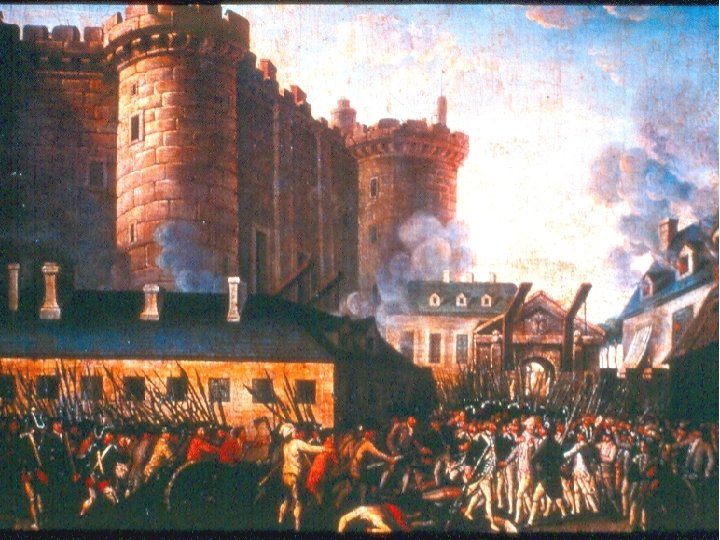
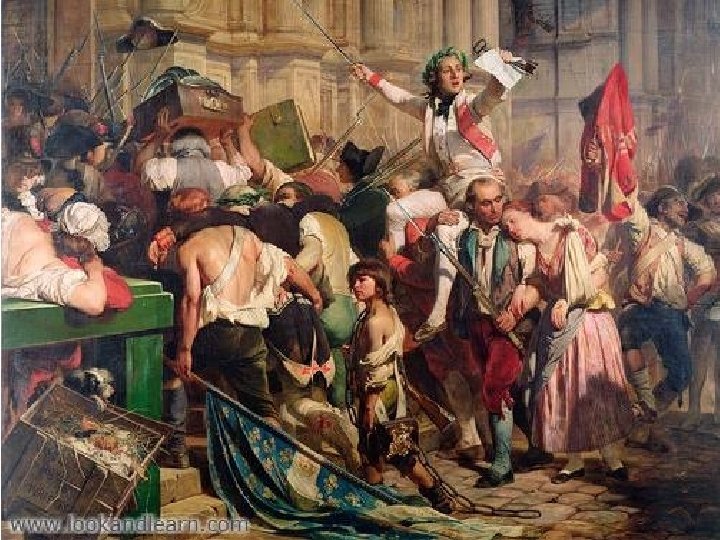
Storming of the Bastille n By July 1789, 25% of people were unemployed, bread prices high, many people without food. n Rumor spread that the kings troops were coming to sack Paris, so angry crowds seized arms to defend the city. n July 14, 1789 hundreds marched to the Bastille , a medieval fort and political prison, to find gun powder
Storming of the Bastille n The commanding officer refused to give up the gunpowder and fired on the crowd. Killed 98 people. n Revolutionary crowds took Bastille—symbolized beginning of French Revolution
March on Versailles n Unemployment and hunger increased n October 5, 1789 7, 000 women marched to palace of Versailles to demand bread n Women invaded palace and killed guards n Bread was given and Louis never returned to Versailles.
Execution of Louis XVI n The King and his family were caught trying to flee the country. n He agreed to sign the Constitution of 1791, then proceeded to veto revolutionary decrees. (King no longer has absolute power. ) n A new, more radical gov’t was elected in 1792 – the National Convention.
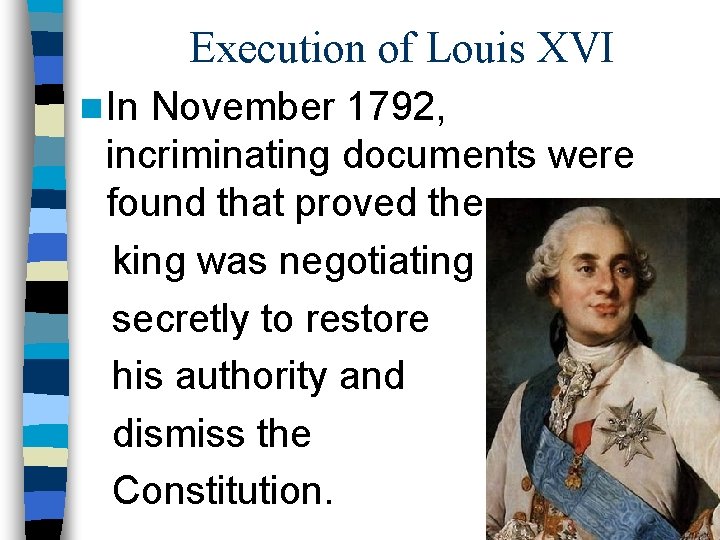
Execution of Louis XVI n In November 1792, incriminating documents were found that proved the king was negotiating secretly to restore his authority and dismiss the Constitution.
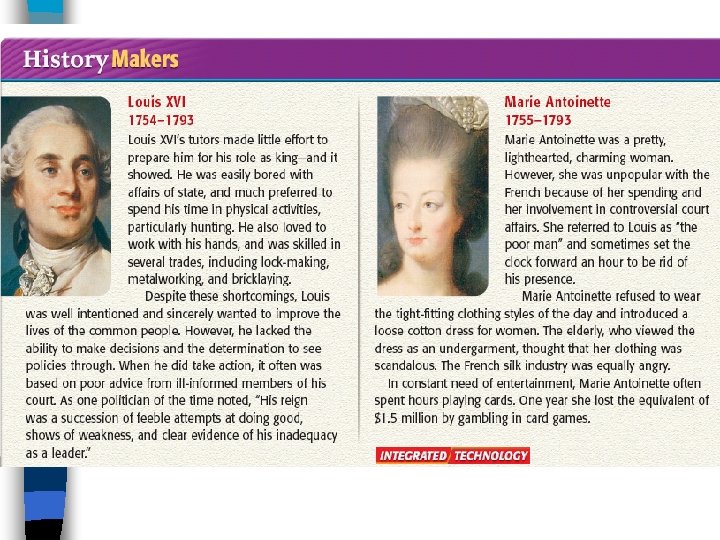
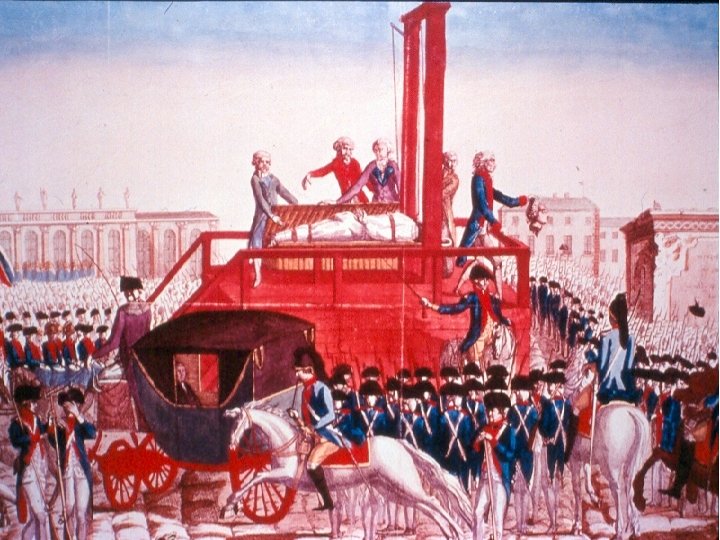
Execution of Louis XVI n National Convention overwhelmingly convicted Louis of treason but sentenced him to death by one vote in 1793 n Queen Marie Antoinette executed too
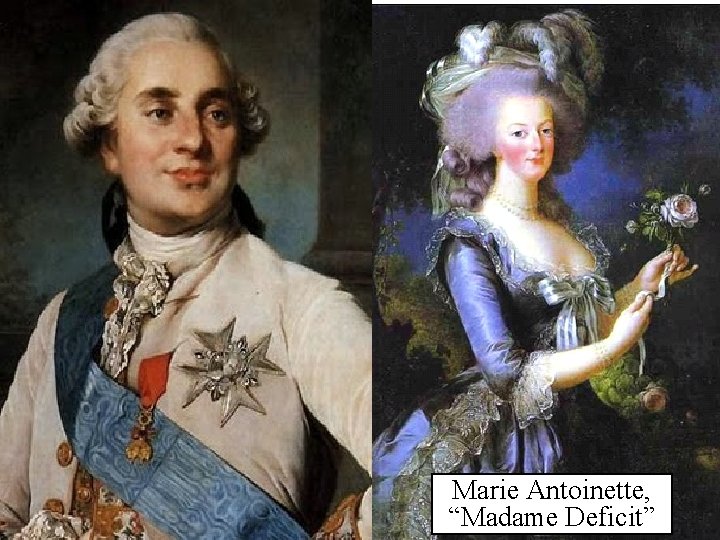
Marie Antoinette, “Madame Deficit”
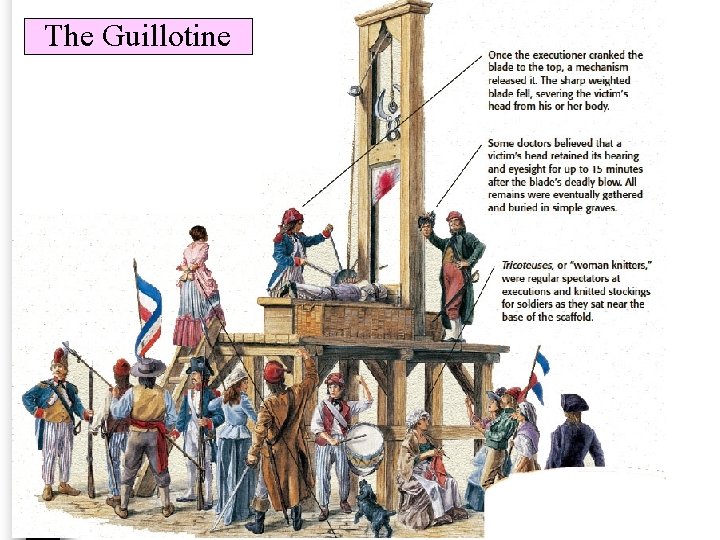
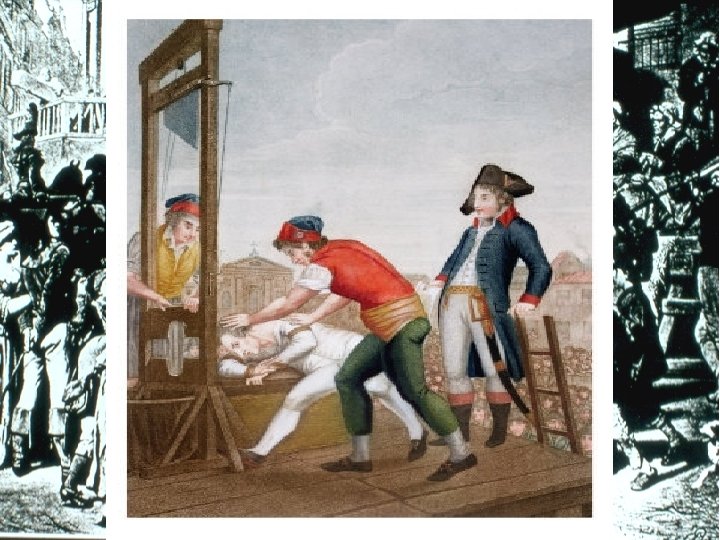
The Guillotine
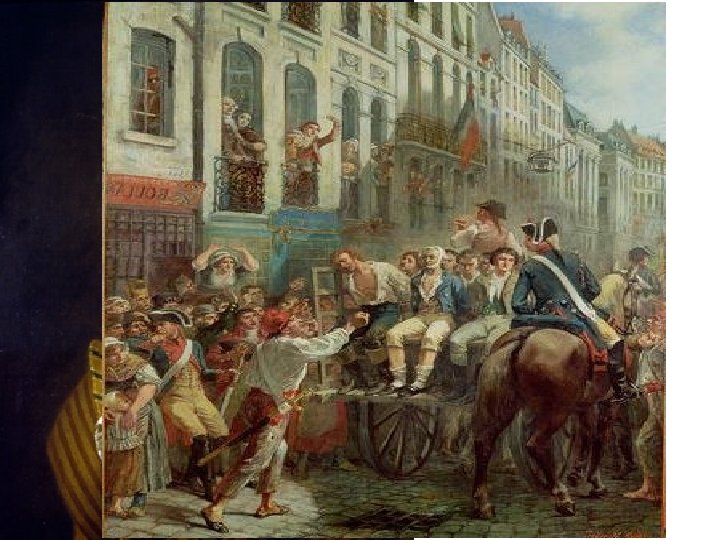
Reign of Terror n National Convention led by Maximilien Robespierre; called for “drastic measures” to save France from other “enemies of the state”. n In France, Robespierre tried citizens for treason against the Revolution
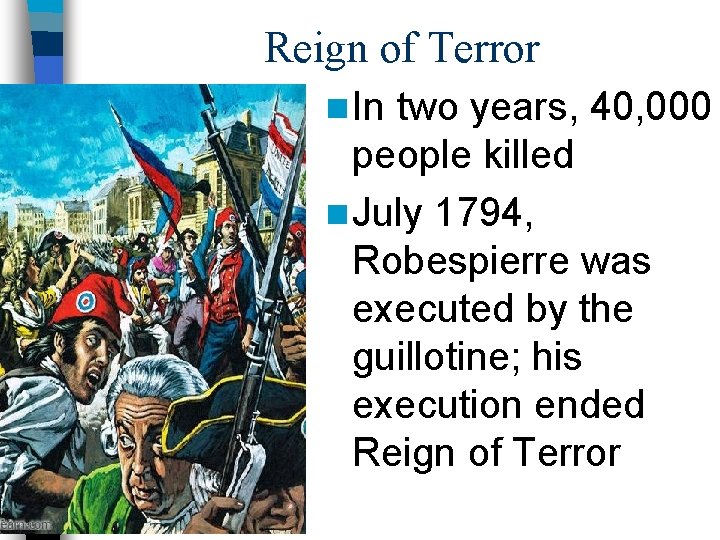
Reign of Terror n In two years, 40, 000 people killed n July 1794, Robespierre was executed by the guillotine; his execution ended Reign of Terror
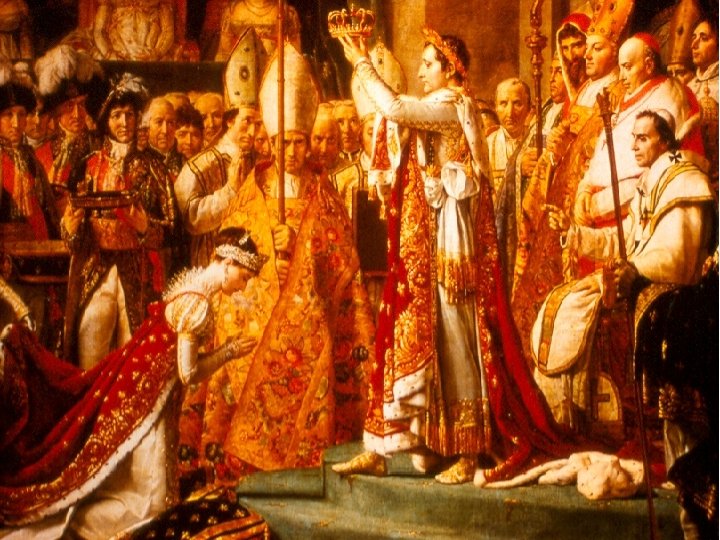
Napoleon Bonaparte n After Robespierre, France run by a 5 -man board called the Directory—was disastrous n Napoleon seized power from Directory; ruled France as emperor & dictator (1799 -1814)
1789 http: //ww w. youtub e. com/wa tch? v=w Xs. Zbkt 0 yqo The History Teachers! 1799