
French Revolution Abbe Sieyes Lafayette King Louis XVI
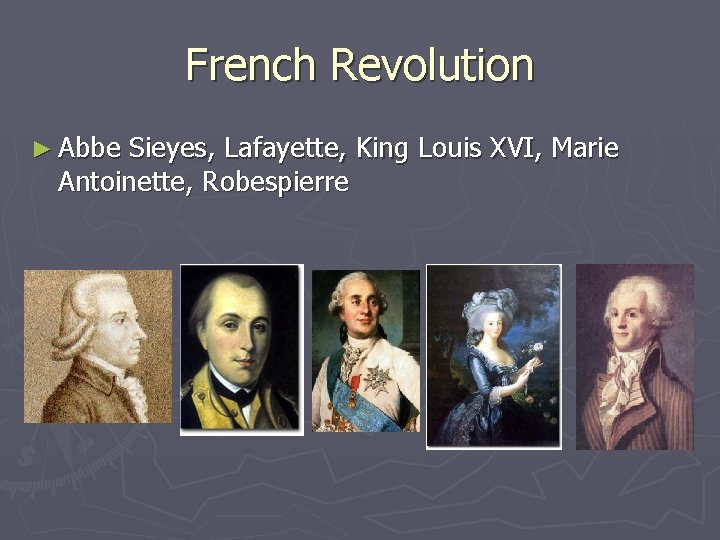
French Revolution ► Abbe Sieyes, Lafayette, King Louis XVI, Marie Antoinette, Robespierre
French Revolution (timeline cont. ) ► Convening of the Estates General (May 1789)— keep in mind Sieyes’s idea regarding the size and scope of the 3 rd Estate ► Tennis Court Oath (June 1789)— § King makes veto assertions § Growing violence § Formation of Permanent Committees to regulate affairs and replace Royal rule of day-to-day matters § **In general, uncertainty is norm and fears of royal use of military against citizens increases
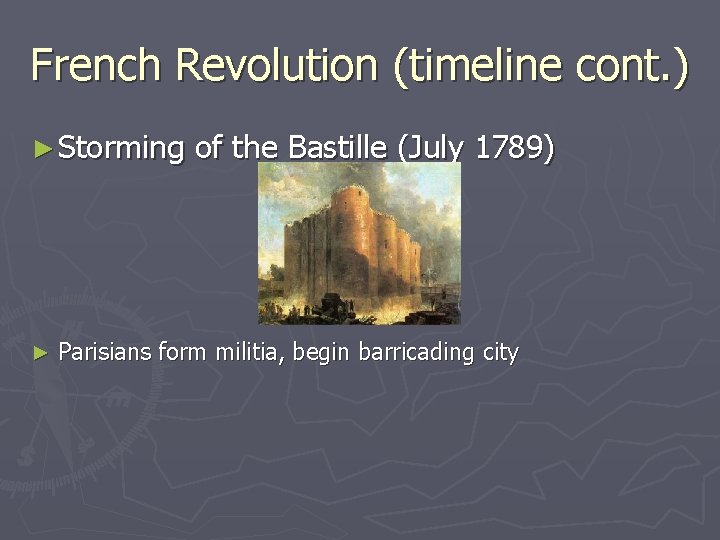
French Revolution (timeline cont. ) ► Storming ► of the Bastille (July 1789) Parisians form militia, begin barricading city
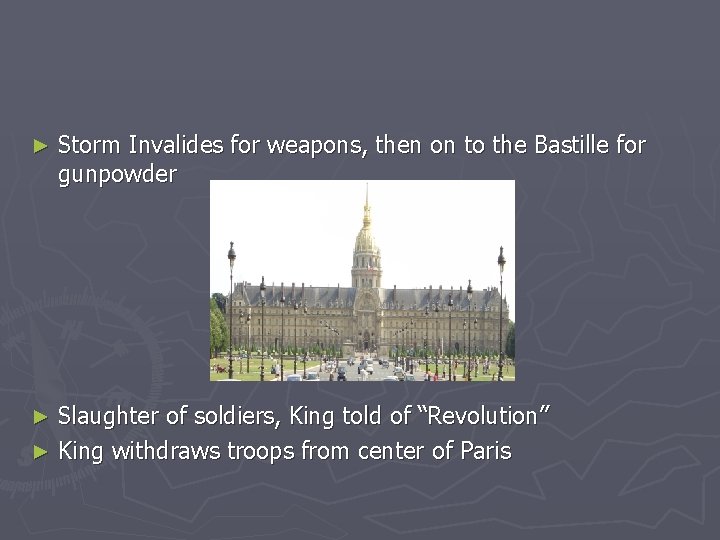
► Storm Invalides for weapons, then on to the Bastille for gunpowder Slaughter of soldiers, King told of “Revolution” ► King withdraws troops from center of Paris ►
French Revolution (timeline cont. ) ► 4 th of August Decrees (1789) ► Commune of Paris (formerly Permanent Committee) increases its authority ► Uprisings continue across the country and in cities—sans culotte ► Decrees renouncing feudalism, and push for passage of the Declaration of the Rights of Man
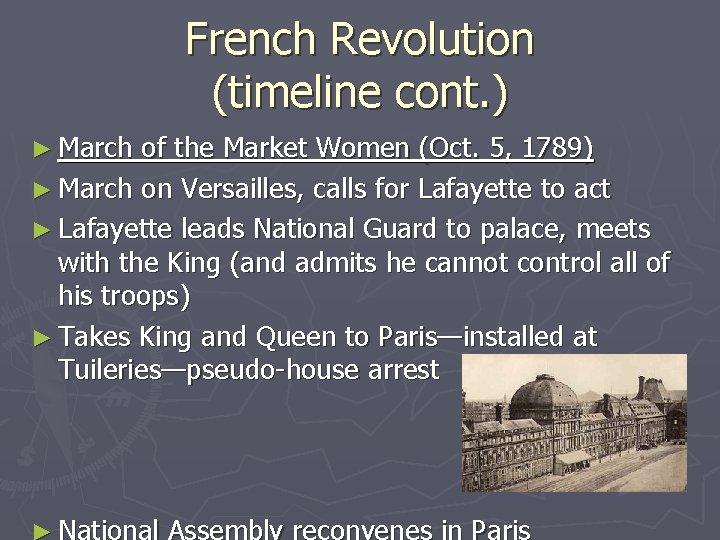
French Revolution (timeline cont. ) ► March of the Market Women (Oct. 5, 1789) ► March on Versailles, calls for Lafayette to act ► Lafayette leads National Guard to palace, meets with the King (and admits he cannot control all of his troops) ► Takes King and Queen to Paris—installed at Tuileries—pseudo-house arrest
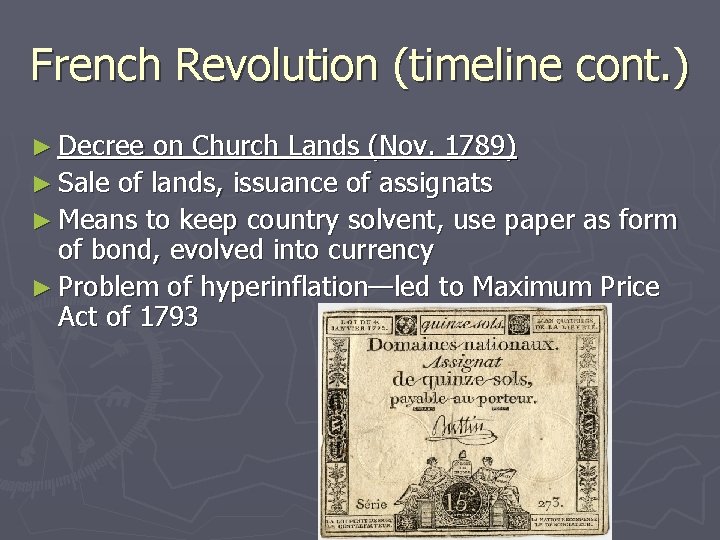
French Revolution (timeline cont. ) ► Decree on Church Lands (Nov. 1789) ► Sale of lands, issuance of assignats ► Means to keep country solvent, use paper as form of bond, evolved into currency ► Problem of hyperinflation—led to Maximum Price Act of 1793
► Civil Constitution of the Clergy (July 1790) ► Church to be under purview of National Assembly ► Clergy to renounce allegiance to any foreign power (e. g. , Pope) ► Civil Constitution causes serious uproar, opposition to action increases
French Revolution (timeline cont. ) ► King has reluctantly signed these major provisions into law. ► However, many nobles (including the King’s brothers—Comte d’Artois and Comte de Provence) believe the King is coerced, so laws are not valid
French Revolution (timeline cont. ) ► King is facing pressure from within and from without—concerns over foreign powers taking advantage of instability in France, issue of Marie Antoinette’s fidelity to the French people ► The Queen was sister to the Emperor of Austria, and daughter to rulers of Holy Roman Empire
French Revolution (timeline cont. ) ► Encyclical Charitas (April 1791) ► Pope Pious VI calls on clergy to repudiate vows to National Assembly under Civil Constitution ► Suspends those that have taken oath
French Revolution (timeline cont. ) ► Comte de’Artois and Comte de Provence have formed resistance to Revolution, and Artois has formed an émigré army ► Other monarchies taking note
French Revolution (timeline cont. ) ► King and Queen make a couple of attempts to leave Tuileries, first to St. Cloud (April 1791) and then to Varennes (June 1791) ► There was confusion amongst the populace as to whether or not the king fled or he was abducted ► Both attempts were frustrated, Lafayette brought King back to Tuileries ► The attempts are made all the more significant given the movements and positioning of military within France and on its borders—e. g. , Austria (where King Leopold II reigned—the queen’s brother)
French Revolution ► Major groups within the National Assembly ► Jacobins ► Feulliant ► Clergy ► Nobility ► Indeterminates
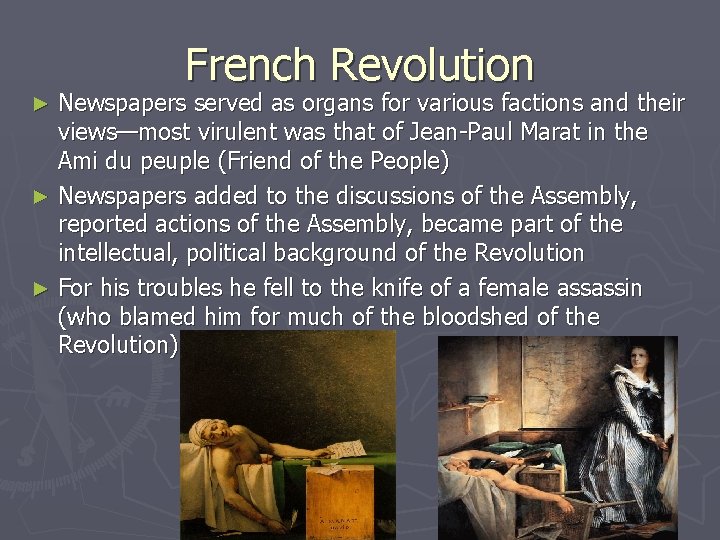
French Revolution Newspapers served as organs for various factions and their views—most virulent was that of Jean-Paul Marat in the Ami du peuple (Friend of the People) ► Newspapers added to the discussions of the Assembly, reported actions of the Assembly, became part of the intellectual, political background of the Revolution ► For his troubles he fell to the knife of a female assassin (who blamed him for much of the bloodshed of the Revolution) ►
French Revolution ► Newspapers served as a medium of discussion, accusation, etc. ► Some were downright scurrilous
- Slides: 17