
FRENCH INDIAN WAR Mr Richardson MAT GHHS WARM




- Slides: 27
FRENCH & INDIAN WAR Mr. Richardson, MAT GHHS
WARM UP • Comparing colonial regions • What important facts should we compare? • Fill in your chart with this information, using your notes from class and from Colonial Brochure Presentations
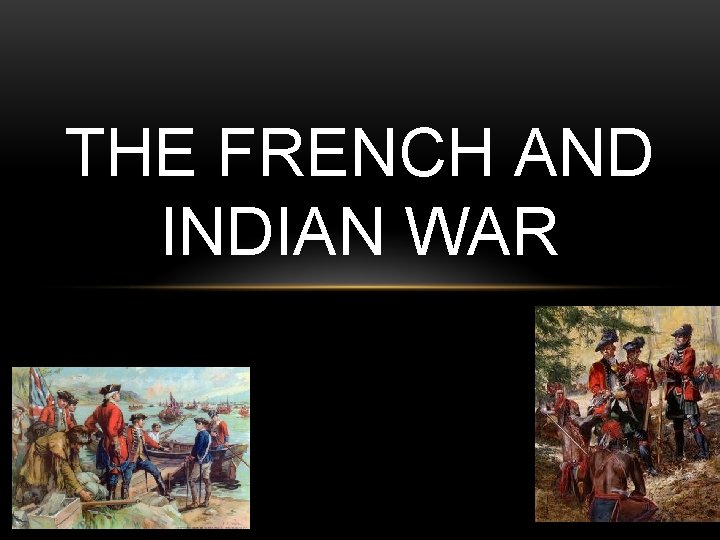
THE FRENCH AND INDIAN WAR
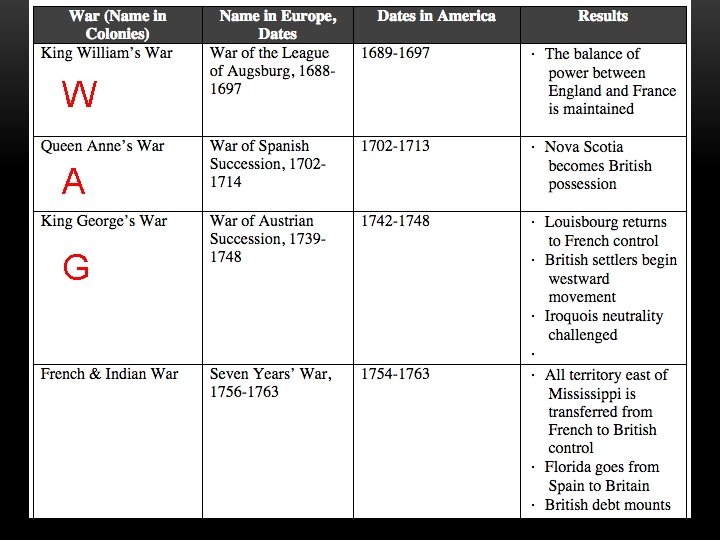
AMERICA’S COLONIAL WARS W A G
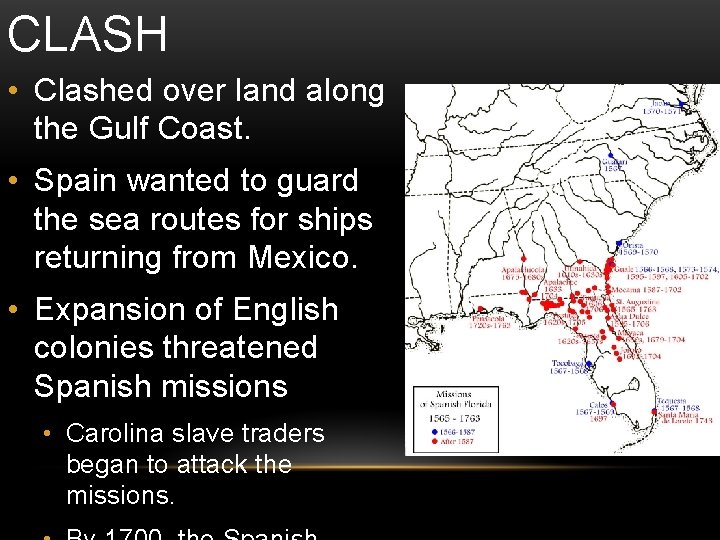
CLASH • Clashed over land along the Gulf Coast. • Spain wanted to guard the sea routes for ships returning from Mexico. • Expansion of English colonies threatened Spanish missions • Carolina slave traders began to attack the missions.
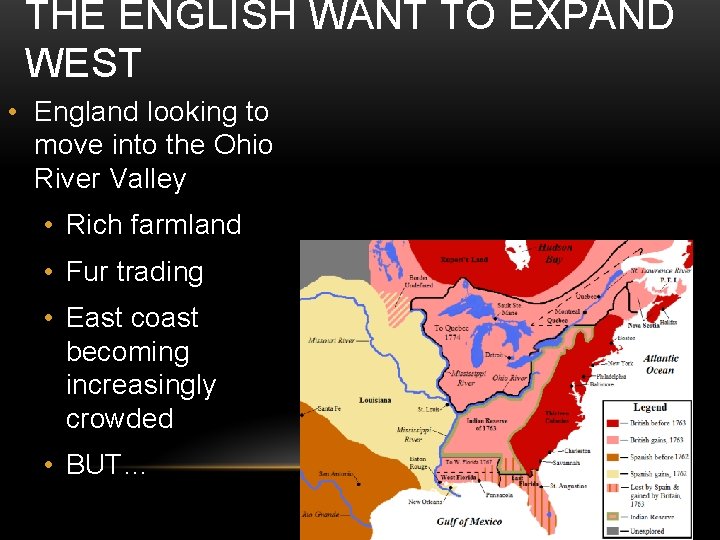
THE ENGLISH WANT TO EXPAND WEST • England looking to move into the Ohio River Valley • Rich farmland • Fur trading • East coast becoming increasingly crowded • BUT…
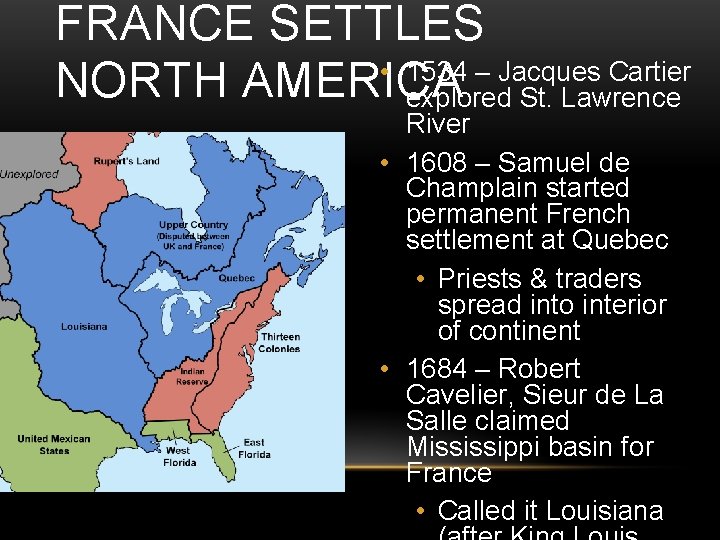
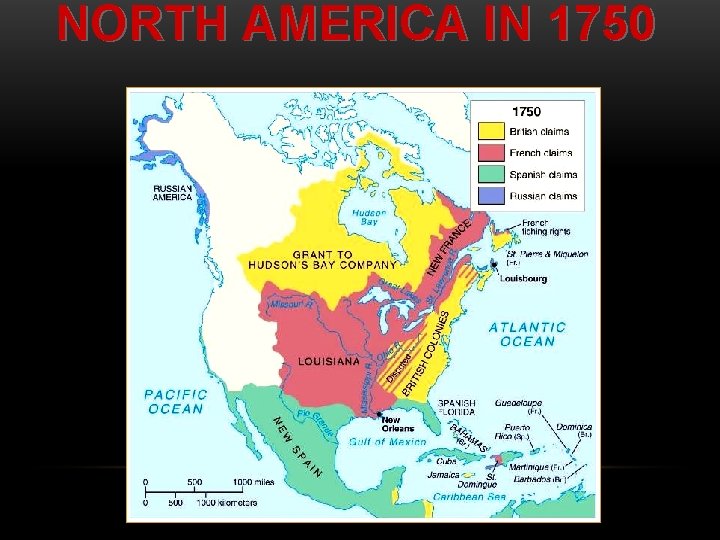
FRANCE SETTLES • 1534 – Jacques Cartier NORTH AMERICA explored St. Lawrence River • 1608 – Samuel de Champlain started permanent French settlement at Quebec • Priests & traders spread into interior of continent • 1684 – Robert Cavelier, Sieur de La Salle claimed Mississippi basin for France • Called it Louisiana
COMPARING BRITISH & FRENCH COLONIES British Colonies • Population of over 1 million • Establishing permanent settlements • Built towns • Raised families • Poor relationship with New France • Population of just 70, 000 • Not focused on permanent settlement • Fur traders • Catholic priests • Friendlier relations with Native Americans • Relied on tribes for hunting and trapping • Trade led to military alliances
FRENCH RELATIONSHIP WITH NATIVE AMERICANS • Made allies of the Algonquians and the Hurons to protect the fur trade. French helped the allies against the Mohawks. • French traders lived in Native American villages; learned the language; and married local women. • By the early 1700 s, French forts at Detroit, Niagara, Kaskaskia, and New Orleans bordered the English colonies to the west. • Power struggle with the English meant constant frontier battles.
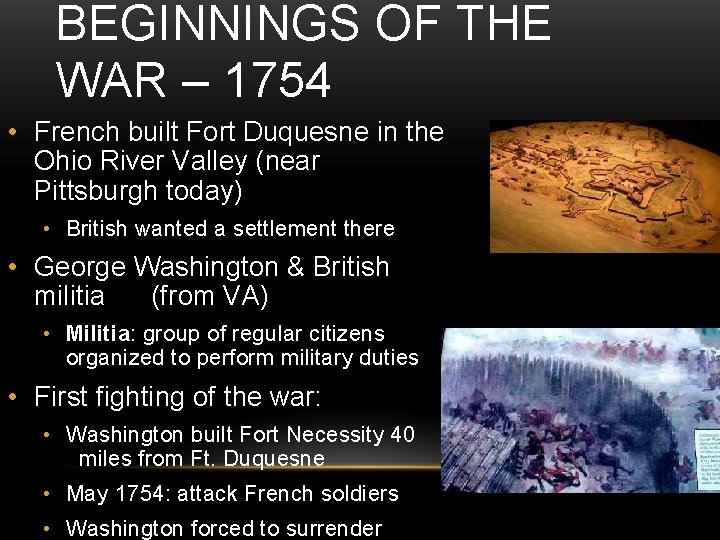
BEGINNINGS OF THE WAR – 1754 • French built Fort Duquesne in the Ohio River Valley (near Pittsburgh today) • British wanted a settlement there • George Washington & British militia (from VA) • Militia: group of regular citizens organized to perform military duties • First fighting of the war: • Washington built Fort Necessity 40 miles from Ft. Duquesne • May 1754: attack French soldiers • Washington forced to surrender
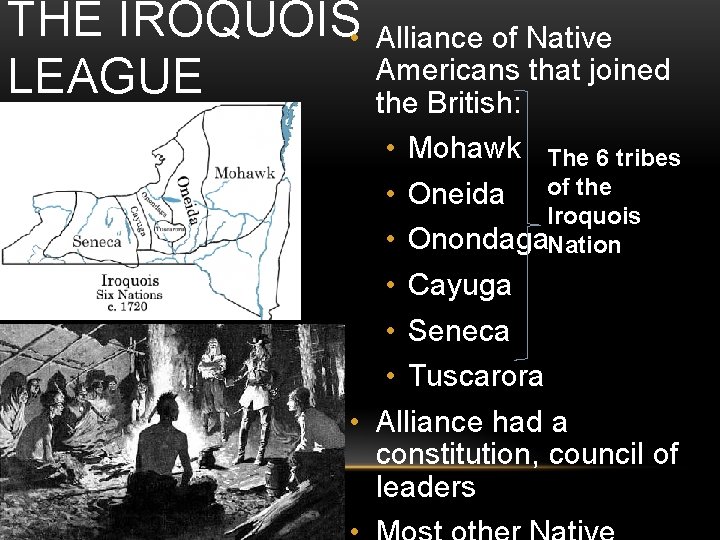
THE IROQUOIS • LEAGUE Alliance of Native Americans that joined the British: • Mohawk The 6 tribes • Oneida of the Iroquois • Onondaga. Nation • Cayuga • Seneca • Tuscarora • Alliance had a constitution, council of leaders
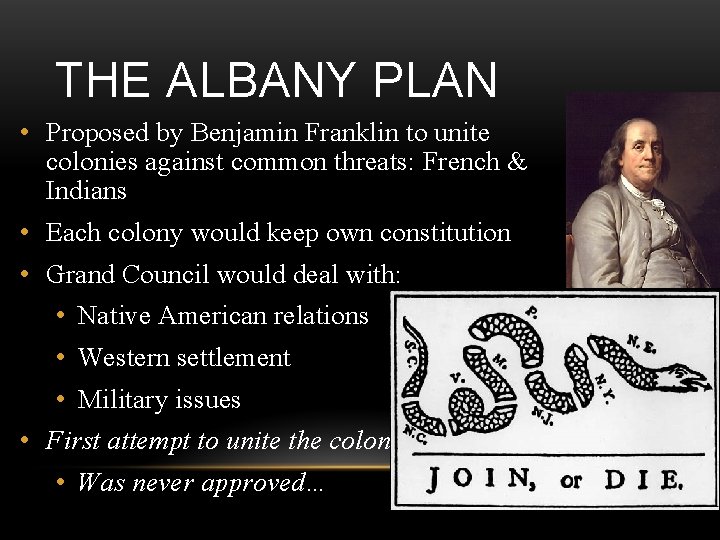
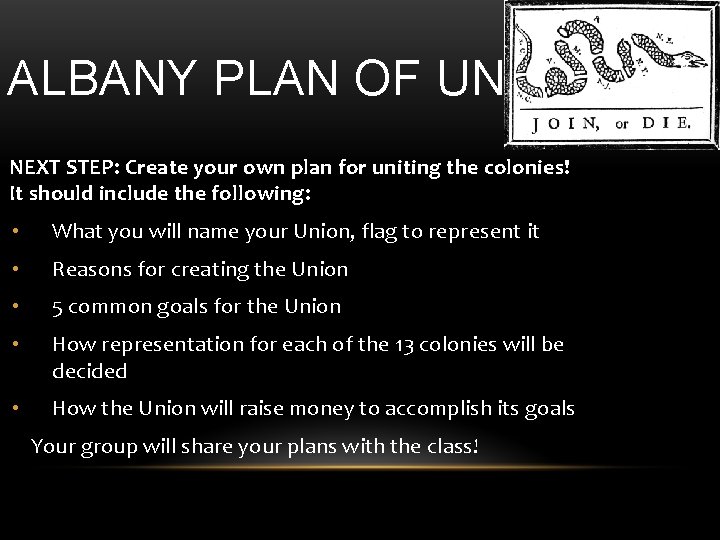
THE ALBANY PLAN • Proposed by Benjamin Franklin to unite colonies against common threats: French & Indians • Each colony would keep own constitution • Grand Council would deal with: • Native American relations • Western settlement • Military issues • First attempt to unite the colonies! • Was never approved…
ALBANY PLAN OF UNION • Complete the Document Analysis Worksheet on the Albany Plan with your group AND answer the following on the back of your worksheet: 1. Why did the colonies need to work together? 2. How did the wealth of a colony affect its position in the Union? 3. What responsibilities did the Union have? 4. Why do you think the colonies rejected the plan? 5. Although the plan was rejected, why was it significant that the colonies met and discussed it?
ALBANY PLAN OF UNION NEXT STEP: Create your own plan for uniting the colonies! It should include the following: • What you will name your Union, flag to represent it • Reasons for creating the Union • 5 common goals for the Union • How representation for each of the 13 colonies will be decided • How the Union will raise money to accomplish its goals Your group will share your plans with the class!
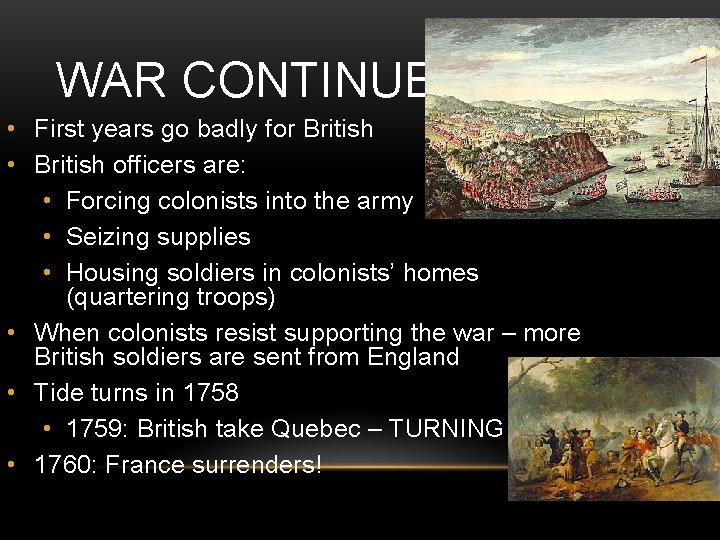
WAR CONTINUES • First years go badly for British • British officers are: • Forcing colonists into the army • Seizing supplies • Housing soldiers in colonists’ homes (quartering troops) • When colonists resist supporting the war – more British soldiers are sent from England • Tide turns in 1758 • 1759: British take Quebec – TURNING POINT! • 1760: France surrenders!
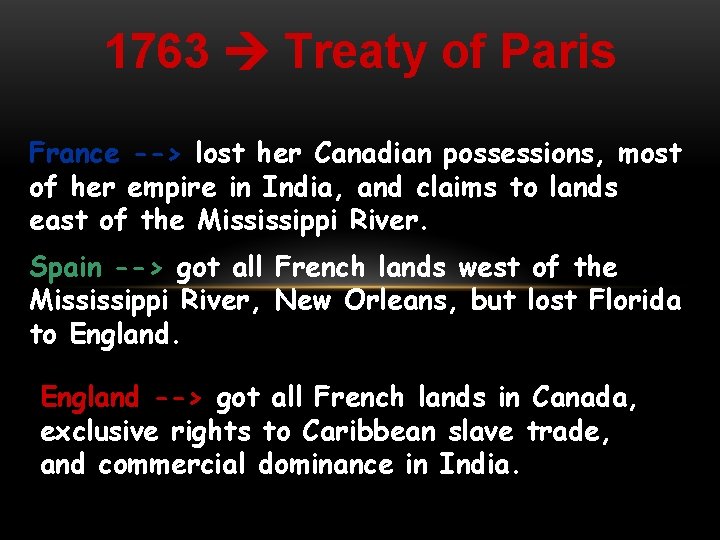
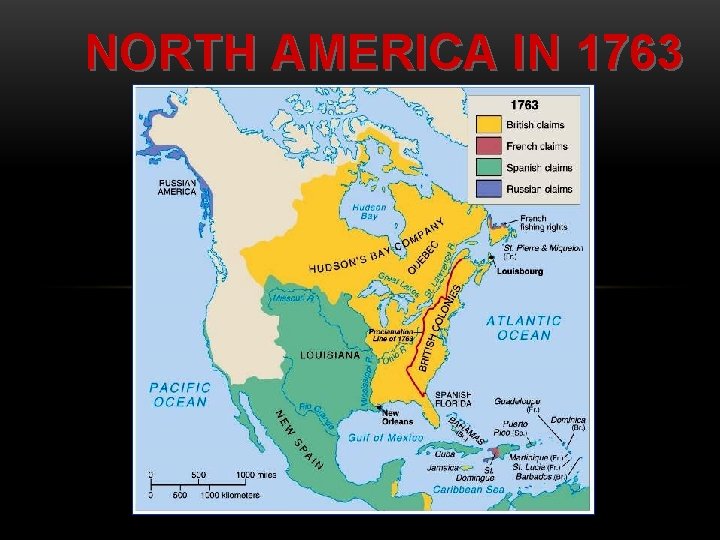
TREATY OF PARIS, 1763 • Ended both: • The Seven Years’ War in Europe • The French and Indian War in North America • The Results: • Britain gains: • All French land east of the Mississippi River, including much of Canada • Spanish Florida • France has to give Spain Louisiana Territory for payment for alliance • France kept two islands near
1763 Treaty of Paris France --> lost her Canadian possessions, most of her empire in India, and claims to lands east of the Mississippi River. Spain --> got all French lands west of the Mississippi River, New Orleans, but lost Florida to England --> got all French lands in Canada, exclusive rights to Caribbean slave trade, and commercial dominance in India.
NORTH AMERICA IN 1750
NORTH AMERICA IN 1763
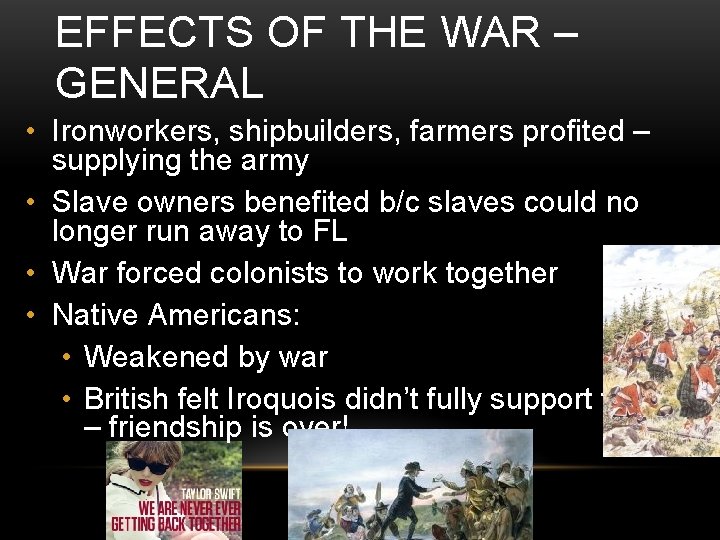
EFFECTS OF THE WAR – GENERAL • Ironworkers, shipbuilders, farmers profited – supplying the army • Slave owners benefited b/c slaves could no longer run away to FL • War forced colonists to work together • Native Americans: • Weakened by war • British felt Iroquois didn’t fully support them – friendship is over!
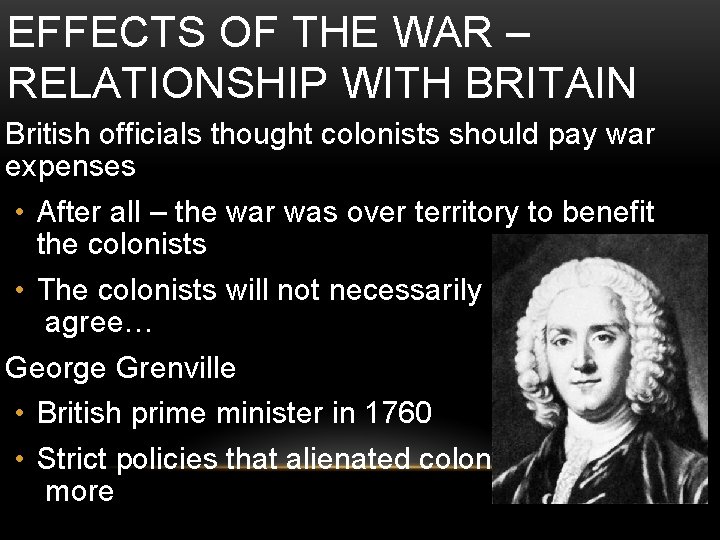
EFFECTS OF THE WAR – RELATIONSHIP WITH BRITAIN British officials thought colonists should pay war expenses • After all – the war was over territory to benefit the colonists • The colonists will not necessarily agree… George Grenville • British prime minister in 1760 • Strict policies that alienated colonists more
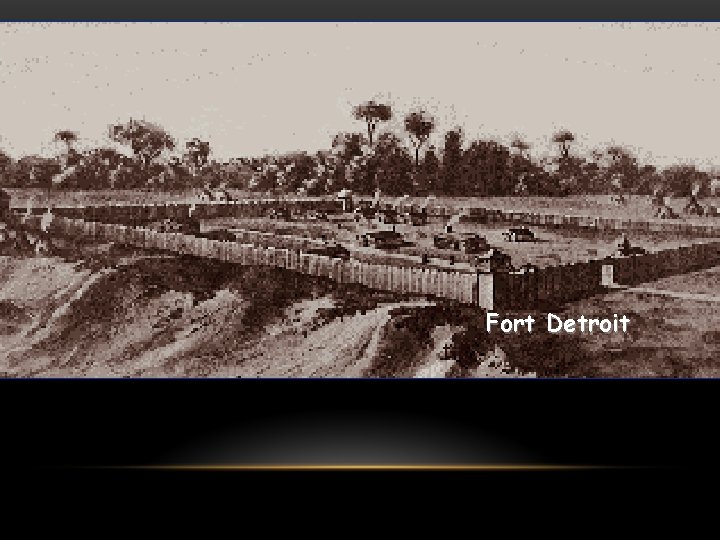
Fort Detroit
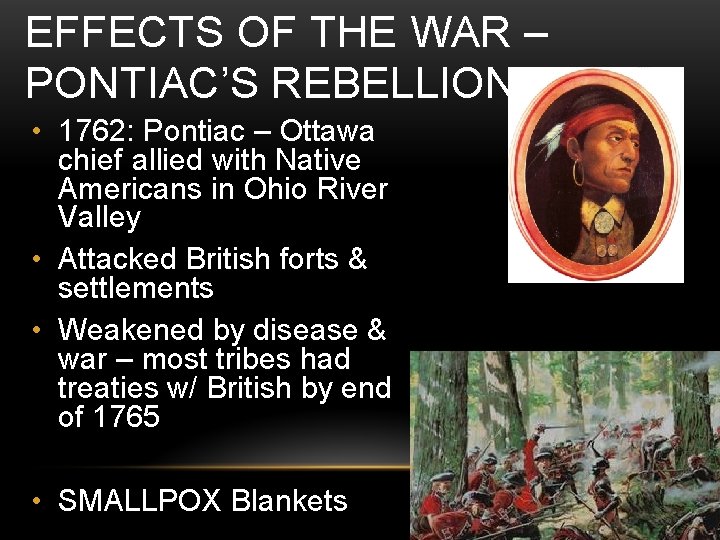
EFFECTS OF THE WAR – PONTIAC’S REBELLION • 1762: Pontiac – Ottawa chief allied with Native Americans in Ohio River Valley • Attacked British forts & settlements • Weakened by disease & war – most tribes had treaties w/ British by end of 1765 • SMALLPOX Blankets
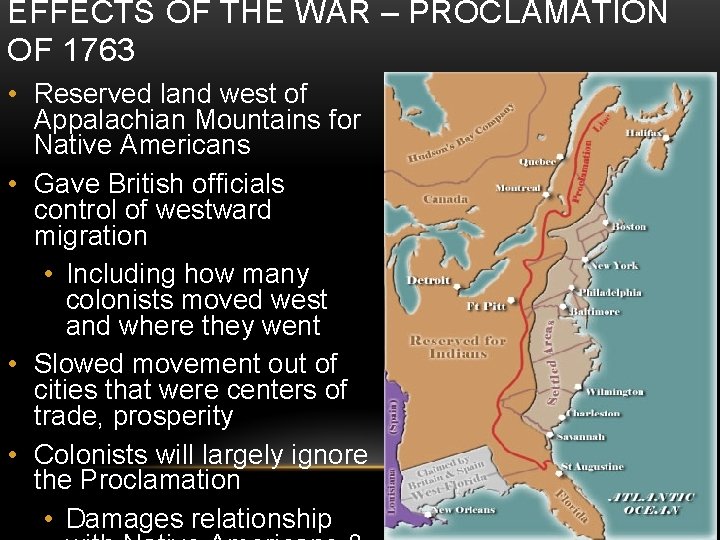
EFFECTS OF THE WAR – PROCLAMATION OF 1763 • Reserved land west of Appalachian Mountains for Native Americans • Gave British officials control of westward migration • Including how many colonists moved west and where they went • Slowed movement out of cities that were centers of trade, prosperity • Colonists will largely ignore the Proclamation • Damages relationship
FRENCH AND INDIAN WAR REVIEW • How did France develop an empire in North America? • Why did Spain and England clash in North America? • What were major events in the French and Indian War? • What were the effects of the French and Indian War on all those involved?
QUESTION TO CONSIDER: • The French and Indian War is known as “the War that Made America” • How would America be different if the French had won the French and Indian War?
MERCANTILISM