
French Describing a region 4 5 Using superlatives
![French Describing a region [4 / 5] - Using superlatives Monsieur Lowe](https://slidetodoc.com/presentation_image_h2/3952f19fb876b2ab91c6161485420122/image-1.jpg "French Describing a region [4 / 5] - Using superlatives Monsieur Lowe")
French Describing a region [4 / 5] - Using superlatives Monsieur Lowe

Phonétique
![[u] tu](http://slidetodoc.com/presentation_image_h2/3952f19fb876b2ab91c6161485420122/image-3.jpg "[u] tu")
[u] tu
![[u] Smart Office amusant sur [on] utiliser [to use]](http://slidetodoc.com/presentation_image_h2/3952f19fb876b2ab91c6161485420122/image-4.jpg "[u] Smart Office amusant sur [on] utiliser [to use]")
[u] Smart Office amusant sur [on] utiliser [to use]
![[ oi ] voir](http://slidetodoc.com/presentation_image_h2/3952f19fb876b2ab91c6161485420122/image-5.jpg "[ oi ] voir")
[ oi ] voir
![[ oi ] Question droite Pourquoi ? [why? ] trois](http://slidetodoc.com/presentation_image_h2/3952f19fb876b2ab91c6161485420122/image-6.jpg "[ oi ] Question droite Pourquoi ? [why? ] trois")
[ oi ] Question droite Pourquoi ? [why? ] trois
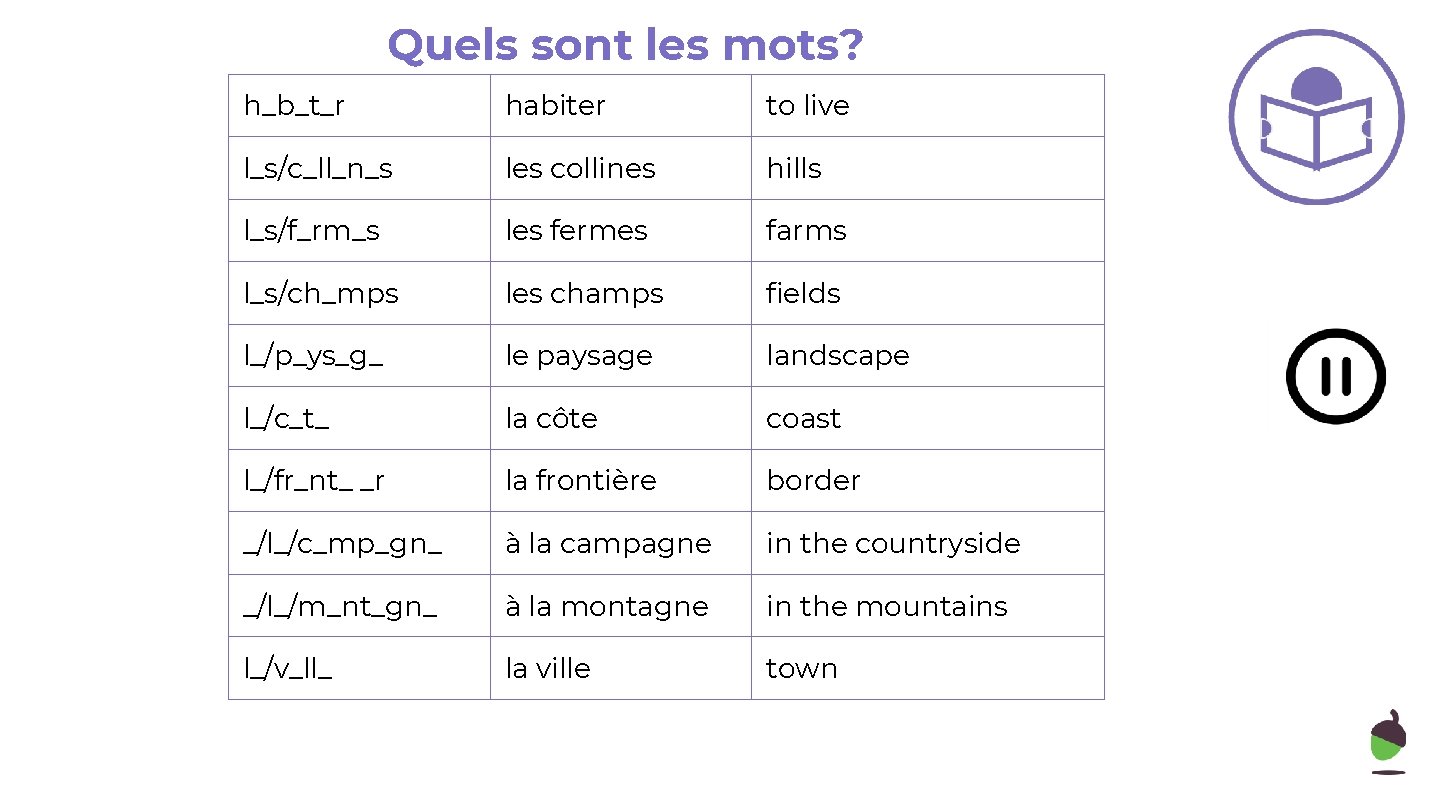
Quels sont les mots? h_b_t_r habiter to live l_s/c_ll_n_s les collines hills l_s/f_rm_s les fermes farms l_s/ch_mps les champs fields l_/p_ys_g_ le paysage landscape l_/c_t_ la côte coast l_/fr_nt_ _r la frontière border _/l_/c_mp_gn_ à la campagne in the countryside _/l_/m_nt_gn_ à la montagne in the mountains l_/v_ll_ la ville town
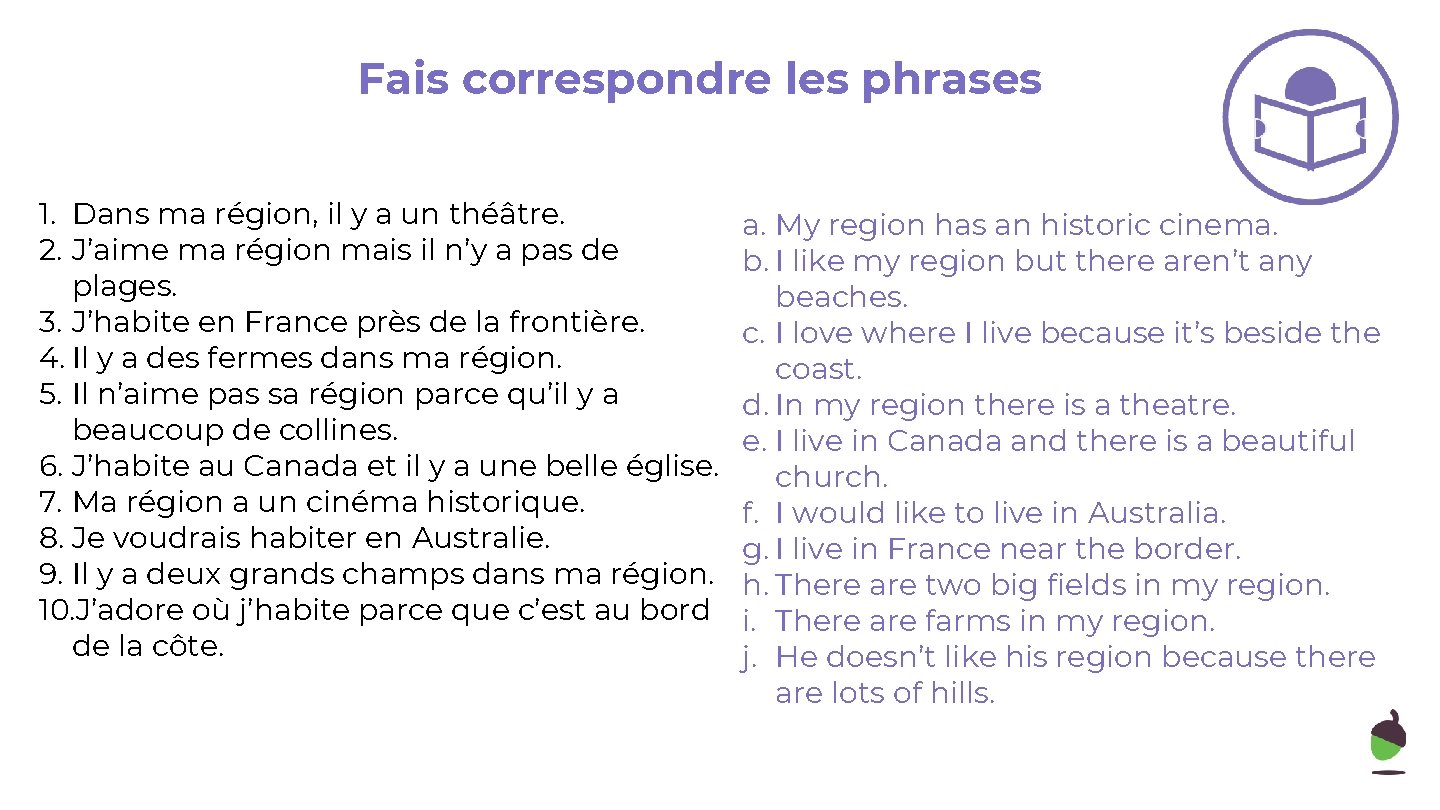
Fais correspondre les phrases 1. Dans ma région, il y a un théâtre. 2. J’aime ma région mais il n’y a pas de plages. 3. J’habite en France près de la frontière. 4. Il y a des fermes dans ma région. 5. Il n’aime pas sa région parce qu’il y a beaucoup de collines. 6. J’habite au Canada et il y a une belle église. 7. Ma région a un cinéma historique. 8. Je voudrais habiter en Australie. 9. Il y a deux grands champs dans ma région. 10. J’adore où j’habite parce que c’est au bord de la côte. a. My region has an historic cinema. b. I like my region but there aren’t any beaches. c. I love where I live because it’s beside the coast. d. In my region there is a theatre. e. I live in Canada and there is a beautiful church. f. I would like to live in Australia. g. I live in France near the border. h. There are two big fields in my region. i. There are farms in my region. j. He doesn’t like his region because there are lots of hills.
Grammaire Superlatives
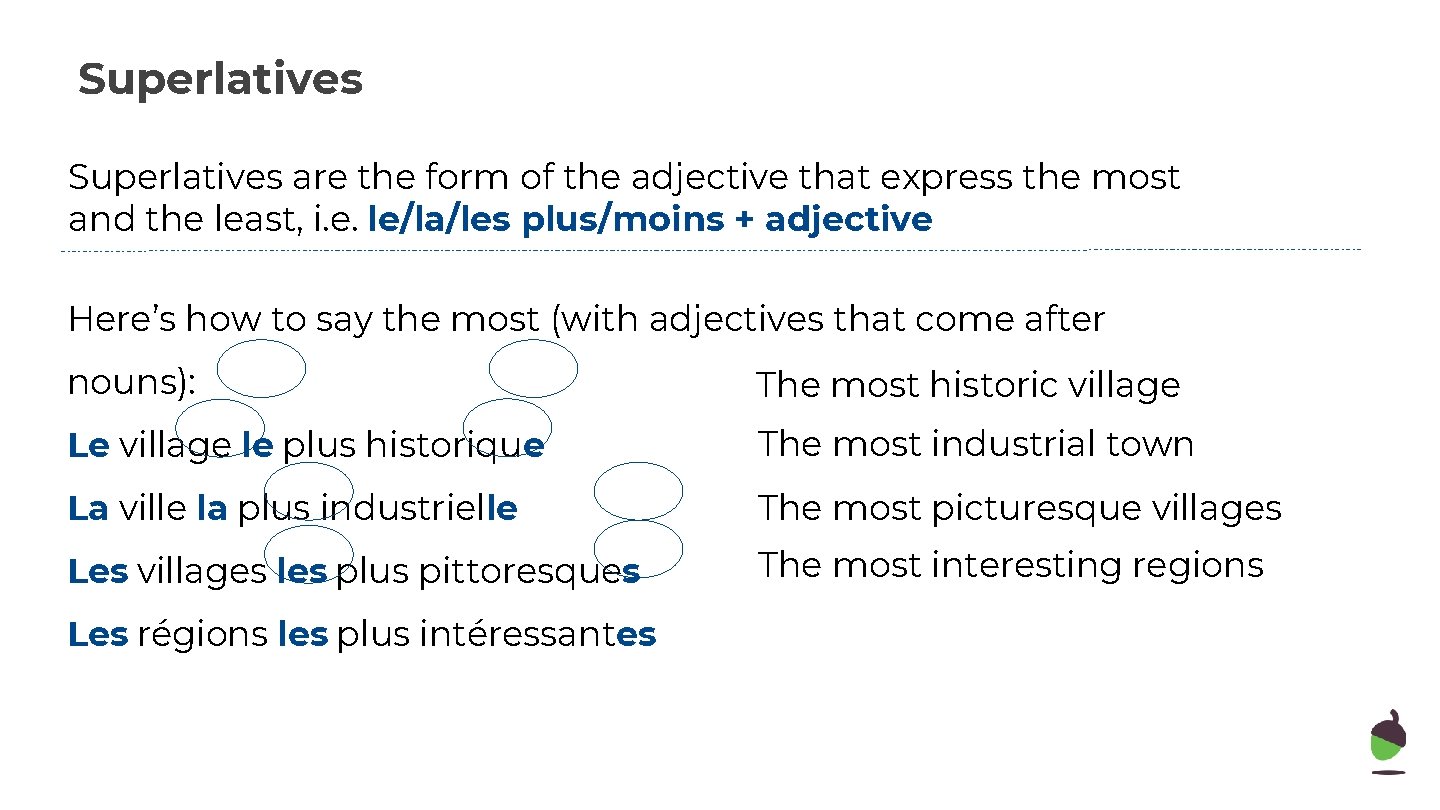
Superlatives are the form of the adjective that express the most and the least, i. e. le/la/les plus/moins + adjective Here’s how to say the most (with adjectives that come after nouns): The most historic village Le village le plus historique The most industrial town La ville la plus industrielle The most picturesque villages Les villages les plus pittoresques The most interesting regions Les régions les plus intéressantes

Superlatives Here’s how to say the least (with adjectives that come after nouns): Le village le moins historique The least historic village La ville la moins industrielle The least industrial town Les villages les moins pittoresques The least picturesque villages Les régions les moins intéressantes The least interesting regions REMINDER - the key points to consider: ● The adjective must agree with the noun you are describing; ● The definite article (le, la, les) is repeated if the adjective comes after the noun.
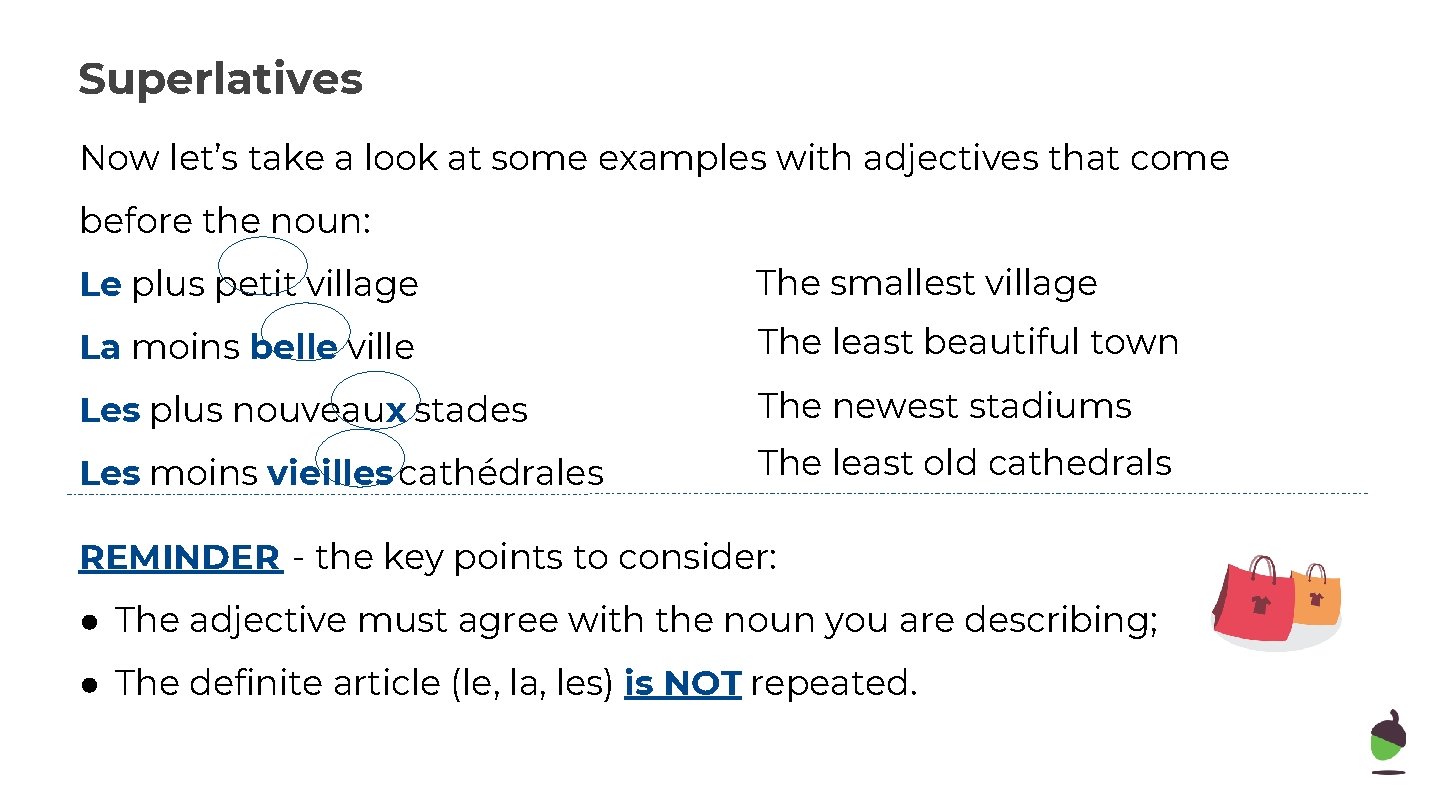
Superlatives Now let’s take a look at some examples with adjectives that come before the noun: Le plus petit village The smallest village La moins belle ville The least beautiful town Les plus nouveaux stades The newest stadiums Les moins vieilles cathédrales The least old cathedrals REMINDER - the key points to consider: ● The adjective must agree with the noun you are describing; ● The definite article (le, la, les) is NOT repeated.
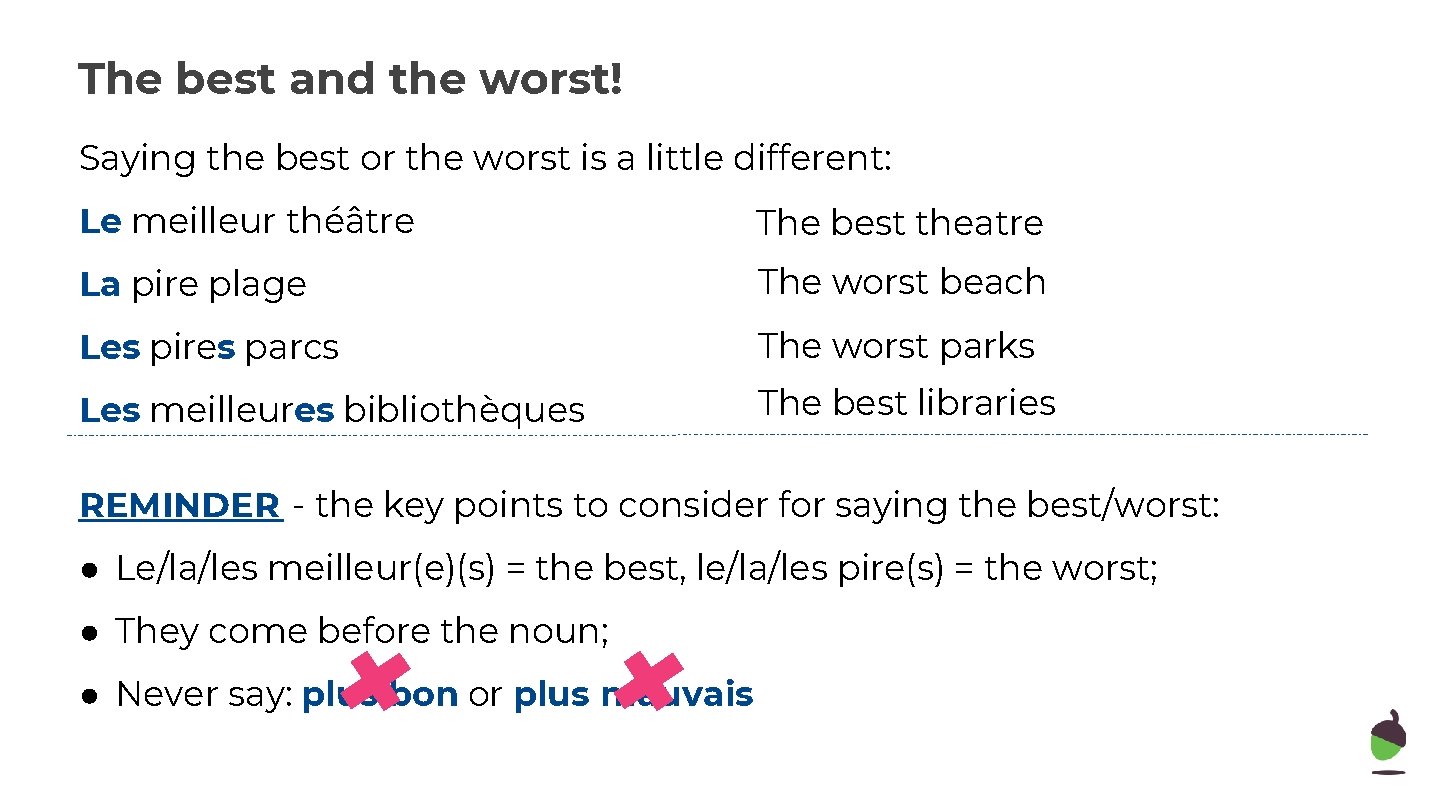
The best and the worst! Saying the best or the worst is a little different: Le meilleur théâtre The best theatre La pire plage The worst beach Les pires parcs The worst parks Les meilleures bibliothèques The best libraries REMINDER - the key points to consider for saying the best/worst: ● Le/la/les meilleur(e)(s) = the best, le/la/les pire(s) = the worst; ● They come before the noun; ● Never say: plus bon or plus mauvais

Describing a region the most and the least + adjective 1. Superlatives translate agree with the noun 2. The adjectives must more 3. Plus = less 4. Moins = le/la/les meilleur(e)(s) 5. The best = le/la/les pire(e) 6. The worst =
- Slides: 14