
French Colonization in North America Department of History
- Slides: 12
French Colonization in North America Department of History UNC - Greensboro
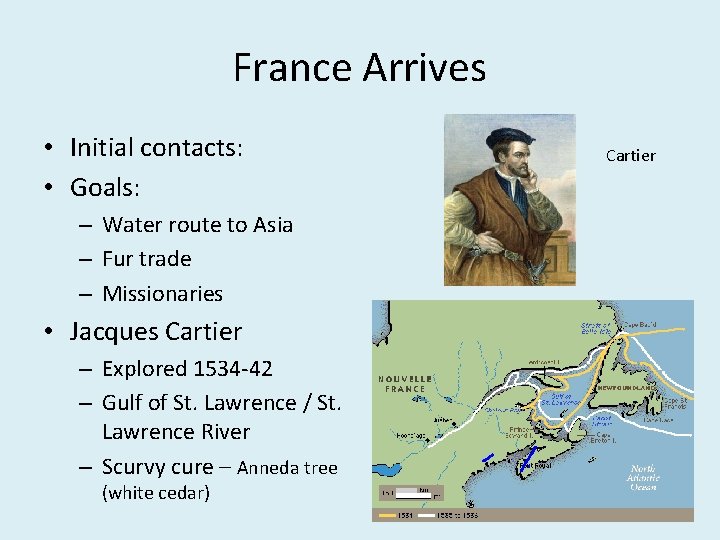
France Arrives • Initial contacts: • Goals: – Water route to Asia – Fur trade – Missionaries • Jacques Cartier – Explored 1534 -42 – Gulf of St. Lawrence / St. Lawrence River – Scurvy cure – Anneda tree (white cedar) Cartier
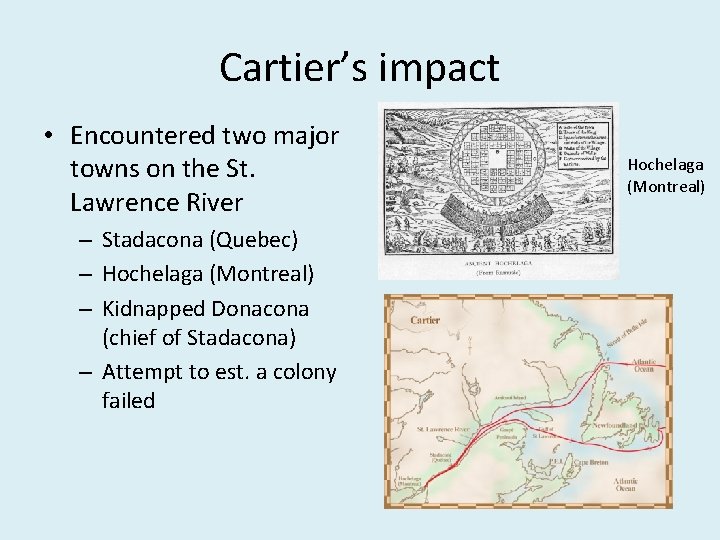
Cartier’s impact • Encountered two major towns on the St. Lawrence River – Stadacona (Quebec) – Hochelaga (Montreal) – Kidnapped Donacona (chief of Stadacona) – Attempt to est. a colony failed Hochelaga (Montreal)
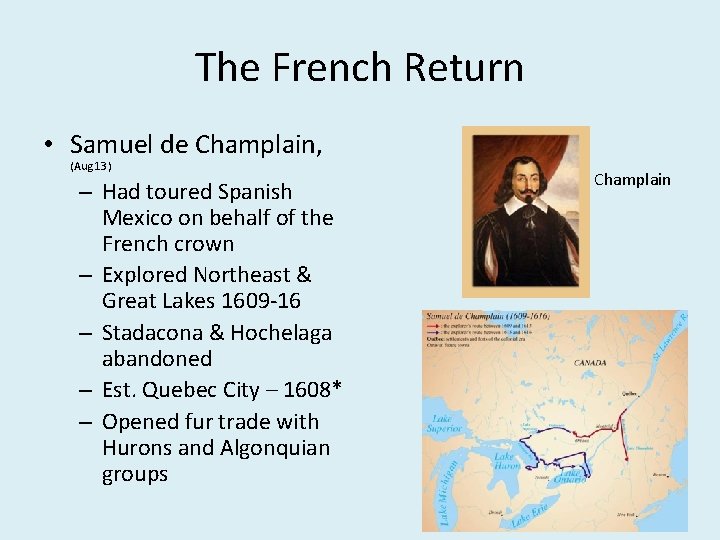
The French Return • Samuel de Champlain, (Aug 13) – Had toured Spanish Mexico on behalf of the French crown – Explored Northeast & Great Lakes 1609 -16 – Stadacona & Hochelaga abandoned – Est. Quebec City – 1608* – Opened fur trade with Hurons and Algonquian groups Champlain
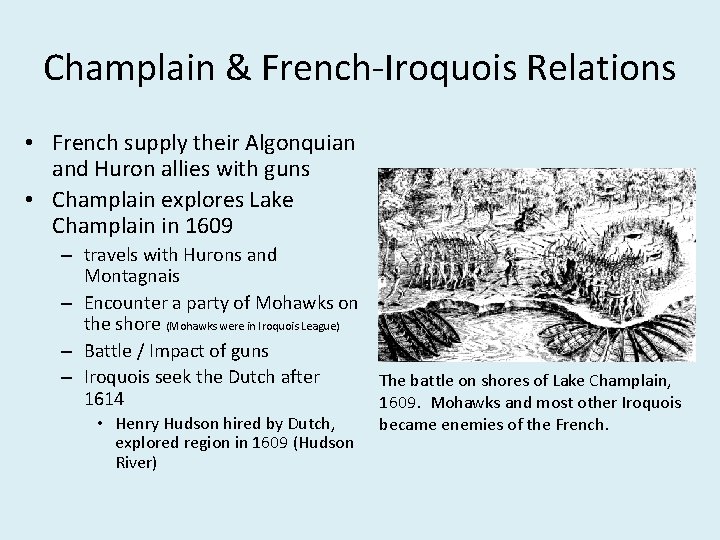
Champlain & French-Iroquois Relations • French supply their Algonquian and Huron allies with guns • Champlain explores Lake Champlain in 1609 – travels with Hurons and Montagnais – Encounter a party of Mohawks on the shore (Mohawks were in Iroquois League) – Battle / Impact of guns – Iroquois seek the Dutch after The battle on shores of Lake Champlain, 1614 1609. Mohawks and most other Iroquois • Henry Hudson hired by Dutch, explored region in 1609 (Hudson River) became enemies of the French.
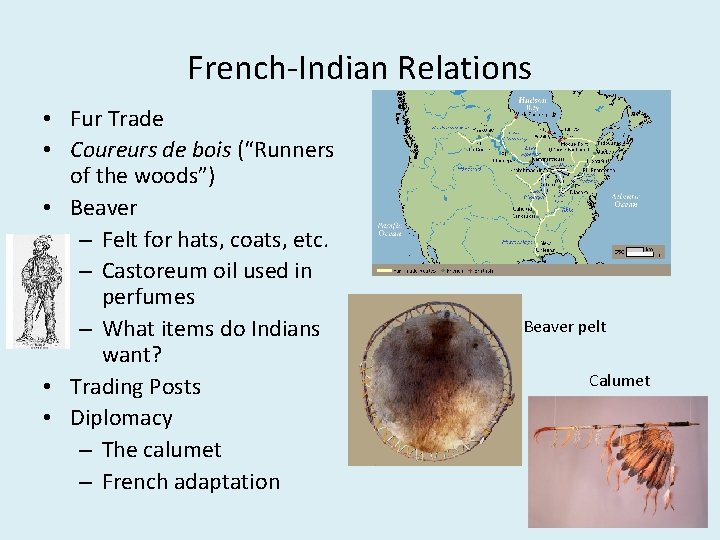
French-Indian Relations • Fur Trade • Coureurs de bois (“Runners of the woods”) • Beaver – Felt for hats, coats, etc. – Castoreum oil used in perfumes – What items do Indians want? • Trading Posts • Diplomacy – The calumet – French adaptation Beaver pelt Calumet
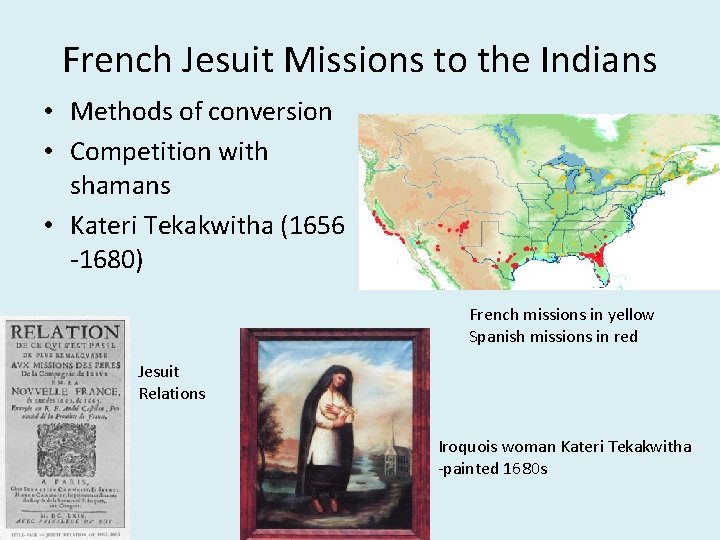
French Jesuit Missions to the Indians • Methods of conversion • Competition with shamans • Kateri Tekakwitha (1656 -1680) French missions in yellow Spanish missions in red Jesuit Relations Iroquois woman Kateri Tekakwitha -painted 1680 s
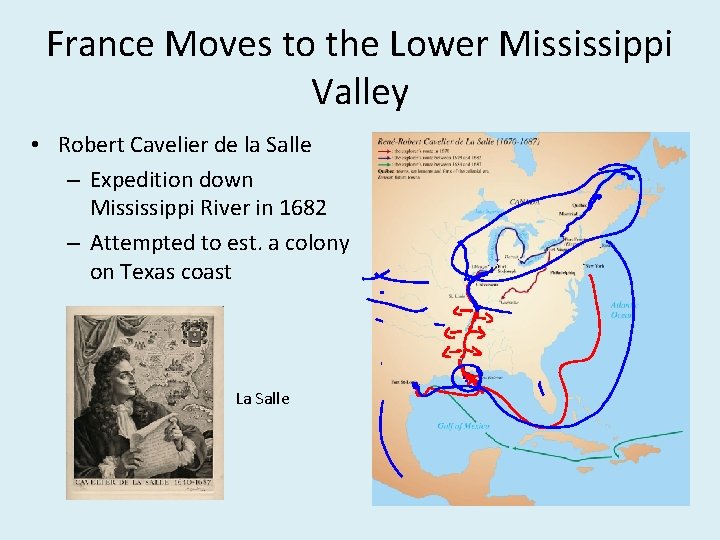
France Moves to the Lower Mississippi Valley • Robert Cavelier de la Salle – Expedition down Mississippi River in 1682 – Attempted to est. a colony on Texas coast La Salle
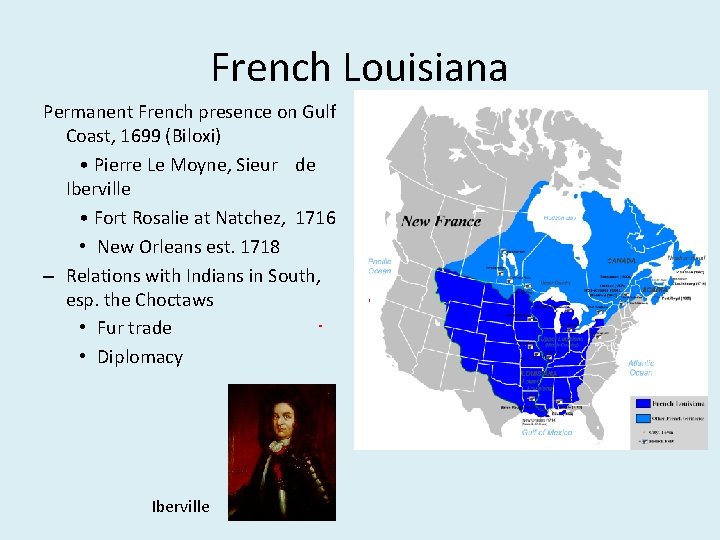
French Louisiana Permanent French presence on Gulf Coast, 1699 (Biloxi) • Pierre Le Moyne, Sieur de Iberville • Fort Rosalie at Natchez, 1716 • New Orleans est. 1718 – Relations with Indians in South, esp. the Choctaws • Fur trade • Diplomacy Iberville
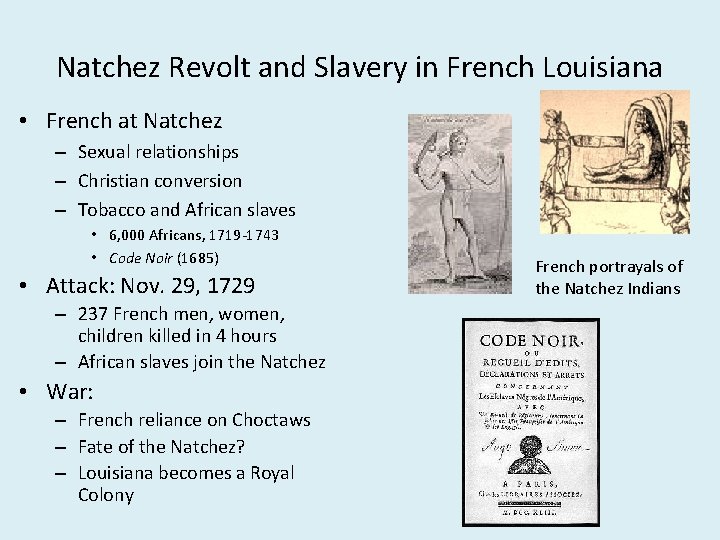
Natchez Revolt and Slavery in French Louisiana • French at Natchez – Sexual relationships – Christian conversion – Tobacco and African slaves • 6, 000 Africans, 1719 -1743 • Code Noir (1685) • Attack: Nov. 29, 1729 – 237 French men, women, children killed in 4 hours – African slaves join the Natchez • War: – French reliance on Choctaws – Fate of the Natchez? – Louisiana becomes a Royal Colony French portrayals of the Natchez Indians
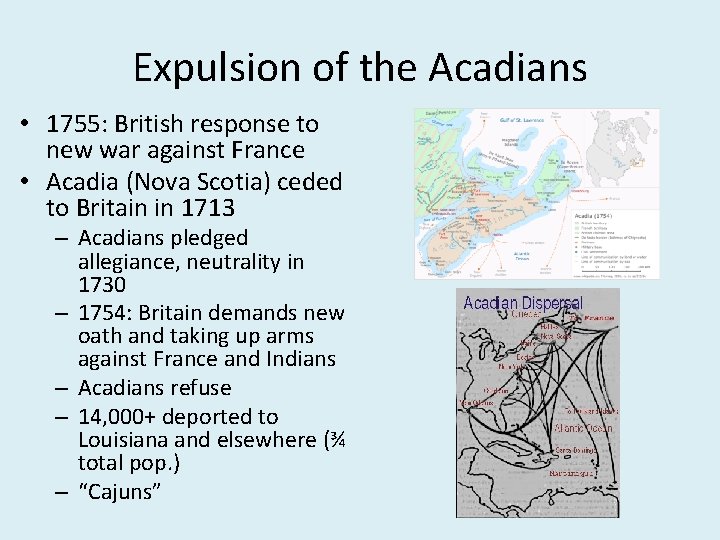
Expulsion of the Acadians • 1755: British response to new war against France • Acadia (Nova Scotia) ceded to Britain in 1713 – Acadians pledged allegiance, neutrality in 1730 – 1754: Britain demands new oath and taking up arms against France and Indians – Acadians refuse – 14, 000+ deported to Louisiana and elsewhere (¾ total pop. ) – “Cajuns”
Additional Resources • W. J. Eccles, France in America (1973) • Richard White, The Middle Ground: Indians, Empires, and Republics in the Great Lakes Region, 1650 -1815 (1991) • Daniel H. Usner, Jr. , Indians, Settlers, and Slaves in a Frontier Exchange Economy: The Lower Mississippi Valley Before 1783 (1992) • Gwendolyn Midlo Hall, Africans in Colonial Louisiana: The Development of Afro-Creole Culture in the Eighteenth Century (1992) • Carl J. Ekberg, French Roots in the Illinois Country: The Mississippi Frontier in Colonial Times (2000) • James S. Pritchard, In Search of Empire: The French in the Americas, 1670 -1730 (2004) • John Mack Faragher, Great and Noble Scheme: The Tragic Story of the Expulsion of the French Acadians from Their American Homeland (2006) • David Hackett Fischer, Champlain's Dream (2008)