
French A Level Why choose French at Alevel
- Slides: 10
French A Level
Why choose French at A-level? • Choosing A-level French is a wise decision if you want a fascinating subject that offers you a range of career possibilities at the end and is a lot of fun along the way. A-level French is interesting and varied and gives you a broad range of knowledge and skills. • A-level French builds upon your existing knowledge gained at GCSE and is stimulating, challenging and rewarding. It gives you the skills required to become global citizens of the 21 st century. • In our course, we investigate technological and social change, looking at diversity and the benefits it brings. You will study highlights of French-speaking artistic culture, including francophone music and cinema, and learn about political engagement and who wields political power in the French-speaking world. You will also explore the influence of the past on presentday French-speaking communities and. learn the language in the context of French-speaking countries and the issues and influences which have shaped them. • Through this variety of topics, you will develop the skills of speaking, listening, reading , writing and translation. New grammar is learnt and existing grammatical knowledge is revisited and revised. . Transferable skills are applied as we study a book and a film and learn how to write an analytical essay in French. • But most importantly we hope to encourage you to fall in love with learning French and lead you to become a true Francophile.
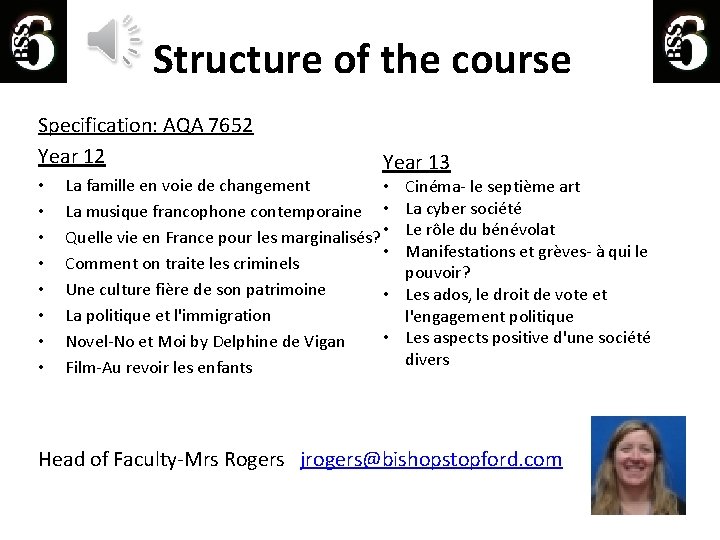
Structure of the course Specification: AQA 7652 Year 12 • • Year 13 La famille en voie de changement • La musique francophone contemporaine • Quelle vie en France pour les marginalisés? • • Comment on traite les criminels Une culture fière de son patrimoine • La politique et l'immigration • Novel-No et Moi by Delphine de Vigan Film-Au revoir les enfants Cinéma- le septième art La cyber société Le rôle du bénévolat Manifestations et grèves- à qui le pouvoir? Les ados, le droit de vote et l'engagement politique Les aspects positive d'une société divers Head of Faculty-Mrs Rogers jrogers@bishopstopford. com
Paper 1 (50%) Listening, reading and writing For this paper you will • practice listening and responding to spoken passages from a range of contents and sources. • practice reading and responding to a variety of texts drawn from a range of authentic sources. • practice translating from French to English and English to French.
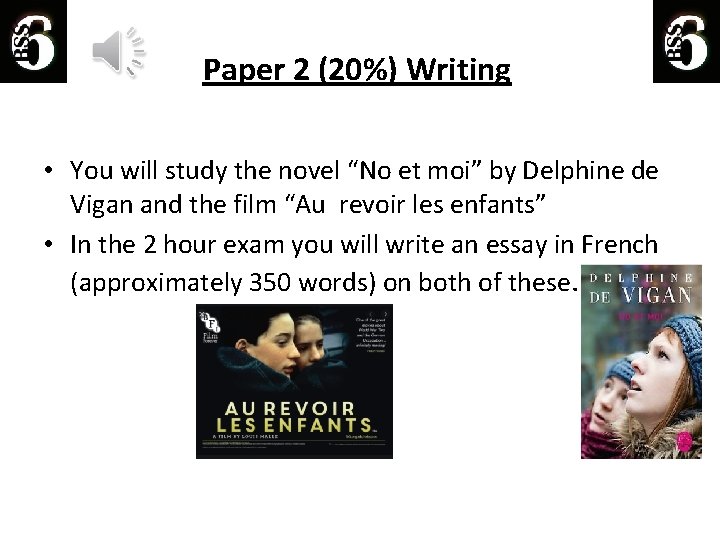
Paper 2 (20%) Writing • You will study the novel “No et moi” by Delphine de Vigan and the film “Au revoir les enfants” • In the 2 hour exam you will write an essay in French (approximately 350 words) on both of these.
Paper 3 (30%): Speaking • Speaking will naturally be an essential part of your studies. You will research, present and discuss all the sub-themes as we progress through the course. • In the speaking exam you will have a discussion on one of the subthemes based on a stimulus card. • The second part of the exam is your Individual Research Project, where you will present and discuss a topic of your choice related to France or the French speaking world.
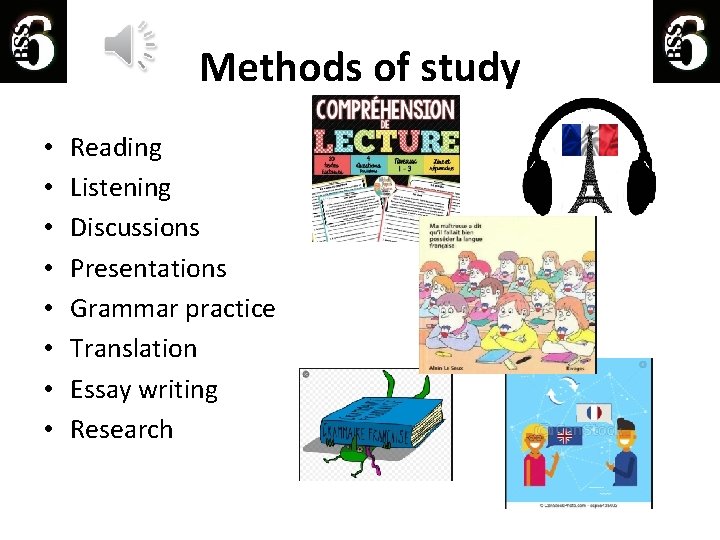
Methods of study • • Reading Listening Discussions Presentations Grammar practice Translation Essay writing Research
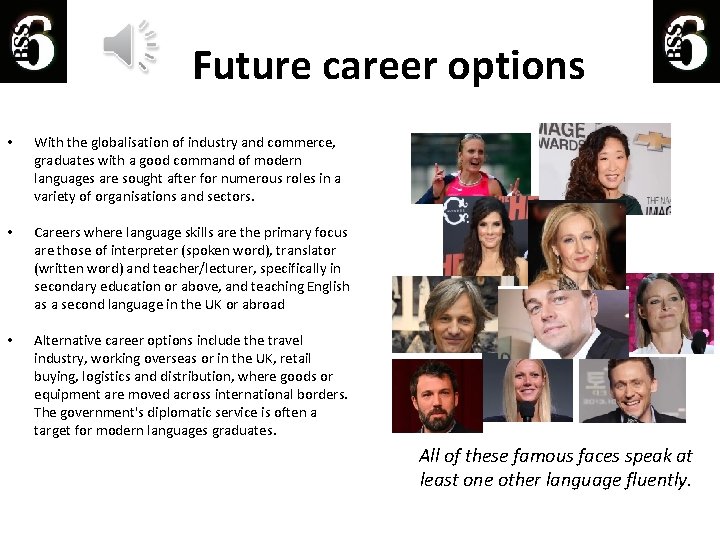
Future career options • With the globalisation of industry and commerce, graduates with a good command of modern languages are sought after for numerous roles in a variety of organisations and sectors. • Careers where language skills are the primary focus are those of interpreter (spoken word), translator (written word) and teacher/lecturer, specifically in secondary education or above, and teaching English as a second language in the UK or abroad • Alternative career options include the travel industry, working overseas or in the UK, retail buying, logistics and distribution, where goods or equipment are moved across international borders. The government's diplomatic service is often a target for modern languages graduates. All of these famous faces speak at least one other language fluently.
Entry Requirements • 6 or above in GCSE French