
Freight Technology Assessment Tool FHWA Office of Freight
- Slides: 39
Freight Technology Assessment Tool FHWA Office of Freight Management
Agenda • Background • Freight Technology Assessment Tool • • • Methodology Processes Performance Measures Technology Benefits & Costs Output • Applying FTAT – Motor Carrier Efficiency Study • Questions FHWA Office of Freight Management
Background – Why DOT? • Creation of Public Private Partnerships – Government is a facilitator or convener of groups of stakeholders • Ability to provide research and development funding (seed money) • Neutral party with interest in success of overall transportation network • Government Participation • Highway systems are at capacity today in many urban areas • Freight forecasted to double by Year 2020 • Promotion of new technologies to increase the efficient flow of freight. FHWA Office of Freight Management
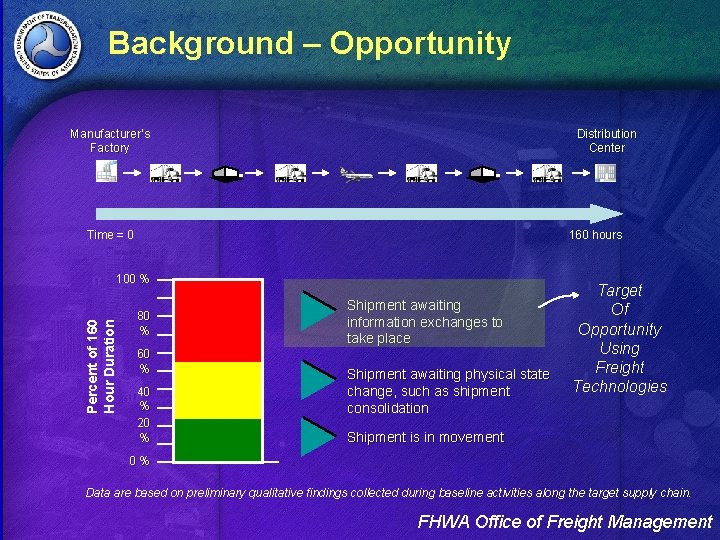
Background – Opportunity Manufacturer’s Factory Distribution Center Time = 0 160 hours Percent of 160 Hour Duration 100 % 80 % 60 % 40 % 20 % Shipment awaiting information exchanges to take place Shipment awaiting physical state change, such as shipment consolidation Target Of Opportunity Using Freight Technologies Shipment is in movement 0% Data are based on preliminary qualitative findings collected during baseline activities along the target supply chain. FHWA Office of Freight Management
Background – Goals • Reduce congestion – Promote the exchange of information between public and private organizations. • Improve efficiency – Projects that promote timely and useful information exchange between supply chain partners. • Enhance safety and security – Projects that ensure that critical information is captured and disseminated to the appropriate facilities and organizations. FHWA Office of Freight Management
Freight Technology Assessment Tool • Developed in 2004 -2005 for FHWA • Project Objective: Provide a tool that allows the users to evaluate the effects of deploying a technology. • Utilizes a qualitative and a quantitative approach • Qualitative analysis: Rating the technology’s effects on a set of predefined performance metrics • Quantitative analysis: benefit cost analysis based on a set of pre-defined cost drivers FHWA Office of Freight Management
Freight Technology Assessment Tool FTAT FHWA Office of Freight Management
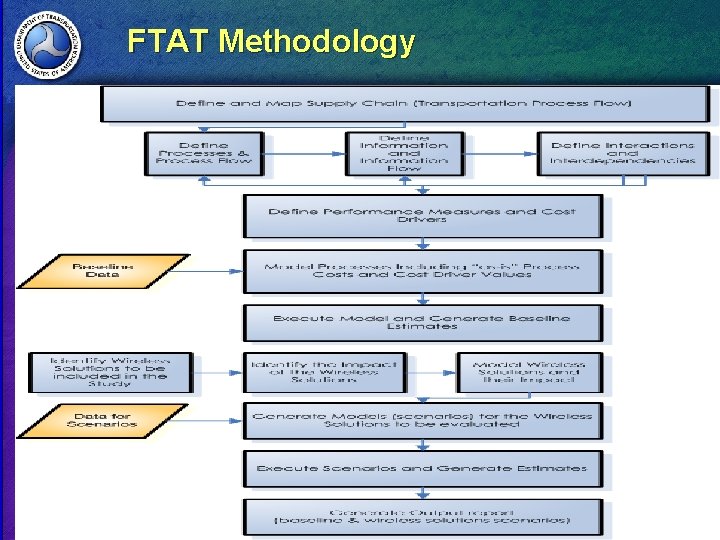
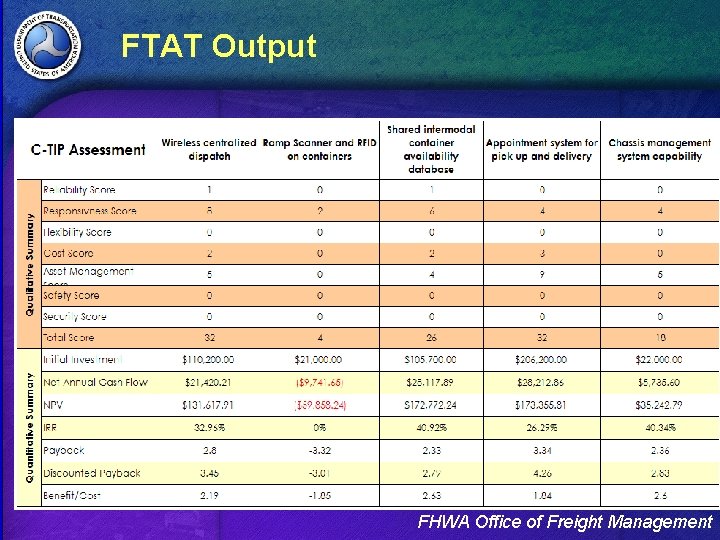
FTAT Methodology • Input • • • Define the supply-chain Performance metrics Cost drivers The technologies or best practices The technology effect for each performance metric • The benefits and costs for each technology • Output • The benefit/cost ratio, plus other financial measures, are computed for each technology • The technologies score FHWA Office of Freight Management
FTAT Methodology FHWA Office of Freight Management
FTAT Methodology FHWA Office of Freight Management
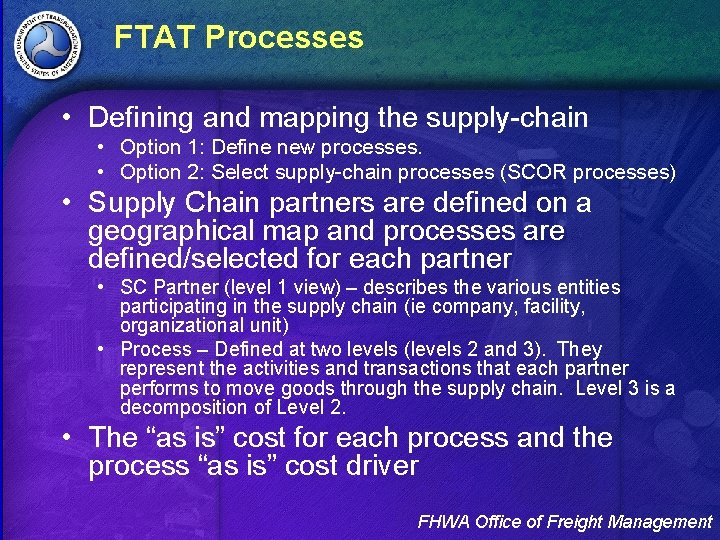
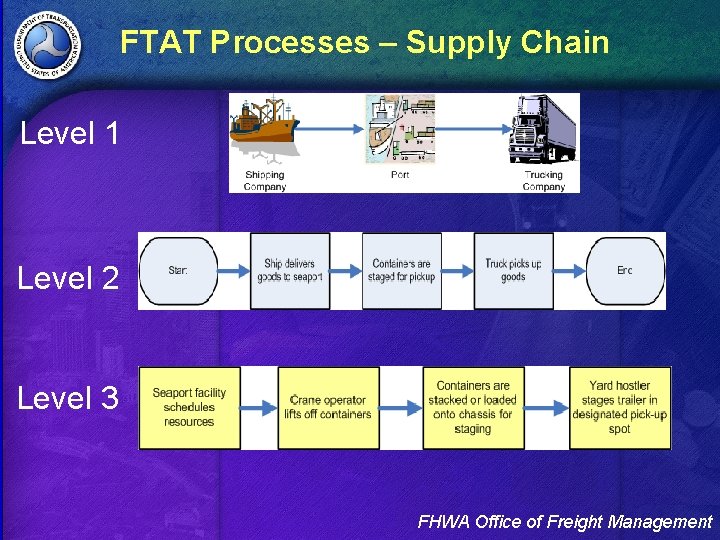
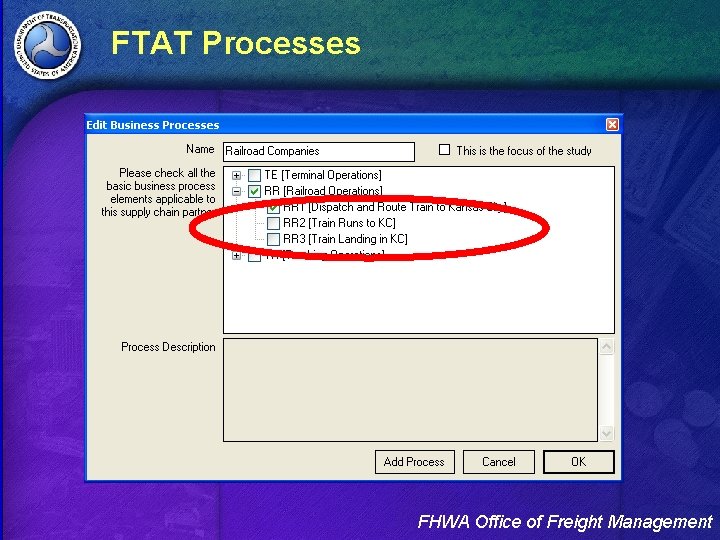
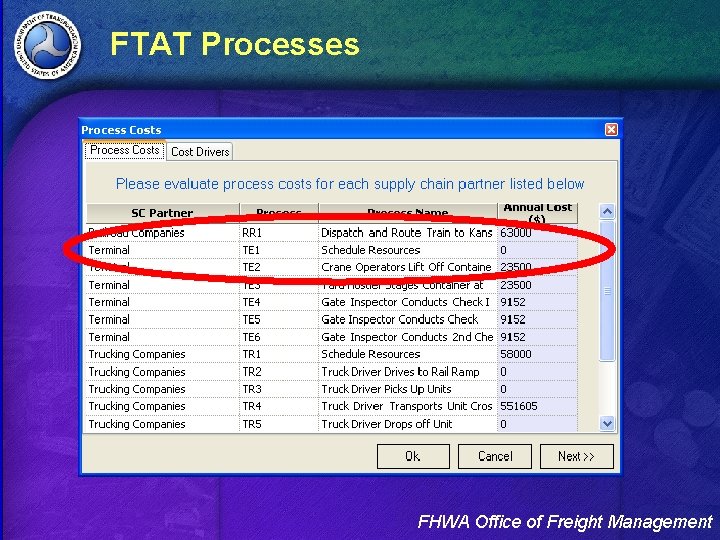
FTAT Processes • Defining and mapping the supply-chain • Option 1: Define new processes. • Option 2: Select supply-chain processes (SCOR processes) • Supply Chain partners are defined on a geographical map and processes are defined/selected for each partner • SC Partner (level 1 view) – describes the various entities participating in the supply chain (ie company, facility, organizational unit) • Process – Defined at two levels (levels 2 and 3). They represent the activities and transactions that each partner performs to move goods through the supply chain. Level 3 is a decomposition of Level 2. • The “as is” cost for each process and the process “as is” cost driver FHWA Office of Freight Management
FTAT Processes – Supply Chain Level 1 Level 2 Level 3 FHWA Office of Freight Management
FTAT Processes FHWA Office of Freight Management
FTAT Processes FHWA Office of Freight Management
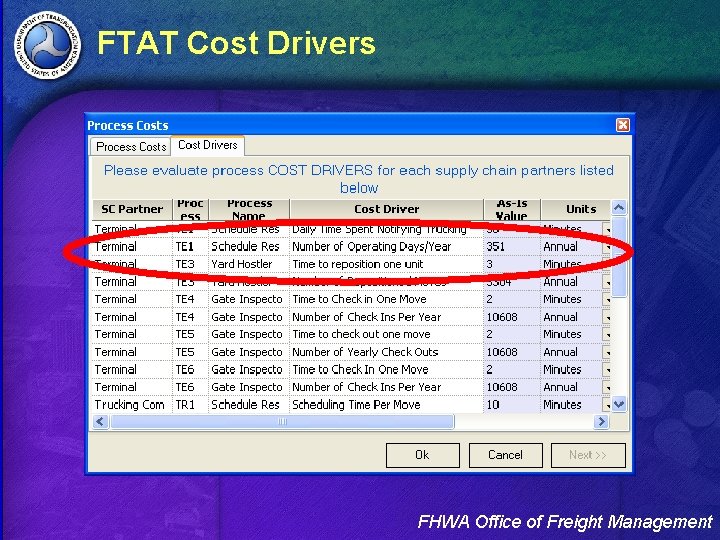
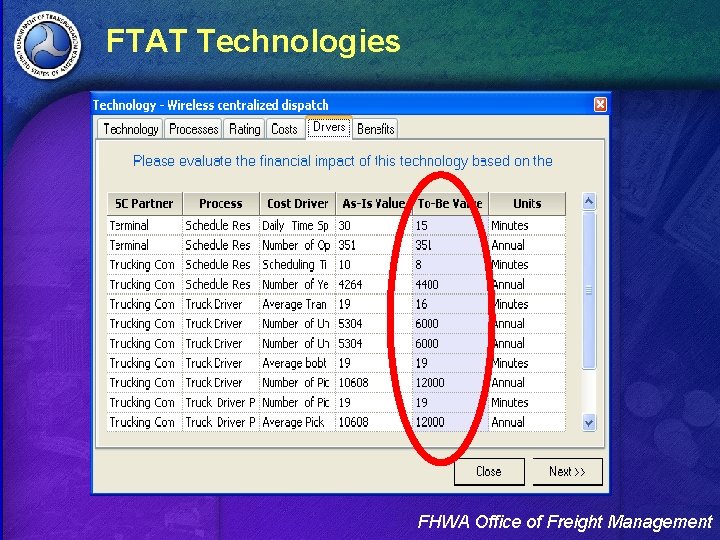
FTAT Cost Drivers • A characteristic that drives the changes in cost level • Example: Order Processing • Cost Drivers: Number of Orders & Time per Order • Uses of Cost drivers: Compute process improvement component of a certain technology FHWA Office of Freight Management
FTAT Cost Drivers FHWA Office of Freight Management
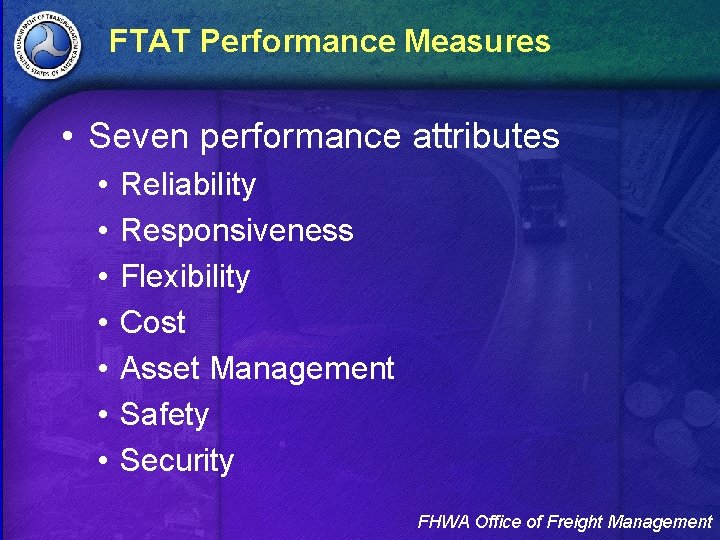
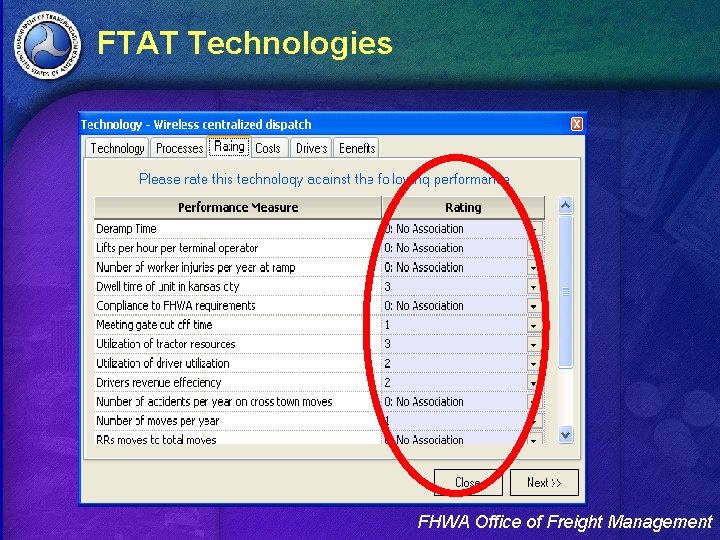
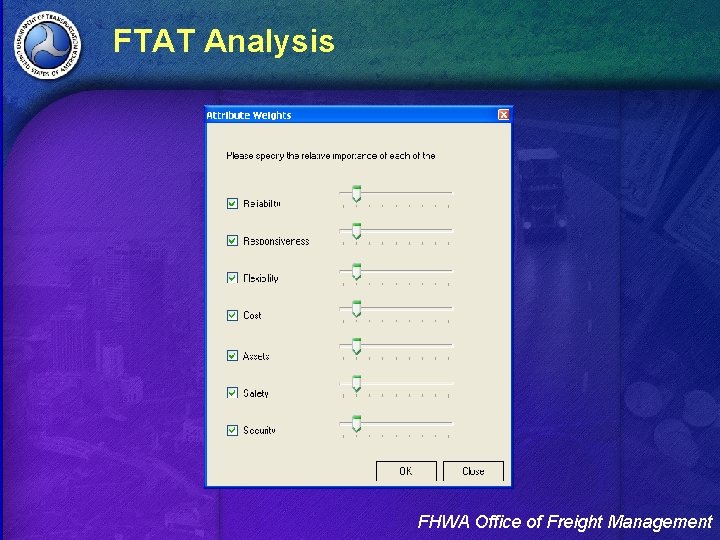
FTAT Performance Measures • Seven performance attributes • • Reliability Responsiveness Flexibility Cost Asset Management Safety Security FHWA Office of Freight Management
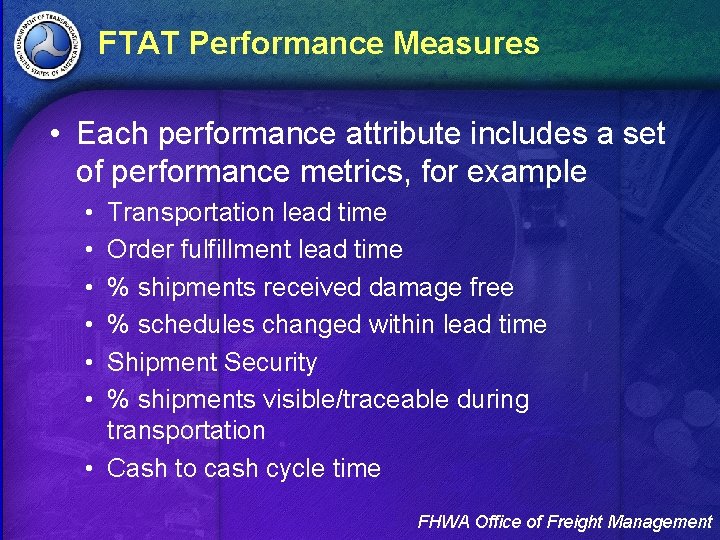
FTAT Performance Measures • Each performance attribute includes a set of performance metrics, for example • • • Transportation lead time Order fulfillment lead time % shipments received damage free % schedules changed within lead time Shipment Security % shipments visible/traceable during transportation • Cash to cash cycle time FHWA Office of Freight Management
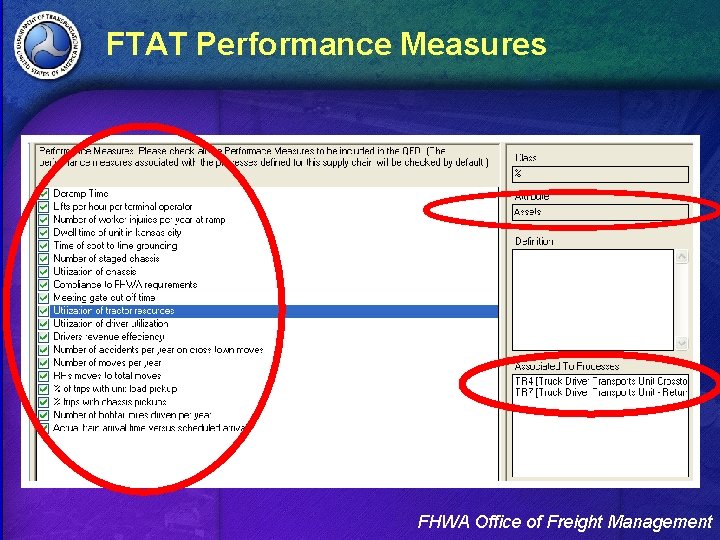
FTAT Performance Measures FHWA Office of Freight Management
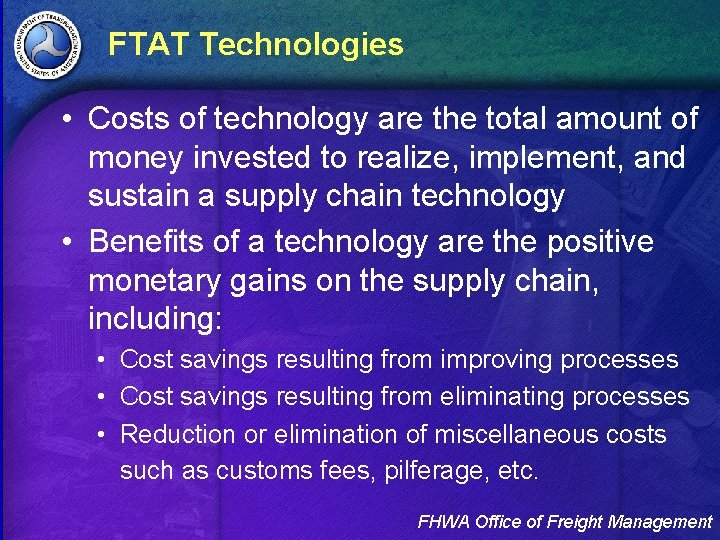
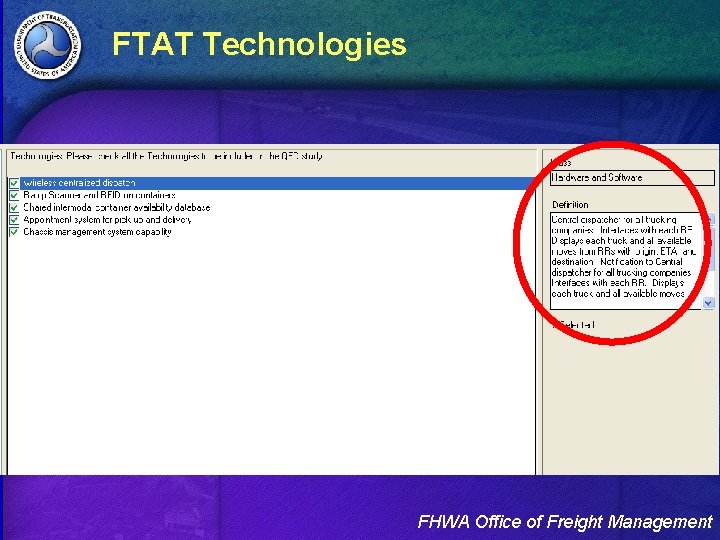
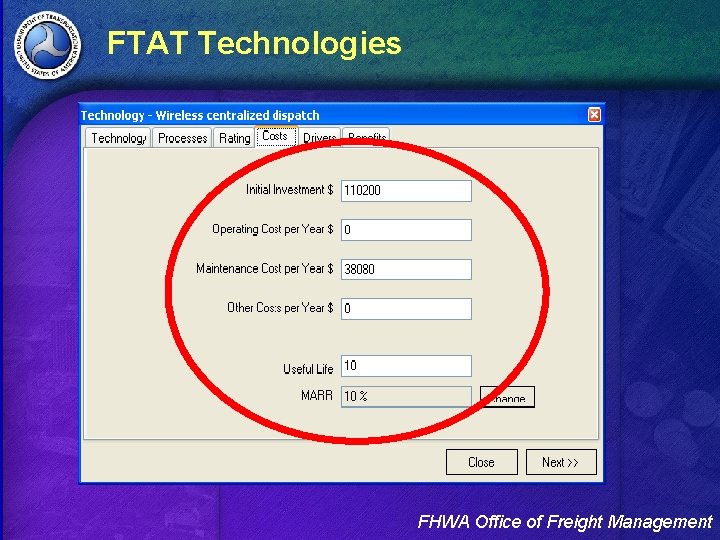
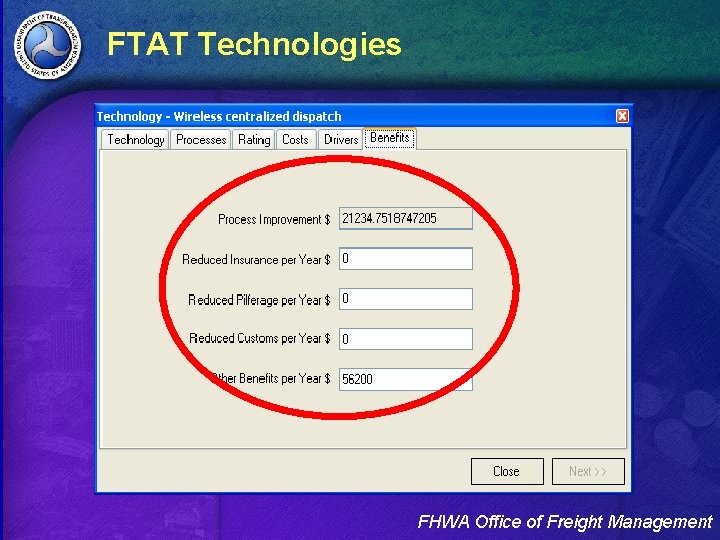
FTAT Technologies • Costs of technology are the total amount of money invested to realize, implement, and sustain a supply chain technology • Benefits of a technology are the positive monetary gains on the supply chain, including: • Cost savings resulting from improving processes • Cost savings resulting from eliminating processes • Reduction or elimination of miscellaneous costs such as customs fees, pilferage, etc. FHWA Office of Freight Management
FTAT Technologies FHWA Office of Freight Management
FTAT Technologies FHWA Office of Freight Management
FTAT Technologies FHWA Office of Freight Management
FTAT Technologies FHWA Office of Freight Management
FTAT Technologies FHWA Office of Freight Management
FTAT Analysis § Quality Function Deployment - QFD is a qualitative analysis technique that can be utilized to motivate organizations to focus on their most critical needs. It is a methodology for taking the input of numerous stakeholders and using that information to drive the decision making process. § Benefit Cost Analysis - a quantitative analysis technique that evaluates the monetary benefits of a set of technology projects versus their associated costs (NPV, BCR, IRR, etc. ). FHWA Office of Freight Management
FTAT Analysis FHWA Office of Freight Management
FTAT Output FHWA Office of Freight Management
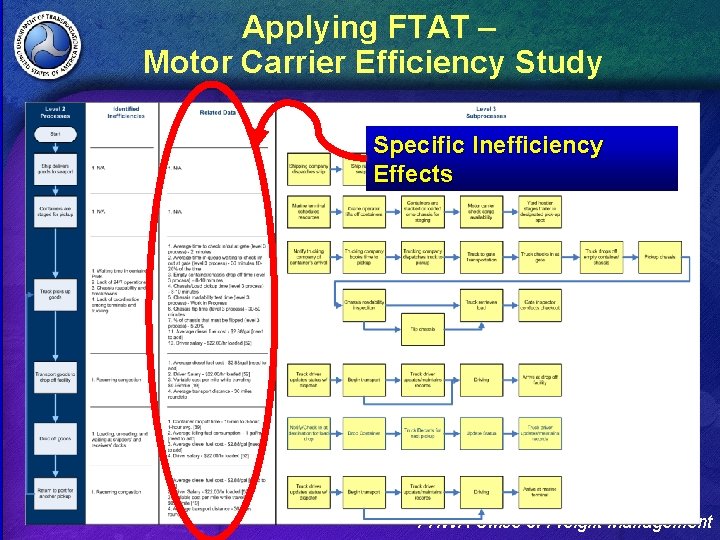
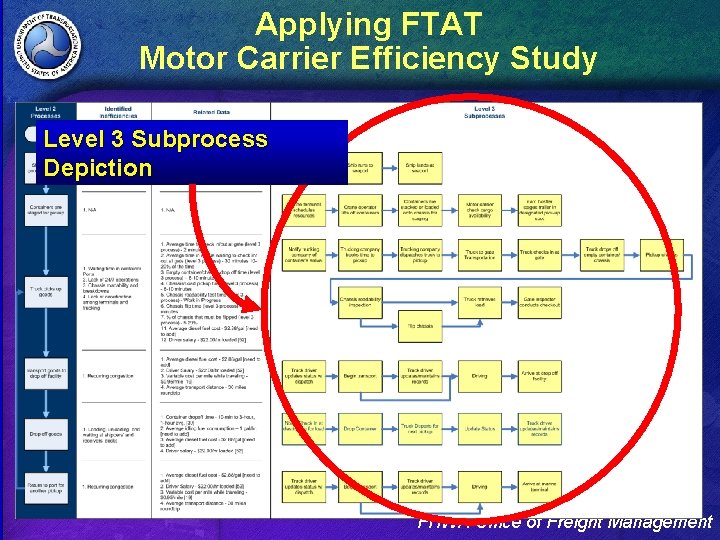
Applying FTAT Motor Carrier Efficiency Study • MCES – Directed by SAFETEA-LU Section 5503 • Major Study Components: • Identify high-priority motor carrier inefficiencies • Examine the application of wireless technology to provide needed capabilities • Perform hypothetical benefit-cost analysis • Progress to Date: • Defined supply chain segments • Identified process-specific inefficiencies • Captured data to define effects of inefficiencies • Will use FTAT to Perform Preliminary B/C Analyses • 10 “Scenarios” • Various trucking operations and trip types FHWA Office of Freight Management
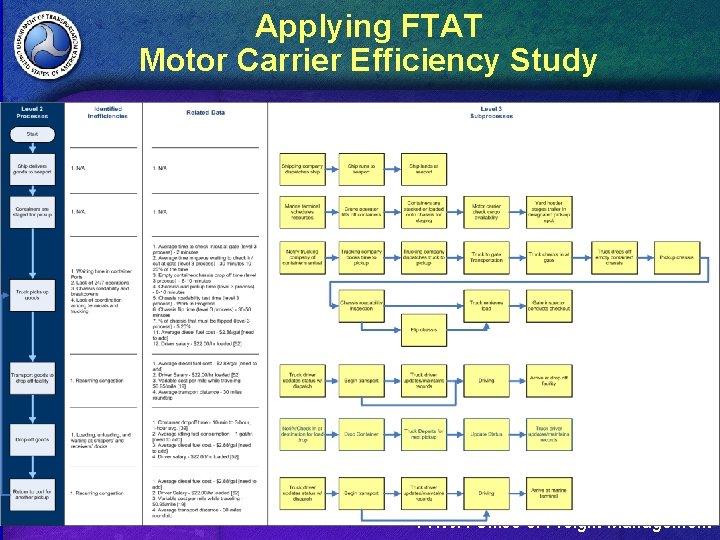
Applying FTAT Motor Carrier Efficiency Study FHWA Office of Freight Management
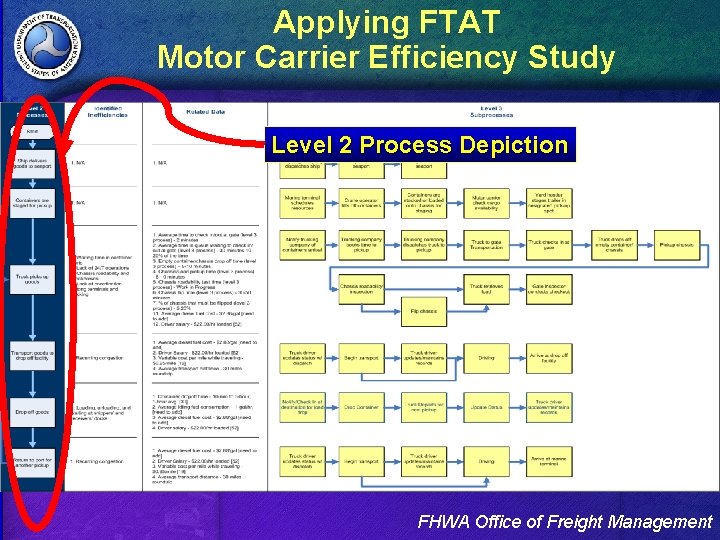
Applying FTAT Motor Carrier Efficiency Study Level 2 Process Depiction FHWA Office of Freight Management
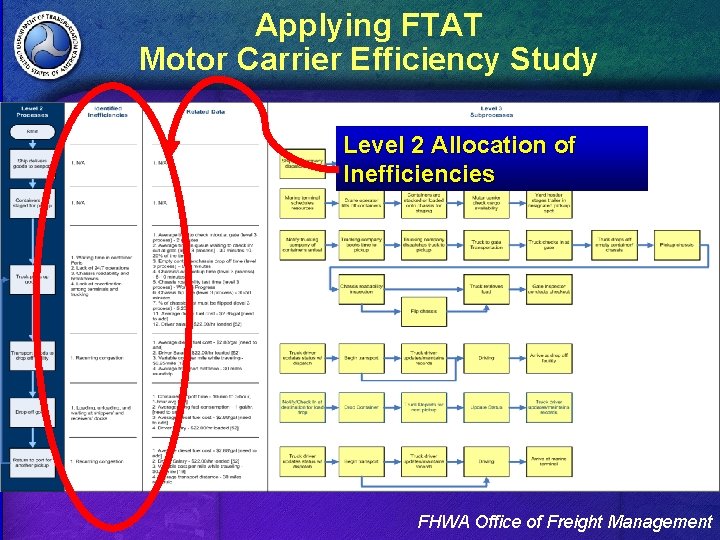
Applying FTAT Motor Carrier Efficiency Study Level 2 Allocation of Inefficiencies FHWA Office of Freight Management
Applying FTAT – Motor Carrier Efficiency Study Specific Inefficiency Effects FHWA Office of Freight Management
Applying FTAT Motor Carrier Efficiency Study Level 3 Subprocess Depiction FHWA Office of Freight Management
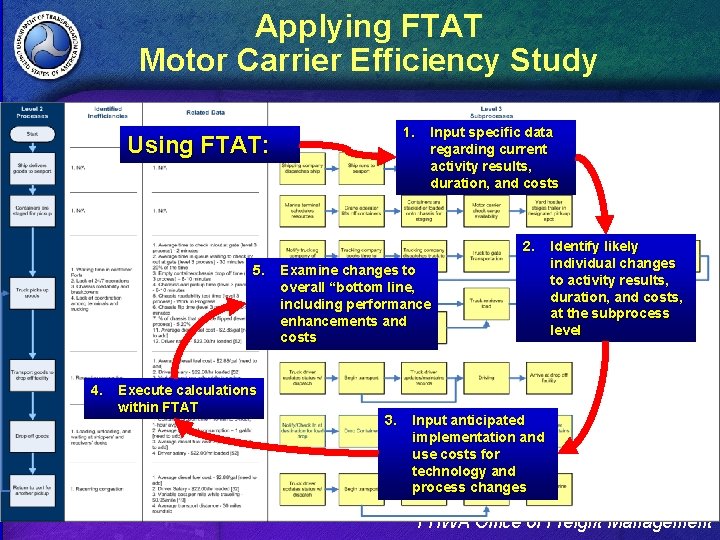
Applying FTAT Motor Carrier Efficiency Study 1. Using FTAT: Input specific data regarding current activity results, duration, and costs 2. 5. 4. Execute calculations within FTAT Examine changes to overall “bottom line, including performance enhancements and costs 3. Identify likely individual changes to activity results, duration, and costs, at the subprocess level Input anticipated implementation and use costs for technology and process changes FHWA Office of Freight Management
Applying FTAT Motor Carrier Efficiency Study The MCES FTAT Analysis Results Will: • Clarify Opportunities – Better define specific sources of inefficiencies – Quantify and qualify potential benefits • Enhance Knowledge – Consolidate information from multiple sources – Provide numerical evidence • Facilitate Decision-Making – Provide means for comparative analysis – Provide basis for selecting Phase II pilot projects FHWA Office of Freight Management
Questions/Discussion FHWA Office of Freight Management
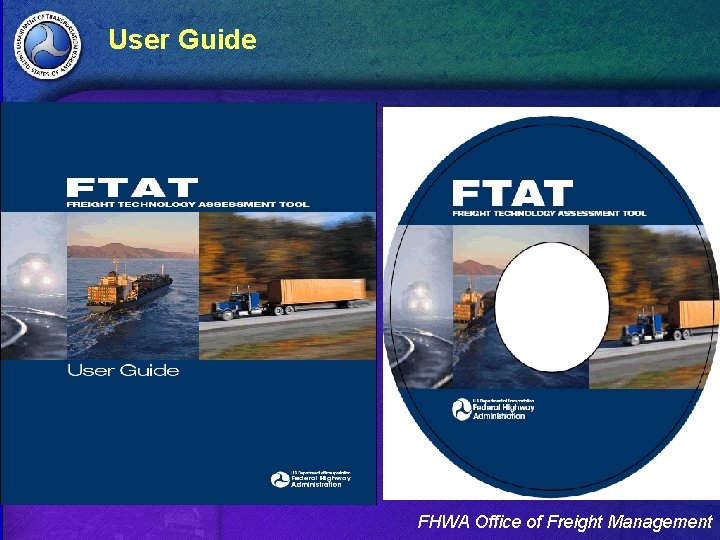
User Guide FHWA Office of Freight Management
Contact Information • Randy Butler – FHWA • randy. butler@dot. gov • 202. 366. 9215 • Paul Belella – Delcan • pbelella@delcan. com • 703. 752. 6060 X 104 • Nathan Rychlik – Productivity Apex, Inc. • nrychlik@productivityapex. com • 407. 384. 0800 FHWA Office of Freight Management