
Freeways and Interchanges CE 453 Lecture 33 Source
- Slides: 48
Freeways and Interchanges CE 453 Lecture 33 Source : A Policy on Geometric Design of Highways and Streets (The Green Book). Washington, DC. American Association of State Highway and 1 Transportation Officials, th 2001 4 Ed.
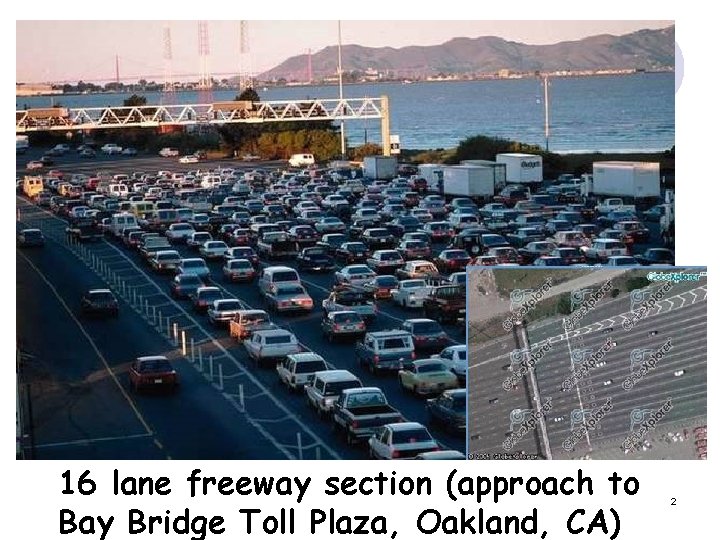
16 lane freeway section (approach to Bay Bridge Toll Plaza, Oakland, CA) 2
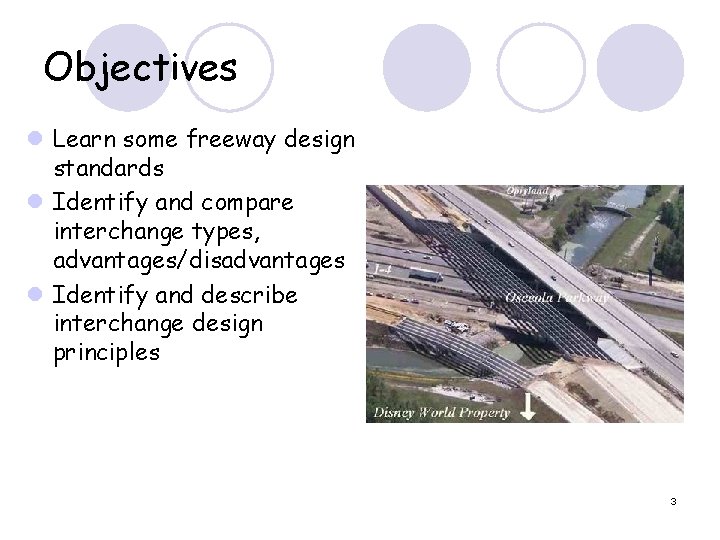
Objectives l Learn some freeway design standards l Identify and compare interchange types, advantages/disadvantages l Identify and describe interchange design principles 3
Freeways § Fully access controlled arterials § Intent: move large volumes of traffic at high speed, safely and efficiently § At-grade crossing are prohibited 4
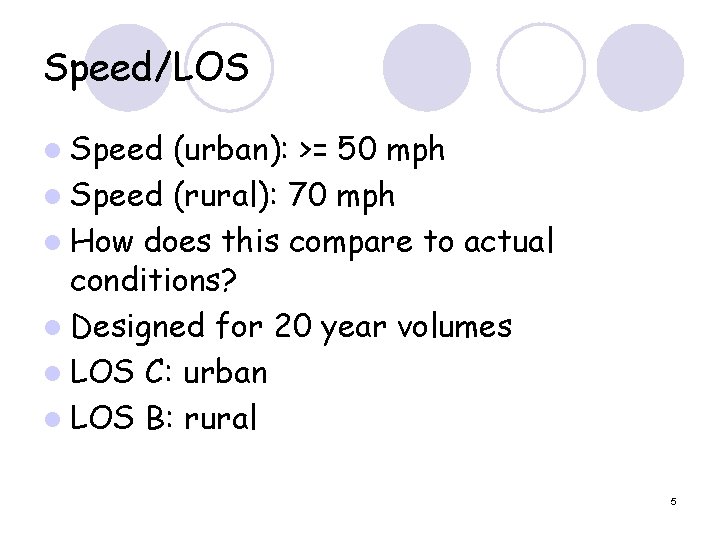
Speed/LOS l Speed (urban): >= 50 mph l Speed (rural): 70 mph l How does this compare to actual conditions? l Designed for 20 year volumes l LOS C: urban l LOS B: rural 5
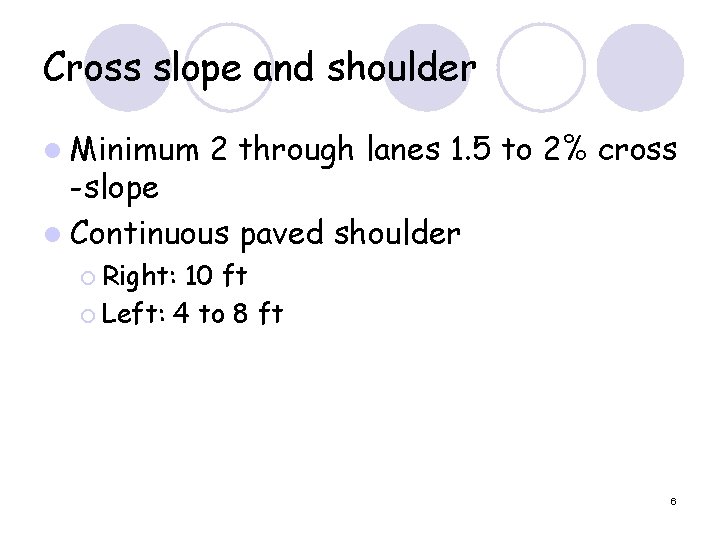
Cross slope and shoulder l Minimum 2 through lanes 1. 5 to 2% cross -slope l Continuous paved shoulder ¡ Right: 10 ft ¡ Left: 4 to 8 ft 6
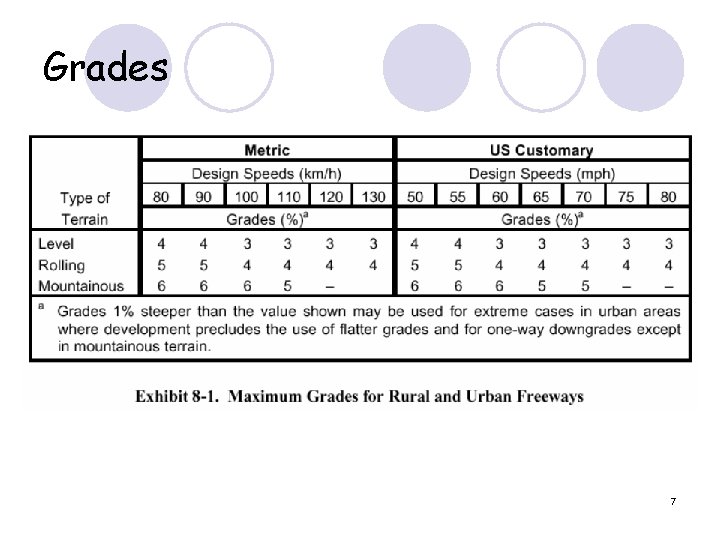
Grades 7
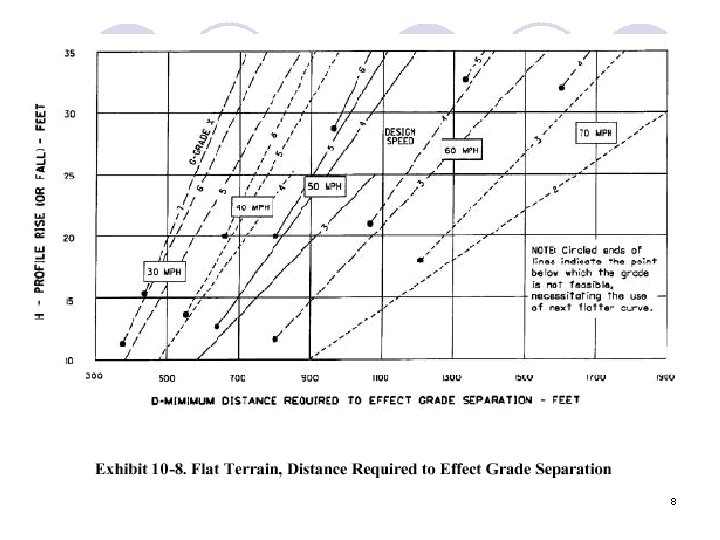
8
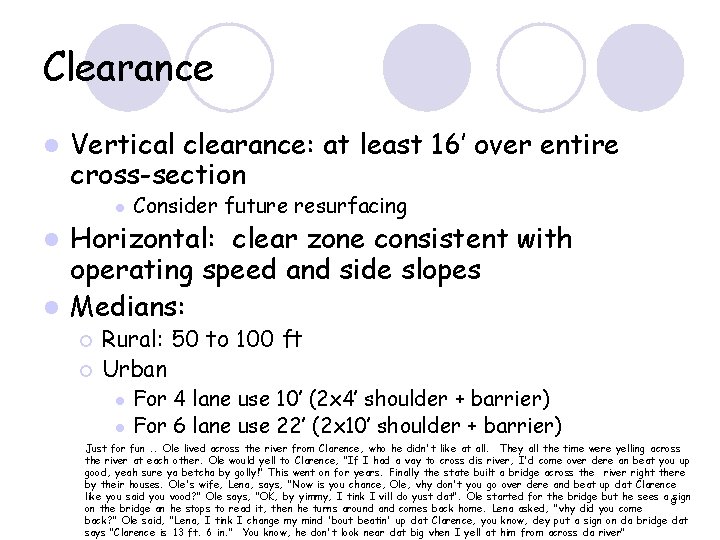
Clearance l Vertical clearance: at least 16’ over entire cross-section l Consider future resurfacing Horizontal: clear zone consistent with operating speed and side slopes l Medians: l ¡ ¡ Rural: 50 to 100 ft Urban l l For 4 lane use 10’ (2 x 4’ shoulder + barrier) For 6 lane use 22’ (2 x 10’ shoulder + barrier) Just for fun. . Ole lived across the river from Clarence, who he didn't like at all. They all the time were yelling across the river at each other. Ole would yell to Clarence, "If I had a vay to cross dis river, I'd come over dere an beat you up good, yeah sure ya betcha by golly!" This went on for years. Finally the state built a bridge across the river right there by their houses. Ole's wife, Lena, says, "Now is you chance, Ole, vhy don't you go over dere and beat up dat Clarence like you said you vood? " Ole says, "OK, by yimmy, I tink I vill do yust dat". Ole started for the bridge but he sees a sign 9 on the bridge an he stops to read it, then he turns around and comes back home. Lena asked, "vhy did you come back? " Ole said, "Lena, I tink I change my mind 'bout beatin' up dat Clarence, you know, dey put a sign on da bridge dat says "Clarence is 13 ft. 6 in. " You know, he don't look near dat big vhen I yell at him from across da river"
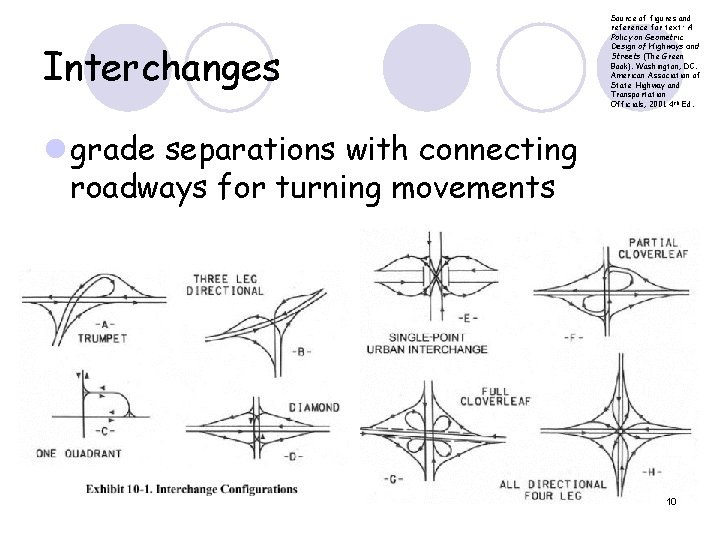
Interchanges Source of figures and reference for text: A Policy on Geometric Design of Highways and Streets (The Green Book). Washington, DC. American Association of State Highway and Transportation Officials, 2001 4 th Ed. l grade separations with connecting roadways for turning movements 10
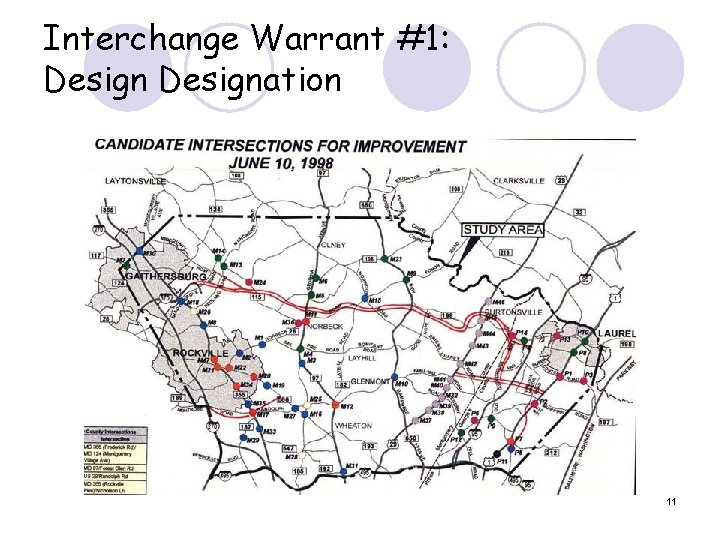
Interchange Warrant #1: Designation 11
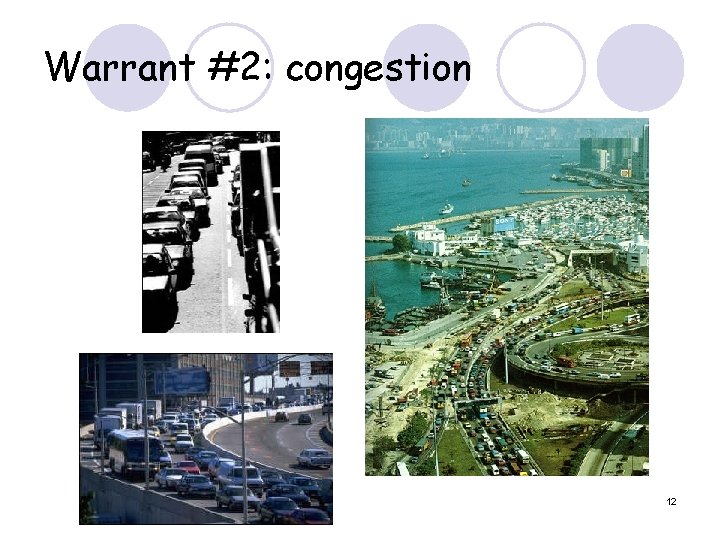
Warrant #2: congestion 12
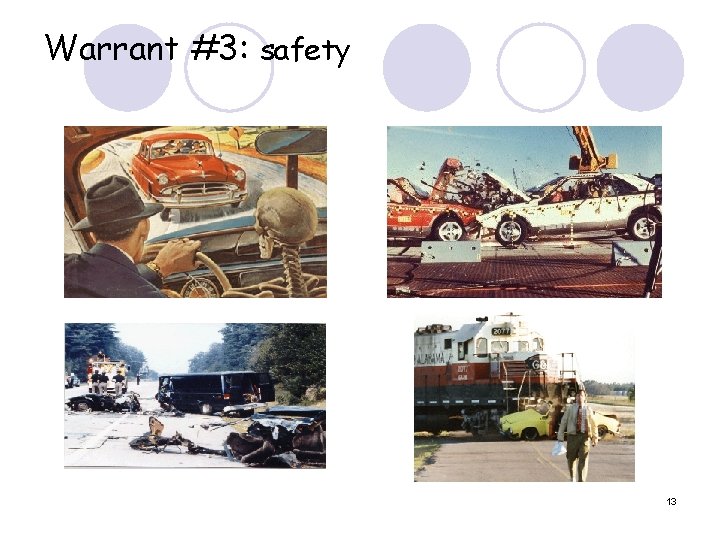
Warrant #3: safety 13
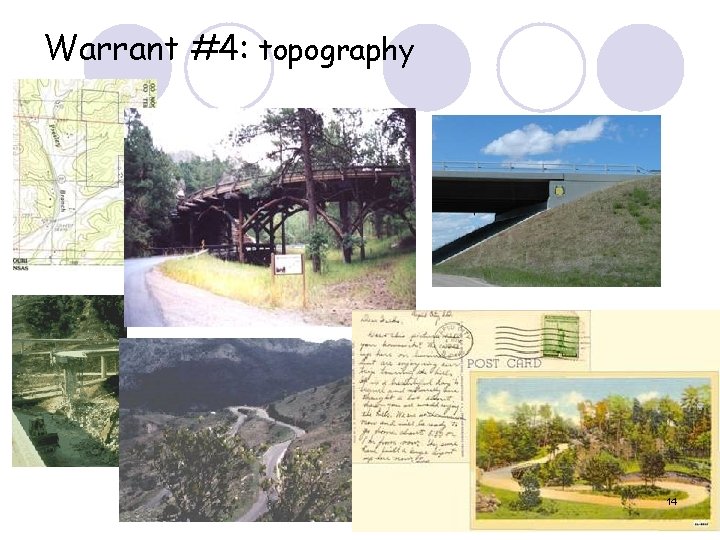
Warrant #4: topography 14
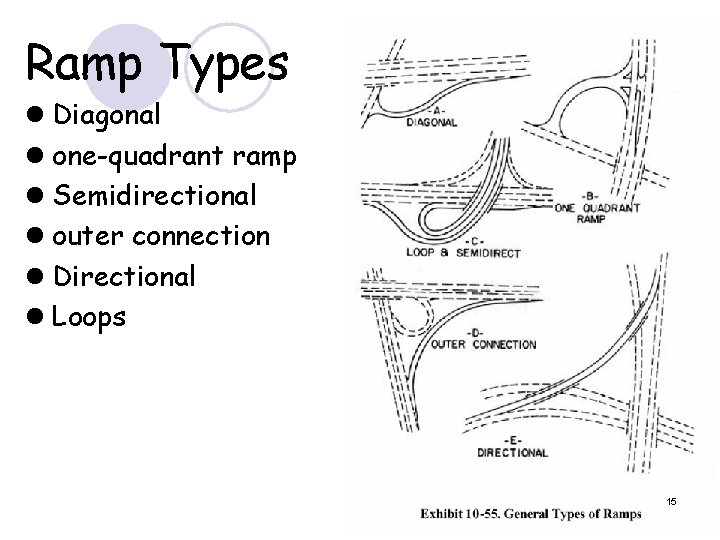
Ramp Types l Diagonal l one-quadrant ramp l Semidirectional l outer connection l Directional l Loops 15
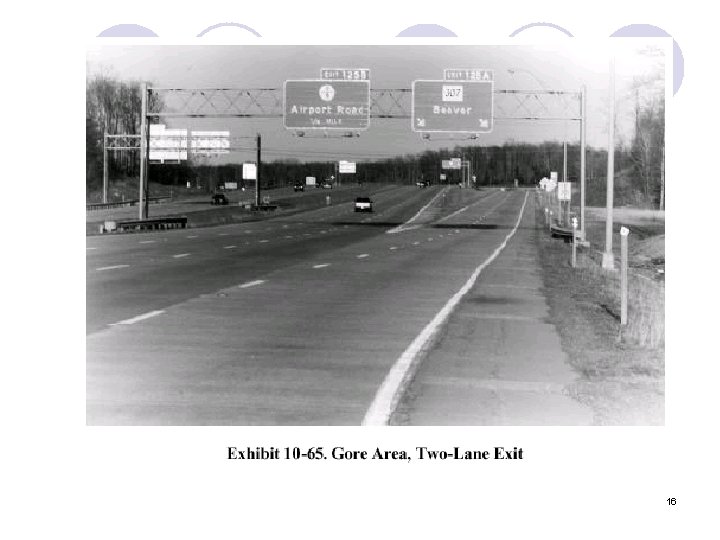
16
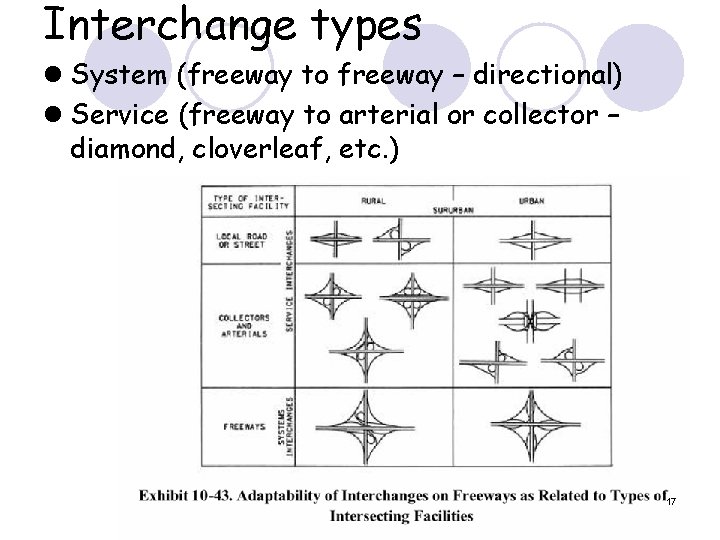
Interchange types l System (freeway to freeway – directional) l Service (freeway to arterial or collector – diamond, cloverleaf, etc. ) 17
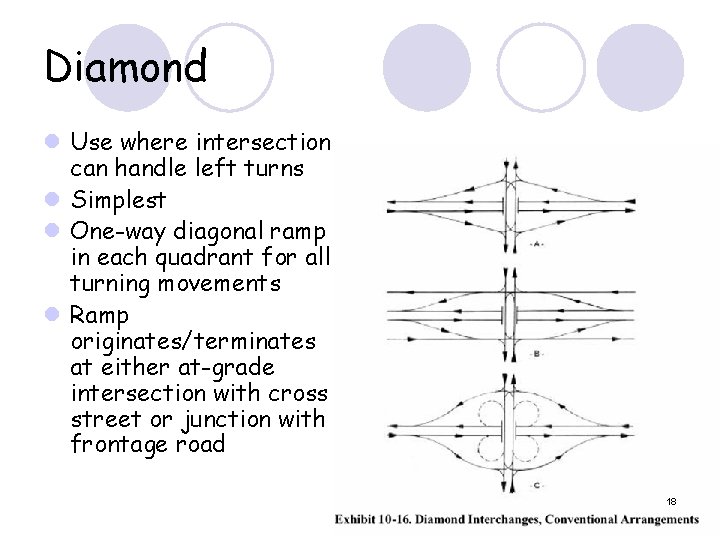
Diamond l Use where intersection can handle left turns l Simplest l One-way diagonal ramp in each quadrant for all turning movements l Ramp originates/terminates at either at-grade intersection with cross street or junction with frontage road 18
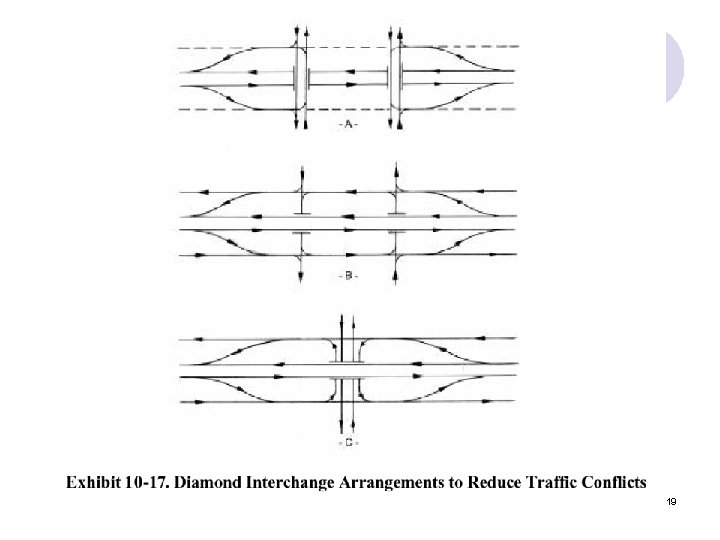
19
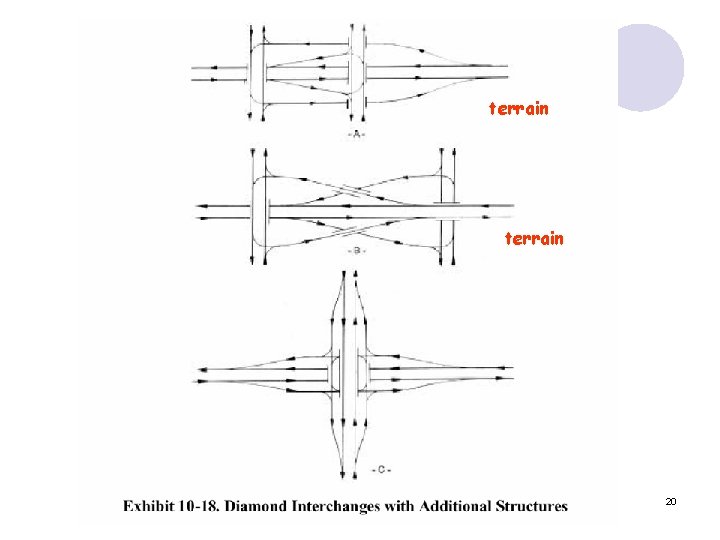
terrain 20
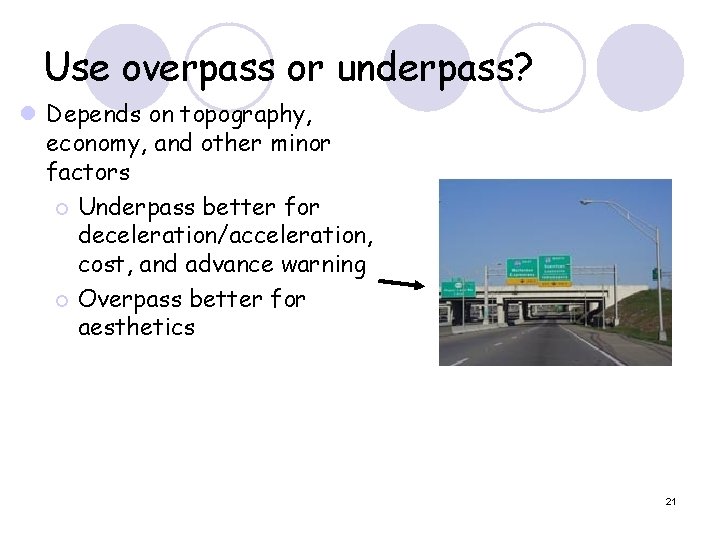
Use overpass or underpass? l Depends on topography, economy, and other minor factors ¡ Underpass better for deceleration/acceleration, cost, and advance warning ¡ Overpass better for aesthetics 21
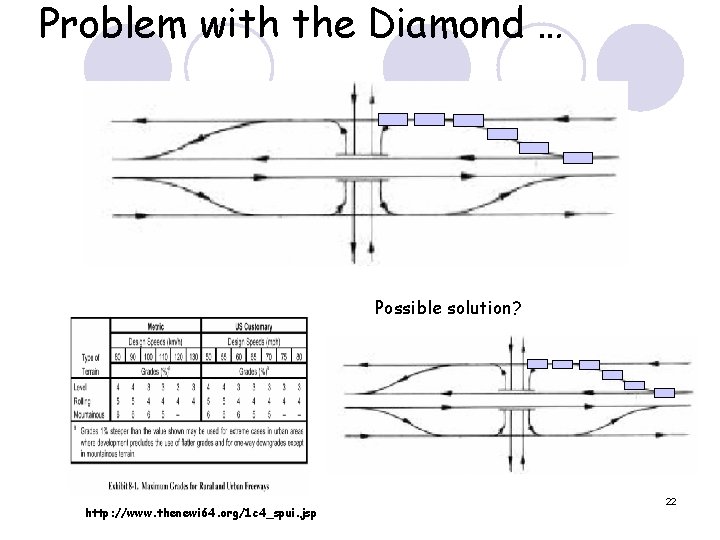
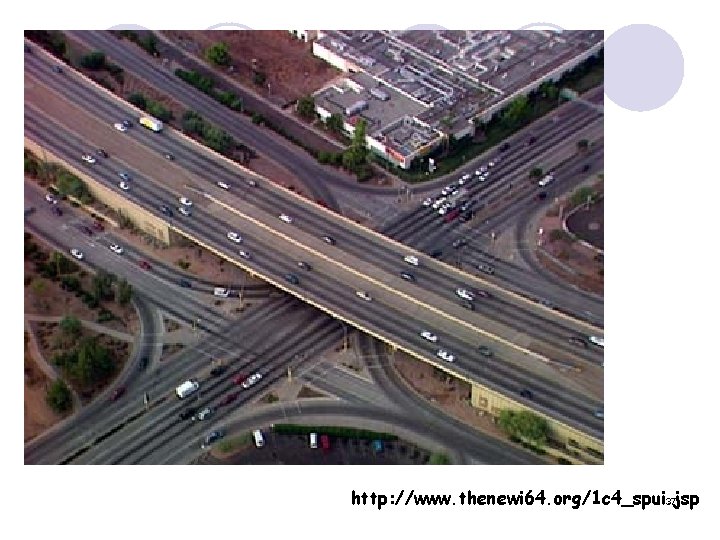
Problem with the Diamond … Possible solution? http: //www. thenewi 64. org/1 c 4_spui. jsp 22
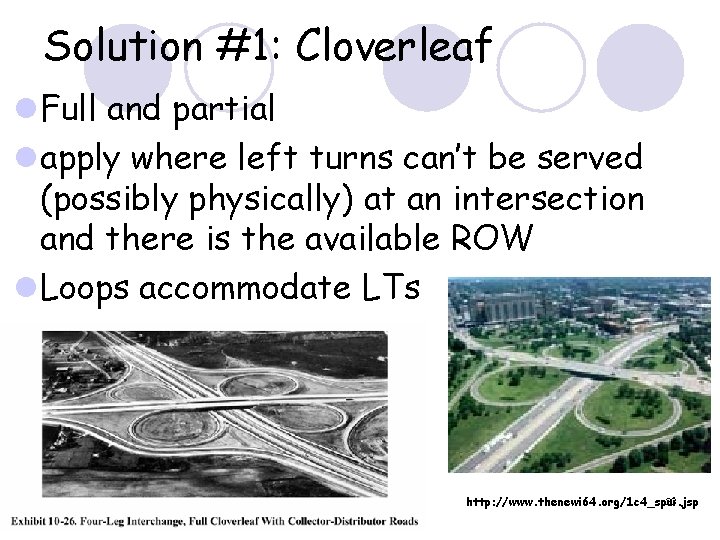
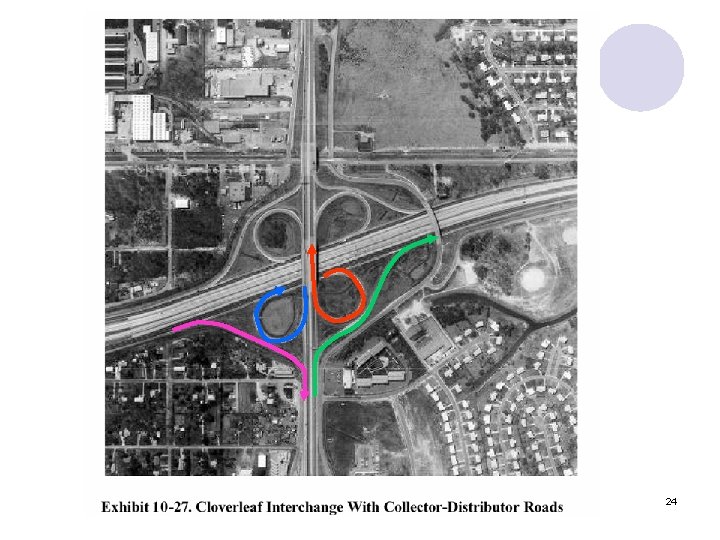
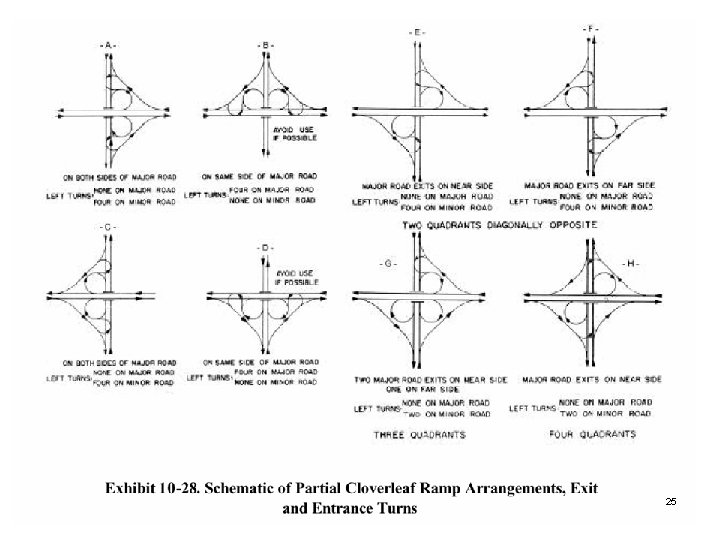
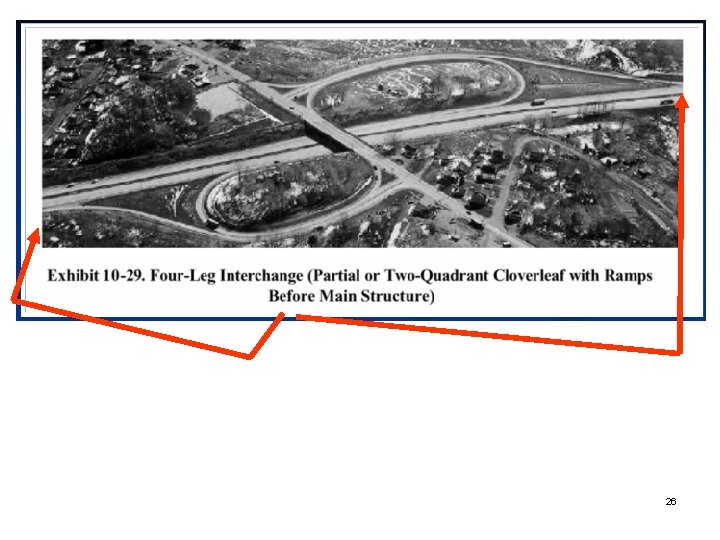
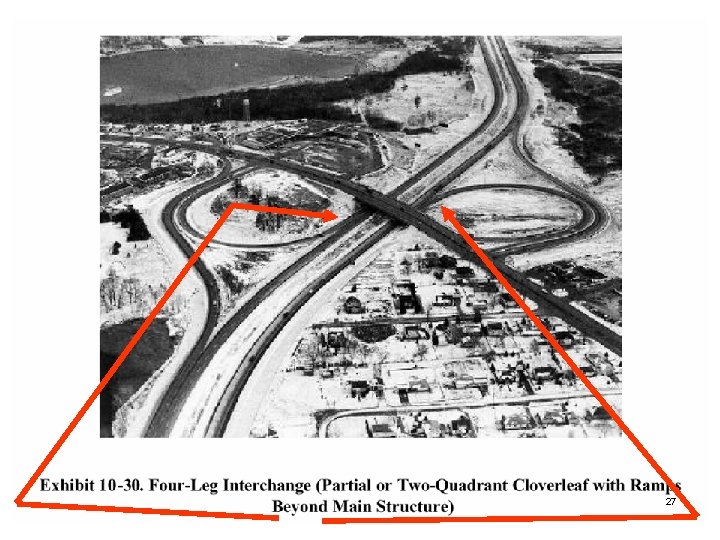
Solution #1: Cloverleaf l Full and partial l apply where left turns can’t be served (possibly physically) at an intersection and there is the available ROW l Loops accommodate LTs 23 http: //www. thenewi 64. org/1 c 4_spui. jsp
24
25
26
27
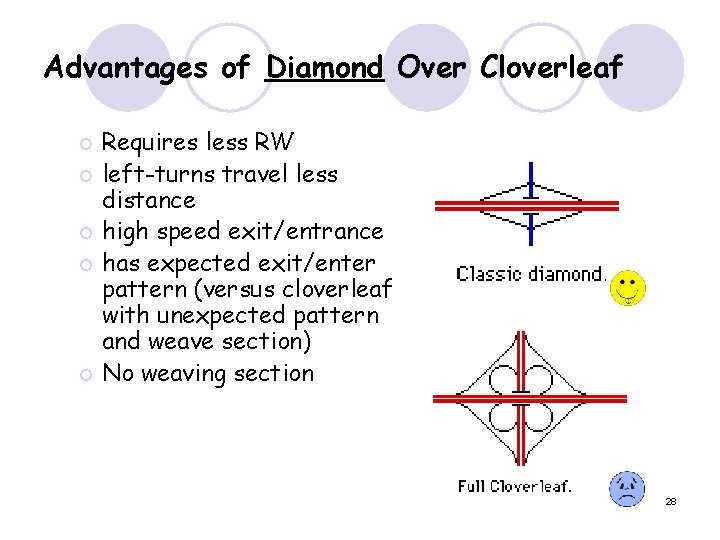
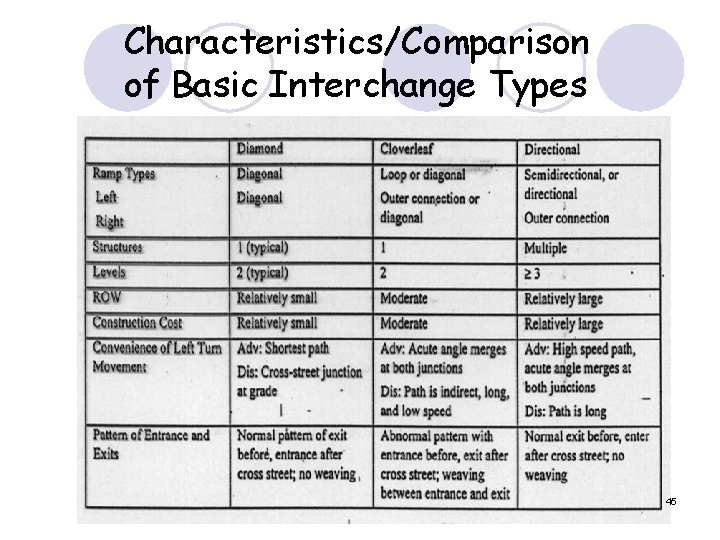
Advantages of Diamond Over Cloverleaf Requires less RW ¡ left-turns travel less distance ¡ high speed exit/entrance ¡ has expected exit/enter pattern (versus cloverleaf with unexpected pattern and weave section) ¡ No weaving section ¡ 28
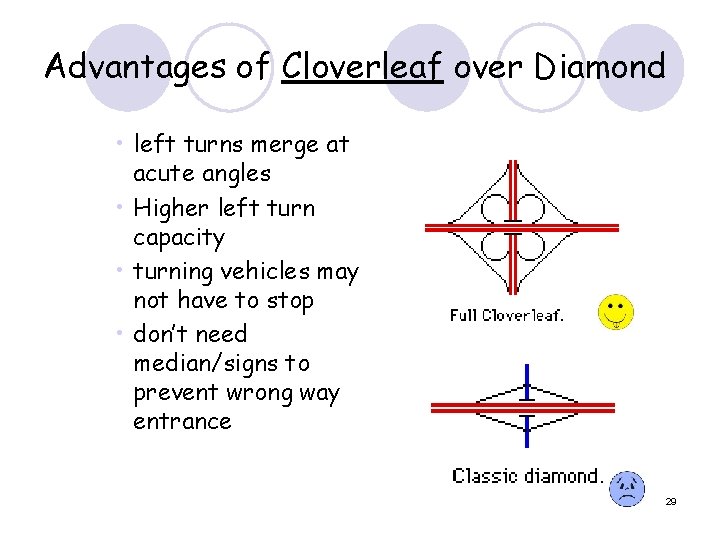
Advantages of Cloverleaf over Diamond • left turns merge at acute angles • Higher left turn capacity • turning vehicles may not have to stop • don’t need median/signs to prevent wrong way entrance 29
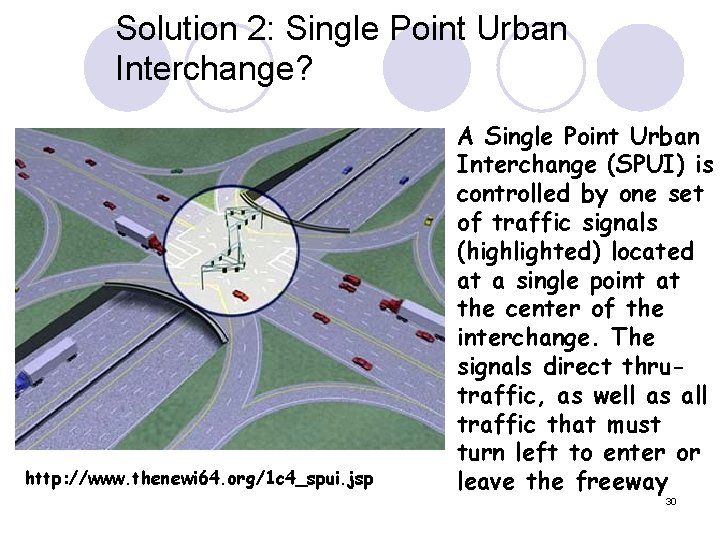
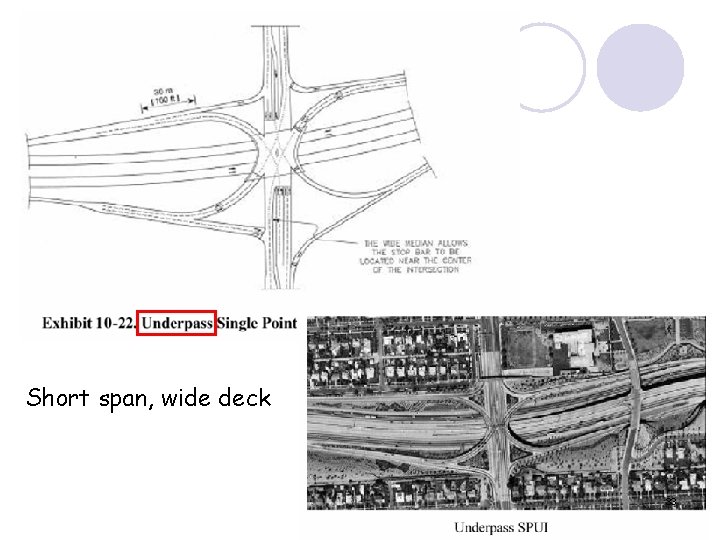
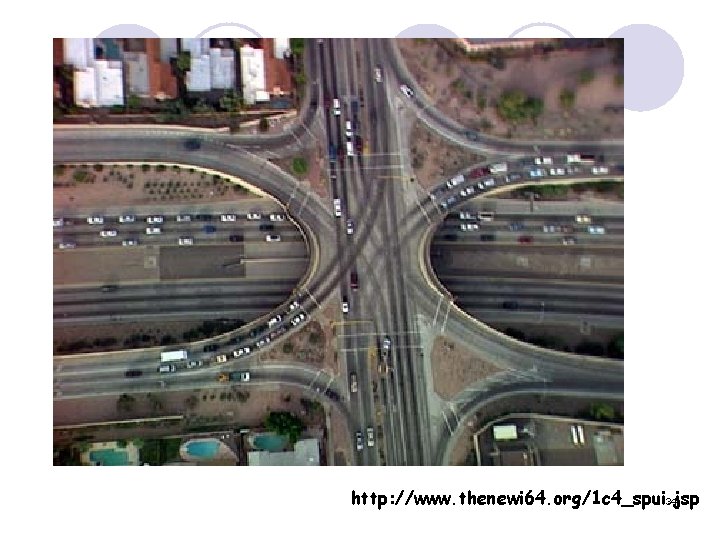
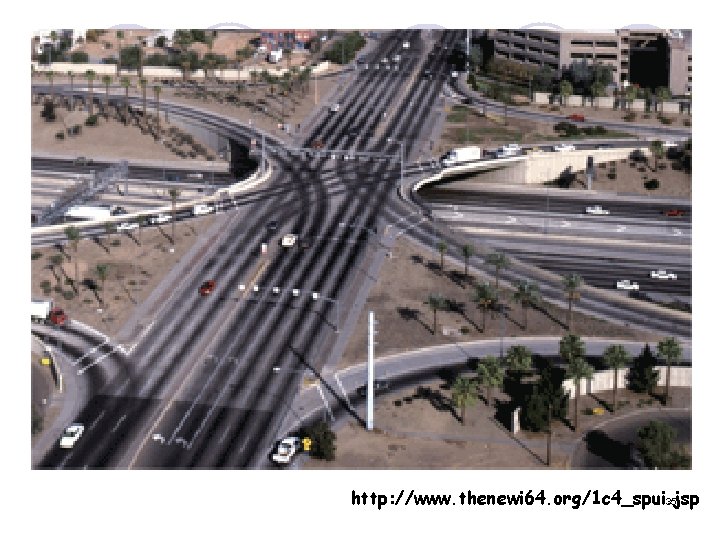
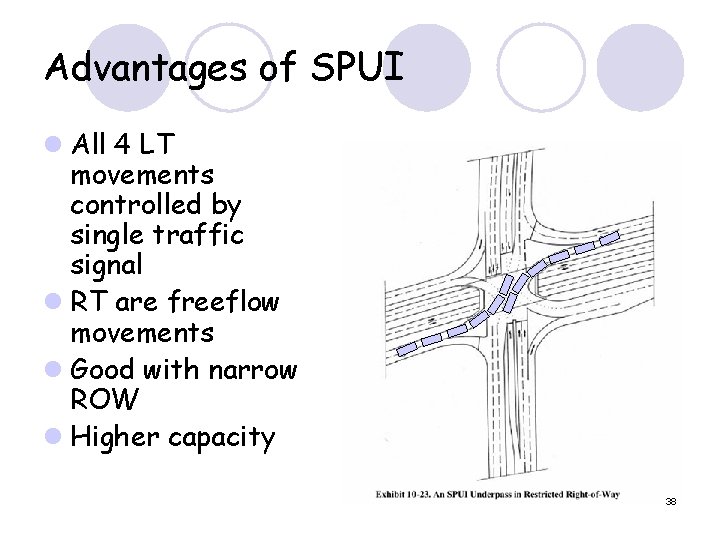
Solution 2: Single Point Urban Interchange? http: //www. thenewi 64. org/1 c 4_spui. jsp A Single Point Urban Interchange (SPUI) is controlled by one set of traffic signals (highlighted) located at a single point at the center of the interchange. The signals direct thrutraffic, as well as all traffic that must turn left to enter or leave the freeway 30
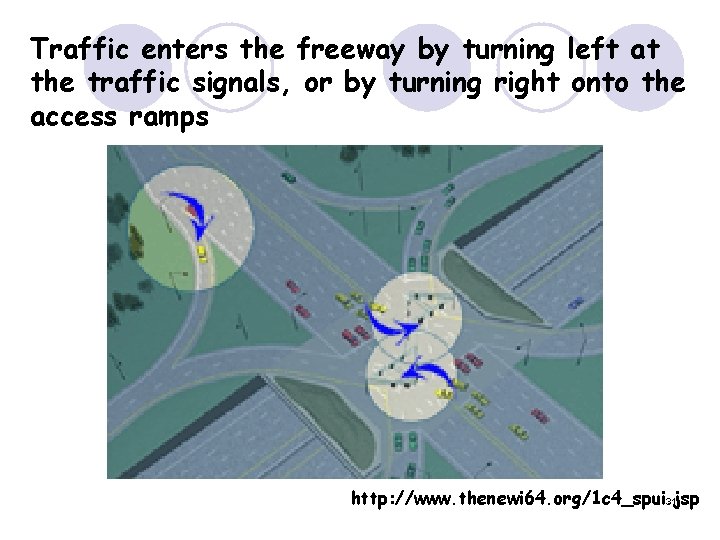
Traffic enters the freeway by turning left at the traffic signals, or by turning right onto the access ramps http: //www. thenewi 64. org/1 c 4_spui. jsp 31
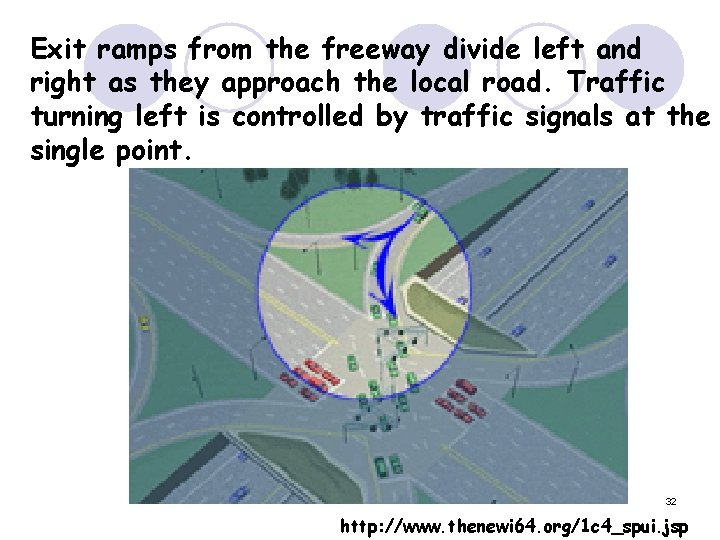
Exit ramps from the freeway divide left and right as they approach the local road. Traffic turning left is controlled by traffic signals at the single point. 32 http: //www. thenewi 64. org/1 c 4_spui. jsp
Short span, wide deck 33
http: //www. thenewi 64. org/1 c 4_spui. jsp 34
http: //www. thenewi 64. org/1 c 4_spui. jsp 35
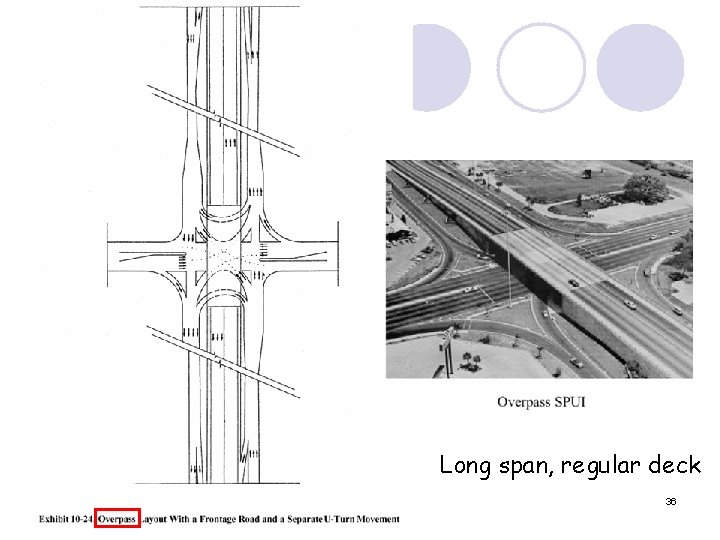
Long span, regular deck 36
http: //www. thenewi 64. org/1 c 4_spui. jsp 37
Advantages of SPUI l All 4 LT movements controlled by single traffic signal l RT are freeflow movements l Good with narrow ROW l Higher capacity 38
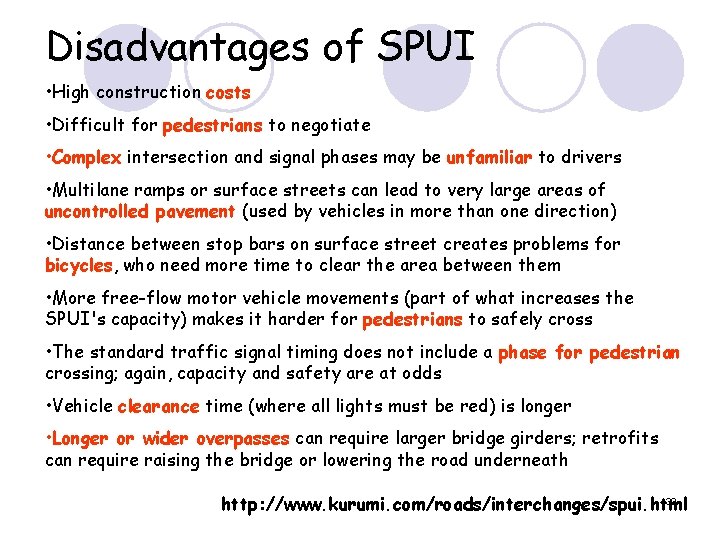
Disadvantages of SPUI • High construction costs • Difficult for pedestrians to negotiate • Complex intersection and signal phases may be unfamiliar to drivers • Multilane ramps or surface streets can lead to very large areas of uncontrolled pavement (used by vehicles in more than one direction) • Distance between stop bars on surface street creates problems for bicycles, who need more time to clear the area between them • More free-flow motor vehicle movements (part of what increases the SPUI's capacity) makes it harder for pedestrians to safely cross • The standard traffic signal timing does not include a phase for pedestrian crossing; again, capacity and safety are at odds • Vehicle clearance time (where all lights must be red) is longer • Longer or wider overpasses can require larger bridge girders; retrofits can require raising the bridge or lowering the road underneath 39 http: //www. kurumi. com/roads/interchanges/spui. html
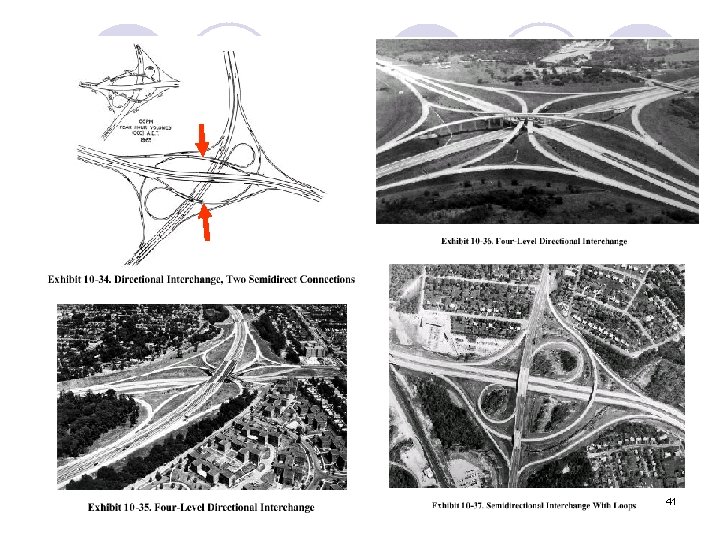
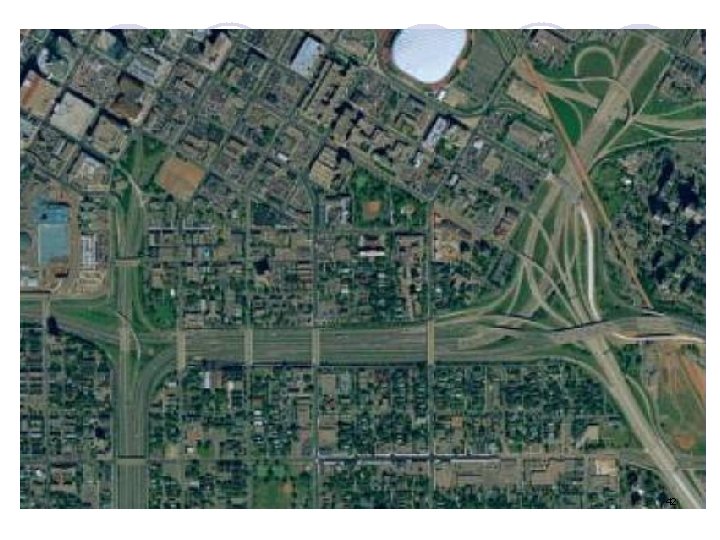
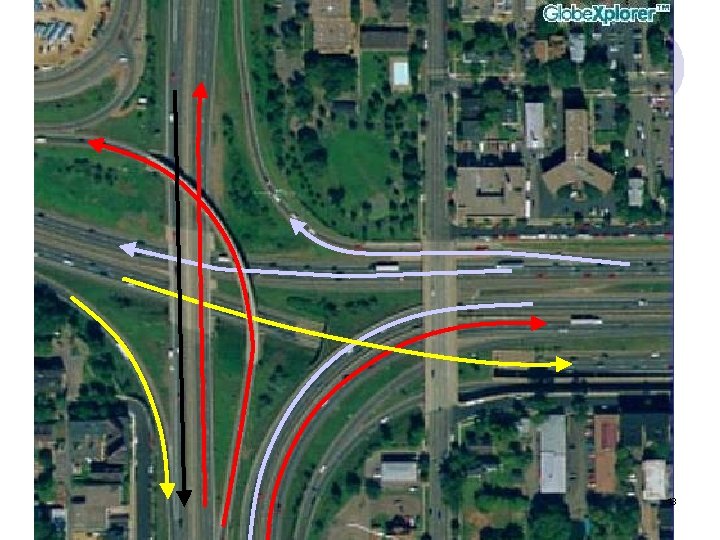
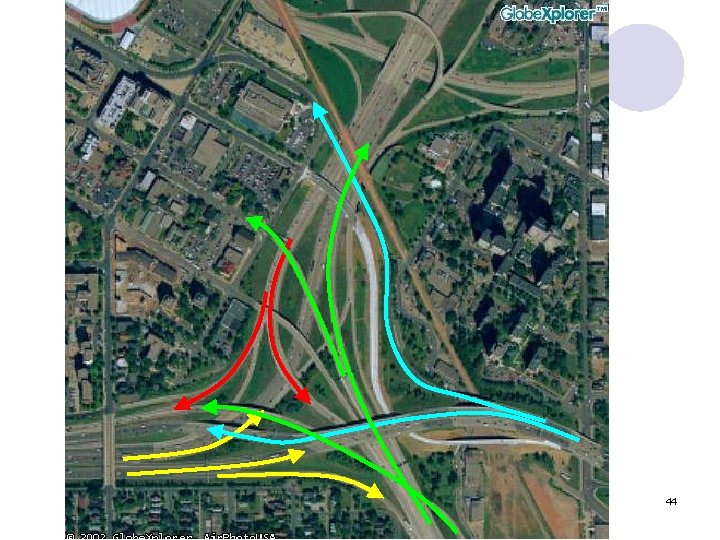
Directional/Semi-Directional l Apply: freeway to freeway or other intersecting roadways with major turning movements (where diamond, cloverleaf or SPUI can’t handle the volumes) l Allows higher LOS l Advantages over cloverleaf l Higher speed left turn l less weaving (often none) l normal exit/entrance patterns 40
41
42
43
44
Characteristics/Comparison of Basic Interchange Types 45
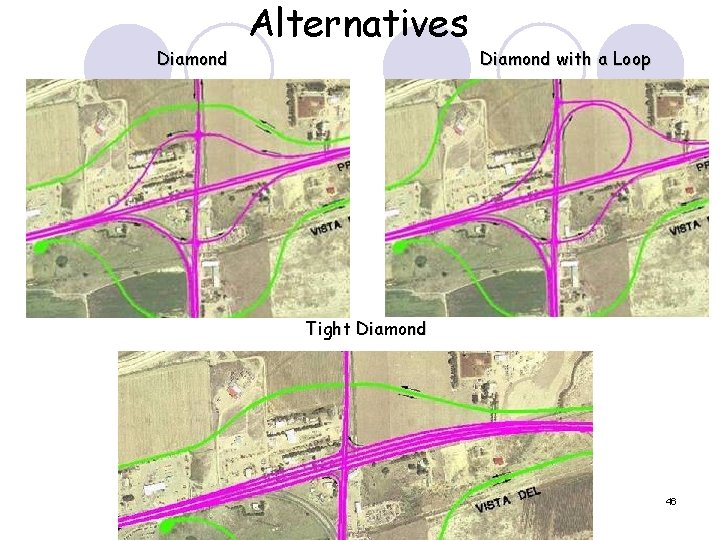
Diamond Alternatives Diamond with a Loop Tight Diamond 46
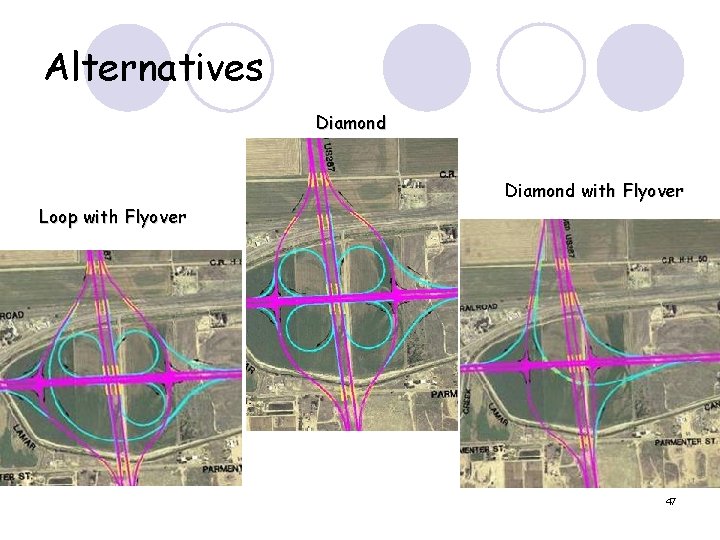
Alternatives Diamond with Flyover Loop with Flyover 47
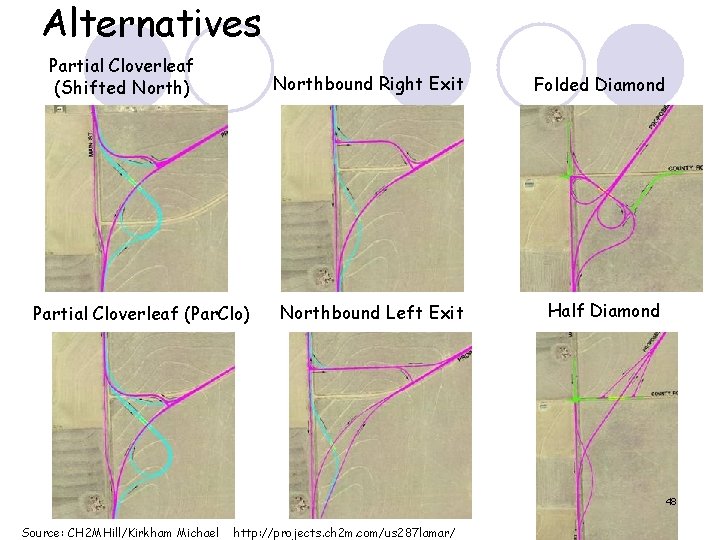
Alternatives Partial Cloverleaf (Shifted North) Partial Cloverleaf (Par. Clo) Northbound Right Exit Folded Diamond Northbound Left Exit Half Diamond 48 Source: CH 2 MHill/Kirkham Michael http: //projects. ch 2 m. com/us 287 lamar/