
Freedom Combi Inverter 1 Inverter Power Diagram Generator
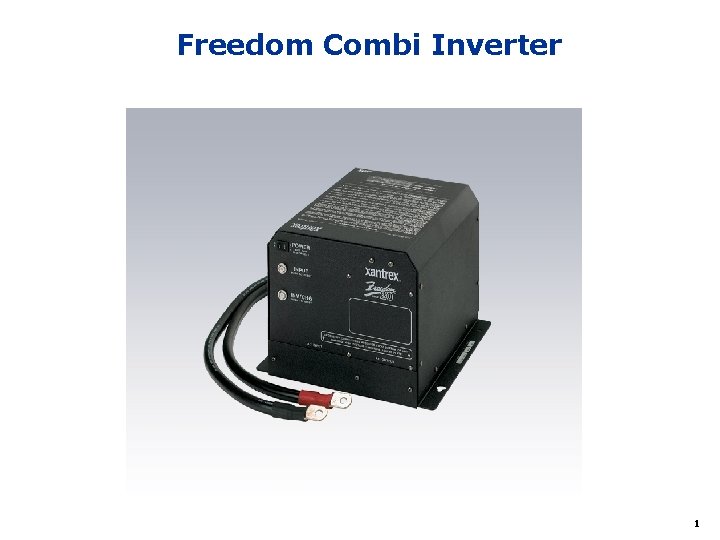
Freedom Combi Inverter 1
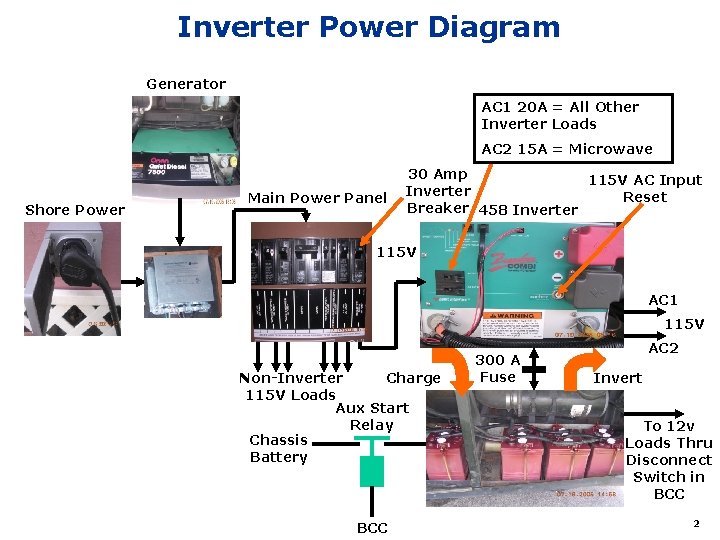
Inverter Power Diagram Generator AC 1 20 A = All Other Inverter Loads AC 2 15 A = Microwave Main Power Panel Shore Power 30 Amp 115 V AC Input Inverter Reset Breaker 458 Inverter 115 V Transfer Switch AC 1 115 V Non-Inverter Charge 115 V Loads Aux Start Relay Chassis Battery BCC 300 A Fuse AC 2 Invert To 12 v Loads Thru Disconnect Switch in BCC 2
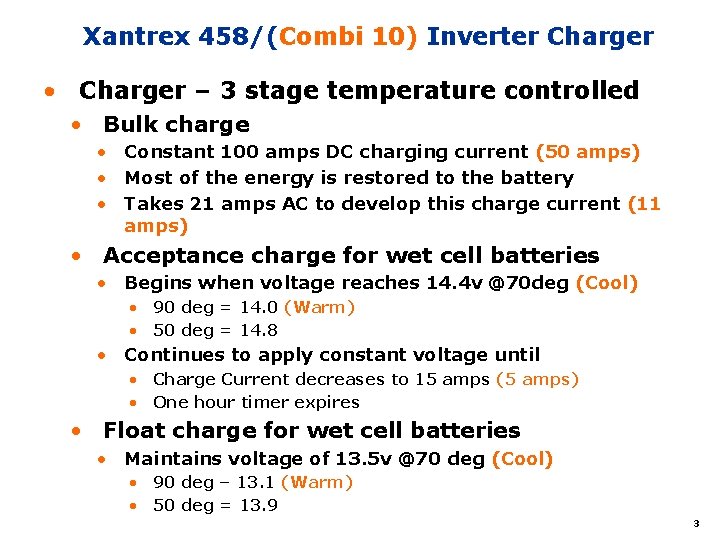
Xantrex 458/(Combi 10) Inverter Charger • Charger – 3 stage temperature controlled • Bulk charge • Constant 100 amps DC charging current (50 amps) • Most of the energy is restored to the battery • Takes 21 amps AC to develop this charge current (11 amps) • Acceptance charge for wet cell batteries • Begins when voltage reaches 14. 4 v @70 deg (Cool) • 90 deg = 14. 0 (Warm) • 50 deg = 14. 8 • Continues to apply constant voltage until • Charge Current decreases to 15 amps (5 amps) • One hour timer expires • Float charge for wet cell batteries • Maintains voltage of 13. 5 v @70 deg (Cool) • 90 deg – 13. 1 (Warm) • 50 deg = 13. 9 3
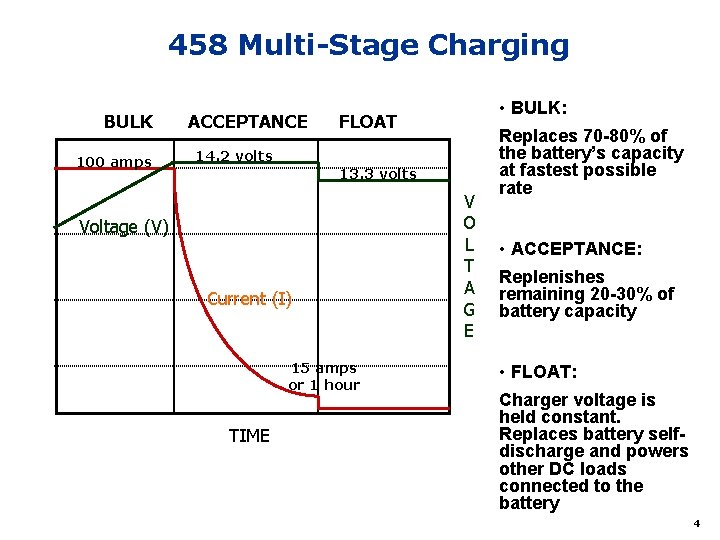
458 Multi-Stage Charging BULK 100 amps ACCEPTANCE • BULK: FLOAT 14. 2 volts 13. 3 volts Voltage (V) Current (I) 15 amps or 1 hour TIME V O L T A G E Replaces 70 -80% of the battery’s capacity at fastest possible rate • ACCEPTANCE: Replenishes remaining 20 -30% of battery capacity • FLOAT: Charger voltage is held constant. Replaces battery selfdischarge and powers other DC loads connected to the battery 4

Basic Remote Control Can be used with Freedom 458 or Combi Inverters 5

Combi Remote Control Cannot be used with Freedom 458 Inverters 6

Reading the Remote - Charging • • AC IN - will be lit. DC AMPS - Drops following the charge cycle. DC VOLTS - Follows the charge cycle BATTERY STATE - Indicates stage of charge cycle Left = Bulk, Middle = Acceptance, Right = Float 7
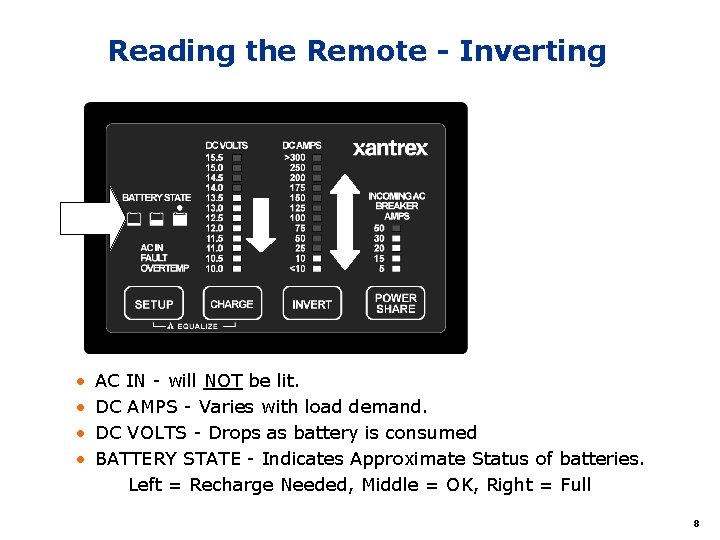
Reading the Remote - Inverting • • AC IN - will NOT be lit. DC AMPS - Varies with load demand. DC VOLTS - Drops as battery is consumed BATTERY STATE - Indicates Approximate Status of batteries. Left = Recharge Needed, Middle = OK, Right = Full 8
Remote Control Functions • Equalizing Charge –intentional overcharging • Removes sulfate from battery plates • Brings each cell to same voltage and specific gravity • Mixes electrolyte • Wet Cell ONLY • Start with full charge and proper water level • Use Disconnect switch to isolate loads to prevent damage due to high voltage • 16. 3 v, variable based on temperature • Timed 8 hour cycle 9
Power Sharing • Your Charger is an AC load • Uses more power than TV or Microwave • Charging power consumption is variable • Purpose • Sets the maximum limit of power consumption • Benefits • Automatically reduces charger’s consumption • Allows other AC loads on inverter circuit to run • Prevents tripping & overloading of shorepower breaker 10

Using the Remote - Power Sharing • Check setting every time you hook up • Set to size of your shorepower connection • Default is 30 amps • If breaker trips, reduce setting • Reducing power sharing reduces charger output • But, increases time needed to complete charging 11
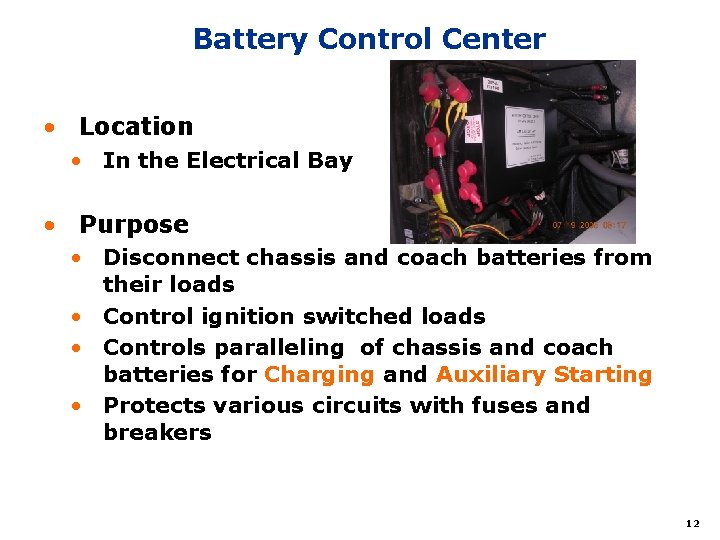
Battery Control Center • Location • In the Electrical Bay • Purpose • Disconnect chassis and coach batteries from their loads • Control ignition switched loads • Controls paralleling of chassis and coach batteries for Charging and Auxiliary Starting • Protects various circuits with fuses and breakers 12
- Slides: 12