
FREE WILL AND DETERMINISM THE THEORY OF UNIVERSAL
- Slides: 10
FREE WILL AND DETERMINISM
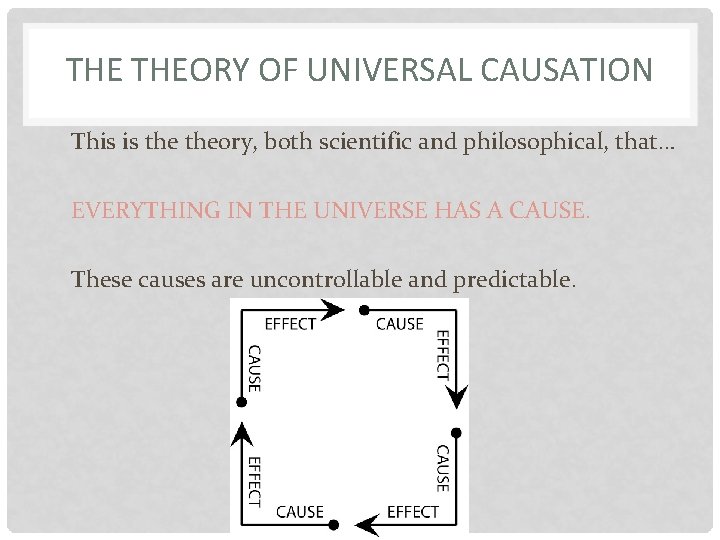
THE THEORY OF UNIVERSAL CAUSATION This is theory, both scientific and philosophical, that… EVERYTHING IN THE UNIVERSE HAS A CAUSE. These causes are uncontrollable and predictable.
The question universal causation raises is: DO HUMANS POSSESS FREE WILL? If they don’t, then they cannot be held morally responsible for their actions. IF THIS IS TRUE, THEN MORALITY BECOMES MEANINGLESS Where have we come across this dilemma before?
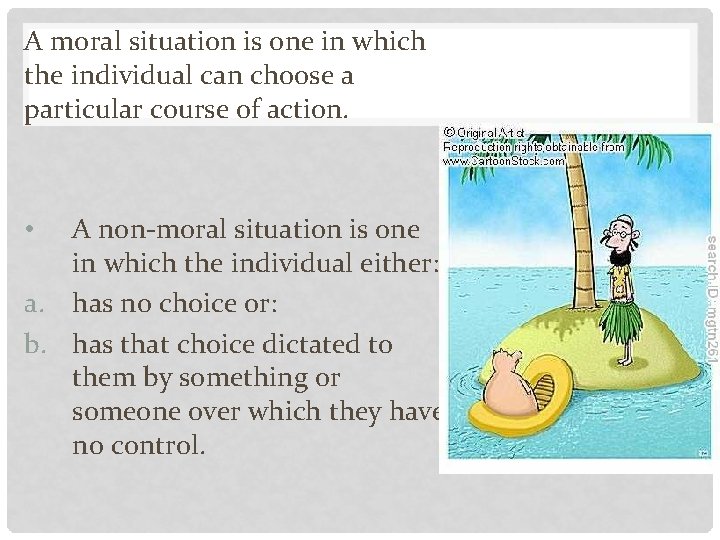
A moral situation is one in which the individual can choose a particular course of action. A non-moral situation is one in which the individual either: a. has no choice or: b. has that choice dictated to them by something or someone over which they have no control. •
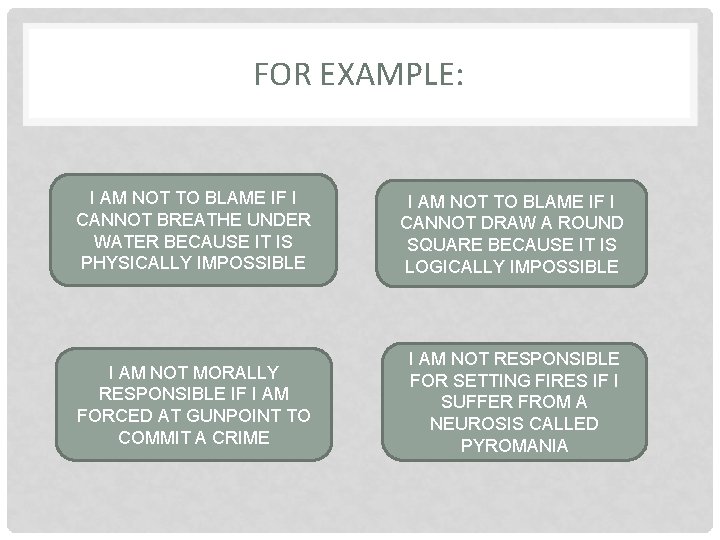
FOR EXAMPLE: I AM NOT TO BLAME IF I CANNOT BREATHE UNDER WATER BECAUSE IT IS PHYSICALLY IMPOSSIBLE I AM NOT TO BLAME IF I CANNOT DRAW A ROUND SQUARE BECAUSE IT IS LOGICALLY IMPOSSIBLE I AM NOT MORALLY RESPONSIBLE IF I AM FORCED AT GUNPOINT TO COMMIT A CRIME I AM NOT RESPONSIBLE FOR SETTING FIRES IF I SUFFER FROM A NEUROSIS CALLED PYROMANIA
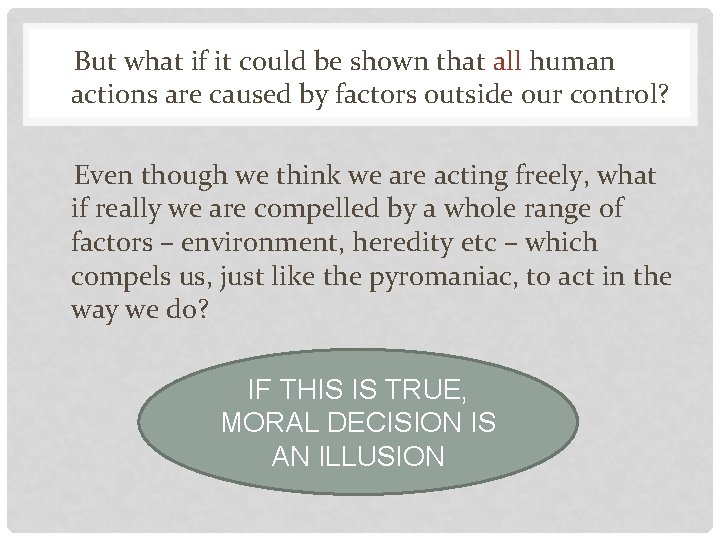
But what if it could be shown that all human actions are caused by factors outside our control? Even though we think we are acting freely, what if really we are compelled by a whole range of factors – environment, heredity etc – which compels us, just like the pyromaniac, to act in the way we do? IF THIS IS TRUE, MORAL DECISION IS AN ILLUSION
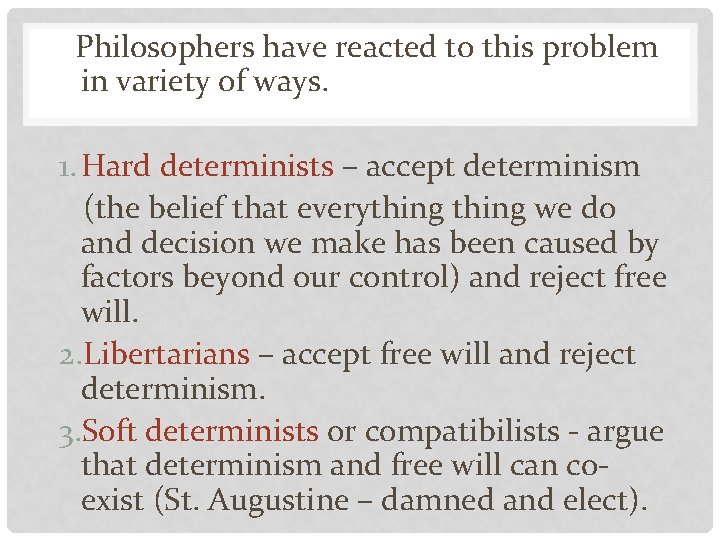
Philosophers have reacted to this problem in variety of ways. 1. Hard determinists – accept determinism (the belief that everything we do and decision we make has been caused by factors beyond our control) and reject free will. 2. Libertarians – accept free will and reject determinism. 3. Soft determinists or compatibilists - argue that determinism and free will can coexist (St. Augustine – damned and elect).
TASK • Try to sum up the problem of free will in no more than five statements. • Include the following key words: • Free will • Autonomous • Determinism • Morality / moral responsibility
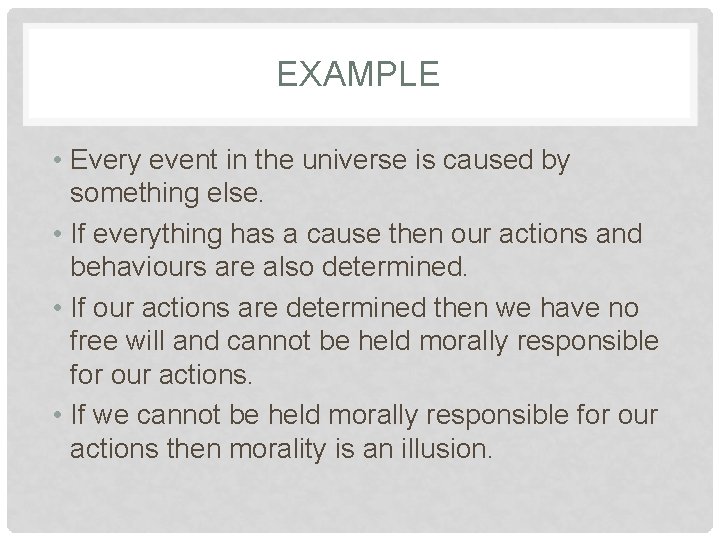
EXAMPLE • Every event in the universe is caused by something else. • If everything has a cause then our actions and behaviours are also determined. • If our actions are determined then we have no free will and cannot be held morally responsible for our actions. • If we cannot be held morally responsible for our actions then morality is an illusion.
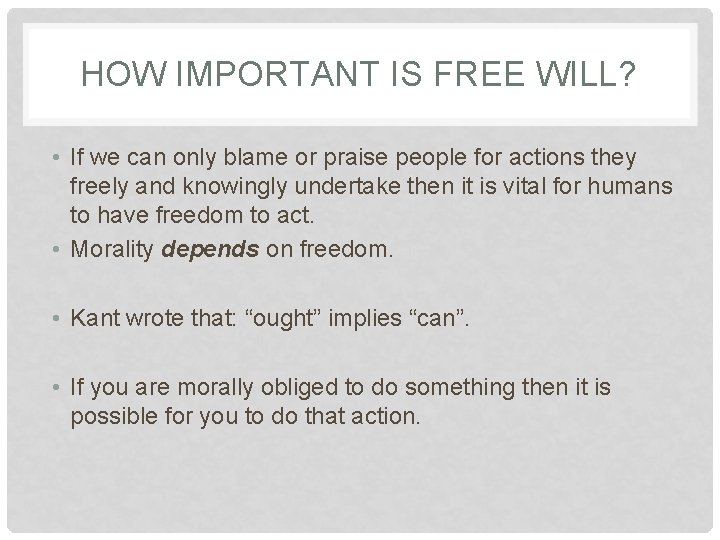
HOW IMPORTANT IS FREE WILL? • If we can only blame or praise people for actions they freely and knowingly undertake then it is vital for humans to have freedom to act. • Morality depends on freedom. • Kant wrote that: “ought” implies “can”. • If you are morally obliged to do something then it is possible for you to do that action.