
Free From Harm Tejal Gandhi MD MPH CPPS
- Slides: 53
Free From Harm Tejal Gandhi, MD, MPH, CPPS Chief Clinical and Safety Officer, Institute for Healthcare Improvement Associate Professor, Harvard Medical School
Patient Safety Is a Public Health Issue • Despite progress, preventable harm remains unacceptably frequent – Significant mortality and morbidity – Quality of life implications – Adversely affects patients in every care setting
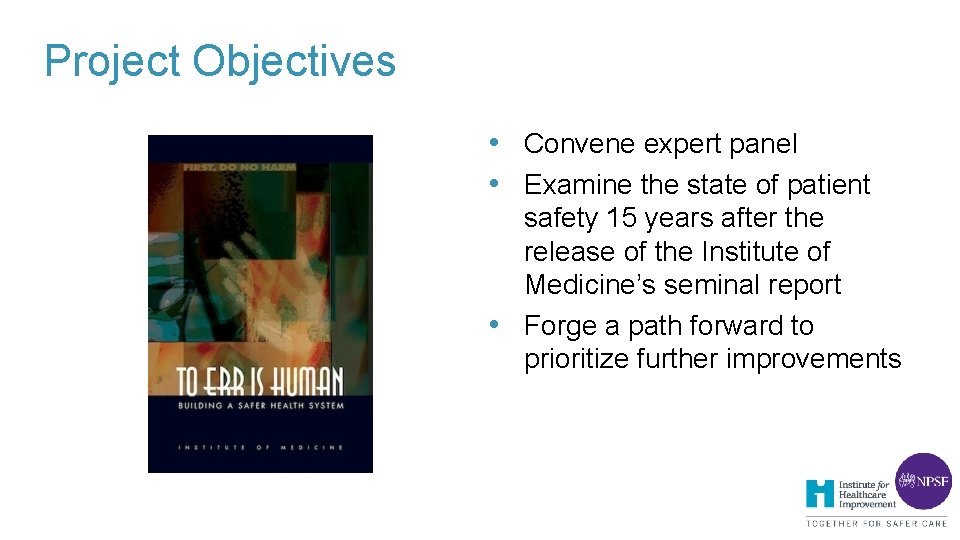
Project Objectives • Convene expert panel • Examine the state of patient safety 15 years after the release of the Institute of Medicine’s seminal report • Forge a path forward to prioritize further improvements
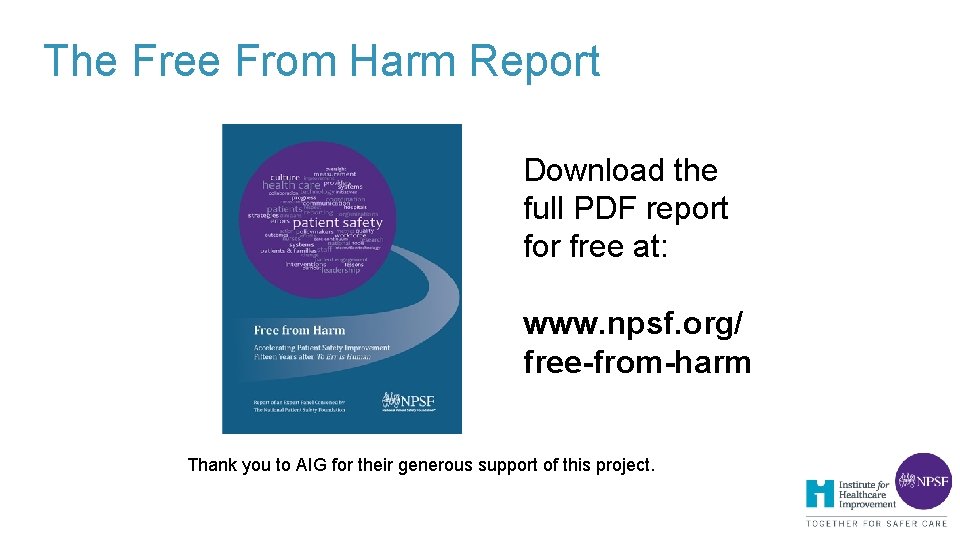
The Free From Harm Report Download the full PDF report for free at: www. npsf. org/ free-from-harm Thank you to AIG for their generous support of this project.
Current State of Patient Safety • Evidence mixed but panel overall felt that health care is safer • More work to be done • While limited, progress notable – Young field – Still developing scientific foundations – Received limited investment • Improving patient safety is a complex problem – Requires work by diverse disciplines to solve
Total Systems Approach Needed • Advancing patient safety requires an overarching shift from reactive, piecemeal interventions to a total systems approach • Need to embrace wider approach beyond specific, circumscribed initiatives to generate change • Fundamental finding: Initiatives can advance only with a key focus on teamwork, culture and patient engagement
Recommendations
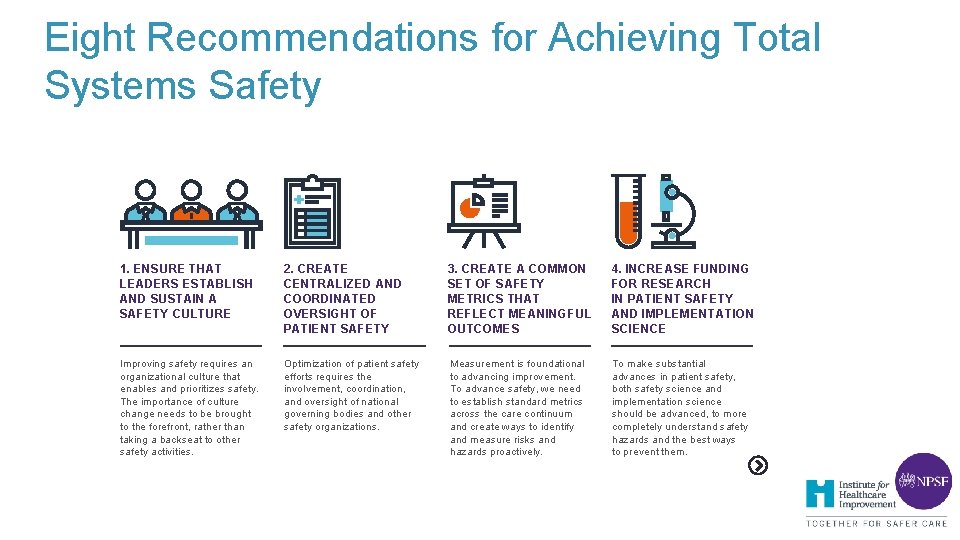
Eight Recommendations for Achieving Total Systems Safety 1. ENSURE THAT LEADERS ESTABLISH AND SUSTAIN A SAFETY CULTURE 2. CREATE CENTRALIZED AND COORDINATED OVERSIGHT OF PATIENT SAFETY 3. CREATE A COMMON SET OF SAFETY METRICS THAT REFLECT MEANINGFUL OUTCOMES 4. INCREASE FUNDING FOR RESEARCH IN PATIENT SAFETY AND IMPLEMENTATION SCIENCE Improving safety requires an organizational culture that enables and prioritizes safety. The importance of culture change needs to be brought to the forefront, rather than taking a backseat to other safety activities. Optimization of patient safety efforts requires the involvement, coordination, and oversight of national governing bodies and other safety organizations. Measurement is foundational to advancing improvement. To advance safety, we need to establish standard metrics across the care continuum and create ways to identify and measure risks and hazards proactively. To make substantial advances in patient safety, both safety science and implementation science should be advanced, to more completely understand safety hazards and the best ways to prevent them.
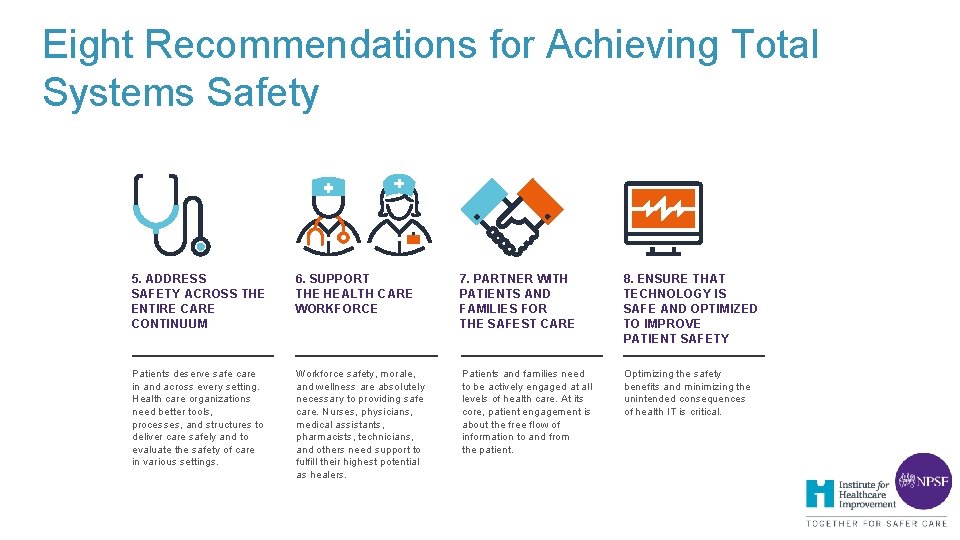
Eight Recommendations for Achieving Total Systems Safety 5. ADDRESS SAFETY ACROSS THE ENTIRE CARE CONTINUUM 6. SUPPORT THE HEALTH CARE WORKFORCE 7. PARTNER WITH PATIENTS AND FAMILIES FOR THE SAFEST CARE 8. ENSURE THAT TECHNOLOGY IS SAFE AND OPTIMIZED TO IMPROVE PATIENT SAFETY Patients deserve safe care in and across every setting. Health care organizations need better tools, processes, and structures to deliver care safely and to evaluate the safety of care in various settings. Workforce safety, morale, and wellness are absolutely necessary to providing safe care. Nurses, physicians, medical assistants, pharmacists, technicians, and others need support to fulfill their highest potential as healers. Patients and families need to be actively engaged at all levels of health care. At its core, patient engagement is about the free flow of information to and from the patient. Optimizing the safety benefits and minimizing the unintended consequences of health IT is critical.
1. Ensure that leaders establish and sustain a safety culture • Improving safety requires an organizational culture that enables and prioritizes safety – Foundational to achieving total systems safety • Safety culture in health care – Professionals accountable for unprofessional conduct but not punished for human mistakes – Errors identified and mitigated proactively – Strong feedback loops to enable learning from previous errors to prevent reoccurrences
What is culture? • “The way we do things around here. ” – Shared perceptions about what is good, right, important, valued, rewarded, supported, and expected – Culture is shaped by: – Policies, practices, and procedures – The values and personalities of people in the organization – Leadership – We can talk about specific pieces of culture, for example: – Safety climate: To what extent is safety of patients a priority? – Teamwork climate: To what extent is collaboration valued and supported?
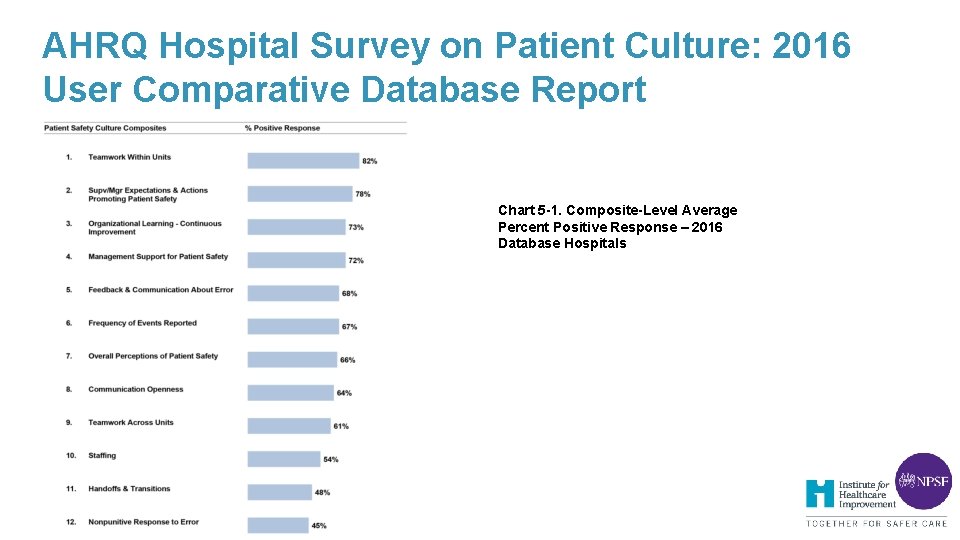
AHRQ Hospital Survey on Patient Culture: 2016 User Comparative Database Report Chart 5 -1. Composite-Level Average Percent Positive Response – 2016 Database Hospitals
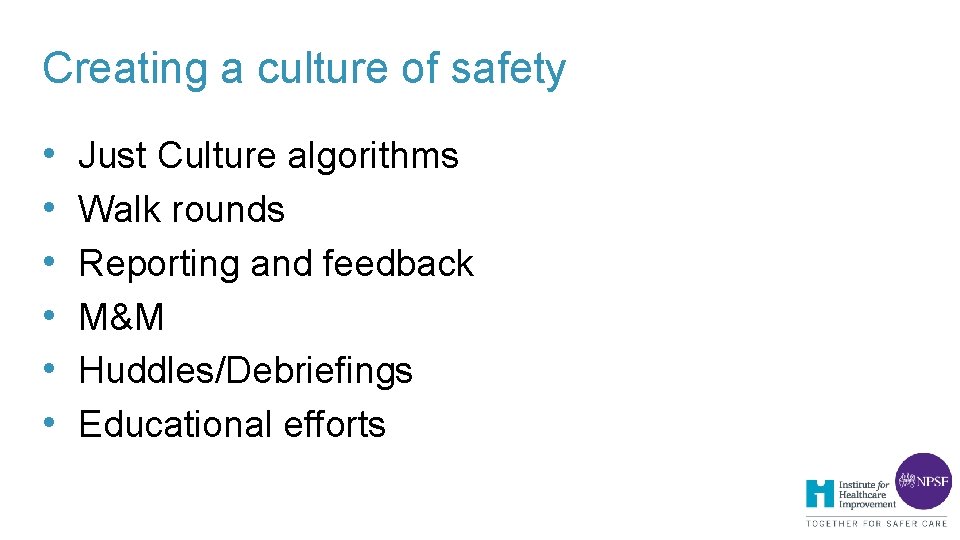
Creating a culture of safety • • • Just Culture algorithms Walk rounds Reporting and feedback M&M Huddles/Debriefings Educational efforts
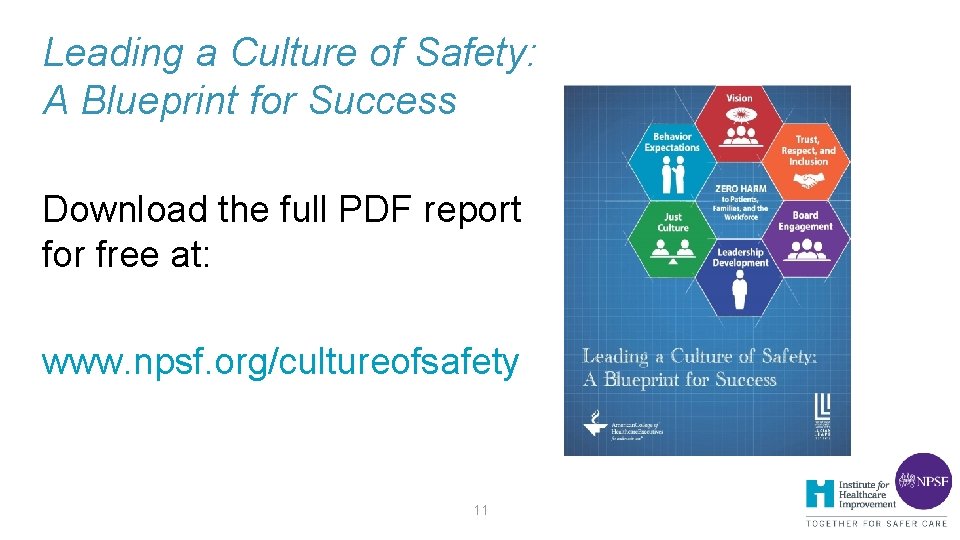
Leading a Culture of Safety: A Blueprint for Success Download the full PDF report for free at: www. npsf. org/cultureofsafety 11
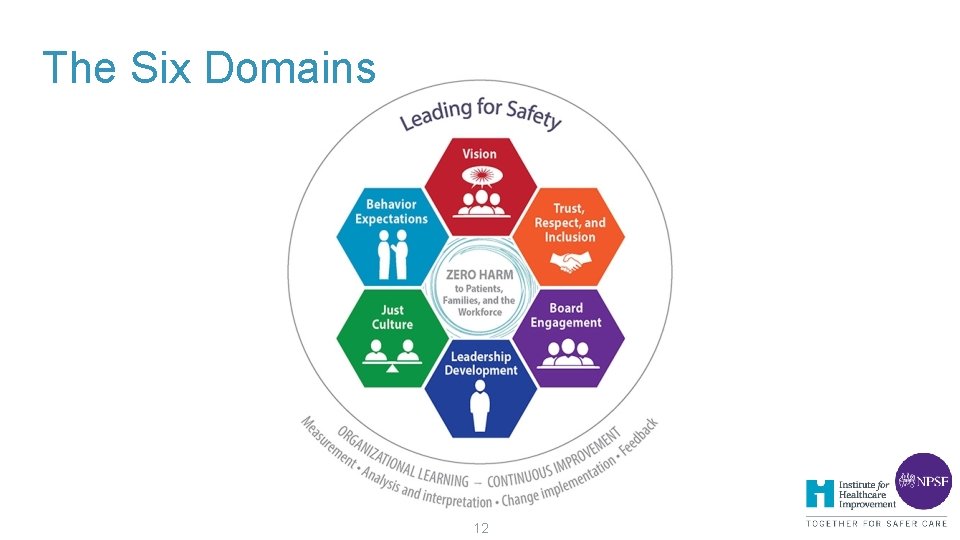
The Six Domains 12
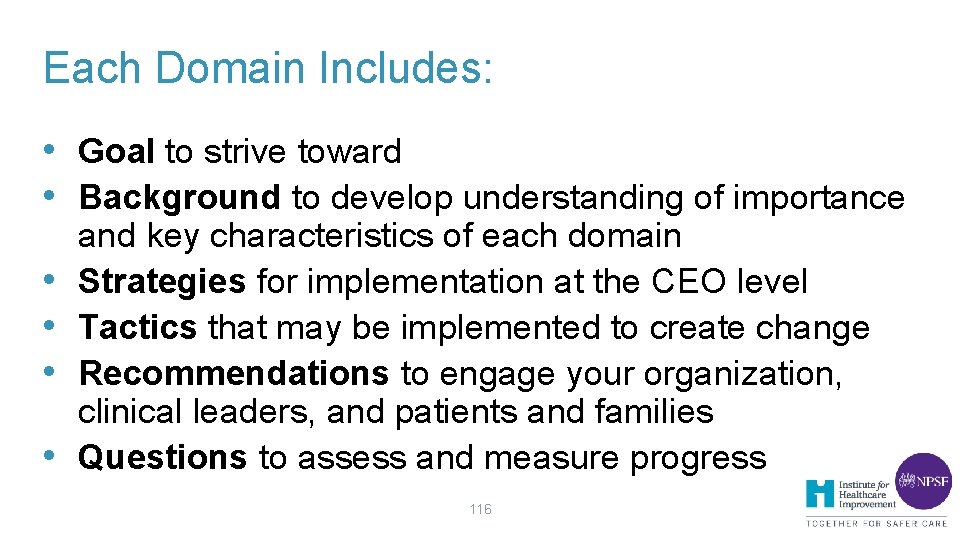
Each Domain Includes: • Goal to strive toward • Background to develop understanding of importance • • and key characteristics of each domain Strategies for implementation at the CEO level Tactics that may be implemented to create change Recommendations to engage your organization, clinical leaders, and patients and families Questions to assess and measure progress 116
2. Create a centralized and coordinated approach to patient safety • To Err is Human called for coordinating patient safety efforts at the national level – Recommendation remains unfulfilled • Optimization of patient safety efforts requires the coordination and oversight of national governing bodies and other safety organizations – Centralized leadership & accountability – Avoid unnecessary duplication – Ensure valuable lessons shared
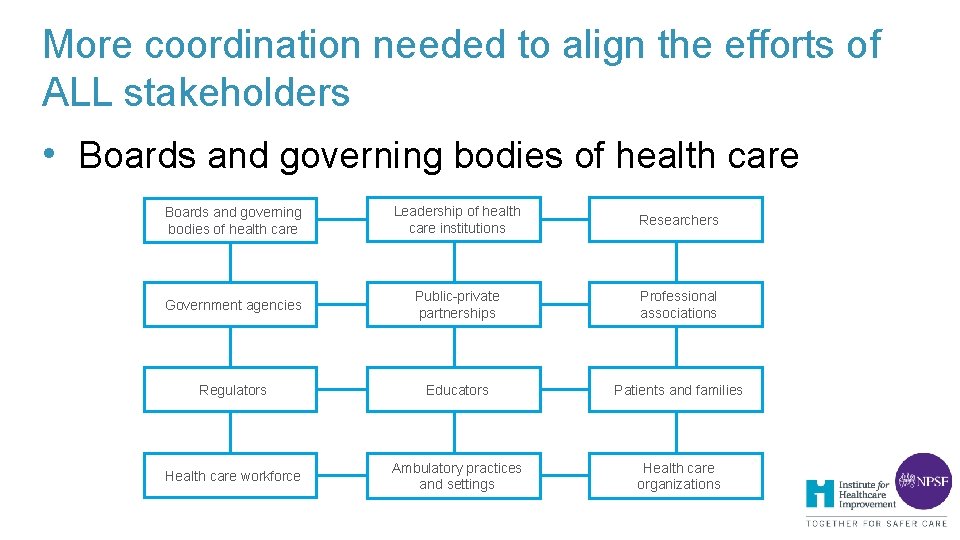
More coordination needed to align the efforts of ALL stakeholders • Boards and governing bodies of health care Leadership of health care institutions Researchers Government agencies Public-private partnerships Professional associations Regulators Educators Patients and families Health care workforce Ambulatory practices and settings Health care organizations
3. Create a common set of safety metrics • Measurement foundational to advancing improvement • Numerous measurement challenges specific to patient safety • To turn the tide, the safety field needs to – Establish standard metrics that span the care continuum – Create new ways to proactively identify and measure risks and hazards
Measurement challenges • No widely used measures for safety • Current measurement methodology fails to detect all instances of errors, harms and “never events” • Significant resource drain • Methods are retrospective and reactive – Need more and better ways to measure risks and hazards in real time – Allow intervention before adverse event occurs
Better metrics needed • What should we be measuring for ambulatory or crosscontinuum safety? – Measures that matter: to clinicians, administration, patients and families? • How do we capture patient reported outcomes/measures that matter to patients? – Patient-Centered Outcomes Research Institute (PCORI) • How do we create metrics that are useful and not overwhelming?
4. Increase funding for research • Safety science and implementation science need to be developed more completely to make substantial advances in patient safety • Need to understand – Safety hazards – Best ways to prevent them • Requires commitment of sustained financial resources – NIH 2015 budget for safety research only 3. 4% of total annual medical research budget ($30. 1 billion)
Patient Safety Science • Investigates contributing factors and underlying causes of risk and harm, including errors and human factors • Draws from other high-risk industries – Aviation – Manufacturing
Implementation Science • Supplements patient safety science • Focuses on delivery, scaling up, translation, and applying lessons learned in the laboratory or pilot setting
5. Address safety across the entire care continuum • Patients deserve safe care in and across every setting • To Err is Human focused on inpatient care but most care provided outside of hospitals • Less research on ambulatory settings – Substantial patient safety risks • Health care organizations need better tools, processes and structures to deliver care safely and evaluate safety of care in various settings
What is different about ambulatory care? • • • Long feedback loops Episodic (from provider and patient perspective) Signal to noise ratio is low Widely distributed Limited resources, redundancies Patients and providers have many degrees of freedom
What do we know about ambulatory safety? • Medication safety • Transitions of care • Missed and delayed diagnosis – Test result follow-up – Referral management Just the tip of the iceberg. . .
Outpatient safety infrastructure • Many principles in place in inpatient settings – Culture change – Event identification and analysis – Systems approach – Proactive assessment • Need to transfer these to all outpatient settings – Procedure areas – Nursing homes, rehab centers – Ambulatory and office
6. Support the health care workforce • Workforce safety, morale and wellness necessary for providing safe care • Professionals need support to fulfill their highest potential as healers, routinely and after adverse events – Attention to physical and emotional harm – Ongoing training opportunities
Joy and meaning in work • Joy and meaning are not sentimental notions • “Workplace safety is inextricably linked to patient safety. Unless caregivers are given the protection, respect, and support they need, they are more likely to make errors, fail to follow safe practices, and not work well in teams. ”
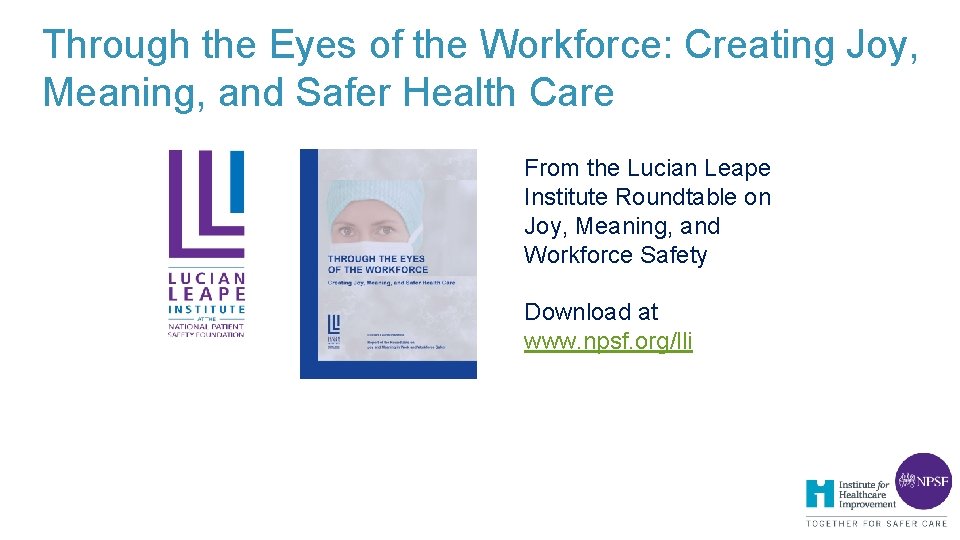
Through the Eyes of the Workforce: Creating Joy, Meaning, and Safer Health Care From the Lucian Leape Institute Roundtable on Joy, Meaning, and Workforce Safety Download at www. npsf. org/lli
Joy and meaning in work • Currently health care workers suffer harm – Emotionally (bullying, demeaning) – Physically (injuries, assault) – Up to 1/3 of nurses experience back or musculoskeletal injuries in a year – Stress from complex and demanding tasks under severe time constraints
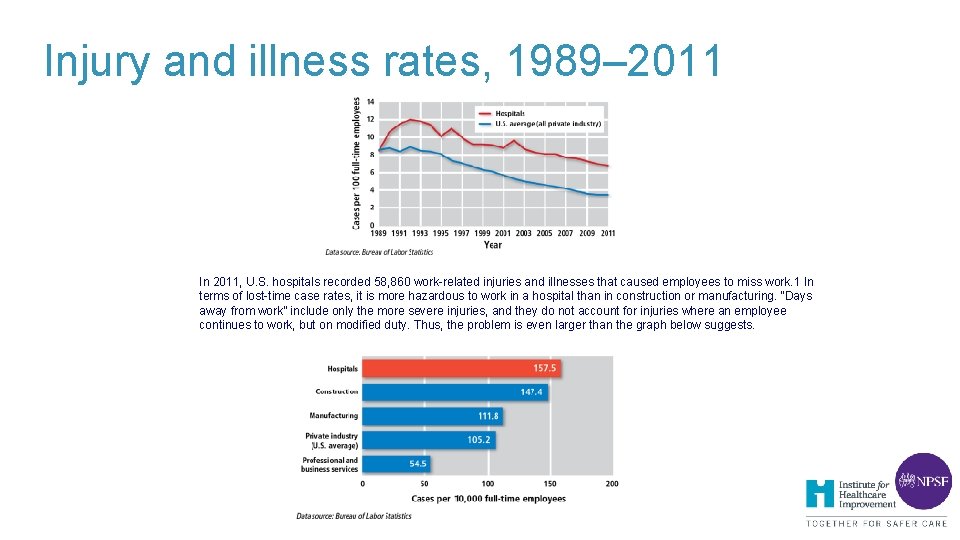
Injury and illness rates, 1989– 2011 In 2011, U. S. hospitals recorded 58, 860 work-related injuries and illnesses that caused employees to miss work. 1 In terms of lost-time case rates, it is more hazardous to work in a hospital than in construction or manufacturing. “Days away from work” include only the more severe injuries, and they do not account for injuries where an employee continues to work, but on modified duty. Thus, the problem is even larger than the graph below suggests.
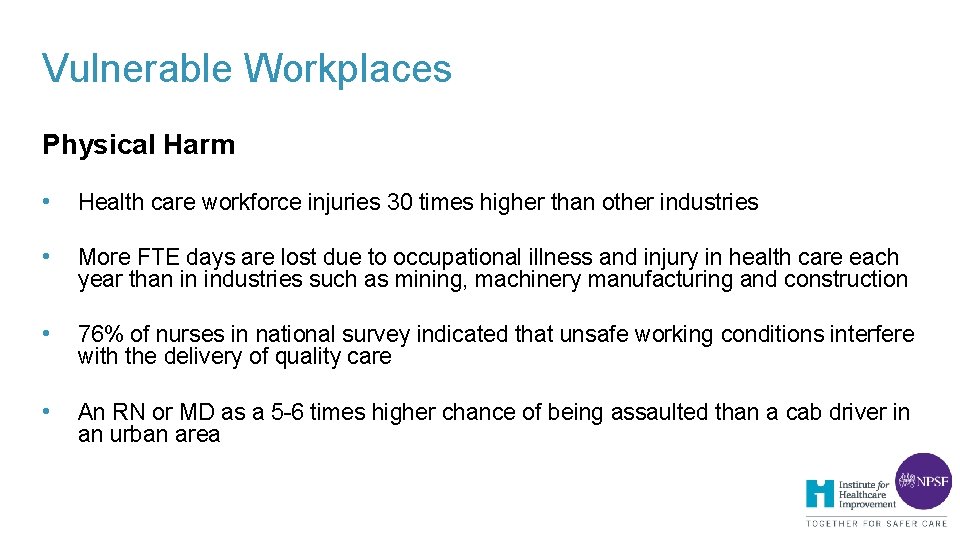
Vulnerable Workplaces Physical Harm • Health care workforce injuries 30 times higher than other industries • More FTE days are lost due to occupational illness and injury in health care each year than in industries such as mining, machinery manufacturing and construction • 76% of nurses in national survey indicated that unsafe working conditions interfere with the delivery of quality care • An RN or MD as a 5 -6 times higher chance of being assaulted than a cab driver in an urban area
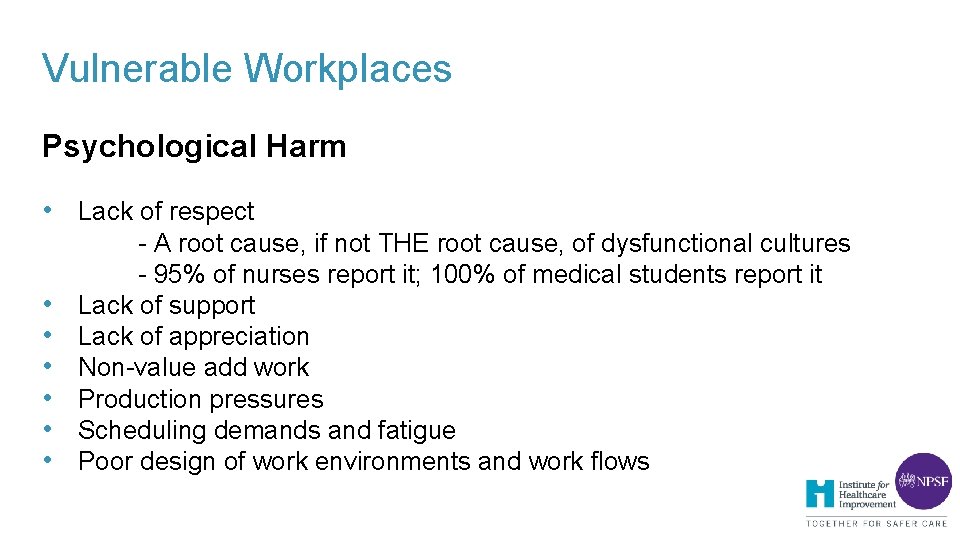
Vulnerable Workplaces Psychological Harm • Lack of respect • • • - A root cause, if not THE root cause, of dysfunctional cultures - 95% of nurses report it; 100% of medical students report it Lack of support Lack of appreciation Non-value add work Production pressures Scheduling demands and fatigue Poor design of work environments and work flows
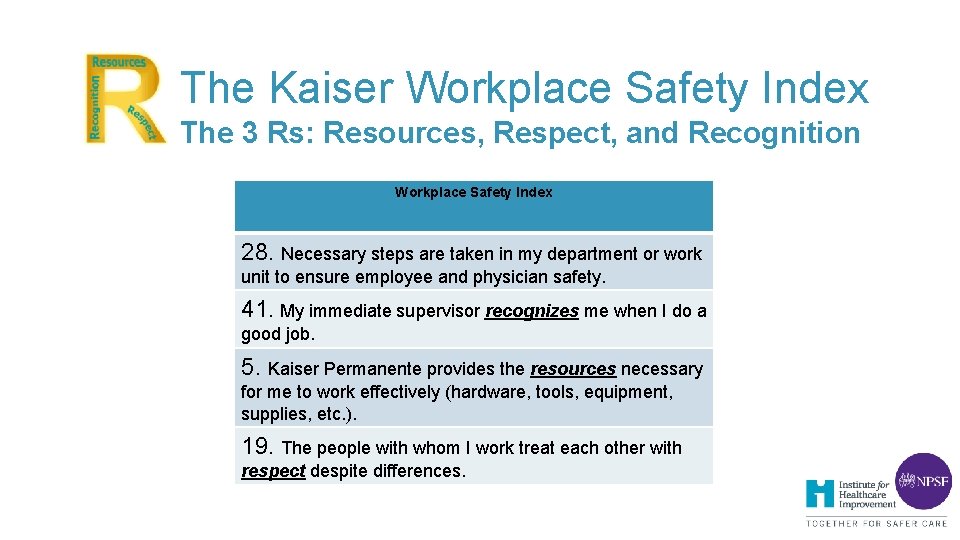
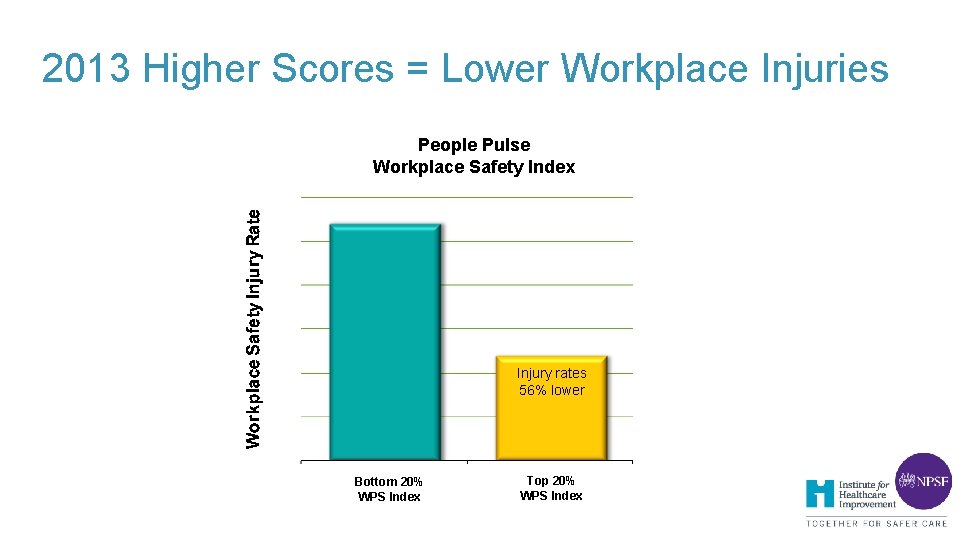
The Kaiser Workplace Safety Index The 3 Rs: Resources, Respect, and Recognition Workplace Safety Index 28. Necessary steps are taken in my department or work unit to ensure employee and physician safety. 41. My immediate supervisor recognizes me when I do a good job. 5. Kaiser Permanente provides the resources necessary for me to work effectively (hardware, tools, equipment, supplies, etc. ). 19. The people with whom I work treat each other with respect despite differences.
2013 Higher Scores = Lower Workplace Injuries People Pulse Workplace Safety Index Injury rates 56% lower Bottom 20% WPS Index Top 20% WPS Index
7. Partner with patients and families for the safest care • Patients and families need to be actively engaged at all levels of health care – Patient engagement: Free flow of information to and from the patient – Foundation: Environment where patients and families are always treated with respect and personal dignity honored • Patient involvement needs to be authentic
Importance of patient and family engagement • Studies link patient engagement with – Patient satisfaction – Safer care – Improved work experience for caregivers – Better health outcomes
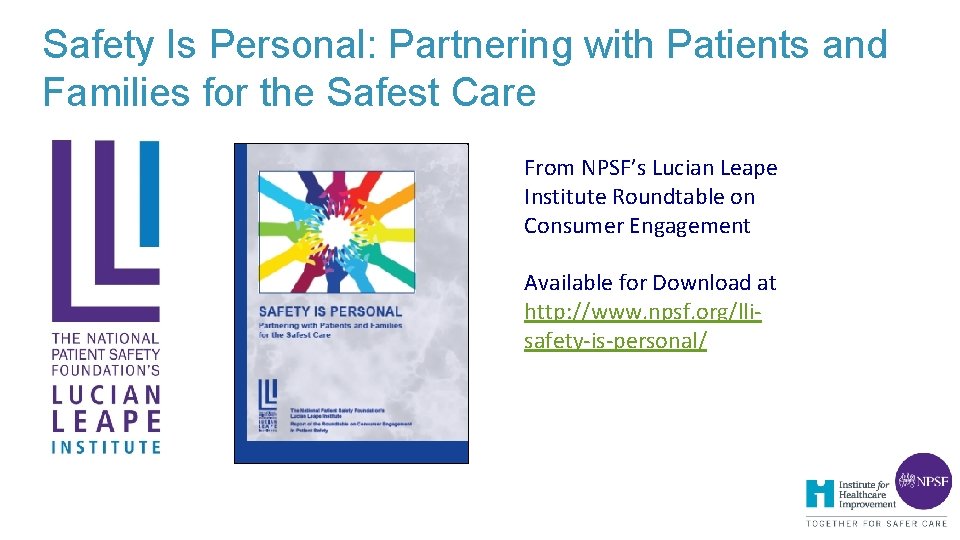
Safety Is Personal: Partnering with Patients and Families for the Safest Care From NPSF’s Lucian Leape Institute Roundtable on Consumer Engagement Available for Download at http: //www. npsf. org/llisafety-is-personal/
Observations from the LLI Roundtable • Move the system from asking patients • • • “What’s the matter? ” to “What matters to you? ” It is very hard to speak up, even for the most empowered Burden cannot be off-loaded to patients Engagement is a shared responsibility Patients who are alone are at highest risk Don’t scare the patient – they need to feel they are safe and do not have to be constantly vigilant
Whitepaper Recommendations Based on evidence that patient engagement improves patient safety For Leaders of Health Care Systems • • Establish patient and family engagement as a core value for the organization Involve patients and families as equal partners in all organizational improvement and redesign activities Educate and train all personnel to be effective partners with patients and families Partner with patient advocacy groups and other community resources
Whitepaper Recommendations For Health Care Clinicians and Staff • • • Provide information and tools that support patients and families to engage effectively in their own care Engage patients as equal partners in safety improvement and care design activities Provide clear information, apologies, and support to patients and families when things go wrong For Health Care Policy Makers • • • Involve patients in all policy-making committees and programs Develop, implement, and report safety metrics that foster transparency, accountability, and improvement Require that patients be involved in setting and implementing the research agenda
Tools for Health Systems • • Patient family advisory councils Shared decision making tools Health literacy tools/training Bedside rounds Patient activated rapid response systems Patient reporting systems Patients on root cause analyses
Whitepaper Recommendations For Patients, Families, and the Public While placing the responsibility for patient safety on health care providers and organizations, the report also urges patients, families, and the public to view themselves as full and active members of the health care system and recommends the following: • • Ask questions about the risks and benefits of recommendations until you understand the answers Don’t go alone to the hospital or to doctor visits Document and share your medications, including names, why, how, and dose with all providers Be very sure you understand the plan of action for your care Repeat back to clinicians in your own words what you think they have told you Arrange to get any recommended lab tests done before a visit Determine who is in charge of your care
8. Ensure that technology is safe and optimized to improve patient safety • Technology has proven potential to improve patient safety but only if we can minimize the risks – Widespread use has led to demonstrable reductions in medical errors – Can potentially introduce new adverse events • Need to optimize the benefits and minimize unintended consequences
Optimize the use of HIT • We know that some technologies reduce errors significantly: – Computerized provider order entry (CPOE) – Barcoding – Electronic prescribing – Handoff tools – Test result management systems – Referral management systems
Optimize the use of HIT • Need to optimize these EHR and device systems – Reduce over-alerting – Variability across vendors – Improve interoperability (devices) • Also, we know there can be unintended consequences – Clinical documentation/cut and paste – Accurate medication and problem lists
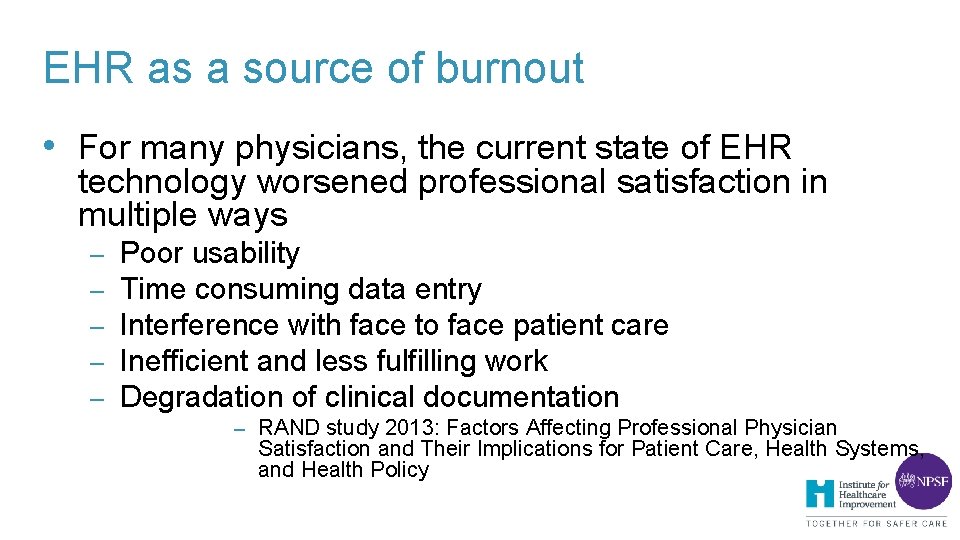
EHR as a source of burnout • For many physicians, the current state of EHR technology worsened professional satisfaction in multiple ways – – – Poor usability Time consuming data entry Interference with face to face patient care Inefficient and less fulfilling work Degradation of clinical documentation – RAND study 2013: Factors Affecting Professional Physician Satisfaction and Their Implications for Patient Care, Health Systems, and Health Policy
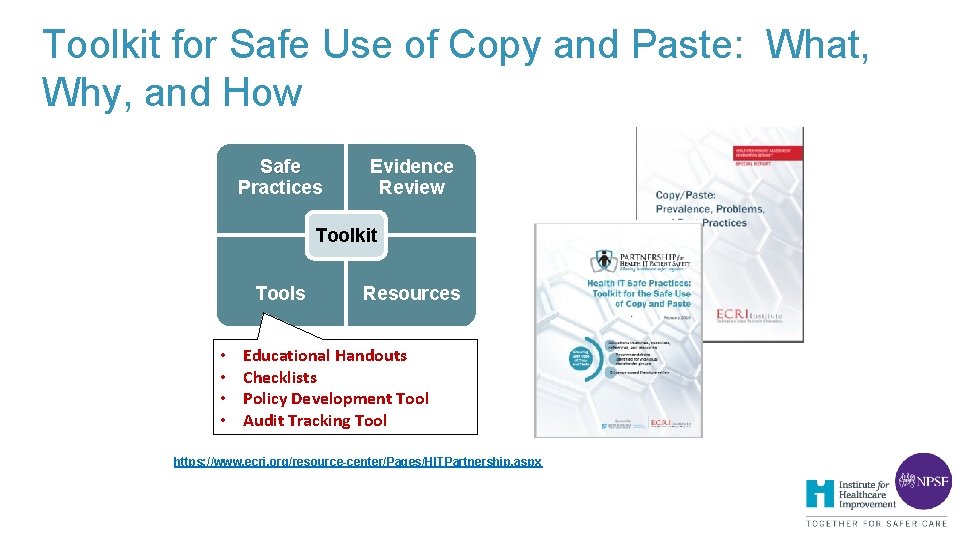
Toolkit for Safe Use of Copy and Paste: What, Why, and How Safe Practices Evidence Review Toolkit Tools • • Resources Educational Handouts Checklists Policy Development Tool Audit Tracking Tool https: //www. ecri. org/resource-center/Pages/HITPartnership. aspx
Conclusion • Much has improved but too much remains the same – Failure to make substantial, measurable, system-wide strides in improving patient safety • Safety must be a top priority as a public health issue • Eight recommendations outline a framework • Must accelerate efforts to create a world where patients and those who care for them are free from harm
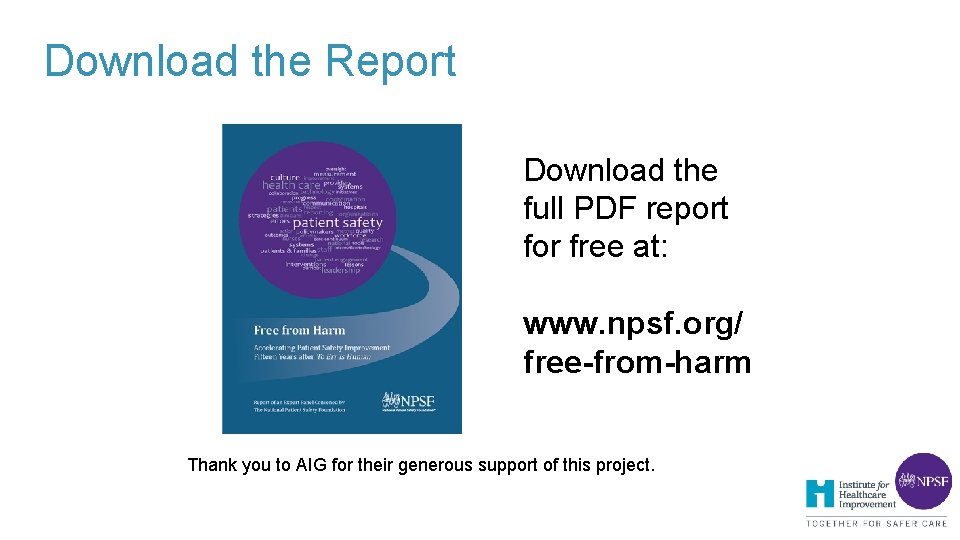
Download the Report Download the full PDF report for free at: www. npsf. org/ free-from-harm Thank you to AIG for their generous support of this project.
Questions?