
Fraud Awareness Training Beach Cities Chapter Institute of

Fraud Awareness Training Beach Cities Chapter Institute of Internal Auditors PRESENTED BY J’on Dennis March 16, 2017
Presenter J’on Dennis, CPA Director, MGO State and Local Government Assurance Services

Fraud Awareness Training OBJECTIVES • Understanding Profile of a Fraudster • Identifying Indicators of Fraud • Implementing Controls to Prevent Fraud
What is Fraud? FRAUD DEFINITIONS Legal: ”A knowing misrepresentation of the truth or concealment of a material fact to induce another to act to his or her detriment. ” Black’s Law Dictionary, 3 rd Ed. Criminal or civil fraud (tort)
What is Fraud? FRAUD DEFINITIONS Working: A form of employee misconduct where an employee uses deceit to take (steal) or misuse an employer’s resources.

Who Commits Fraud? PEOPLE – 3 KINDS • Always Steal • Never Steal • Steal Under Perceived Pressure • Donald Cressey • Sociology Professor • Subgroup of embezzlement felons in prison (exemplary lives before – no prior criminal history)
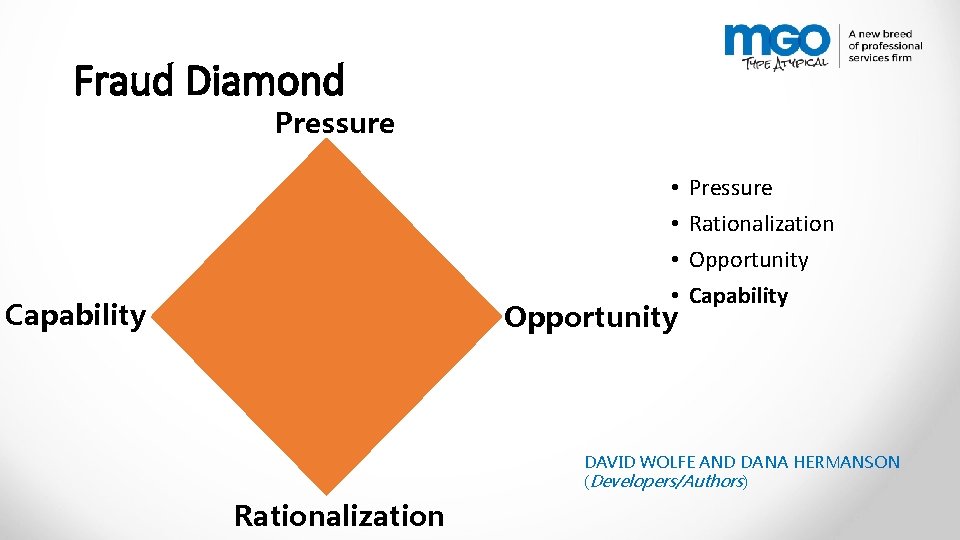
Fraud Diamond Pressure • • Capability Opportunity Pressure Rationalization Opportunity Capability DAVID WOLFE AND DANA HERMANSON (Developers/Authors) Rationalization

Fraud Diamond (continued)
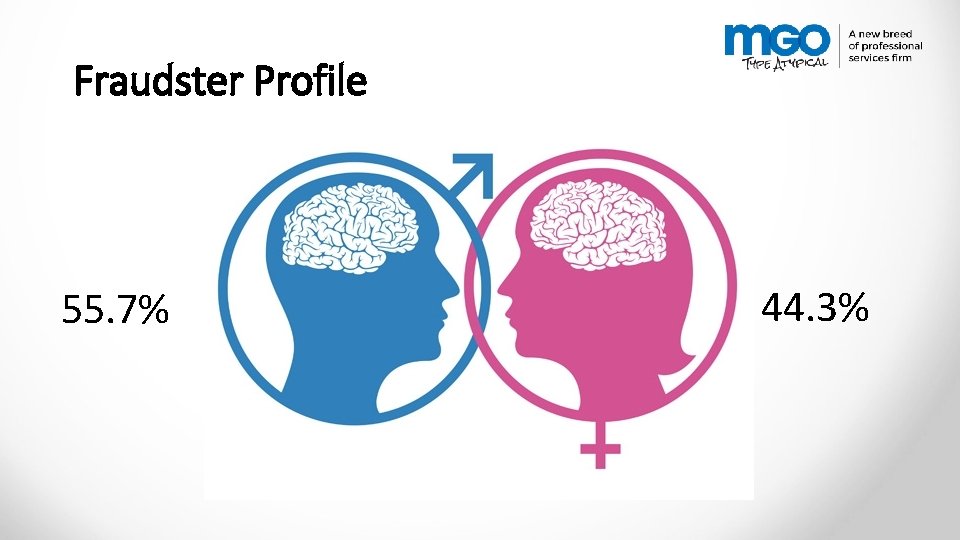
Fraudster Profile 55. 7% 44. 3%
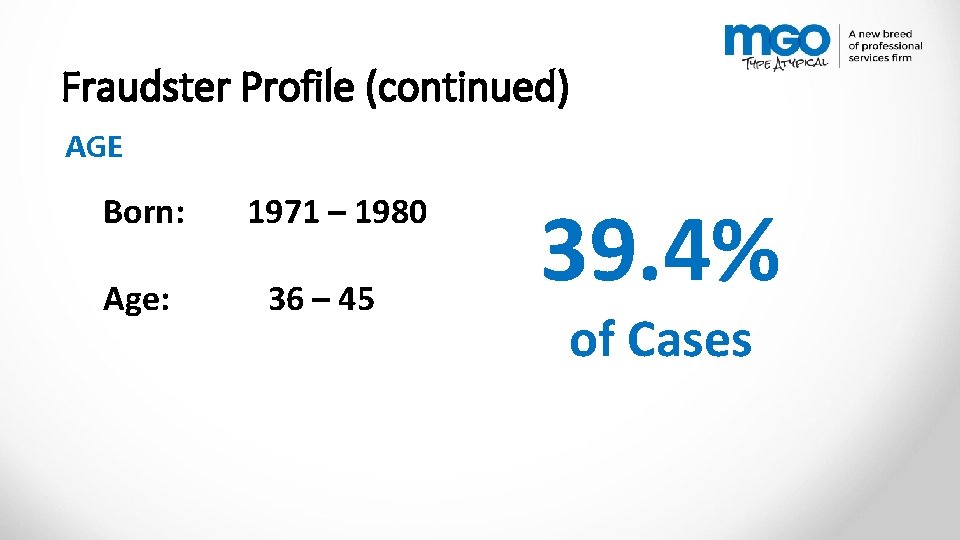
Fraudster Profile (continued) AGE Born: Age: 1971 – 1980 36 – 45 39. 4% of Cases
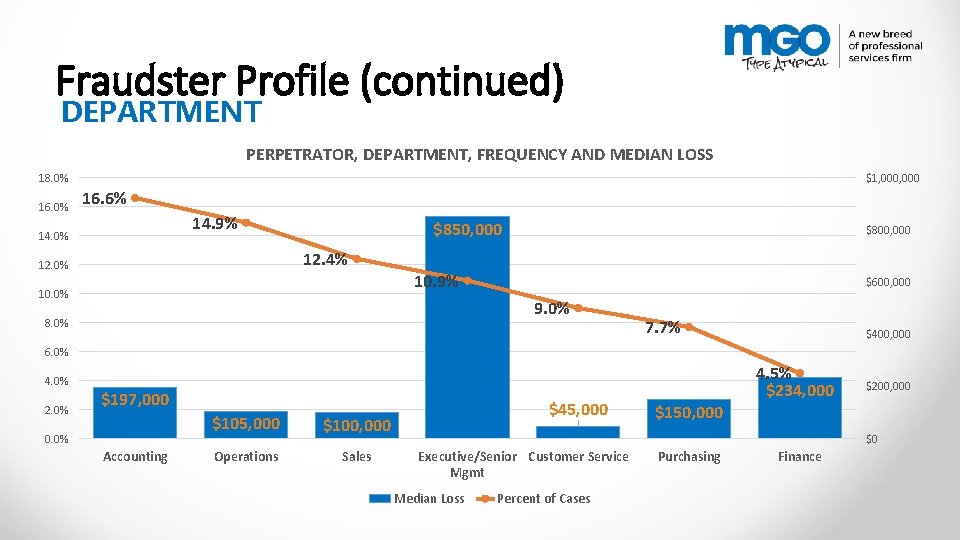
Fraudster Profile (continued) DEPARTMENT PERPETRATOR, DEPARTMENT, FREQUENCY AND MEDIAN LOSS 18. 0% 16. 0% $1, 000 16. 6% 14. 9% 14. 0% $850, 000 12. 4% 12. 0% 10. 0% $800, 000 10. 9% $600, 000 9. 0% 8. 0% 7. 7% $400, 000 6. 0% 4. 0% 2. 0% $197, 000 0. 0% Accounting $105, 000 $100, 000 Operations Sales $45, 000 $150, 000 4. 5% $234, 000 $200, 000 $0 Executive/Senior Customer Service Mgmt Median Loss Percent of Cases Purchasing Finance
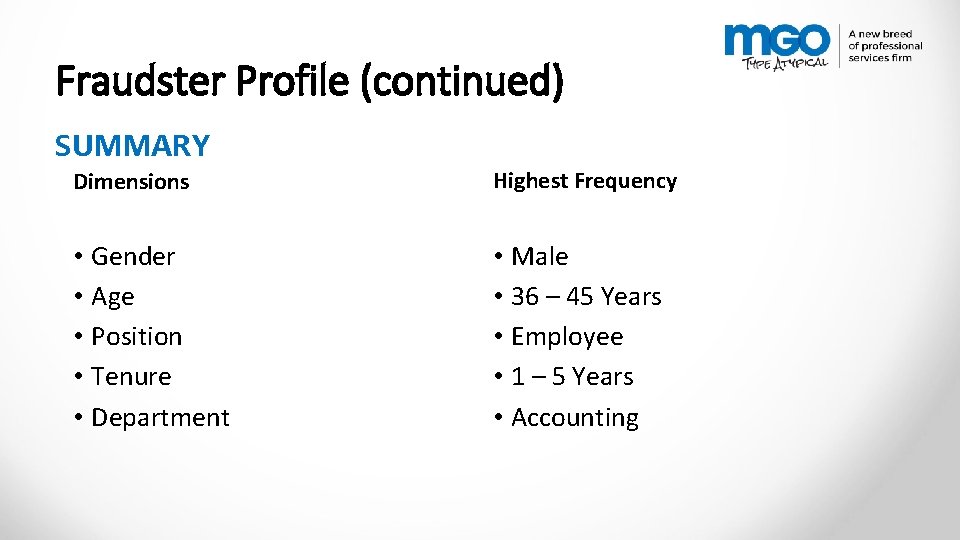
Fraudster Profile (continued) SUMMARY Dimensions Highest Frequency • Gender • Age • Position • Tenure • Department • Male • 36 – 45 Years • Employee • 1 – 5 Years • Accounting
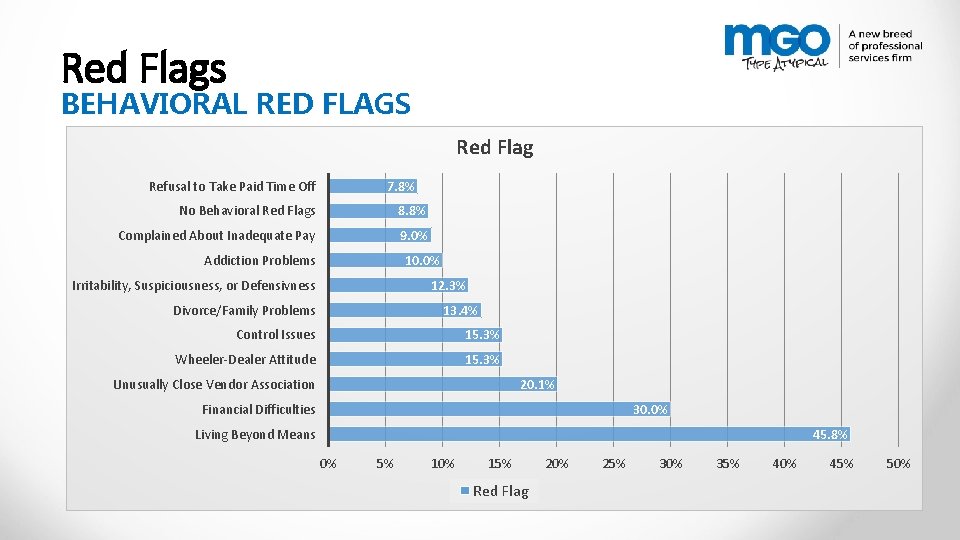
Red Flags BEHAVIORAL RED FLAGS Red Flag Refusal to Take Paid Time Off 7. 8% No Behavioral Red Flags 8. 8% Complained About Inadequate Pay 9. 0% Addiction Problems 10. 0% Irritability, Suspiciousness, or Defensivness 12. 3% Divorce/Family Problems 13. 4% Control Issues 15. 3% Wheeler-Dealer Attitude 15. 3% Unusually Close Vendor Association 20. 1% Financial Difficulties 30. 0% Living Beyond Means 45. 8% 0% 5% 10% 15% Red Flag 20% 25% 30% 35% 40% 45% 50%
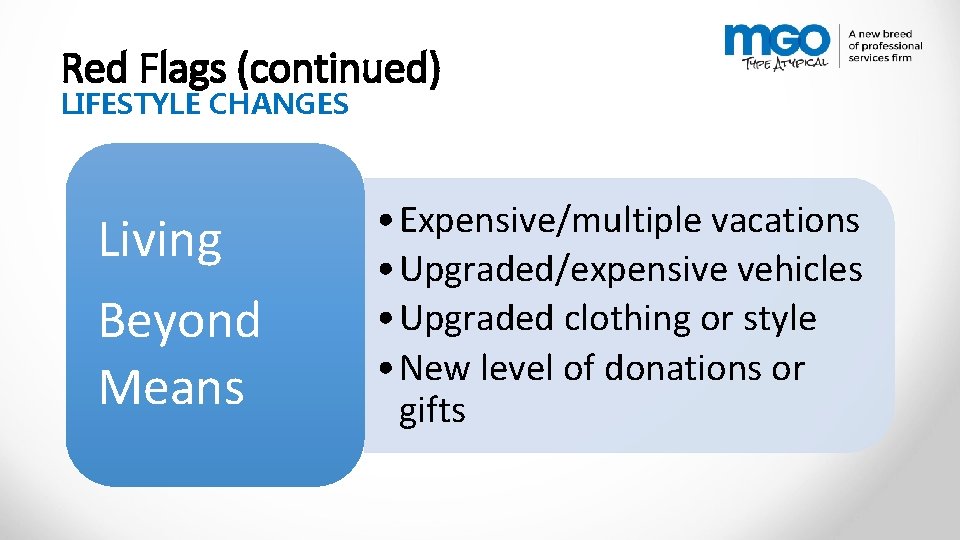
Red Flags (continued) LIFESTYLE CHANGES Living Beyond Means • Expensive/multiple vacations • Upgraded/expensive vehicles • Upgraded clothing or style • New level of donations or gifts
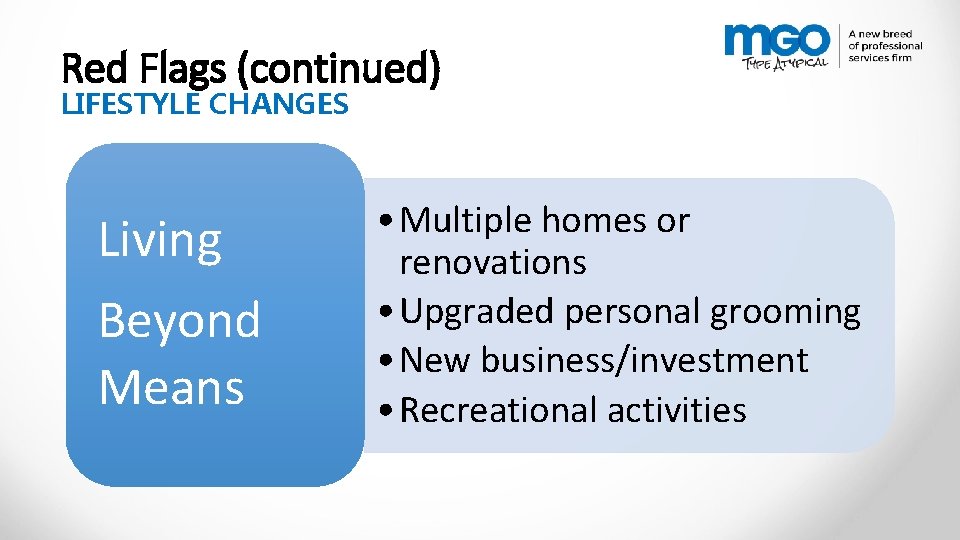
Red Flags (continued) LIFESTYLE CHANGES Living Beyond Means • Multiple homes or renovations • Upgraded personal grooming • New business/investment • Recreational activities
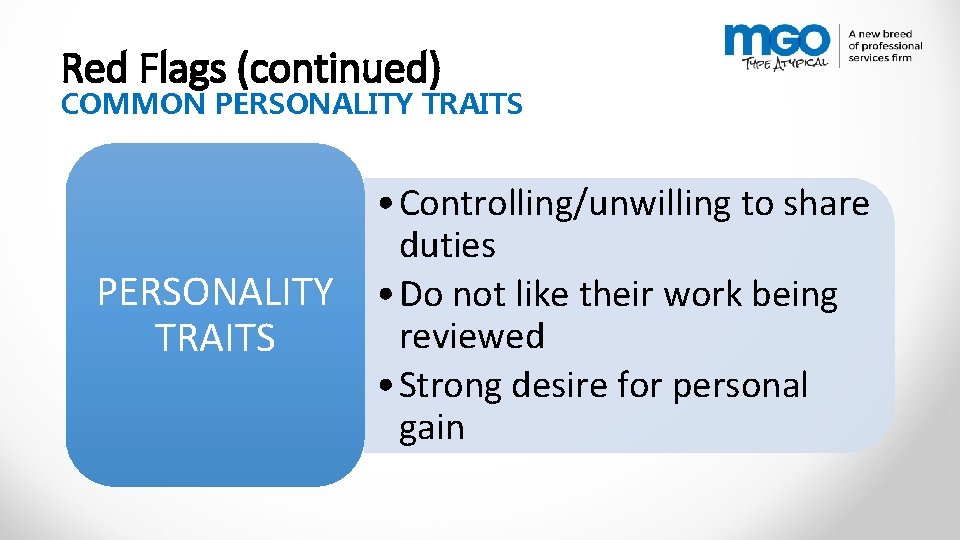
Red Flags (continued) COMMON PERSONALITY TRAITS • Controlling/unwilling to share duties • Do not like their work being reviewed • Strong desire for personal gain
Red Flags (continued) COMMON PERSONALITY TRAITS PERSONALIT Y TRAITS • Controlling/unwilling to share duties • Unable to relax • "Beat the system" attitude
Red Flags (continued) COMMON BEHAVIOR CHANGES • Brags about purchases • Unusual amounts of cash in possession • Borrows money from coworkers
Red Flags (continued) COMMON BEHAVIOR CHANGES • Collection calls at work • Outside business calls at work • Becomes irritable or moody
Red Flags (continued) COMMON BEHAVIOR CHANGES • Territorial over responsibility area • Takes PTO in small increments • Redoes or rewrites work to "make it neat"
Red Flags (continued) COMMON BEHAVIOR CHANGES • Unreasonably upset when questioned about work • Starts coming in early or staying late • Discusses/mentions family or financial problems
Red Flags (continued) COMMON BEHAVIOR CHANGES ADDICTION FLAGS • Absenteeism • Manipulative behavior • Looks/acts ill
Red Flags (continued) COMMON BEHAVIOR CHANGES ADDICTION FLAGS • Illogical/inconsistent decisions and actions • Loss of sleep • Loss of appetite
Red Flags (continued) COMMON BEHAVIOR CHANGES • Frequent work issue complaints DISSATISFACTION • Decreased productivity • Change in attire/grooming • Irregular schedules
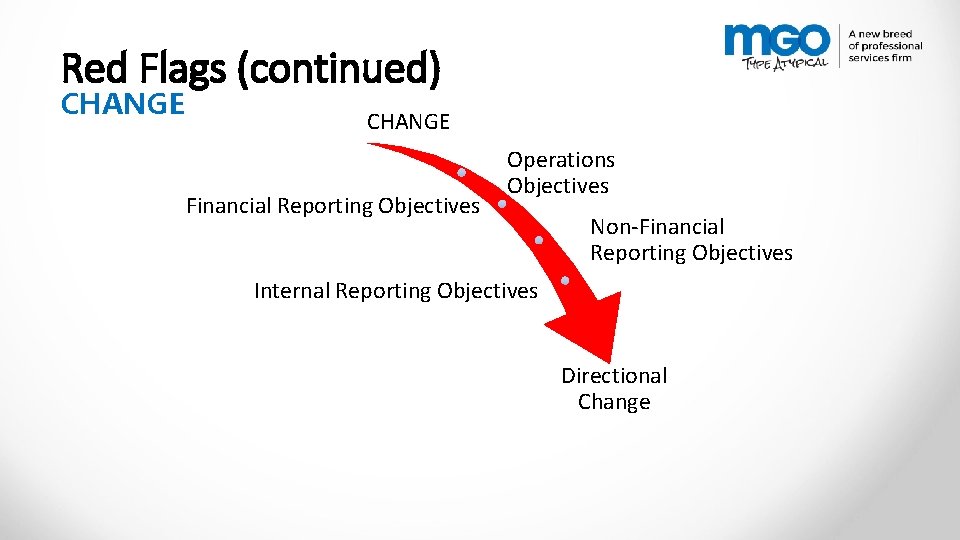
Red Flags (continued) CHANGE Financial Reporting Objectives Operations Objectives Non-Financial Reporting Objectives Internal Reporting Objectives Directional Change
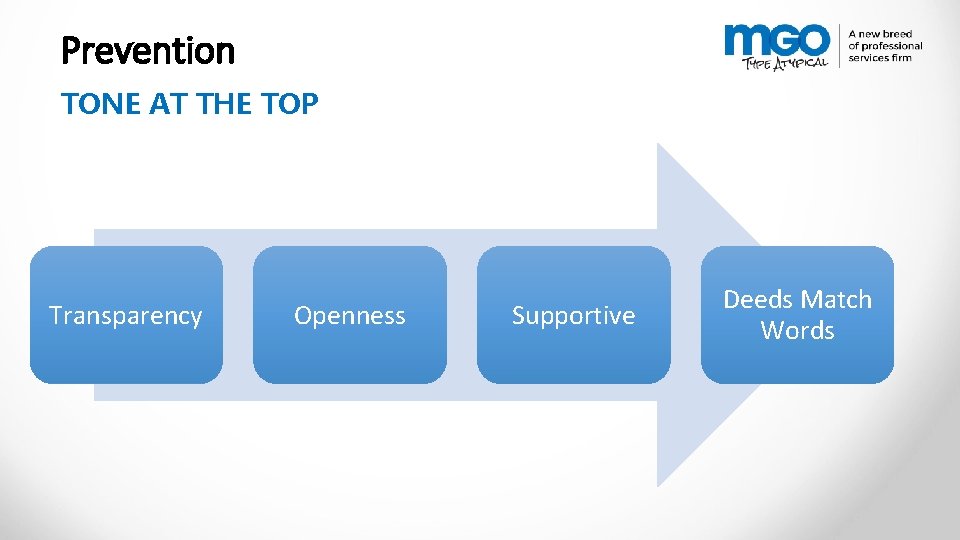
Prevention TONE AT THE TOP Transparency Openness Supportive Deeds Match Words
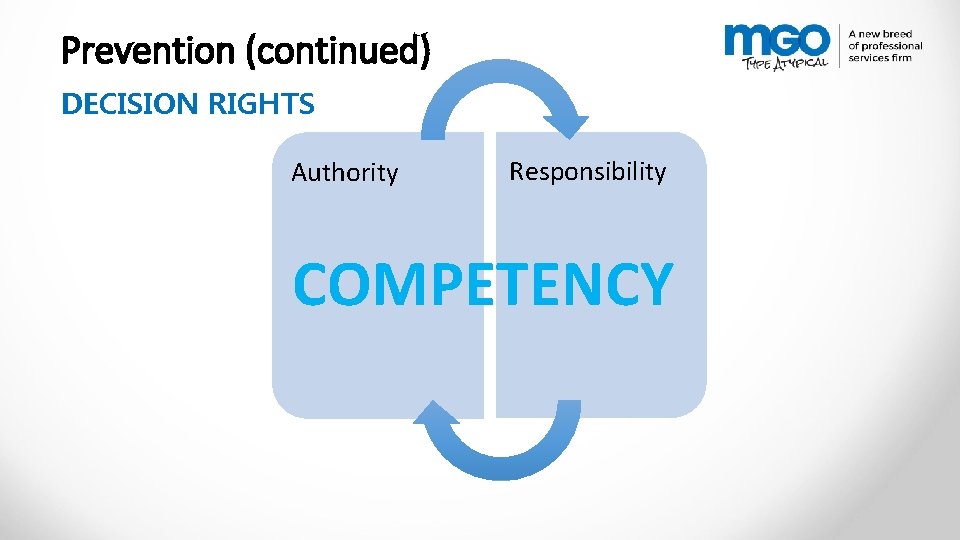
Prevention (continued) DECISION RIGHTS Authority Responsibility COMPETENCY
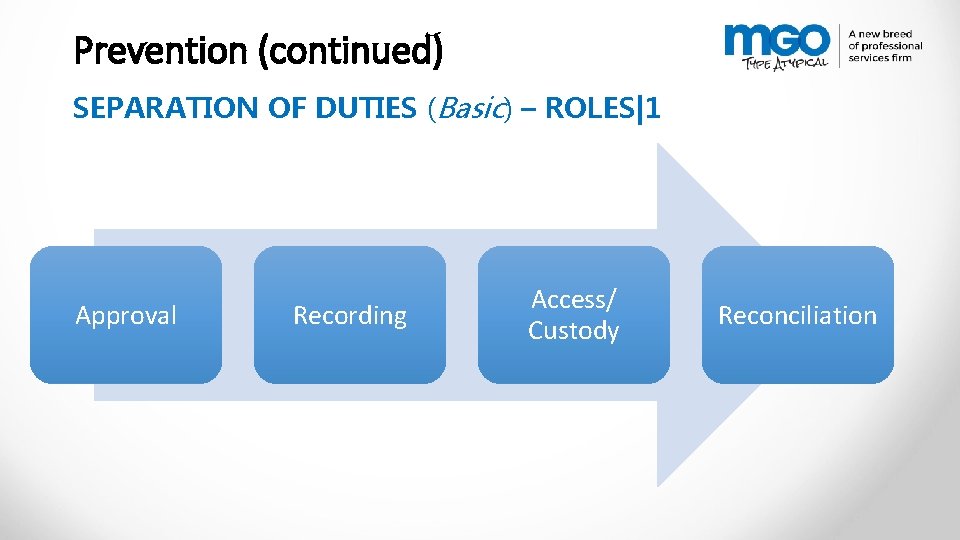
Prevention (continued) SEPARATION OF DUTIES (Basic) – ROLES|1 Approval Recording Access/ Custody Reconciliation
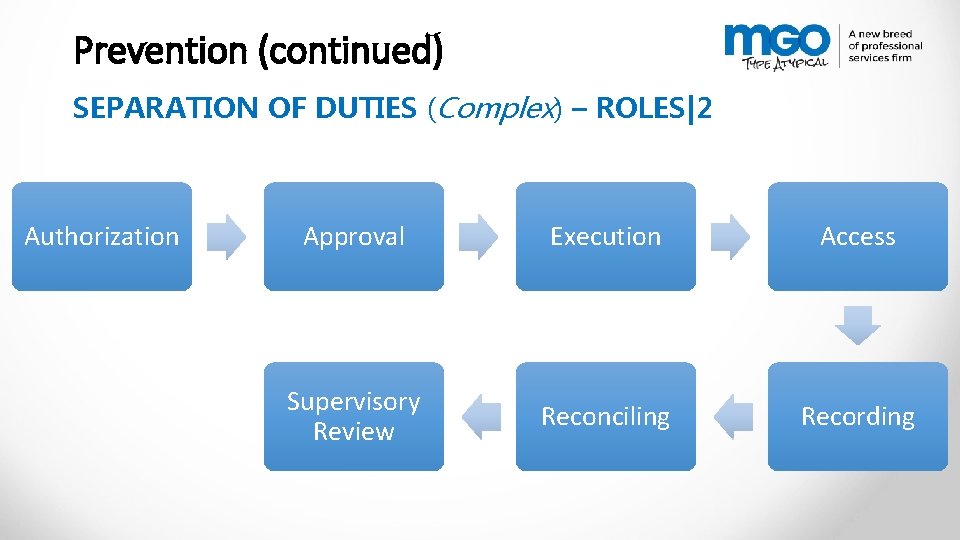
Prevention (continued) SEPARATION OF DUTIES (Complex) – ROLES|2 Authorization Approval Execution Access Supervisory Review Reconciling Recording
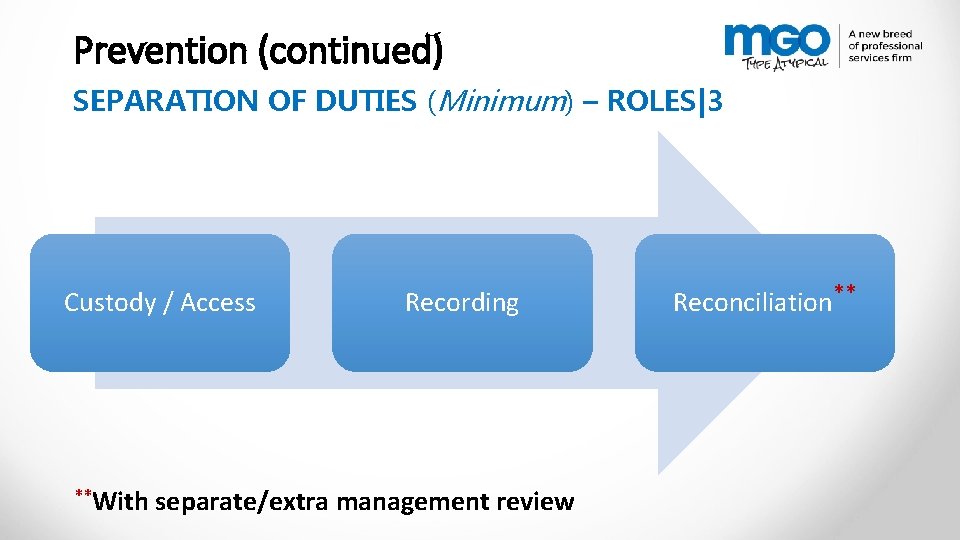
Prevention (continued) SEPARATION OF DUTIES (Minimum) – ROLES|3 Custody / Access **With Recording separate/extra management review Reconciliation**
Prevention (continued) ESCALATION POLICY 1. Assists employees with their reporting of incidents, events, conditions 2. Ensures proper evaluation and escalation 3. Identifies incidents, events or conditions • external or internal • not contemplated by existing policy, procedure, or guidance
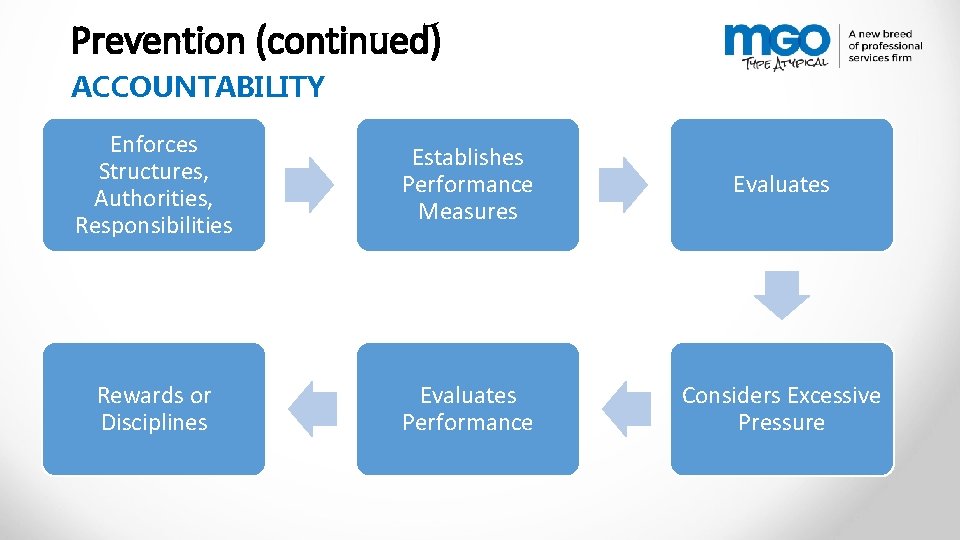
Prevention (continued) ACCOUNTABILITY Enforces Structures, Authorities, Responsibilities Establishes Performance Measures Evaluates Rewards or Disciplines Evaluates Performance Considers Excessive Pressure
Questions? Let’s Talk.

J’on R. Dennis, CPA (213) 408 -8679 jdennis@mgocpa. com Twitter: @jrdennis_CPA Linkedin: jondennis. CPA
- Slides: 34