
Franz Kafka 1883 1924 A Brief Biography and
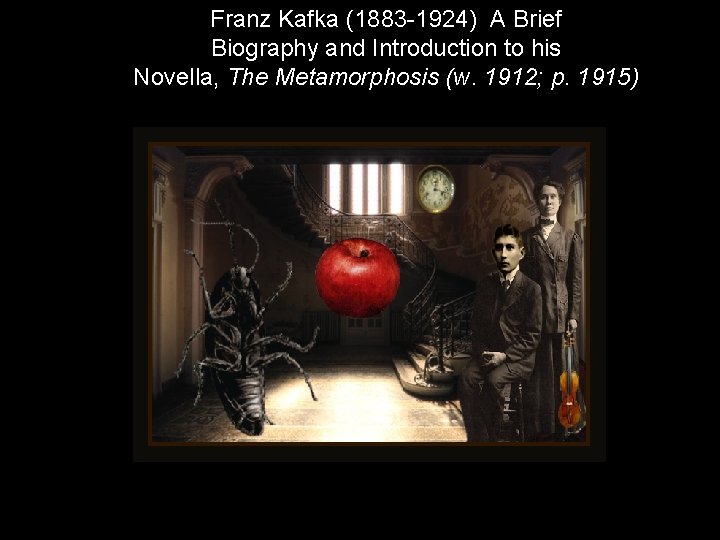
Franz Kafka (1883 -1924) A Brief Biography and Introduction to his Novella, The Metamorphosis (w. 1912; p. 1915)
Literary Terms: 1. Modernism 2. Surrealism 3. Existentialism 4. Kafkaesque
Modernism The Modernist Period in English Literature occupied the years from shortly after the beginning of the twentieth century throughly 1965. In broad terms, the period was marked by sudden and unexpected breaks with traditional ways of viewing and interacting with the world. Experimentation and individualism became virtues, where in the past they were often heartily discouraged. Modernism was set in motion, in one sense, through a series of cultural shocks. The first of these great shocks was the Great War, which ravaged Europe from 1914 through 1918, known now as World War One. At the time, this “War to End All Wars” was looked upon with such ghastly horror that many people simply could not imagine what the world seemed to be plunging towards. The first hints of that particular way of thinking called Modernism stretch back into the nineteenth century.
The first hints of that particular way of thinking called Modernism stretch back into the nineteenth century. As literary periods go, Modernism displays a relatively strong sense of cohesion and similarity across genres and locales. Furthermore, writers who adopted the Modern point of view often did so quite deliberately and self-consciously. A central preoccupation of Modernism is with the inner self and consciousness. In contrast to the Romantic world view, the Modernist cares rather little for Nature, Being, or the overarching structures of history. Instead of progress and growth, the Modernist intelligentsia sees decay and a growing alienation of the individual. The machinery of modern society is perceived as impersonal, capitalist, and antagonistic to the artistic impulse. War most certainly had a great deal of influence on such ways of approaching the world. Two World Wars in the span of a generation effectively shell-shocked all of Western civilization.
Surrealism A movement in visual art and literature, flourishing in Europe between World Wars I and II. Surrealism grew principally out of the earlier Dadamovement, which before World War I produced works of anti-art that deliberately defied reason; but Surrealism’s emphasis was not on negation but on positive expression. The movement represented a reaction against what its members saw as the destruction wrought by the “rationalism” that had guided European culture and politics in the past and that had culminated in the horrors of World War I.
According to the major spokesman of the movement, the poet and critic André Breton, who published The Surrealist Manifesto in 1924, Surrealism was a means of reuniting conscious and unconscious realms of experience so completely that the world of dream and fantasy would be joined to the everyday rational world in “an absolute reality, a surreality. ” Drawing heavily on theories adapted from Sigmund Freud, Breton saw the unconscious as the wellspring of the imagination. He defined genius in terms of accessibility to this normally untapped realm, which, he believed, could be attained by poets and painters alike. Surrealism Video (5 min) http: //video. about. com/arthistory/What-is-Surrealism-. htm
Existentialism In the most general sense, existentialism deals with the recurring problem of finding meaning within existence. “I think therefore I am. ” Though reduced now to the level of cliché, Rene Descartes’ famous maxim sums up perfectly the philosophical underpinnings of existentialist thought. From this perspective, there are no meanings or structures that precede one’s own existence, as one finds in organized religion. Therefore, the individual must find or create meaning for his or her self. Positive change is then an imperative for the true existentialist; otherwise existence is a complete void. To put it another way, it is not simply enough to “be. ” One has to be “something” or life truly lacks meaning or purpose. From this point of view, existentialism has the potential to indeed be a very positive means of approaching reality.
Life might be without an inherent meaning or one we can understand. Our human desires for logic and immortality are futile and we are then forced to define our own meanings, knowing they might be temporary. People are “created” by the experiences they undergo and it is action and making choices that give life meaning.
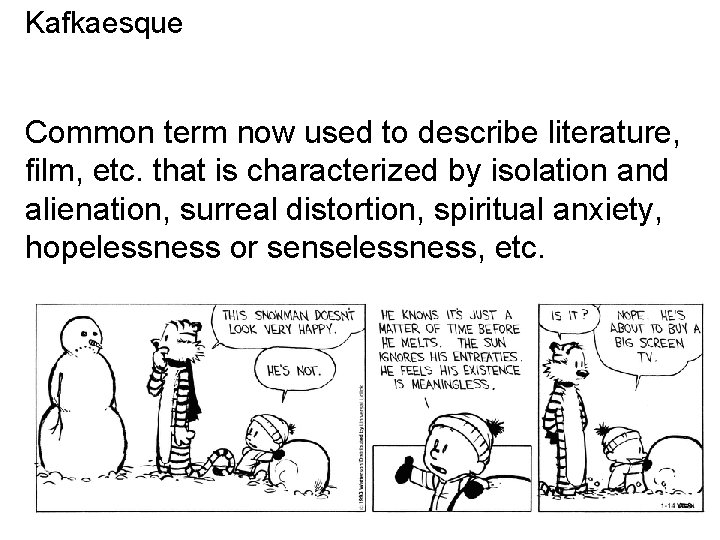
Kafkaesque Common term now used to describe literature, film, etc. that is characterized by isolation and alienation, surreal distortion, spiritual anxiety, hopelessness or senselessness, etc.
Like many existential writers, Franz Kafka saw the individual as being caught up in systems and bureaucracies that were beyond understanding. Even existence becomes a kind of control over personal autonomy. The natural response to this is to resign from life, but Kafka presents the situation with dry humor. He approaches the inherent terror of existence with a wink and a nod, and embraces the absurdity of everything. Later in the twentieth century, the comedy troupe Monty Python would in a sense follow in Kafka’s steps, presenting life as ultimately absurd and as meaningful or meaningless as one chose to make it.
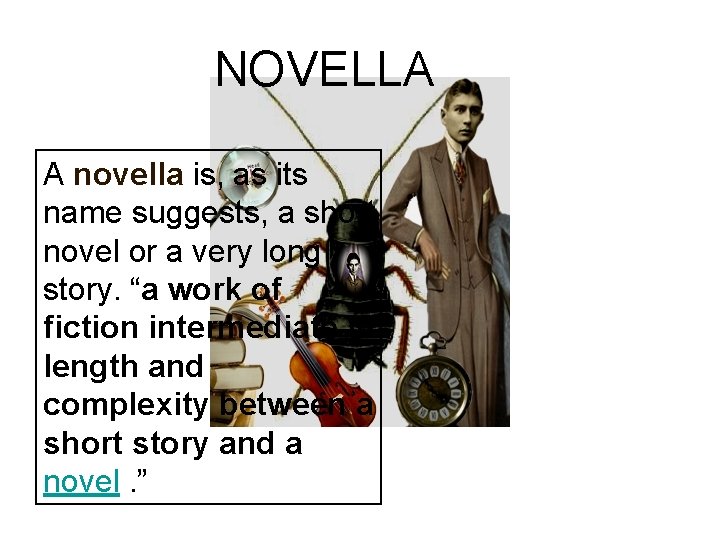
NOVELLA A novella is, as its name suggests, a short novel or a very long story. “a work of fiction intermediate in length and complexity between a short story and a novel. ”
Part 1: A Brief Biography
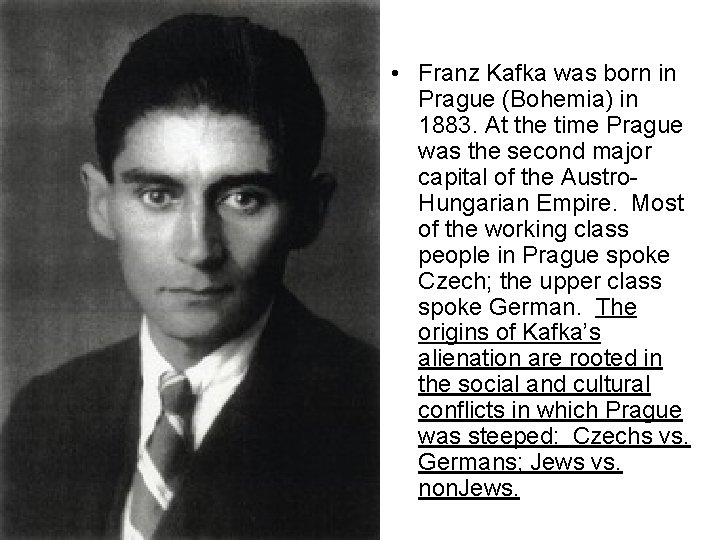
• Franz Kafka was born in Prague (Bohemia) in 1883. At the time Prague was the second major capital of the Austro. Hungarian Empire. Most of the working class people in Prague spoke Czech; the upper class spoke German. The origins of Kafka’s alienation are rooted in the social and cultural conflicts in which Prague was steeped: Czechs vs. Germans; Jews vs. non. Jews.
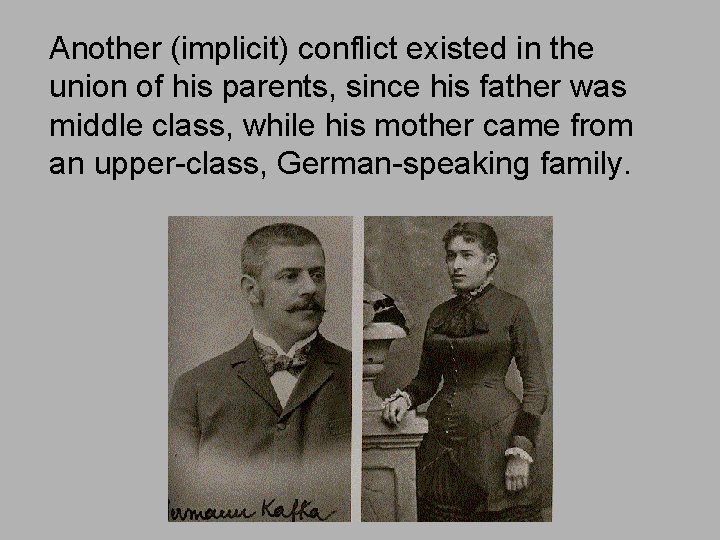
Another (implicit) conflict existed in the union of his parents, since his father was middle class, while his mother came from an upper-class, German-speaking family.
German-speaking family. • Hermann Kafka (father) worked initially as a traveling salesman; he then became a wealthy retailer of men’s and women’s clothing and accessories. • Julie Lowy (mother) was the daughter of an affluent brewer.
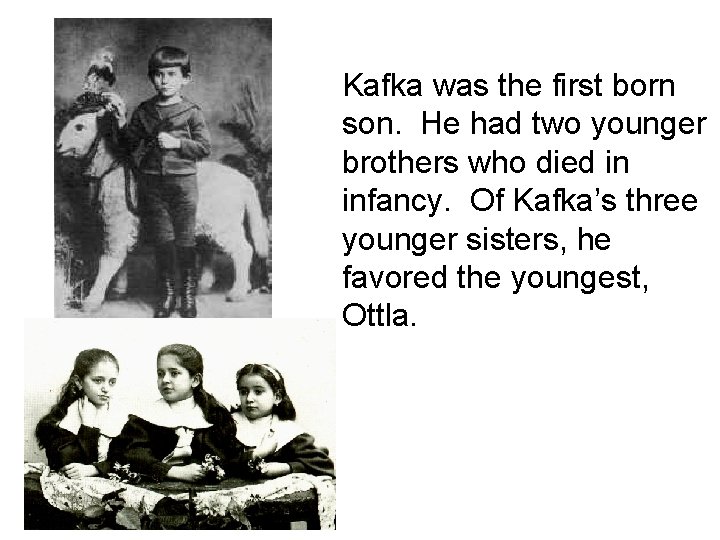
Kafka was the first born son. He had two younger brothers who died in infancy. Of Kafka’s three younger sisters, he favored the youngest, Ottla.
Kafka’s father was reputed to be an overbearing, materialistic, tyrannical man who valued making money above all else. He was critical of Franz’s literary efforts and viewed his son as lacking substance and ambition. Because Mrs. Kafka helped her husband run his lucrative business, the Kafka children were left in the care of a series of governesses and servants.
According to Dr. Grzegorz Gazda, a Kafka scholar from the University Of Lodz, Poland, the Kafka children did have one long-term positive surrogate parent—a Czechspeaking governess--Marie Wernerova, who remained in the Kafka household until her death in 1918. It was Wernerova’s presence that gave the children’s everyday lives more of a “family atmosphere. ”
For most of his adult life, Franz Kafka was employed at the “Worker's Accident Insurance Institute for the Kingdom of Bohemia. The job involved investigating personal injury to industrial workers, such as lost fingers or limbs, and assessing compensation. Industrial accidents of this kind were commonplace at this time. ”
Kafka in Love
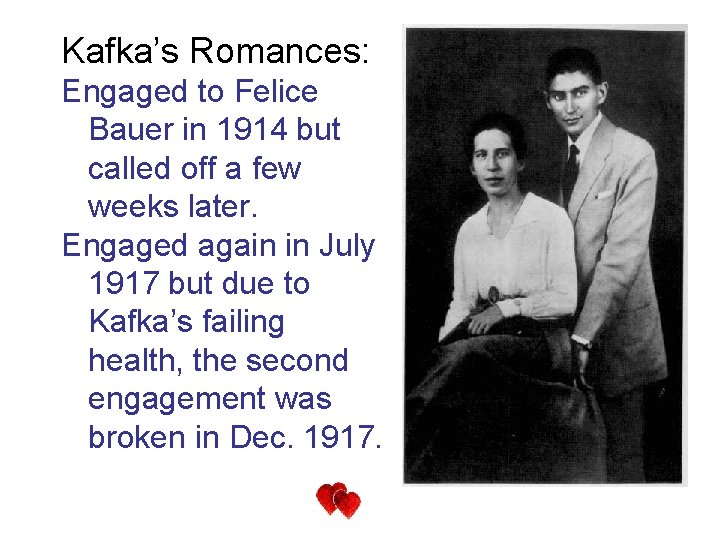
Kafka’s Romances: Engaged to Felice Bauer in 1914 but called off a few weeks later. Engaged again in July 1917 but due to Kafka’s failing health, the second engagement was broken in Dec. 1917.
In 1918, while convalescing in a Schelensen boarding house for tuberculosis patients, Kafka met a shy dressmaker from Prague, Julie Wohryzek. By the summer of 1919, Kafka proposed to Julie, much to his father’s objections, who suggested that his son would do better to visit a brothel than to marry a woman from such a low social standing. Kafka and Wohryzek amicably agreed to call off the engagement and remained friends.
• 1920, Kafka had a serious relationship with the married Czech journalist and writer Milena Jesenská. However, their relationship did not last. His final relationship was with 25 -year-old Dora Diamant, a kindergarten teacher who volunteered at one of the last sanatoriums Kafka visited.
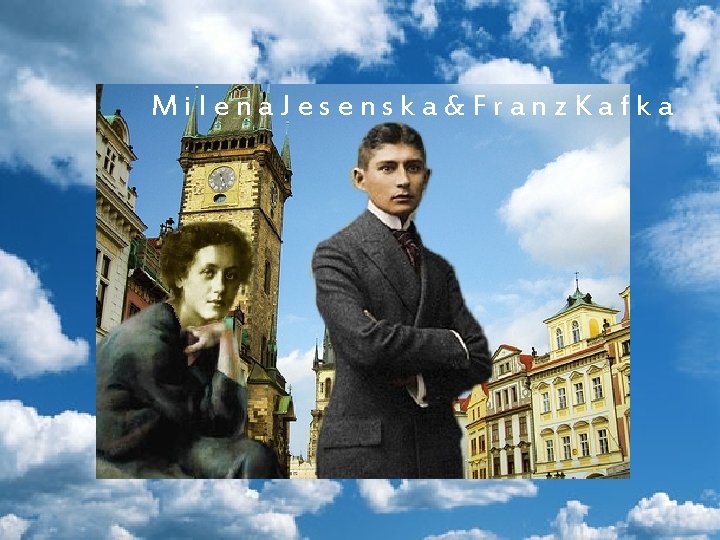
Milena. Jesenska&Franz. Kafka
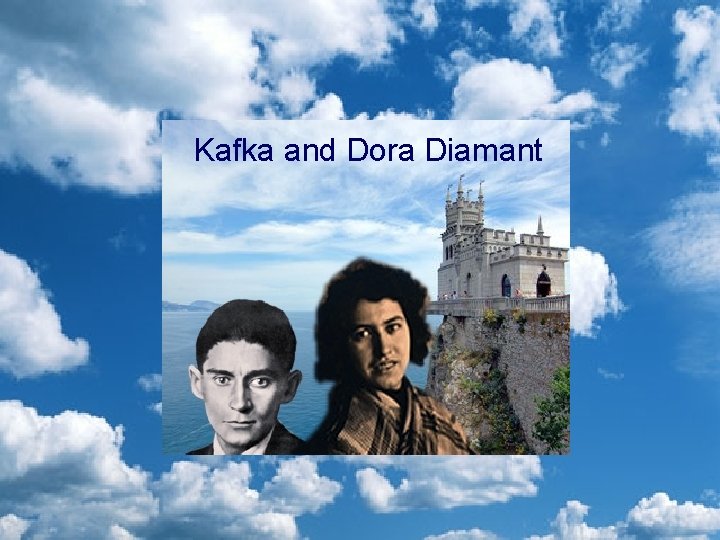
Kafka and Dora Diamant
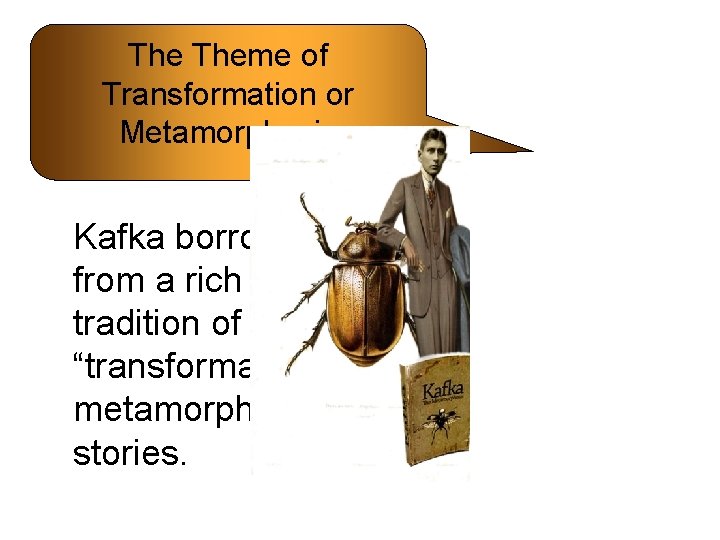
The Theme of Transformation or Metamorphosis Kafka borrows from a rich literary tradition of “transformation” or metamorphosis stories.
“Wedding Preparations in the Country” Among Kafka’s unfinished manuscripts (Max Brod was Kafka’s literary executor) was a long story called “Wedding Preparations in the Country, ” a fragmented work about Eduard Raban, a man who is reluctantly traveling to the country to prepare for his own wedding to his fiancé, Betty. Composed around 1907 -08, but never published during Kafka’s lifetime, it contains common themes in Kafka’s work… “nonarrival” and “stasis. ”
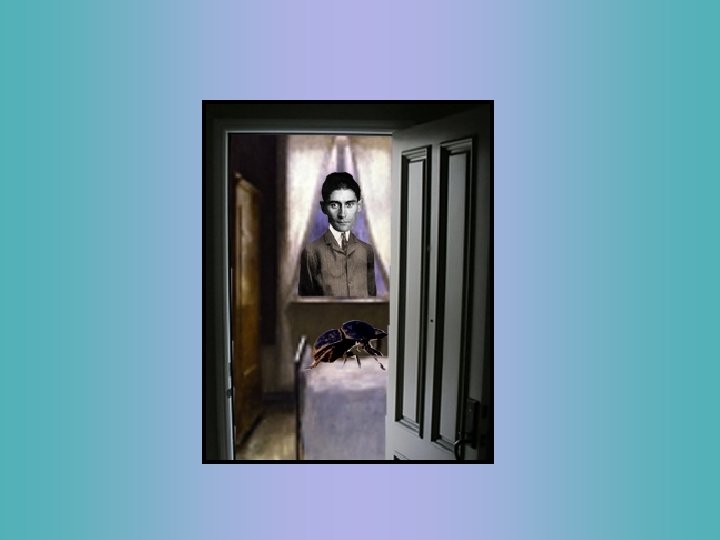
“WPITC” reads like an exercise in stasis: Eduard’s watch stops, he is preoccupied with the ineffectual forward movement of the horses’ “thin forelegs, ” and notes the “light short steps of the people coming toward him. ” The “carriage wheels squeaked with the brakes on, ” and “the wind was blowing straight against him. ” Eduard Raban so dreads the wedding plans that he imagines sending a BODY DOUBLE:
“I don’t even need to go to the country myself…I’ll send my clothed body…For I myself am meanwhile lying in my bed, smoothly covered over with the yellow brown blanket, exposed to the breeze that is wafted through the seldom-aired room…. As I lie in bed I assume the shape of a big beetle, a stag beetle or a cockchafer, I think…. The form of a large beetle, yes. Then I would pretend it was a matter of hibernating…and I would press my little legs to my bulging belly…”
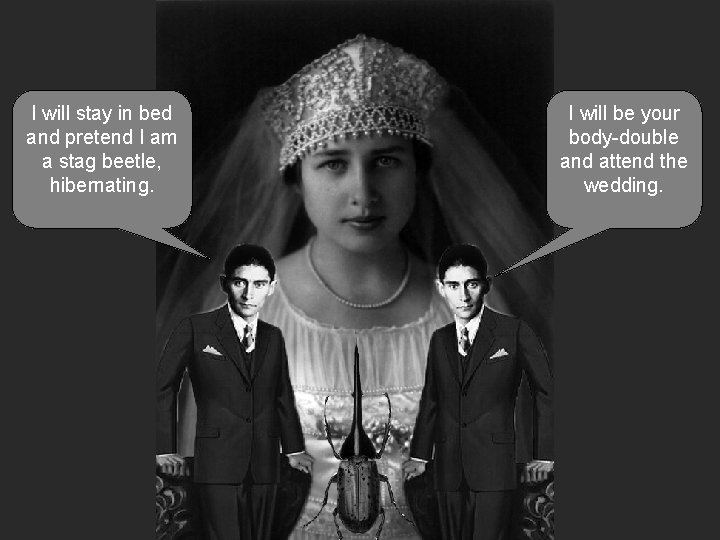
I will stay in bed and pretend I am a stag beetle, hibernating. I will be your body-double and attend the wedding.
Cool Kafka Quote: 'I think we ought to read only the kind of books that wound and stab us. If the book we're reading doesn't wake us up with a blow on the head, what are we reading it for? . . . [We] need the books that affect us like a disaster, that grieve us deeply, like the death of someone we loved more than ourselves, like being banished into forests far from everyone, like a suicide. A book must be the axe for the frozen sea inside us. That is my belief. ‘
When Kafka was dying, he asked his editor to burn all of his writing. Fortunately, he ignored Kafka. His works are so famous that an adjective “kafkaesque” was coined to describe situations and settings characterized by social anxiety, isolation, surreal distortion, or senselessness.
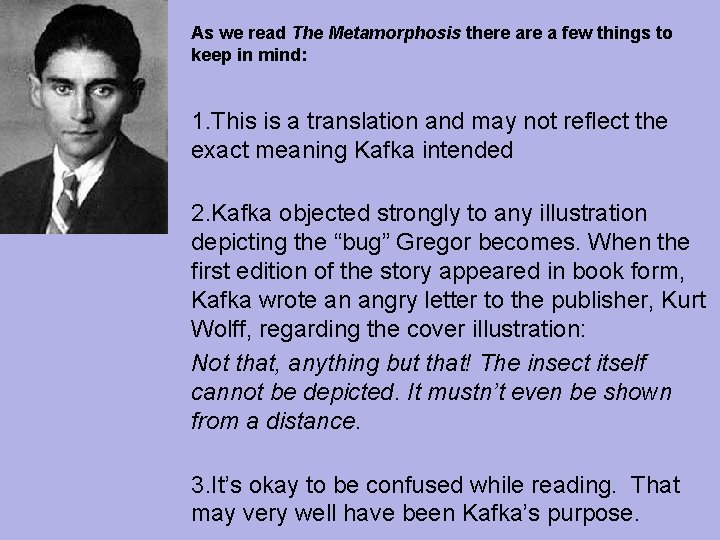
As we read The Metamorphosis there a few things to keep in mind: 1. This is a translation and may not reflect the exact meaning Kafka intended 2. Kafka objected strongly to any illustration depicting the “bug” Gregor becomes. When the first edition of the story appeared in book form, Kafka wrote an angry letter to the publisher, Kurt Wolff, regarding the cover illustration: Not that, anything but that! The insect itself cannot be depicted. It mustn’t even be shown from a distance. 3. It’s okay to be confused while reading. That may very well have been Kafka’s purpose.
- Slides: 37