
Franz Frank ABB Switzerland Ltd Power Gen Europe
Franz Frank (ABB Switzerland Ltd) – Power. Gen Europe 2010 Significant energy savings and reduced emissions in power plants through variable speed drives © ABB Group 30 October 2020 | Slide 1
Agenda § Savings potential by using variable speed drives § § Variable speed drive applications in power stations § § © ABB Group 30 October 2020 | Slide 2 Comparison of process control methods with respect to efficiency References § § What is a Variable Speed Drive (VSD) system ? Payback calculation – case example ABB medium voltage drives portfolio
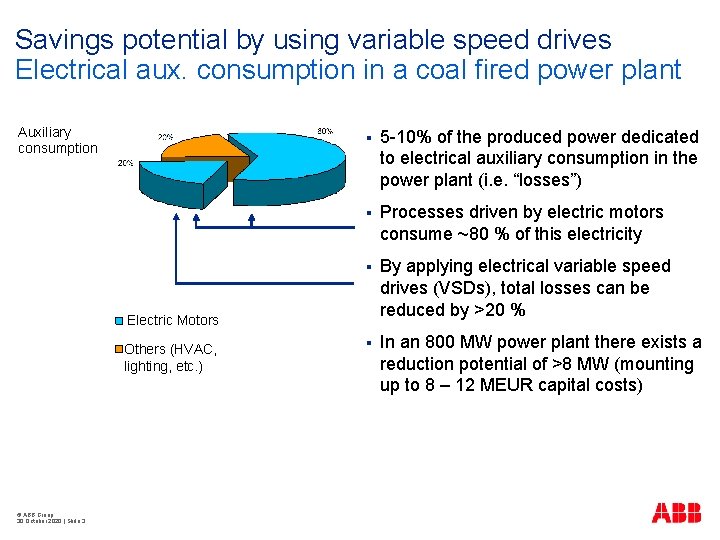
Savings potential by using variable speed drives Electrical aux. consumption in a coal fired power plant Auxiliary consumption § 5 -10% of the produced power dedicated to electrical auxiliary consumption in the power plant (i. e. “losses”) § Processes driven by electric motors consume ~80 % of this electricity § By applying electrical variable speed drives (VSDs), total losses can be reduced by >20 % § In an 800 MW power plant there exists a reduction potential of >8 MW (mounting up to 8 – 12 MEUR capital costs) Electric Motors Others (HVAC, lighting, etc. ) © ABB Group 30 October 2020 | Slide 3
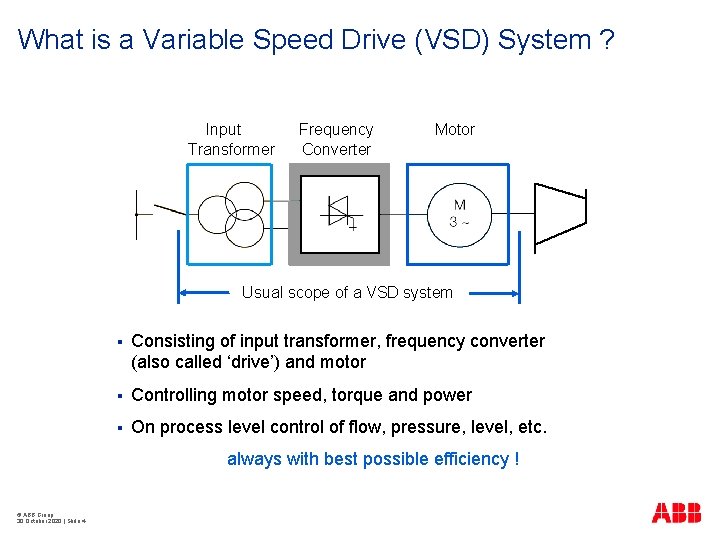
What is a Variable Speed Drive (VSD) System ? Input Transformer Frequency Converter Motor Usual scope of a VSD system § Consisting of input transformer, frequency converter (also called ‘drive’) and motor § Controlling motor speed, torque and power § On process level control of flow, pressure, level, etc. always with best possible efficiency ! © ABB Group 30 October 2020 | Slide 4
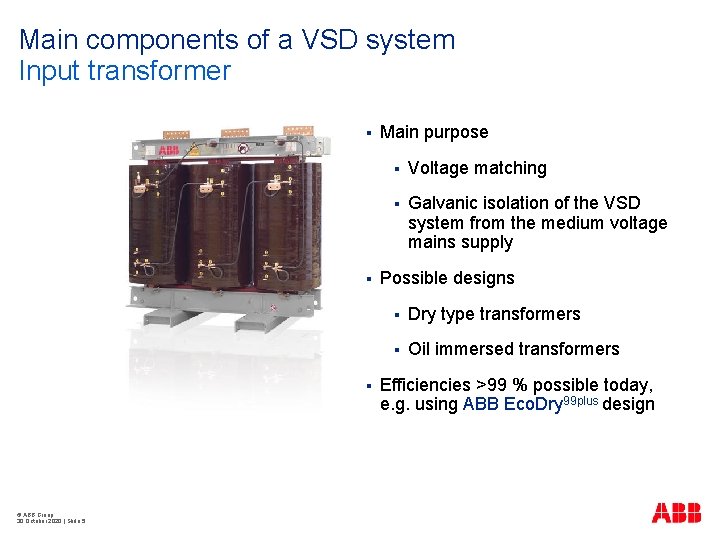
Main components of a VSD system Input transformer § § § © ABB Group 30 October 2020 | Slide 5 Main purpose § Voltage matching § Galvanic isolation of the VSD system from the medium voltage mains supply Possible designs § Dry type transformers § Oil immersed transformers Efficiencies >99 % possible today, e. g. using ABB Eco. Dry 99 plus design
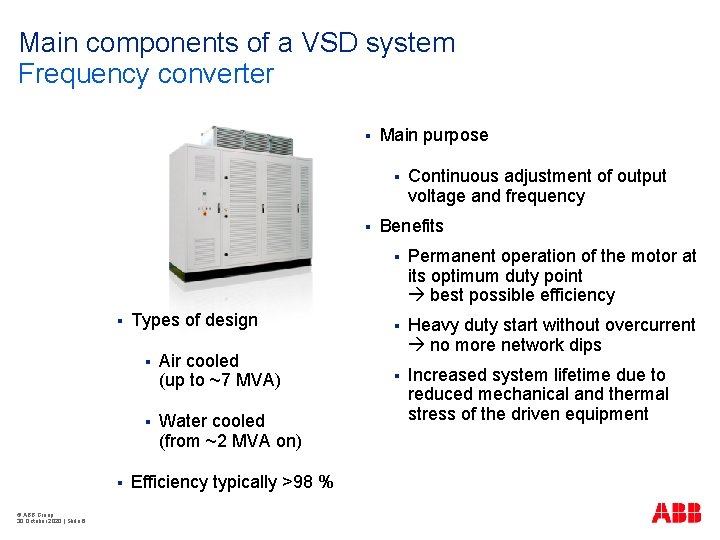
Main components of a VSD system Frequency converter § Main purpose § § © ABB Group 30 October 2020 | Slide 6 Types of design § Air cooled (up to ~7 MVA) § Water cooled (from ~2 MVA on) Efficiency typically >98 % Continuous adjustment of output voltage and frequency Benefits § Permanent operation of the motor at its optimum duty point best possible efficiency § Heavy duty start without overcurrent no more network dips § Increased system lifetime due to reduced mechanical and thermal stress of the driven equipment
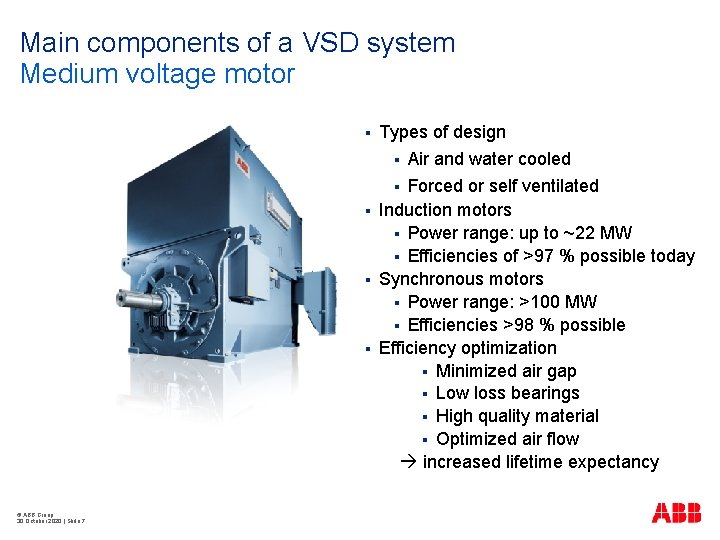
Main components of a VSD system Medium voltage motor § Types of design Air and water cooled § Forced or self ventilated Induction motors § Power range: up to ~22 MW § Efficiencies of >97 % possible today Synchronous motors § Power range: >100 MW § Efficiencies >98 % possible Efficiency optimization § Minimized air gap § Low loss bearings § High quality material § Optimized air flow increased lifetime expectancy § M 3~ § § § © ABB Group 30 October 2020 | Slide 7
Agenda § Savings potential by using variable speed drives § § Variable speed drive applications in power stations § § © ABB Group 30 October 2020 | Slide 8 Comparison of process control methods with respect to efficiency References § § What is a Variable Speed Drive (VSD) system ? Payback calculation – case example ABB medium voltage drives portfolio
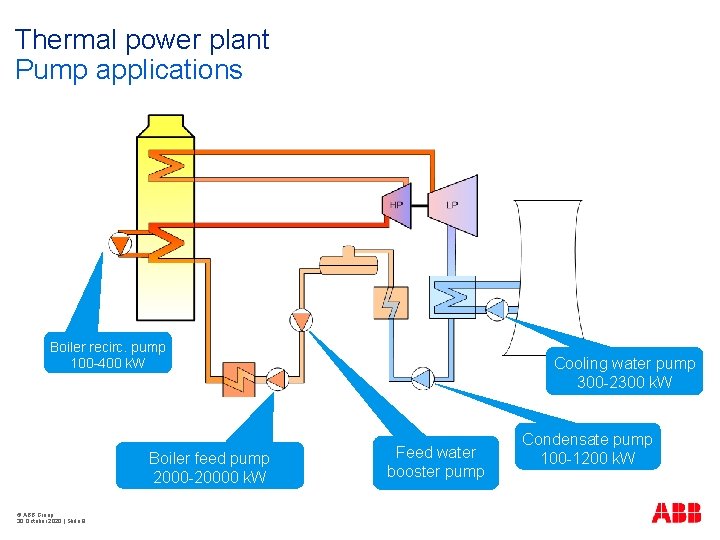
Thermal power plant Pump applications Boiler recirc. pump 100 -400 k. W Boiler feed pump 2000 -20000 k. W © ABB Group 30 October 2020 | Slide 9 Cooling water pump 300 -2300 k. W Feed water booster pump Condensate pump 100 -1200 k. W
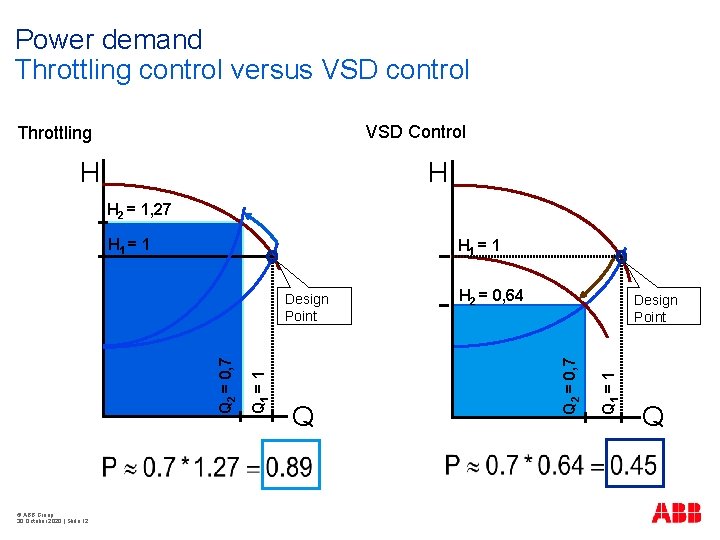
Power demand Throttling control versus VSD control VSD Control Throttling H H H 2 = 1, 27 H 1 = 1 © ABB Group 30 October 2020 | Slide 12 Design Point Q 1 = 1 Q H 2 = 0, 64 Q 2 = 0, 7 Q 1 = 1 Q 2 = 0, 7 Design Point Q
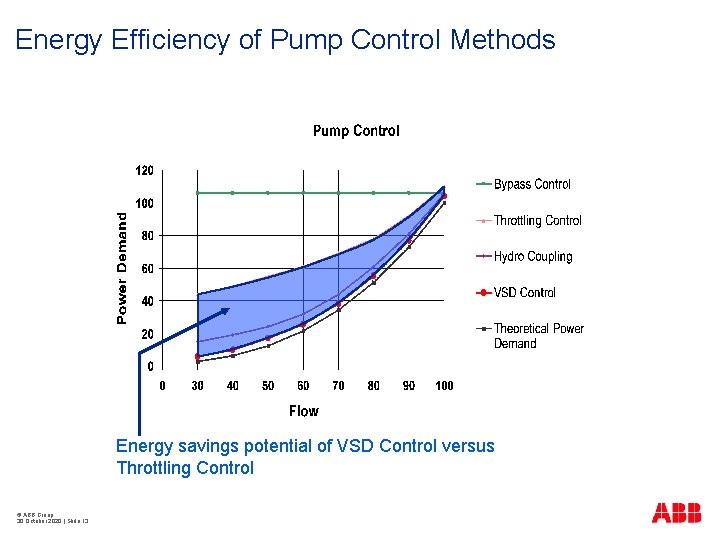
Energy Efficiency of Pump Control Methods Energy savings potential of VSD Control versus Throttling Control © ABB Group 30 October 2020 | Slide 13
Agenda § Savings potential by using variable speed drives § § Variable speed drive applications in power stations § § © ABB Group 30 October 2020 | Slide 15 Comparison of process control methods with respect to efficiency References § § What is a Variable Speed Drive (VSD) system ? Payback calculation – case example ABB medium voltage drives portfolio
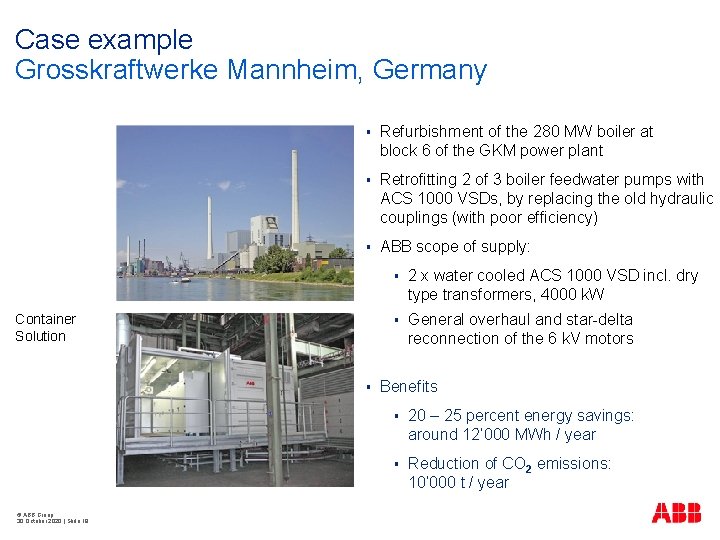
Case example Grosskraftwerke Mannheim, Germany § Refurbishment of the 280 MW boiler at block 6 of the GKM power plant § Retrofitting 2 of 3 boiler feedwater pumps with ACS 1000 VSDs, by replacing the old hydraulic couplings (with poor efficiency) § ABB scope of supply: Container Solution § © ABB Group 30 October 2020 | Slide 18 § 2 x water cooled ACS 1000 VSD incl. dry type transformers, 4000 k. W § General overhaul and star-delta reconnection of the 6 k. V motors Benefits § 20 – 25 percent energy savings: around 12’ 000 MWh / year § Reduction of CO 2 emissions: 10’ 000 t / year

Payback of applying electrical variable speed drives Case example § Feedwater pump, average operating time / year = 8’ 000 h § Average electrical power consumption = 4’ 000 k. W § § Resulting electrical energy demand = 32’ 000 MWh Energy savings due to applying VSD = 20% § Resulting energy savings per year = 6’ 400 MWh § Energy cost savings = 320’ 000 EUR based on el. energy costs of 5 ct / k. Wh § è resulting in a payback time of only two years è total savings over 20 years lifetime = 5’ 760’ 000 EUR Additionally ! § © ABB Group 30 October 2020 | Slide 19 Reduction of CO 2 emissions of ~5’ 000 t / year
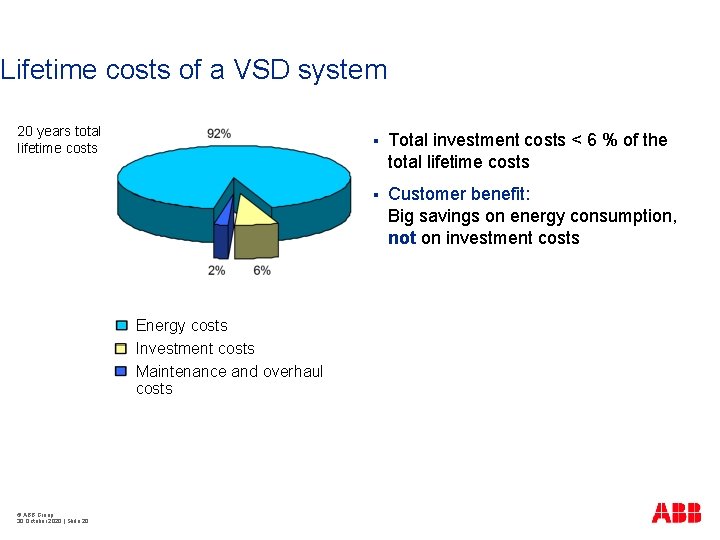
Lifetime costs of a VSD system 20 years total lifetime costs Energy costs Investment costs Maintenance and overhaul costs © ABB Group 30 October 2020 | Slide 20 § Total investment costs < 6 % of the total lifetime costs § Customer benefit: Big savings on energy consumption, not on investment costs
Agenda § Savings potential by using variable speed drives § § Variable speed drive applications in power stations § § © ABB Group 30 October 2020 | Slide 21 Comparison of process control methods with respect to efficiency References § § What is a Variable Speed Drive (VSD) system ? Payback calculation – case example ABB medium voltage drives portfolio
![Product portfolio ABB Medium voltage drives Motor [MW] 100 50 20 ACS 6000 LCI](http://slidetodoc.com/presentation_image/269c457eb52119d08f2421f2babded6d/image-17.jpg "Product portfolio ABB Medium voltage drives Motor [MW] 100 50 20 ACS 6000 LCI")
Product portfolio ABB Medium voltage drives Motor [MW] 100 50 20 ACS 6000 LCI 10 5 ACS 5000 2 ACS 1000 1 ACS 2000 0. 315 1. 8 © ABB Group 30 October 2020 | Slide 22 2. 3 3. 3 4. 0 4. 16 6. 0 6. 6 6. 9 10. 0 Motor [k. V]
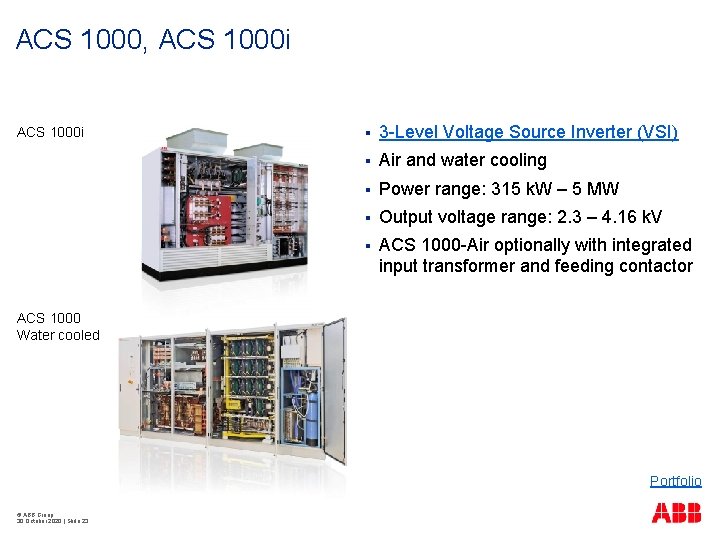
ACS 1000, ACS 1000 i § 3 -Level Voltage Source Inverter (VSI) § Air and water cooling § Power range: 315 k. W – 5 MW § Output voltage range: 2. 3 – 4. 16 k. V § ACS 1000 -Air optionally with integrated input transformer and feeding contactor ACS 1000 Water cooled Portfolio © ABB Group 30 October 2020 | Slide 23
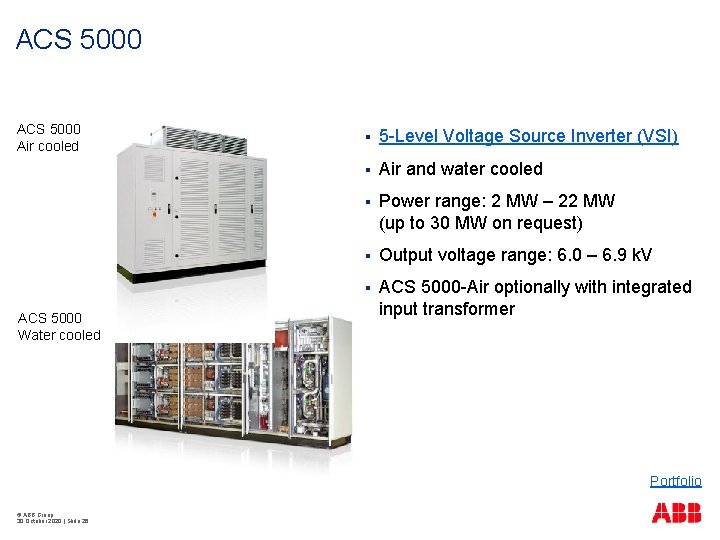
ACS 5000 Air cooled ACS 5000 Water cooled § 5 -Level Voltage Source Inverter (VSI) § Air and water cooled § Power range: 2 MW – 22 MW (up to 30 MW on request) § Output voltage range: 6. 0 – 6. 9 k. V § ACS 5000 -Air optionally with integrated input transformer Portfolio © ABB Group 30 October 2020 | Slide 26
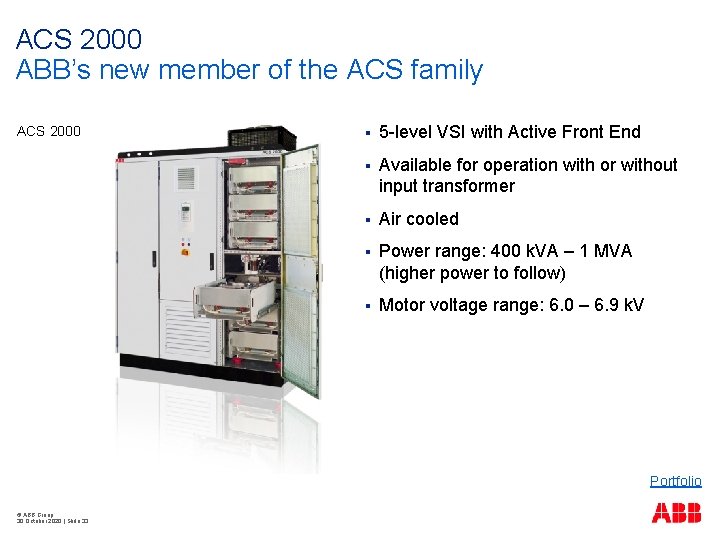
ACS 2000 ABB’s new member of the ACS family ACS 2000 § 5 -level VSI with Active Front End § Available for operation with or without input transformer § Air cooled § Power range: 400 k. VA – 1 MVA (higher power to follow) § Motor voltage range: 6. 0 – 6. 9 k. V Portfolio © ABB Group 30 October 2020 | Slide 33
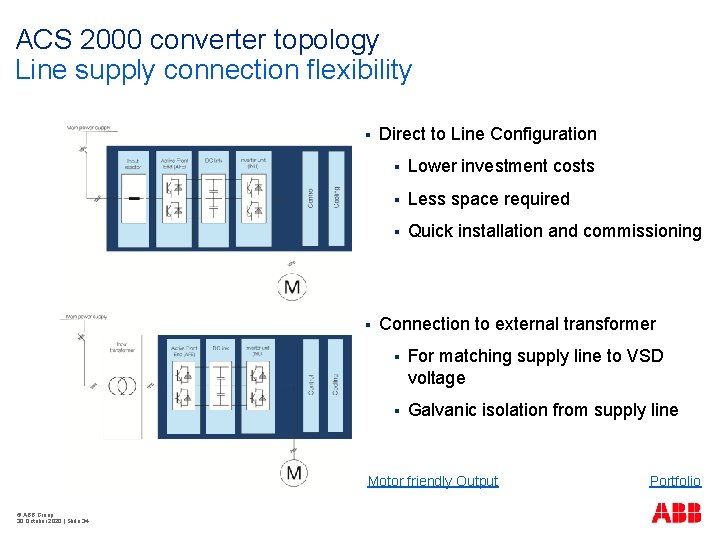
ACS 2000 converter topology Line supply connection flexibility § § Direct to Line Configuration § Lower investment costs § Less space required § Quick installation and commissioning Connection to external transformer § For matching supply line to VSD voltage § Galvanic isolation from supply line Motor friendly Output © ABB Group 30 October 2020 | Slide 34 Portfolio
© ABB Group 30 October 2020 | Slide 36
- Slides: 22