
Frans Lanting Biography Lanting was born in Rotterdam
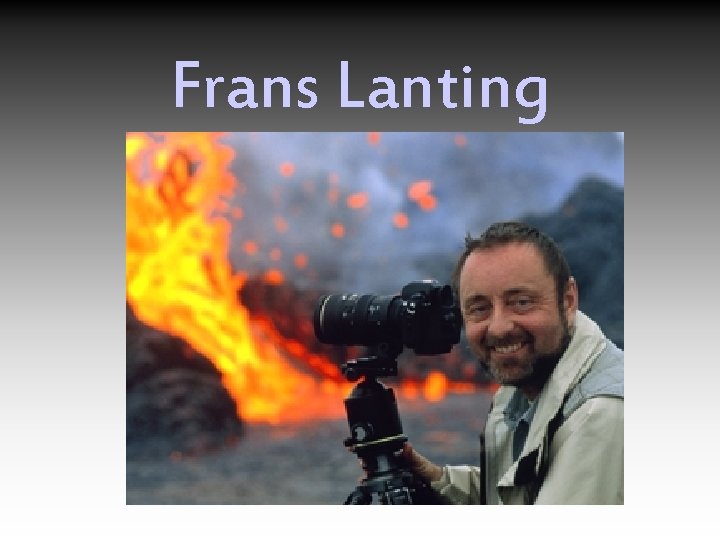
Frans Lanting
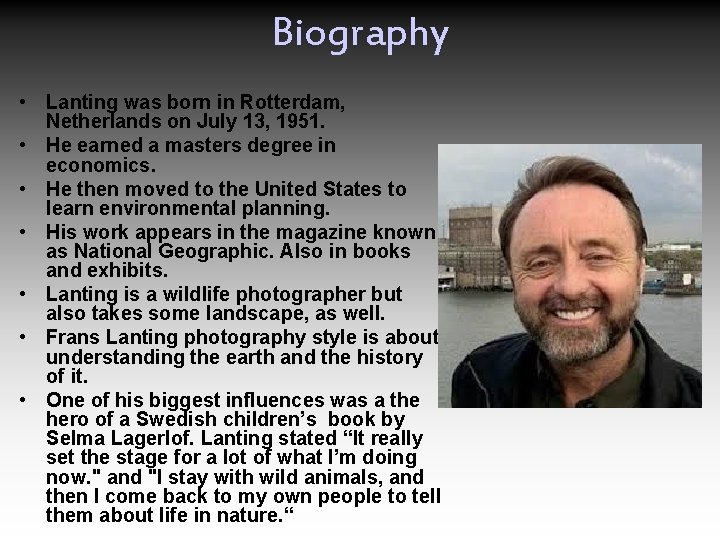
Biography • Lanting was born in Rotterdam, Netherlands on July 13, 1951. • He earned a masters degree in economics. • He then moved to the United States to learn environmental planning. • His work appears in the magazine known as National Geographic. Also in books and exhibits. • Lanting is a wildlife photographer but also takes some landscape, as well. • Frans Lanting photography style is about understanding the earth and the history of it. • One of his biggest influences was a the hero of a Swedish children’s book by Selma Lagerlof. Lanting stated “It really set the stage for a lot of what I’m doing now. " and "I stay with wild animals, and then I come back to my own people to tell them about life in nature. “
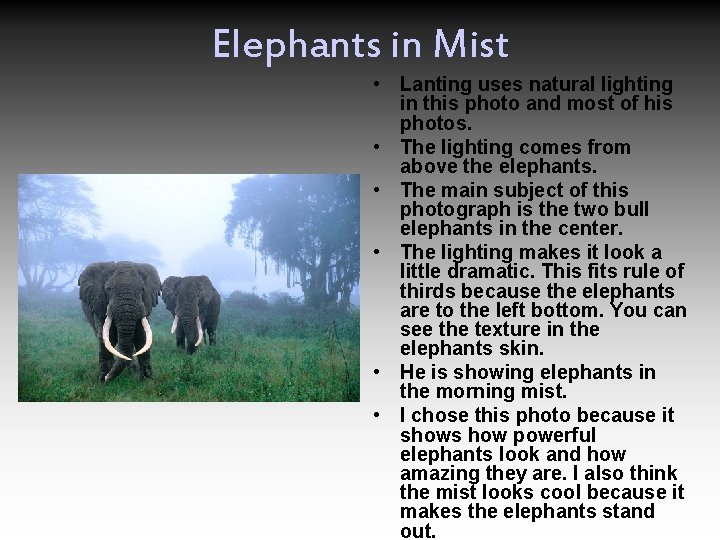
Elephants in Mist • Lanting uses natural lighting in this photo and most of his photos. • The lighting comes from above the elephants. • The main subject of this photograph is the two bull elephants in the center. • The lighting makes it look a little dramatic. This fits rule of thirds because the elephants are to the left bottom. You can see the texture in the elephants skin. • He is showing elephants in the morning mist. • I chose this photo because it shows how powerful elephants look and how amazing they are. I also think the mist looks cool because it makes the elephants stand out.
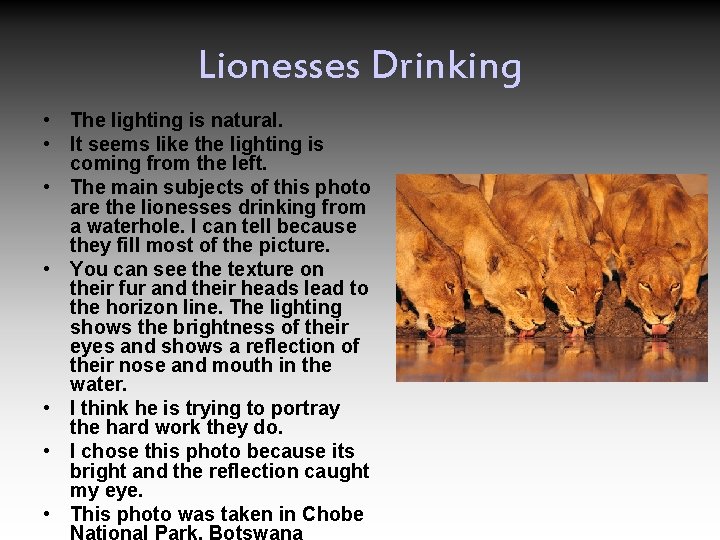
Lionesses Drinking • The lighting is natural. • It seems like the lighting is coming from the left. • The main subjects of this photo are the lionesses drinking from a waterhole. I can tell because they fill most of the picture. • You can see the texture on their fur and their heads lead to the horizon line. The lighting shows the brightness of their eyes and shows a reflection of their nose and mouth in the water. • I think he is trying to portray the hard work they do. • I chose this photo because its bright and the reflection caught my eye. • This photo was taken in Chobe National Park, Botswana
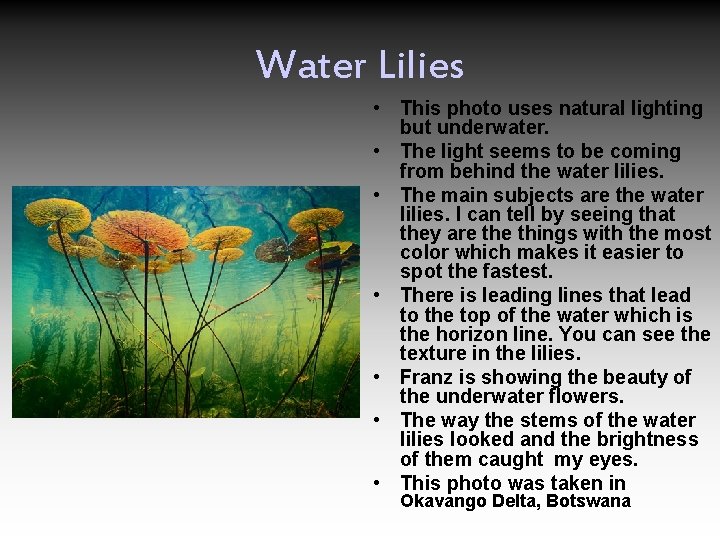
Water Lilies • This photo uses natural lighting but underwater. • The light seems to be coming from behind the water lilies. • The main subjects are the water lilies. I can tell by seeing that they are things with the most color which makes it easier to spot the fastest. • There is leading lines that lead to the top of the water which is the horizon line. You can see the texture in the lilies. • Franz is showing the beauty of the underwater flowers. • The way the stems of the water lilies looked and the brightness of them caught my eyes. • This photo was taken in Okavango Delta, Botswana
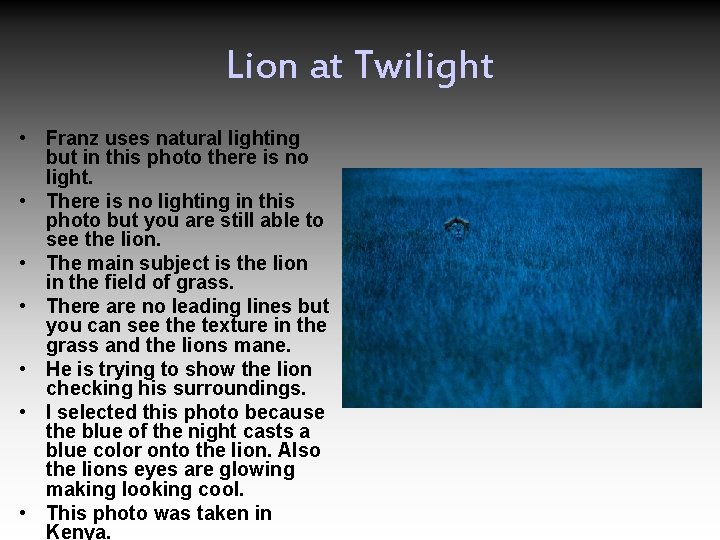
Lion at Twilight • Franz uses natural lighting but in this photo there is no light. • There is no lighting in this photo but you are still able to see the lion. • The main subject is the lion in the field of grass. • There are no leading lines but you can see the texture in the grass and the lions mane. • He is trying to show the lion checking his surroundings. • I selected this photo because the blue of the night casts a blue color onto the lion. Also the lions eyes are glowing making looking cool. • This photo was taken in Kenya.
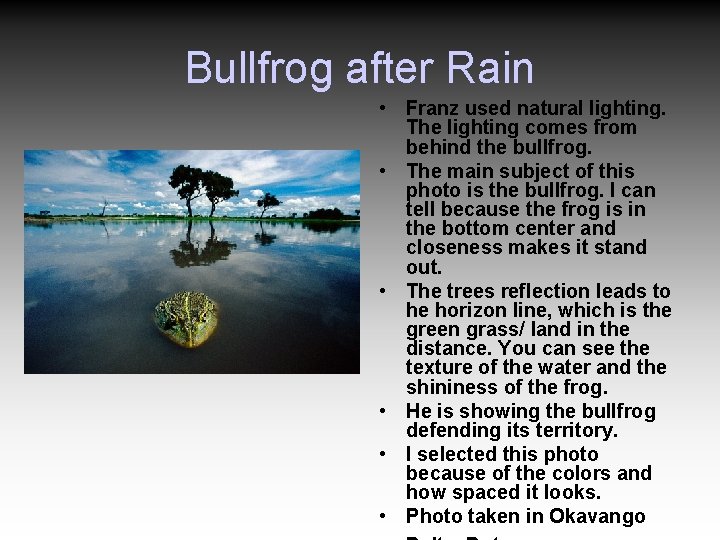
Bullfrog after Rain • Franz used natural lighting. The lighting comes from behind the bullfrog. • The main subject of this photo is the bullfrog. I can tell because the frog is in the bottom center and closeness makes it stand out. • The trees reflection leads to he horizon line, which is the green grass/ land in the distance. You can see the texture of the water and the shininess of the frog. • He is showing the bullfrog defending its territory. • I selected this photo because of the colors and how spaced it looks. • Photo taken in Okavango
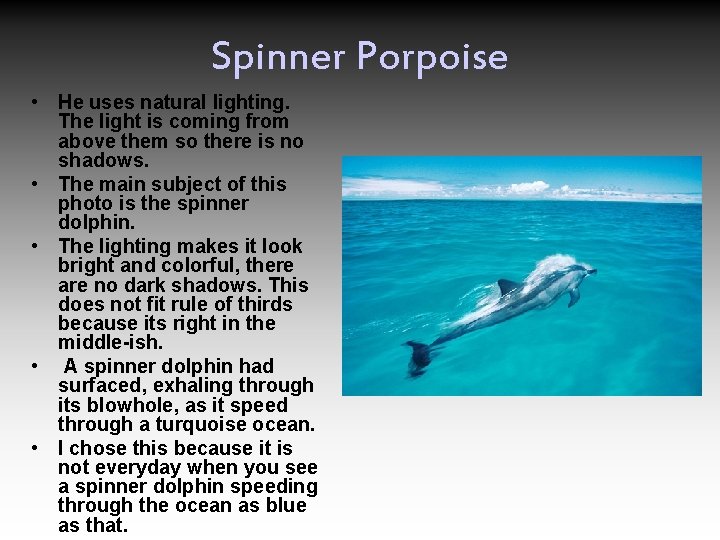
Spinner Porpoise • He uses natural lighting. The light is coming from above them so there is no shadows. • The main subject of this photo is the spinner dolphin. • The lighting makes it look bright and colorful, there are no dark shadows. This does not fit rule of thirds because its right in the middle-ish. • A spinner dolphin had surfaced, exhaling through its blowhole, as it speed through a turquoise ocean. • I chose this because it is not everyday when you see a spinner dolphin speeding through the ocean as blue as that.
Sources • http: //www. lanting. com/frans-lanting-nature -photographer. php • http: //en. wikipedia. org/wiki/Frans_Lanting
- Slides: 9