
Frangible roofs How to determine frangibility in existing
Frangible roofs How to determine frangibility in existing storage tanks
Frangible roofs • • • 2 Alex Joensen Specialist, Structural Consultancy, FORCE Technology M. Sc. Eng. & IWE EEMUA 159 Tank Integrity Assessor TLF: +4522697107 Mail: aljo@force. dk
Agenda • What is a frangible roof and why are they important • Is the roof-to-shell joint in my tank frangible -EEMUA 180 approach -Risk assessment -BS 2654 or API 650 criteria -EN 14015 -FINITE ELEMENT ANALYSIS or API 2000 • Roofs with external supporting structure • Non-frangibility? - mitigation • Conclusions and Recommendations 3
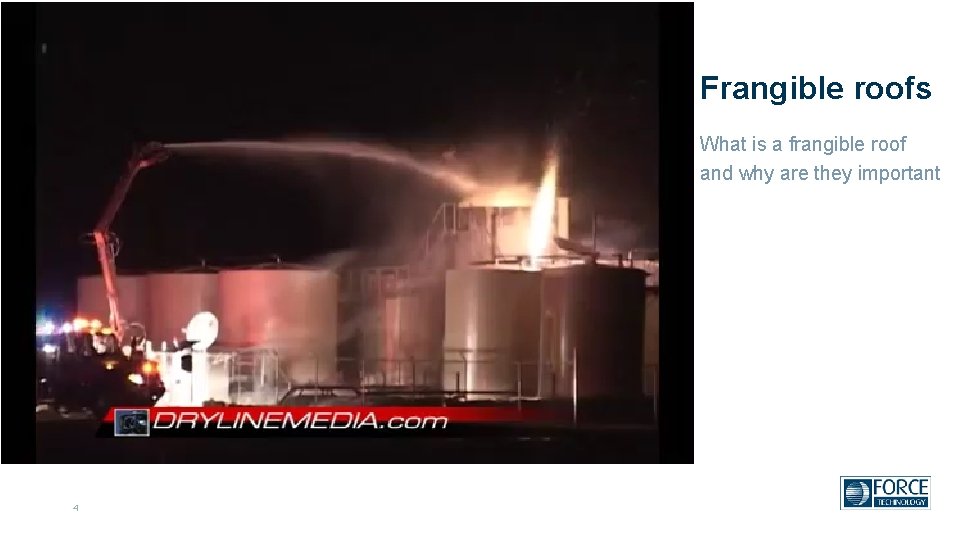
Frangible roofs What is a frangible roof and why are they important 4
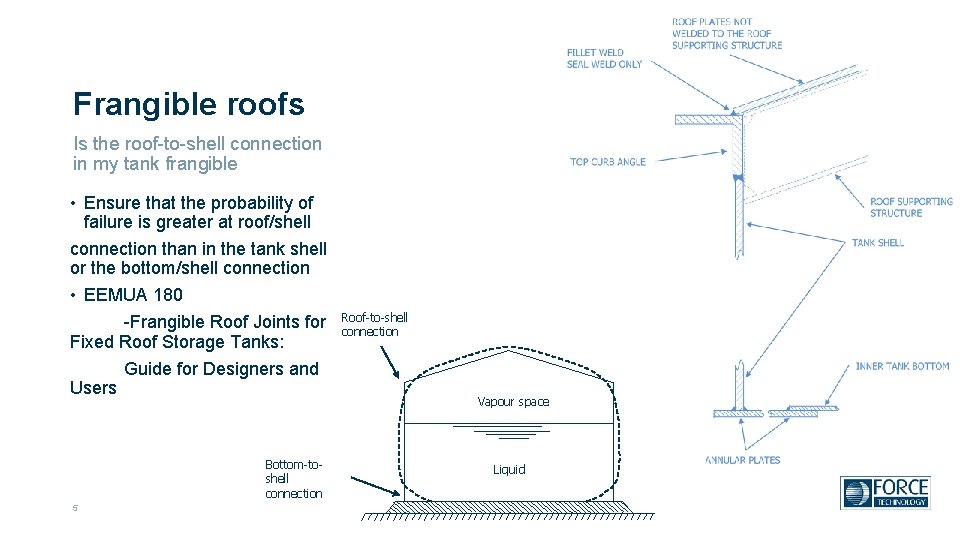
Frangible roofs Is the roof-to-shell connection in my tank frangible • Ensure that the probability of failure is greater at roof/shell connection than in the tank shell or the bottom/shell connection • EEMUA 180 -Frangible Roof Joints for Fixed Roof Storage Tanks: Guide for Designers and Users Bottom-toshell connection 5 Roof-to-shell connection Vapour space Liquid
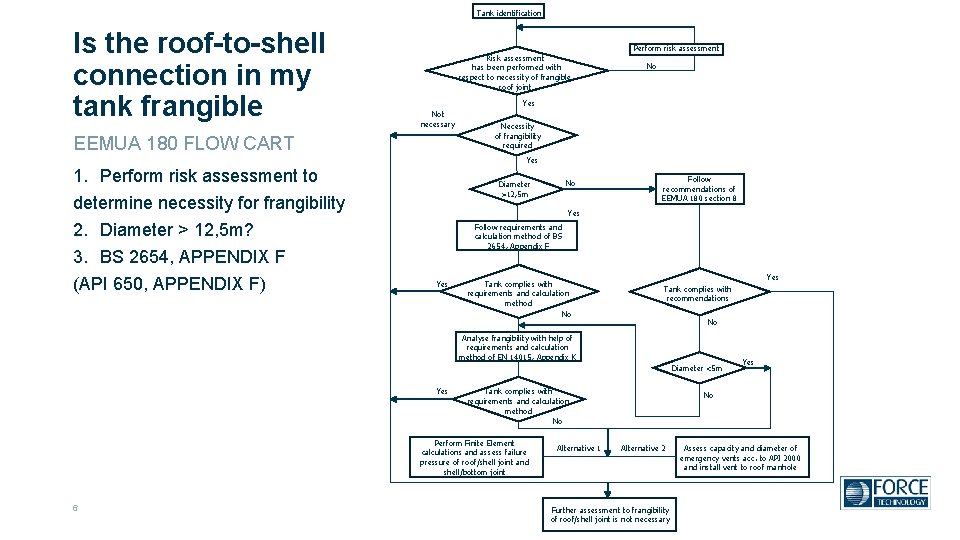
Tank identification Is the roof-to-shell connection in my tank frangible Risk assessment has been performed with respect to necessity of frangible roof joint Perform risk assessment No Yes Not necessary EEMUA 180 FLOW CART Necessity of frangibility required Yes 1. Perform risk assessment to determine necessity for frangibility 2. Diameter > 12, 5 m? 3. BS 2654, APPENDIX F (API 650, APPENDIX F) No Diameter >12, 5 m Follow recommendations of EEMUA 180 section 8 Yes Follow requirements and calculation method of BS 2654, Appendix F Yes Tank complies with requirements and calculation method No Yes Tank complies with recommendations No Analyse frangibility with help of requirements and calculation method of EN 14015, Appendix K Diameter <5 m Yes Tank complies with requirements and calculation method No Perform Finite Element calculations and assess failure pressure of roof/shell joint and shell/bottom joint 6 Alternative 1 Yes No Alternative 2 Further assessment to frangibility of roof/shell joint is not necessary Assess capacity and diameter of emergency vents acc. to API 2000 and install vent to roof manhole
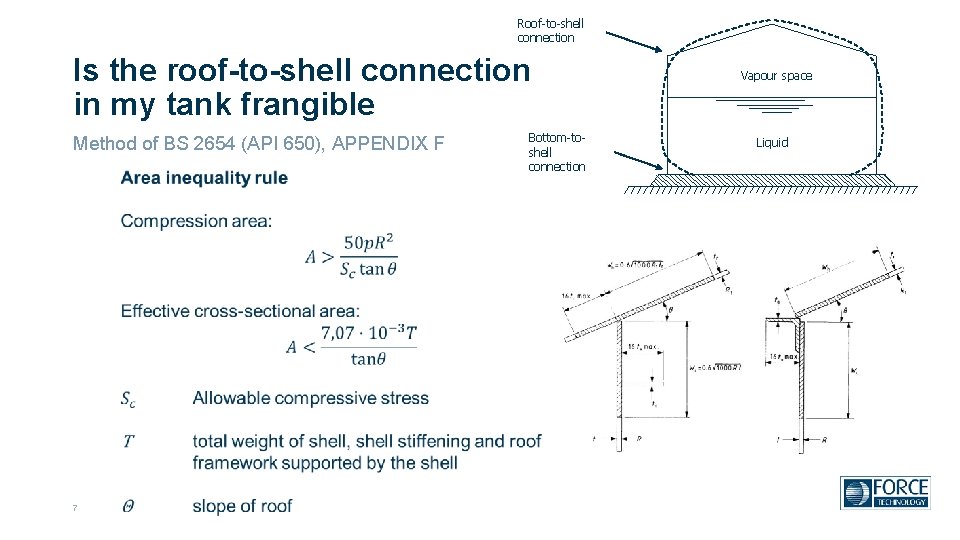
Roof-to-shell connection Is the roof-to-shell connection in my tank frangible Method of BS 2654 (API 650), APPENDIX F 7 Bottom-toshell connection Vapour space Liquid
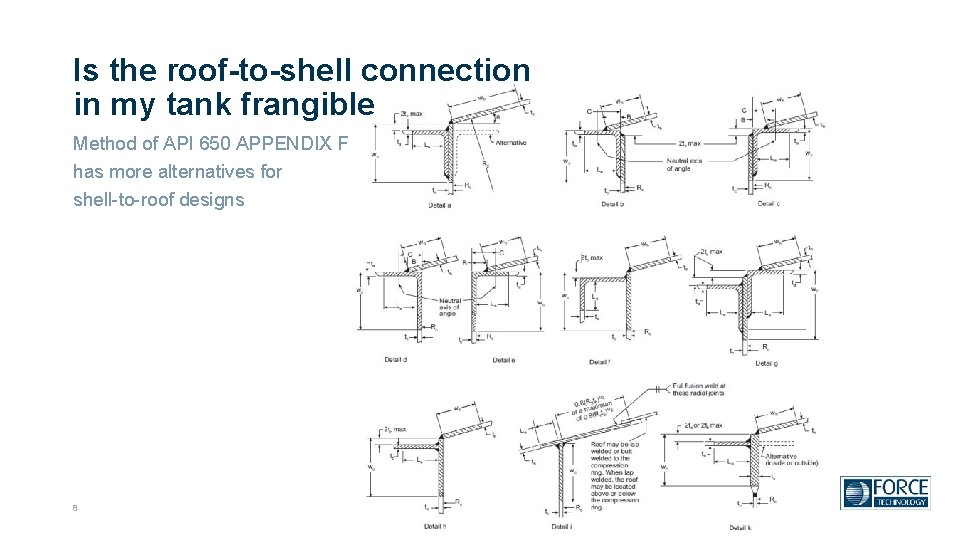
Is the roof-to-shell connection in my tank frangible Method of API 650 APPENDIX F has more alternatives for shell-to-roof designs 8
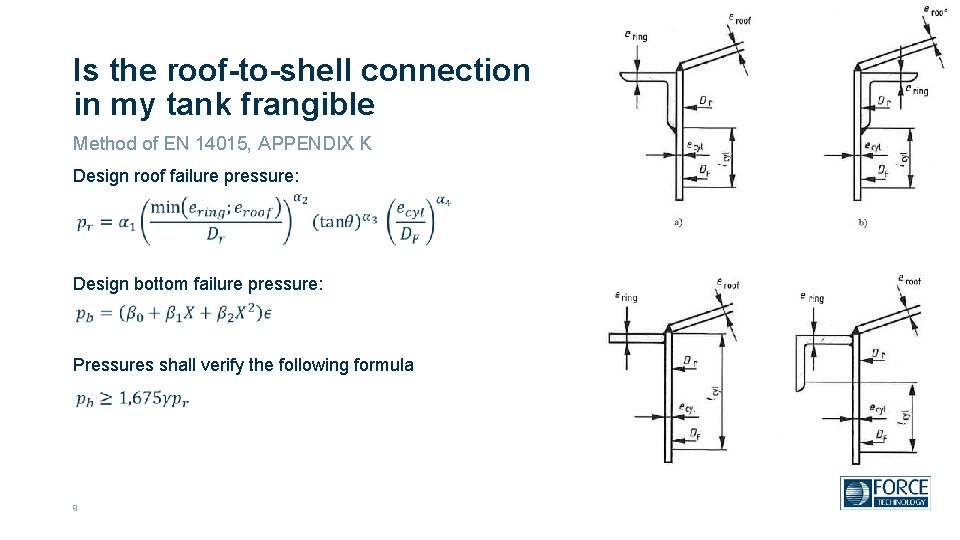
Is the roof-to-shell connection in my tank frangible Method of EN 14015, APPENDIX K Design roof failure pressure: Design bottom failure pressure: Pressures shall verify the following formula 9
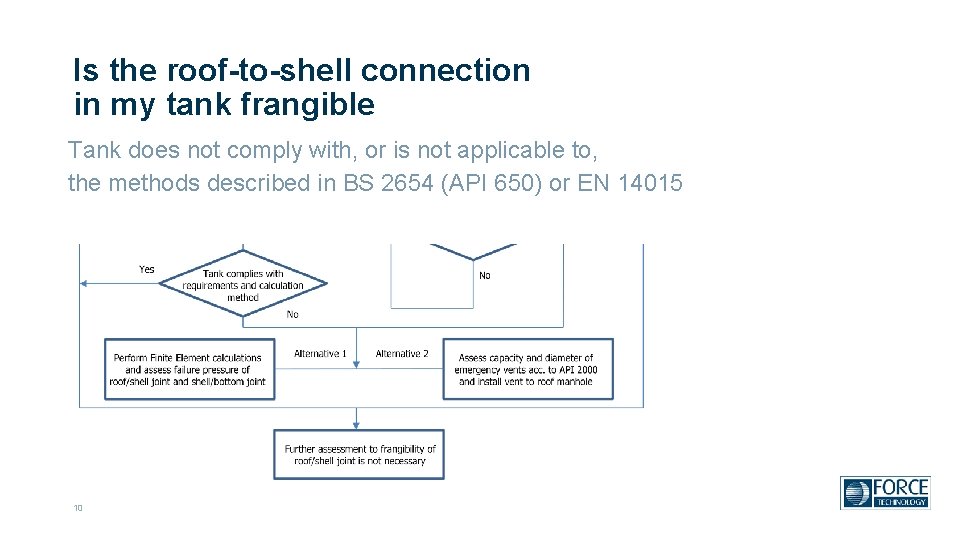
Is the roof-to-shell connection in my tank frangible Tank does not comply with, or is not applicable to, the methods described in BS 2654 (API 650) or EN 14015 10
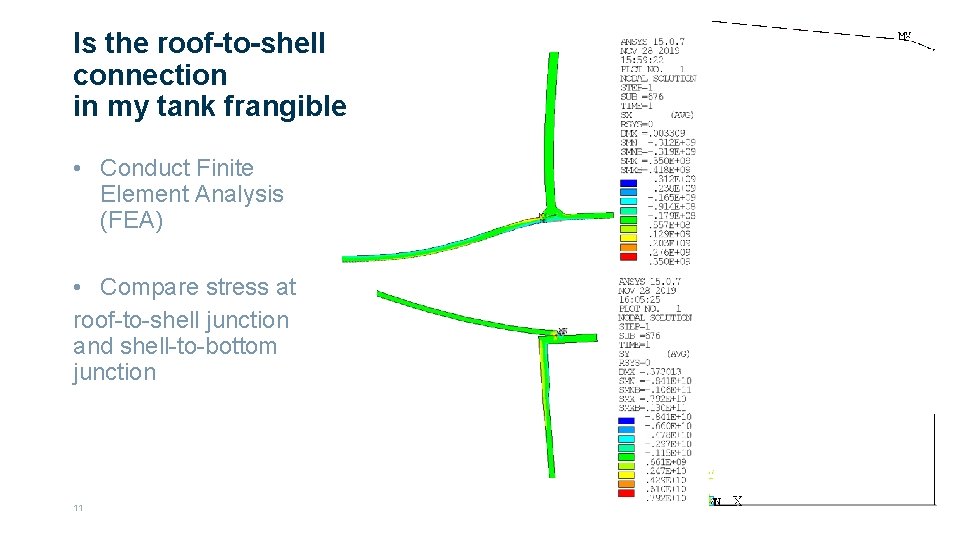
Is the roof-to-shell connection in my tank frangible • Conduct Finite Element Analysis (FEA) • Compare stress at roof-to-shell junction and shell-to-bottom junction 11
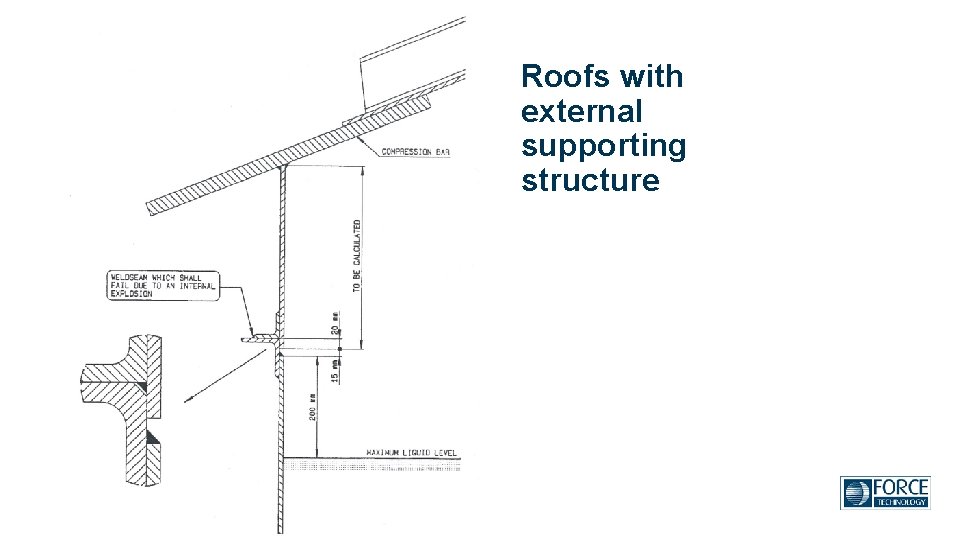
Roofs with external supporting structure 12
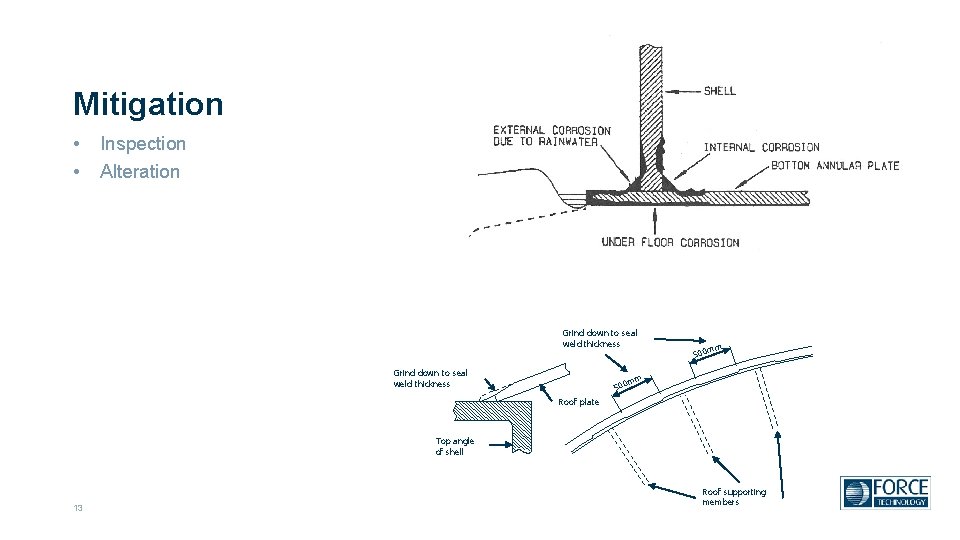
Mitigation • • Inspection Alteration Grind down to seal weld thickness m 500 m Roof plate Top angle of shell 13 Roof supporting members
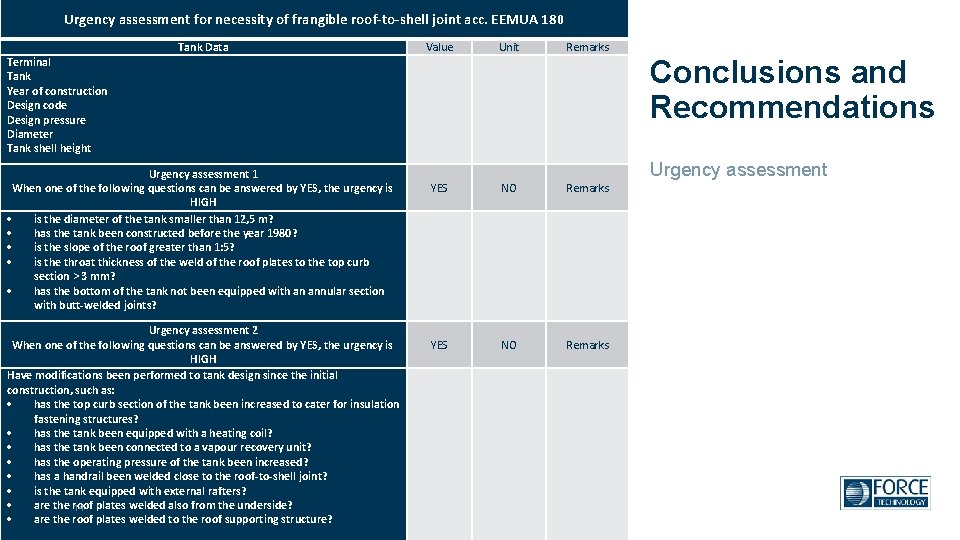
Urgency assessment for necessity of frangible roof-to-shell joint acc. EEMUA 180 Tank Data Value Unit Remarks Conclusions and Recommendations Terminal Tank Year of construction Design code Design pressure Diameter Tank shell height Urgency assessment 1 When one of the following questions can be answered by YES, the urgency is HIGH is the diameter of the tank smaller than 12, 5 m? has the tank been constructed before the year 1980? is the slope of the roof greater than 1: 5? is the throat thickness of the weld of the roof plates to the top curb section > 3 mm? has the bottom of the tank not been equipped with an annular section with butt-welded joints? Urgency assessment 2 When one of the following questions can be answered by YES, the urgency is HIGH Have modifications been performed to tank design since the initial construction, such as: has the top curb section of the tank been increased to cater for insulation fastening structures? has the tank been equipped with a heating coil? has the tank been connected to a vapour recovery unit? has the operating pressure of the tank been increased? has a handrail been welded close to the roof-to-shell joint? is the tank equipped with external rafters? are the roof 14 plates welded also from the underside? are the roof plates welded to the roof supporting structure? Urgency assessment YES NO Remarks

Mere information på forcetechnology. com
- Slides: 15