
Framing Angles Other Compositional Elements Basic Film Composition
Framing, Angles & Other Compositional Elements Basic Film Composition
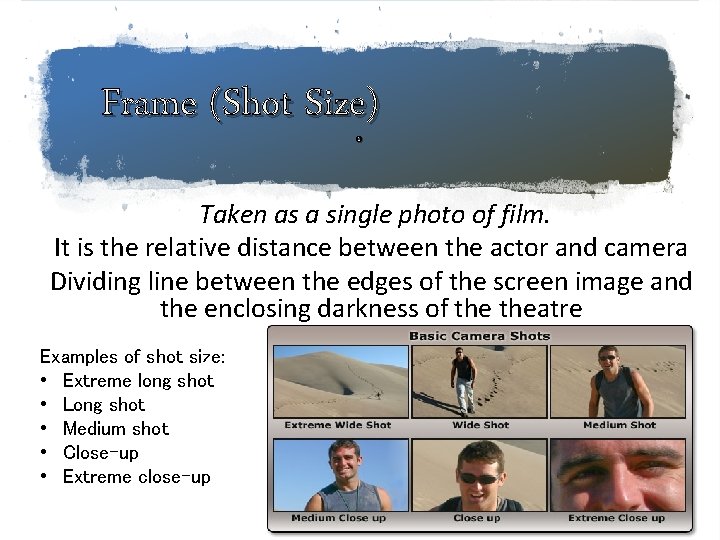
Frame (Shot Size) o Taken as a single photo of film. It is the relative distance between the actor and camera Dividing line between the edges of the screen image and the enclosing darkness of theatre Examples of shot size: • Extreme long shot • Long shot • Medium shot • Close-up • Extreme close-up
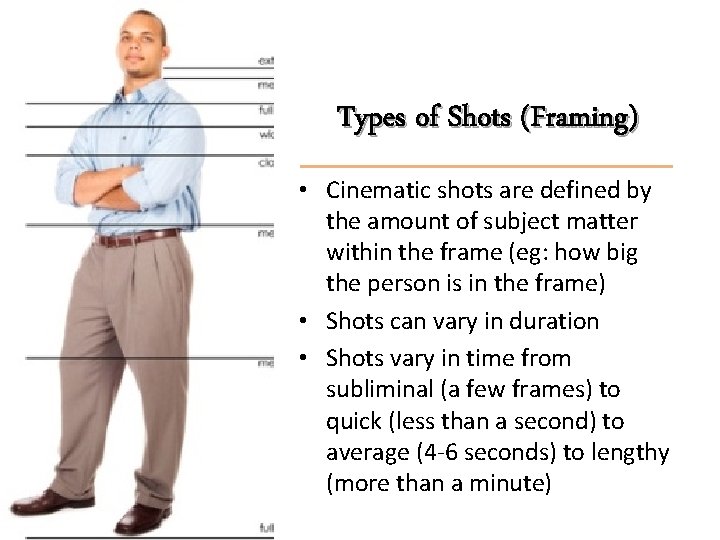
Types of Shots (Framing) • Cinematic shots are defined by the amount of subject matter within the frame (eg: how big the person is in the frame) • Shots can vary in duration • Shots vary in time from subliminal (a few frames) to quick (less than a second) to average (4 -6 seconds) to lengthy (more than a minute)
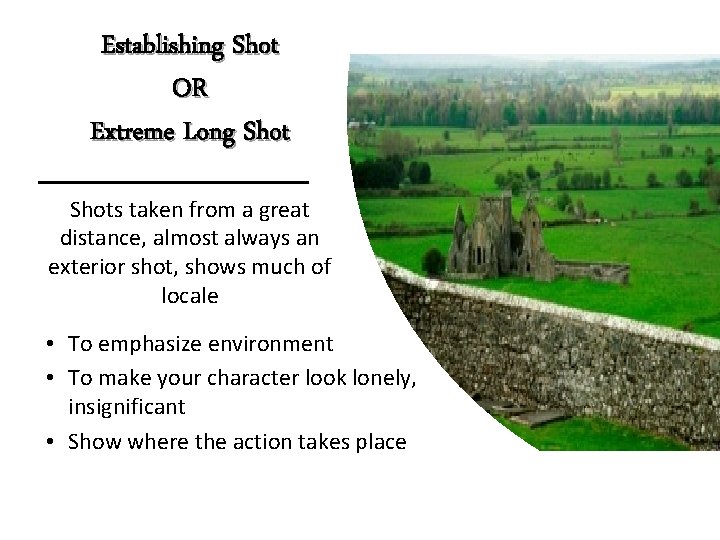
Establishing Shot OR Extreme Long Shots taken from a great distance, almost always an exterior shot, shows much of locale • To emphasize environment • To make your character look lonely, insignificant • Show where the action takes place
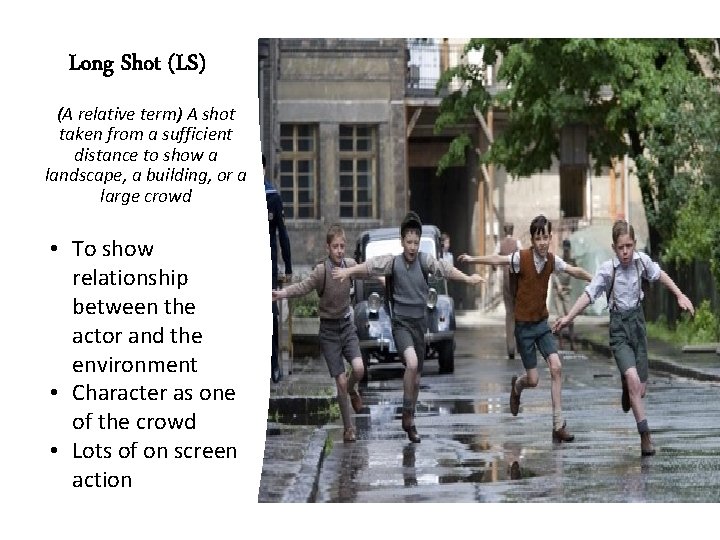
Long Shot (LS) (A relative term) A shot taken from a sufficient distance to show a landscape, a building, or a large crowd • To show relationship between the actor and the environment • Character as one of the crowd • Lots of on screen action
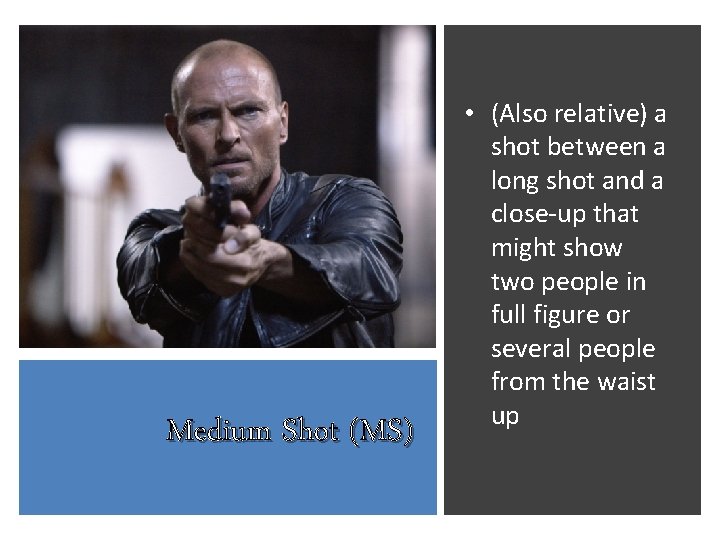
Medium Shot (MS) • (Also relative) a shot between a long shot and a close-up that might show two people in full figure or several people from the waist up
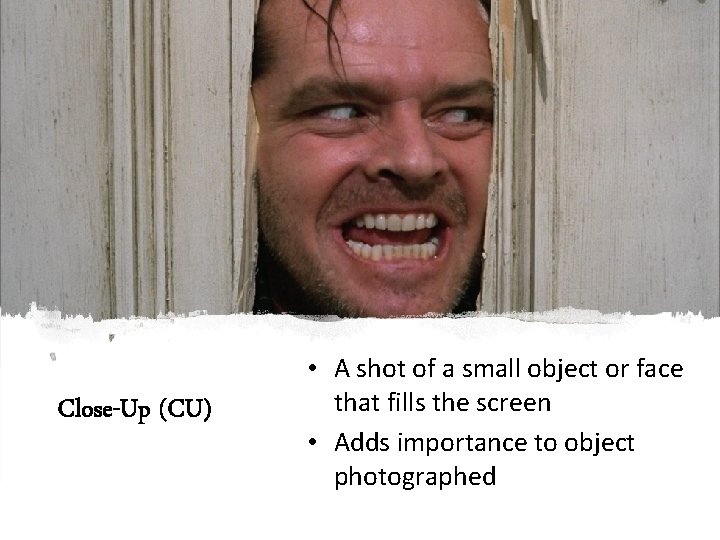
Close-Up (CU) • A shot of a small object or face that fills the screen • Adds importance to object photographed
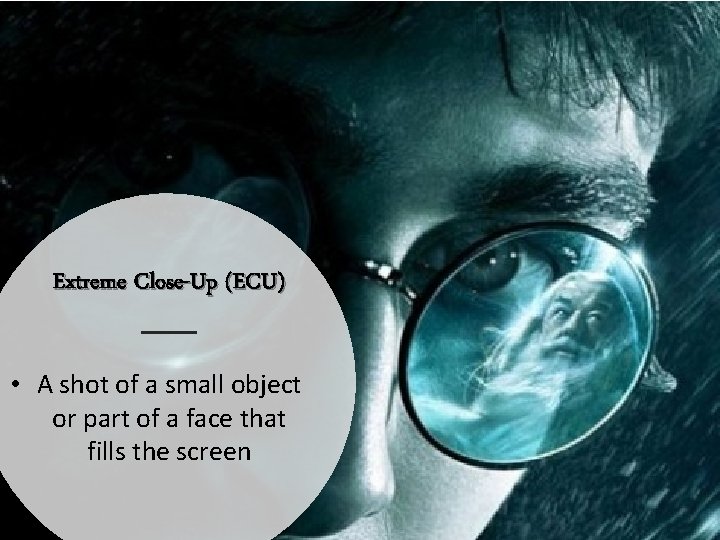
Extreme Close-Up (ECU) • A shot of a small object or part of a face that fills the screen
Types of Angles • The angle is determined by where the camera is placed not the subject matter. ~Angles can serve as commentary on the subject matter.
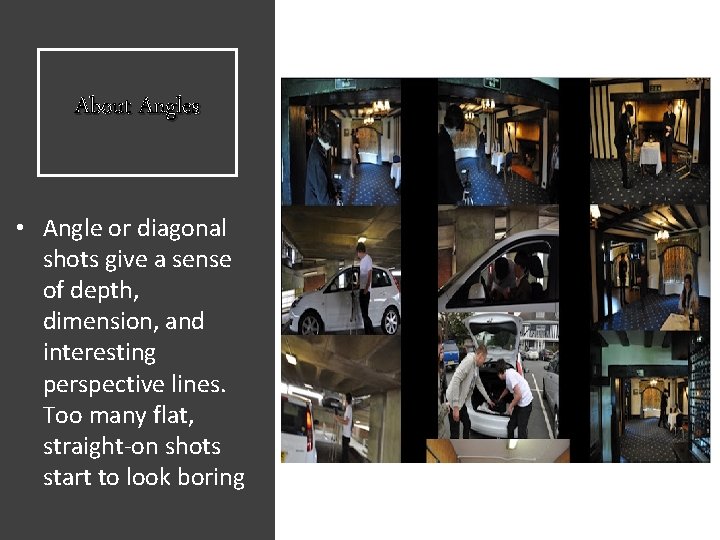
About Angles • Angle or diagonal shots give a sense of depth, dimension, and interesting perspective lines. Too many flat, straight-on shots start to look boring
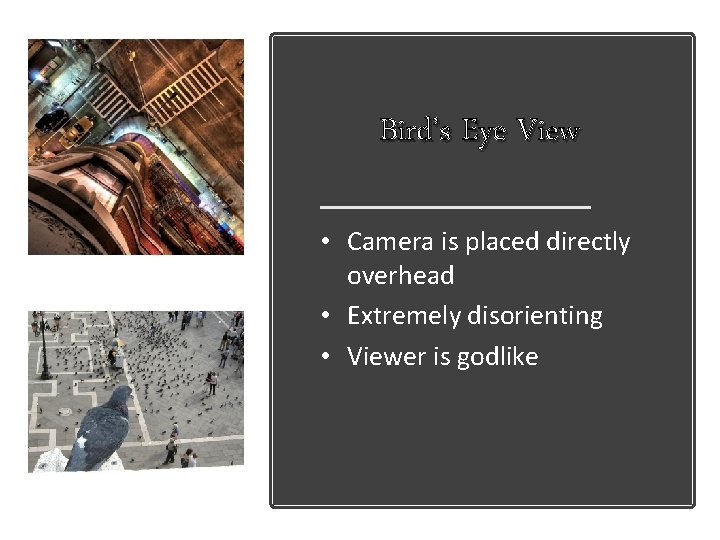
Bird’s Eye View • Camera is placed directly overhead • Extremely disorienting • Viewer is godlike
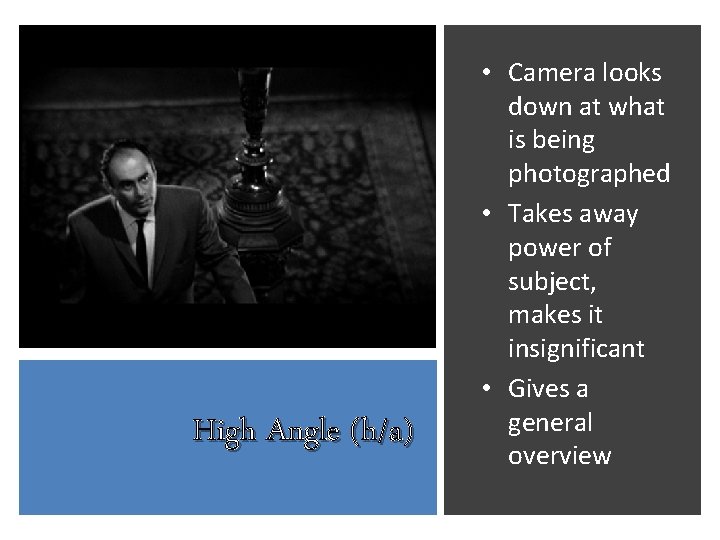
High Angle (h/a) • Camera looks down at what is being photographed • Takes away power of subject, makes it insignificant • Gives a general overview
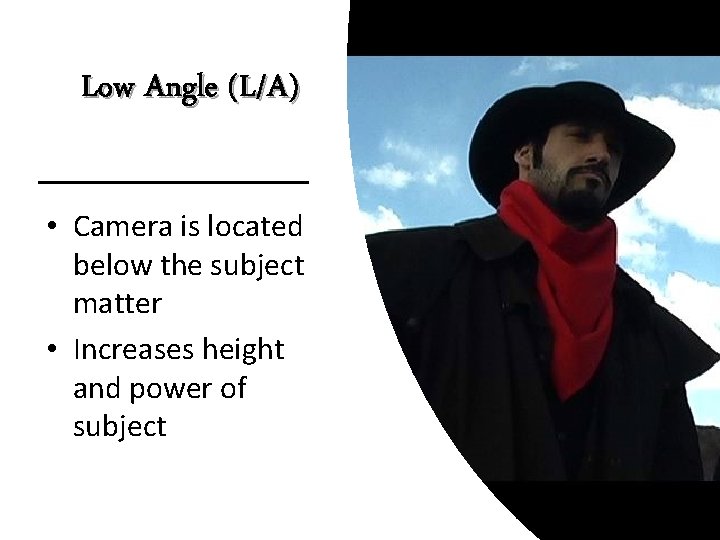
Low Angle (L/A) • Camera is located below the subject matter • Increases height and power of subject
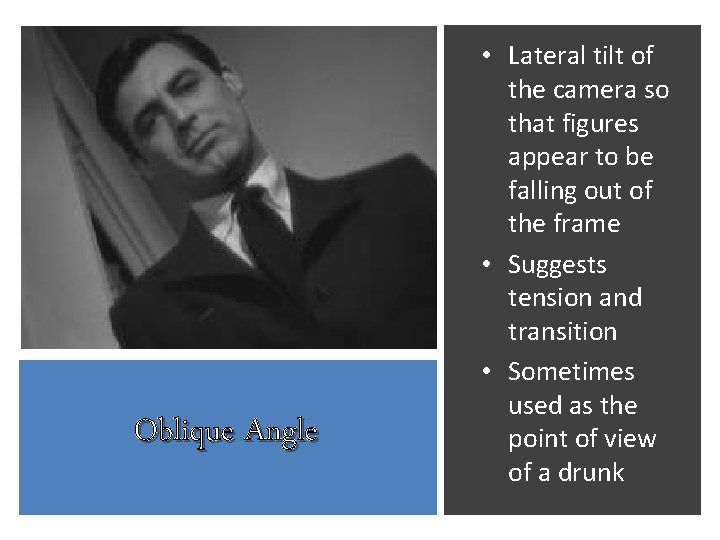
Oblique Angle • Lateral tilt of the camera so that figures appear to be falling out of the frame • Suggests tension and transition • Sometimes used as the point of view of a drunk
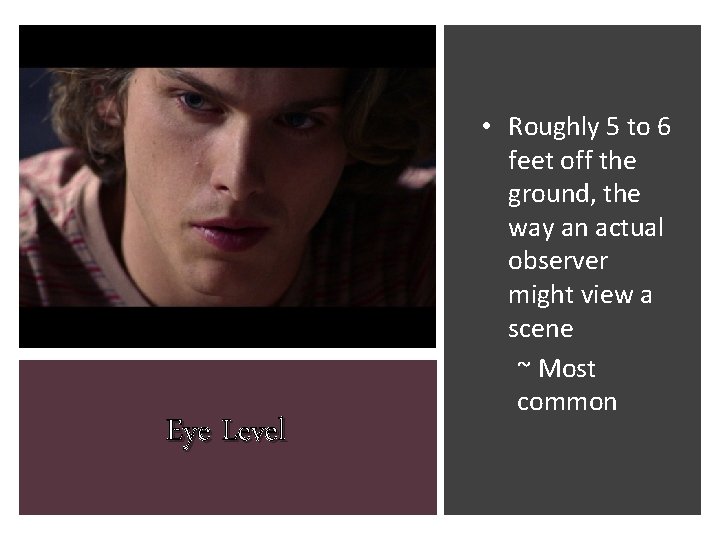
Eye Level • Roughly 5 to 6 feet off the ground, the way an actual observer might view a scene ~ Most common
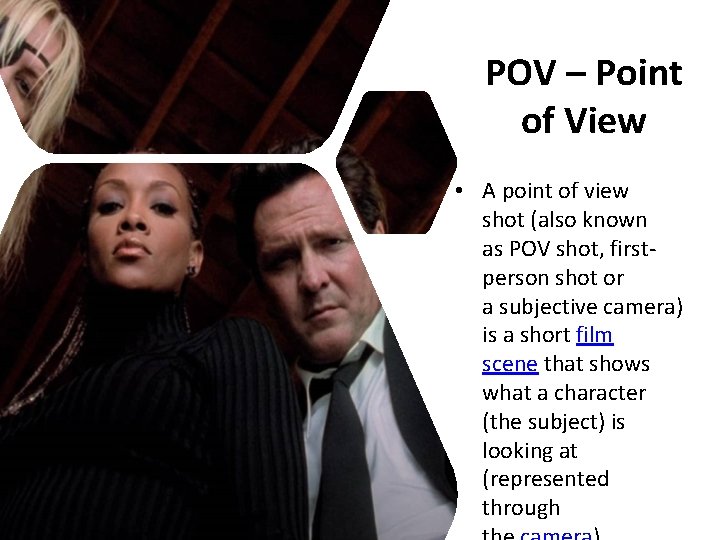
POV – Point of View • A point of view shot (also known as POV shot, firstperson shot or a subjective camera) is a short film scene that shows what a character (the subject) is looking at (represented through
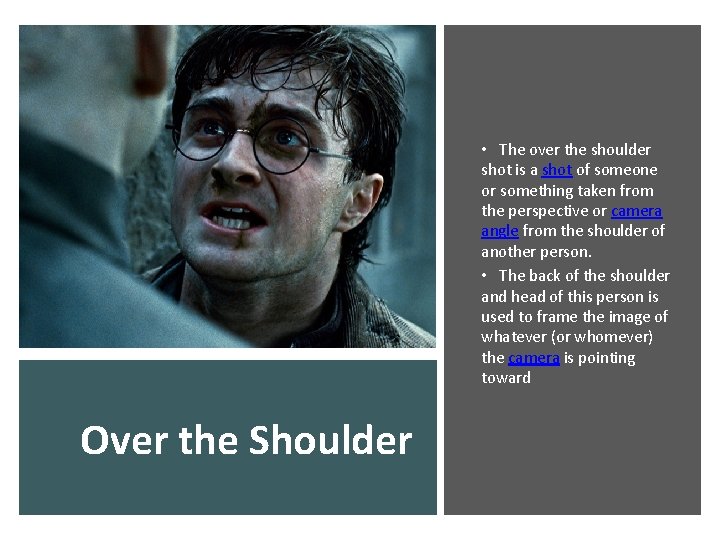
• The over the shoulder shot is a shot of someone or something taken from the perspective or camera angle from the shoulder of another person. • The back of the shoulder and head of this person is used to frame the image of whatever (or whomever) the camera is pointing toward Over the Shoulder
Shot Composition Composing your shots: • Composing your shots within a frame is a skill you will get better at the more you do it and the more you study how other filmmakers create great shots
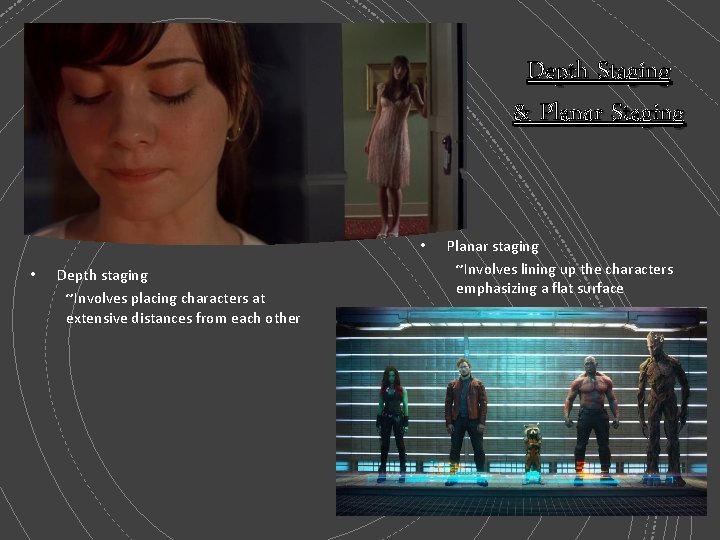
Depth Staging & Planar Staging • • Depth staging ~Involves placing characters at extensive distances from each other Planar staging ~Involves lining up the characters emphasizing a flat surface
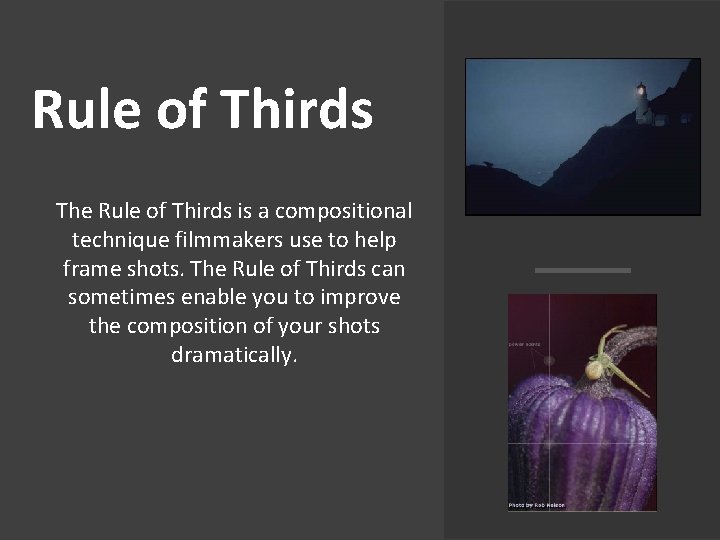
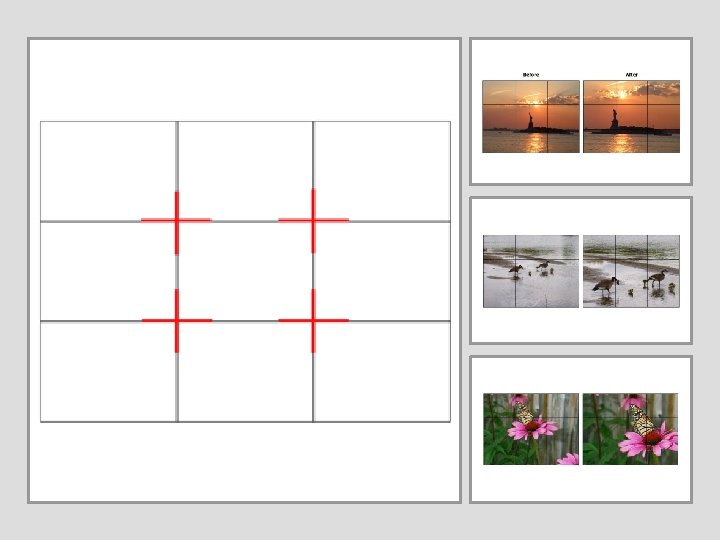
Rule of Thirds The Rule of Thirds is a compositional technique filmmakers use to help frame shots. The Rule of Thirds can sometimes enable you to improve the composition of your shots dramatically.
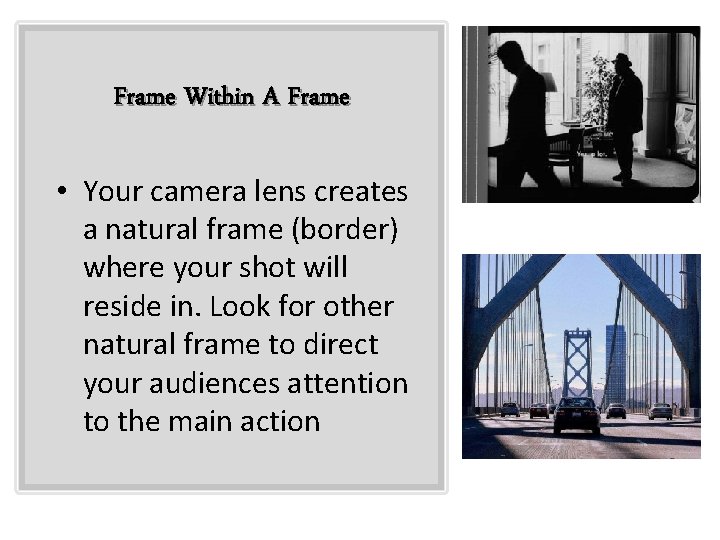
Frame Within A Frame • Your camera lens creates a natural frame (border) where your shot will reside in. Look for other natural frame to direct your audiences attention to the main action
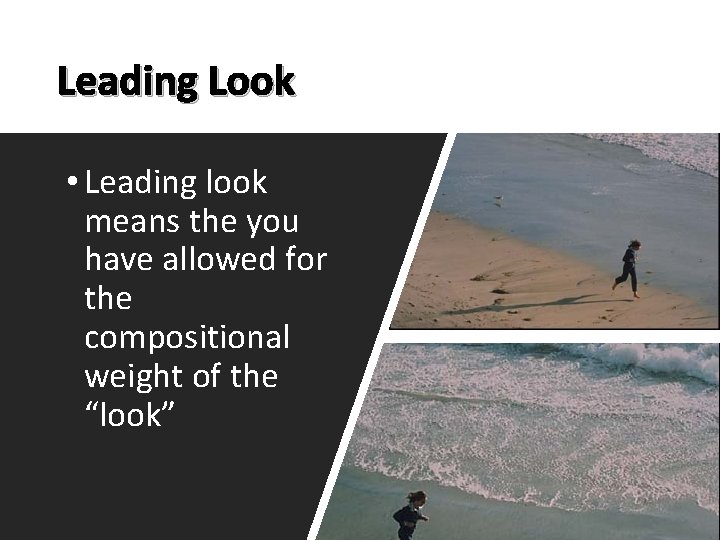
Leading Look • Leading look means the you have allowed for the compositional weight of the “look”
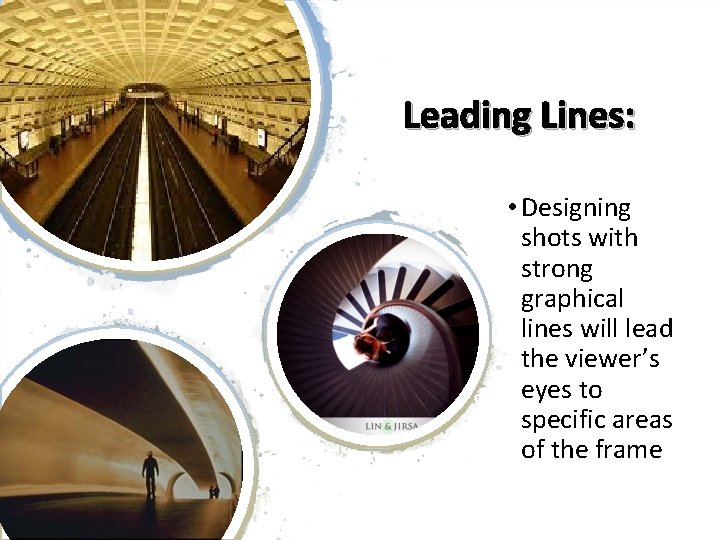
Leading Lines: • Designing shots with strong graphical lines will lead the viewer’s eyes to specific areas of the frame
- Slides: 24