
Frame Narratives and Epistolary Novels What is a

- Slides: 13
Frame Narratives and Epistolary Novels!
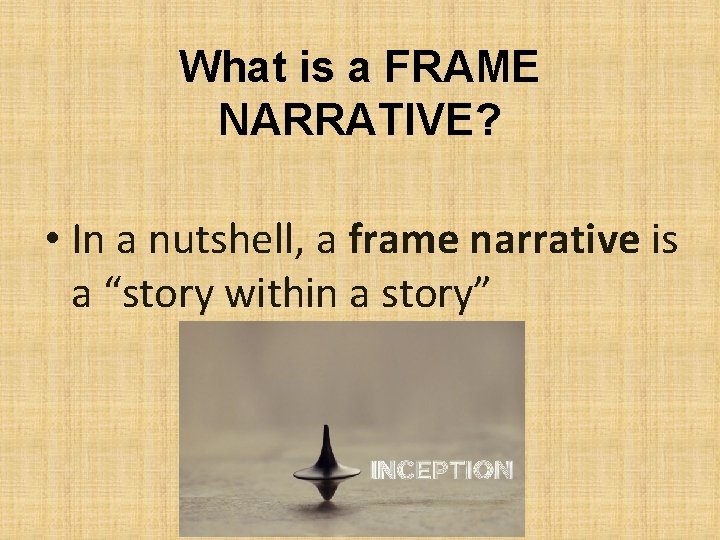
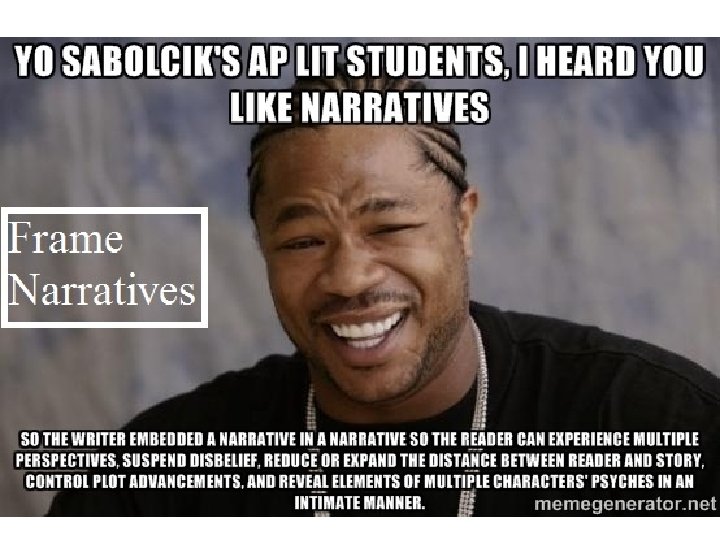
What is a FRAME NARRATIVE? • In a nutshell, a frame narrative is a “story within a story”
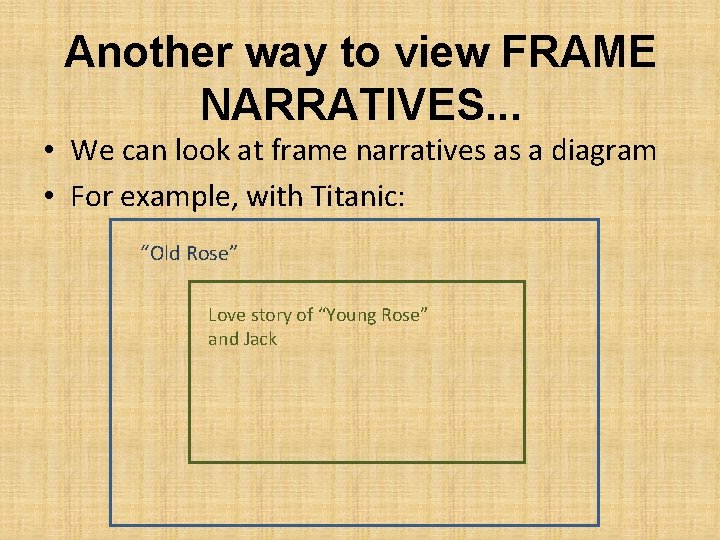
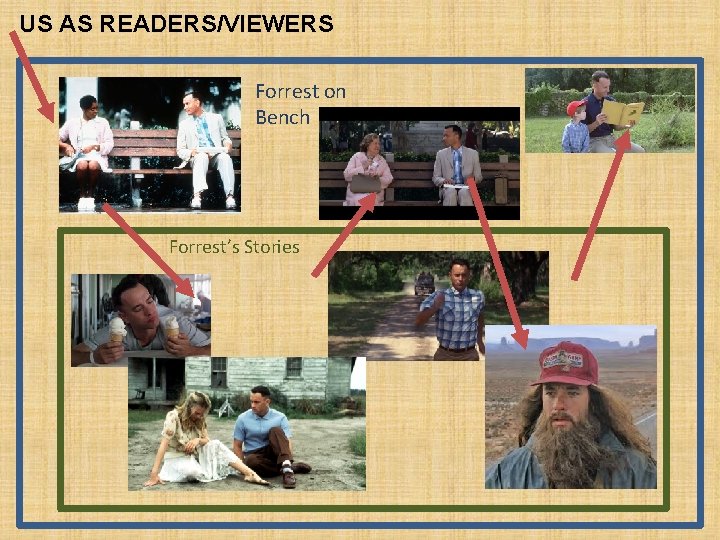
Examples of FRAME NARRATIVES. . . • Titanic – (the movie) the story of “Old Rose” revisiting the site of the Titanic “bookends” the love story of Jack and “Young Rose” onboard the ship in 1912 • Forrest Gump – Forrest (in the present on the bench) is telling his life story (of Forrest in the past) to various citizens on the park bench • Can you think of any others?
Another way to view FRAME NARRATIVES. . . • We can look at frame narratives as a diagram • For example, with Titanic: “Old Rose” Love story of “Young Rose” and Jack
US AS READERS/VIEWERS Forrest on Bench Forrest’s Stories
MORE FRAME NARRATIVES. . . • “The Rime of the Ancient Mariner” • Frankenstein • The Canterbury Tales • Be sure to take note when we switch between “the frame” and the interior narratives. • Ask yourself, why the interruption? !
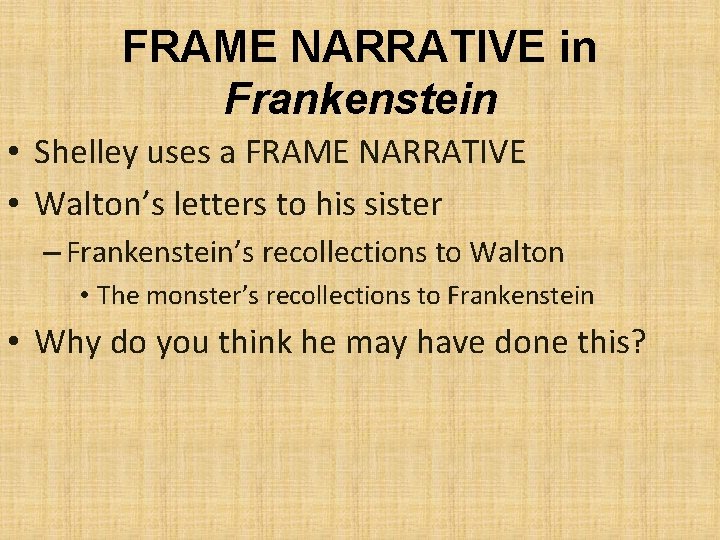
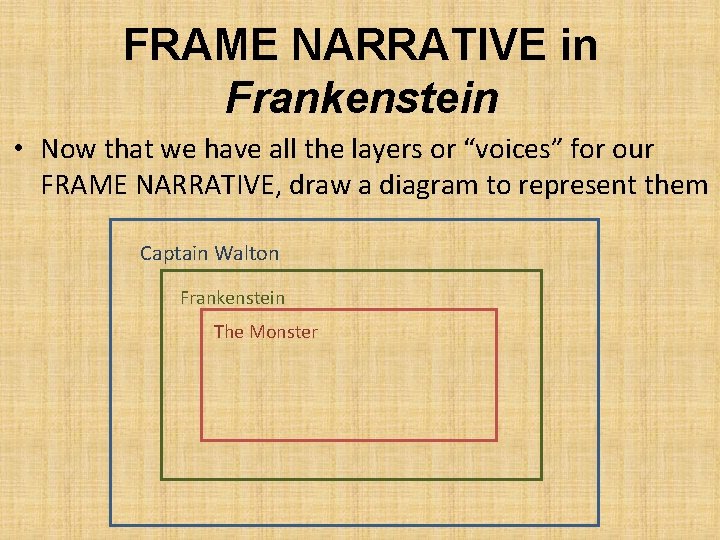
FRAME NARRATIVE in Frankenstein • Shelley uses a FRAME NARRATIVE • Walton’s letters to his sister – Frankenstein’s recollections to Walton • The monster’s recollections to Frankenstein • Why do you think he may have done this?
FRAME NARRATIVE in Frankenstein • Now that we have all the layers or “voices” for our FRAME NARRATIVE, draw a diagram to represent them Captain Walton Frankenstein The Monster
So what is the PURPOSE of a FRAME NARRATIVE? • The shifts in point of view (POV) serve to create a sense of verisimilitude • Verisimilitude– the appearance of something to be real or true – when what we are reading appears to be true • e. g. A character in a book cuts his/her finger and the finger bleeds. We believe it is happening – if the book said the cut finger produced sparks of fire rather than blood, the story would NOT possess verisimilitude
Epistolary Novel • A novel written as a series of documents • Could be letters, radio broadcasts, newspaper clippings, diary entries, etc. • Subjectivity vs. Objectivity of Narration • Newspaper Articles vs. Diary Entries • Important considerations: reliability of narrator, psychological approaches, • Examples: Dracula, Frankenstein, The Color Purple, The Perks of Being a Wallflower, The Screwtape Letters, World War Z
Application to Frankenstein • Discuss the inclusion of frame narration and epistolary form in our current novel, Frankenstein. • Determine the effects and implications of these narrative choices on larger meanings of the text.