
FRAILTY SARCOPENIA PHYSICAL FUNCTION Dr Victoria Keevil Consultant



- Slides: 44
FRAILTY, SARCOPENIA & PHYSICAL FUNCTION Dr Victoria Keevil Consultant in Geriatric Medicine Addenbrooke’s Hospital
Aims • Background • Concepts of frailty and sarcopenia • Inactivity, exercise and ageing
BACKGROUND
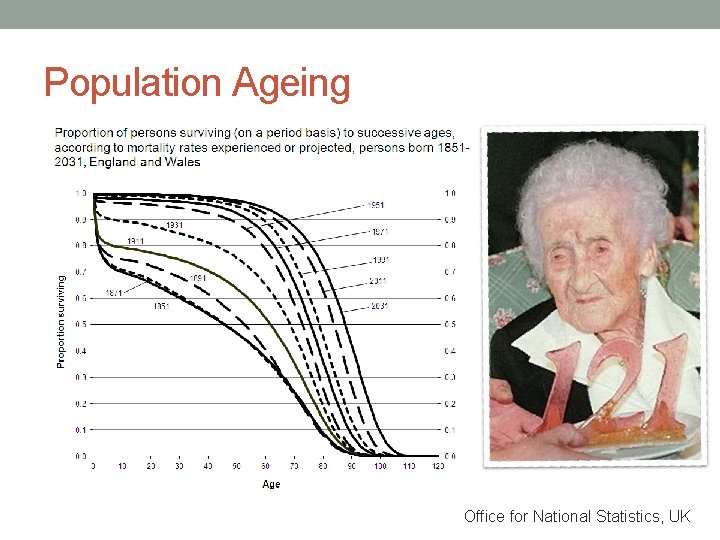
Population Ageing Office for National Statistics, UK
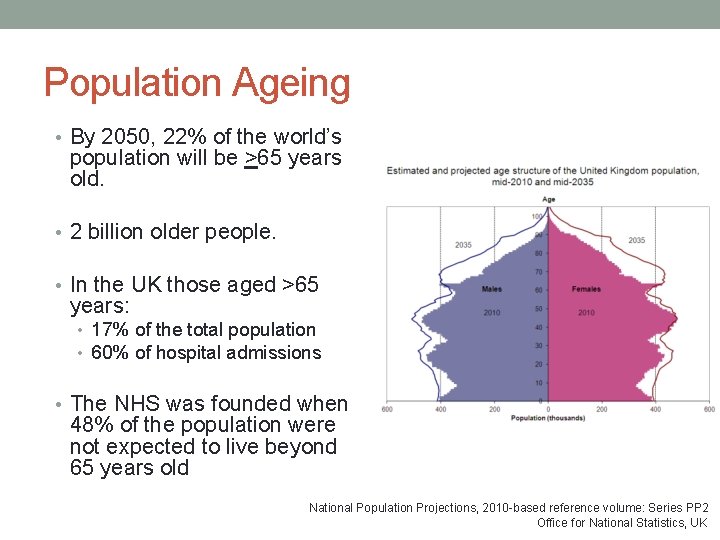
Population Ageing • By 2050, 22% of the world’s population will be >65 years old. • 2 billion older people. • In the UK those aged >65 years: • 17% of the total population • 60% of hospital admissions • The NHS was founded when 48% of the population were not expected to live beyond 65 years old National Population Projections, 2010 -based reference volume: Series PP 2 Office for National Statistics, UK
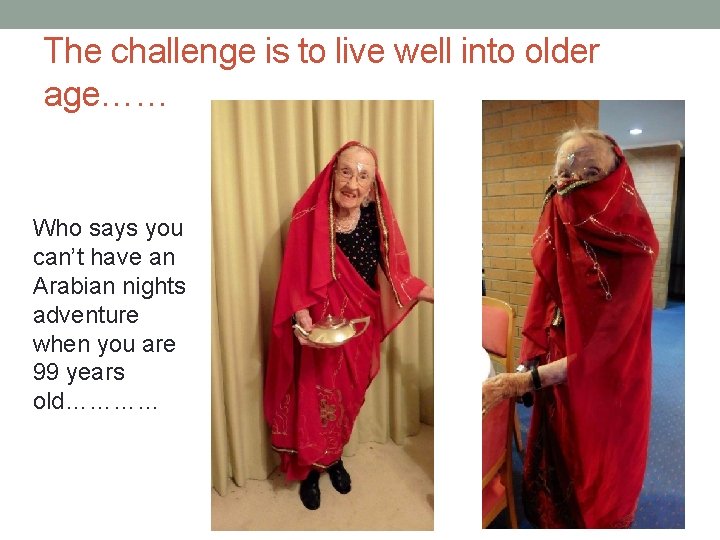
The challenge is to live well into older age…… Who says you can’t have an Arabian nights adventure when you are 99 years old…………
FRAILTY & SARCOPENIA
Frailty • ‘………. . a biological syndrome of decreases reserve and resistance to stressors, resulting from cumulative declines across multiple physiologic systems, and causing vulnerability……………’ (Fried et al. , J Gerontol A Biol Sci Med Sci, 2001) • ‘……. a medical syndrome with multiple causes and contributors that is characterised by diminished strength, endurance and reduced physiologic function that increases an individual’s vulnerability for developing increased dependency and/or death. ’ (Morley, J Am Med Dir Assoc, 2013)
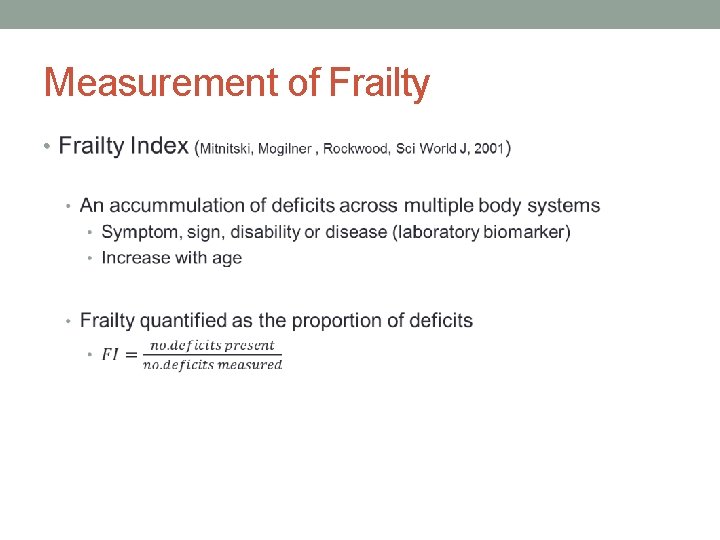
Measurement of Frailty •
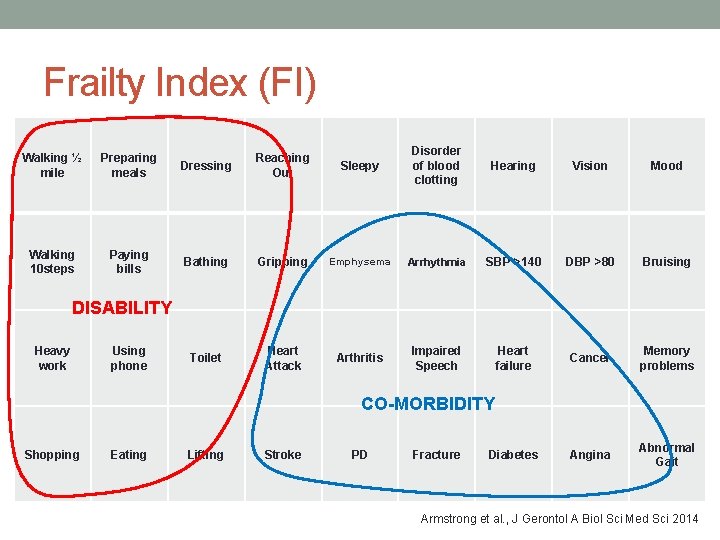
Frailty Index (FI) Walking ½ mile Preparing meals Walking 10 steps Paying bills Sleepy Disorder of blood clotting Hearing Vision Mood Gripping Emphysema Arrhythmia SBP >140 DBP >80 Bruising Heart Attack Arthritis Impaired Speech Heart failure Cancer Memory problems Diabetes Angina Abnormal Gait Dressing Reaching Out Bathing Toilet DISABILITY Heavy work Using phone CO-MORBIDITY Shopping Eating Lifting Stroke PD Fracture Armstrong et al. , J Gerontol A Biol Sci Med Sci 2014
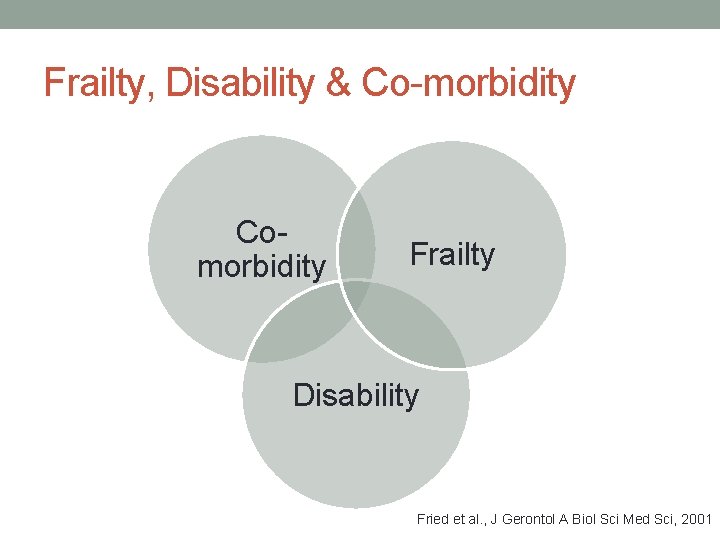
Frailty, Disability & Co-morbidity Comorbidity Frailty Disability Fried et al. , J Gerontol A Biol Sci Med Sci, 2001
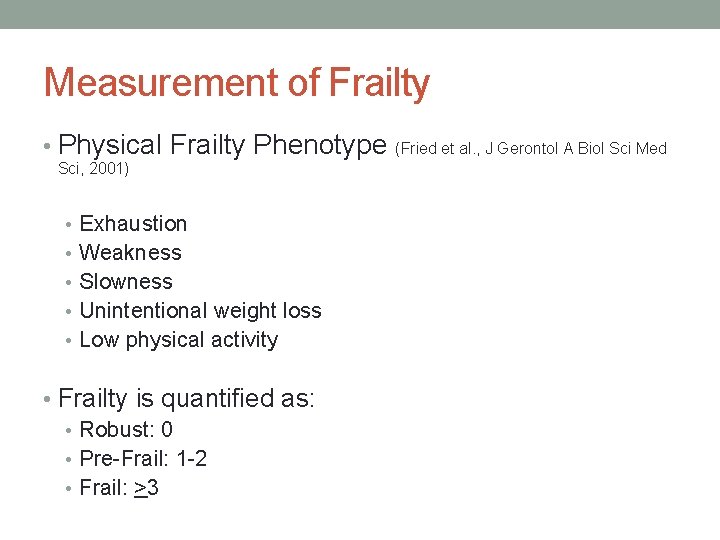
Measurement of Frailty • Physical Frailty Phenotype (Fried et al. , J Gerontol A Biol Sci Med Sci, 2001) • Exhaustion • Weakness • Slowness • Unintentional weight loss • Low physical activity • Frailty is quantified as: • Robust: 0 • Pre-Frail: 1 -2 • Frail: >3
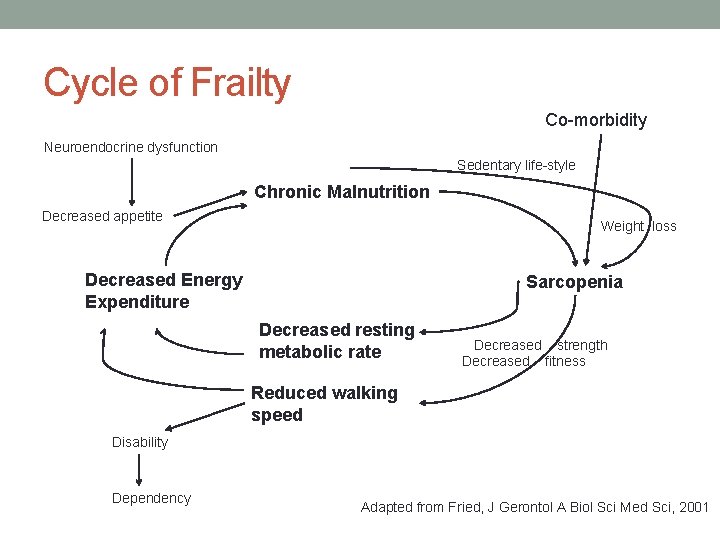
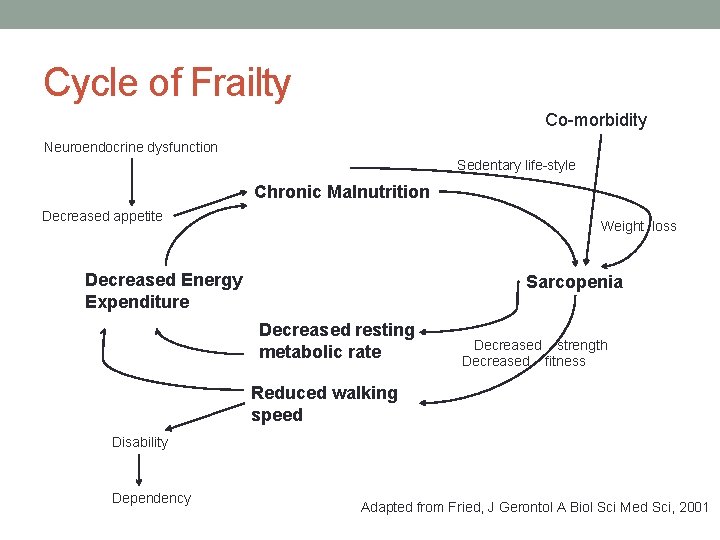
Cycle of Frailty Co-morbidity Neuroendocrine dysfunction Sedentary life-style Chronic Malnutrition Decreased appetite Weight loss Decreased Energy Expenditure Sarcopenia Decreased resting metabolic rate Decreased strength Decreased fitness Reduced walking speed Disability Dependency Adapted from Fried, J Gerontol A Biol Sci Med Sci, 2001
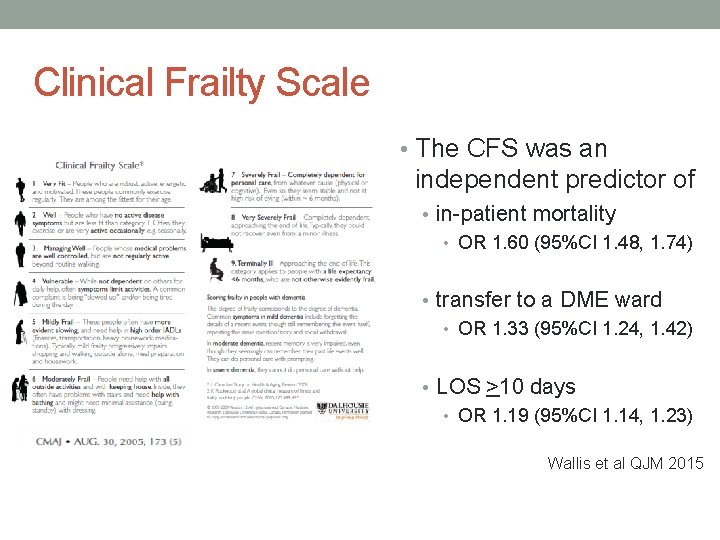
Clinical Frailty Scale • The CFS was an independent predictor of • in-patient mortality • OR 1. 60 (95%CI 1. 48, 1. 74) • transfer to a DME ward • OR 1. 33 (95%CI 1. 24, 1. 42) • LOS >10 days • OR 1. 19 (95%CI 1. 14, 1. 23) Wallis et al QJM 2015
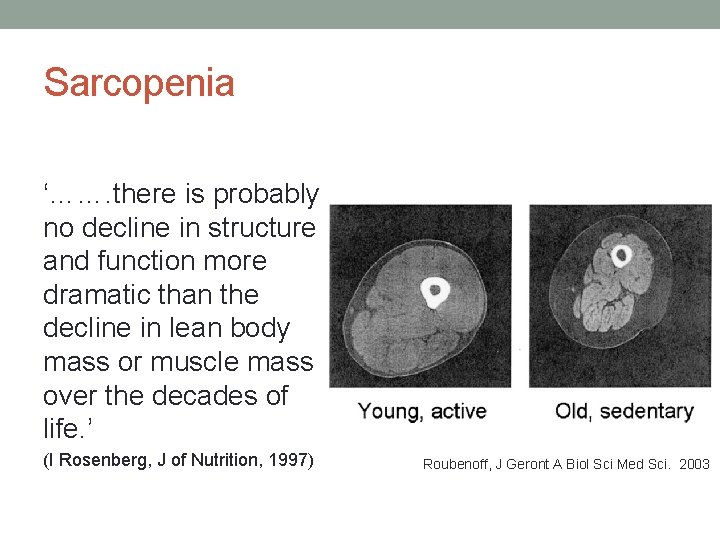
Sarcopenia ‘……. there is probably no decline in structure and function more dramatic than the decline in lean body mass or muscle mass over the decades of life. ’ (I Rosenberg, J of Nutrition, 1997) Roubenoff, J Geront A Biol Sci Med Sci. 2003
Cycle of Frailty Co-morbidity Neuroendocrine dysfunction Sedentary life-style Chronic Malnutrition Decreased appetite Weight loss Decreased Energy Expenditure Sarcopenia Decreased resting metabolic rate Decreased strength Decreased fitness Reduced walking speed Disability Dependency Adapted from Fried, J Gerontol A Biol Sci Med Sci, 2001
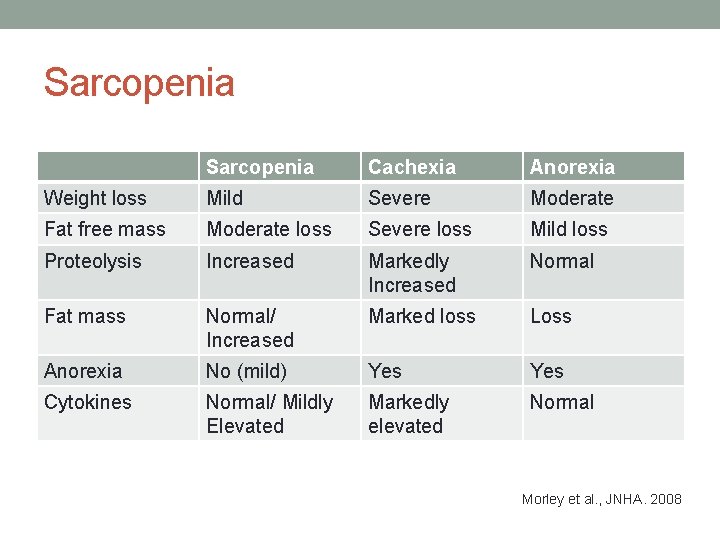
Sarcopenia Cachexia Anorexia Weight loss Mild Severe Moderate Fat free mass Moderate loss Severe loss Mild loss Proteolysis Increased Markedly Increased Normal Fat mass Normal/ Increased Marked loss Loss Anorexia No (mild) Yes Cytokines Normal/ Mildly Elevated Markedly elevated Normal Morley et al. , JNHA. 2008
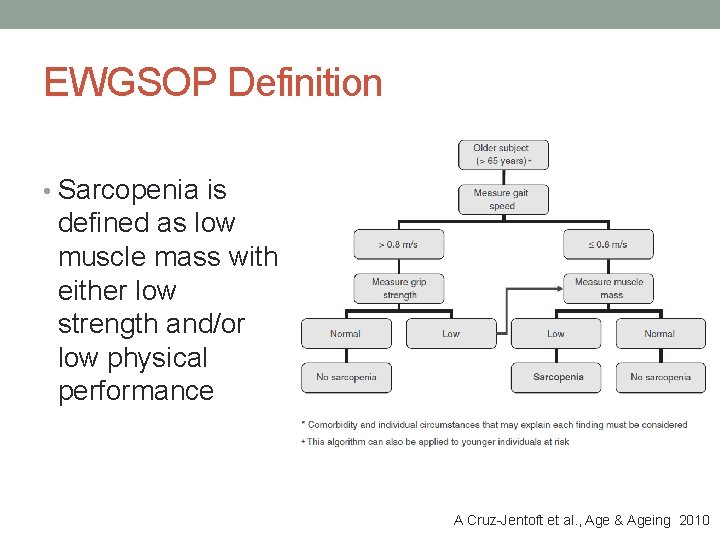
EWGSOP Definition • Sarcopenia is defined as low muscle mass with either low strength and/or low physical performance A Cruz-Jentoft et al. , Age & Ageing 2010
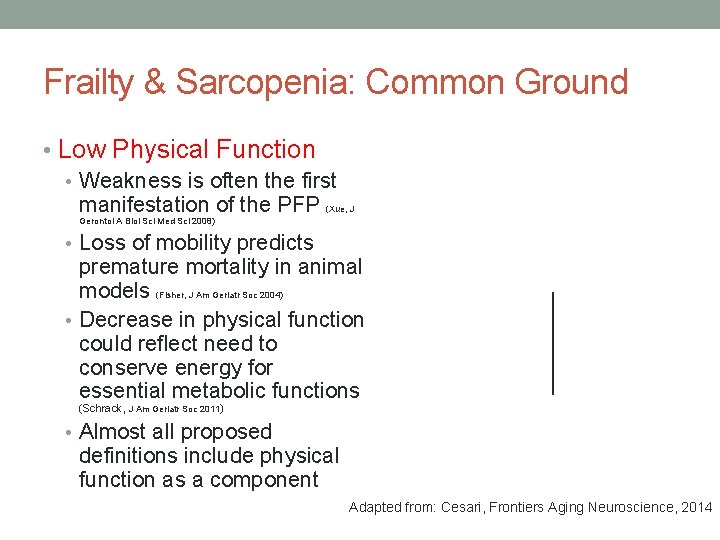
Frailty & Sarcopenia: Common Ground • Low Physical Function • Weakness is often the first manifestation of the PFP (Xue, J Gerontol A Biol Sci Med Sci 2008) • Loss of mobility predicts premature mortality in animal models (Fisher, J Am Geriatr Soc 2004) • Decrease in physical function could reflect need to conserve energy for essential metabolic functions (Schrack, J Am Geriatr Soc 2011) • Almost all proposed definitions include physical function as a component Adapted from: Cesari, Frontiers Aging Neuroscience, 2014
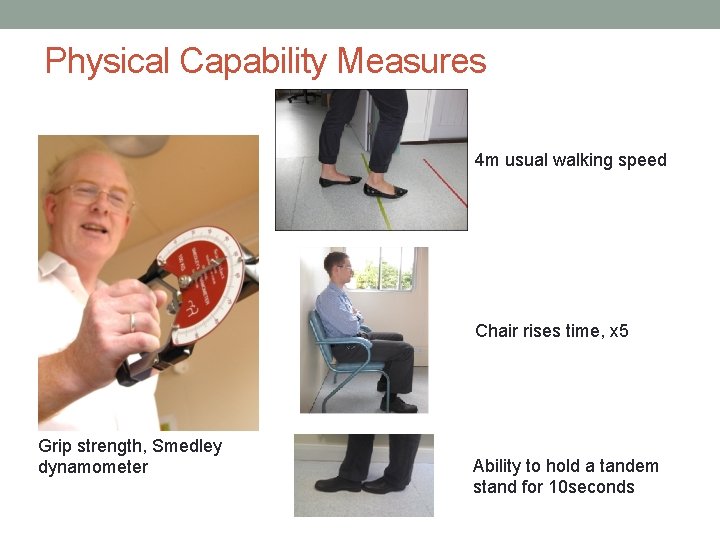
Physical Capability Measures 4 m usual walking speed Chair rises time, x 5 Grip strength, Smedley dynamometer Ability to hold a tandem stand for 10 seconds
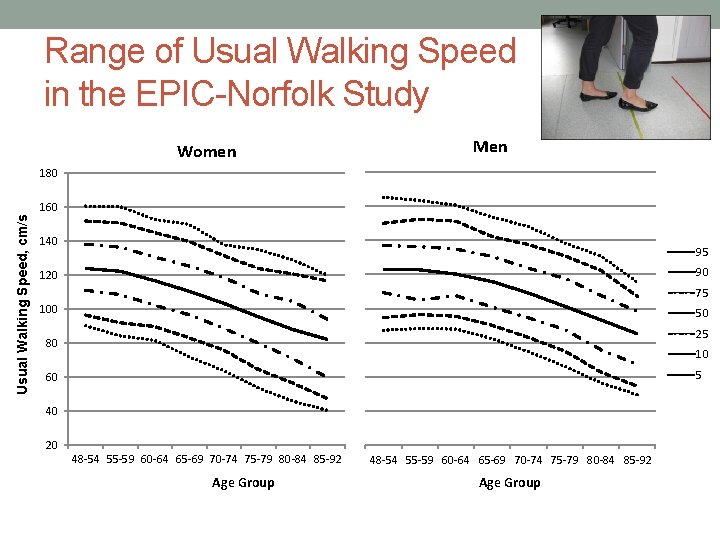
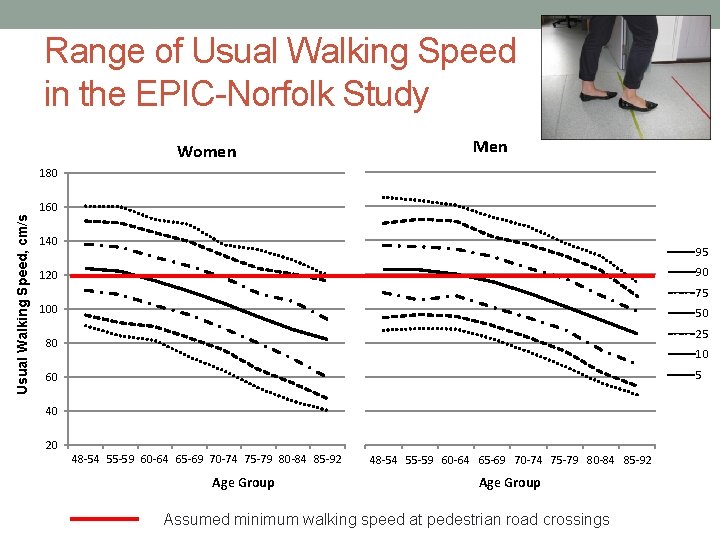
Range of Usual Walking Speed in the EPIC-Norfolk Study Women Men 180 Usual Walking Speed, cm/s 160 140 95 90 120 75 100 50 25 80 10 5 60 40 20 48 -54 55 -59 60 -64 65 -69 70 -74 75 -79 80 -84 85 -92 Age Group
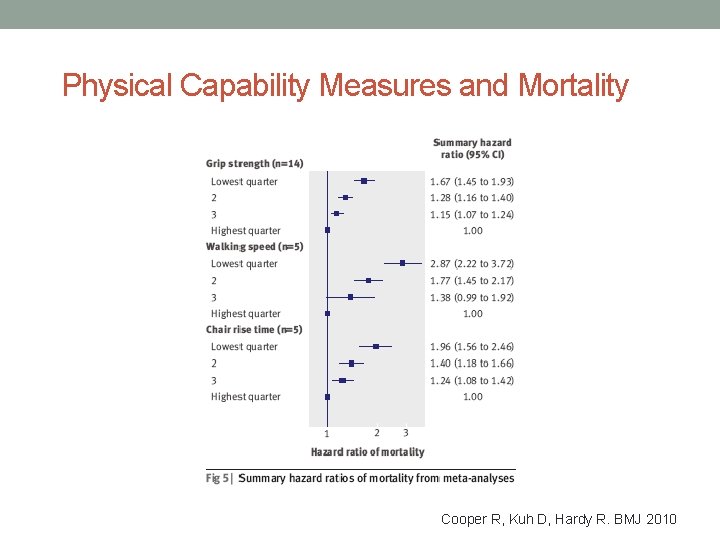
Physical Capability Measures and Mortality Cooper R, Kuh D, Hardy R. BMJ 2010
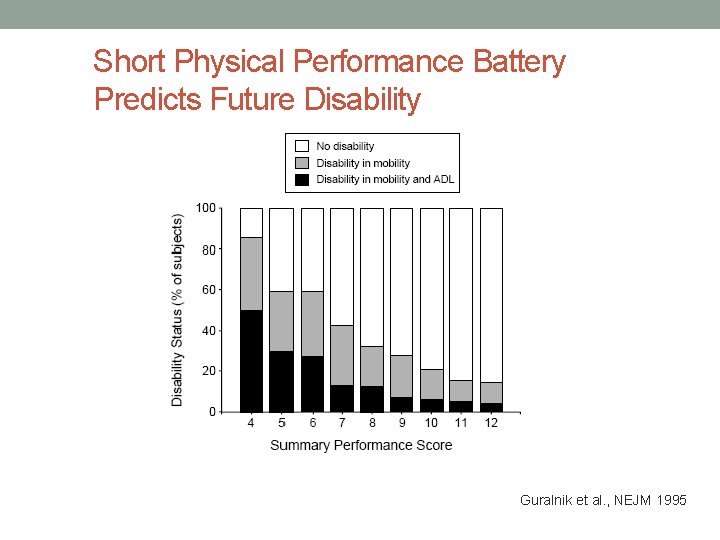
Short Physical Performance Battery Predicts Future Disability Guralnik et al. , NEJM 1995
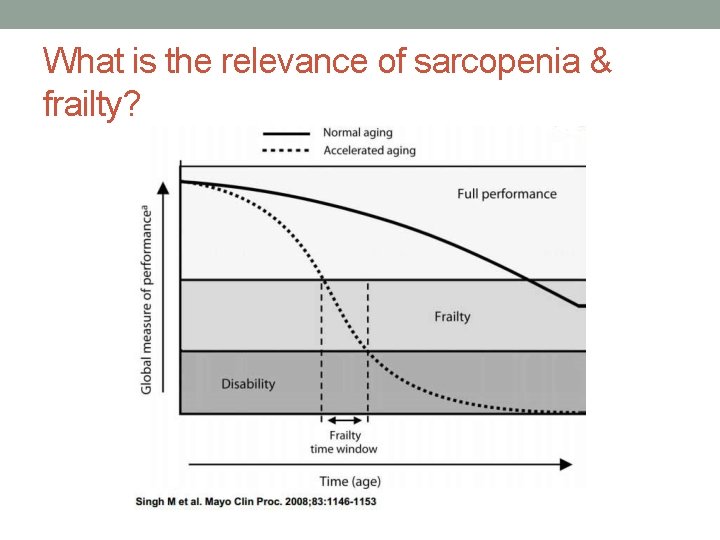
What is the relevance of sarcopenia & frailty?
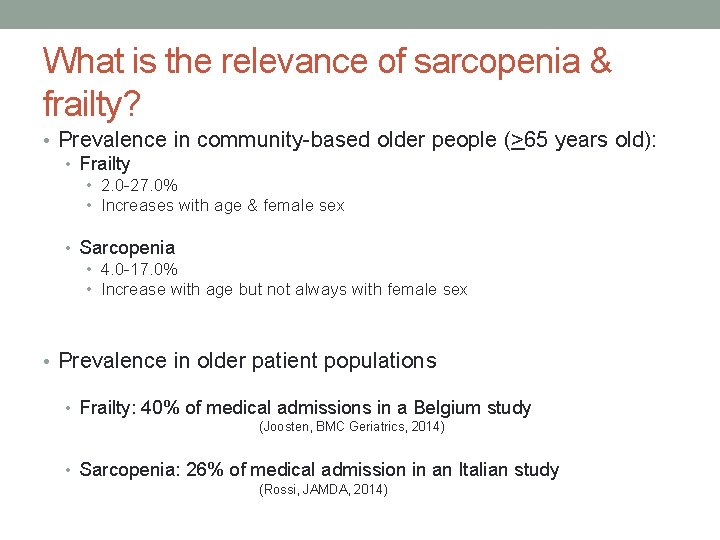
What is the relevance of sarcopenia & frailty? • Prevalence in community-based older people (>65 years old): • Frailty • 2. 0 -27. 0% • Increases with age & female sex • Sarcopenia • 4. 0 -17. 0% • Increase with age but not always with female sex • Prevalence in older patient populations • Frailty: 40% of medical admissions in a Belgium study (Joosten, BMC Geriatrics, 2014) • Sarcopenia: 26% of medical admission in an Italian study (Rossi, JAMDA, 2014)
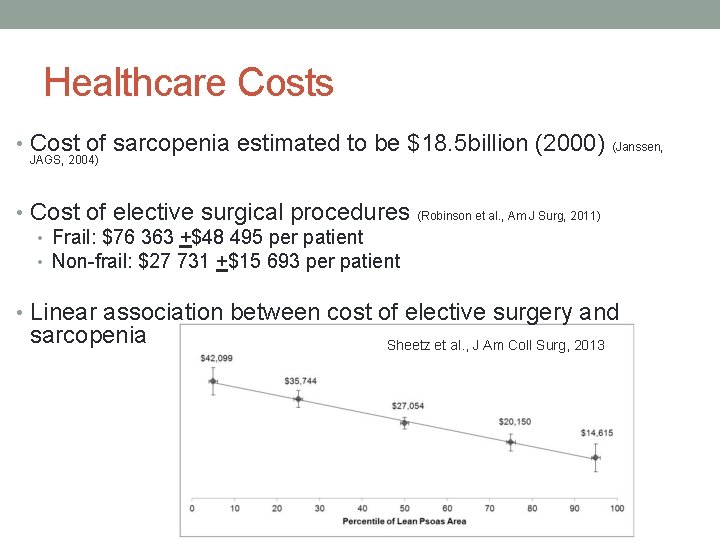
Healthcare Costs • Cost of sarcopenia estimated to be $18. 5 billion (2000) (Janssen, JAGS, 2004) • Cost of elective surgical procedures (Robinson et al. , Am J Surg, 2011) • Frail: $76 363 +$48 495 per patient • Non-frail: $27 731 +$15 693 per patient • Linear association between cost of elective surgery and sarcopenia Sheetz et al. , J Am Coll Surg, 2013
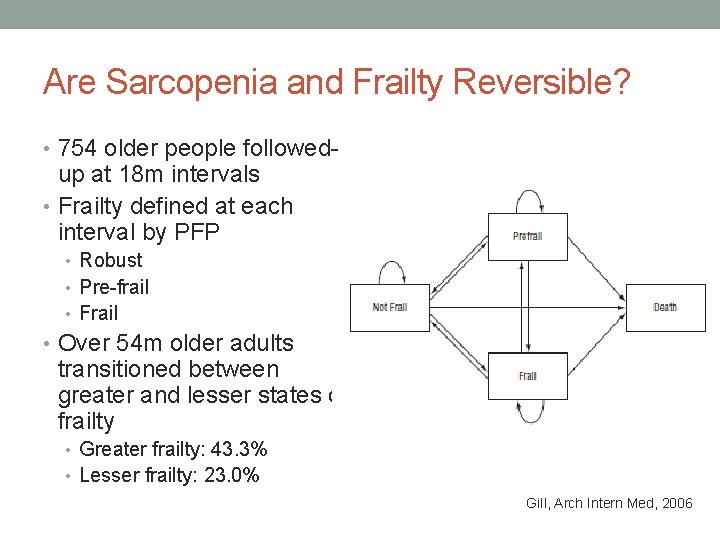
Are Sarcopenia and Frailty Reversible? • 754 older people followed- up at 18 m intervals • Frailty defined at each interval by PFP • Robust • Pre-frail • Frail • Over 54 m older adults transitioned between greater and lesser states of frailty • Greater frailty: 43. 3% • Lesser frailty: 23. 0% Gill, Arch Intern Med, 2006
INACTIVITY & EXERCISE
Inactivity or ‘Sedentariness’ • Time awake spent sitting or lying when energy expenditure is at or just above the basal metabolic rate (≤ 1. 5 METs). • We spend in excess of 60% of our waking lives sedentary • ‘Active couch potato’ • Those who achieve current physical activity guidelines (150 mins/week of MVPA) can still be sedentary for 5, 730 mins/week. • Thus, sedentariness has been proposed as an independent risk factor for poor health & there is new research interest in ‘inactive physiology’
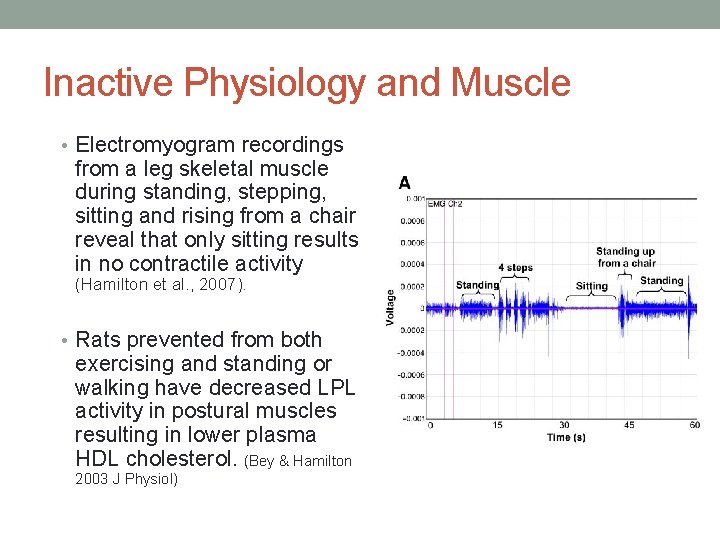
Inactive Physiology and Muscle • Electromyogram recordings from a leg skeletal muscle during standing, stepping, sitting and rising from a chair reveal that only sitting results in no contractile activity (Hamilton et al. , 2007). • Rats prevented from both exercising and standing or walking have decreased LPL activity in postural muscles resulting in lower plasma HDL cholesterol. (Bey & Hamilton 2003 J Physiol)
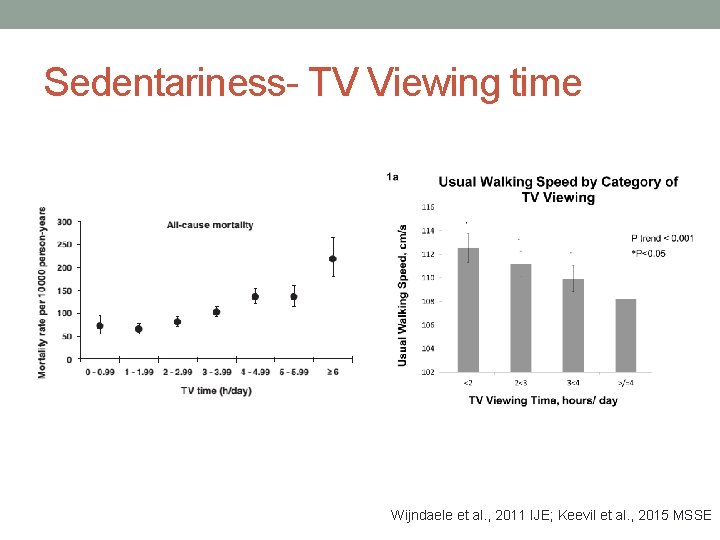
Sedentariness- TV Viewing time Wijndaele et al. , 2011 IJE; Keevil et al. , 2015 MSSE
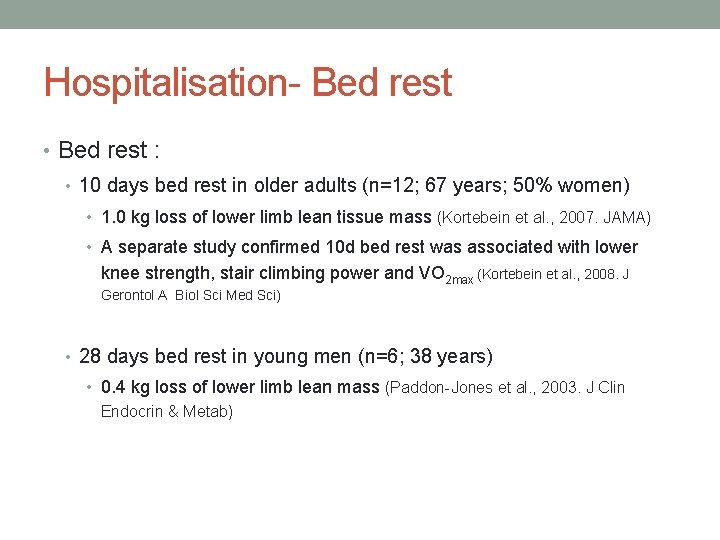
Hospitalisation- Bed rest • Bed rest : • 10 days bed rest in older adults (n=12; 67 years; 50% women) • 1. 0 kg loss of lower limb lean tissue mass (Kortebein et al. , 2007. JAMA) • A separate study confirmed 10 d bed rest was associated with lower knee strength, stair climbing power and VO 2 max (Kortebein et al. , 2008. J Gerontol A Biol Sci Med Sci) • 28 days bed rest in young men (n=6; 38 years) • 0. 4 kg loss of lower limb lean mass (Paddon-Jones et al. , 2003. J Clin Endocrin & Metab)
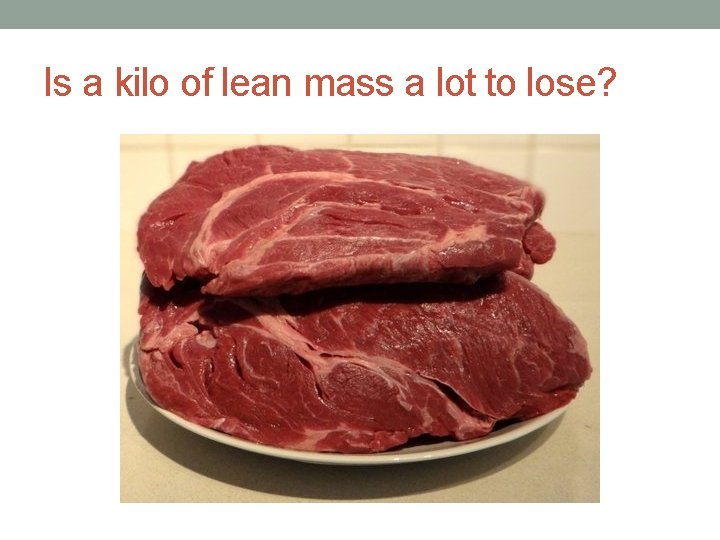
Is a kilo of lean mass a lot to lose?
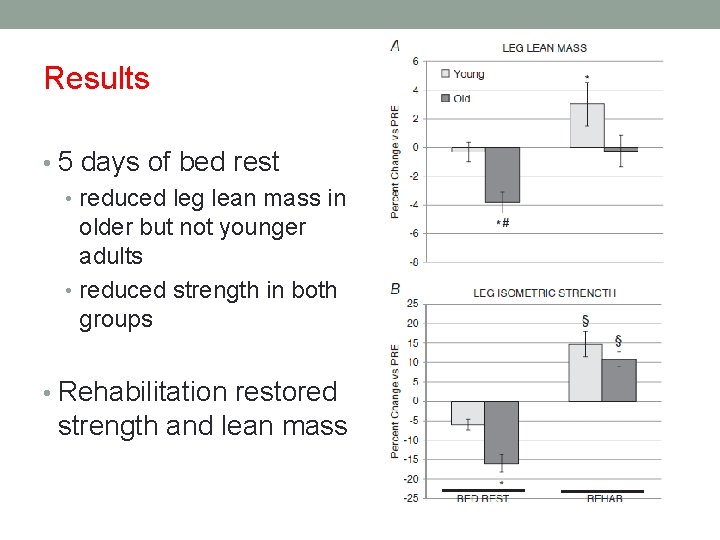
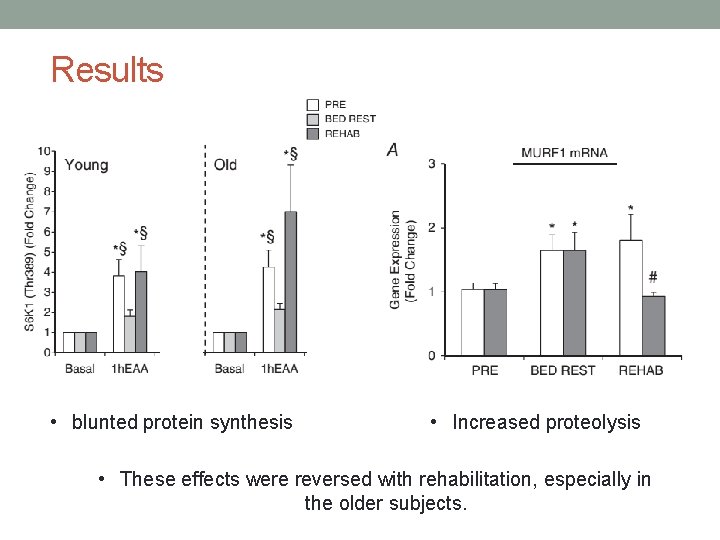
Physical Inactivity and Skeletal Muscle Young vs Old (Tanner et al. , 2015. J Physiol) • Healthy volunteers • 18 -35 (n=15; 7 men) • 60 -75 (n=9, 2 men) • Both age-groups were similar in terms of BMI, lean mass and habitual physical activity at baseline • Study protocol • 4 nights/ 5 day bed rest • 8 week rehabilitation • 3 x/week RET • protein supplementation
Results • 5 days of bed rest • reduced leg lean mass in older but not younger adults • reduced strength in both groups • Rehabilitation restored strength and lean mass
Results • blunted protein synthesis • Increased proteolysis • These effects were reversed with rehabilitation, especially in the older subjects.
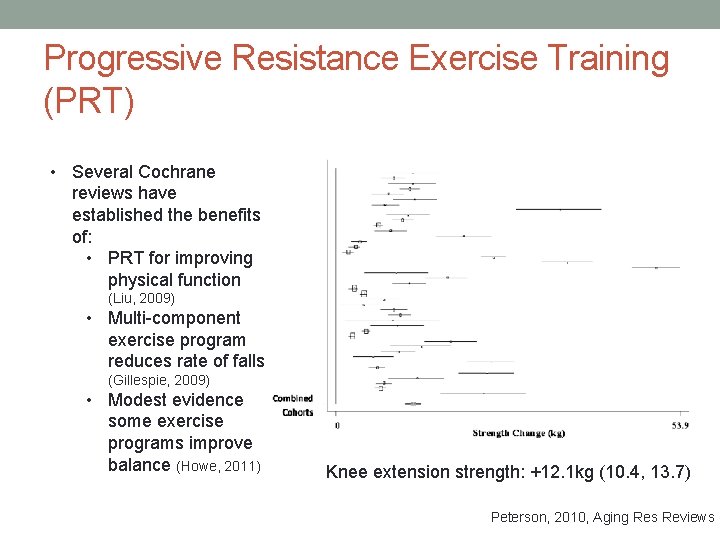
Progressive Resistance Exercise Training (PRT) • Several Cochrane reviews have established the benefits of: • PRT for improving physical function (Liu, 2009) • Multi-component exercise program reduces rate of falls (Gillespie, 2009) • Modest evidence some exercise programs improve balance (Howe, 2011) Knee extension strength: +12. 1 kg (10. 4, 13. 7) Peterson, 2010, Aging Res Reviews
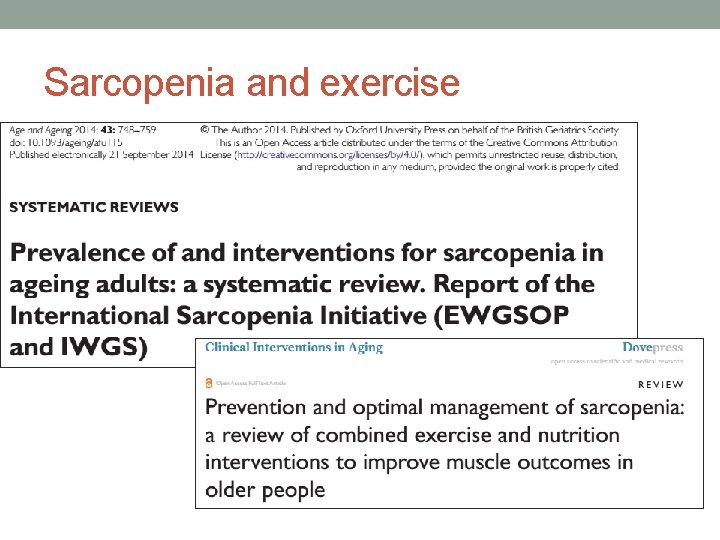
Sarcopenia and exercise
Sarcopenia & Exercise • Exercise (usual RET or multi-faceted interventions including strength and balance) +/- nutritional interventions: • Improves muscle strength • Improves physical performance • Mixed results with respect to muscle mass
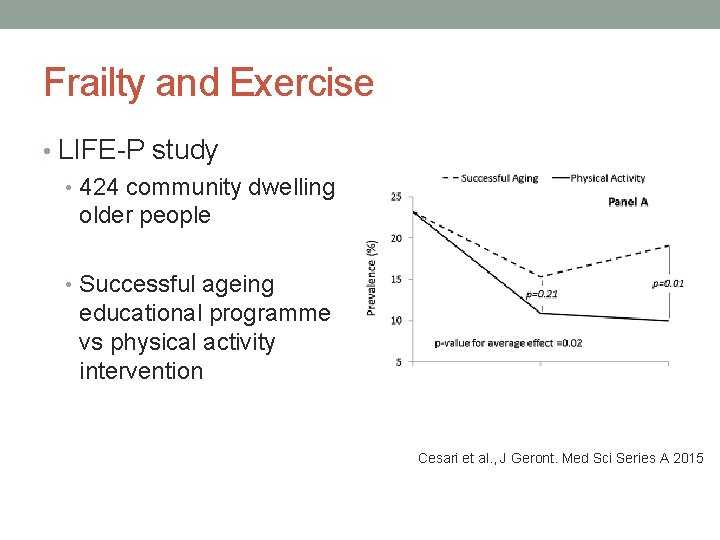
Frailty and Exercise • LIFE-P study • 424 community dwelling older people • Successful ageing educational programme vs physical activity intervention Cesari et al. , J Geront. Med Sci Series A 2015
Summary • Frailty (and sarcopenia) are clinical syndromes which are important to identify in patient populations • Current interventions which are most evidence based focus on reducing sedentariness and increasing physical activity • Small differences in activity can make big differences to patients
Acknowledgements I would like to thank the sponsors listed below.
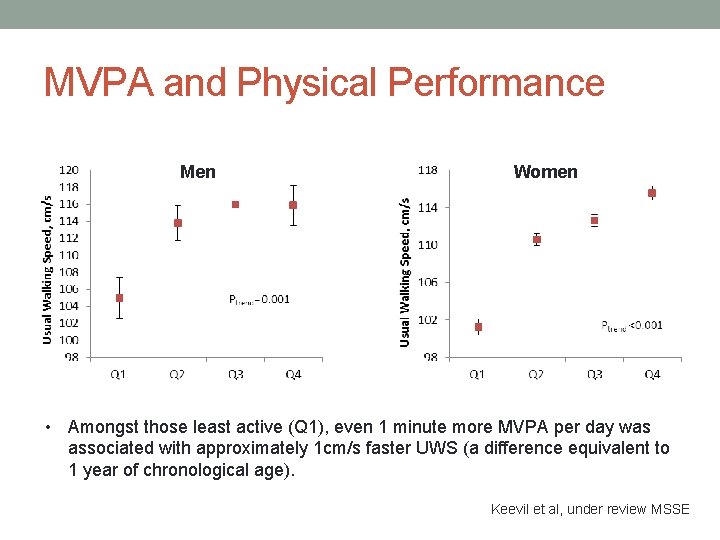
MVPA and Physical Performance Men Women • Amongst those least active (Q 1), even 1 minute more MVPA per day was associated with approximately 1 cm/s faster UWS (a difference equivalent to 1 year of chronological age). Keevil et al, under review MSSE
Range of Usual Walking Speed in the EPIC-Norfolk Study Women Men 180 Usual Walking Speed, cm/s 160 140 95 90 120 75 100 50 25 80 10 5 60 40 20 48 -54 55 -59 60 -64 65 -69 70 -74 75 -79 80 -84 85 -92 Age Group Assumed minimum walking speed at pedestrian road crossings