
Frailty a syndrome or a risk score Geriatric


- Slides: 31
Frailty: a syndrome or a risk score ? Профессор Йан Дегрис Geriatric Conference Sint-Petersburg Russia Oktober 14 th 2013
2
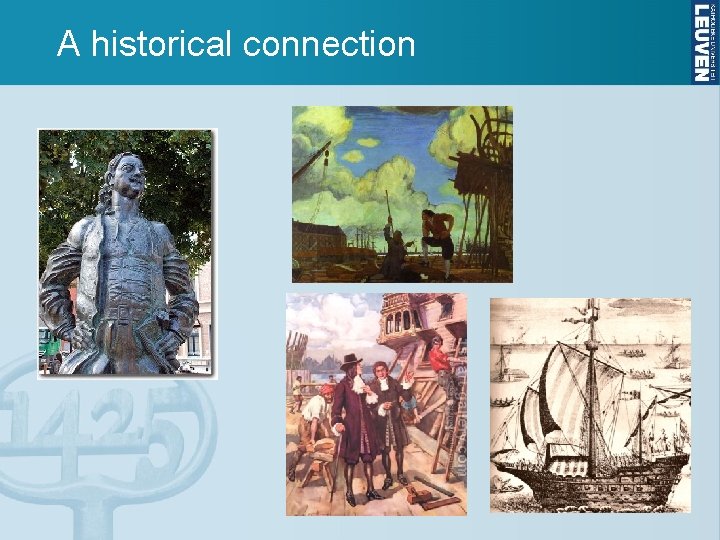
A historical connection
The grey epidemic • In 2050 22% of the world population will be aged 60 or older and 12, 4 % of that population will be aged 80 or over. • In 2050, 71% of all octogenarians will live in developing countries. United Nations. Department of Econ and omicsocial Affairs, population division. World Population Prospect: the 2008 revision 4
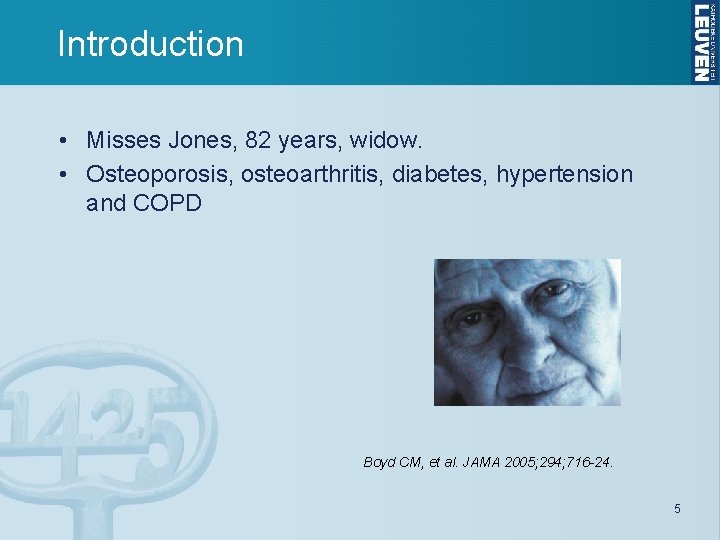
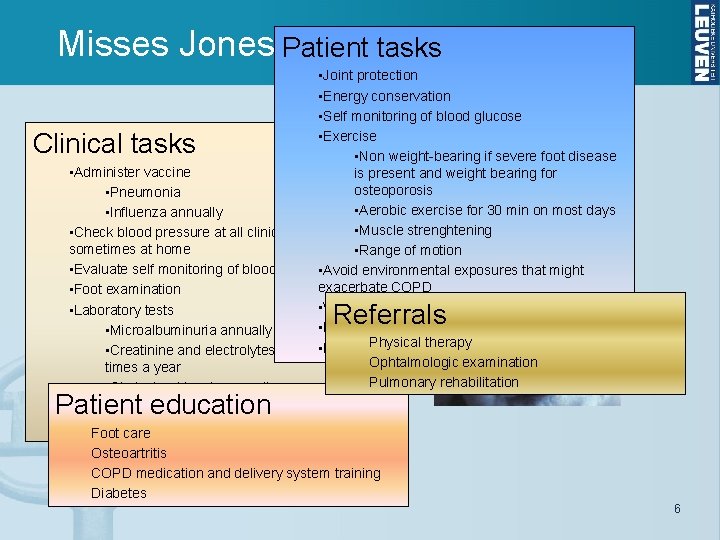
Introduction • Misses Jones, 82 years, widow. • Osteoporosis, osteoarthritis, diabetes, hypertension and COPD Boyd CM, et al. JAMA 2005; 294; 716 -24. 5
Misses Jones Patient tasks • Joint protection • Energy conservation • Self monitoring of blood glucose • Exercise • Non weight-bearing if severe foot disease • Administer vaccine is present and weight bearing for osteoporosis • Pneumonia • Aerobic exercise for 30 min on most days • Influenza annually • Check blood pressure at all clinical visits and • Muscle strenghtening sometimes at home • Range of motion • Evaluate self monitoring of blood glucose • Avoid environmental exposures that might exacerbate COPD • Foot examination • Wear appropriate footwear • Laboratory tests • Limit intake of alcohol • Microalbuminuria annually if not present Physical therapy • Maintain normal body weight • Creatinine and electrolytes at least 1 -2 Ophtalmologic examination times a year Pulmonary rehabilitation • Cholesterol levels annually • Liver function biannually • Hb. A 1 C biannally to quarterly Foot care Clinical tasks Referrals Patient education Osteoartritis COPD medication and delivery system training Diabetes 6
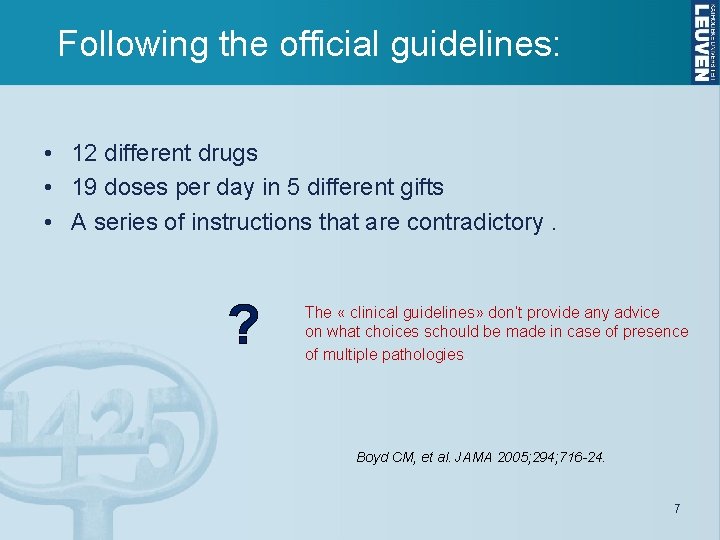
Following the official guidelines: • 12 different drugs • 19 doses per day in 5 different gifts • A series of instructions that are contradictory. ? The « clinical guidelines» don’t provide any advice on what choices schould be made in case of presence of multiple pathologies. Boyd CM, et al. JAMA 2005; 294; 716 -24. 7
Conflicting guidelines: why? • By a lack of evidence ! • Most of the clinical trials are about: – Patients with one single pathology – Middle aged patient. – Hospitalised patients. 8
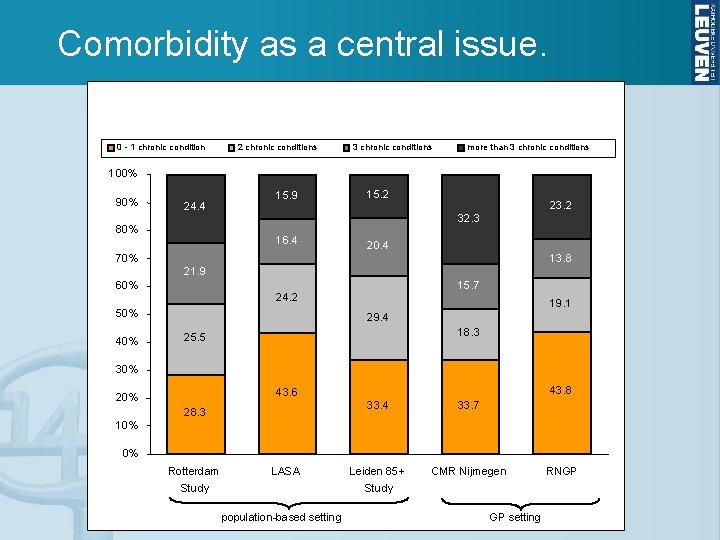
Comorbidity as a central issue. 0 - 1 chronic condition 2 chronic conditions 3 chronic conditions more than 3 chronic conditions 100% 90% 24. 4 80% 15. 9 15. 2 23. 2 32. 3 16. 4 20. 4 70% 13. 8 21. 9 60% 15. 7 24. 2 50% 40% 19. 1 29. 4 18. 3 25. 5 30% 43. 8 43. 6 20% 28. 3 33. 4 33. 7 Leiden 85+ CMR Nijmegen 10% 0% Rotterdam LASA Study population-based setting GP setting RNGP
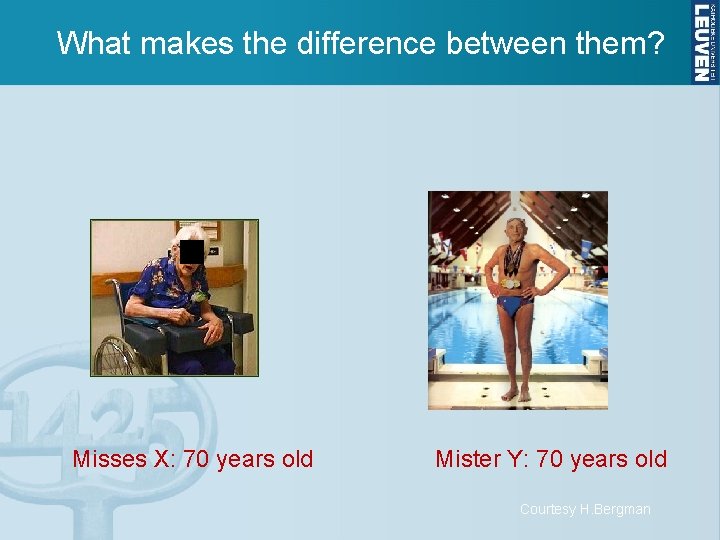
What makes the difference between them? Misses X: 70 years old Mister Y: 70 years old Courtesy H. Bergman
A paradigm shift. From a Disease oriented medical approach, towards a: Goal-oriented integrative approach. Targetting prevention of functional decline, maintenance of autonomy and further loss of resources The missing clinical concept is that of « FRAILTY »
Definition of fraily • Age-related alteration in physiology with los of organ system reserve that leads to vulnerability, limited capacity to respond internal and environmental stresses, unstable homeostasis and poor medical and functionional outcomes Adapted from: Studenski JAGS 2004; 62; 1560 -66 Ferruci J. Endocrionol Inverst 2002; 25; 10 -8
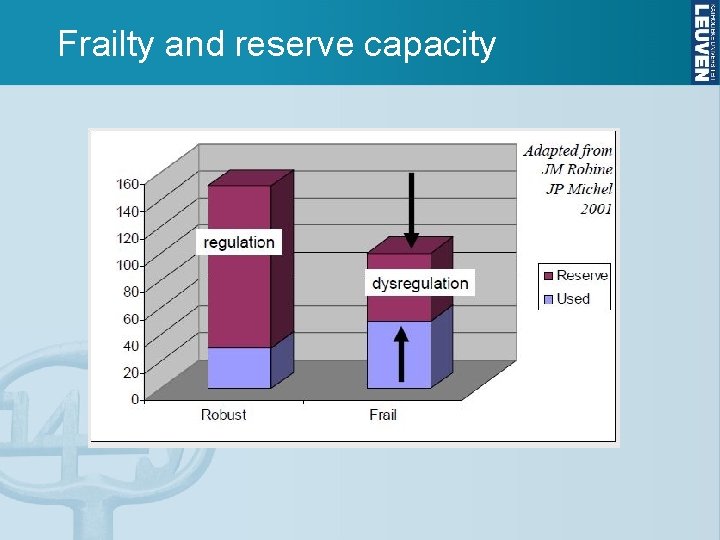
Frailty and reserve capacity
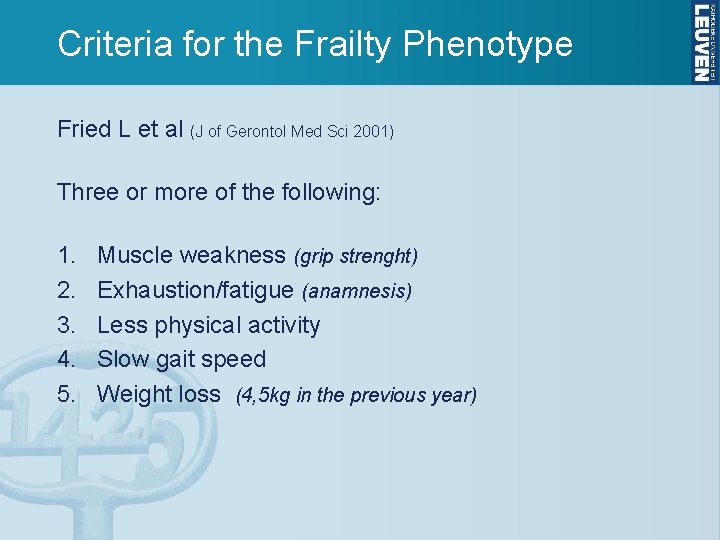
Criteria for the Frailty Phenotype Fried L et al (J of Gerontol Med Sci 2001) Three or more of the following: 1. 2. 3. 4. 5. Muscle weakness (grip strenght) Exhaustion/fatigue (anamnesis) Less physical activity Slow gait speed Weight loss (4, 5 kg in the previous year)
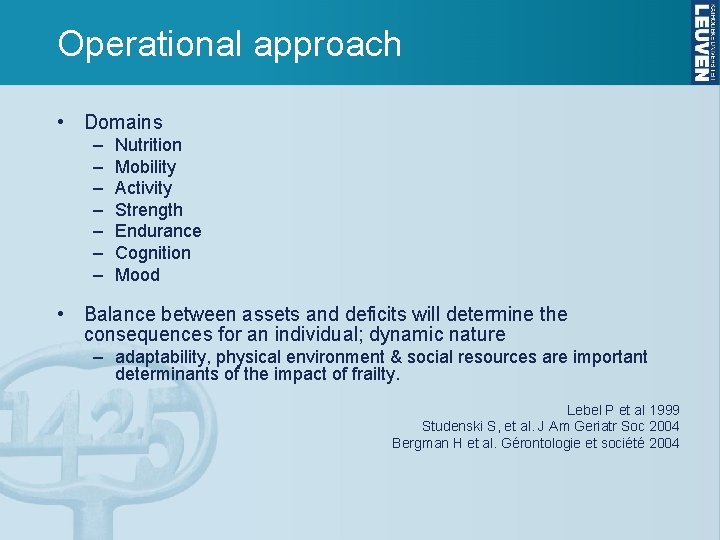
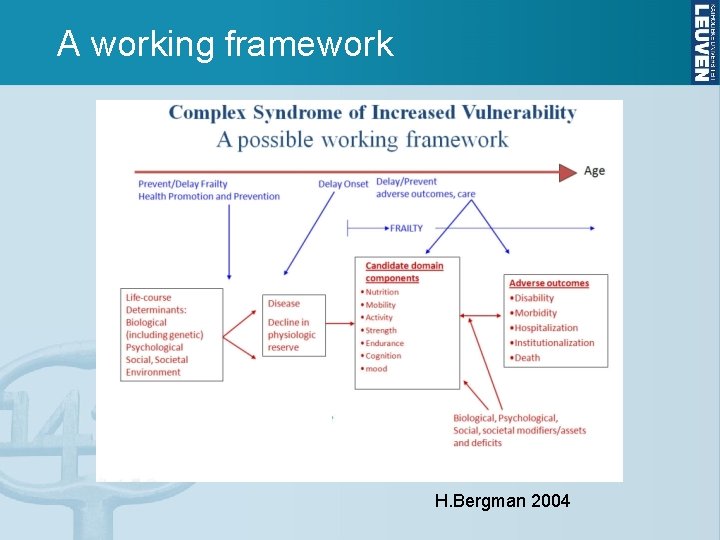
Operational approach • Domains – – – – Nutrition Mobility Activity Strength Endurance Cognition Mood • Balance between assets and deficits will determine the consequences for an individual; dynamic nature – adaptability, physical environment & social resources are important determinants of the impact of frailty. Lebel P et al 1999 Studenski S, et al. J Am Geriatr Soc 2004 Bergman H et al. Gérontologie et société 2004
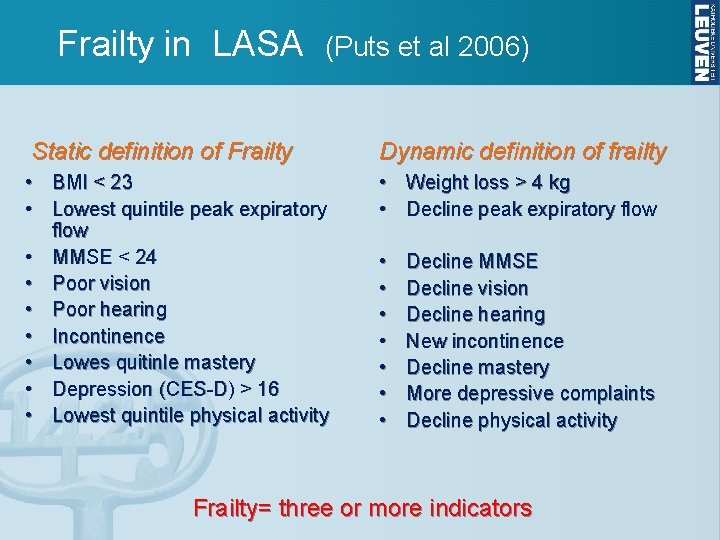
Frailty in LASA (Puts et al 2006) Static definition of Frailty Dynamic definition of frailty • BMI < 23 • Lowest quintile peak expiratory flow • MMSE < 24 • Poor vision • Poor hearing • Incontinence • Lowes quitinle mastery • Depression (CES-D) > 16 • Lowest quintile physical activity • Weight loss > 4 kg • Decline peak expiratory flow • • Decline MMSE Decline vision Decline hearing New incontinence Decline mastery More depressive complaints Decline physical activity Frailty= three or more indicators
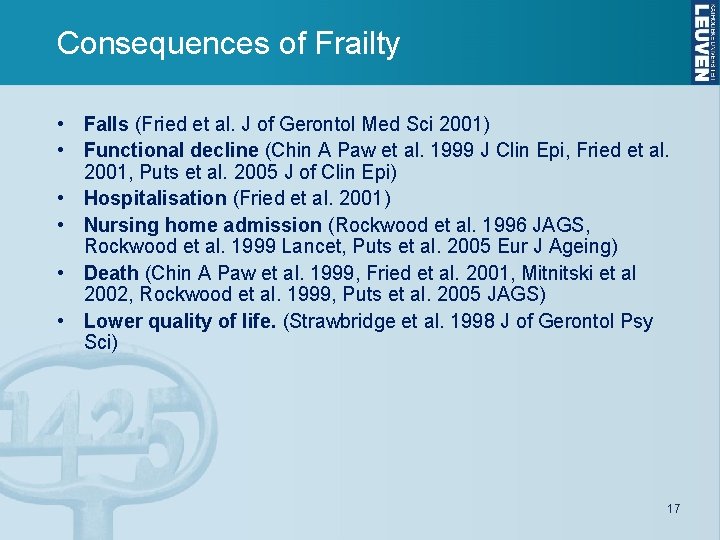
Consequences of Frailty • Falls (Fried et al. J of Gerontol Med Sci 2001) • Functional decline (Chin A Paw et al. 1999 J Clin Epi, Fried et al. 2001, Puts et al. 2005 J of Clin Epi) • Hospitalisation (Fried et al. 2001) • Nursing home admission (Rockwood et al. 1996 JAGS, Rockwood et al. 1999 Lancet, Puts et al. 2005 Eur J Ageing) • Death (Chin A Paw et al. 1999, Fried et al. 2001, Mitnitski et al 2002, Rockwood et al. 1999, Puts et al. 2005 JAGS) • Lower quality of life. (Strawbridge et al. 1998 J of Gerontol Psy Sci) 17
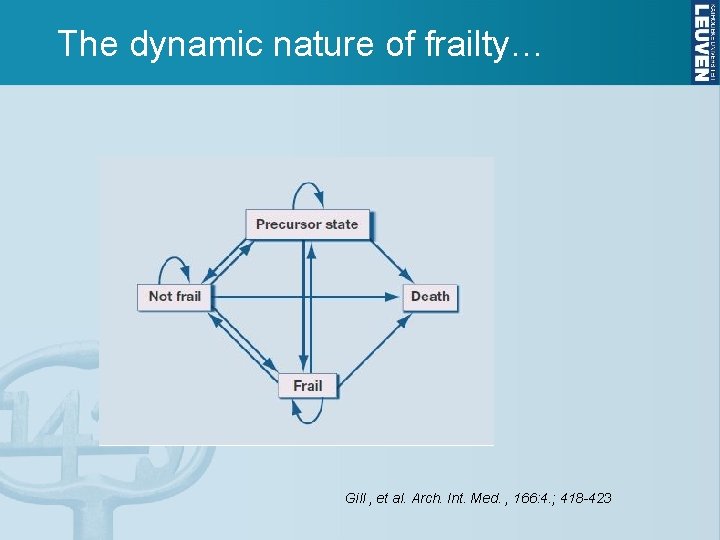
The dynamic nature of frailty… Gill , et al. Arch. Int. Med. , 166: 4. ; 418 -423
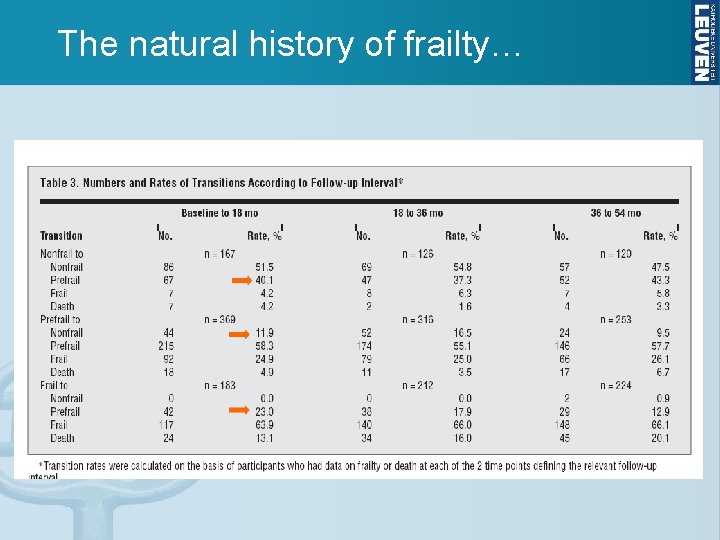
The natural history of frailty… Gill et al 2006
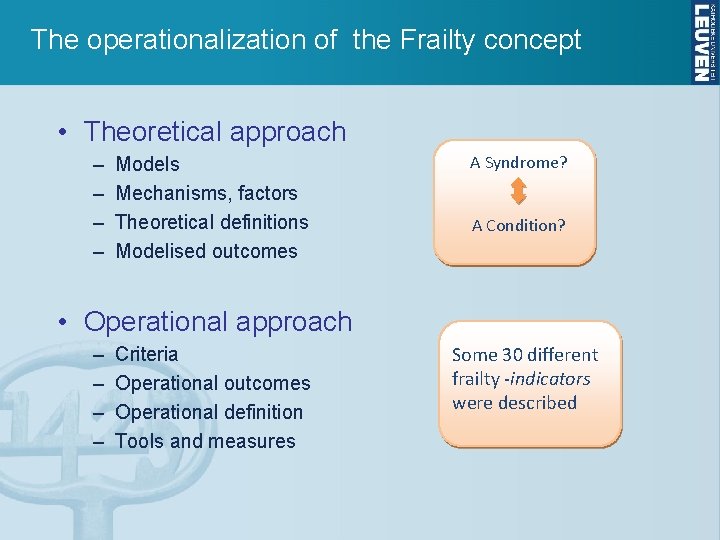
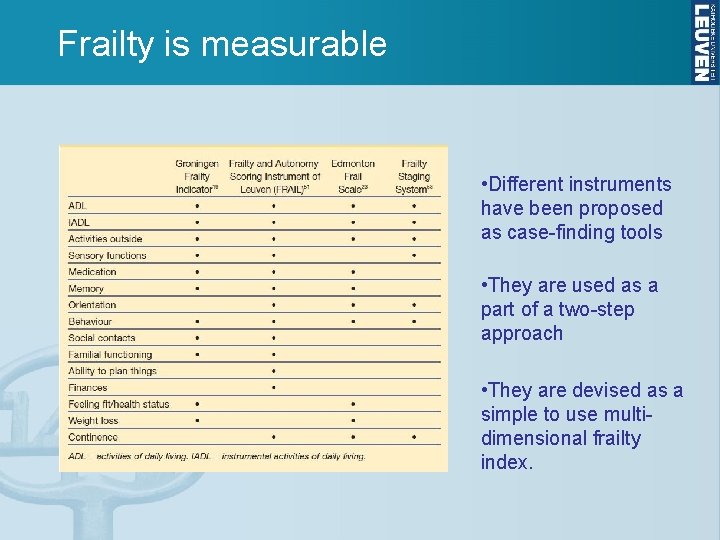
The operationalization of the Frailty concept • Theoretical approach – – Models Mechanisms, factors Theoretical definitions Modelised outcomes A Syndrome? A Condition? • Operational approach – – Criteria Operational outcomes Operational definition Tools and measures Some 30 different frailty -indicators were described
Frailty model Swinne 2008
A working framework H. Bergman 2004
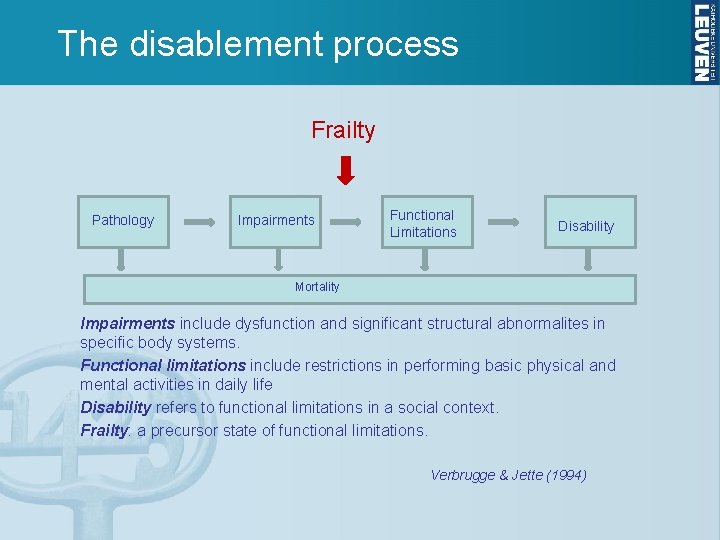
The disablement process Frailty Pathology Impairments Functional Limitations Disability Mortality Impairments include dysfunction and significant structural abnormalites in specific body systems. Functional limitations include restrictions in performing basic physical and mental activities in daily life Disability refers to functional limitations in a social context. Frailty: a precursor state of functional limitations. Verbrugge & Jette (1994)
Frailty is measurable • Different instruments have been proposed as case-finding tools • They are used as a part of a two-step approach • They are devised as a simple to use multidimensional frailty index.
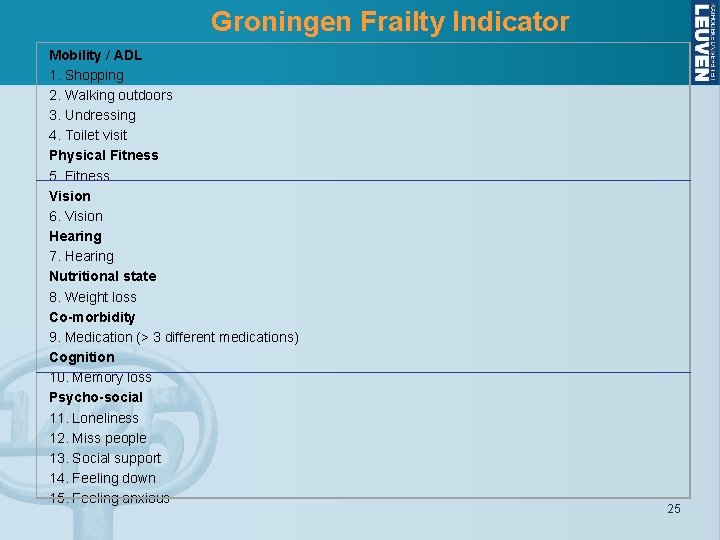
Groningen Frailty Indicator Mobility / ADL 1. Shopping 2. Walking outdoors 3. Undressing 4. Toilet visit Physical Fitness 5. Fitness Vision 6. Vision Hearing 7. Hearing Nutritional state 8. Weight loss Co-morbidity 9. Medication (> 3 different medications) Cognition 10. Memory loss Psycho-social 11. Loneliness 12. Miss people 13. Social support 14. Feeling down 15. Feeling anxious 25
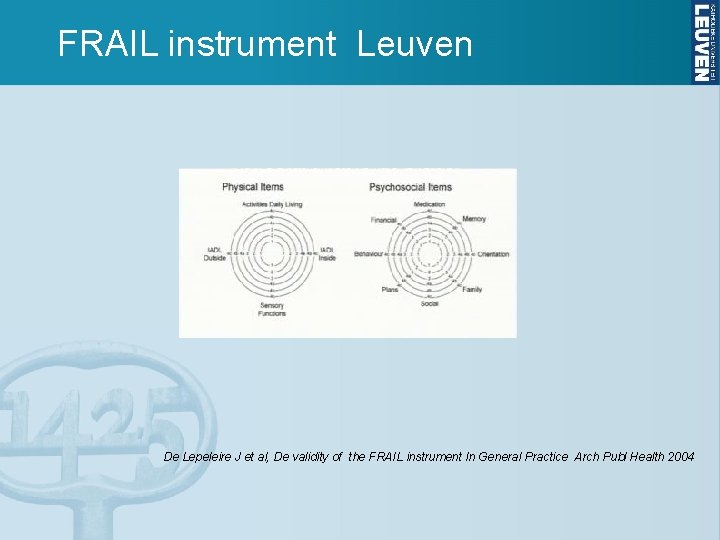
FRAIL instrument Leuven De Lepeleire J et al, De validity of the FRAIL instrument In General Practice Arch Publ Health 2004
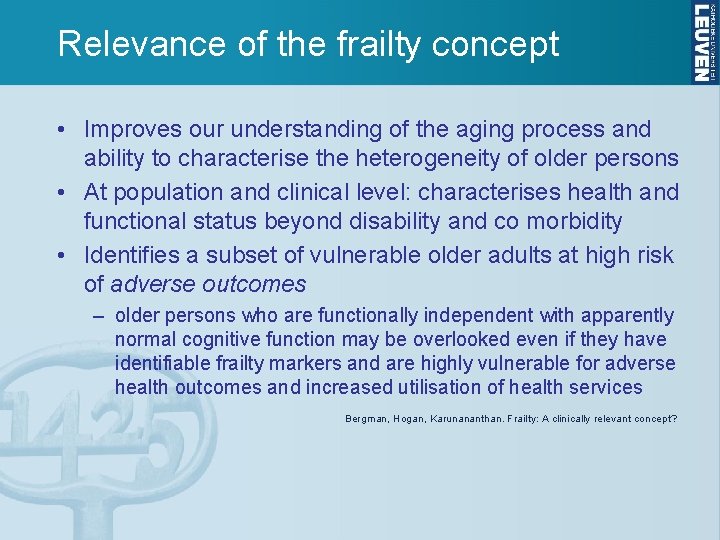
Relevance of the frailty concept • Improves our understanding of the aging process and ability to characterise the heterogeneity of older persons • At population and clinical level: characterises health and functional status beyond disability and co morbidity • Identifies a subset of vulnerable older adults at high risk of adverse outcomes – older persons who are functionally independent with apparently normal cognitive function may be overlooked even if they have identifiable frailty markers and are highly vulnerable for adverse health outcomes and increased utilisation of health services Bergman, Hogan, Karunananthan. Frailty: A clinically relevant concept?
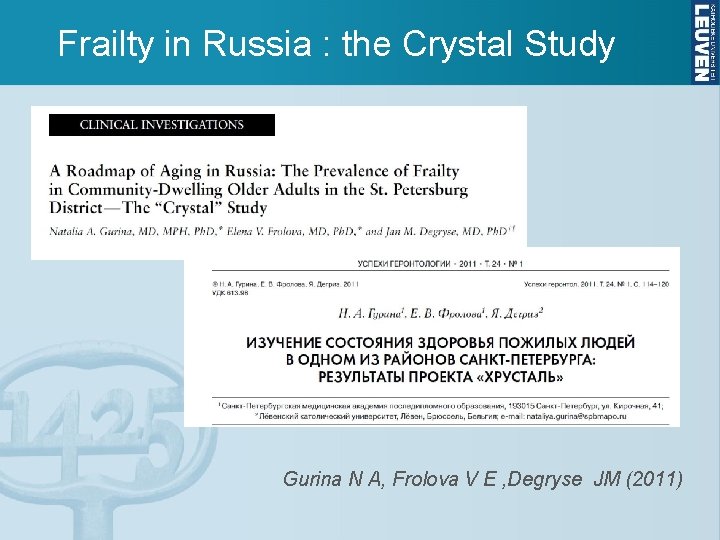
Frailty in Russia : the Crystal Study Gurina N A, Frolova V E , Degryse JM (2011)
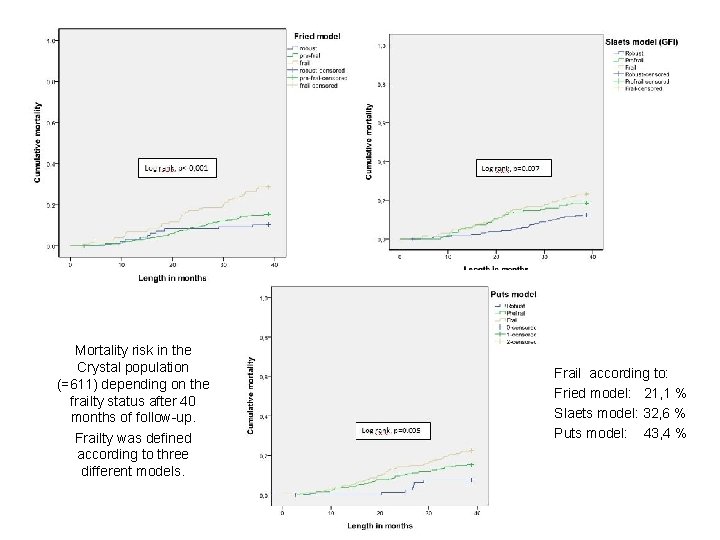
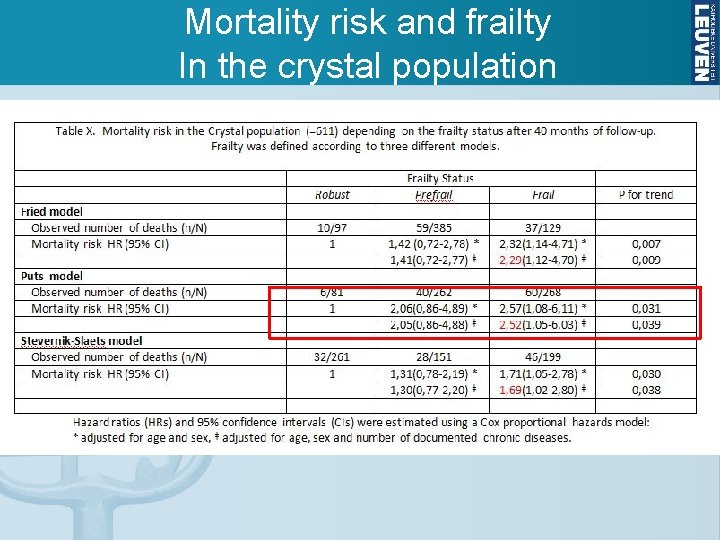
Frailty and survival in the Crystal population Mortality risk in the Crystal population (=611) depending on the frailty status after 40 months of follow-up. Frailty was defined according to three different models. Frail according to: Fried model: 21, 1 % Slaets model: 32, 6 % Puts model: 43, 4 %
Mortality risk and frailty In the crystal population
Conclusion The frailty concept has opened new horizons in understanding the aging process and the heterogeneity of older persons and the potential to identify vulnerable older adults and prevent/delay adverse consequences Frailty predicts mortality independently of co-morbidity in a Russian population. More research is needed In order to understand the role of specificfrailty markers (e. g. FEV 1 , psycho-social risk factors ) Additional interventional studies are needed to prove the validity