
FRAGMIN dalteparin sodium injection Prophylaxis of Ischemic Complications



- Slides: 44
® FRAGMIN (dalteparin sodium injection) Prophylaxis of Ischemic Complications in Unstable Angina and Non–Q-Wave Myocardial Infarction in Combination With Aspirin Therapy Please see full prescribing information for FRAGMIN with the boxed warning for spinal/epidural hematomas. 1
Unstable Angina and Non–Q-Wave Myocardial Infarction Epidemiology and Pathophysiology 2
Coronary Artery Disease Leading Cause of Cardiovascular Disease • 13. 2 million Americans have CAD (MI or angina) ―comprises >50% of all CV events in patients <75 years of age ―responsible for 20% of all deaths in the US ―single largest killer of American males and females § 1 CAD event every 26 seconds § 1 CAD death every minute CAD, coronary artery disease; CV, cardiovascular; MI, myocardial infarction. Thom T et al. Circulation. 2006; 113: e 85 -e 151. 3
Unstable Angina and Non–Q-Wave MI Overview • ACS is a clinical syndrome referring to acute MI (Q-wave and non–Q-wave) and unstable angina ―usually due to coronary artery thrombosis on atherosclerotic plaque • Unstable angina and non–Q-wave MI are a major cause of emergency medical care and hospitalization in the US ―responsible for 1. 4 million hospitalizations in 1996 ― 5. 3 million ER visits for evaluation of chest pain in 1997 ACS, acute coronary syndrome; LMWH, low molecular weight heparin; MI, myocardial infarction, UH, unfractionated heparin. Braunwald E et al. 2002. Available at: http: //www. acc. org/clinical/guidelines/unstable. pdf. ―associated with an increased risk of cardiac death 4
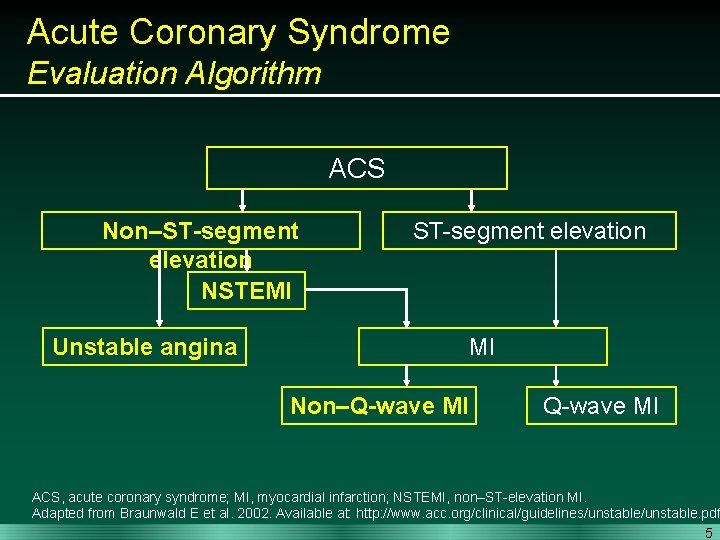
Acute Coronary Syndrome Evaluation Algorithm ACS Non–ST-segment elevation NSTEMI ST-segment elevation Unstable angina MI Non–Q-wave MI ACS, acute coronary syndrome; MI, myocardial infarction; NSTEMI, non–ST-elevation MI. Adapted from Braunwald E et al. 2002. Available at: http: //www. acc. org/clinical/guidelines/unstable. pdf 5
Unstable Angina Clinical Presentation and Classification • Diagnosis of unstable angina refers to new or worsening symptoms of myocardial ischemia: ―rest angina ―new-onset severe angina ―increasing angina • Classification of angina: ―Class I: no limitation of ordinary activity § angina only with strenuous or prolonged activity ―Class II: slight limitation of ordinary activity ―Class III: marked limitation of ordinary activity ―Class IV: inability to carry on any physical activity without Braunwalddiscomfort E et al. 2002. Available at: http: //www. acc. org/clinical/guidelines/unstable. pdf. 6
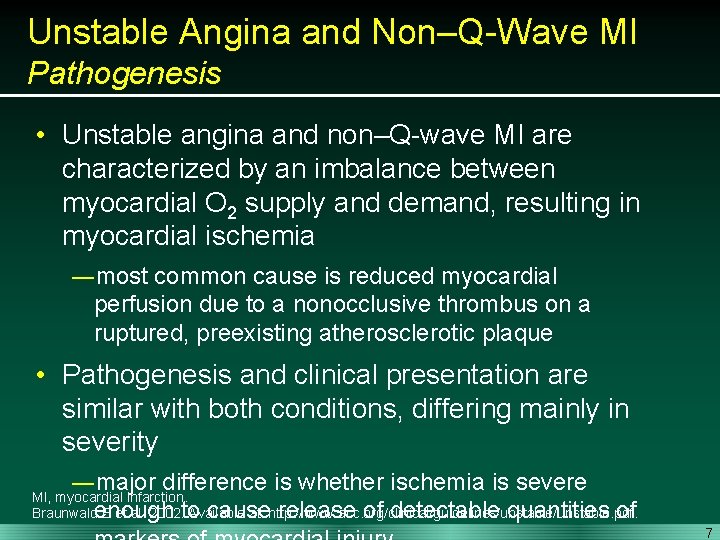
Unstable Angina and Non–Q-Wave MI Pathogenesis • Unstable angina and non–Q-wave MI are characterized by an imbalance between myocardial O 2 supply and demand, resulting in myocardial ischemia ―most common cause is reduced myocardial perfusion due to a nonocclusive thrombus on a ruptured, preexisting atherosclerotic plaque • Pathogenesis and clinical presentation are similar with both conditions, differing mainly in severity ―major difference is whether ischemia is severe enough to cause release of detectable quantities of MI, myocardial infarction. Braunwald E et al. 2002. Available at: http: //www. acc. org/clinical/guidelines/unstable. pdf. 7
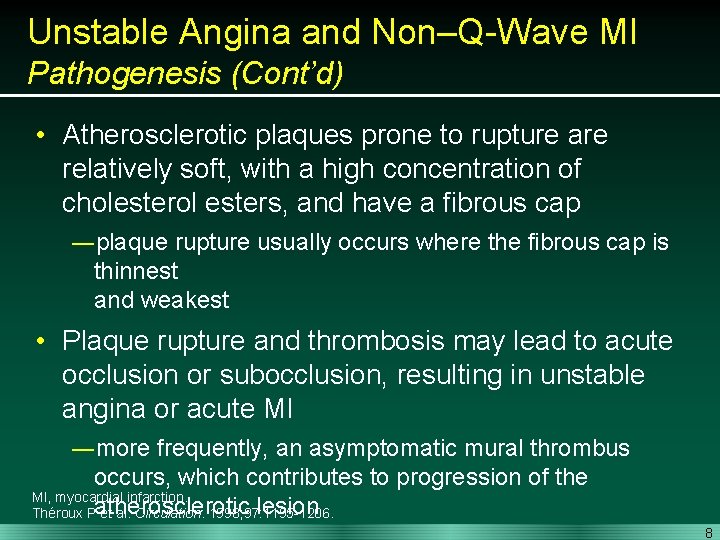
Unstable Angina and Non–Q-Wave MI Pathogenesis (Cont’d) • Atherosclerotic plaques prone to rupture are relatively soft, with a high concentration of cholesterol esters, and have a fibrous cap ―plaque rupture usually occurs where the fibrous cap is thinnest and weakest • Plaque rupture and thrombosis may lead to acute occlusion or subocclusion, resulting in unstable angina or acute MI ―more frequently, an asymptomatic mural thrombus occurs, which contributes to progression of the MI, myocardial infarction. lesion Théroux Patherosclerotic et al. Circulation. 1998; 97: 1195 -1206. 8
Unstable Angina and Non–Q-Wave Myocardial Infarction The Role of Anticoagulant Agents in the Prophylaxis of Ischemic Complications 9
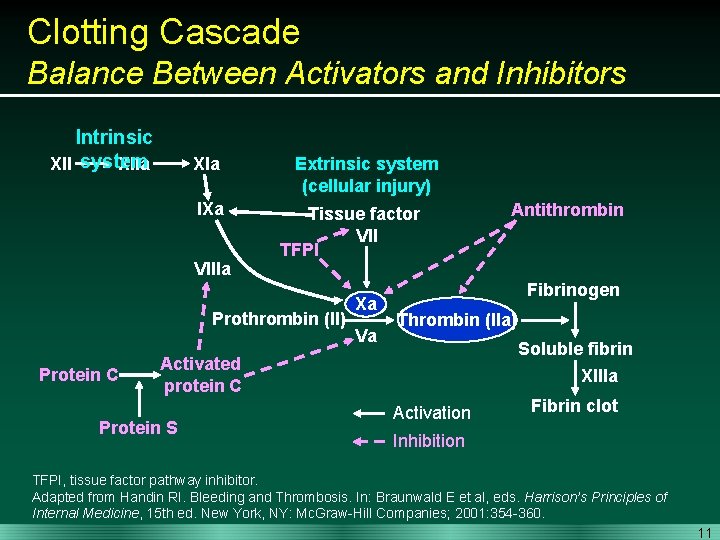
Hemostatic System Normal Clotting • Role of the hemostatic system: ―maintain blood in a fluid state for circulation ―convert blood into an insoluble gel at sites of vascular injury • Blood loss is limited following vascular injury by: ―platelet adhesion and aggregation ―activation of plasma coagulation proteins López JA et al. Hematology (Am Soc Hematol Educ Program). 2004: 439 -456. 10
Clotting Cascade Balance Between Activators and Inhibitors Intrinsic XII system XIIa XIa IXa VIIIa Extrinsic system (cellular injury) Tissue factor VII TFPI Prothrombin (II) Protein C Xa Va Fibrinogen Thrombin (IIa) Soluble fibrin XIIIa Activated protein C Protein S Antithrombin Activation Fibrin clot Inhibition TFPI, tissue factor pathway inhibitor. Adapted from Handin RI. Bleeding and Thrombosis. In: Braunwald E et al, eds. Harrison’s Principles of Internal Medicine, 15 th ed. New York, NY: Mc. Graw-Hill Companies; 2001: 354 -360. 11
Unstable Angina and Non–Q-Wave MI Arterial Thrombi • Arterial thrombi are composed mainly of platelet aggregates bound together by thin fibrin strands ―usually form at sites of rupture of atherosclerotic plaque • Plaque rupture exposes the subendothelium to the blood, triggering activation of platelets and the coagulation cascade ―both anticoagulants and antiplatelet agents are potentially effective in reducing ischemic complications MI, myocardial infarction. Hirsh J et al. Circulation. 2001; 103: 2994 -3018. 12
Anticoagulant Agents Unfractionated Heparin • Heterogeneous mixture of branched glycosaminoglycans ―binds to antithrombin via a pentasaccharide ―inactivates clotting factors IIa (thrombin) and Xa, and to a lesser extent, factors IXa, XIa, and XIIa • Nonspecific binding to endothelial cells, platelet factor 4, plasma proteins, macrophages, platelets, and osteoblasts ―unpredictable PK/PD properties • Administered by continuous IV infusion or by SC injection PD, pharmacodynamic; PK, pharmacokinetic. Hirsh 2 -3 J et al. times Chest. 2004; 126: 188 S-203 S. daily 13
Anticoagulant Agents Low Molecular Weight Heparin • Derived from UH by chemical or enzymatic depolymerization (fragments ≈ 1/3 the size of UH) • Reduced nonspecific binding to proteins and cells ―predictable PK/PD properties ―no need for routine coagulation monitoring • Prepared by different depolymerization methods PD, pharmacodynamic; PK, pharmacokinetic; UH, unfractionated heparin. ―agents differ in PK properties Hirsh J et al. Chest. 2004; 126: 188 S-203 S. 14
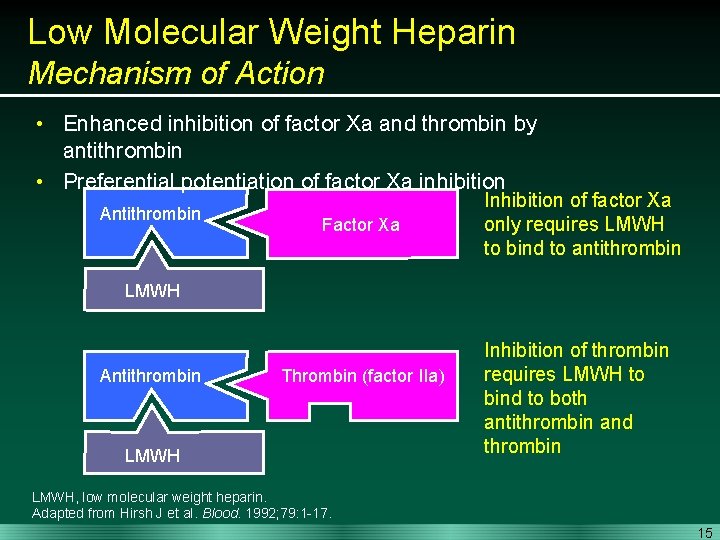
Low Molecular Weight Heparin Mechanism of Action • Enhanced inhibition of factor Xa and thrombin by antithrombin • Preferential potentiation of factor Xa inhibition Antithrombin Factor Xa Inhibition of factor Xa only requires LMWH to bind to antithrombin LMWH Antithrombin Thrombin (factor IIa) LMWH Inhibition of thrombin requires LMWH to bind to both antithrombin and thrombin LMWH, low molecular weight heparin. Adapted from Hirsh J et al. Blood. 1992; 79: 1 -17. 15
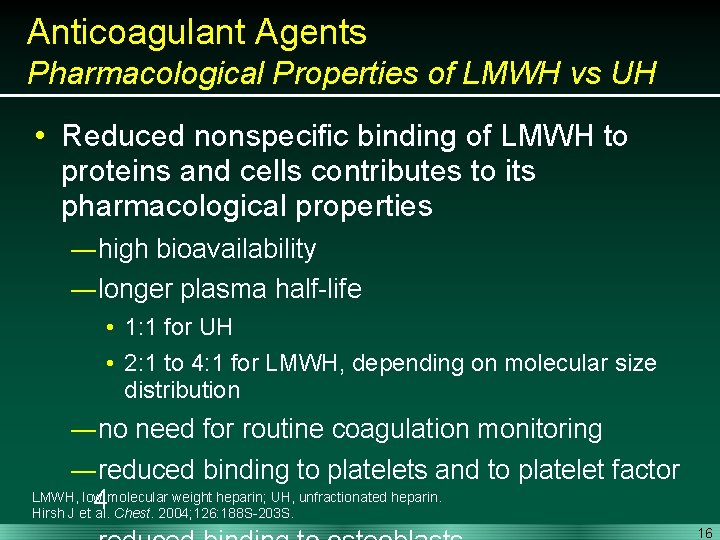
Anticoagulant Agents Pharmacological Properties of LMWH vs UH • Reduced nonspecific binding of LMWH to proteins and cells contributes to its pharmacological properties ―high bioavailability ―longer plasma half-life • 1: 1 for UH • 2: 1 to 4: 1 for LMWH, depending on molecular size distribution ―no need for routine coagulation monitoring ―reduced binding to platelets and to platelet factor LMWH, low molecular weight heparin; UH, unfractionated heparin. 4 Hirsh J et al. Chest. 2004; 126: 188 S-203 S. 16
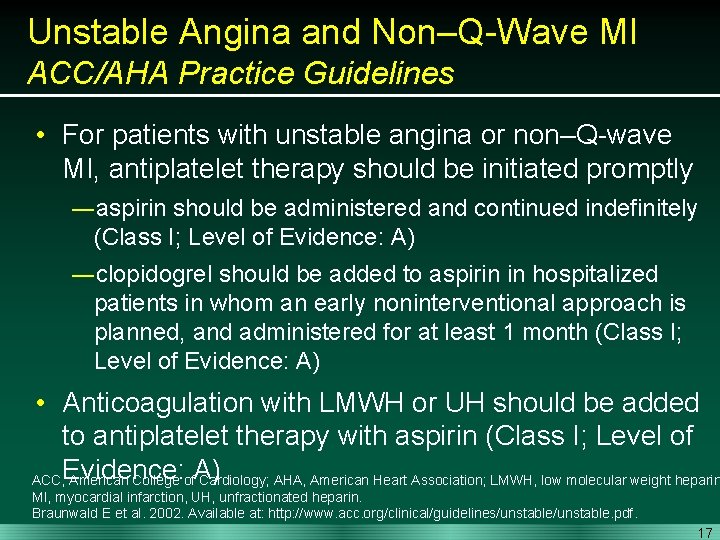
Unstable Angina and Non–Q-Wave MI ACC/AHA Practice Guidelines • For patients with unstable angina or non–Q-wave MI, antiplatelet therapy should be initiated promptly ―aspirin should be administered and continued indefinitely (Class I; Level of Evidence: A) ―clopidogrel should be added to aspirin in hospitalized patients in whom an early noninterventional approach is planned, and administered for at least 1 month (Class I; Level of Evidence: A) • Anticoagulation with LMWH or UH should be added to antiplatelet therapy with aspirin (Class I; Level of ACC, Evidence: American College of. A) Cardiology; AHA, American Heart Association; LMWH, low molecular weight heparin MI, myocardial infarction, UH, unfractionated heparin. Braunwald E et al. 2002. Available at: http: //www. acc. org/clinical/guidelines/unstable. pdf. 17
® FRAGMIN (dalteparin sodium injection) Use of FRAGMIN in the Prophylaxis of Ischemic Complications in Unstable Angina and Non–Q-Wave Myocardial Infarction, Concurrently Administered With Aspirin Please see full prescribing information for FRAGMIN with the boxed warning for spinal/epidural hematomas. Therapy 18
FRAGMIN (dalteparin sodium injection) • FRAGMIN is a LMWH produced through nitrous acid depolymerization of porcine UH ―mean molecular weight = 5000 daltons • Introduced in Europe in 1985 • Approved in the United States in 1994 • Currently marketed in >80 countries Please see full prescribing information for FRAGMIN with the boxed warning for spinal/epidural hematomas. LMWH, low molecular weight heparin; UH, unfractionated heparin. FRAGMIN Prescribing Information, 2004. 19
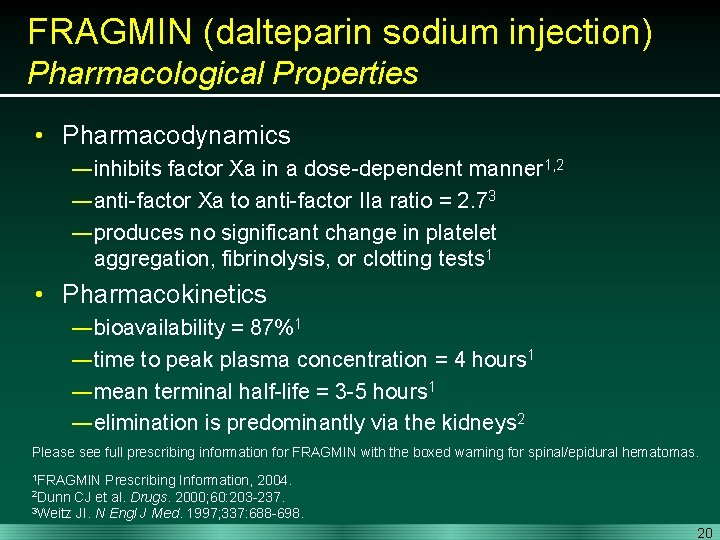
FRAGMIN (dalteparin sodium injection) Pharmacological Properties • Pharmacodynamics ―inhibits factor Xa in a dose-dependent manner 1, 2 ―anti-factor Xa to anti-factor IIa ratio = 2. 73 ―produces no significant change in platelet aggregation, fibrinolysis, or clotting tests 1 • Pharmacokinetics ―bioavailability = 87%1 ―time to peak plasma concentration = 4 hours 1 ―mean terminal half-life = 3 -5 hours 1 ―elimination is predominantly via the kidneys 2 Please see full prescribing information for FRAGMIN with the boxed warning for spinal/epidural hematomas. 1 FRAGMIN Prescribing Information, 2004. CJ et al. Drugs. 2000; 60: 203 -237. 3 Weitz JI. N Engl J Med. 1997; 337: 688 -698. 2 Dunn 20
FRAGMIN (dalteparin sodium injection) Indications • FRAGMIN injection is indicated for the prophylaxis of ischemic complications in unstable angina and non–Q-wave myocardial infarction, when concurrently administered with aspirin therapy • FRAGMIN is also indicated for the prophylaxis of DVT, which may lead to PE: ― in patients undergoing hip replacement surgery ― in patients undergoing abdominal surgery who are at risk for thromboembolic complications ― in medical patients who are at risk for thromboembolic complications due to severely restricted mobility during acute illness Please see full prescribing information for FRAGMIN with the boxed warning for spinal/epidural hematomas. DVT, deep vein thrombosis; PE, pulmonary embolism. FRAGMIN Prescribing Information, 2004. 21
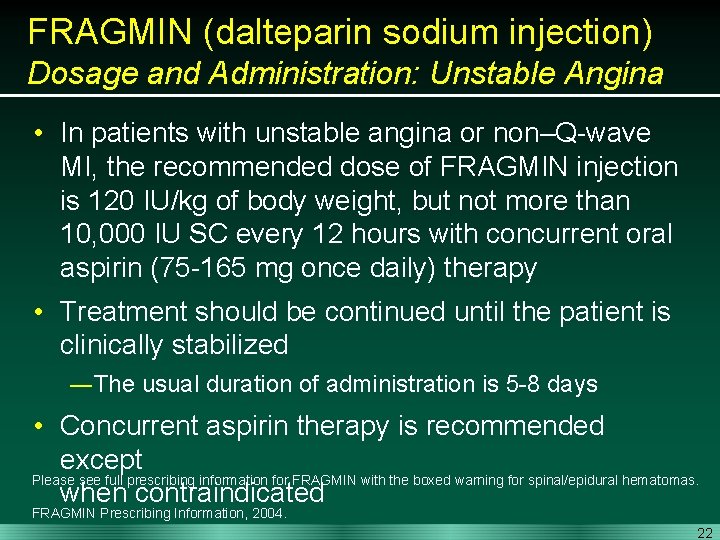
FRAGMIN (dalteparin sodium injection) Dosage and Administration: Unstable Angina • In patients with unstable angina or non–Q-wave MI, the recommended dose of FRAGMIN injection is 120 IU/kg of body weight, but not more than 10, 000 IU SC every 12 hours with concurrent oral aspirin (75 -165 mg once daily) therapy • Treatment should be continued until the patient is clinically stabilized ―The usual duration of administration is 5 -8 days • Concurrent aspirin therapy is recommended except Please see full prescribing information for FRAGMIN with the boxed warning for spinal/epidural hematomas. when contraindicated FRAGMIN Prescribing Information, 2004. 22
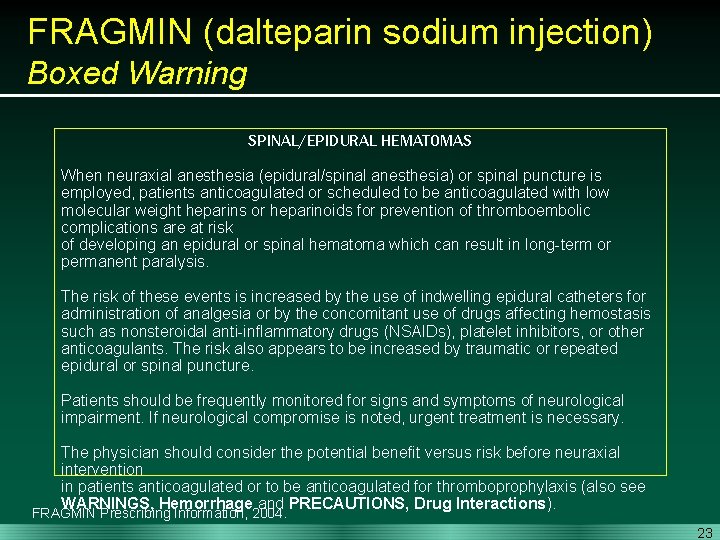
FRAGMIN (dalteparin sodium injection) Boxed Warning SPINAL/EPIDURAL HEMATOMAS When neuraxial anesthesia (epidural/spinal anesthesia) or spinal puncture is employed, patients anticoagulated or scheduled to be anticoagulated with low molecular weight heparins or heparinoids for prevention of thromboembolic complications are at risk of developing an epidural or spinal hematoma which can result in long-term or permanent paralysis. The risk of these events is increased by the use of indwelling epidural catheters for administration of analgesia or by the concomitant use of drugs affecting hemostasis such as nonsteroidal anti-inflammatory drugs (NSAIDs), platelet inhibitors, or other anticoagulants. The risk also appears to be increased by traumatic or repeated epidural or spinal puncture. Patients should be frequently monitored for signs and symptoms of neurological impairment. If neurological compromise is noted, urgent treatment is necessary. The physician should consider the potential benefit versus risk before neuraxial intervention in patients anticoagulated or to be anticoagulated for thromboprophylaxis (also see WARNINGS, Hemorrhage and PRECAUTIONS, Drug Interactions). FRAGMIN Prescribing Information, 2004. 23
FRAGMIN (dalteparin sodium injection) Contraindications • FRAGMIN injection is contraindicated in patients with known hypersensitivity to the drug, active major bleeding, or thrombocytopenia associated with positive in vitro tests for anti-platelet antibody in the presence of FRAGMIN • Patients undergoing regional anesthesia should not receive FRAGMIN for unstable angina or non–Q-wave myocardial infarction due to an increased risk of bleeding associated with the dosage of FRAGMIN recommended for unstable angina and non–Q-wave myocardial infarction • Patients with known hypersensitivity to heparin or pork products should not be treated with FRAGMIN Please see full prescribing information for FRAGMIN with the boxed warning for spinal/epidural hematomas. FRAGMIN Prescribing Information, 2004. 24
FRAGMIN (dalteparin sodium injection) Warnings • FRAGMIN injection is not intended for intramuscular injection • FRAGMIN cannot be used interchangeably (unit for unit) with unfractionated heparin or other low molecular weight heparins • FRAGMIN should be used with extreme caution in patients with history of heparin-induced thrombocytopenia Please see full prescribing information for FRAGMIN with the boxed warning for spinal/epidural hematomas. FRAGMIN Prescribing Information, 2004. 25
FRAGMIN (dalteparin sodium injection) Precautions • FRAGMIN injection should not be mixed with other injections or infusions unless specific compatibility data are available that support such mixing • FRAGMIN should be used with caution in patients with bleeding diathesis, thrombocytopenia, or platelet defects, severe liver or kidney insufficiency, hypertensive or diabetic retinopathy, and recent gastrointestinal bleeding • If a thromboembolic event should occur despite dalteparin prophylaxis, FRAGMIN should be discontinued and appropriate therapy initiated Please see full prescribing information for FRAGMIN with the boxed warning for spinal/epidural hematomas. FRAGMIN Prescribing Information, 2004. 26
FRAGMIN (dalteparin sodium injection) Additional Safety Information • The most commonly reported side effect is hematoma at the injection site Please see full prescribing information for FRAGMIN with the boxed warning for spinal/epidural hematomas. FRAGMIN Prescribing Information, 2004. 27
FRAGMIN (dalteparin sodium injection) Drug Interactions • FRAGMIN should be used with care in patients receiving oral anticoagulants, platelet inhibitors, and thrombolytic agents because of increased risk of bleeding • Aspirin, unless contraindicated, is recommended in patients treated for unstable angina or non–Q-wave myocardial infarction Please see full prescribing information for FRAGMIN with the boxed warning for spinal/epidural hematomas. FRAGMIN Prescribing Information, 2004. 28
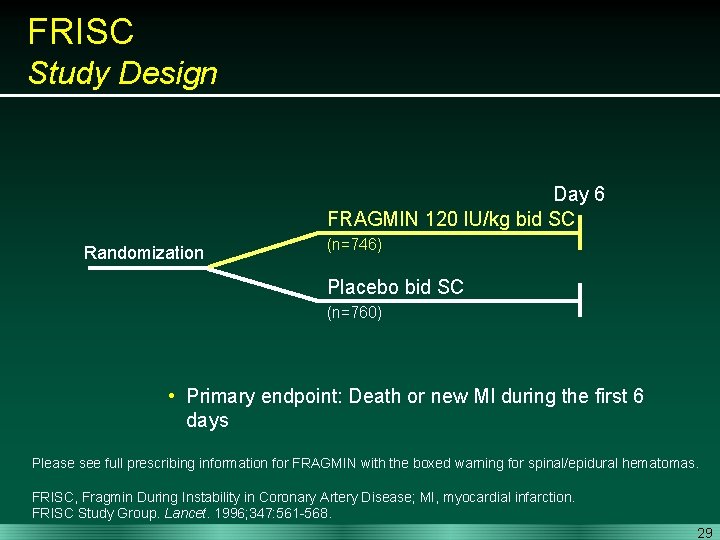
FRISC Study Design Day 6 FRAGMIN 120 IU/kg bid SC Randomization (n=746) Placebo bid SC (n=760) • Primary endpoint: Death or new MI during the first 6 days Please see full prescribing information for FRAGMIN with the boxed warning for spinal/epidural hematomas. FRISC, Fragmin During Instability in Coronary Artery Disease; MI, myocardial infarction. FRISC Study Group. Lancet. 1996; 347: 561 -568. 29
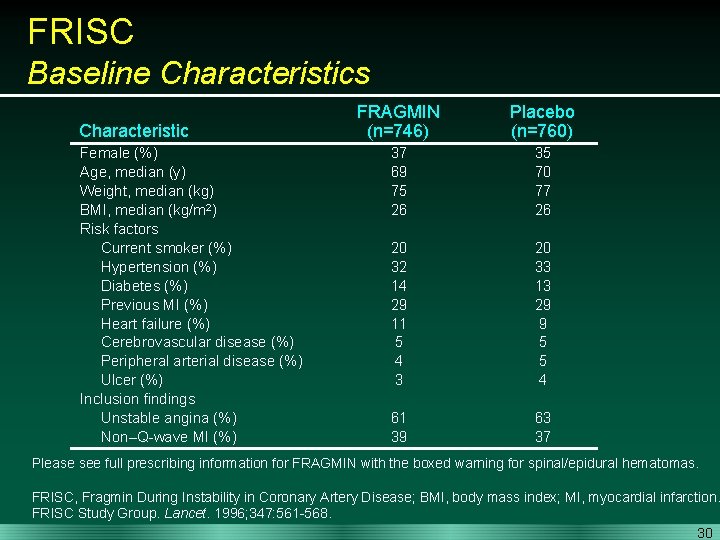
FRISC Baseline Characteristics Characteristic Female (%) Age, median (y) Weight, median (kg) BMI, median (kg/m 2) Risk factors Current smoker (%) Hypertension (%) Diabetes (%) Previous MI (%) Heart failure (%) Cerebrovascular disease (%) Peripheral arterial disease (%) Ulcer (%) Inclusion findings Unstable angina (%) Non–Q-wave MI (%) FRAGMIN (n=746) Placebo (n=760) 37 69 75 26 35 70 77 26 20 32 14 29 11 5 4 3 20 33 13 29 9 5 5 4 61 39 63 37 Please see full prescribing information for FRAGMIN with the boxed warning for spinal/epidural hematomas. FRISC, Fragmin During Instability in Coronary Artery Disease; BMI, body mass index; MI, myocardial infarction. FRISC Study Group. Lancet. 1996; 347: 561 -568. 30
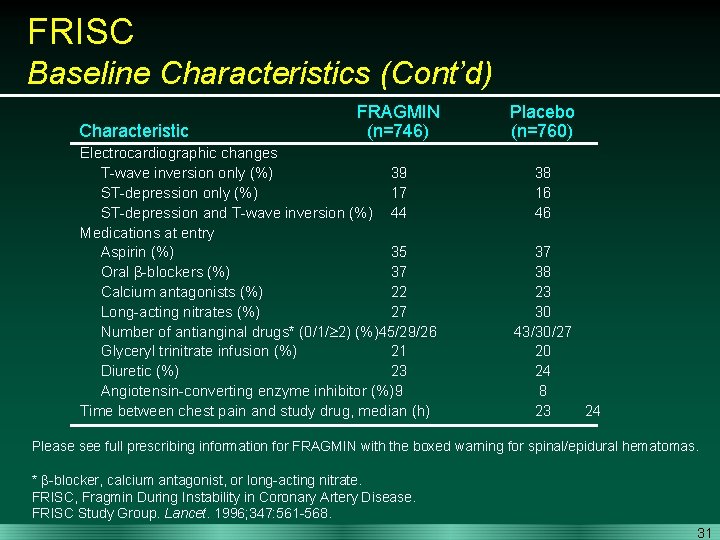
FRISC Baseline Characteristics (Cont’d) Characteristic FRAGMIN (n=746) Electrocardiographic changes T-wave inversion only (%) 39 ST-depression only (%) 17 ST-depression and T-wave inversion (%) 44 Medications at entry Aspirin (%) 35 Oral β-blockers (%) 37 Calcium antagonists (%) 22 Long-acting nitrates (%) 27 Number of antianginal drugs* (0/1/ 2) (%)45/29/26 Glyceryl trinitrate infusion (%) 21 Diuretic (%) 23 Angiotensin-converting enzyme inhibitor (%)9 Time between chest pain and study drug, median (h) Placebo (n=760) 38 16 46 37 38 23 30 43/30/27 20 24 8 23 24 Please see full prescribing information for FRAGMIN with the boxed warning for spinal/epidural hematomas. * β-blocker, calcium antagonist, or long-acting nitrate. FRISC, Fragmin During Instability in Coronary Artery Disease. FRISC Study Group. Lancet. 1996; 347: 561 -568. 31
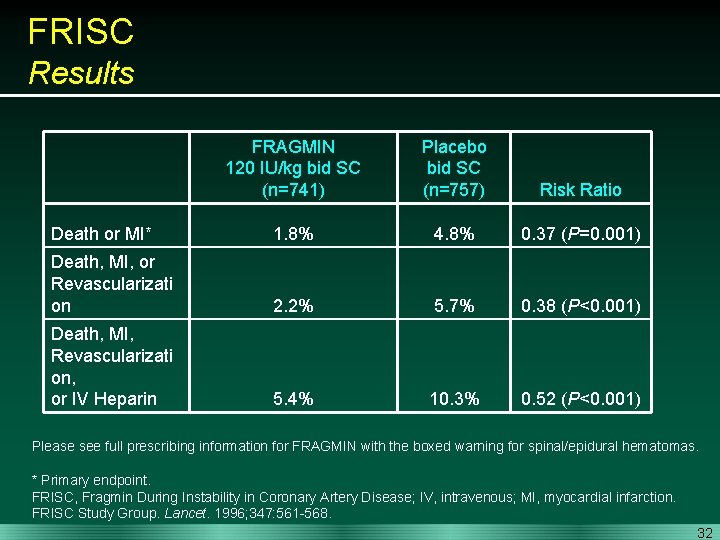
FRISC Results FRAGMIN 120 IU/kg bid SC (n=741) Placebo bid SC (n=757) Risk Ratio Death or MI* 1. 8% 4. 8% 0. 37 (P=0. 001) Death, MI, or Revascularizati on 2. 2% 5. 7% 0. 38 (P<0. 001) Death, MI, Revascularizati on, or IV Heparin 5. 4% 10. 3% 0. 52 (P<0. 001) Please see full prescribing information for FRAGMIN with the boxed warning for spinal/epidural hematomas. * Primary endpoint. FRISC, Fragmin During Instability in Coronary Artery Disease; IV, intravenous; MI, myocardial infarction. FRISC Study Group. Lancet. 1996; 347: 561 -568. 32
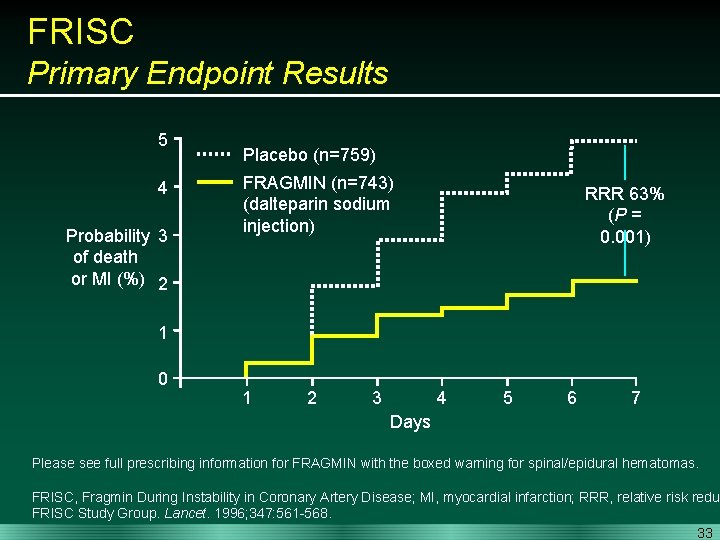
FRISC Primary Endpoint Results 5 4 Probability 3 of death or MI (%) 2 Placebo (n=759) FRAGMIN (n=743) (dalteparin sodium injection) RRR 63% (P = 0. 001) 1 0 1 2 3 4 5 6 7 Days Please see full prescribing information for FRAGMIN with the boxed warning for spinal/epidural hematomas. FRISC, Fragmin During Instability in Coronary Artery Disease; MI, myocardial infarction; RRR, relative risk reduc FRISC Study Group. Lancet. 1996; 347: 561 -568. 33
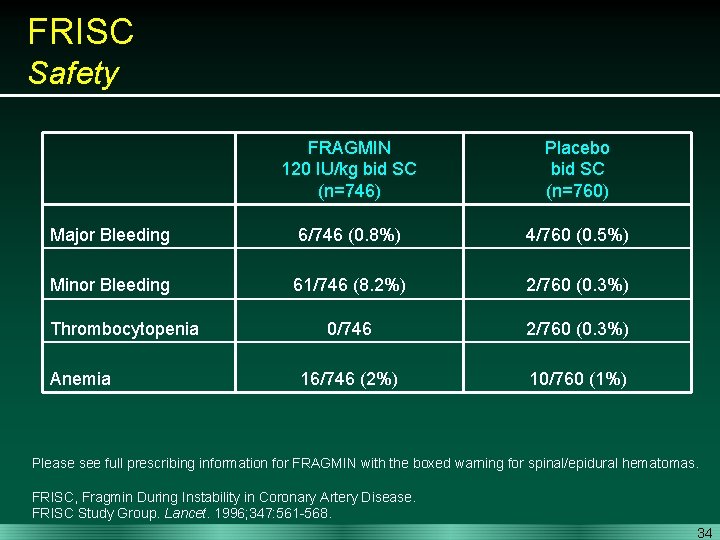
FRISC Safety FRAGMIN 120 IU/kg bid SC (n=746) Placebo bid SC (n=760) Major Bleeding 6/746 (0. 8%) 4/760 (0. 5%) Minor Bleeding 61/746 (8. 2%) 2/760 (0. 3%) 0/746 2/760 (0. 3%) 16/746 (2%) 10/760 (1%) Thrombocytopenia Anemia Please see full prescribing information for FRAGMIN with the boxed warning for spinal/epidural hematomas. FRISC, Fragmin During Instability in Coronary Artery Disease. FRISC Study Group. Lancet. 1996; 347: 561 -568. 34
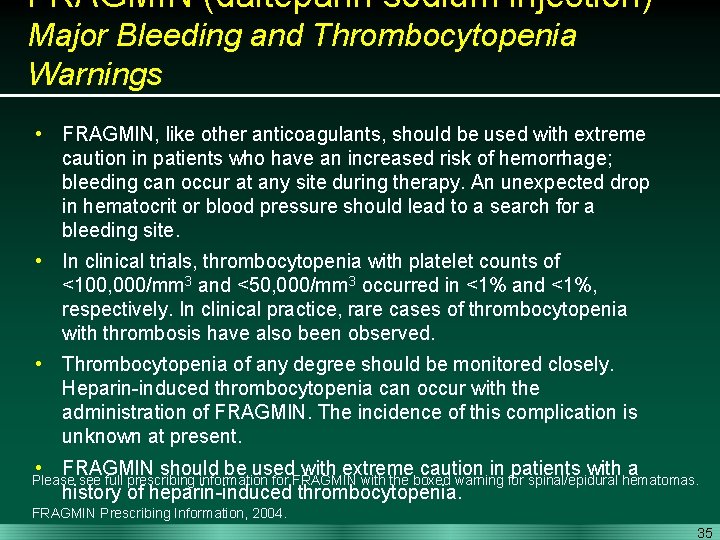
FRAGMIN (dalteparin sodium injection) Major Bleeding and Thrombocytopenia Warnings • FRAGMIN, like other anticoagulants, should be used with extreme caution in patients who have an increased risk of hemorrhage; bleeding can occur at any site during therapy. An unexpected drop in hematocrit or blood pressure should lead to a search for a bleeding site. • In clinical trials, thrombocytopenia with platelet counts of <100, 000/mm 3 and <50, 000/mm 3 occurred in <1% and <1%, respectively. In clinical practice, rare cases of thrombocytopenia with thrombosis have also been observed. • Thrombocytopenia of any degree should be monitored closely. Heparin-induced thrombocytopenia can occur with the administration of FRAGMIN. The incidence of this complication is unknown at present. • FRAGMIN should be used with extreme caution in patients with a history of heparin-induced thrombocytopenia. Please see full prescribing information for FRAGMIN with the boxed warning for spinal/epidural hematomas. FRAGMIN Prescribing Information, 2004. 35
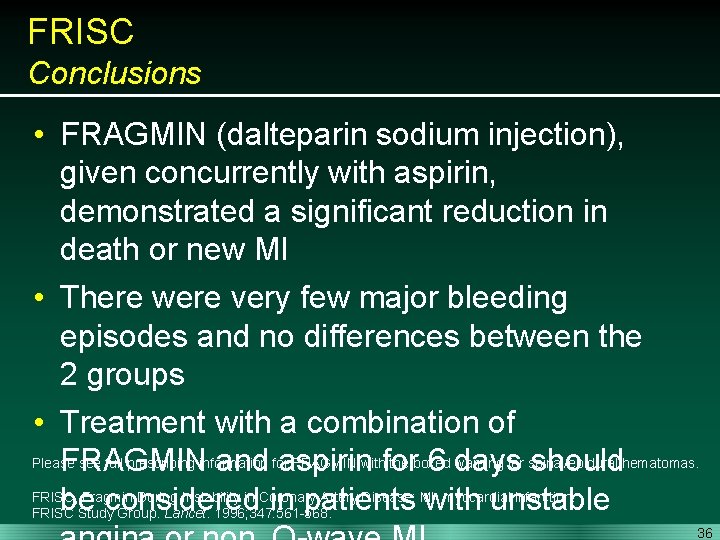
FRISC Conclusions • FRAGMIN (dalteparin sodium injection), given concurrently with aspirin, demonstrated a significant reduction in death or new MI • There were very few major bleeding episodes and no differences between the 2 groups • Treatment with a combination of Please see full prescribing information FRAGMIN withfor the boxed warning for spinal/epidural FRAGMIN and foraspirin 6 days shouldhematomas. FRISC, Fragmin During Instability in Coronary Artery Disease; MI, myocardial infarction. be considered in patients with unstable FRISC Study Group. Lancet. 1996; 347: 561 -568. 36
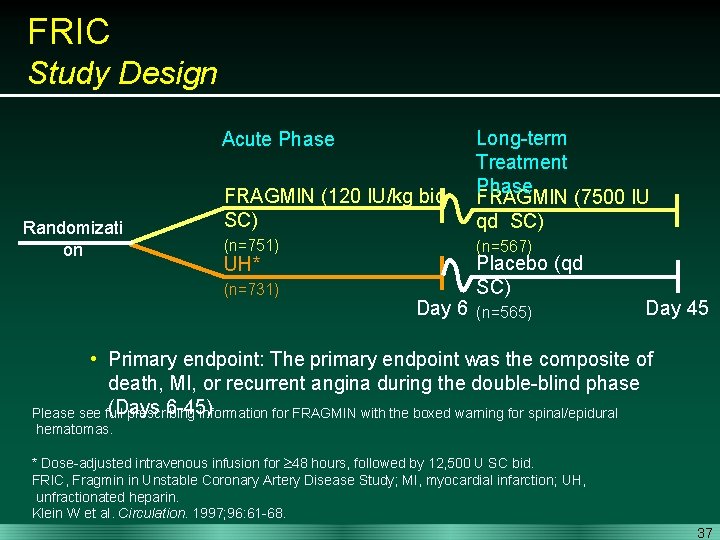
FRIC Study Design FRAGMIN (120 IU/kg bid SC) Long-term Treatment Phase FRAGMIN (7500 IU qd SC) (n=751) (n=567) Acute Phase Randomizati on UH* (n=731) Day 6 Placebo (qd SC) (n=565) Day 45 • Primary endpoint: The primary endpoint was the composite of death, MI, or recurrent angina during the double-blind phase (Days 6 -45) Please see full prescribing information for FRAGMIN with the boxed warning for spinal/epidural hematomas. * Dose-adjusted intravenous infusion for 48 hours, followed by 12, 500 U SC bid. FRIC, Fragmin in Unstable Coronary Artery Disease Study; MI, myocardial infarction; UH, unfractionated heparin. Klein W et al. Circulation. 1997; 96: 61 -68. 37
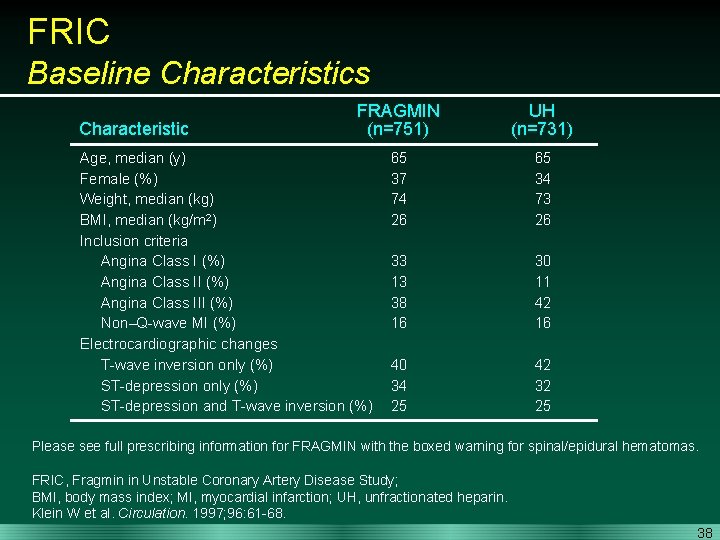
FRIC Baseline Characteristics Characteristic FRAGMIN (n=751) Age, median (y) Female (%) Weight, median (kg) BMI, median (kg/m 2) Inclusion criteria Angina Class I (%) Angina Class III (%) Non–Q-wave MI (%) Electrocardiographic changes T-wave inversion only (%) ST-depression and T-wave inversion (%) UH (n=731) 65 37 74 26 65 34 73 26 33 13 38 16 30 11 42 16 40 34 25 42 32 25 Please see full prescribing information for FRAGMIN with the boxed warning for spinal/epidural hematomas. FRIC, Fragmin in Unstable Coronary Artery Disease Study; BMI, body mass index; MI, myocardial infarction; UH, unfractionated heparin. Klein W et al. Circulation. 1997; 96: 61 -68. 38
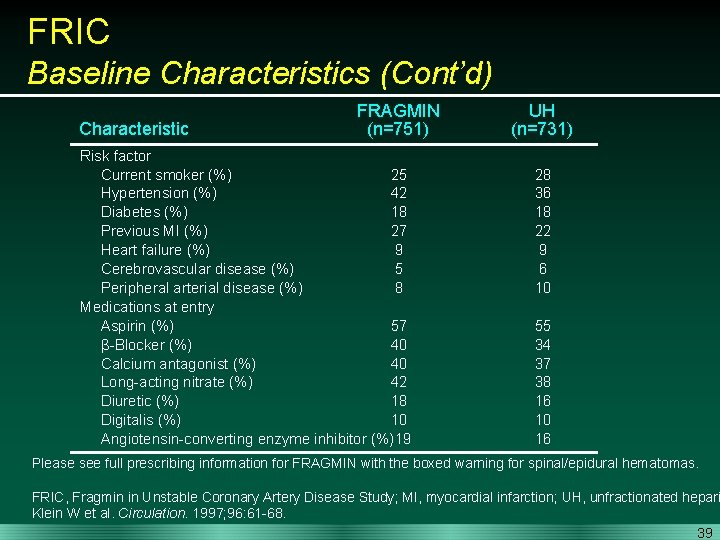
FRIC Baseline Characteristics (Cont’d) Characteristic FRAGMIN (n=751) Risk factor Current smoker (%) 25 Hypertension (%) 42 Diabetes (%) 18 Previous MI (%) 27 Heart failure (%) 9 Cerebrovascular disease (%) 5 Peripheral arterial disease (%) 8 Medications at entry Aspirin (%) 57 β-Blocker (%) 40 Calcium antagonist (%) 40 Long-acting nitrate (%) 42 Diuretic (%) 18 Digitalis (%) 10 Angiotensin-converting enzyme inhibitor (%)19 UH (n=731) 28 36 18 22 9 6 10 55 34 37 38 16 10 16 Please see full prescribing information for FRAGMIN with the boxed warning for spinal/epidural hematomas. FRIC, Fragmin in Unstable Coronary Artery Disease Study; MI, myocardial infarction; UH, unfractionated hepari Klein W et al. Circulation. 1997; 96: 61 -68. 39
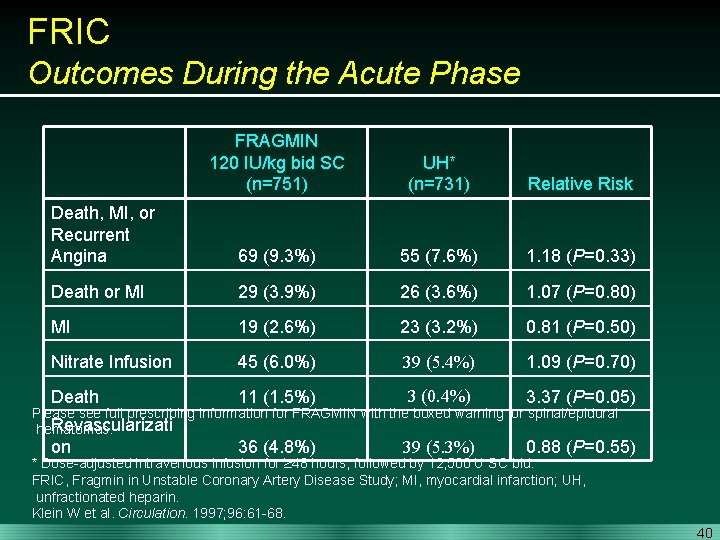
FRIC Outcomes During the Acute Phase FRAGMIN 120 IU/kg bid SC (n=751) UH* (n=731) Relative Risk Death, MI, or Recurrent Angina 69 (9. 3%) 55 (7. 6%) 1. 18 (P=0. 33) Death or MI 29 (3. 9%) 26 (3. 6%) 1. 07 (P=0. 80) MI 19 (2. 6%) 23 (3. 2%) 0. 81 (P=0. 50) Nitrate Infusion 45 (6. 0%) 39 (5. 4%) 1. 09 (P=0. 70) Death 11 (1. 5%) 3 (0. 4%) 3. 37 (P=0. 05) on 36 (4. 8%) 39 (5. 3%) 0. 88 (P=0. 55) Please see full prescribing information for FRAGMIN with the boxed warning for spinal/epidural Revascularizati hematomas. * Dose-adjusted intravenous infusion for 48 hours, followed by 12, 500 U SC bid. FRIC, Fragmin in Unstable Coronary Artery Disease Study; MI, myocardial infarction; UH, unfractionated heparin. Klein W et al. Circulation. 1997; 96: 61 -68. 40
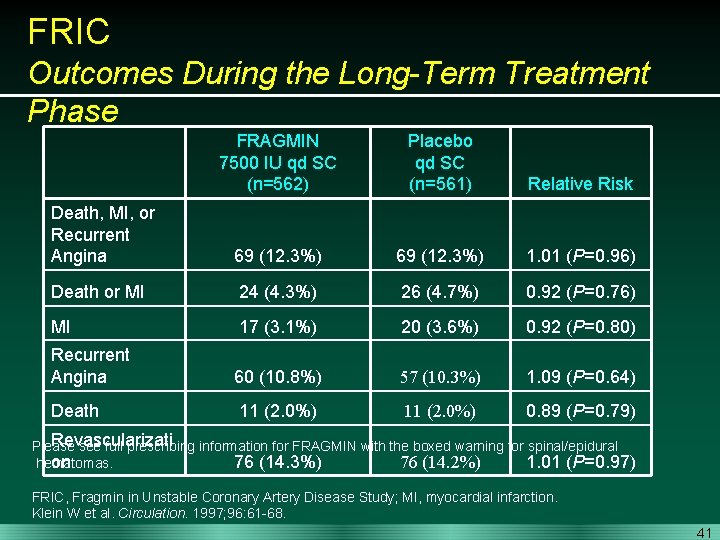
FRIC Outcomes During the Long-Term Treatment Phase FRAGMIN 7500 IU qd SC (n=562) Placebo qd SC (n=561) Relative Risk Death, MI, or Recurrent Angina 69 (12. 3%) 1. 01 (P=0. 96) Death or MI 24 (4. 3%) 26 (4. 7%) 0. 92 (P=0. 76) MI 17 (3. 1%) 20 (3. 6%) 0. 92 (P=0. 80) Recurrent Angina 60 (10. 8%) 57 (10. 3%) 1. 09 (P=0. 64) Death 11 (2. 0%) 0. 89 (P=0. 79) Revascularizati Please see full prescribing information for FRAGMIN with the boxed warning for spinal/epidural 76 (14. 2%) on 76 (14. 3%) 1. 01 (P=0. 97) hematomas. FRIC, Fragmin in Unstable Coronary Artery Disease Study; MI, myocardial infarction. Klein W et al. Circulation. 1997; 96: 61 -68. 41
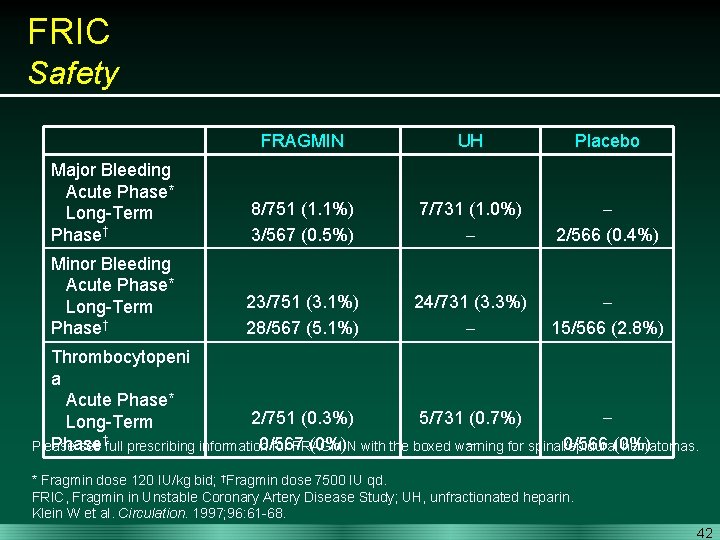
FRIC Safety FRAGMIN UH Placebo Major Bleeding Acute Phase* Long-Term Phase† 8/751 (1. 1%) 3/567 (0. 5%) 7/731 (1. 0%) – – 2/566 (0. 4%) Minor Bleeding Acute Phase* Long-Term Phase† 23/751 (3. 1%) 28/567 (5. 1%) 24/731 (3. 3%) – – 15/566 (2. 8%) Thrombocytopeni a Acute Phase* – 2/751 (0. 3%) 5/731 (0. 7%) Long-Term † – Phase 0/567 (0%) with the boxed warning 0/566 (0%) Please see full prescribing information for FRAGMIN for spinal/epidural hematomas. * Fragmin dose 120 IU/kg bid; †Fragmin dose 7500 IU qd. FRIC, Fragmin in Unstable Coronary Artery Disease Study; UH, unfractionated heparin. Klein W et al. Circulation. 1997; 96: 61 -68. 42
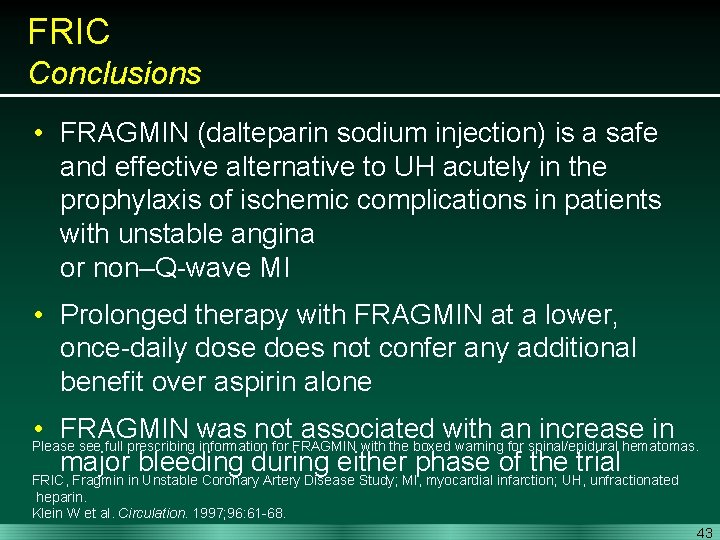
FRIC Conclusions • FRAGMIN (dalteparin sodium injection) is a safe and effective alternative to UH acutely in the prophylaxis of ischemic complications in patients with unstable angina or non–Q-wave MI • Prolonged therapy with FRAGMIN at a lower, once-daily dose does not confer any additional benefit over aspirin alone • FRAGMIN was not associated with an increase in major bleeding during either phase of the trial FRIC, Fragmin in Unstable Coronary Artery Disease Study; MI, myocardial infarction; UH, unfractionated Please see full prescribing information for FRAGMIN with the boxed warning for spinal/epidural hematomas. heparin. Klein W et al. Circulation. 1997; 96: 61 -68. 43
Prophylaxis of Ischemic Complications in Unstable Angina and Non–Q-Wave MI Summary • Unstable angina and non–Q-wave MI are a major cause of emergency medical care and hospitalization in the US 1 • Both anticoagulants and antiplatelet agents are potentially effective in reducing ischemic complications in these patients 1 • FRAGMIN (dalteparin sodium injection), given concurrently with aspirin, significantly reduces death or new MI, compared with placebo, 2 and is a safe and Please see full prescribing information for to FRAGMIN boxedprophylaxis warning for spinal/epidural effective alternative UH 3 withinthethe of hematomas. MI, myocardial infarction; UH, unfractionated heparin. ischemic complications in patients with unstable Braunwald E et al. 2002. Available at: http: //www. acc. org/clinical/guidelines/unstable. pdf. angina or. Lancet. non–Q-wave FRISC Study Group. 1996; 347: 561 -568. MI 1 2 3 Klein W et al. Circulation. 1997; 96: 61 -68. 44