
Fractures and Dislocations about the Elbow CRITOE 2
Fractures and Dislocations about the Elbow
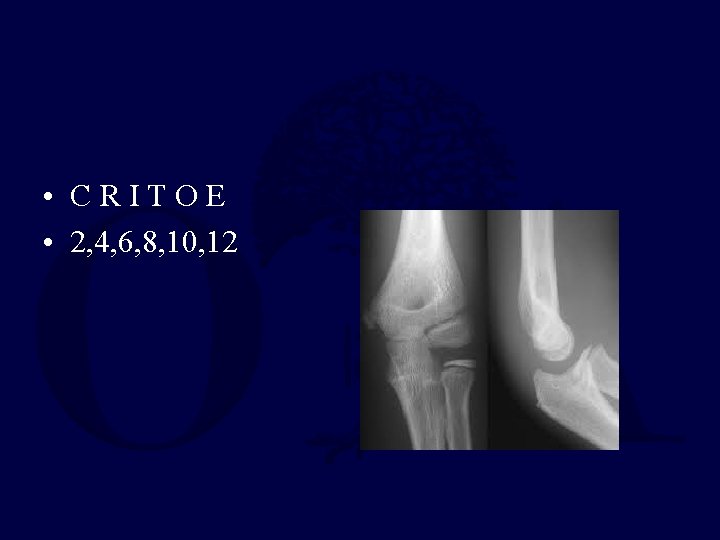
• CRITOE • 2, 4, 6, 8, 10, 12

Elbow Fractures in Children • Very common injuries (approximately 65% of pediatric trauma) • Radiographic assessment - difficult for nonorthopaedists, because of the complexity and variability of the physeal anatomy and development
![• Mechanism of injury • • h/o trouma Fall from height [ jamun]](http://slidetodoc.com/presentation_image_h/d00fcef3f56e21cccdca4e6e468e444e/image-4.jpg "• Mechanism of injury • • h/o trouma Fall from height [ jamun]")
• Mechanism of injury • • h/o trouma Fall from height [ jamun] RTA Fall on outstretch hand

CLINICAL SYMPTOM • Pain • Swelling • Deformity • Loss of function • Children will usually not move the elbow
![Elbow Fractures Physical Examination 1]TENDER 2] Swelling 3] DEFORMITY 4] Complete vascular exam –](http://slidetodoc.com/presentation_image_h/d00fcef3f56e21cccdca4e6e468e444e/image-7.jpg "Elbow Fractures Physical Examination 1]TENDER 2] Swelling 3] DEFORMITY 4] Complete vascular exam –")
Elbow Fractures Physical Examination 1]TENDER 2] Swelling 3] DEFORMITY 4] Complete vascular exam – Doppler may be helpful to document vascular status 5]Neurologic exam is essential, as nerve injuries are common.
Elbow Fractures Physical Examination • Always palpate the arm and forearm for signs of compartment syndrome • Thorough documentation of all findings is important – A simple record of “neurovascular status is intact” is unacceptable (and doesn’t hold up in court…) – Individual assessment and recording of motor, sensory, and vascular function is essential
Elbow Fractures Radiographs • AP and Lateral views are important initial views – In trauma these views may be less than ideal, because it can be difficult to position the injured extremity • Oblique views may be necessary – Especially for the evaluation of suspected lateral condyle fractures • Comparison views frequently obtained by primary care or ER physicians – Although these are rarely used by orthopaedists
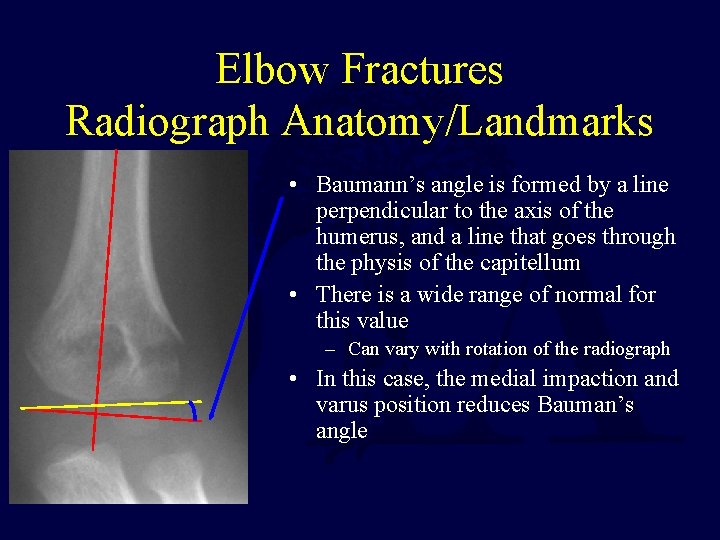
Elbow Fractures Radiograph Anatomy/Landmarks • Baumann’s angle is formed by a line perpendicular to the axis of the humerus, and a line that goes through the physis of the capitellum • There is a wide range of normal for this value – Can vary with rotation of the radiograph • In this case, the medial impaction and varus position reduces Bauman’s angle
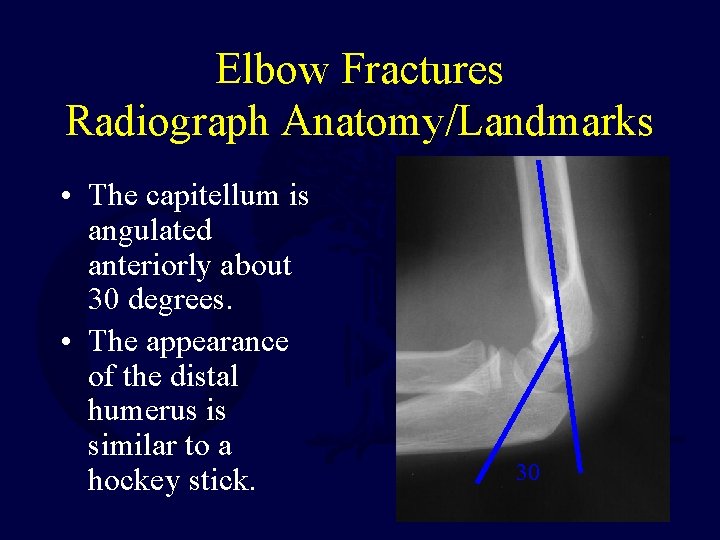
Elbow Fractures Radiograph Anatomy/Landmarks • The capitellum is angulated anteriorly about 30 degrees. • The appearance of the distal humerus is similar to a hockey stick. 30
Supracondylar Humerus Fractures • Most common fracture around the elbow in children – 60 percent of elbow fractures • 95 percent are extension type injuries – Produces posterior angulation/displacement of the distal fragment • Occurs from a fall on an outstretched hand – Ligamentous laxity and hyperextension of the elbow are important mechanical factors • May be associated with a distal radius or forearm fractures
![Supracondylar Humerus Fractures Classification[Gartland] • Type 1 – Non-displaced • Type 2 – Angulated/displaced](http://slidetodoc.com/presentation_image_h/d00fcef3f56e21cccdca4e6e468e444e/image-13.jpg "Supracondylar Humerus Fractures Classification[Gartland] • Type 1 – Non-displaced • Type 2 – Angulated/displaced")
Supracondylar Humerus Fractures Classification[Gartland] • Type 1 – Non-displaced • Type 2 – Angulated/displaced fracture with intact posterior cortex • Type 3 – Complete displacement, with no contact between fragments Gartland. Management of supracondylar fractures of the humerus in children. Surg Gynecol Obstet. 1959; 109: 145 -54.
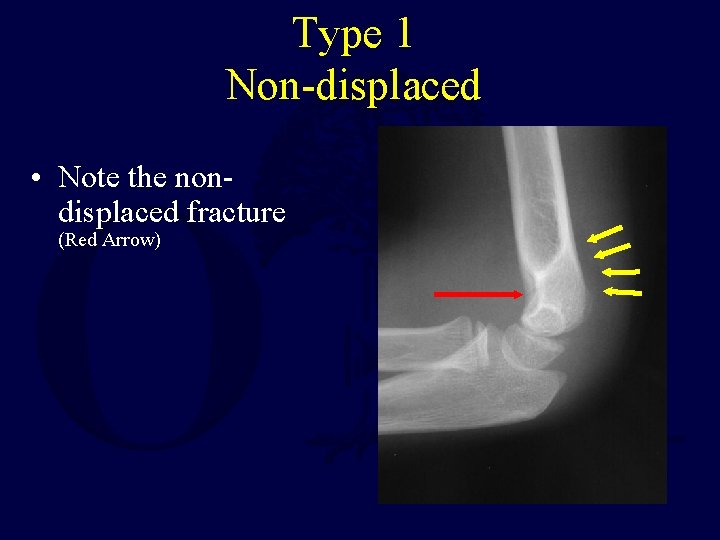
Type 1 Non-displaced • Note the nondisplaced fracture (Red Arrow)
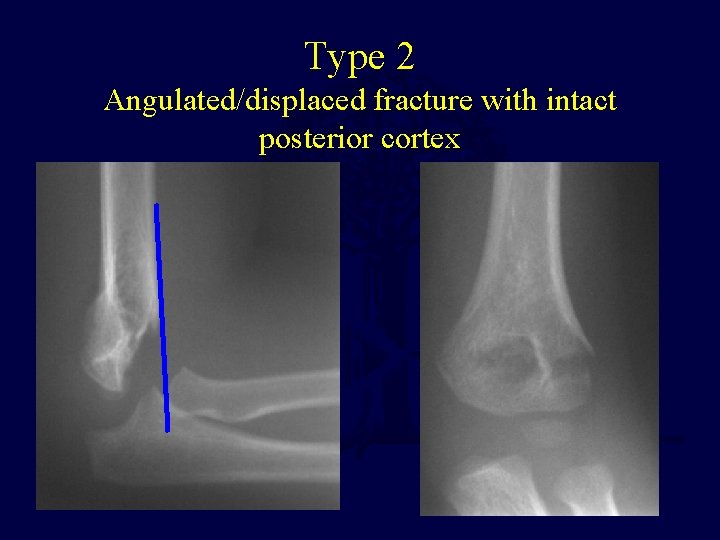
Type 2 Angulated/displaced fracture with intact posterior cortex
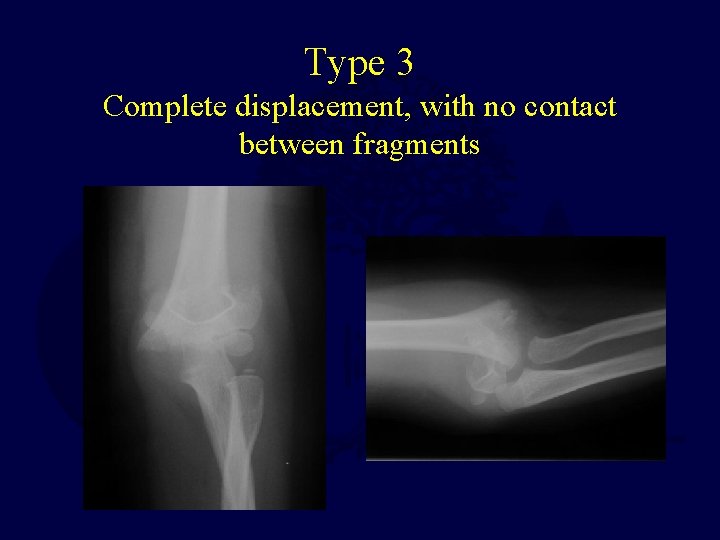
Type 3 Complete displacement, with no contact between fragments
Supracondylar Humerus Fractures Associated Injuries • Nerve injury incidence is high, between 7 and 16 % – Median, radial, and/or ulnar nerve • Anterior interosseous nerve injury is most commonly injured nerve • Carefully document pre-manipulation exam, – Post-manipulation neurologic deficits can alter decision making
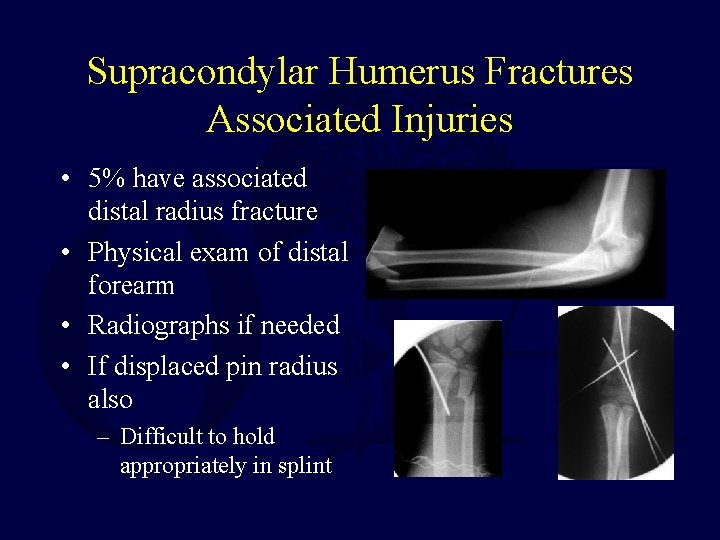
Supracondylar Humerus Fractures Associated Injuries • 5% have associated distal radius fracture • Physical exam of distal forearm • Radiographs if needed • If displaced pin radius also – Difficult to hold appropriately in splint
Supracondylar Humerus Fractures Associated Injuries • Vascular injuries are rare, but pulses should always be assessed before and after reduction • In the absence of a radial and/or ulnar pulse, the fingers may still be well-perfused, because of the excellent collateral circulation about the elbow • Doppler device can be used for assessment
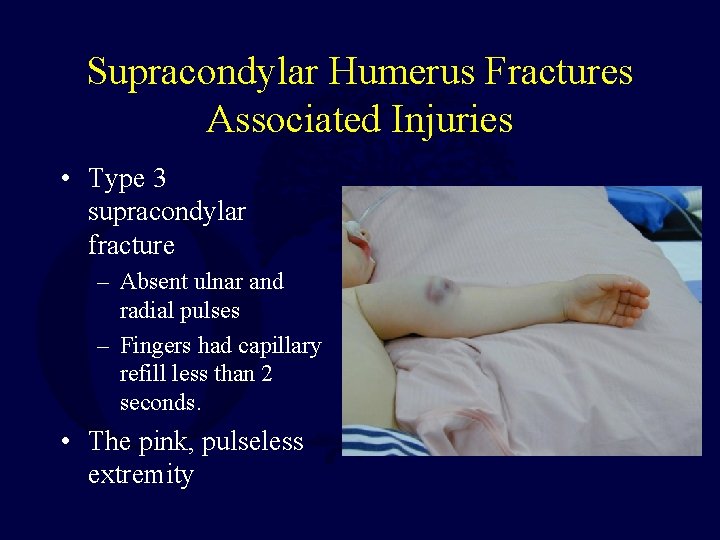
Supracondylar Humerus Fractures Associated Injuries • Type 3 supracondylar fracture – Absent ulnar and radial pulses – Fingers had capillary refill less than 2 seconds. • The pink, pulseless extremity
Supracondylar Humerus Fractures Treatment • Type 1 Fractures – In most cases, these can be treated with immobilization [OBOVE ELBOW POP SLAB] for approximately 3 weeks, at 90 degrees of flexion – If there is significant swelling, do not flex to 90 degrees until the swelling subsides
![Supracondylar Humerus Fractures Treatment • Type 2 Fractures: Posterior Angulation REDUCTION + POP[A/E] K-WIRE](http://slidetodoc.com/presentation_image_h/d00fcef3f56e21cccdca4e6e468e444e/image-22.jpg "Supracondylar Humerus Fractures Treatment • Type 2 Fractures: Posterior Angulation REDUCTION + POP[A/E] K-WIRE")
Supracondylar Humerus Fractures Treatment • Type 2 Fractures: Posterior Angulation REDUCTION + POP[A/E] K-WIRE FIXATION IF UNSTALE
Supracondylar Humerus Fractures Treatment • Type 3 Fractures – These fractures have a high risk of neurologic and/or vascular compromise – Can be associated with a significant amount of swelling – Current treatment protocols use percutaneous pin fixation in almost all cases – In rare cases, open reduction may be necessary • Especially in cases of vascular disruption
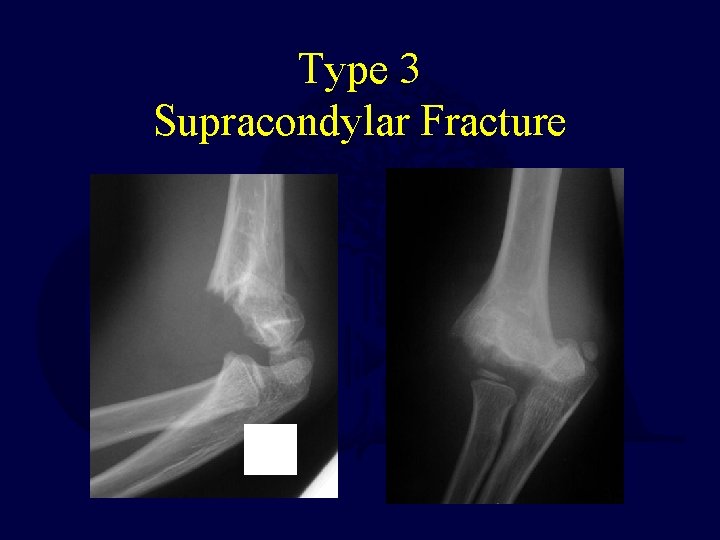
Type 3 Supracondylar Fracture
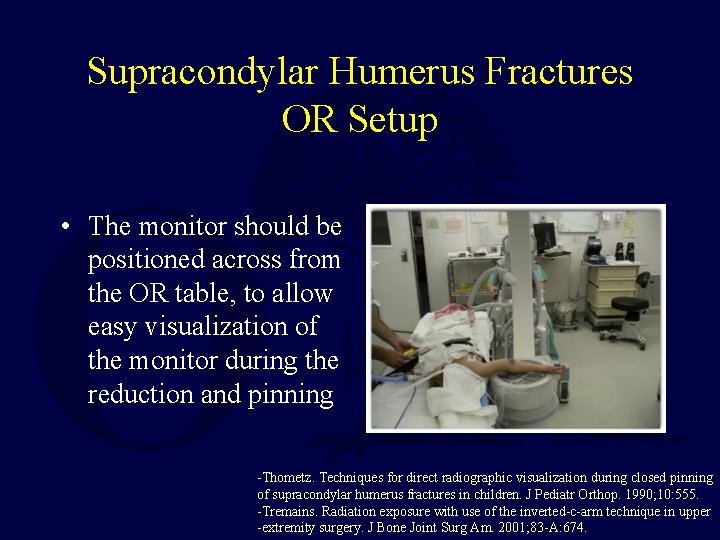
Supracondylar Humerus Fractures OR Setup • The monitor should be positioned across from the OR table, to allow easy visualization of the monitor during the reduction and pinning -Thometz. Techniques for direct radiographic visualization during closed pinning of supracondylar humerus fractures in children. J Pediatr Orthop. 1990; 10: 555. -Tremains. Radiation exposure with use of the inverted-c-arm technique in upper -extremity surgery. J Bone Joint Surg Am. 2001; 83 -A: 674.
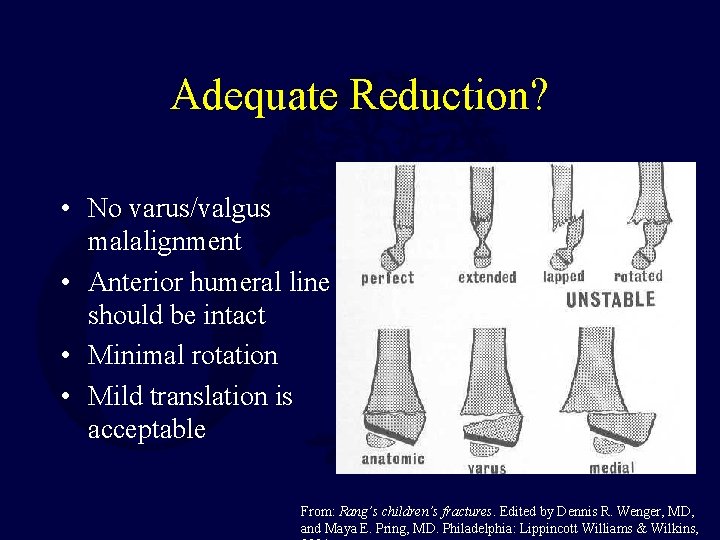
Adequate Reduction? • No varus/valgus malalignment • Anterior humeral line should be intact • Minimal rotation • Mild translation is acceptable From: Rang’s children’s fractures. Edited by Dennis R. Wenger, MD, and Maya E. Pring, MD. Philadelphia: Lippincott Williams & Wilkins,
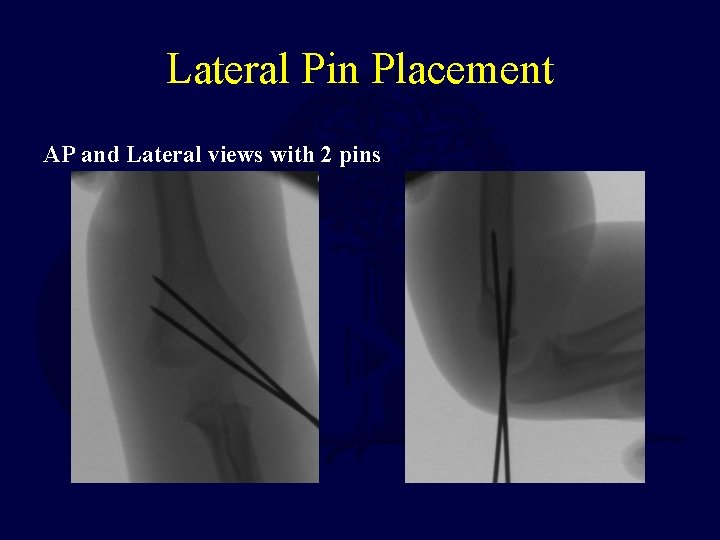
Lateral Pin Placement AP and Lateral views with 2 pins
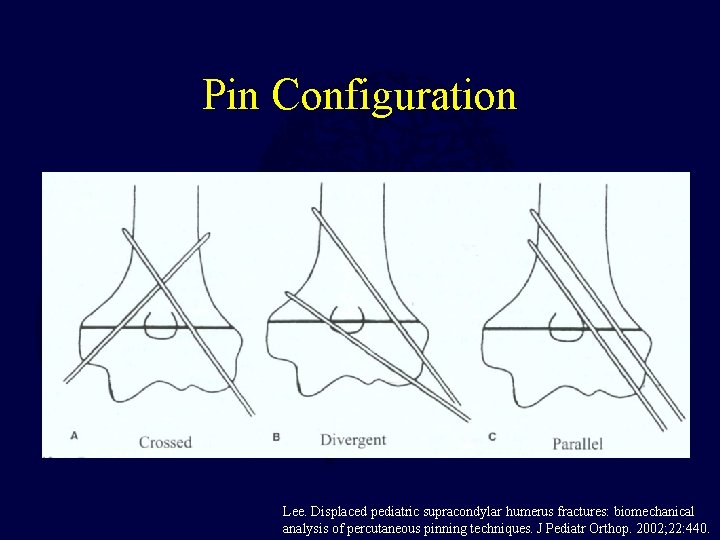
Pin Configuration Lee. Displaced pediatric supracondylar humerus fractures: biomechanical analysis of percutaneous pinning techniques. J Pediatr Orthop. 2002; 22: 440.
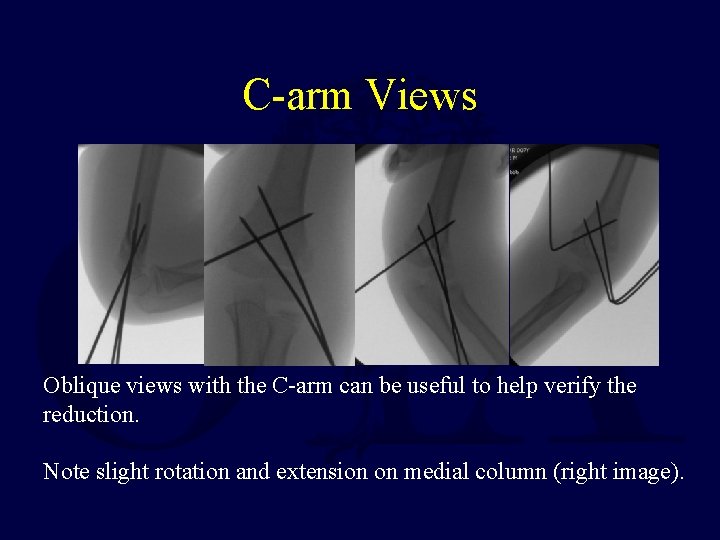
C-arm Views Oblique views with the C-arm can be useful to help verify the reduction. Note slight rotation and extension on medial column (right image).
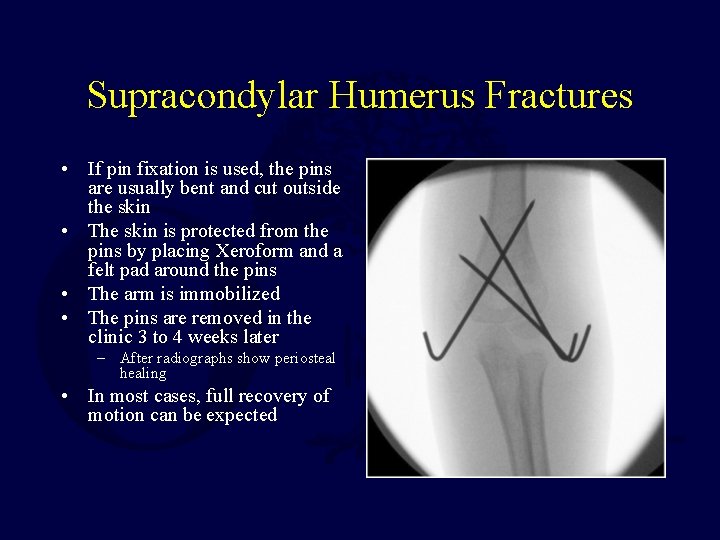
Supracondylar Humerus Fractures • If pin fixation is used, the pins are usually bent and cut outside the skin • The skin is protected from the pins by placing Xeroform and a felt pad around the pins • The arm is immobilized • The pins are removed in the clinic 3 to 4 weeks later – After radiographs show periosteal healing • In most cases, full recovery of motion can be expected
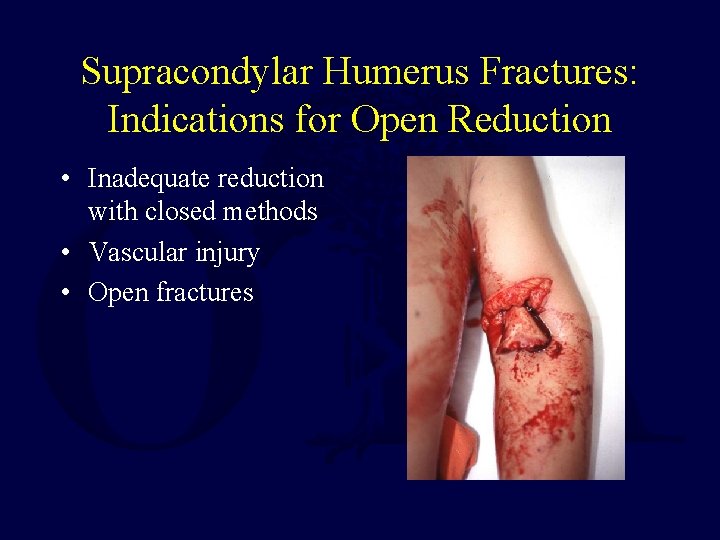
Supracondylar Humerus Fractures: Indications for Open Reduction • Inadequate reduction with closed methods • Vascular injury • Open fractures
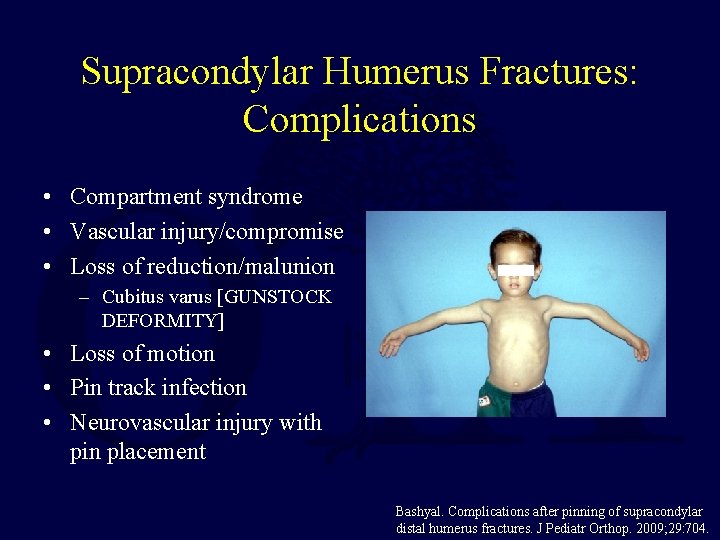
Supracondylar Humerus Fractures: Complications • Compartment syndrome • Vascular injury/compromise • Loss of reduction/malunion – Cubitus varus [GUNSTOCK DEFORMITY] • Loss of motion • Pin track infection • Neurovascular injury with pin placement Bashyal. Complications after pinning of supracondylar distal humerus fractures. J Pediatr Orthop. 2009; 29: 704.
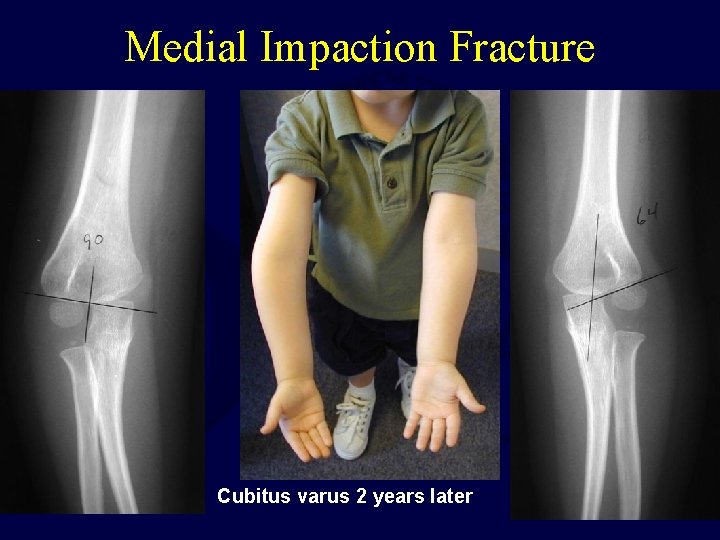
Medial Impaction Fracture Cubitus varus 2 years later
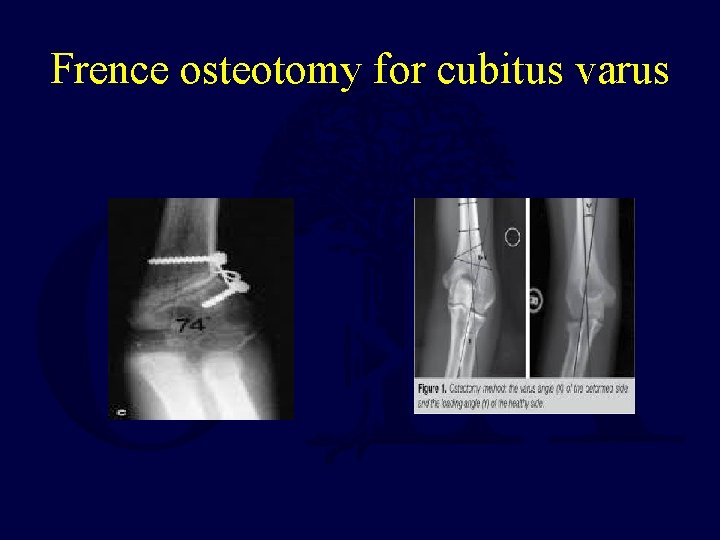
Frence osteotomy for cubitus varus
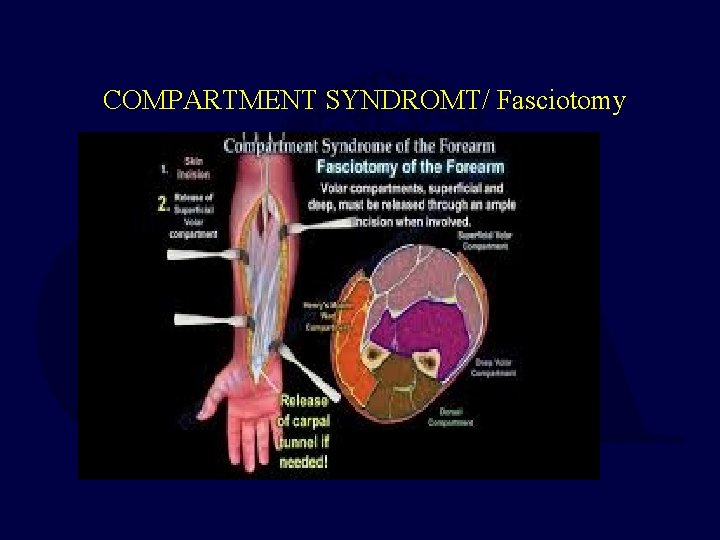
COMPARTMENT SYNDROMT/ Fasciotomy
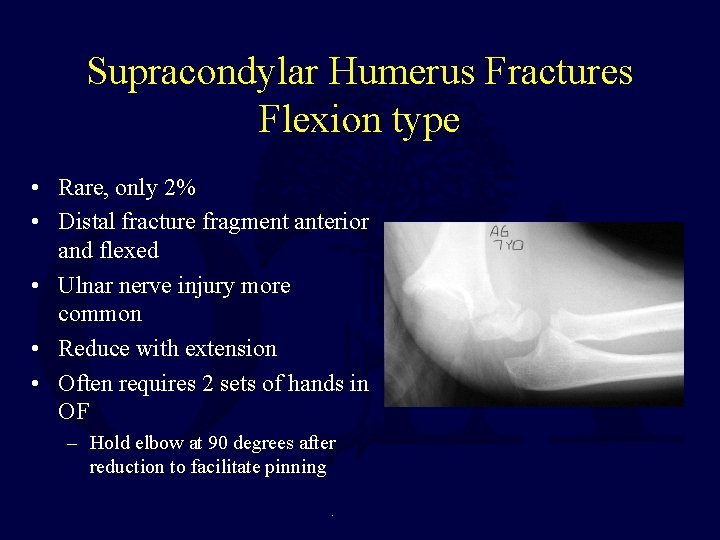
Supracondylar Humerus Fractures Flexion type • Rare, only 2% • Distal fracture fragment anterior and flexed • Ulnar nerve injury more common • Reduce with extension • Often requires 2 sets of hands in OF – Hold elbow at 90 degrees after reduction to facilitate pinning.

Flexion Type
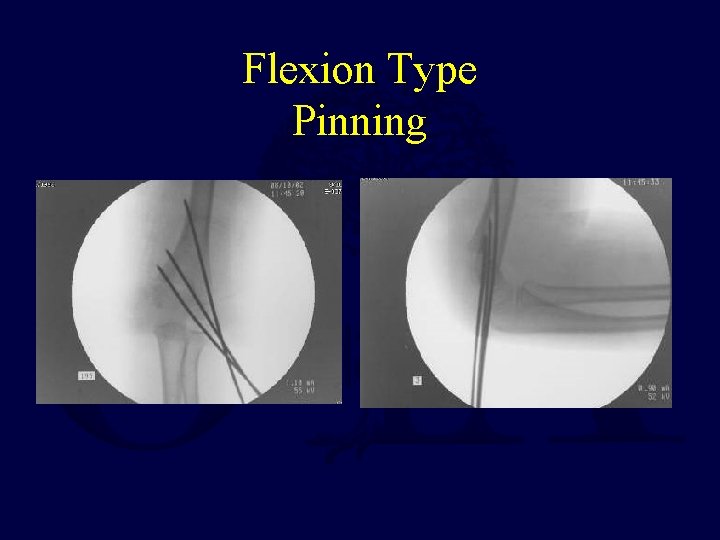
Flexion Type Pinning
Elbow dislocation • Common in adults , rare in paediatric age • Three bony point relationship disturbed [triangle] • Shorting ; arm in supracondylar fracture • Forearm ; in elbow dislocation
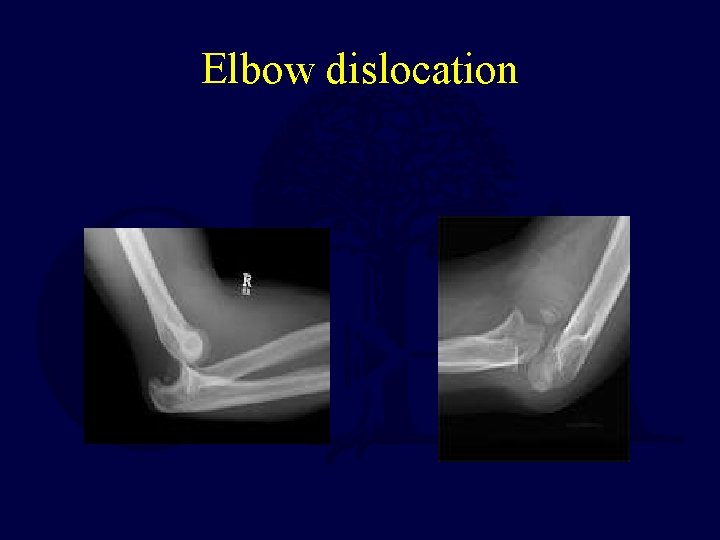
Elbow dislocation
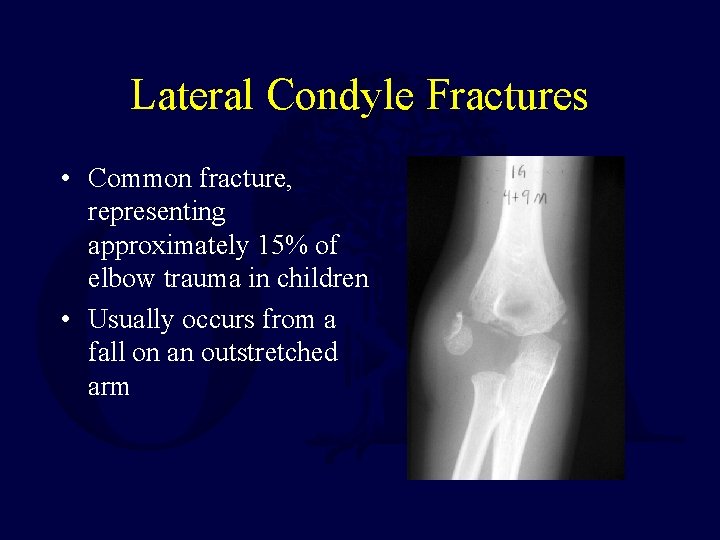
Lateral Condyle Fractures • Common fracture, representing approximately 15% of elbow trauma in children • Usually occurs from a fall on an outstretched arm
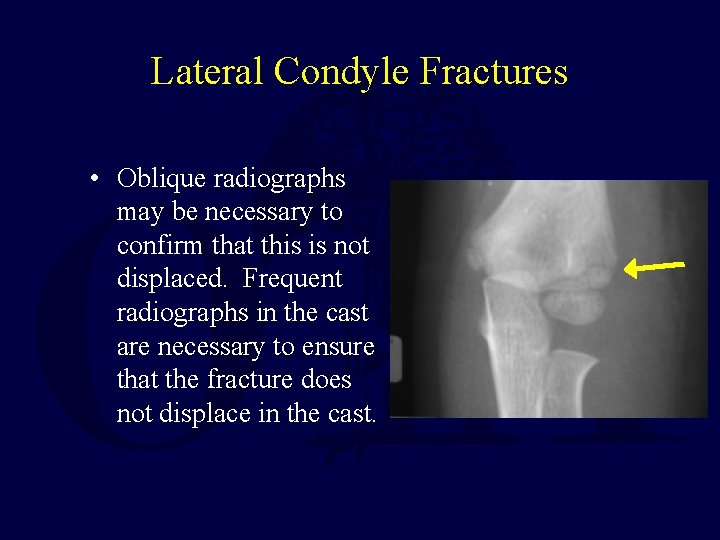
Lateral Condyle Fractures • Oblique radiographs may be necessary to confirm that this is not displaced. Frequent radiographs in the cast are necessary to ensure that the fracture does not displace in the cast.
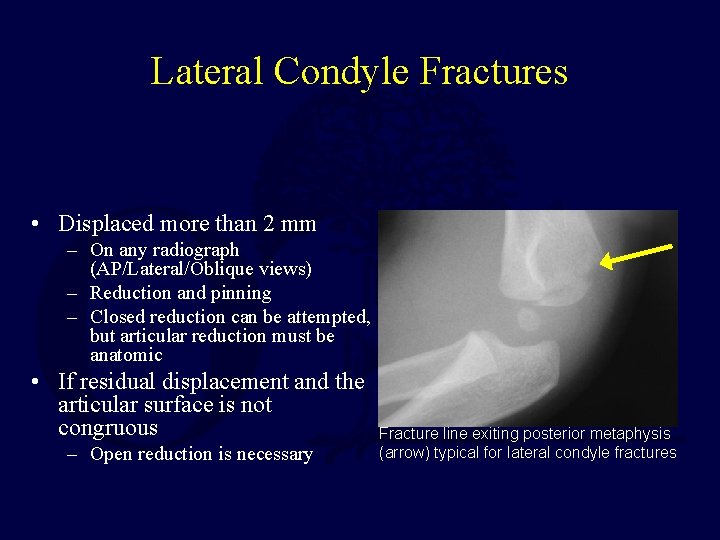
Lateral Condyle Fractures • Displaced more than 2 mm – On any radiograph (AP/Lateral/Oblique views) – Reduction and pinning – Closed reduction can be attempted, but articular reduction must be anatomic • If residual displacement and the articular surface is not congruous – Open reduction is necessary Fracture line exiting posterior metaphysis (arrow) typical for lateral condyle fractures
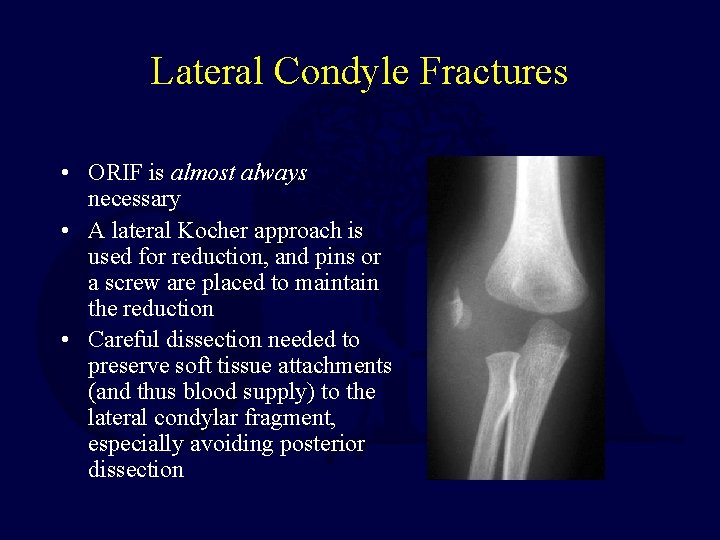
Lateral Condyle Fractures • ORIF is almost always necessary • A lateral Kocher approach is used for reduction, and pins or a screw are placed to maintain the reduction • Careful dissection needed to preserve soft tissue attachments (and thus blood supply) to the lateral condylar fragment, especially avoiding posterior dissection
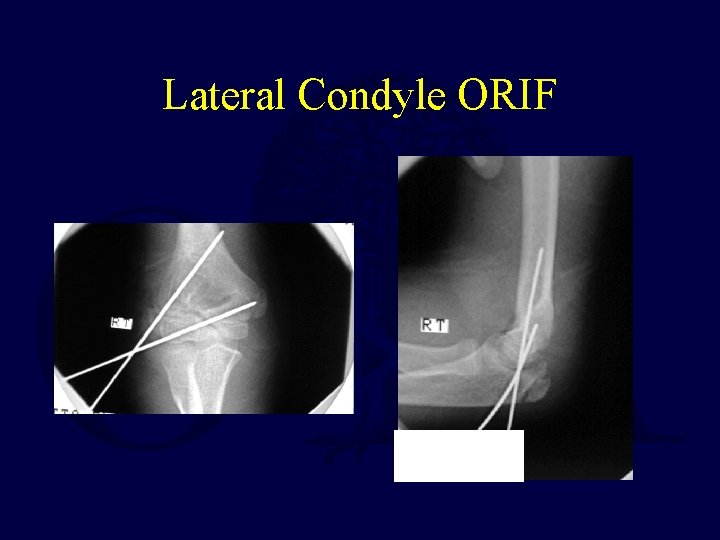
Lateral Condyle ORIF
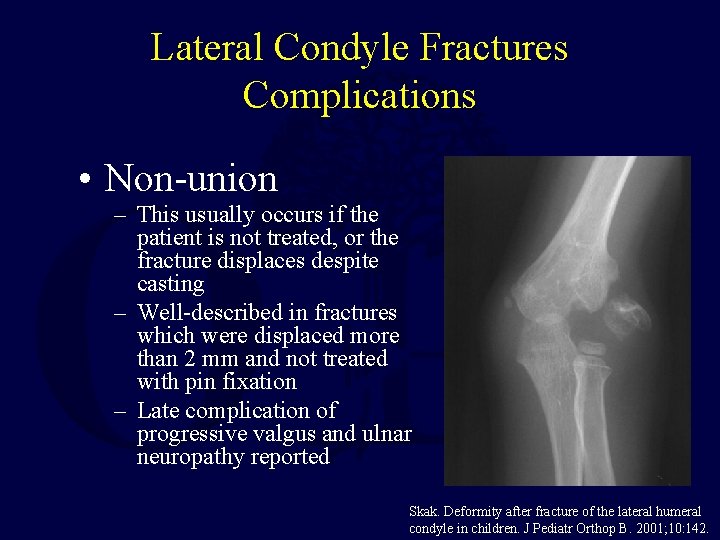
Lateral Condyle Fractures Complications • Non-union – This usually occurs if the patient is not treated, or the fracture displaces despite casting – Well-described in fractures which were displaced more than 2 mm and not treated with pin fixation – Late complication of progressive valgus and ulnar neuropathy reported Skak. Deformity after fracture of the lateral humeral condyle in children. J Pediatr Orthop B. 2001; 10: 142.
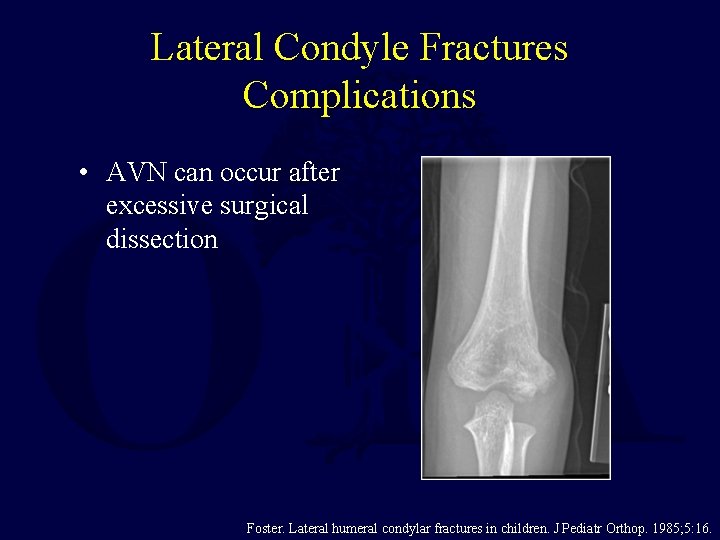
Lateral Condyle Fractures Complications • AVN can occur after excessive surgical dissection Foster. Lateral humeral condylar fractures in children. J Pediatr Orthop. 1985; 5: 16.
Medial Epicondyle Fractures • Represent 5% to 10% of pediatric elbow fractures • Occurs with valgus stress to the elbow, which avulses the medial epicondyle • Frequently associated with an elbow dislocation Landin. Elbow fractures in children. An epidemiological analysis of 589 cases. Acta Orthop Scand. 1986; 57: 309.
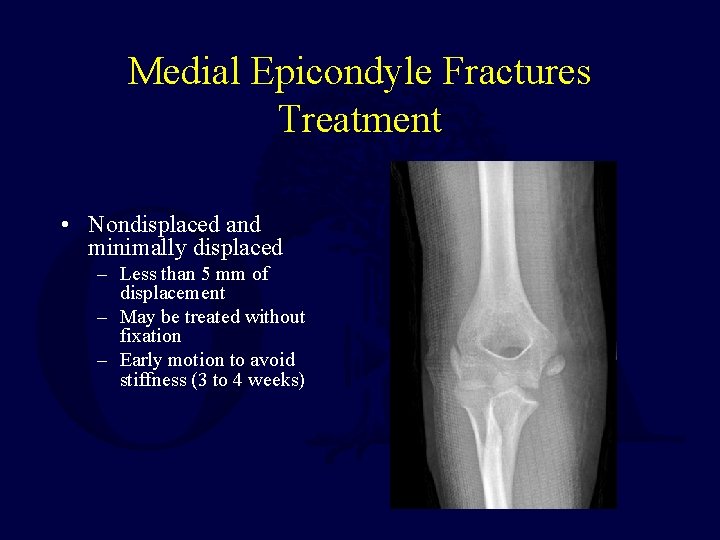
Medial Epicondyle Fractures Treatment • Nondisplaced and minimally displaced – Less than 5 mm of displacement – May be treated without fixation – Early motion to avoid stiffness (3 to 4 weeks)

Medial Epicondyle Fractures Treatment • Displaced more than 5 mm – Treatment is controversial – Some recommending operative, others non-operative treatment – Some have suggested that surgery is indicated in the presence of valgus instability, or in patients who are throwing athletes. • Only absolute indication is entrapped fragment after dislocation with incongruent elbow joint – First attempt closed reduction • Long term studies favor nonoperative treatment
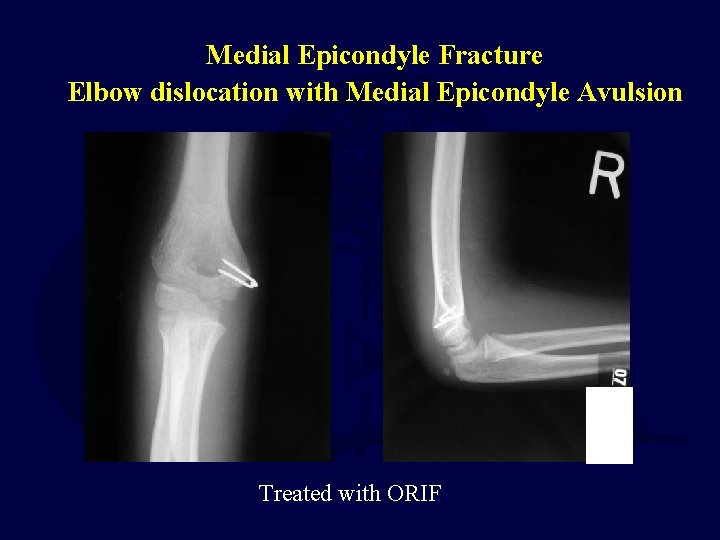
Medial Epicondyle Fracture Elbow dislocation with Medial Epicondyle Avulsion Treated with ORIF
Olecranon Fractures • Relatively rare fracture in children – May be associated with elbow subluxation/ dislocation, or radial head fracture • The diagnosis may be difficult in a younger child – Olecranon does not ossify until 8 -9 years • Anatomic reduction is necessary in displaced fractures to restore normal elbow extension.
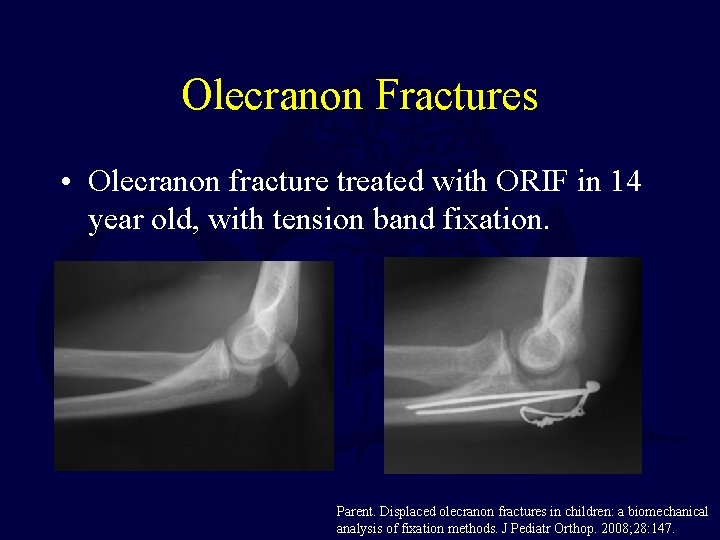
Olecranon Fractures • Olecranon fracture treated with ORIF in 14 year old, with tension band fixation. Parent. Displaced olecranon fractures in children: a biomechanical analysis of fixation methods. J Pediatr Orthop. 2008; 28: 147.
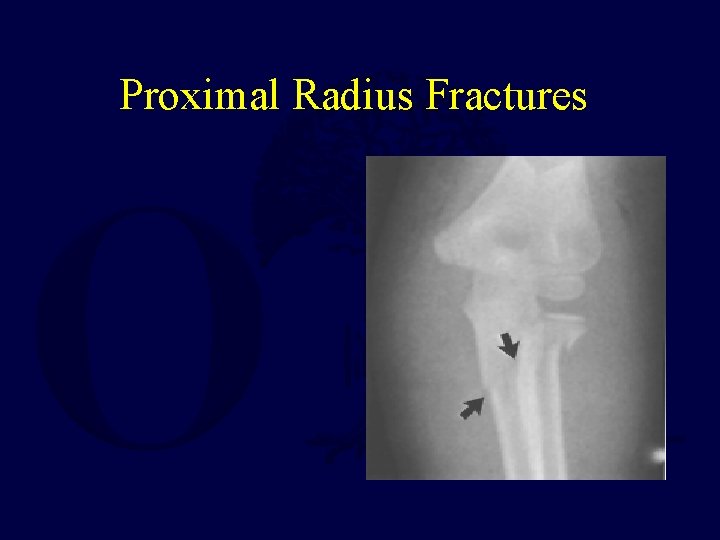
Proximal Radius Fractures • 1% of children’s fractures • 90% involve physis or neck • Normally some angulation of head to radial shaft (0 -15 degrees) • No ligaments attach to head or neck • Much of radial neck extraarticular (no effusion with fracture)
Proximal Radius Fractures
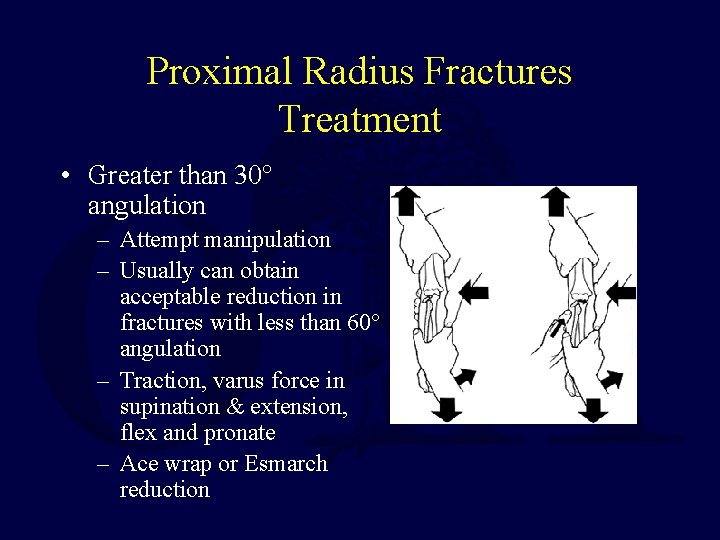
Proximal Radius Fractures Treatment • Greater than 30° angulation – Attempt manipulation – Usually can obtain acceptable reduction in fractures with less than 60° angulation – Traction, varus force in supination & extension, flex and pronate – Ace wrap or Esmarch reduction
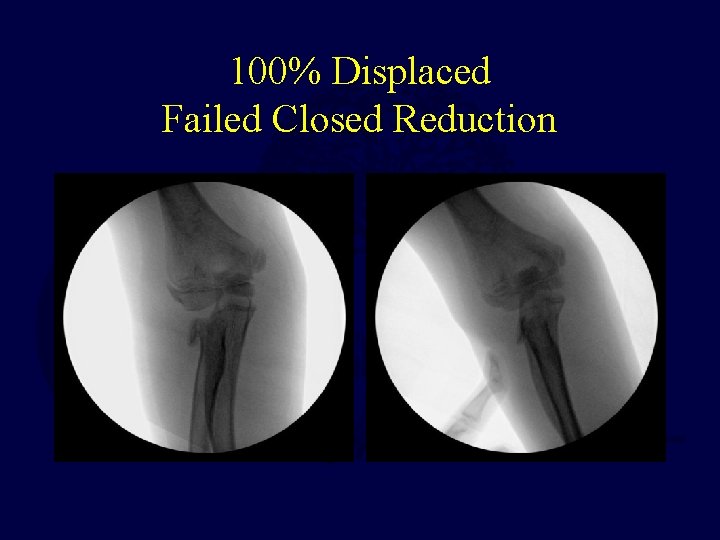
100% Displaced Failed Closed Reduction
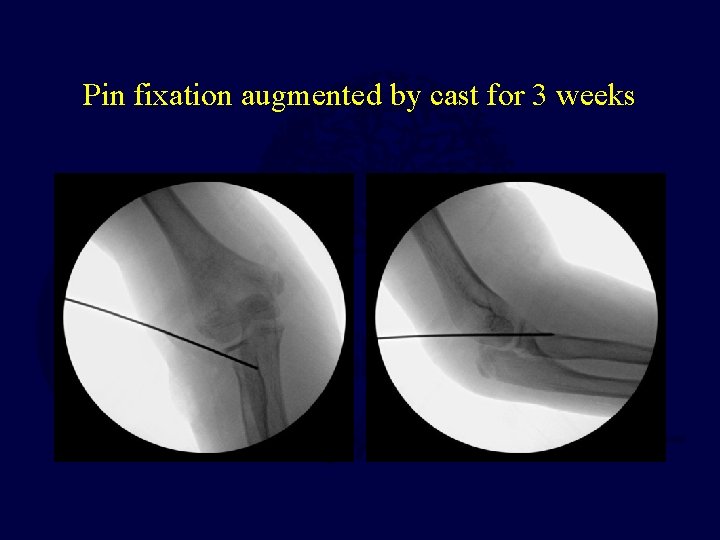
Pin fixation augmented by cast for 3 weeks
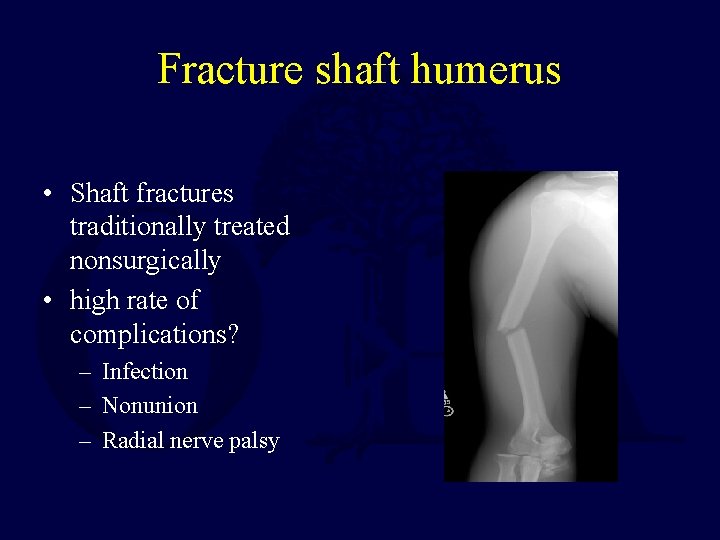
Fracture shaft humerus • Shaft fractures traditionally treated nonsurgically • high rate of complications? – Infection – Nonunion – Radial nerve palsy
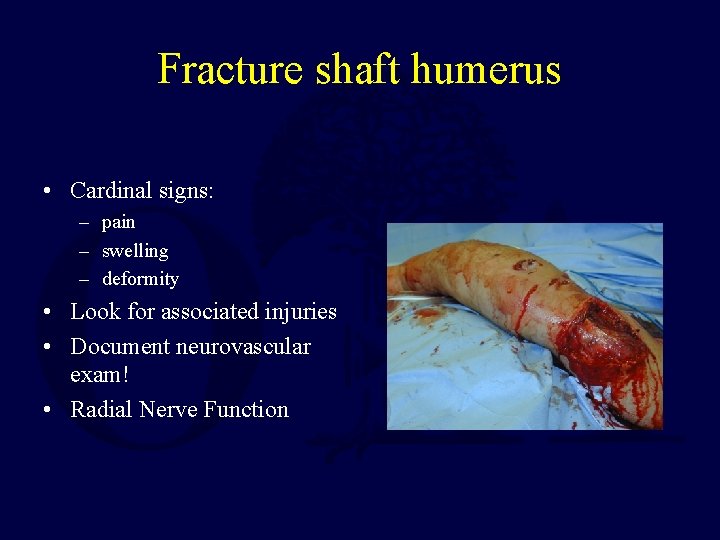
Fracture shaft humerus • Cardinal signs: – pain – swelling – deformity • Look for associated injuries • Document neurovascular exam! • Radial Nerve Function
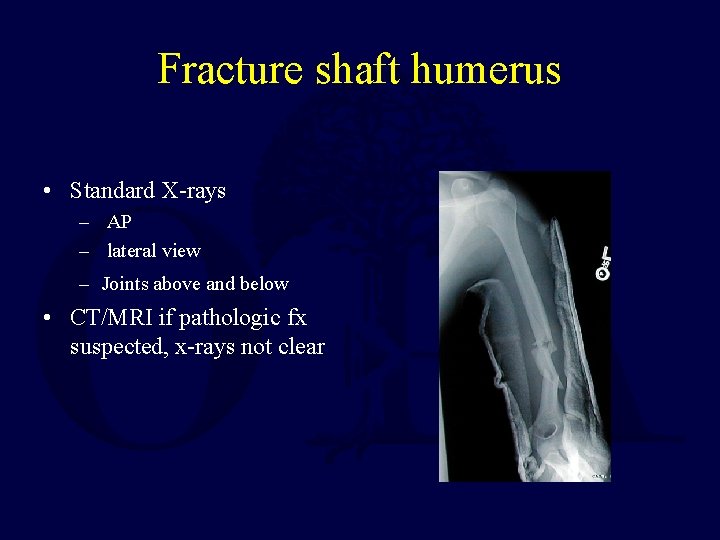
Fracture shaft humerus • Standard X-rays – AP – lateral view – Joints above and below • CT/MRI if pathologic fx suspected, x-rays not clear
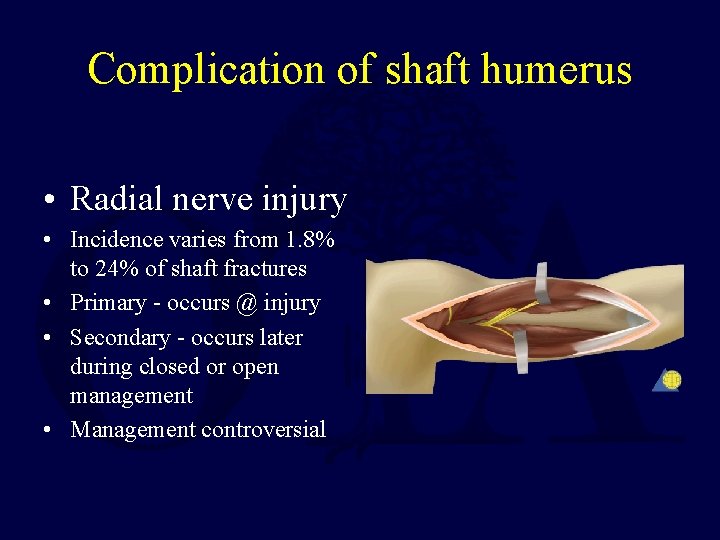
Complication of shaft humerus • Radial nerve injury • Incidence varies from 1. 8% to 24% of shaft fractures • Primary - occurs @ injury • Secondary - occurs later during closed or open management • Management controversial

Complication of shaft humerus • Spontaneous recovery: ~90% • If no recovery, tendon transfers very reliable
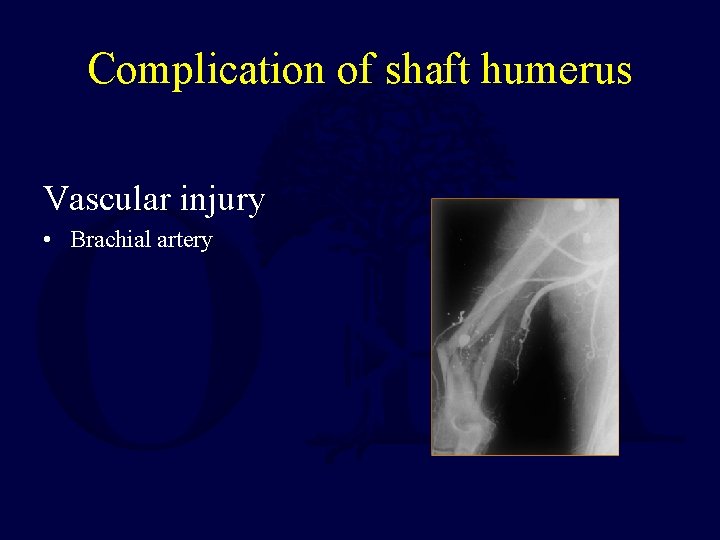
Complication of shaft humerus Vascular injury • Brachial artery
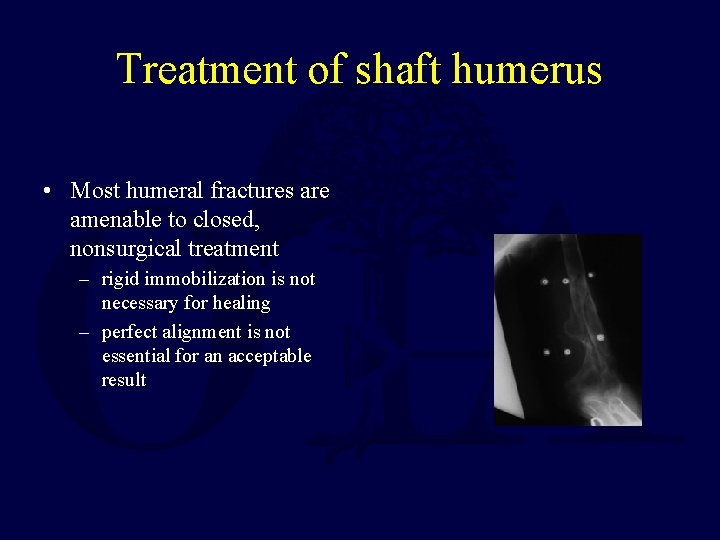
Treatment of shaft humerus • Most humeral fractures are amenable to closed, nonsurgical treatment – rigid immobilization is not necessary for healing – perfect alignment is not essential for an acceptable result
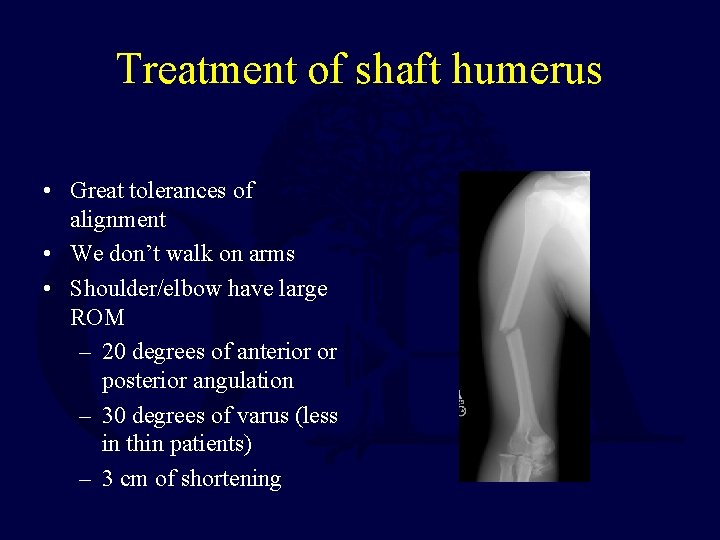
Treatment of shaft humerus • Great tolerances of alignment • We don’t walk on arms • Shoulder/elbow have large ROM – 20 degrees of anterior or posterior angulation – 30 degrees of varus (less in thin patients) – 3 cm of shortening
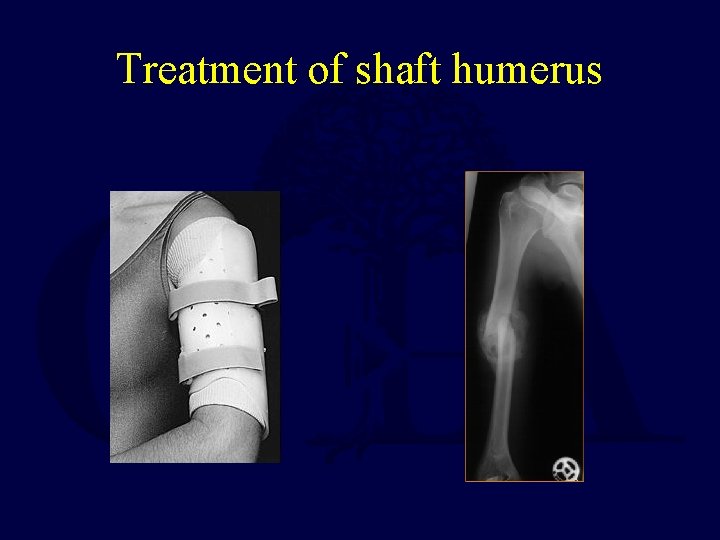
Treatment of shaft humerus
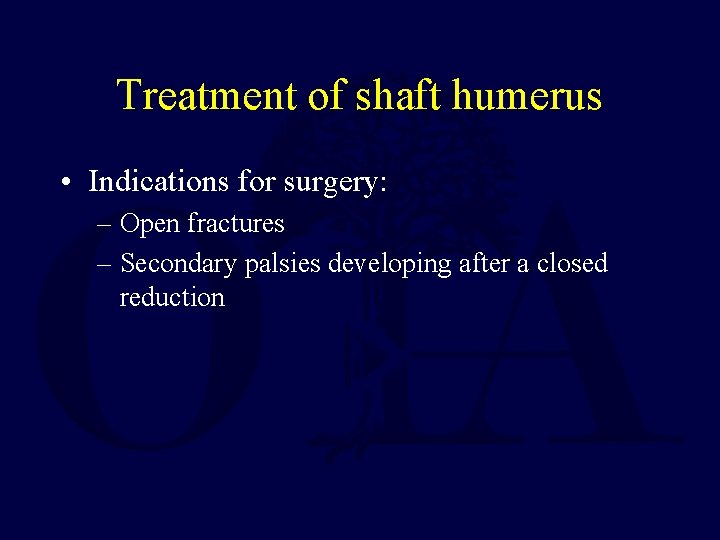
Treatment of shaft humerus • Indications for surgery: – Open fractures – Secondary palsies developing after a closed reduction
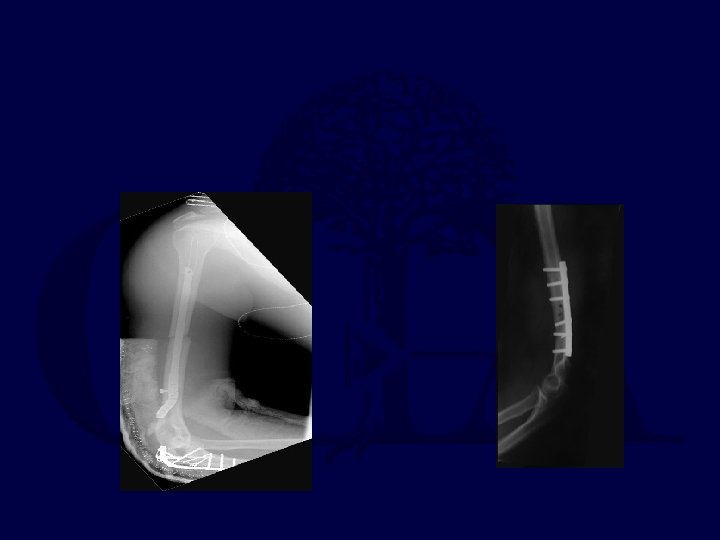
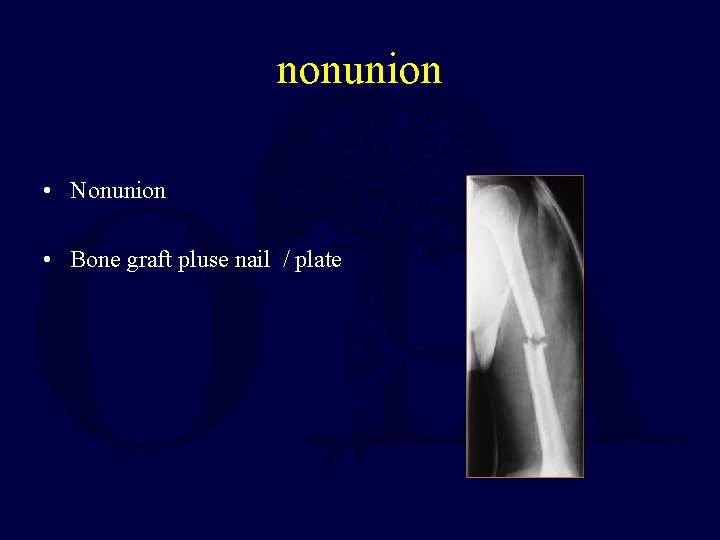
nonunion • Nonunion • Bone graft pluse nail / plate
Summary Humeral Shaft Fractures • Results very good for functional bracing • Need to carefully document radial nerve exam • Most radial nerves injuries recover • Most prefer plates over nails
- Slides: 71