
Fracture of Solids Theoretical tensile strength of a
- Slides: 28
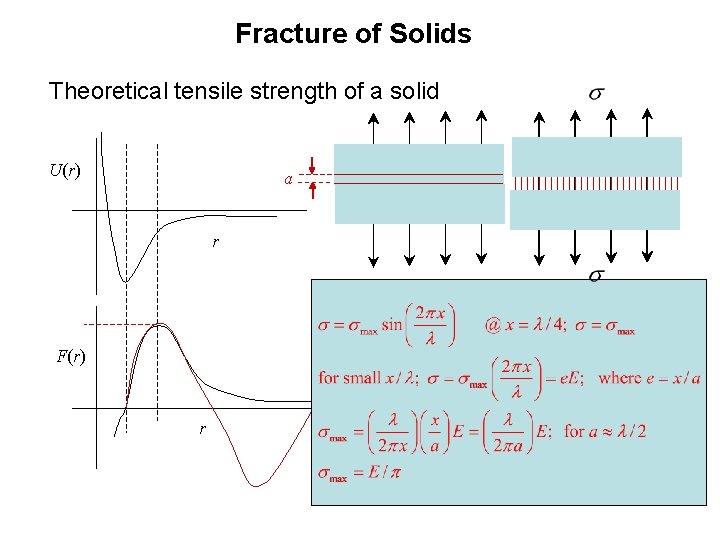
Fracture of Solids Theoretical tensile strength of a solid U(r) a r F(r) r
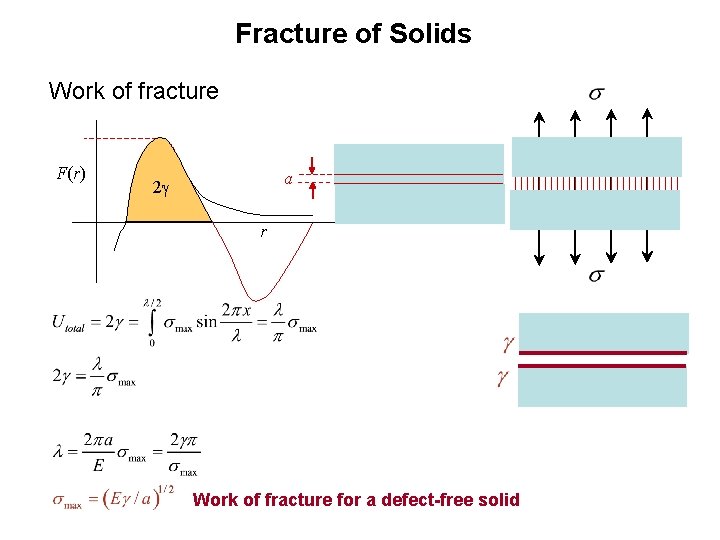
Fracture of Solids Work of fracture F(r) a 2 g r Work of fracture for a defect-free solid
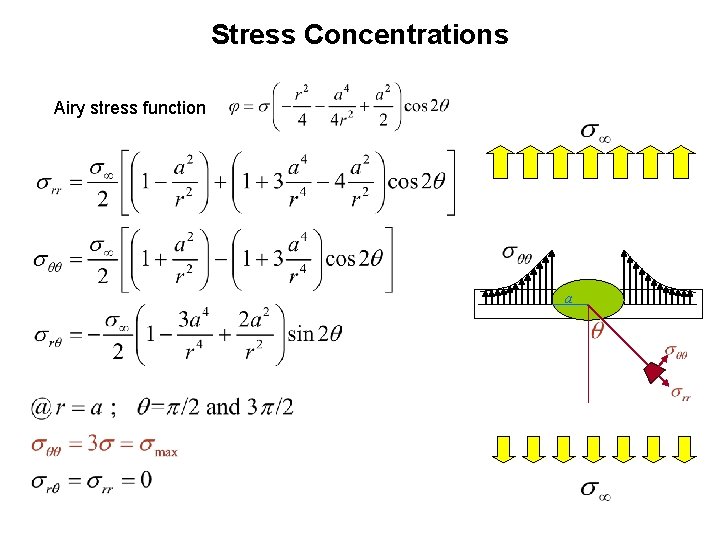
Stress Concentrations Airy stress function a
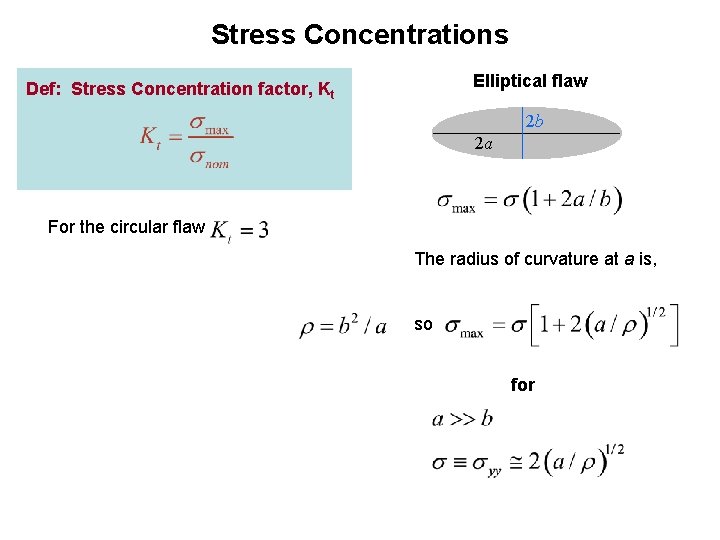
Stress Concentrations Elliptical flaw Def: Stress Concentration factor, Kt 2 b 2 a For the circular flaw The radius of curvature at a is, so for
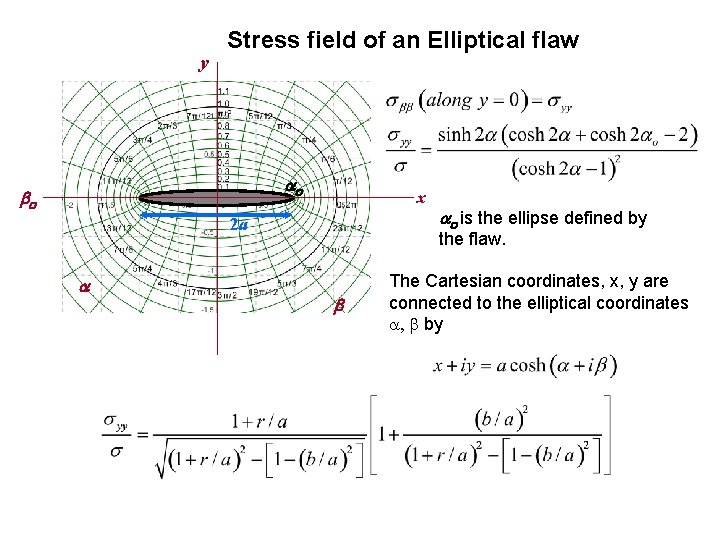
y Stress field of an Elliptical flaw ao bo x 2 a a ao is the ellipse defined by the flaw. b The Cartesian coordinates, x, y are connected to the elliptical coordinates a, b by
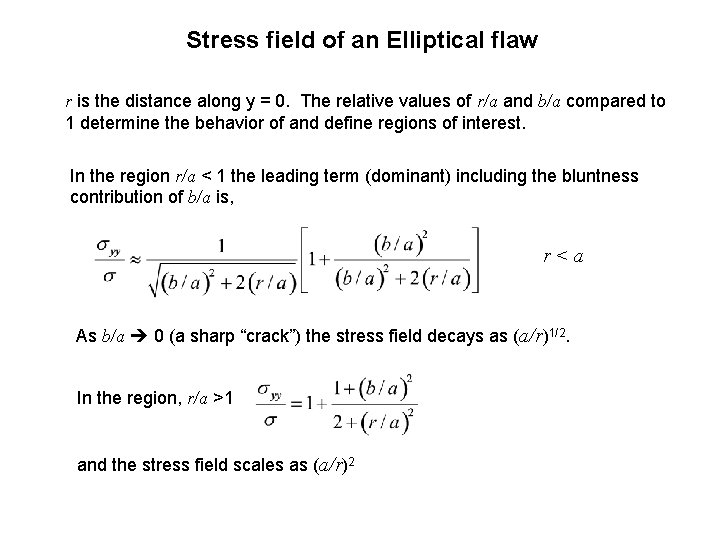
Stress field of an Elliptical flaw r is the distance along y = 0. The relative values of r/a and b/a compared to 1 determine the behavior of and define regions of interest. In the region r/a < 1 the leading term (dominant) including the bluntness contribution of b/a is, r<a As b/a 0 (a sharp “crack”) the stress field decays as (a/r)1/2. In the region, r/a >1 and the stress field scales as (a/r)2
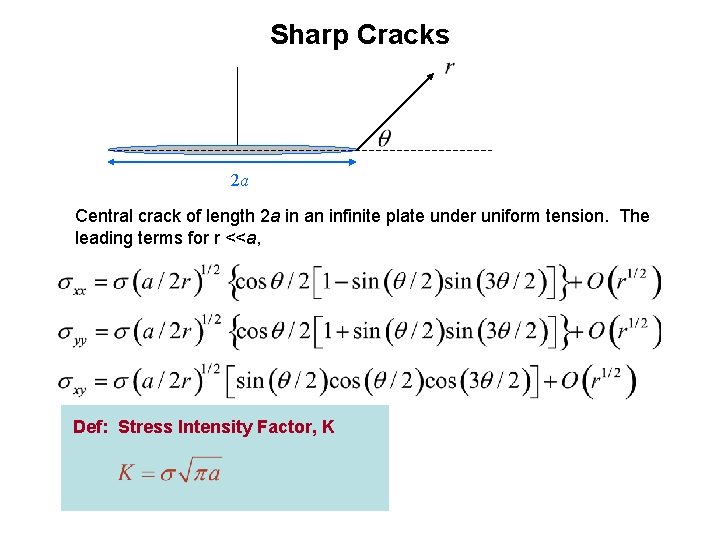
Sharp Cracks 2 a Central crack of length 2 a in an infinite plate under uniform tension. The leading terms for r <<a, Def: Stress Intensity Factor, K
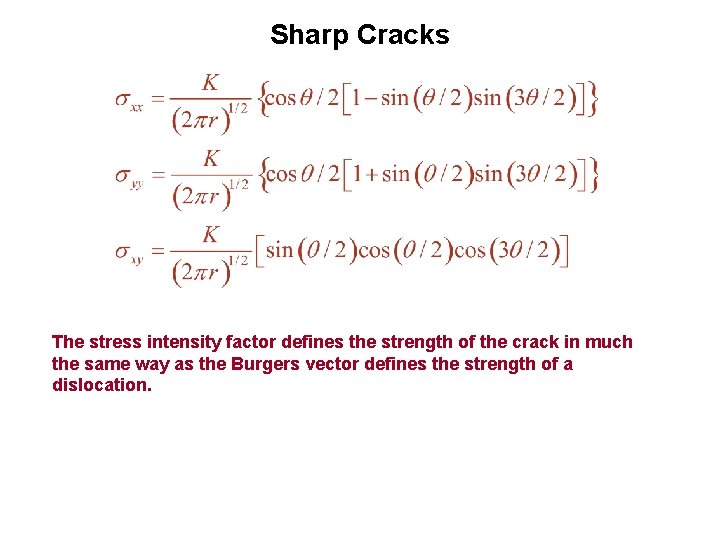
Sharp Cracks The stress intensity factor defines the strength of the crack in much the same way as the Burgers vector defines the strength of a dislocation.
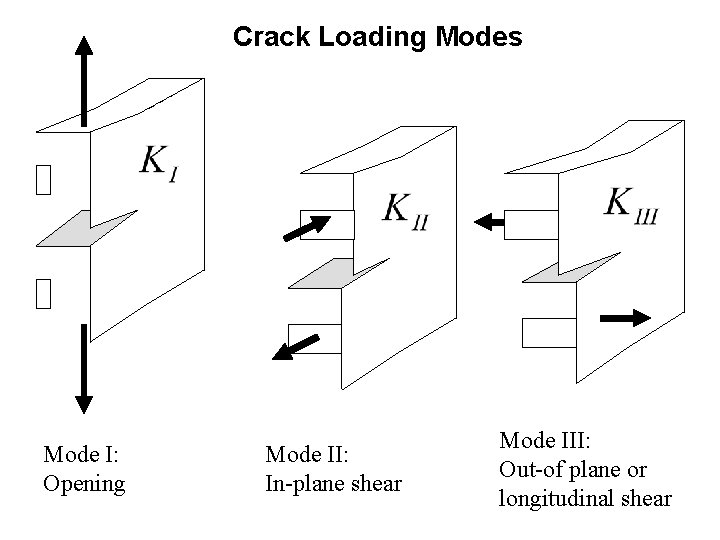
Crack Loading Modes Mode I: Opening Mode II: In-plane shear Mode III: Out-of plane or longitudinal shear
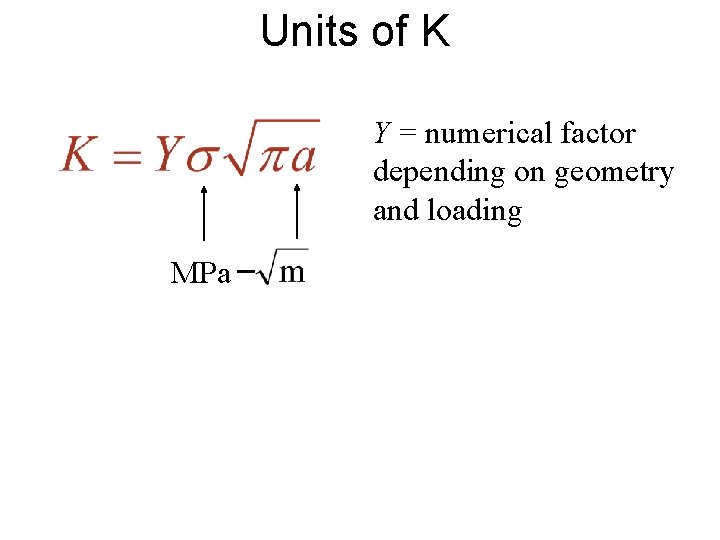
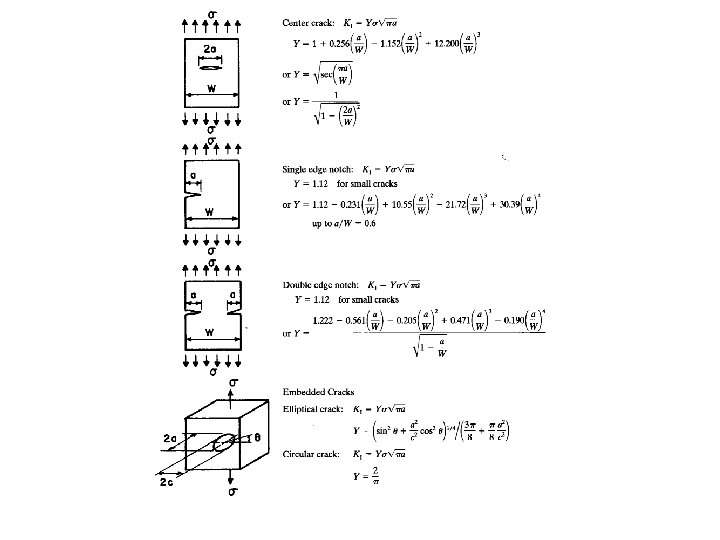
Units of K Y = numerical factor depending on geometry and loading MPa
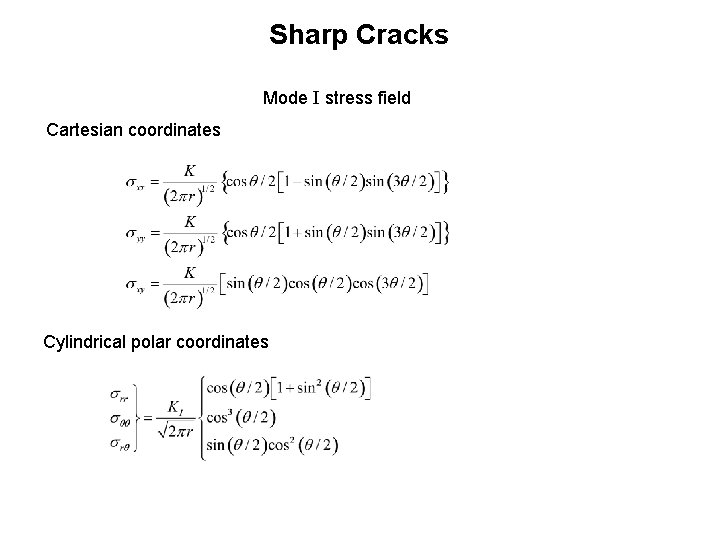
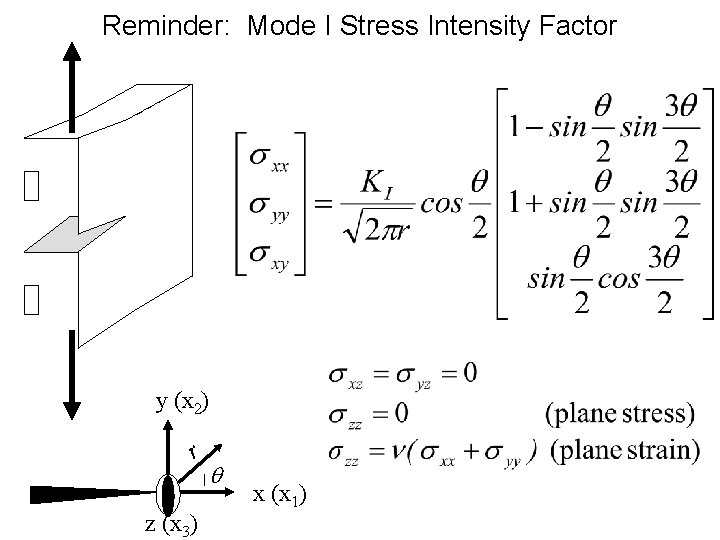
Sharp Cracks Mode I stress field Cartesian coordinates Cylindrical polar coordinates
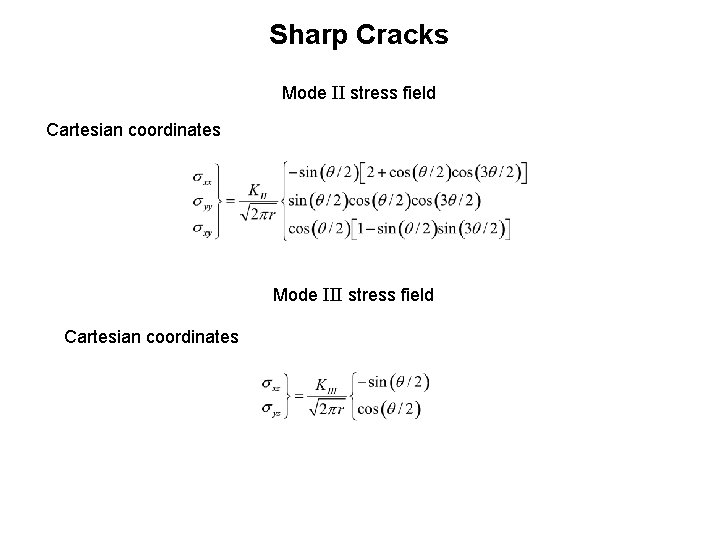
Sharp Cracks Mode II stress field Cartesian coordinates Mode III stress field Cartesian coordinates
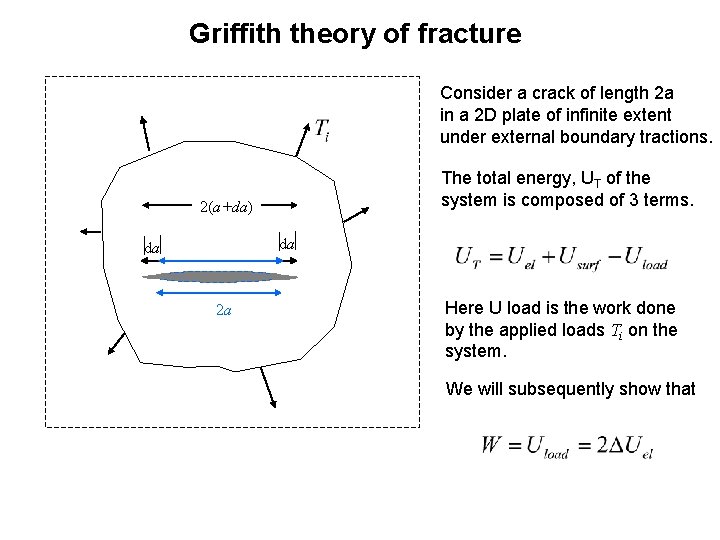
Griffith theory of fracture Consider a crack of length 2 a in a 2 D plate of infinite extent under external boundary tractions. The total energy, UT of the system is composed of 3 terms. 2(a+da) da da 2 a Here U load is the work done by the applied loads Ti on the system. We will subsequently show that
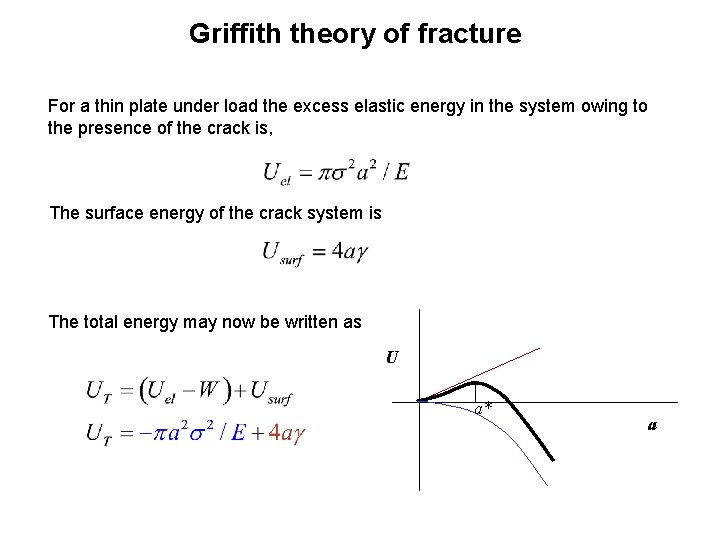
Griffith theory of fracture For a thin plate under load the excess elastic energy in the system owing to the presence of the crack is, The surface energy of the crack system is The total energy may now be written as U a* a
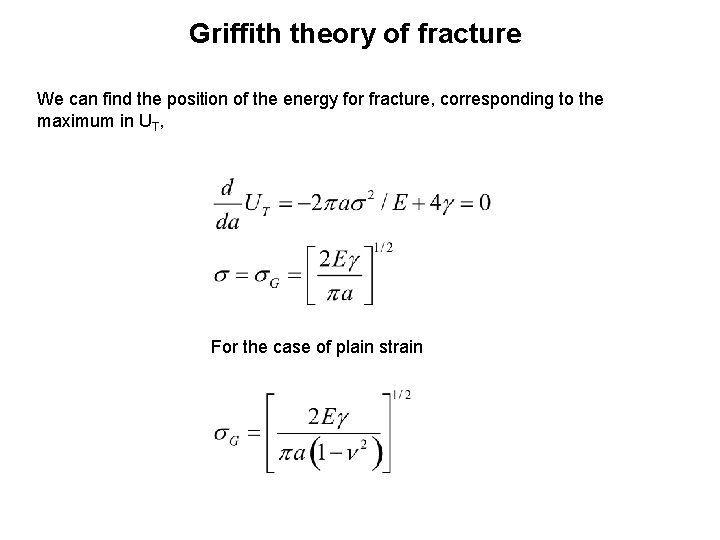
Griffith theory of fracture We can find the position of the energy for fracture, corresponding to the maximum in UT, For the case of plain strain
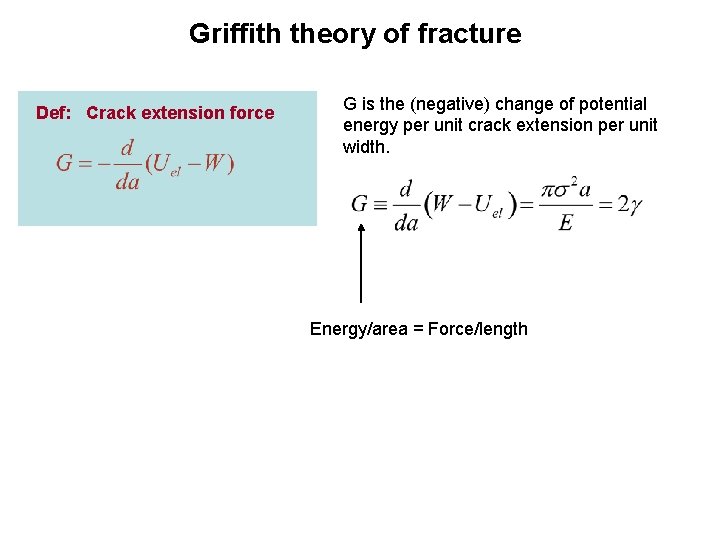
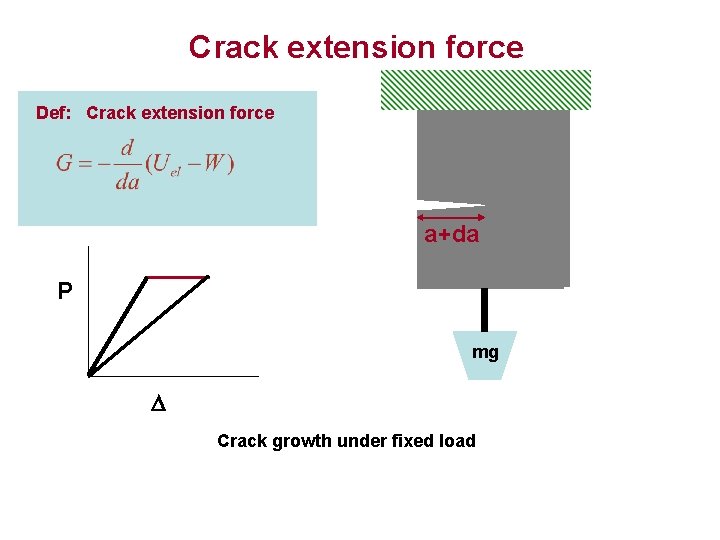
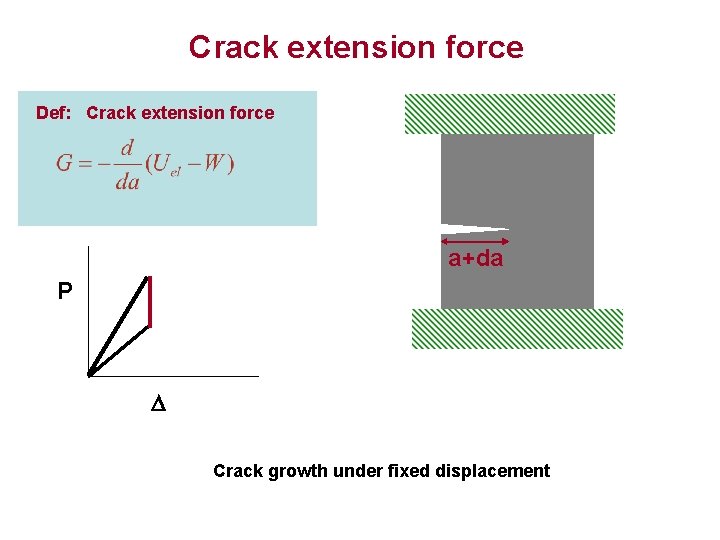
Griffith theory of fracture Def: Crack extension force G is the (negative) change of potential energy per unit crack extension per unit width. Energy/area = Force/length
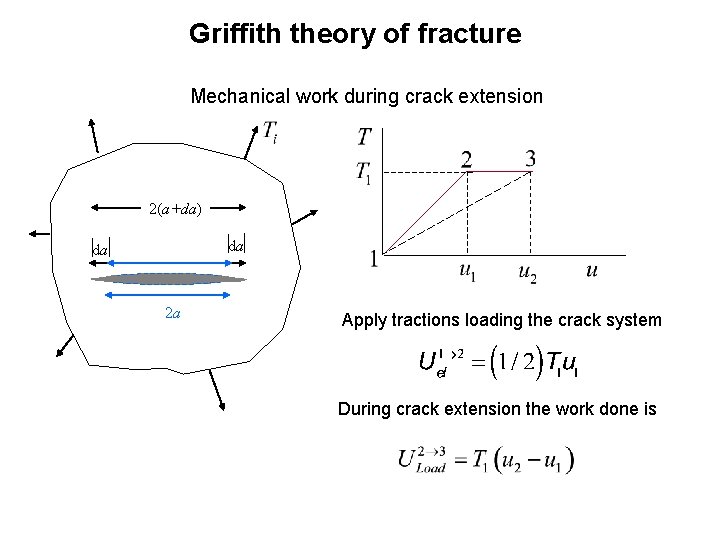
Griffith theory of fracture Mechanical work during crack extension 2(a+da) da da 2 a Apply tractions loading the crack system During crack extension the work done is
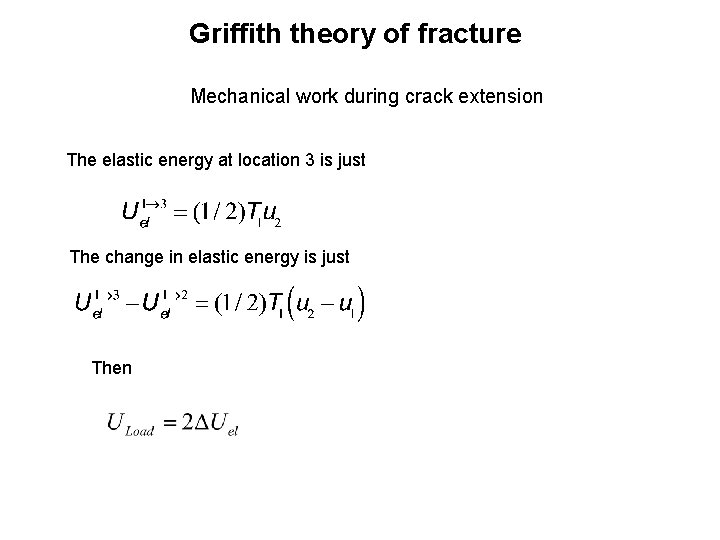
Griffith theory of fracture Mechanical work during crack extension The elastic energy at location 3 is just The change in elastic energy is just Then
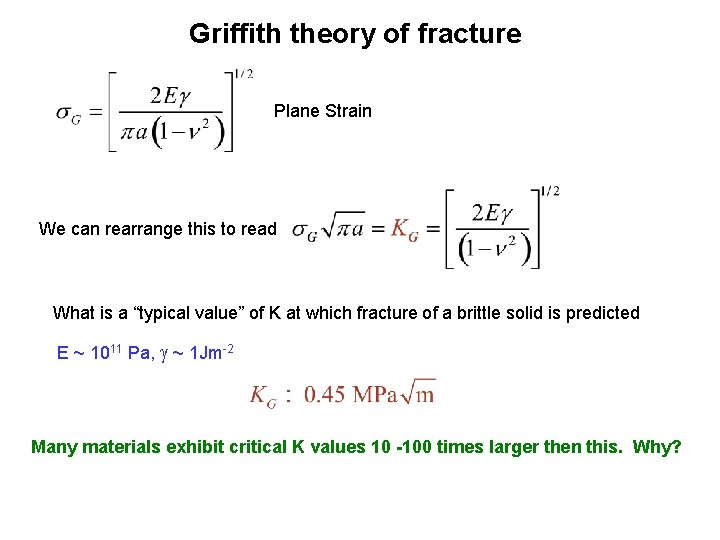
Griffith theory of fracture Plane Strain We can rearrange this to read What is a “typical value” of K at which fracture of a brittle solid is predicted E ~ 1011 Pa, g ~ 1 Jm-2 Many materials exhibit critical K values 10 -100 times larger then this. Why?
Crack extension force Def: Crack extension force a+da a P mg D Crack growth under fixed load
Crack extension force Def: Crack extension force a+da a P D Crack growth under fixed displacement
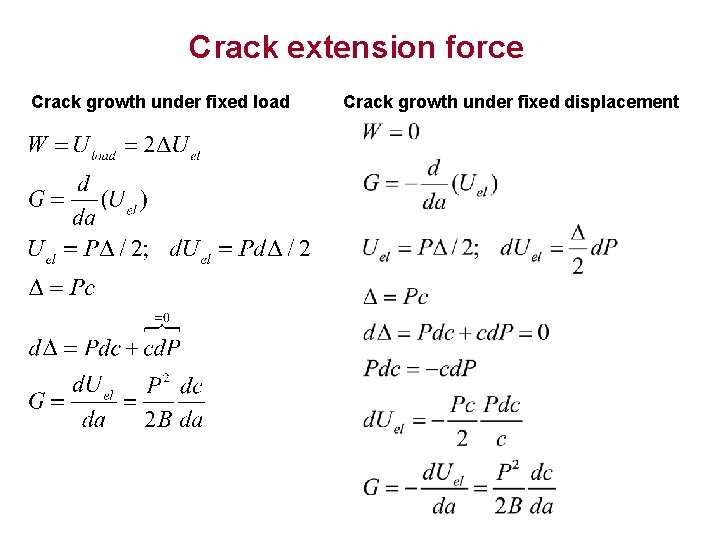
Crack extension force Crack growth under fixed load Crack growth under fixed displacement
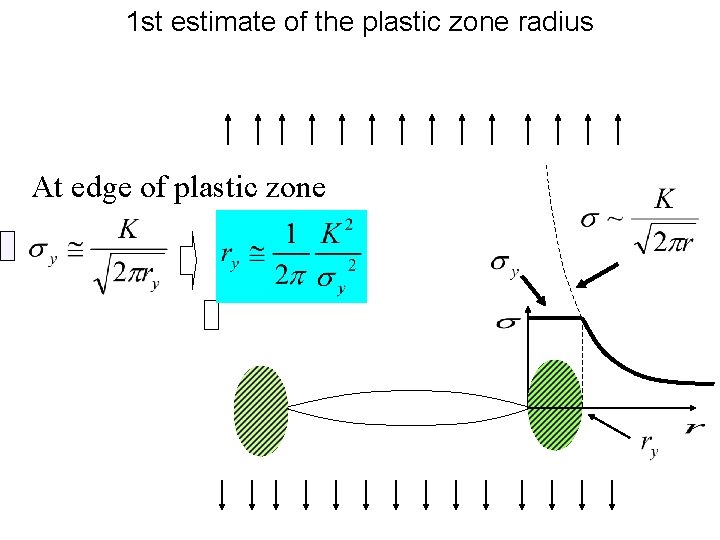
1 st estimate of the plastic zone radius At edge of plastic zone
Reminder: Mode I Stress Intensity Factor y (x 2) r z (x 3) q x (x 1)
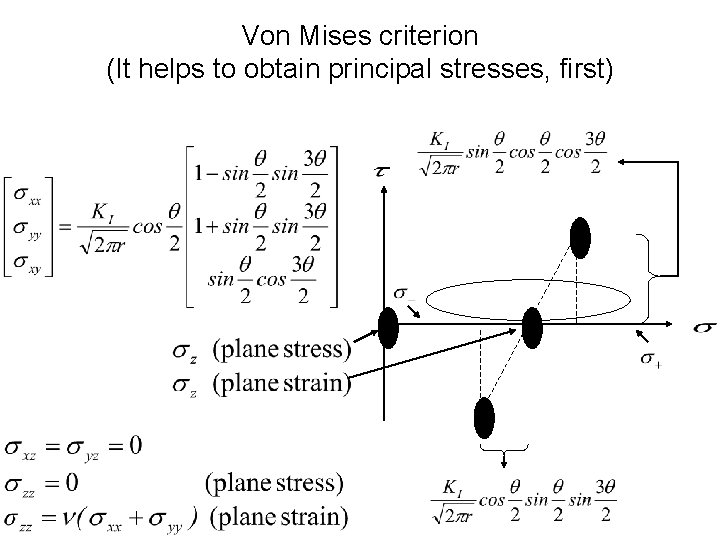
Von Mises criterion (It helps to obtain principal stresses, first)
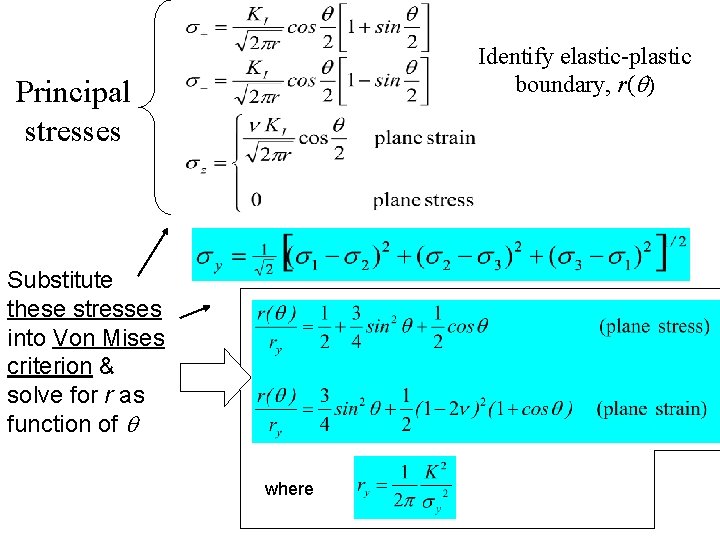
Identify elastic-plastic boundary, r(q) Principal stresses Substitute these stresses into Von Mises criterion & solve for r as function of q where
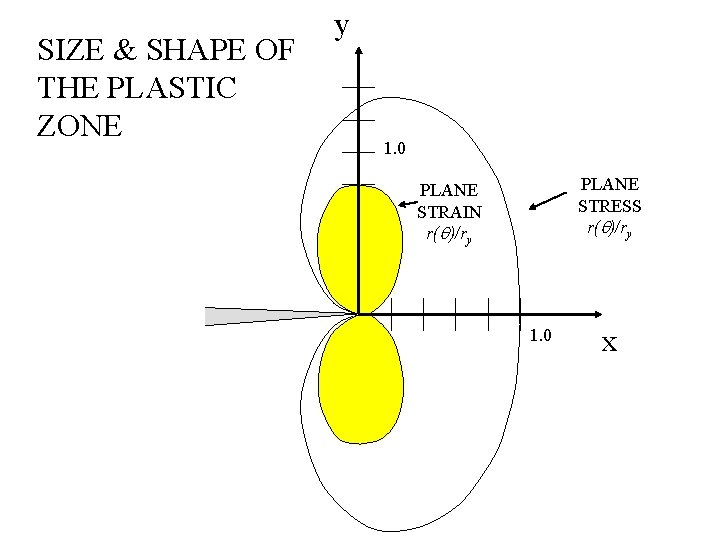
SIZE & SHAPE OF THE PLASTIC ZONE y 1. 0 PLANE STRESS r(q)/ry PLANE STRAIN r(q)/ry 1. 0 x