
FRACTURE OF MANDIBLE 7 th AUG 2015 Importance
FRACTURE OF MANDIBLE 7 th. AUG 2015
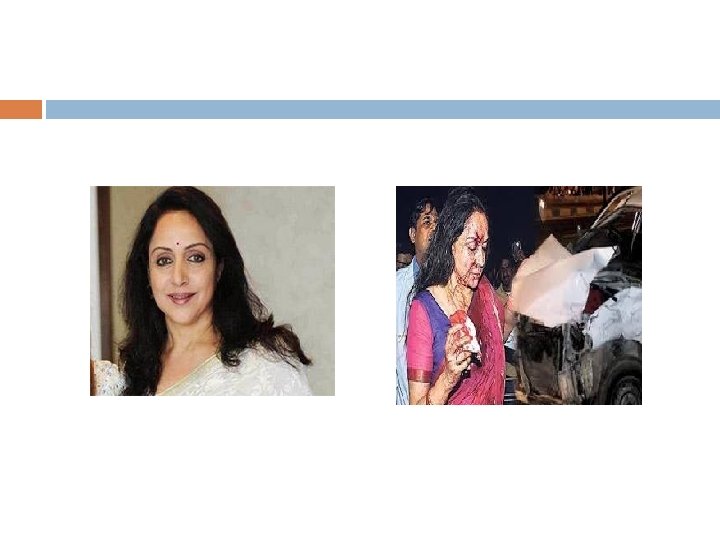
Importance of Facial injury Soft tissue & bone- antr protection to cranium Face appearance- Look Whole antr region with functions of daily life - Sight , smell, eating, breathing & Talking Any significant impairment – Life style & Quality of Life
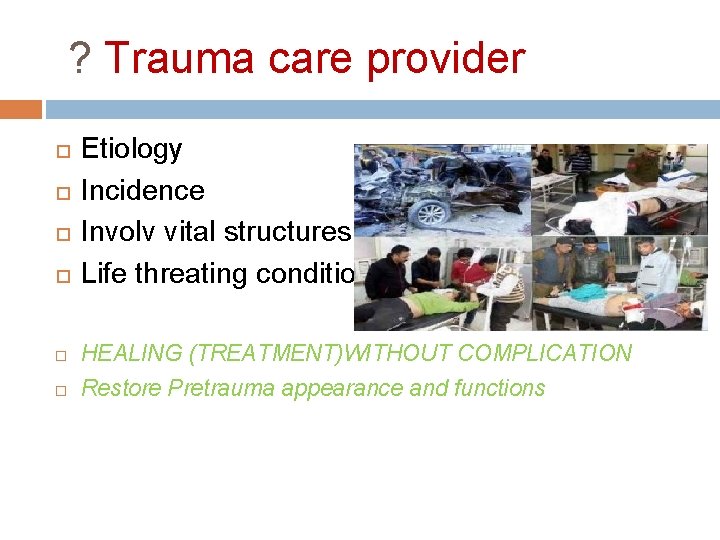
? Trauma care provider Etiology Incidence Involv vital structures Life threating conditions HEALING (TREATMENT)WITHOUT COMPLICATION Restore Pretrauma appearance and functions
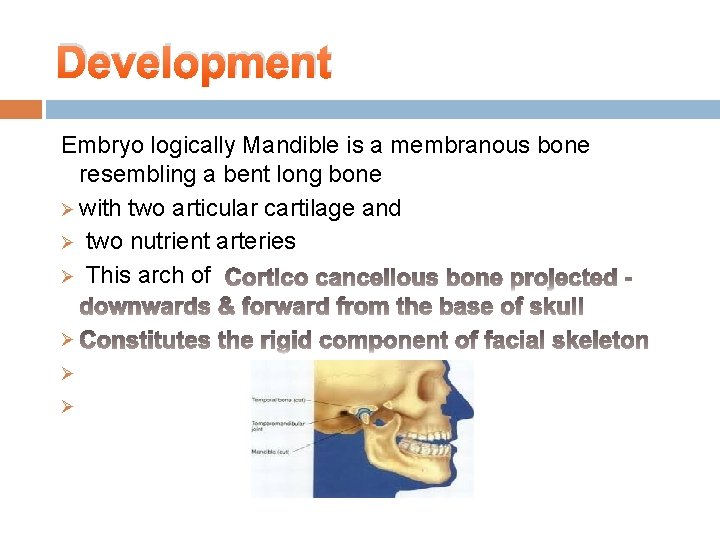
Development Embryo logically Mandible is a membranous bone resembling a bent long bone Ø with two articular cartilage and Ø two nutrient arteries Ø This arch of Ø Ø Ø
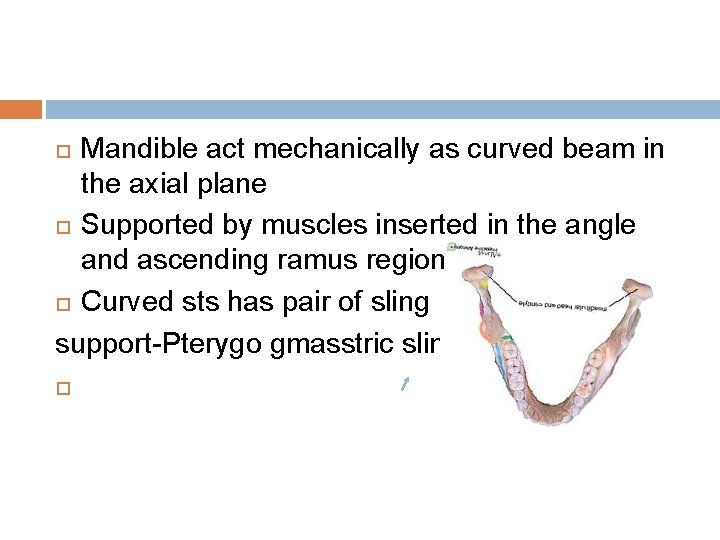
Mandible act mechanically as curved beam in the axial plane Supported by muscles inserted in the angle and ascending ramus region. Curved sts has pair of sling support-Pterygo gmasstric sling.
Force to Fracture (Nahum 1975) Curved beam like bone Condylar Neck #- 425 lb frontal impact Symphysis-800 -900 lb Front impact with both condylar # Mandible more sensitive to lateral impact than frontal impact( cushioned by opening and retrusion of jaw
Incidence & Etiology
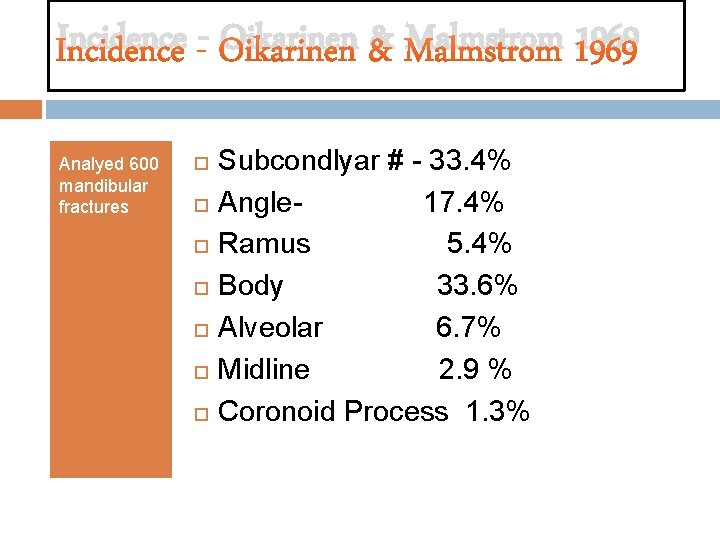
Incidence - Oikarinen & Malmstrom 1969 Analyed 600 mandibular fractures Subcondlyar # - 33. 4% Angle 17. 4% Ramus 5. 4% Body 33. 6% Alveolar 6. 7% Midline 2. 9 % Coronoid Process 1. 3%
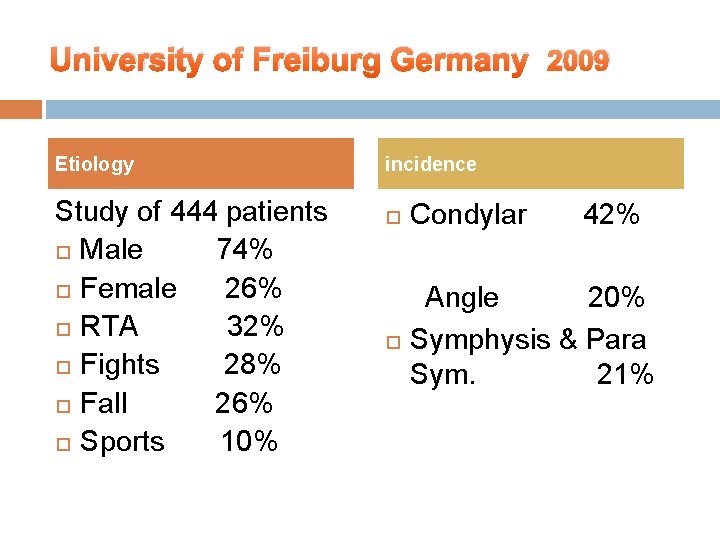
University of Freiburg Germany 2009 Etiology Study of 444 patients Male 74% Female 26% RTA 32% Fights 28% Fall 26% Sports 10% incidence Condylar 42% Angle 20% Symphysis & Para Sym. 21%
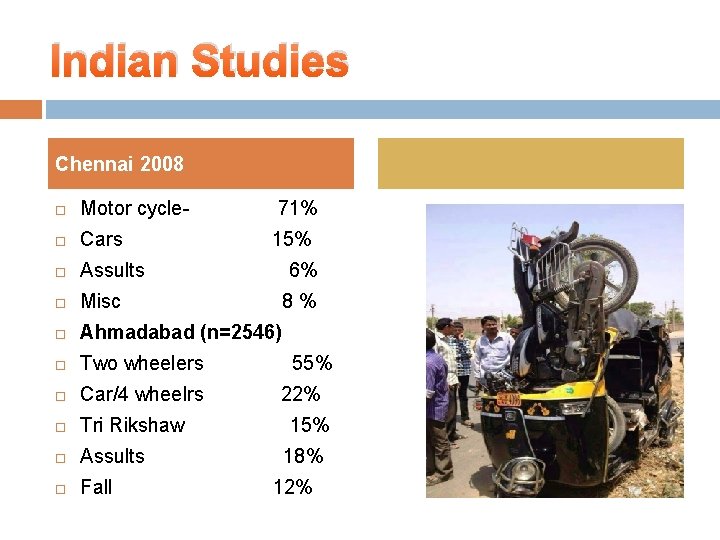
Indian Studies Chennai 2008 Motor cycle- 71% Cars 15% Assults Misc Ahmadabad (n=2546) Two wheelers Car/4 wheelrs Tri Rikshaw Assults Fall 6% 8% 55% 22% 15% 18% 12%
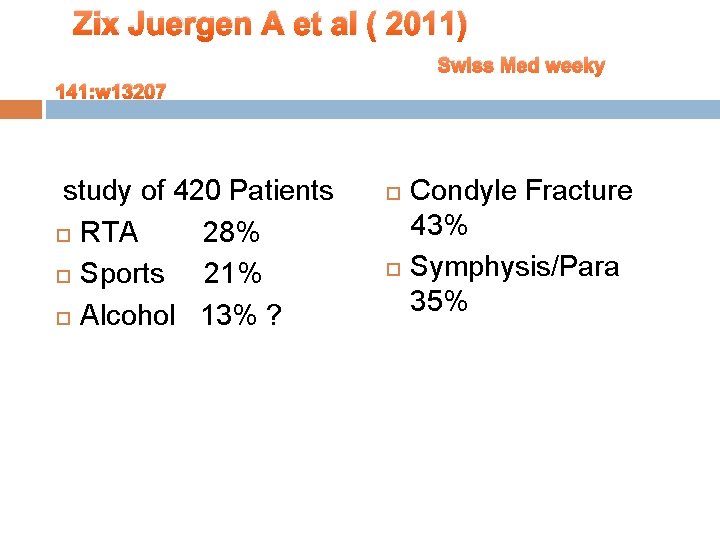
Zix Juergen A et al ( 2011) Swiss Med weeky 141: w 13207 study of 420 Patients RTA 28% Sports 21% Alcohol 13% ? Condyle Fracture 43% Symphysis/Para 35%
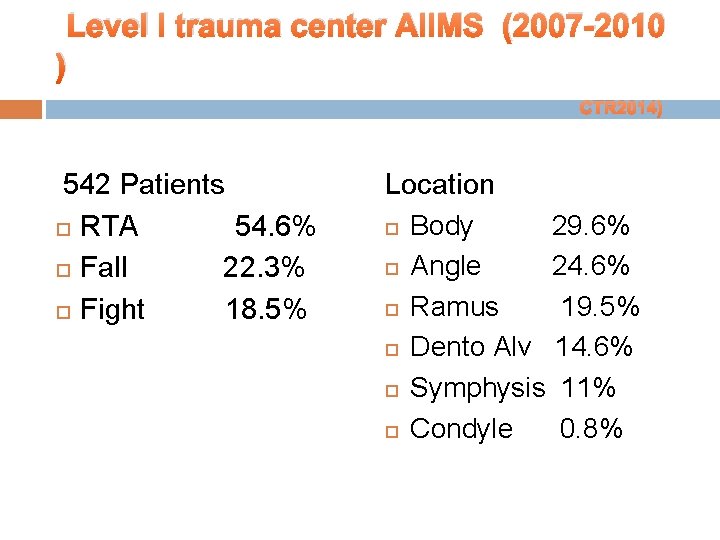
Level I trauma center AIIMS (2007 -2010 ) CTR 2014) 542 Patients RTA 54. 6% Fall 22. 3% Fight 18. 5% Location Body 29. 6% Angle 24. 6% Ramus 19. 5% Dento Alv 14. 6% Symphysis 11% Condyle 0. 8%
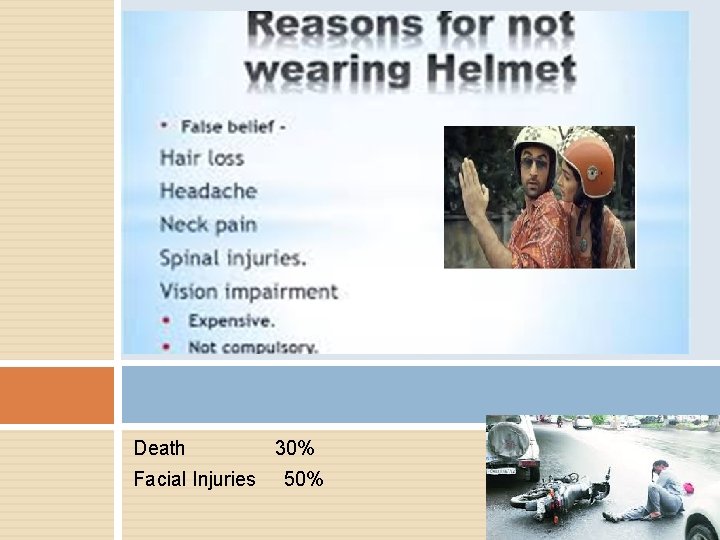
Death Facial Injuries 30% 50%
Helmet More than 80 percent of all motorcycle crashes result in injury or death to the motorcyclist. Per mile driven, a motorcyclist is 16 times more likely to die in a crash than an automobile driver. Wearing a motorcycle helmet reduces that risk by almost one-third (29 percent). Head injury is a leading cause of death in motor cycle crashes. Riders who don�t wear helmets and who experience a crash are 40 percent more likely to sustain a fatal head injury. A study of 900 motorcycle crashes (conducted by the University of Southern California) showed that wearing a helmet was the single most critical factor in preventing or reducing head and neck injuries among motorcycle drivers and passengers. From 1984 through 1995, helmets saved the lives of more than 7, 400 motorcyclists. But more than 6, 300 additional deaths could have been prevented if all riders had been wearing helmets.
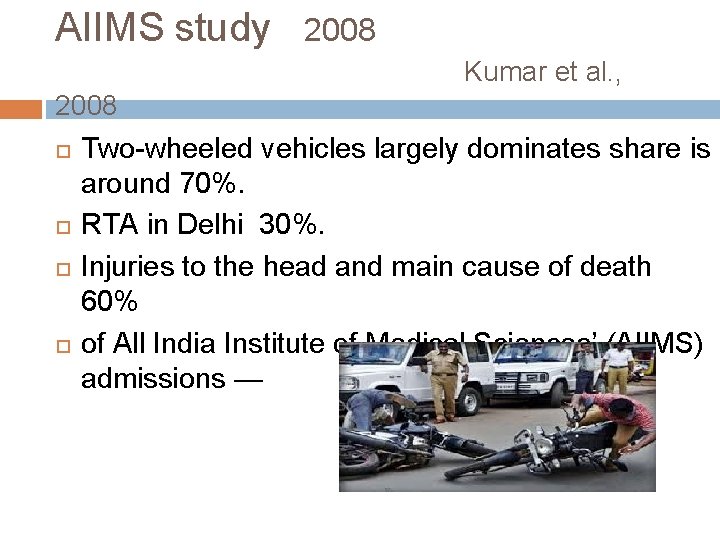
AIIMS study 2008 Kumar et al. , 2008 Two-wheeled vehicles largely dominates share is around 70%. RTA in Delhi 30%. Injuries to the head and main cause of death 60% of All India Institute of Medical Sciences’ (AIIMS) admissions —
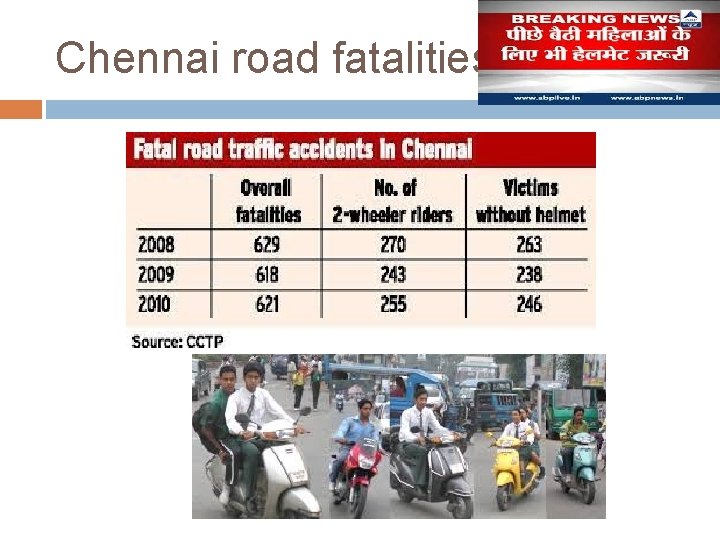
Chennai road fatalities
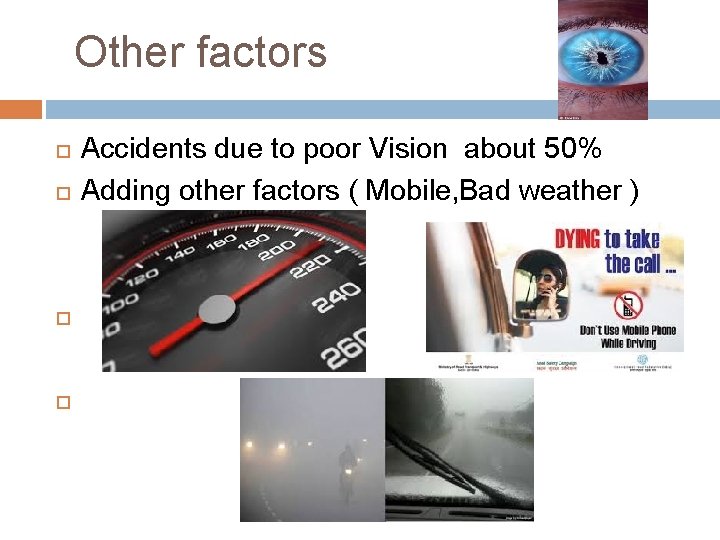
Other factors Accidents due to poor Vision about 50% Adding other factors ( Mobile, Bad weather )
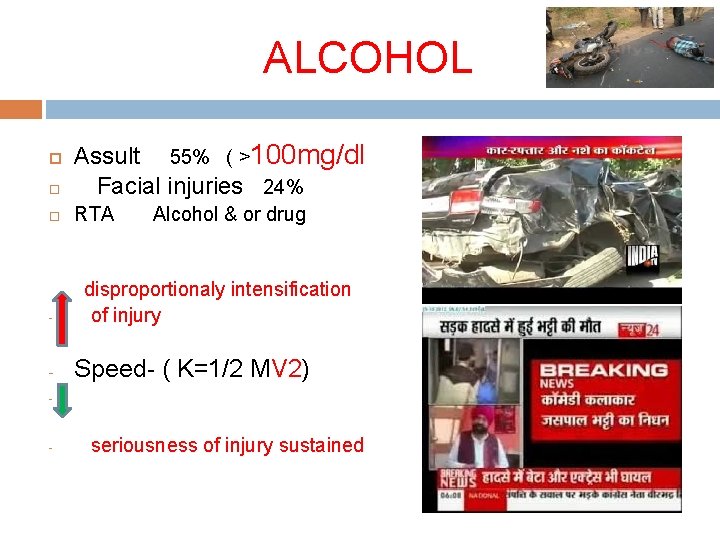
ALCOHOL Assult 55% ( >100 mg/dl Facial injuries 24% RTA - - Alcohol & or drug disproportionaly intensification of injury Speed- ( K=1/2 MV 2) - - seriousness of injury sustained
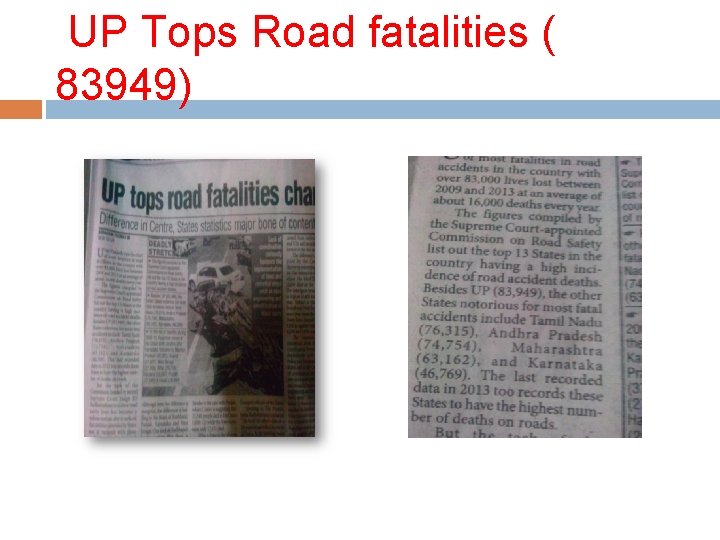
UP Tops Road fatalities ( 83949)
v v Reduced incidence of condylar fracture Increased Body Fracture Ellis, Moos and El Attar Busuito, Smith & Robson 1985 1986
Predictability Not consistent within all groups and hospitals Location and community demographics Trauma reported from industrial urban. Altercations Rural setting- RTA

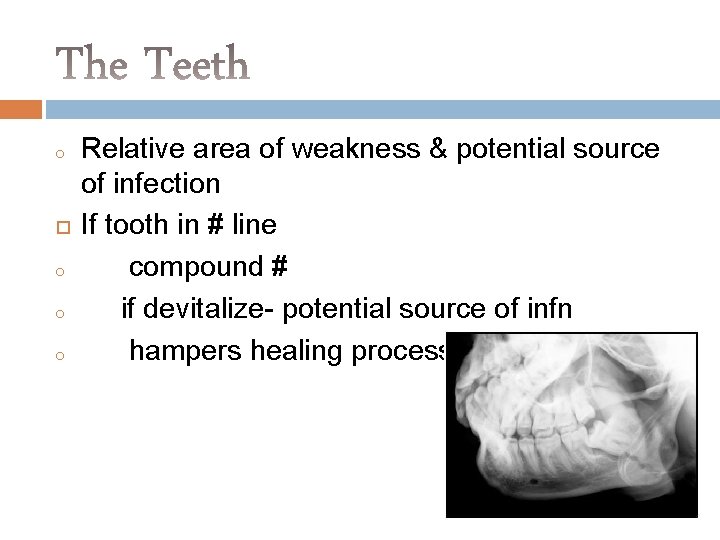
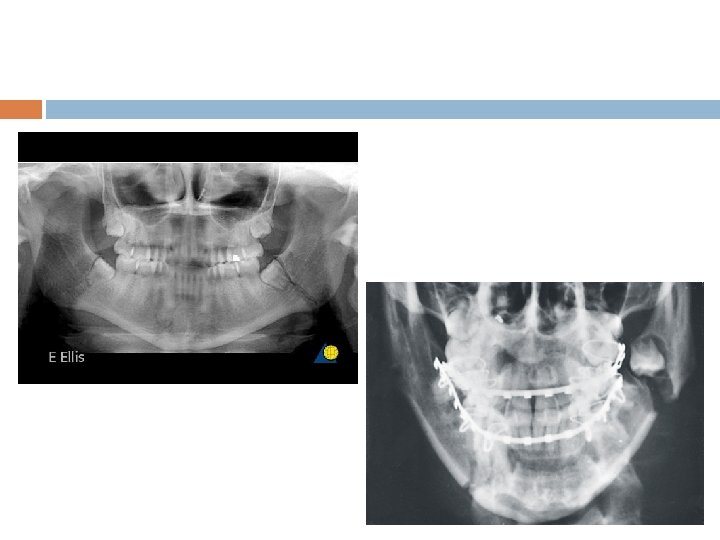
o o o o Relative area of weakness & potential source of infection If tooth in # line compound # if devitalize- potential source of infn hampers healing process
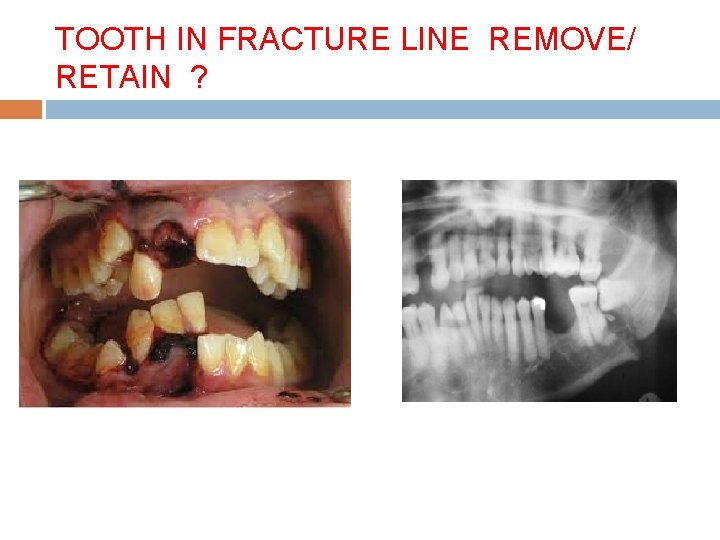
TOOTH IN FRACTURE LINE REMOVE/ RETAIN ?
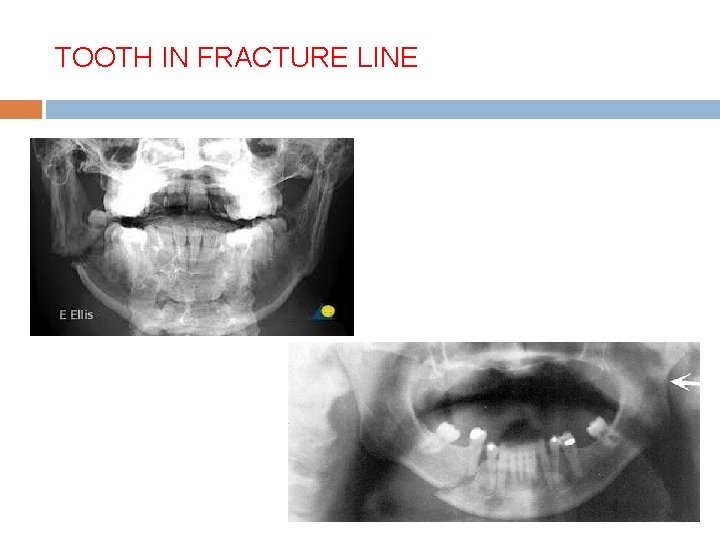
TOOTH IN FRACTURE LINE
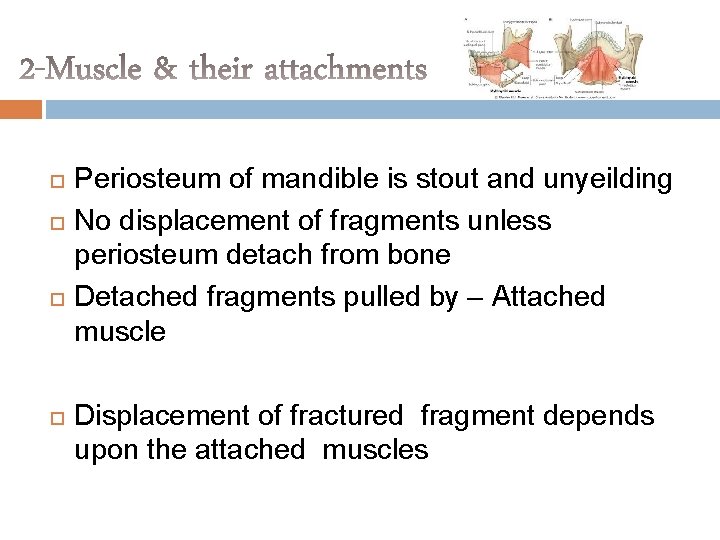
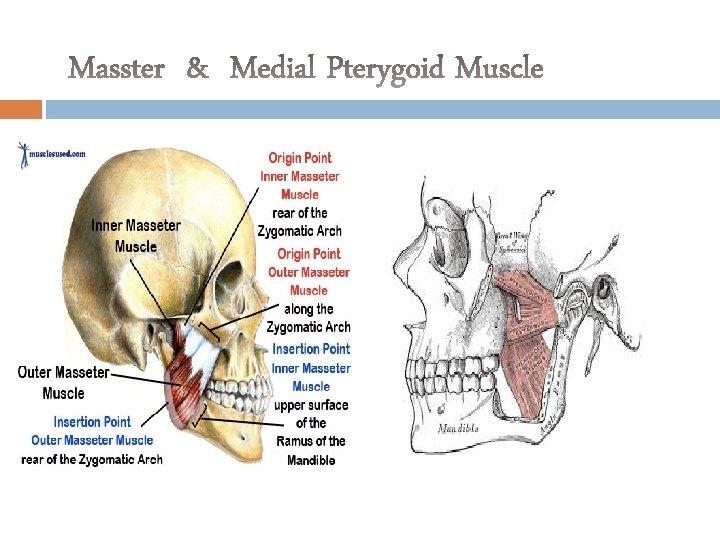
Periosteum of mandible is stout and unyeilding No displacement of fragments unless periosteum detach from bone Detached fragments pulled by – Attached muscle Displacement of fractured fragment depends upon the attached muscles
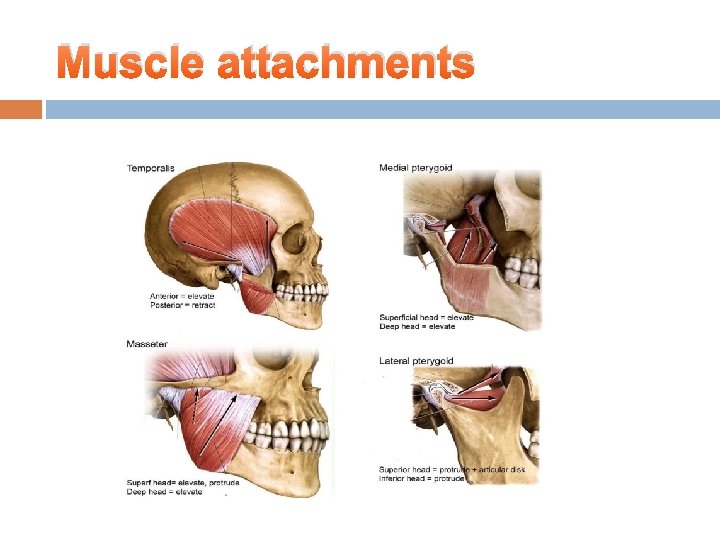
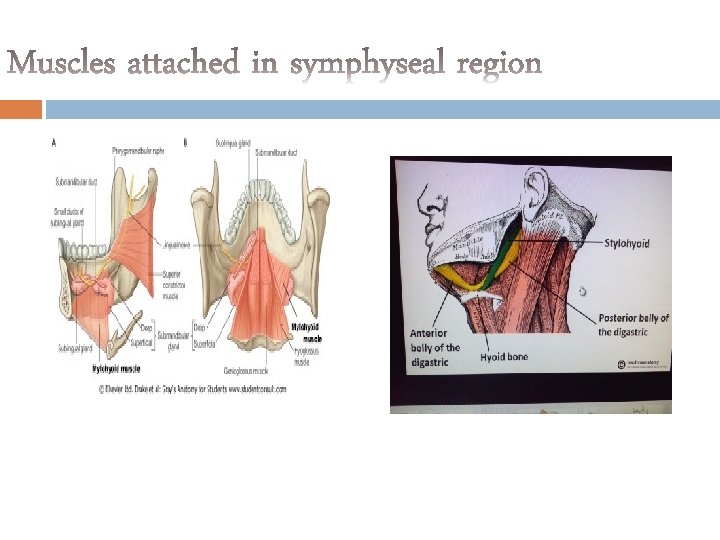
Muscle attachments
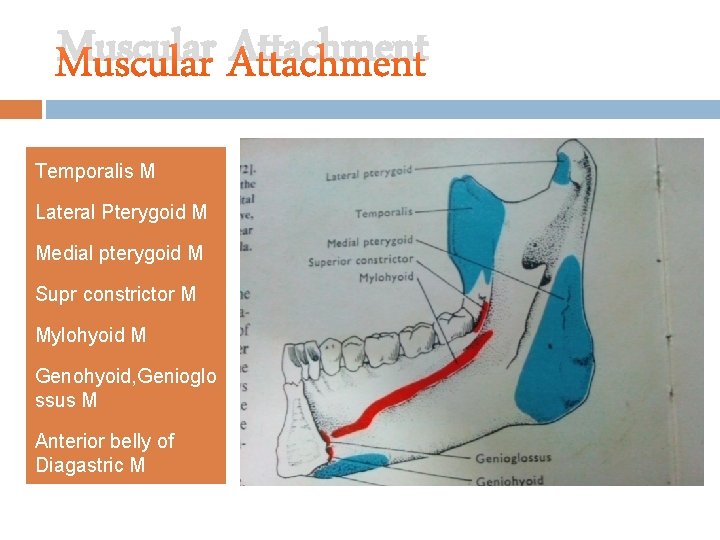
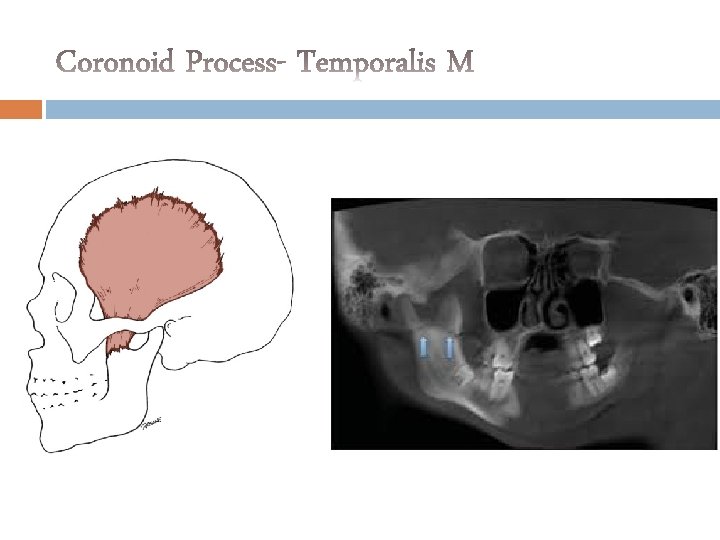
Muscular Attachment Temporalis M Lateral Pterygoid M Medial pterygoid M Supr constrictor M Mylohyoid M Genohyoid, Genioglo ssus M Anterior belly of Diagastric M
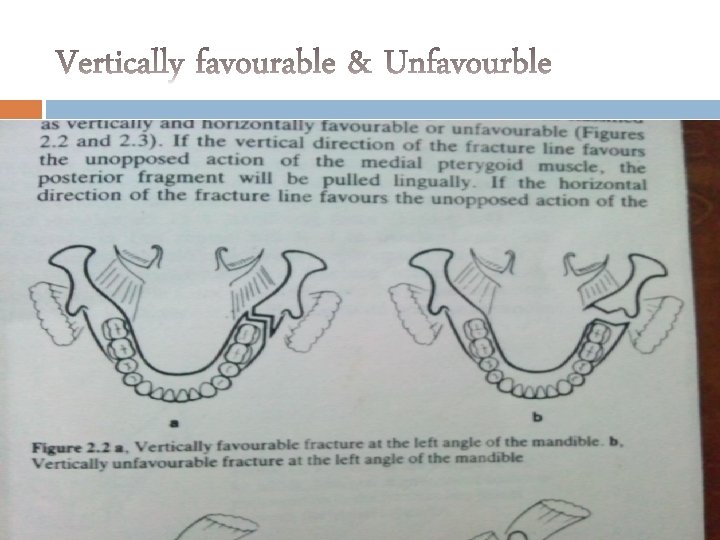
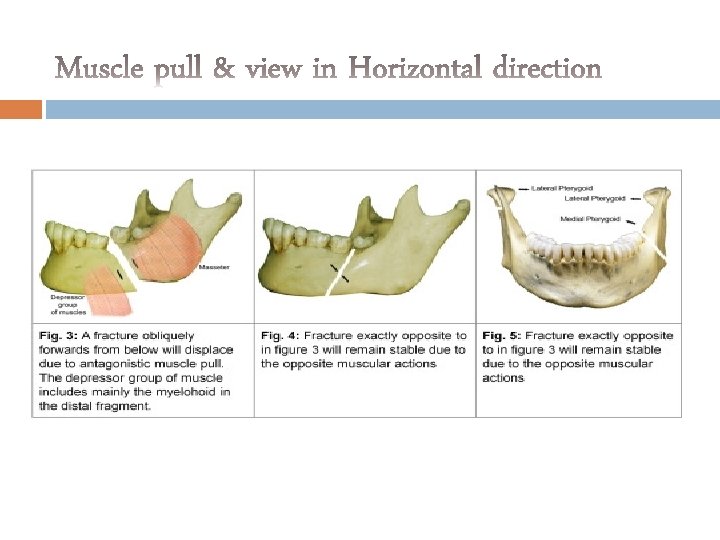
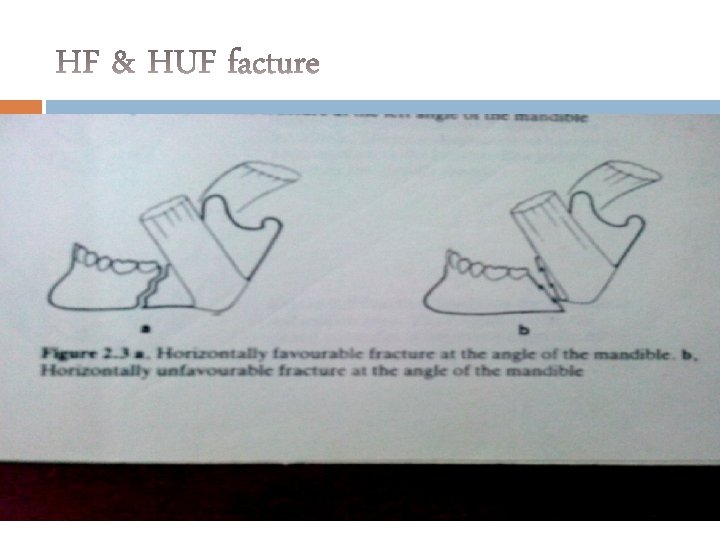
DIRECTION OF FRACTURE LINE RESISTS MUSCLE PULL Vertical direction –( View) V favorable V unfavorable View horizontal direction H favorable H unfavorable
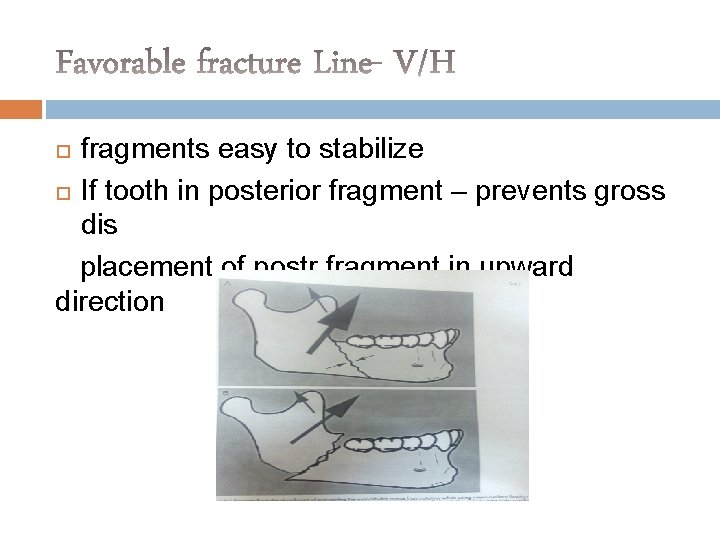
fragments easy to stabilize If tooth in posterior fragment – prevents gross dis placement of postr fragment in upward direction
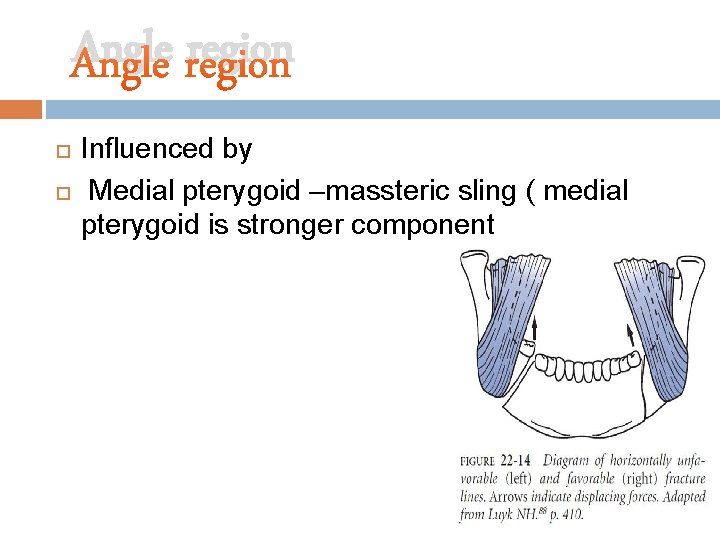
Angle region Influenced by Medial pterygoid –massteric sling ( medial pterygoid is stronger component
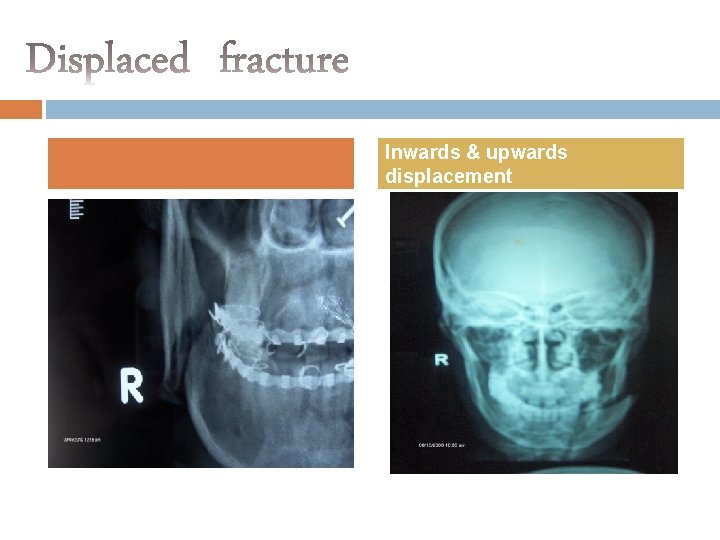
Inwards & upwards displacement
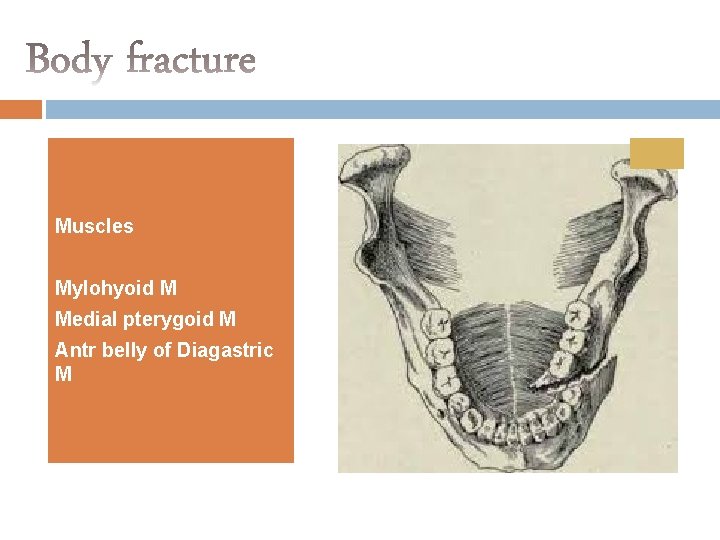
Muscles Mylohyoid M Medial pterygoid M Antr belly of Diagastric M
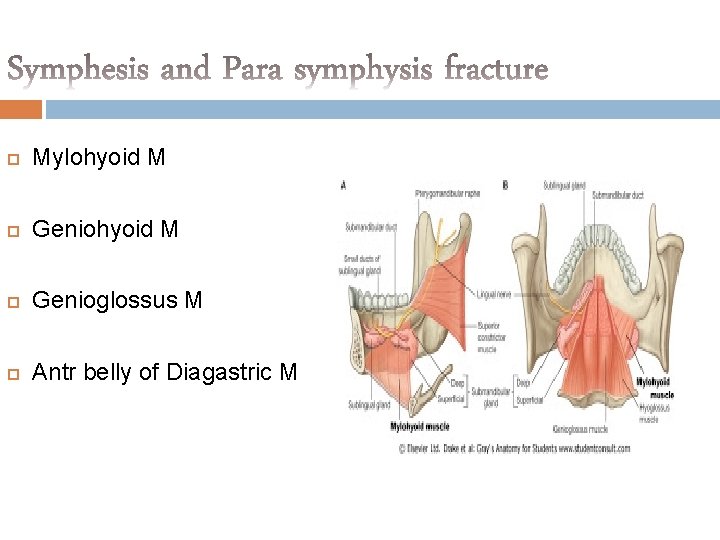
Mylohyoid M Genioglossus M Antr belly of Diagastric M
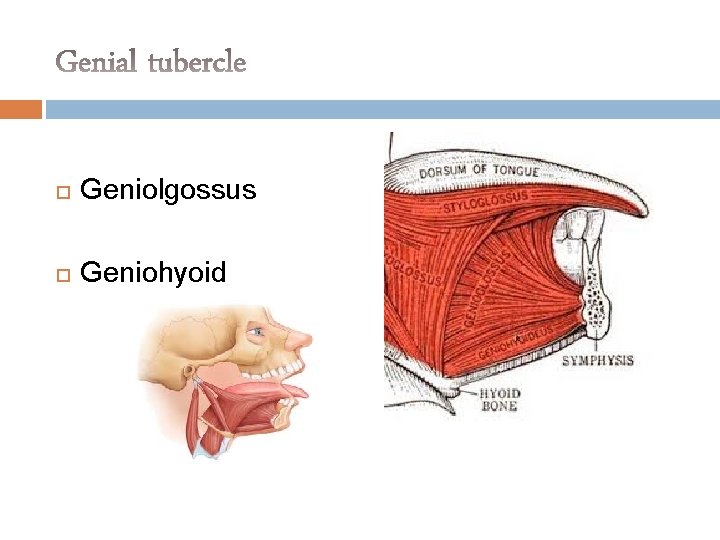
Geniolgossus Geniohyoid
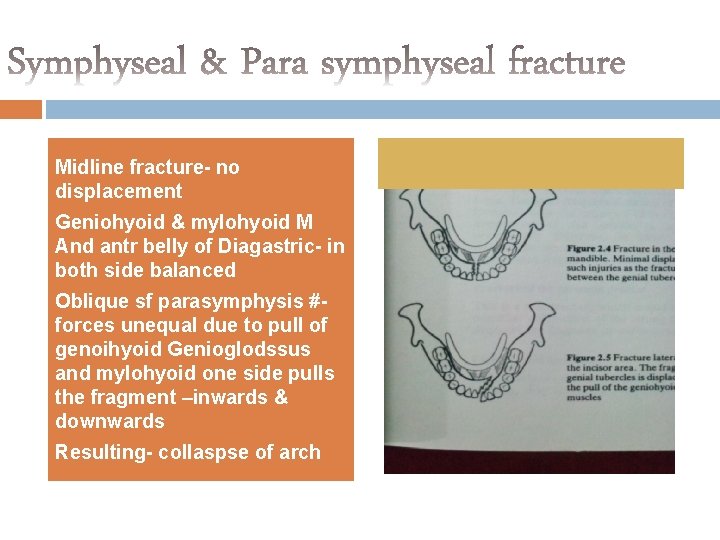
Midline fracture- no displacement Geniohyoid & mylohyoid M And antr belly of Diagastric- in both side balanced Oblique sf parasymphysis #forces unequal due to pull of genoihyoid Genioglodssus and mylohyoid one side pulls the fragment –inwards & downwards Resulting- collaspse of arch
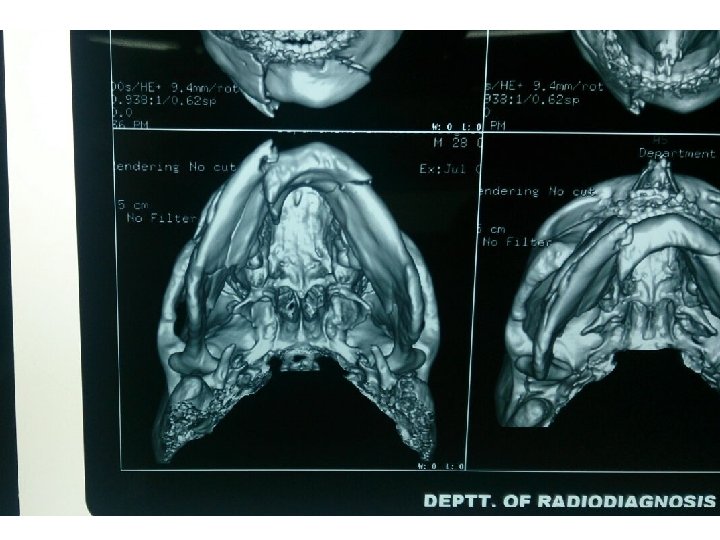
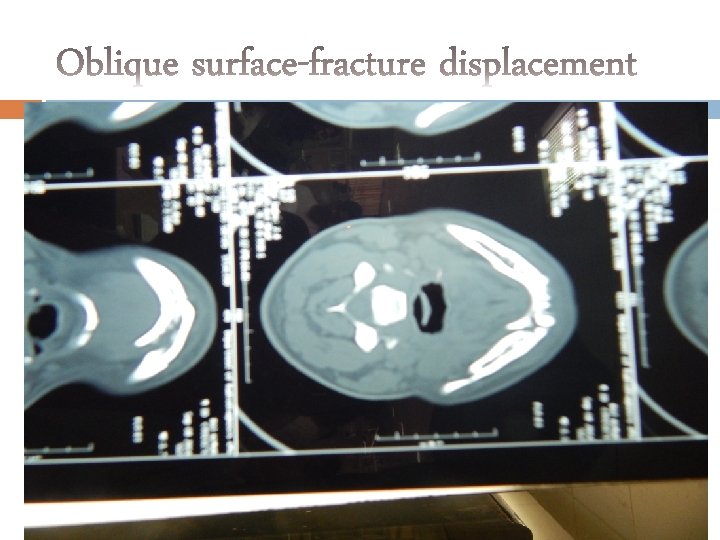
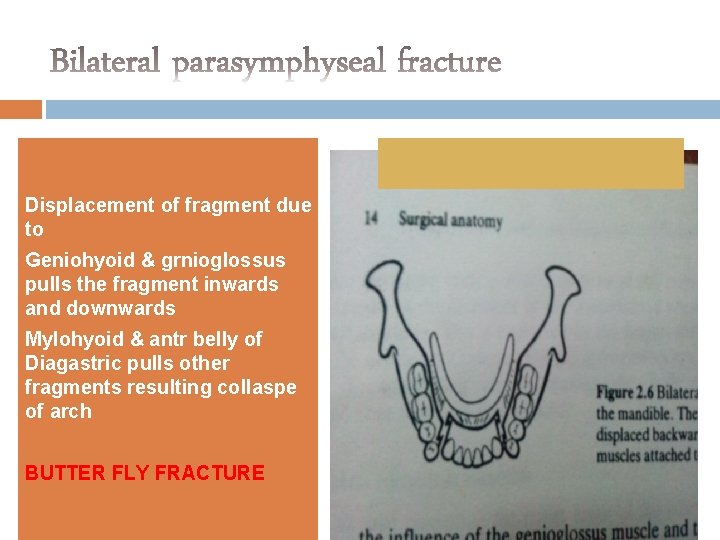
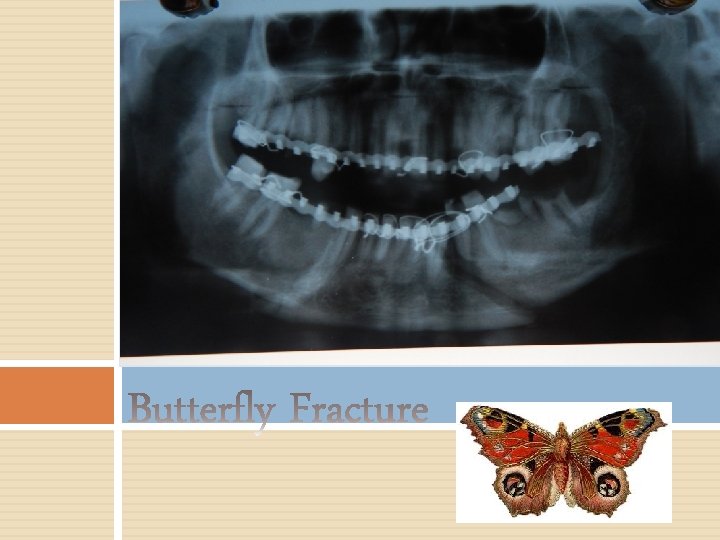
Displacement of fragment due to Geniohyoid & grnioglossus pulls the fragment inwards and downwards Mylohyoid & antr belly of Diagastric pulls other fragments resulting collaspe of arch BUTTER FLY FRACTURE
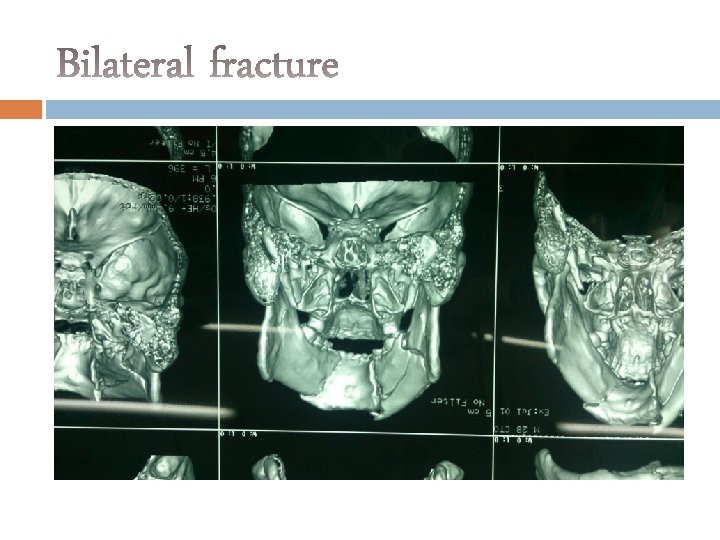
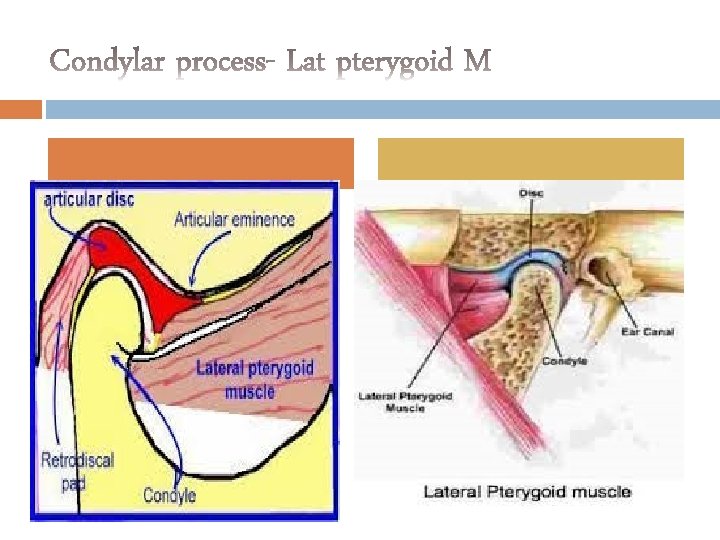
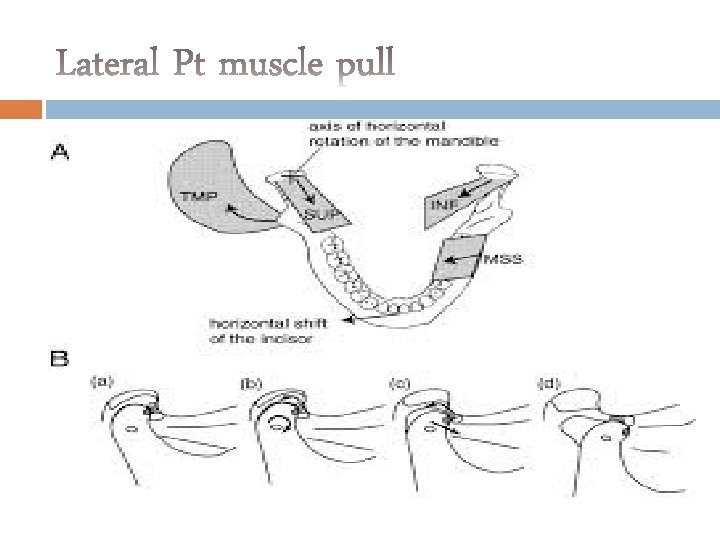
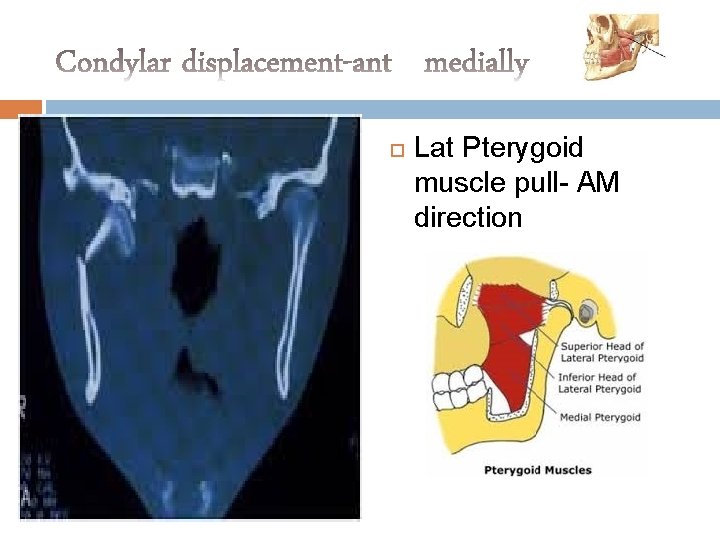
Lat Pterygoid muscle pull- AM direction
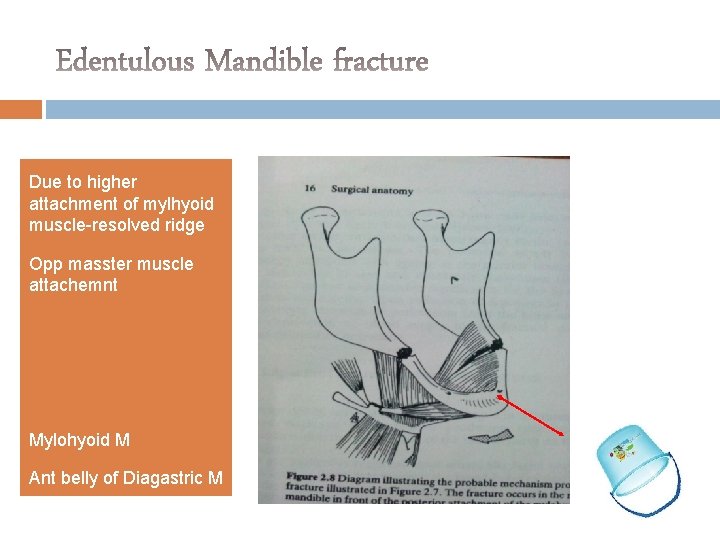
Due to higher attachment of mylhyoid muscle-resolved ridge Opp masster muscle attachemnt Mylohyoid M Ant belly of Diagastric M
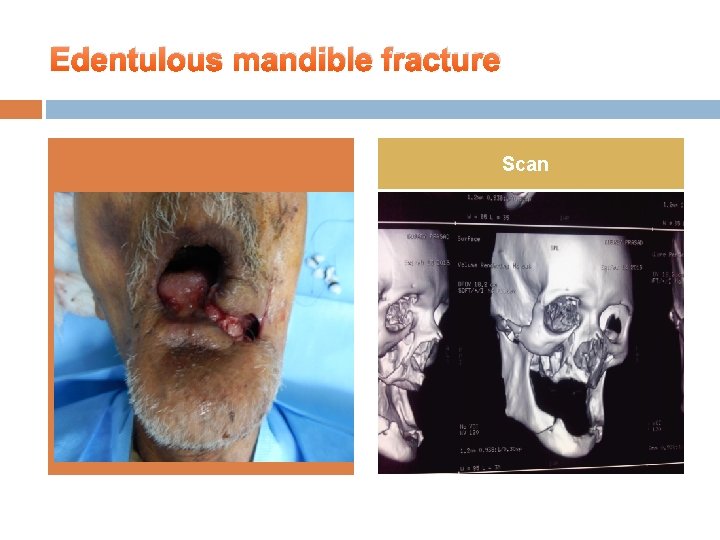
Edentulous mandible fracture Scan
14 th Aug 2015 In Continuation
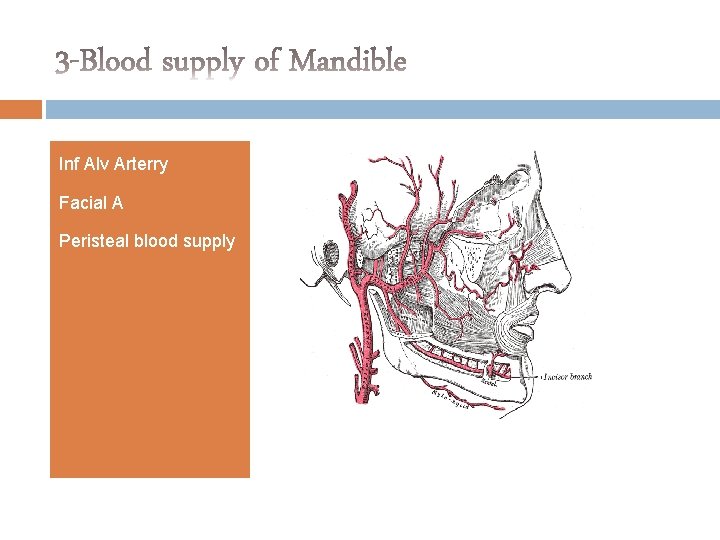
Inf Alv Arterry Facial A Peristeal blood supply
Lost with the tooth lost changes IAA gradually diminishes in size May eventually dis appear
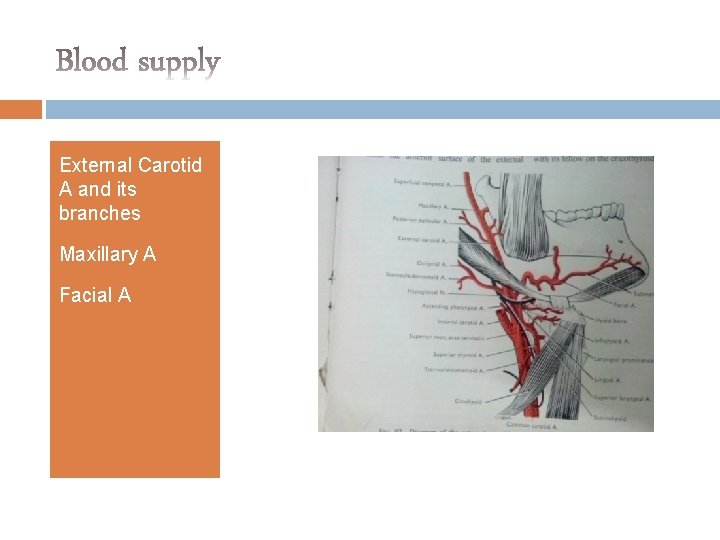
External Carotid A and its branches Maxillary A Facial A
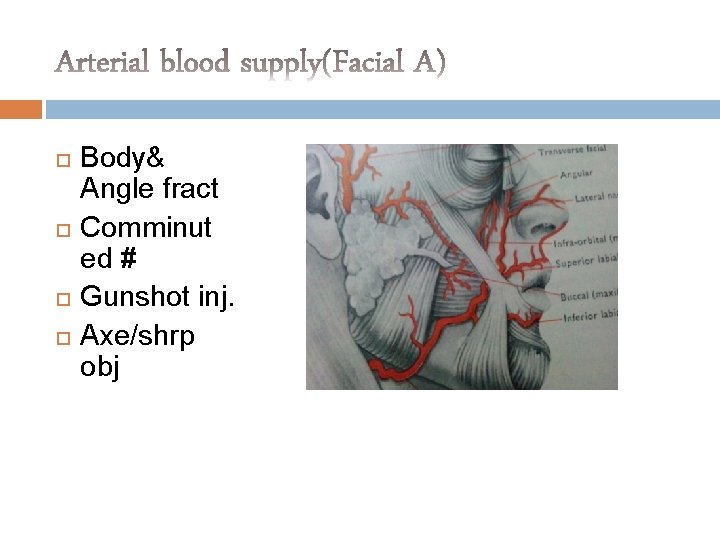
Body& Angle fract Comminut ed # Gunshot inj. Axe/shrp obj
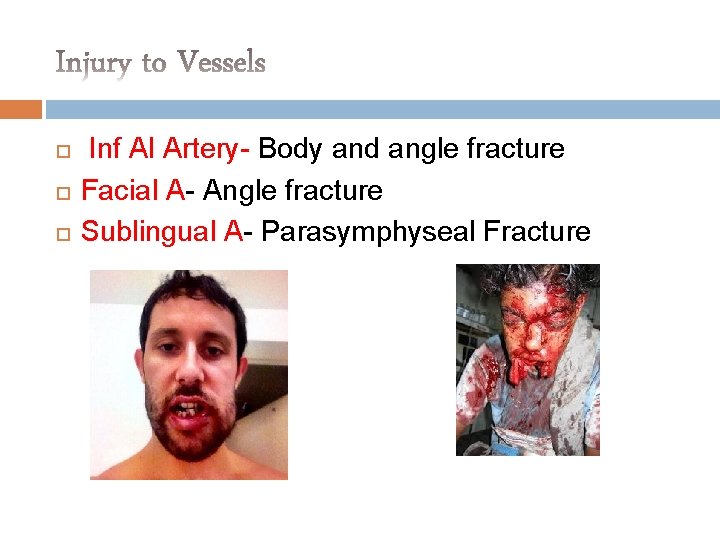
Inf Al Artery- Body and angle fracture Facial A- Angle fracture Sublingual A- Parasymphyseal Fracture
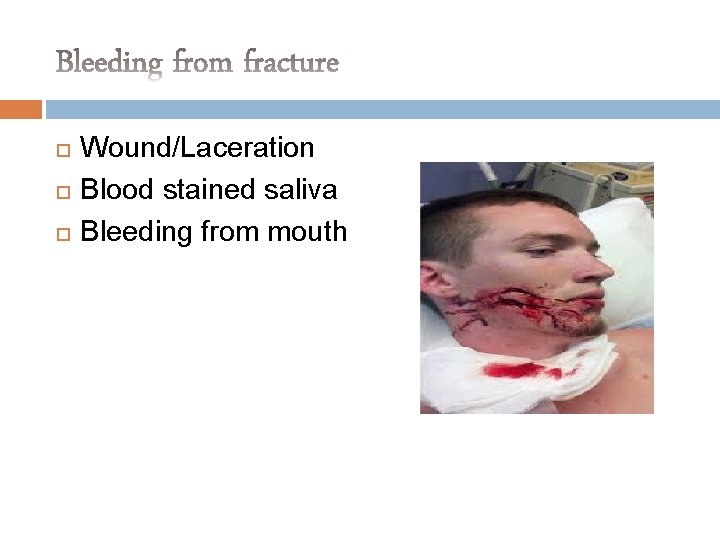
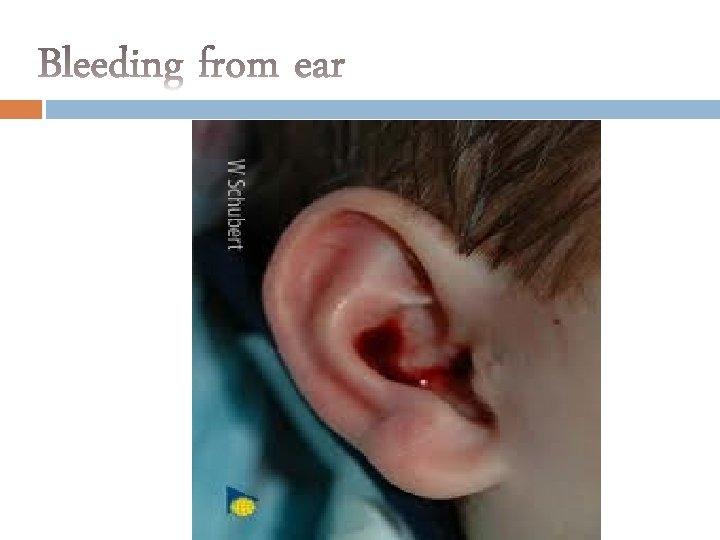
Wound/Laceration Blood stained saliva Bleeding from mouth
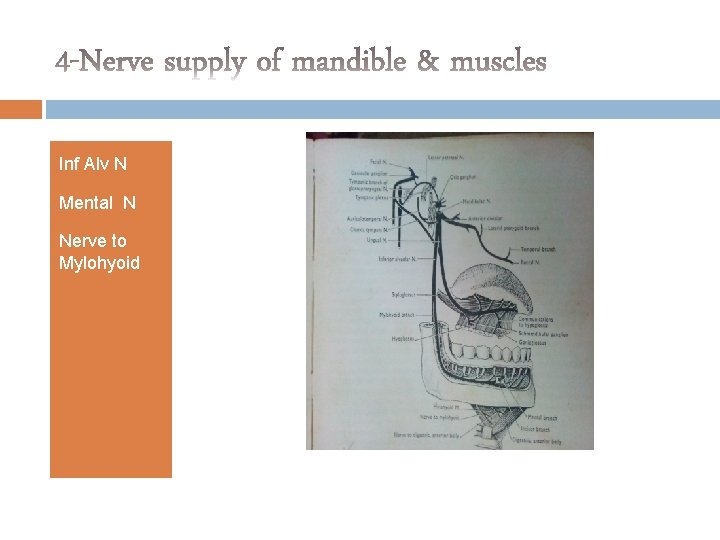
Inf Alv N Mental N Nerve to Mylohyoid
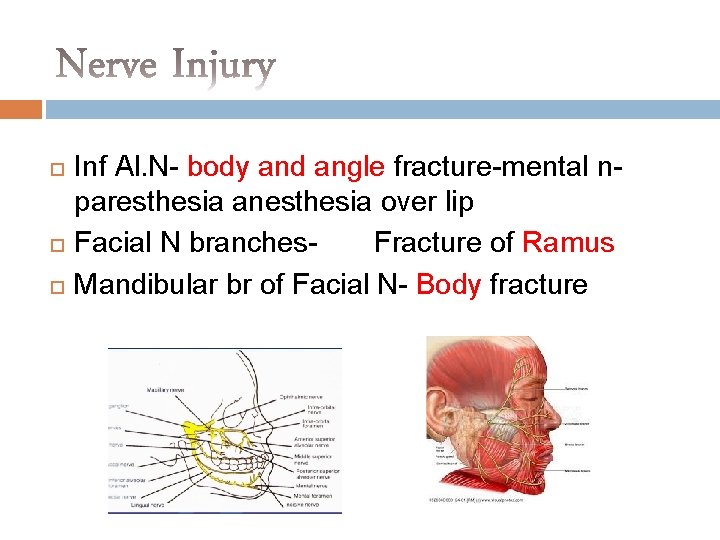
Inf Al. N- body and angle fracture-mental nparesthesia anesthesia over lip Facial N branches. Fracture of Ramus Mandibular br of Facial N- Body fracture
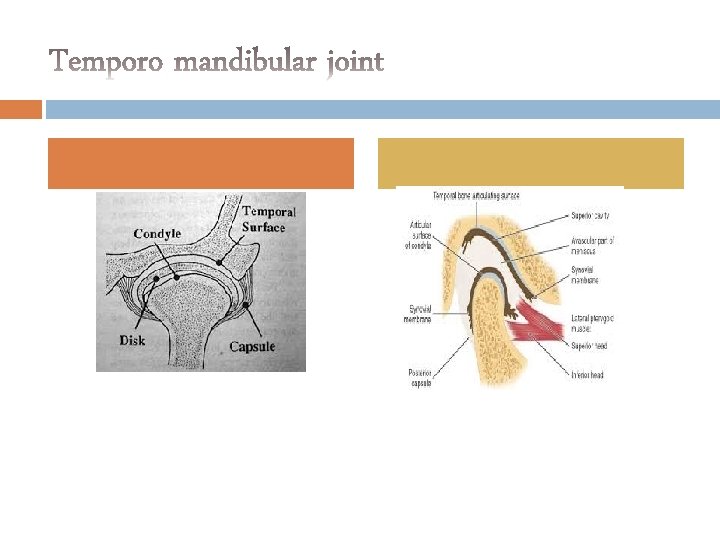
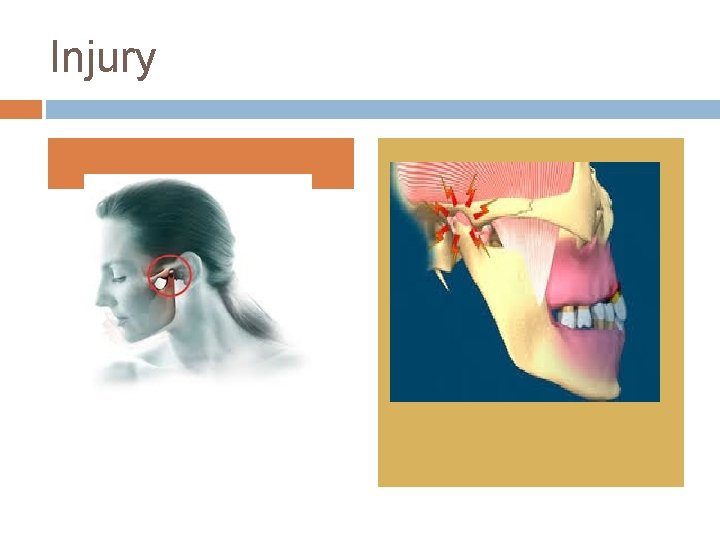
Injury
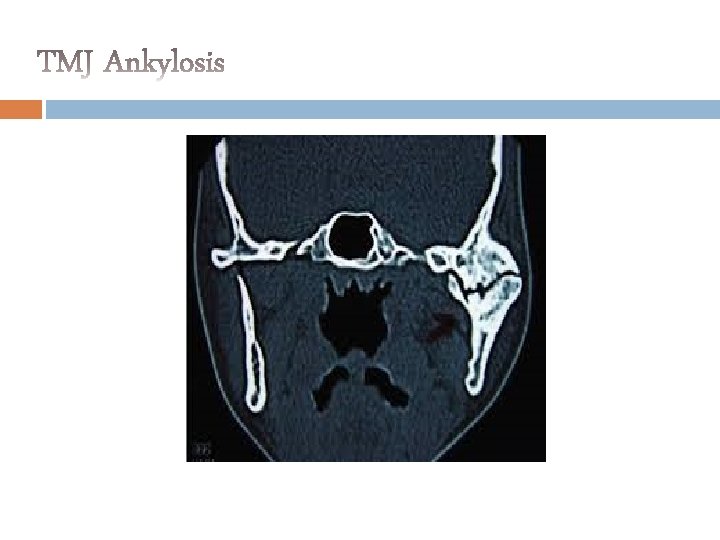
TMJ effusion(Fracture) Heamorthrosis Meniscus damage(IDTMJ) TMJ ankylosis
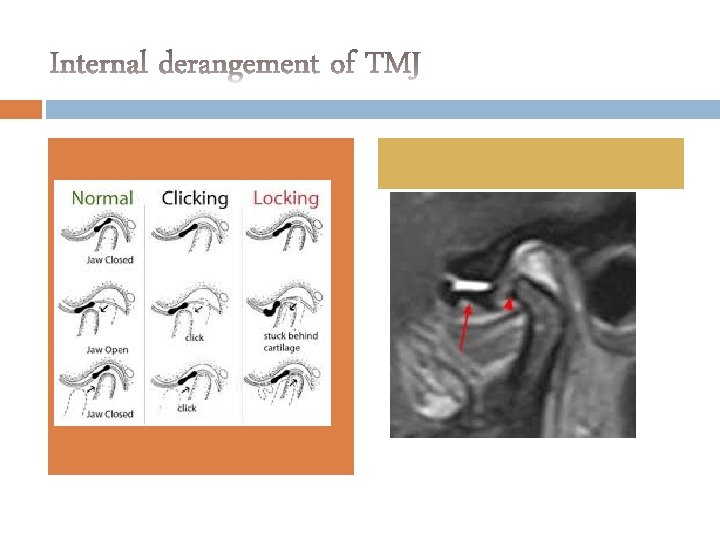
Area of weakness-Vulnerable to Fracture Junction of alv bone and basal mnd bone-so DA # are independent to mandibular fracture. Symphyseal #-formed by the union of two half of mandible in centre at irst year of life. So area of weakness. Parasymphyseal region- lateral to the mental prominence-presence of mental formen. Body region-junction of thicker body with Ramus-angle regionand due to curvature of trajectories in this region.
Anatomical variations Strength of lower jaw varies with presence r absence of tooth. Presence of impacted tooth r long root of cannine make the area vulnerable for fracture. Condylar region-slender neck of condyle render to fracture as a result of direct violence to chin. acts as safety mechanism to prevent injury to middle cranial fossa. Curve of mandible is more distorted from trauma-so buccal and lingual plate fractures at different level-this may give appearance of double fracture.
Referrence Books Text book of Oral& Max. Fac Surgery- N. Malik Kelly’s fractures of the mandible-Peter Banks, Oral & Maxillofacial Surgery- R. J. Fonseca Principles of Internal fixation of the Craniomaxillofacial Skeleton-Ehrenfeld, Manson& Prein. Maxillofacial Surgery Reconstruction- Peter ward Booth
- Slides: 74