
Fracture dislocation of the elbow AO Trauma Advanced
Fracture dislocation of the elbow AO Trauma Advanced Principles Course
Learning objectives • Understand the different types of elbow dislocations • Identify subtle signs of complex elbow injuries • Create surgical tactics based upon the injury type • DO NOTHING THAT INCREASES INSTABILITY

AO/OTA Classification Proximal Radius and Ulna 2 R 1 A 2 R 1 B 2 R 1 C 2 U 1 A 2 U 1 B 2 U 1 C 2 R 1 A Radius, proximal end segment, extraarticular fracture 2 U 1 A Ulna, proximal end segment, extraarticular fracture 2 R 1 B Radius, proximal end segment, extraarticular fracture 2 U 1 B Ulna, proximal end segment, partial articular fracture 2 R 1 C Radius, proximal end segment, complete articular fracture 2 U 1 C Ulna, proximal end segment, complete articular fracture Further Elbow dislocation can be classified with the help of list of universal modifiers
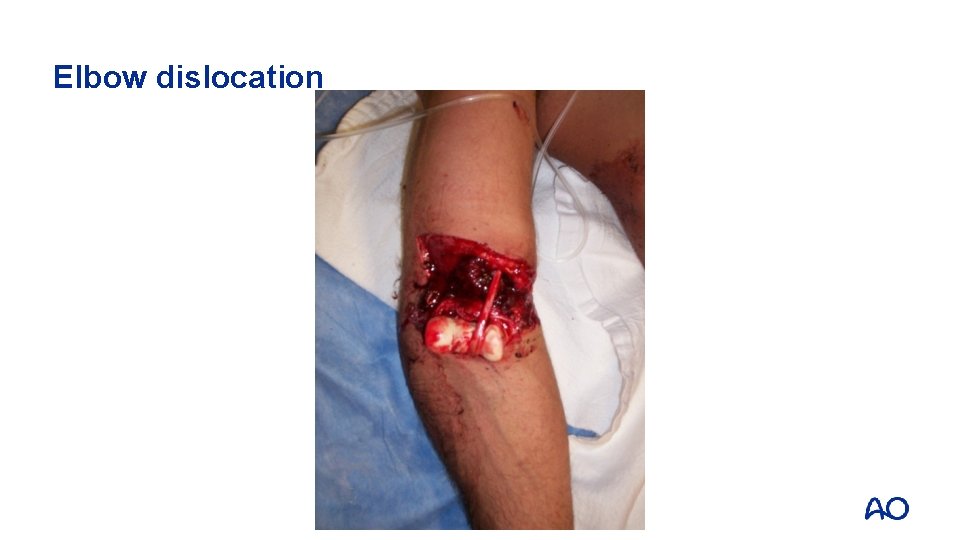
Elbow dislocation

Elbow dislocation • Traditional treatment: closed reduction • Active range of motion can reduce slight subluxation through use of muscles around elbow Courtesy of David Ring

Elbow dislocation Failure to maintain reduction: • Consider interposed tissue or incarcerated bony/cartilaginous fragments • Severe soft-tissue damage (avulsion of common flexor/extensor origins) may increase instability • CT scan may be helpful • Consider ligamentous and tendinous repair

Elbow dislocation
The “gang of four” • Terrible triad fracture dislocation • Transolecranon fracture dislocation • Monteggia variant fracture dislocation • Varus posteromedial fracture dislocation
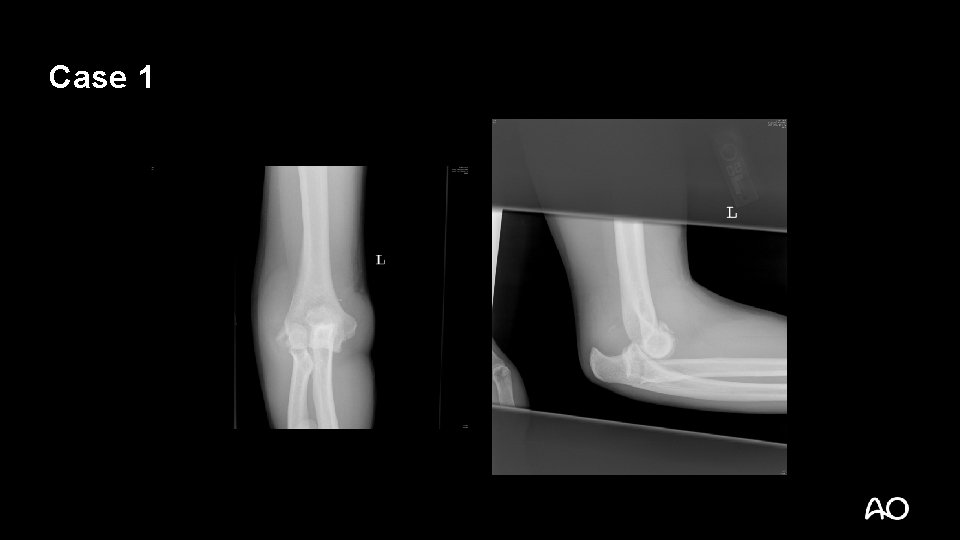
Case 1
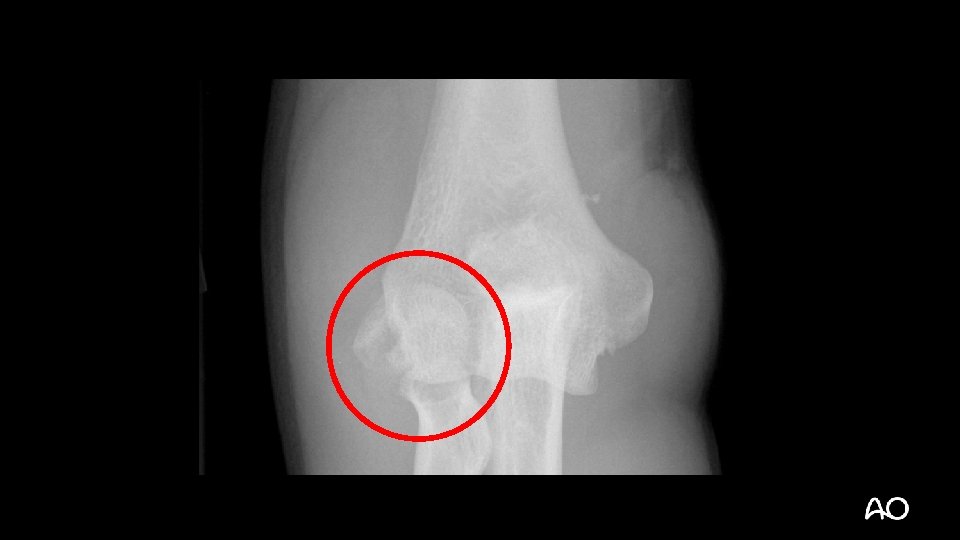
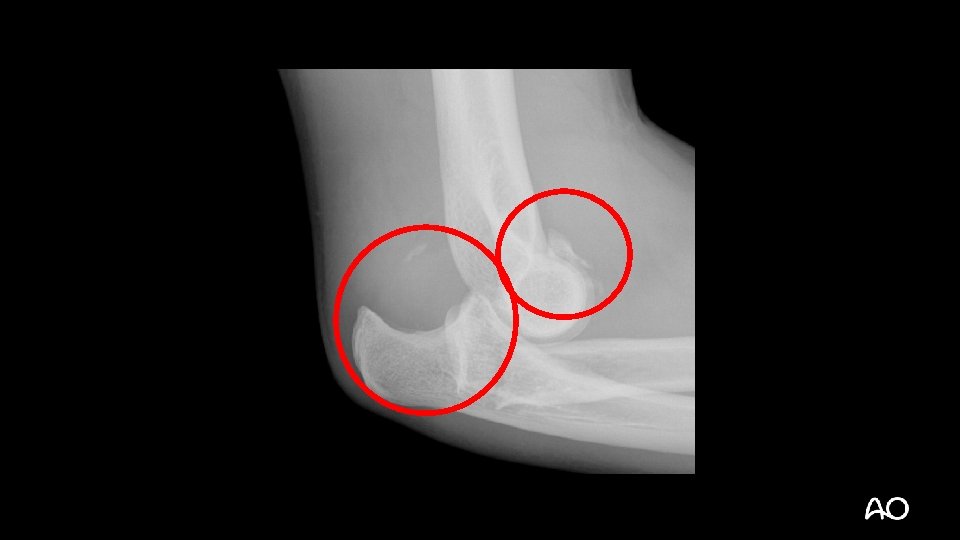

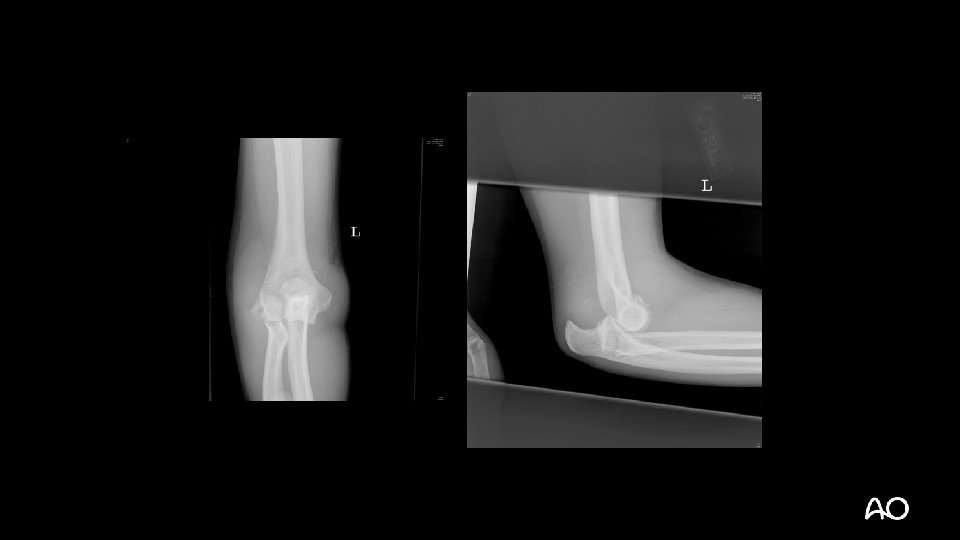
Terrible triad fracture dislocation • Historically poor outcomes • Injury “triad”: • Elbow dislocation (often posterior) • Radial head fracture • Coronoid fracture
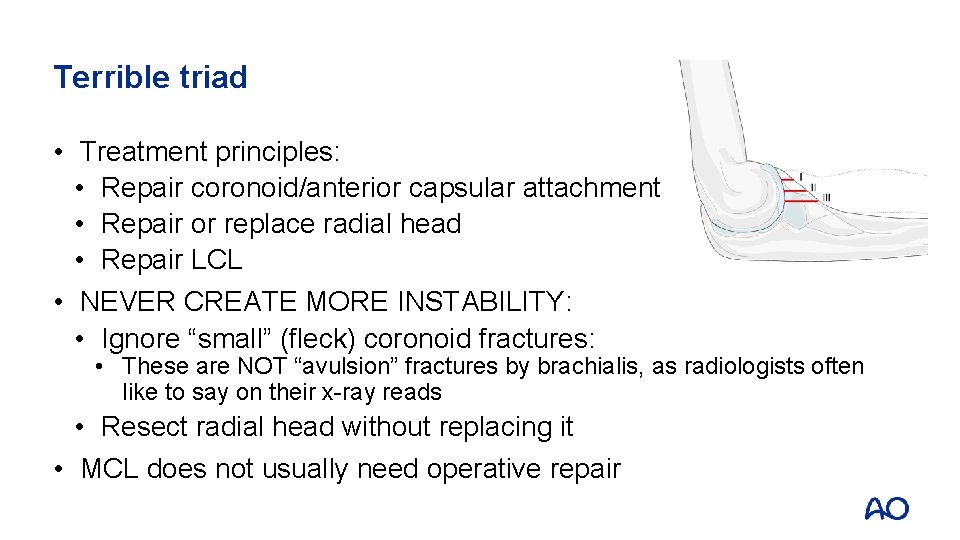
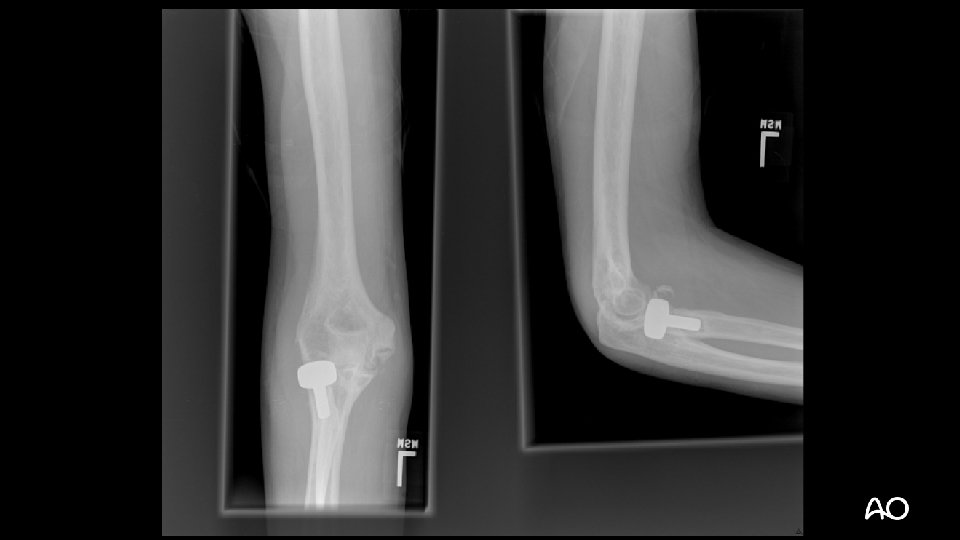
Terrible triad • Treatment principles: • Repair coronoid/anterior capsular attachment • Repair or replace radial head • Repair LCL • NEVER CREATE MORE INSTABILITY: • Ignore “small” (fleck) coronoid fractures: • These are NOT “avulsion” fractures by brachialis, as radiologists often like to say on their x-ray reads • Resect radial head without replacing it • MCL does not usually need operative repair

Terrible triad—tactic • Kocher approach to elbow (ECU-anconeus interval) • LCL often avulsed from lateral epicondyle: • “Bare epicondyle” • If resecting the radial head, do it now to improve access to coronoid ECU = extensor carpi ulnaris
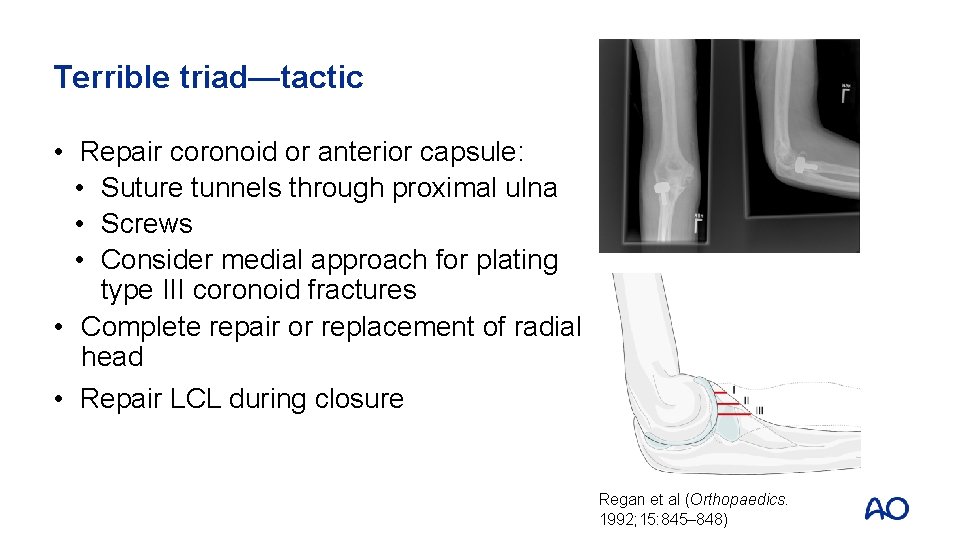
Terrible triad—tactic • Repair coronoid or anterior capsule: • Suture tunnels through proximal ulna • Screws • Consider medial approach for plating type III coronoid fractures • Complete repair or replacement of radial head • Repair LCL during closure Regan et al (Orthopaedics. 1992; 15: 845– 848)
Case 2
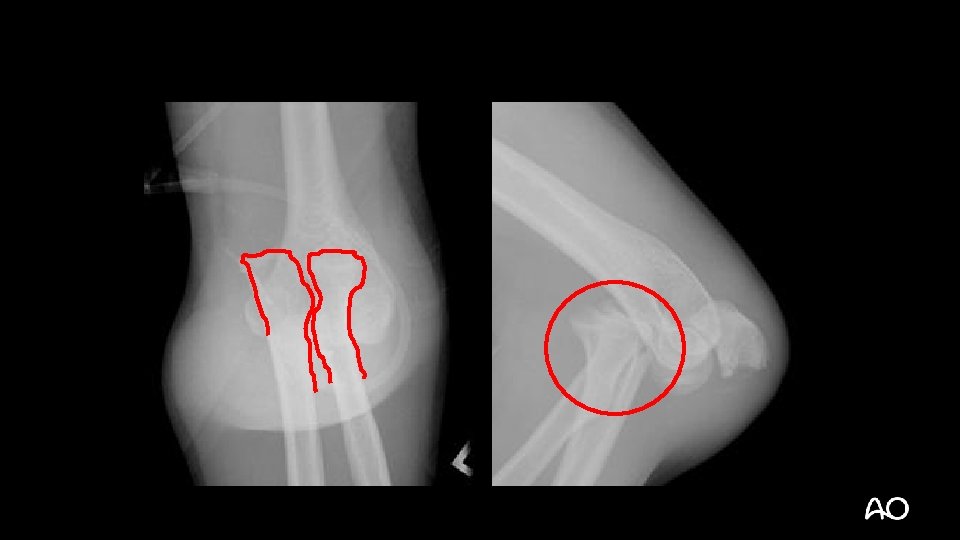
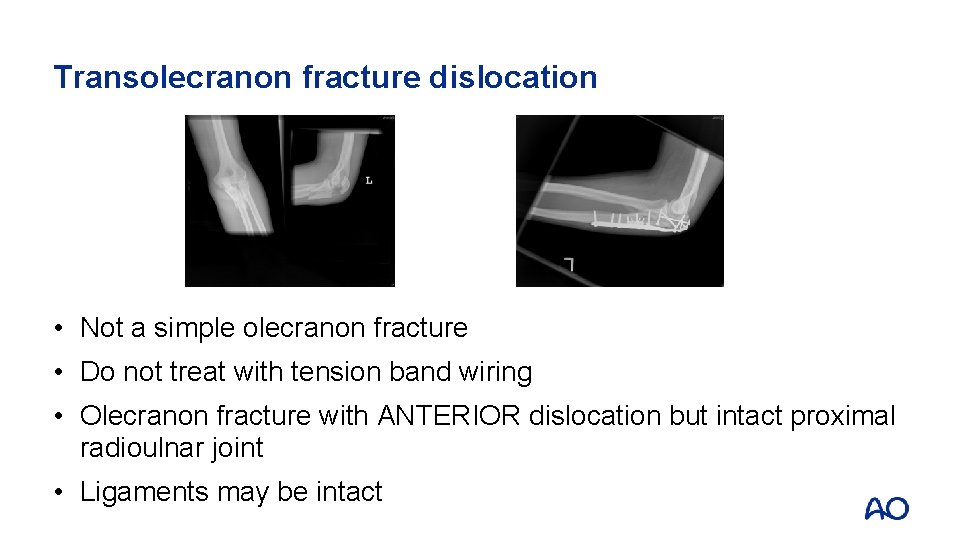
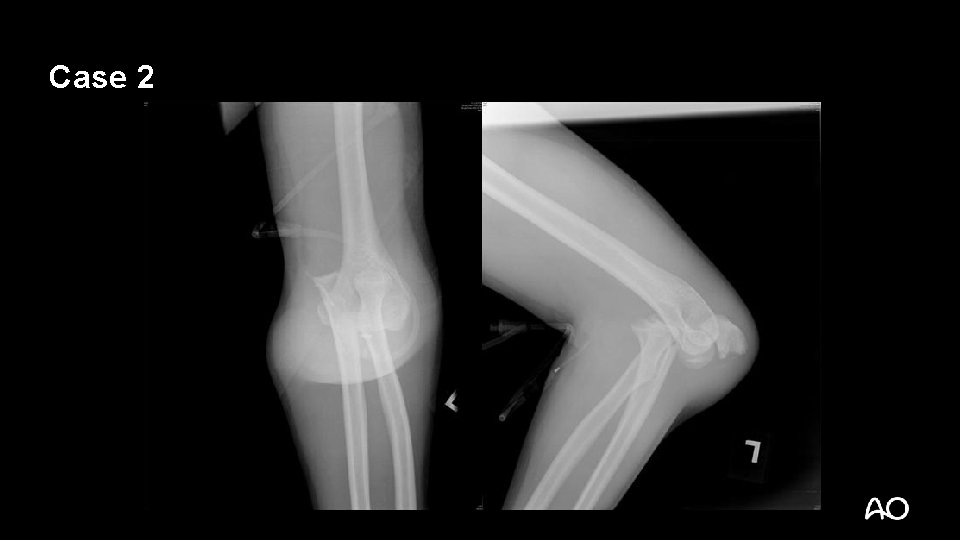
Transolecranon fracture dislocation • Not a simple olecranon fracture • Do not treat with tension band wiring • Olecranon fracture with ANTERIOR dislocation but intact proximal radioulnar joint • Ligaments may be intact

Transolecranon—tactic • Extensile posterior exposure • Full-thickness cutaneous flaps: • Can access Kocher (ECUanconeus) interval for radial head repair/replacement if necessary

Transolecranon—tactic • Address coronoid fractures through olecranon fracture line • Anatomically reduce olecranon • Plate-and-screw constructs are often necessary (no tension band) • Normally, ligaments are relatively spared

Case 3
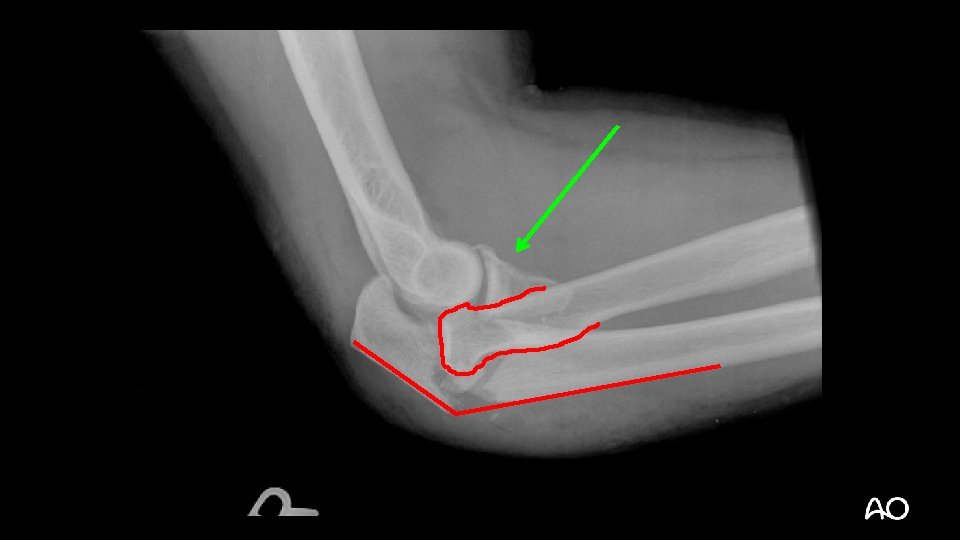
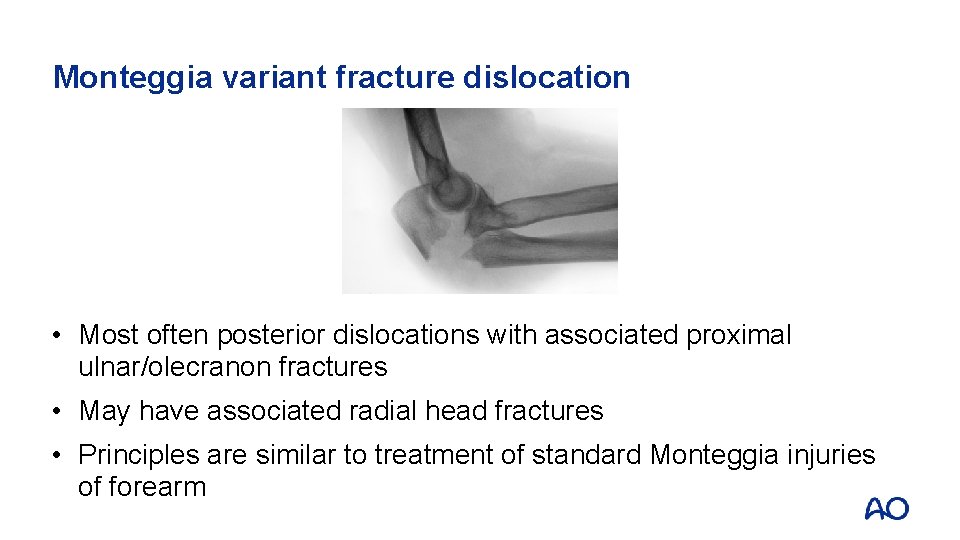
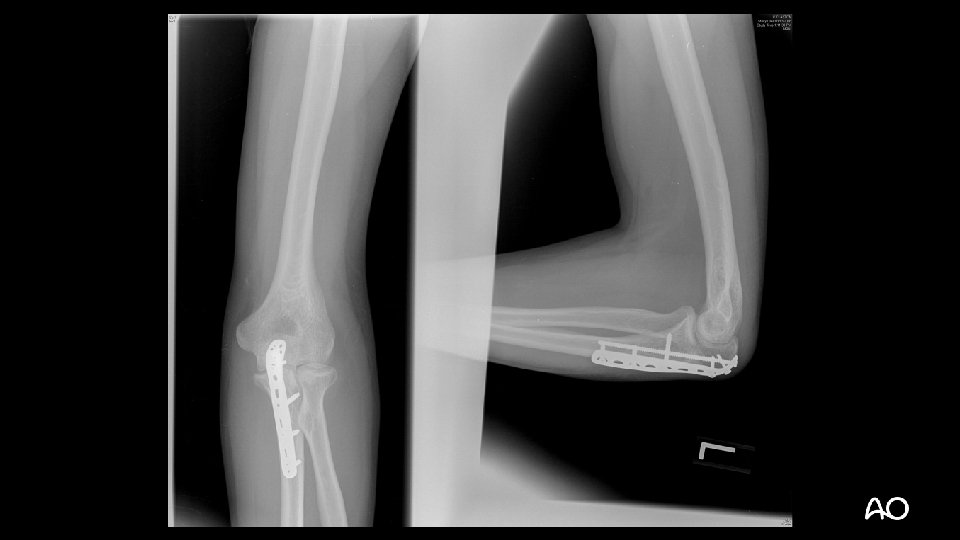
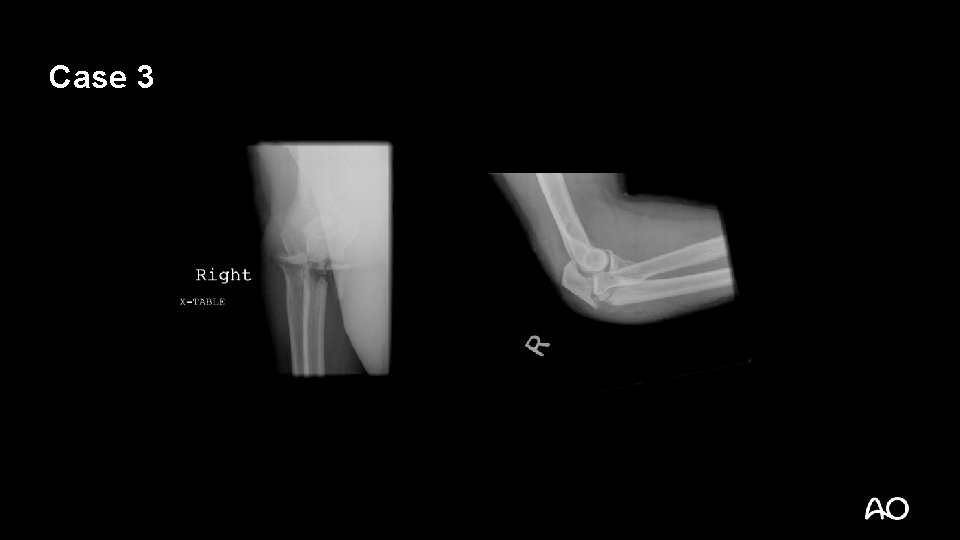
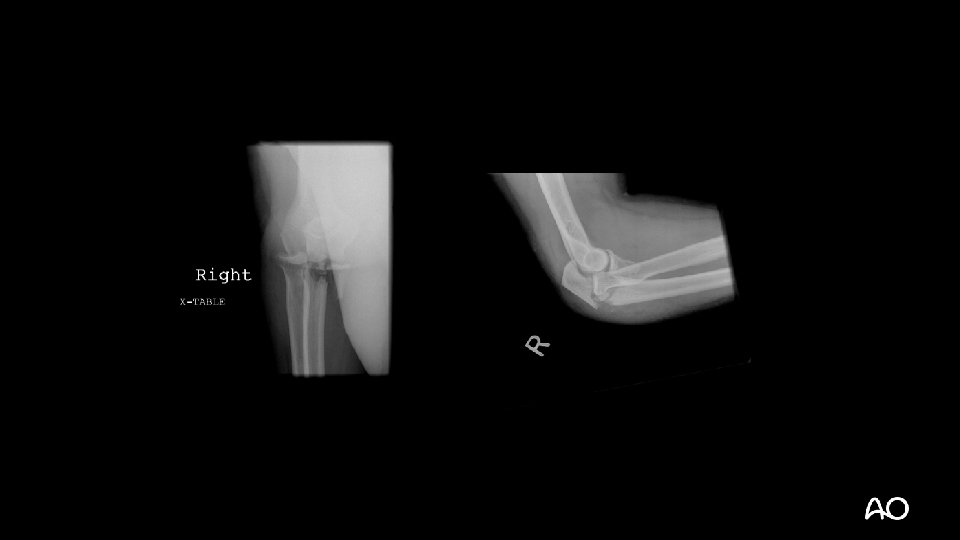
Monteggia variant fracture dislocation • Most often posterior dislocations with associated proximal ulnar/olecranon fractures • May have associated radial head fractures • Principles are similar to treatment of standard Monteggia injuries of forearm
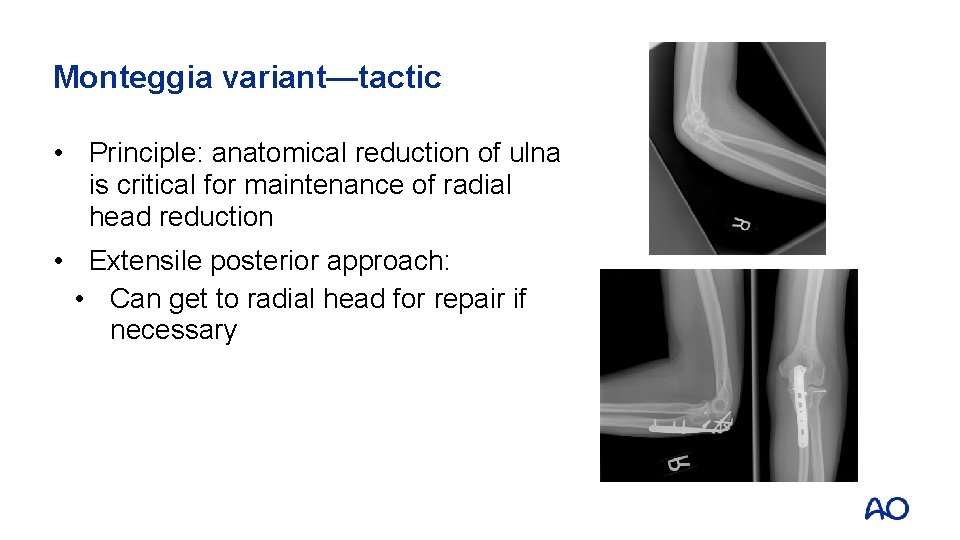
Monteggia variant—tactic • Principle: anatomical reduction of ulna is critical for maintenance of radial head reduction • Extensile posterior approach: • Can get to radial head for repair if necessary
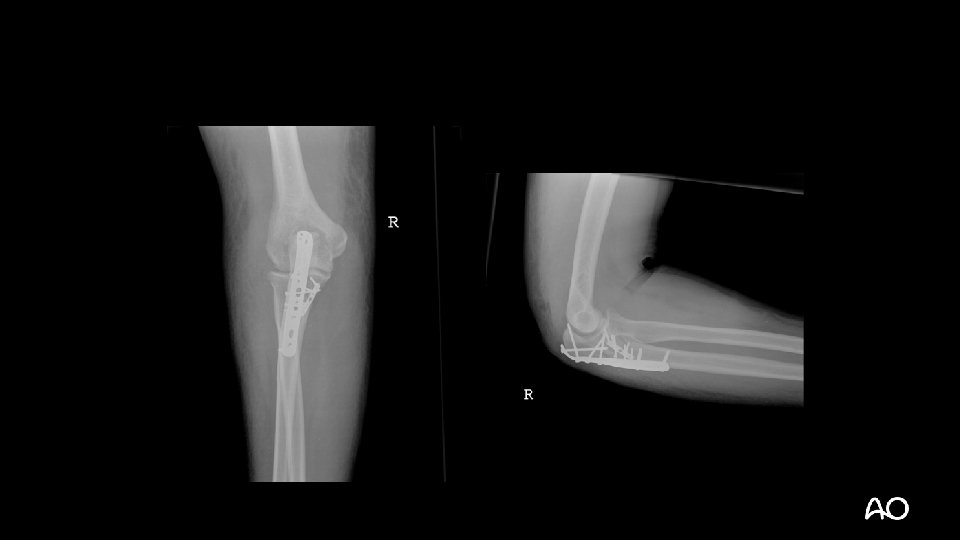

Case 4

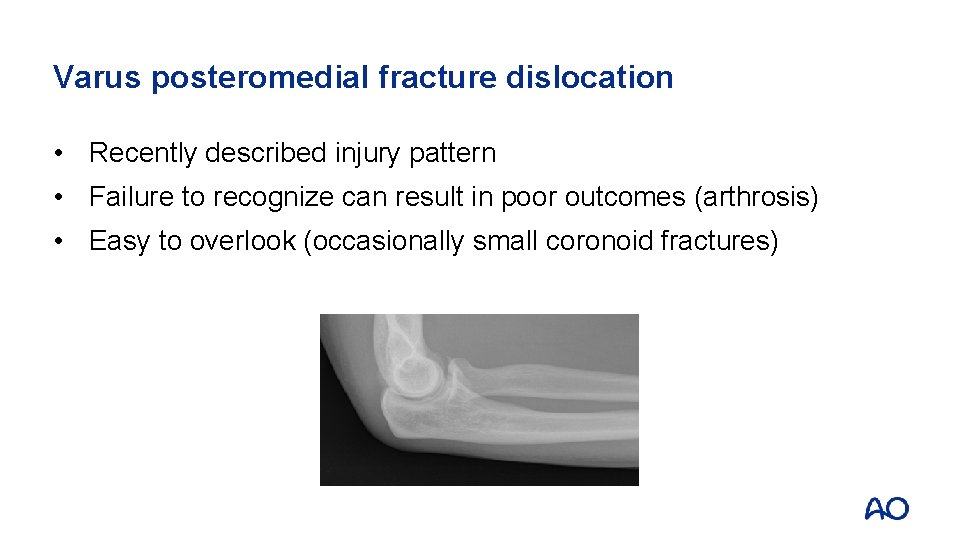
Varus posteromedial fracture dislocation • Recently described injury pattern • Failure to recognize can result in poor outcomes (arthrosis) • Easy to overlook (occasionally small coronoid fractures)
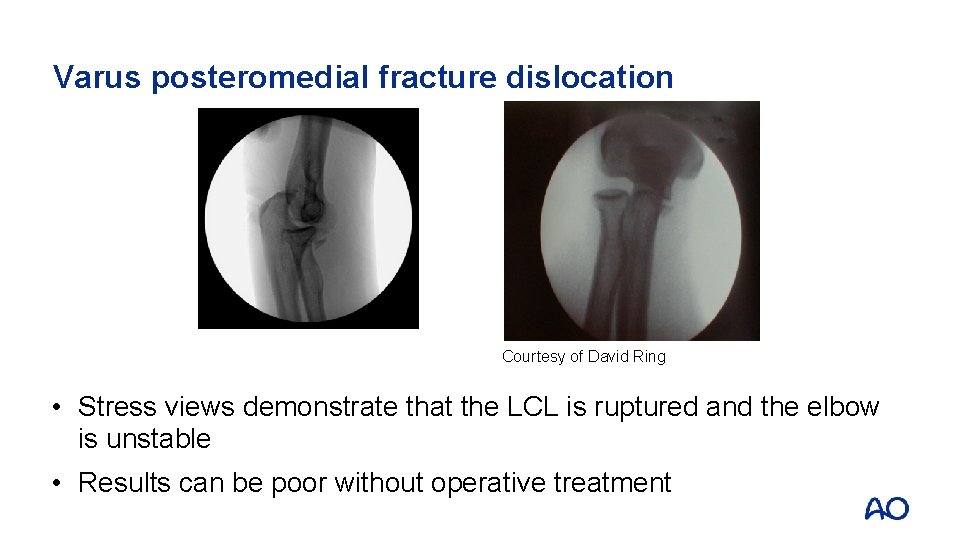
Varus posteromedial fracture dislocation Courtesy of David Ring • Stress views demonstrate that the LCL is ruptured and the elbow is unstable • Results can be poor without operative treatment
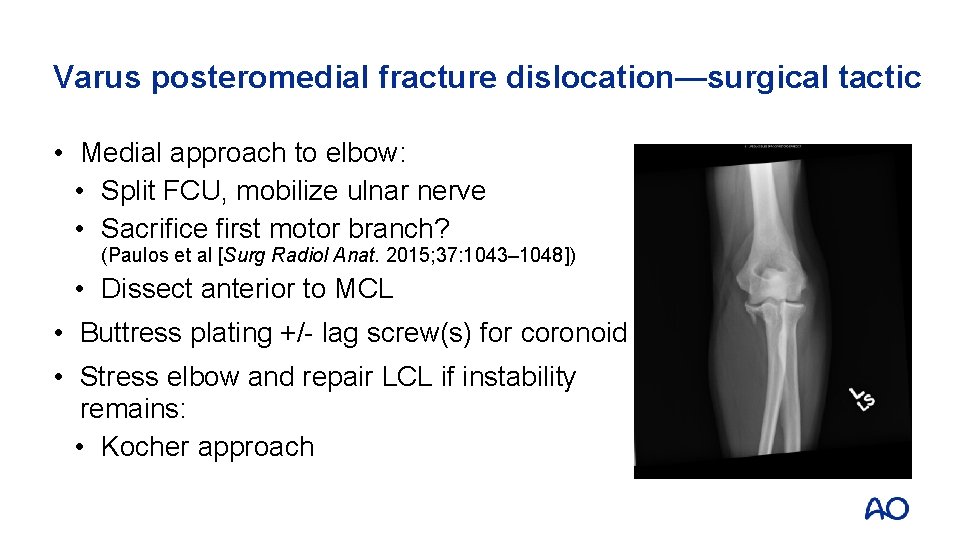
Varus posteromedial fracture dislocation—surgical tactic • Medial approach to elbow: • Split FCU, mobilize ulnar nerve • Sacrifice first motor branch? (Paulos et al [Surg Radiol Anat. 2015; 37: 1043– 1048]) • Dissect anterior to MCL • Buttress plating +/- lag screw(s) for coronoid • Stress elbow and repair LCL if instability remains: • Kocher approach
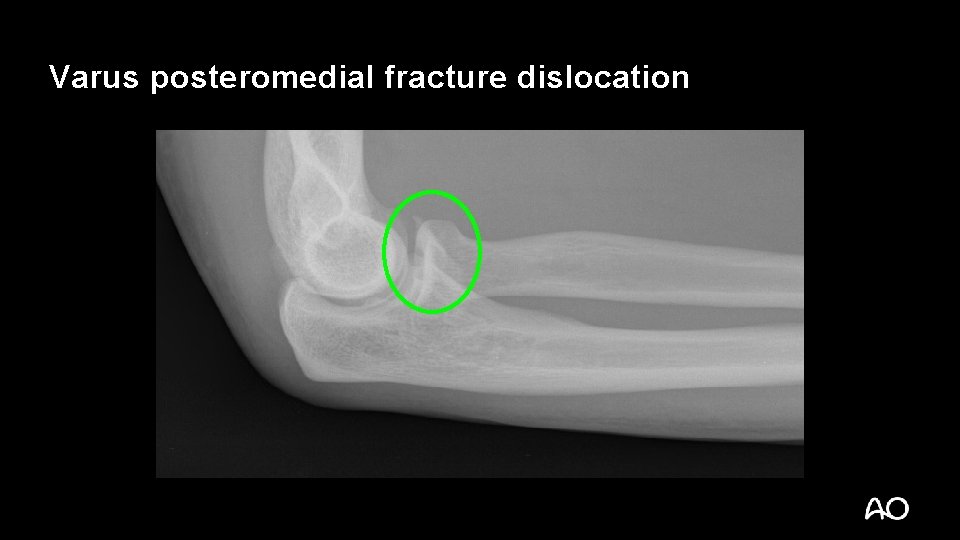
Varus posteromedial fracture dislocation
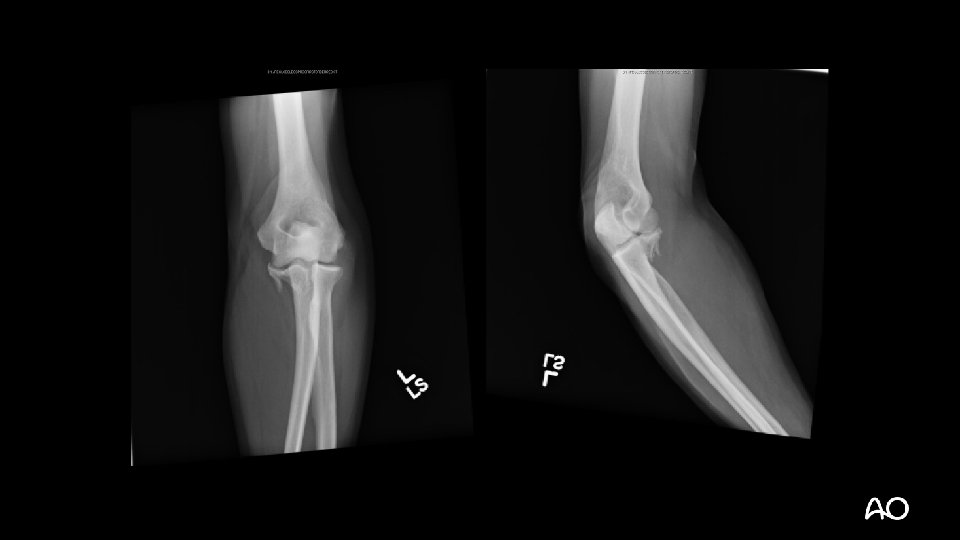
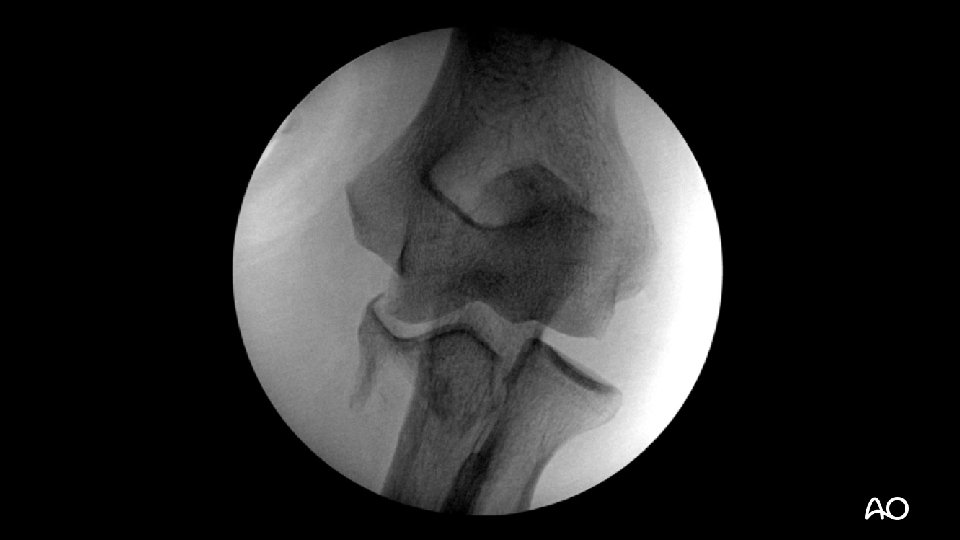
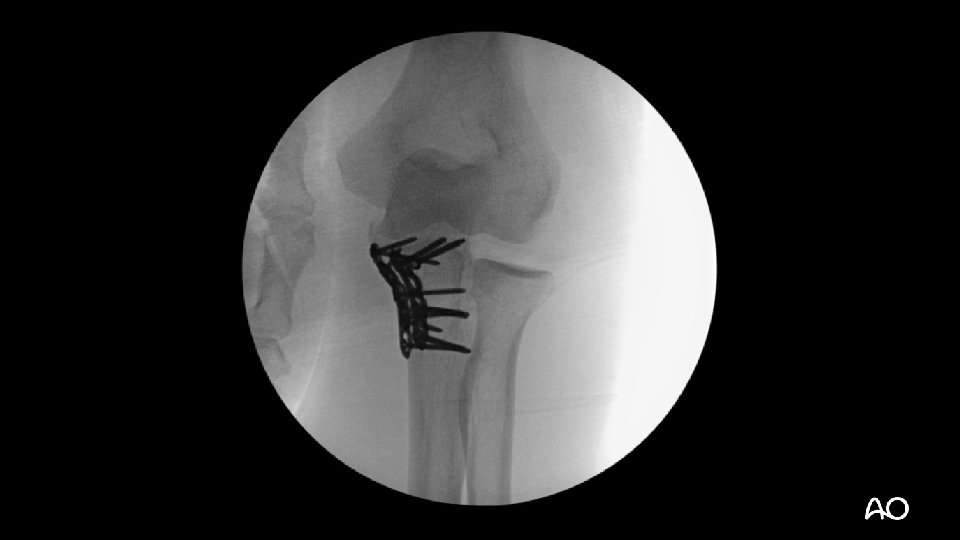
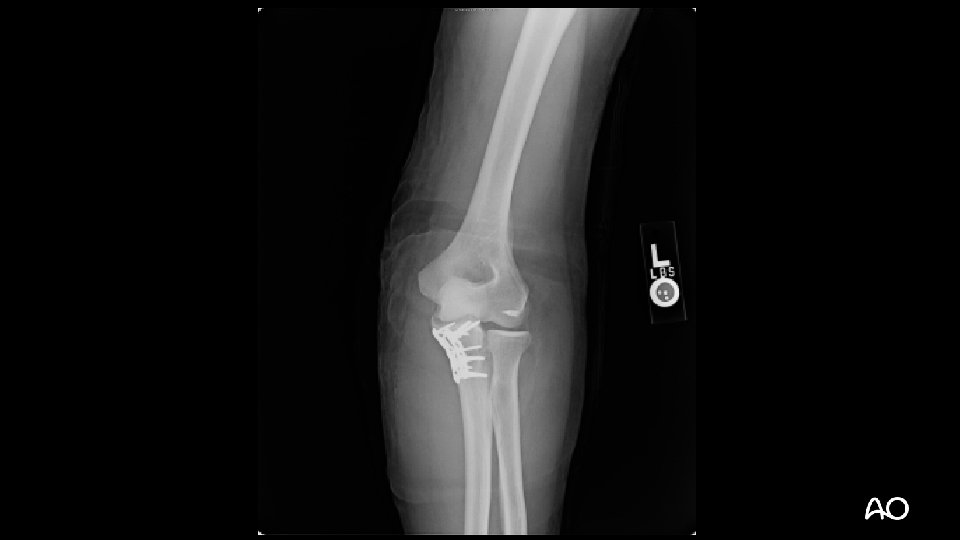
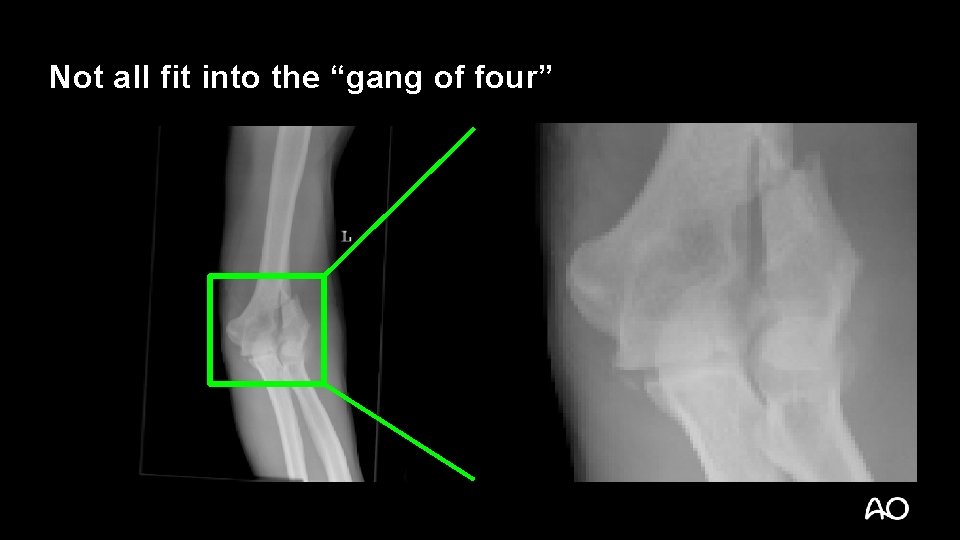
Not all fit into the “gang of four”
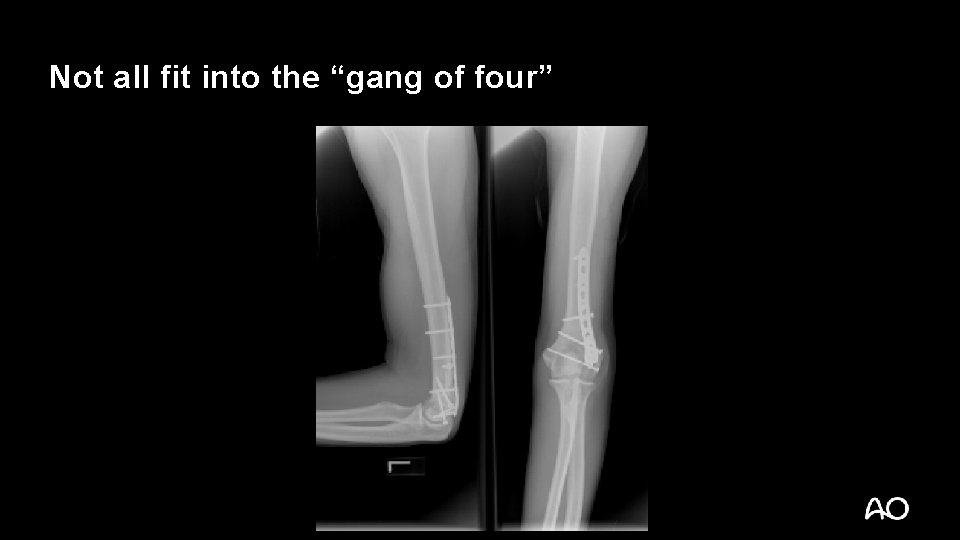
Not all fit into the “gang of four”
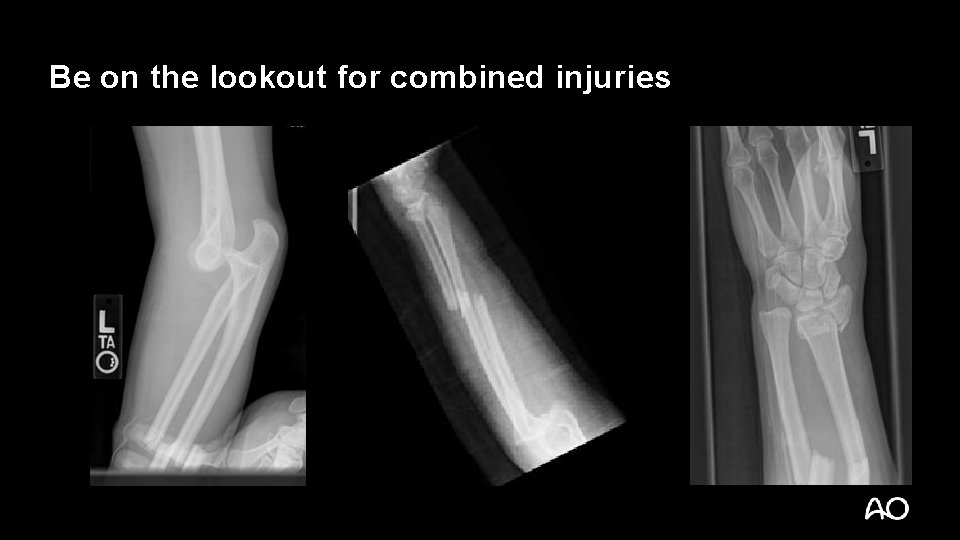
Be on the lookout for combined injuries
Take-home messages • Four main types of fracture dislocations (other odd ones exist too) • Look for subtle signs of complex elbow injuries • Create a surgical tactic that accomplishes your goal • DO NOTHING THAT INCREASES INSTABILITY— The radial head is more important than you may think
- Slides: 44