
Fracture and Failure Theory Defining Failure can be
Fracture and Failure Theory
Defining Failure can be defined in a variety of ways: n n n Unable to perform the to a given criteria Fracture Yielding …… ……
Failure of Structural Materials Yielding is often considered “impending failure” n n The deformations associated with yield provide a warning The service life is effectively ended if a materials yields under service, in most cases.
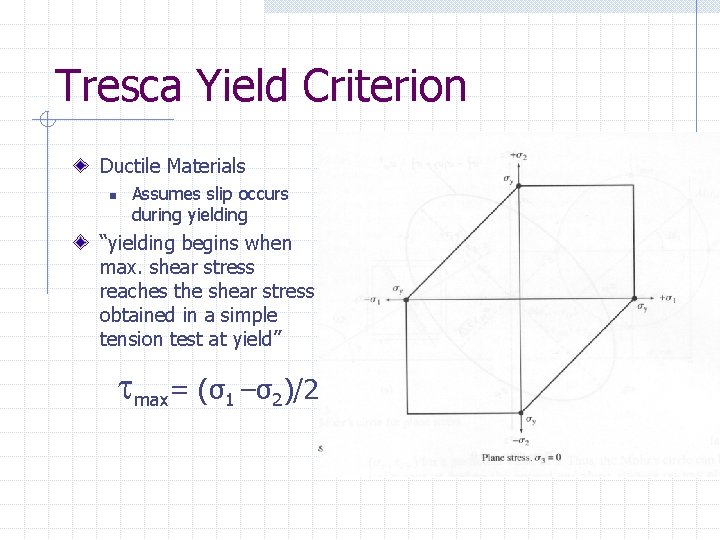
Tresca Yield Criterion Ductile Materials n Assumes slip occurs during yielding “yielding begins when max. shear stress reaches the shear stress obtained in a simple tension test at yield” tmax= (σ1 –σ2)/2
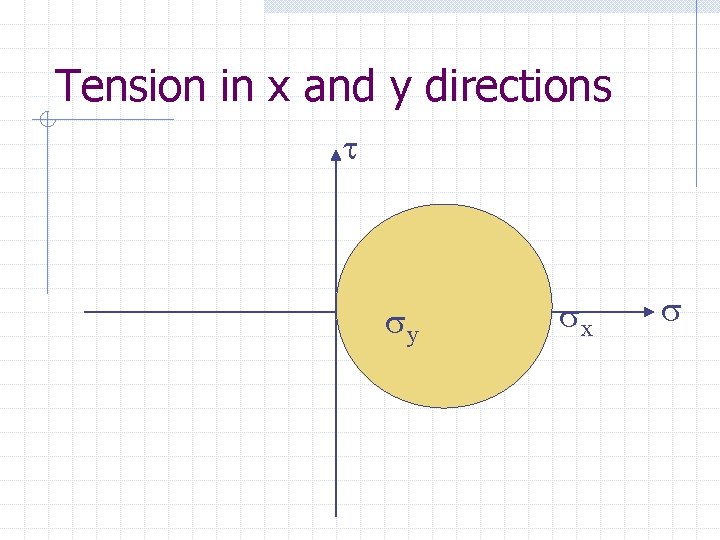
Tension in x and y directions t y x
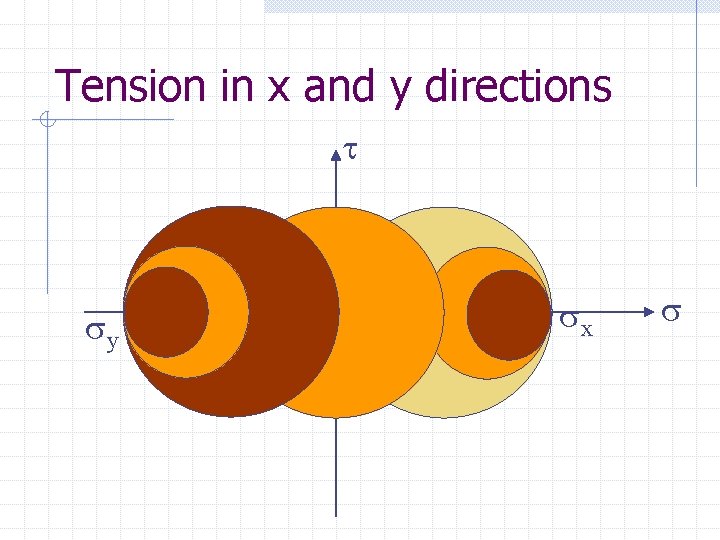
Tension in x and y directions t y x
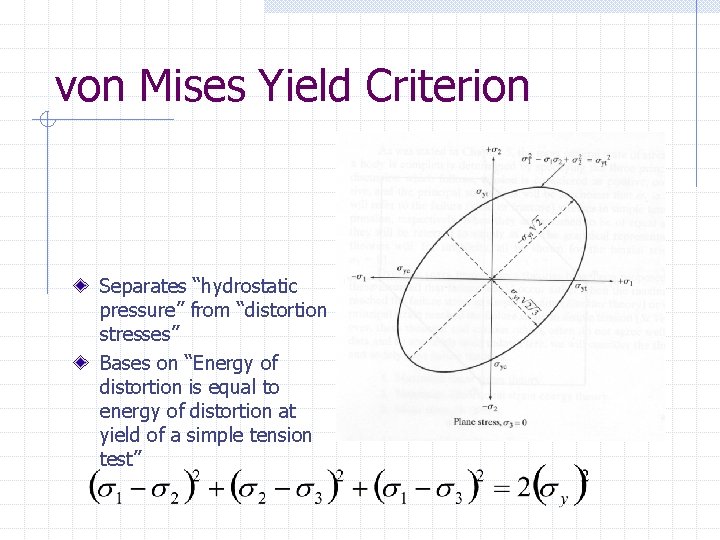
von Mises Yield Criterion Separates “hydrostatic pressure” from “distortion stresses” Bases on “Energy of distortion is equal to energy of distortion at yield of a simple tension test”
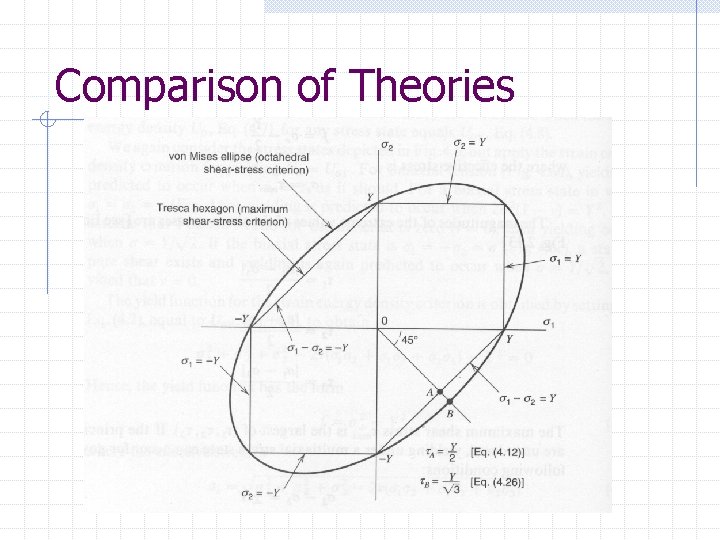
Comparison of Theories
Surface Energy and Fracture Energy required to generate new surfaces Griffith crack theory n Crack will propagate if elastic strain energy is equal to energy of newly created surface
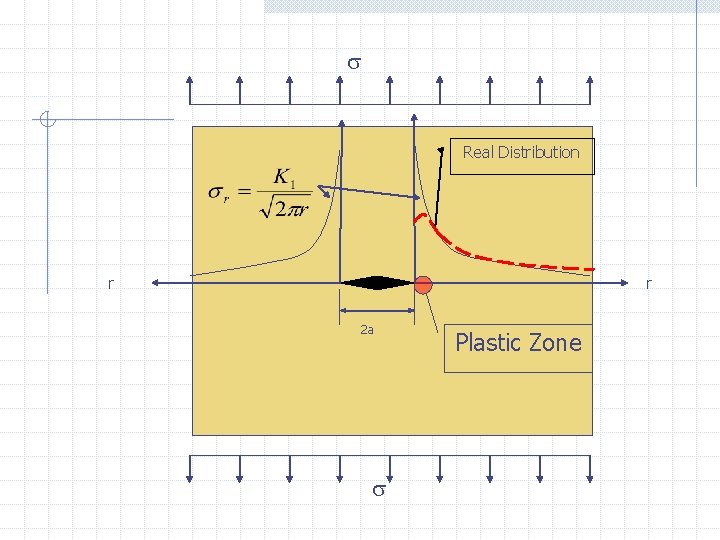
Real Distribution r r 2 a Plastic Zone
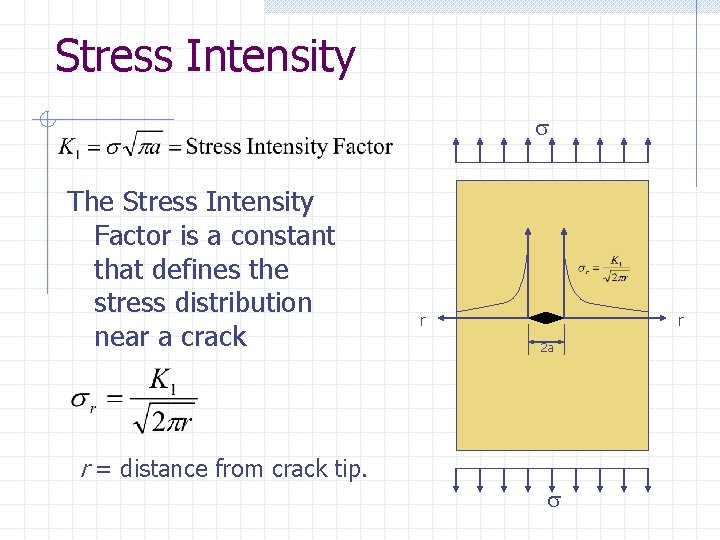
Stress Intensity The Stress Intensity Factor is a constant that defines the stress distribution near a crack r r 2 a r = distance from crack tip.
Fracture Toughness, KIc Fracture toughness, KIc n Material property w Used to predict the crack size that can be tolerated n n n c = KIc/(pa)1/2 KIc increases with thickness KIc decreases with temperature increase
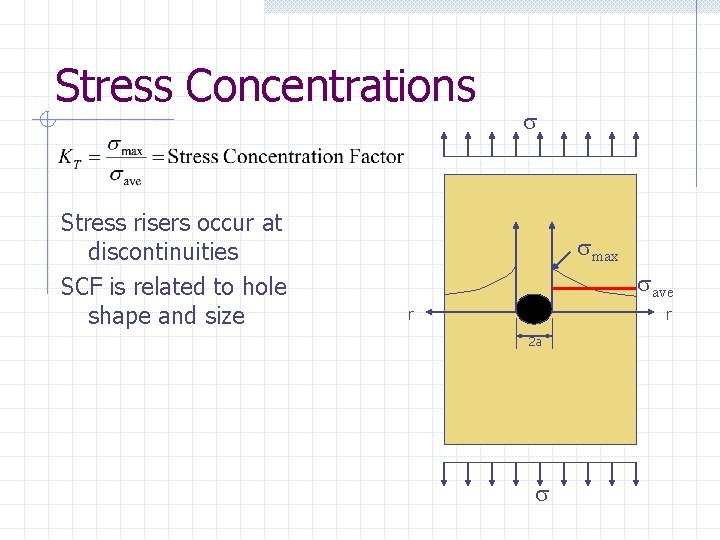
Stress Concentrations Stress risers occur at discontinuities SCF is related to hole shape and size max ave r r 2 a
- Slides: 13