
FRACTION S LESSON 1 Lets Learn About Fractions

FRACTION S LESSON 1

Let's Learn About Fractions Video
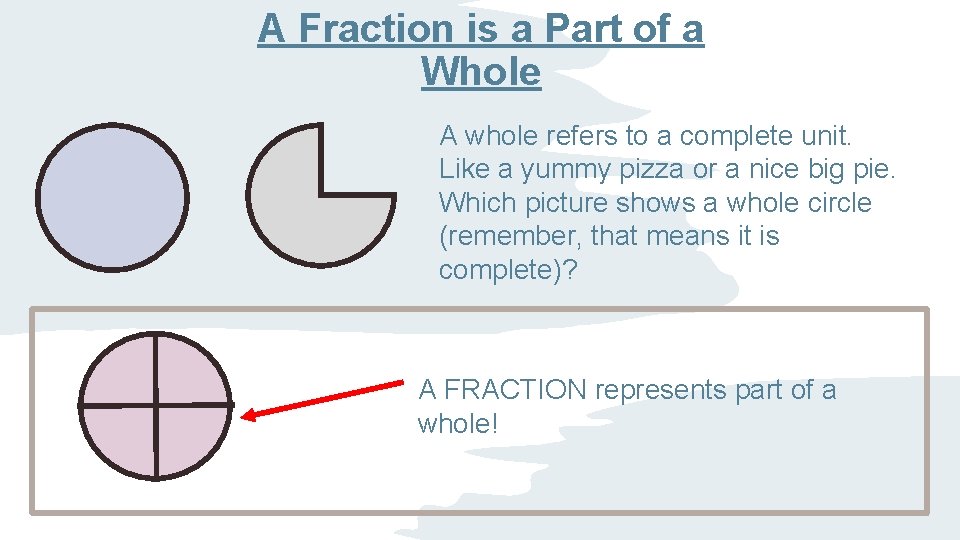
A Fraction is a Part of a Whole Click to add text A whole refers to a complete unit. Like a yummy pizza or a nice big pie. Which picture shows a whole circle (remember, that means it is complete)? A FRACTION represents part of a whole!
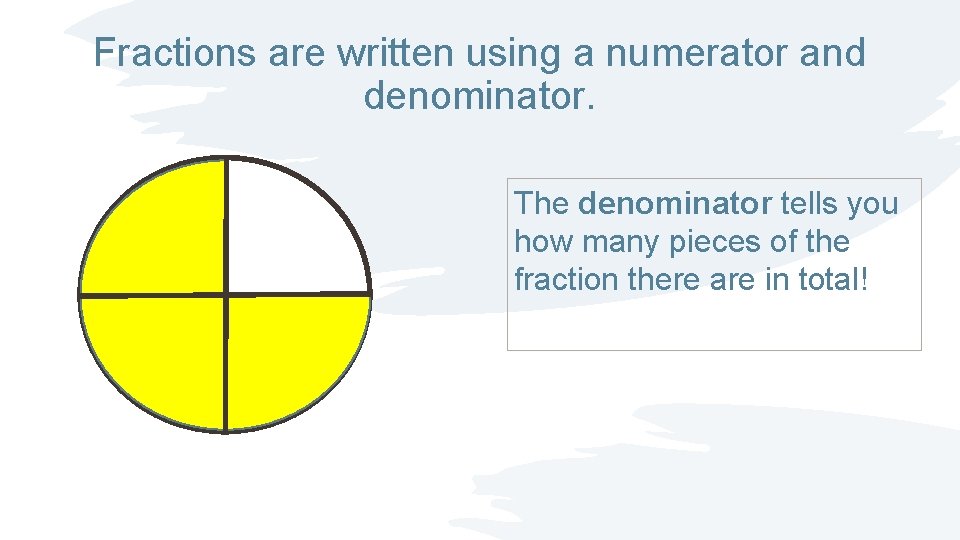
Fractions are written using a numerator and denominator. The denominator tells you how many pieces of the fraction there are in total!
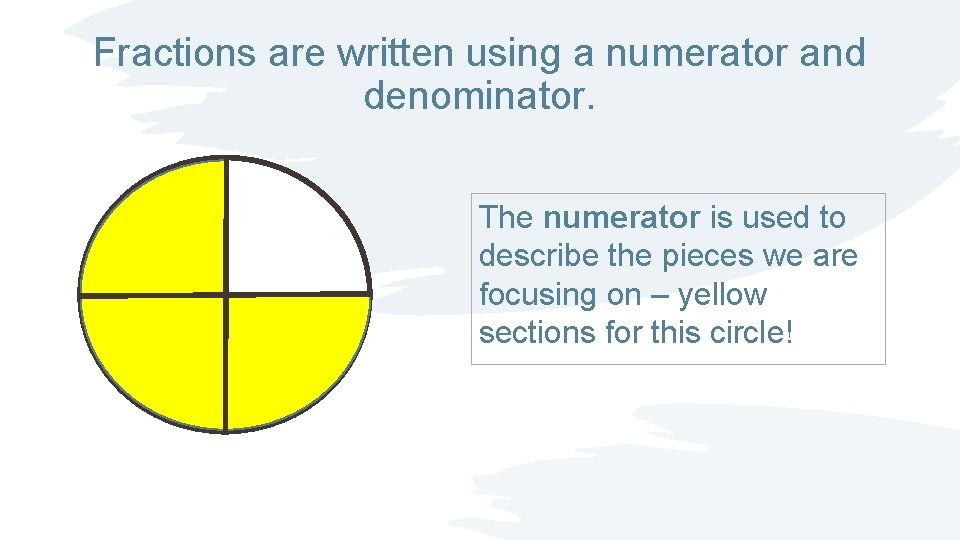
Fractions are written using a numerator and denominator. The numerator is used to describe the pieces we are focusing on – yellow sections for this circle!
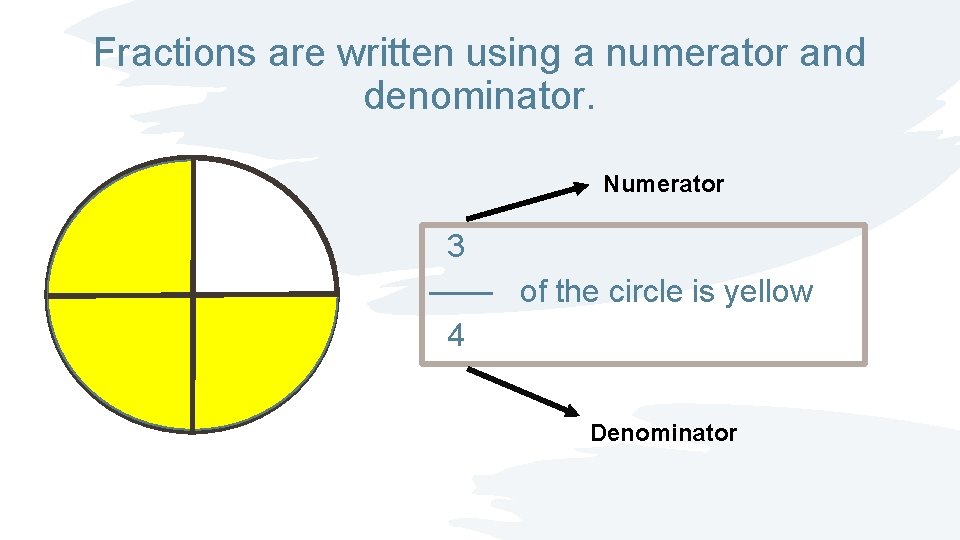
Fractions are written using a numerator and denominator. Numerator 3 —— of the circle is yellow 4 Denominator
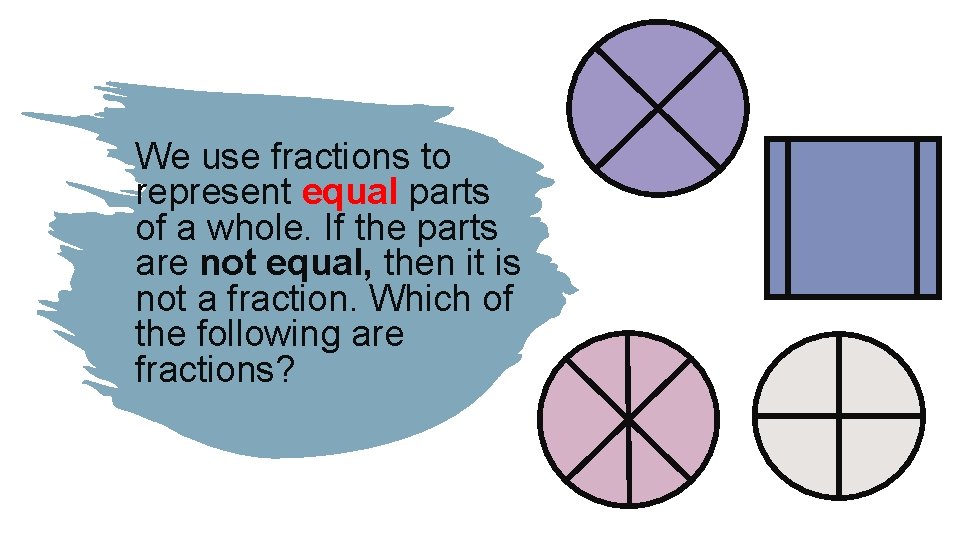
We use fractions to represent equal parts of a whole. If the parts are not equal, then it is not a fraction. Which of the following are fractions?
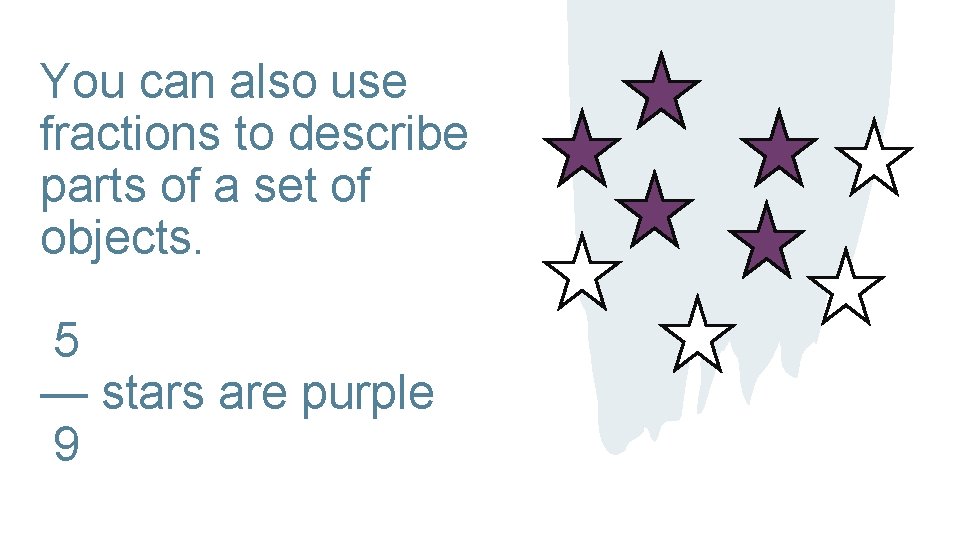
You can also use fractions to describe parts of a set of objects. 5 — stars are purple 9
Task: Play Rolling Fractions Game Directions: 1. Students take turns rolling the dice making fractions from two numbers rolled. For example, if you roll a 3 and 4, then the fraction is ¾. 2. Students colour in the parts on their game board. For ¾, students will colour in three pieces of the pie cut in fourths. 3. As students play, they will colour in all avaliable pieces. First player to colour in all the pieces on all of their pies wins! Materials: • 2 dice (6 sided) • Game board (see next slide) • Something to write with *Credit: Monti Parchman It's Elementary
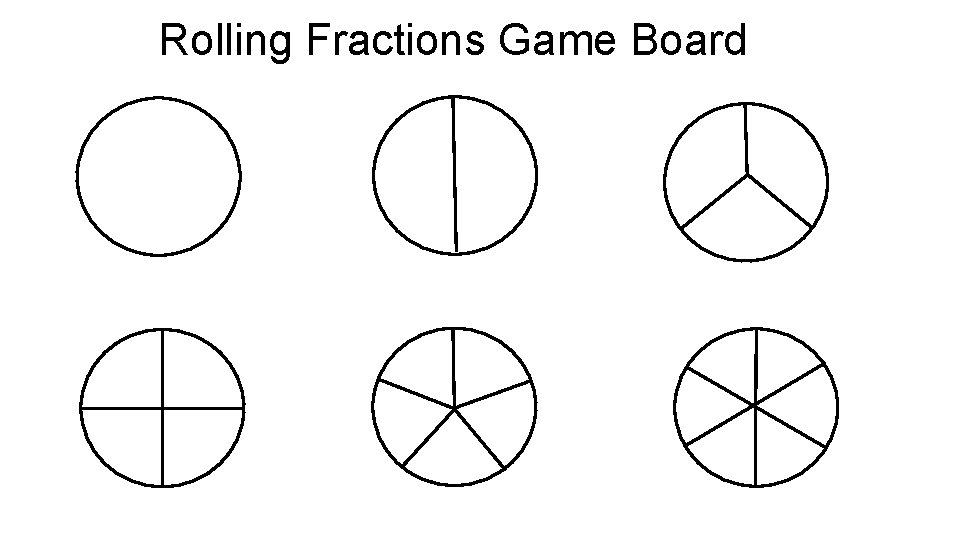
Rolling Fractions Game Board
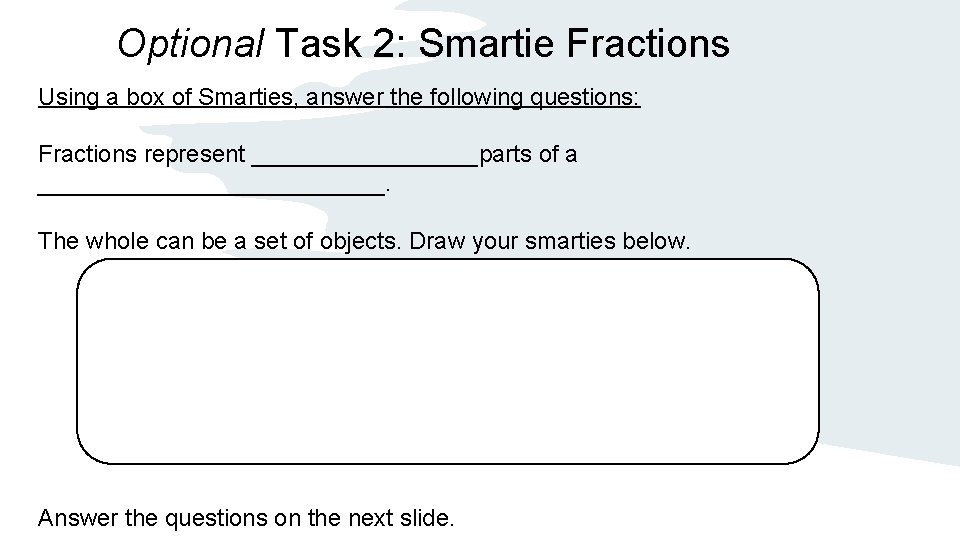
Optional Task 2: Smartie Fractions Using a box of Smarties, answer the following questions: Fractions represent _________parts of a _____________. The whole can be a set of objects. Draw your smarties below. Answer the questions on the next slide.
Optional Task 2: Smartie Fractions What fraction of each colour of smartie did you get? If you were to equally share your smarties with a partner, how many smarties would you each get? Write a division equation and draw a picture to prove your thinking.
- Slides: 12