
Fraction Flowchart Decisions and Actions in evaluating fraction
- Slides: 21
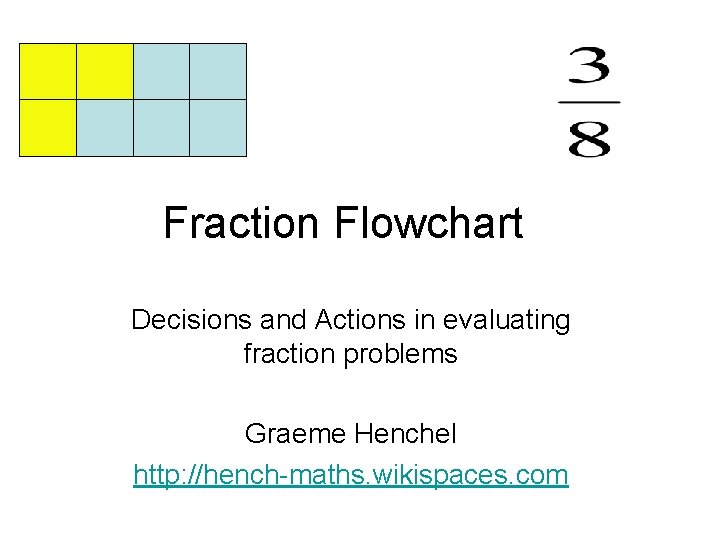
Fraction Flowchart Decisions and Actions in evaluating fraction problems Graeme Henchel http: //hench-maths. wikispaces. com
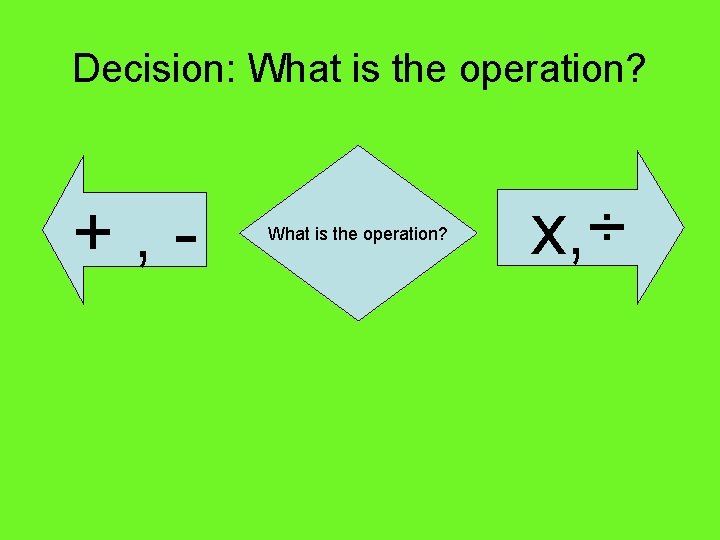
Decision: What is the operation? +, - What is the operation? x, ÷
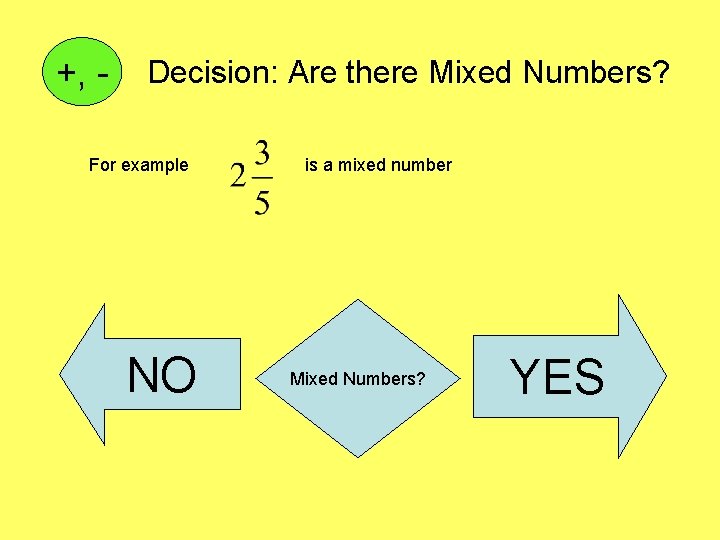
+, - Decision: Are there Mixed Numbers? For example NO is a mixed number Mixed Numbers? YES
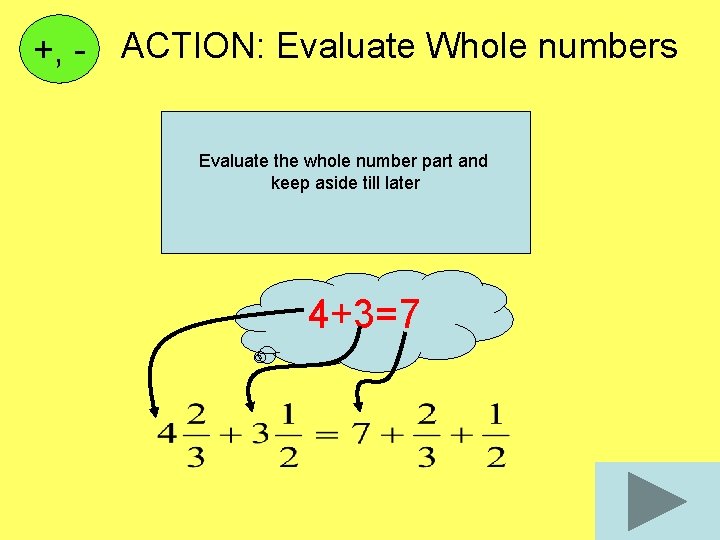
+, - ACTION: Evaluate Whole numbers Evaluate the whole number part and keep aside till later 4+3=7
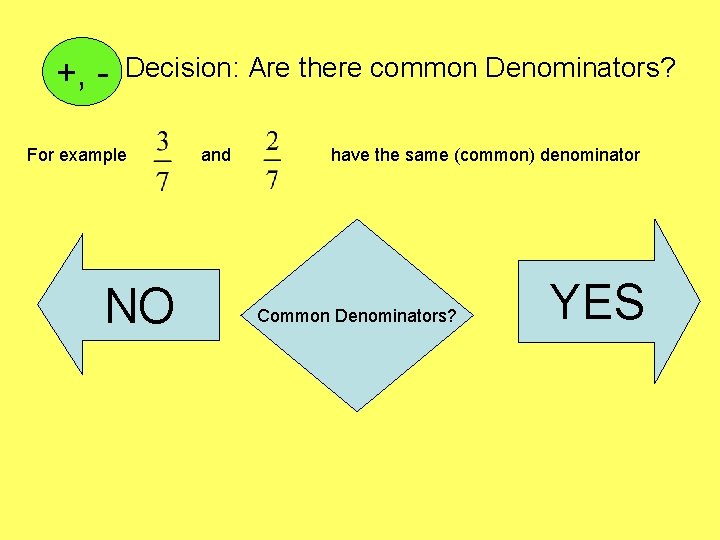
+, - Decision: Are there common Denominators? For example NO and have the same (common) denominator Common Denominators? YES
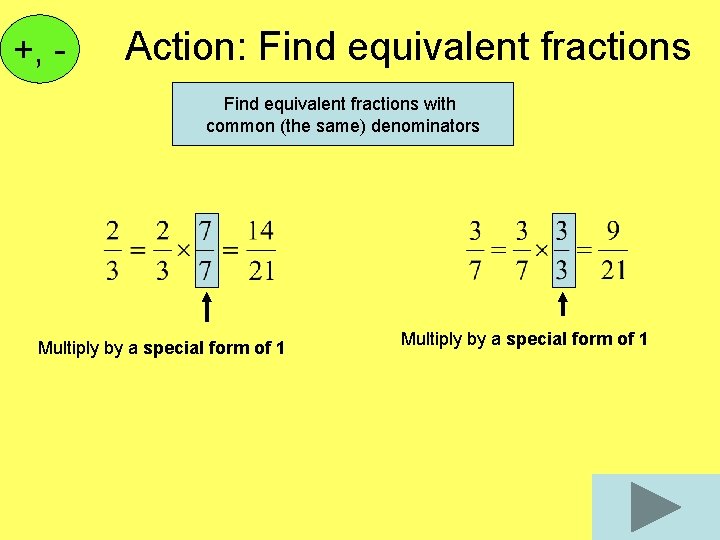
+, - Action: Find equivalent fractions with common (the same) denominators Multiply by a special form of 1
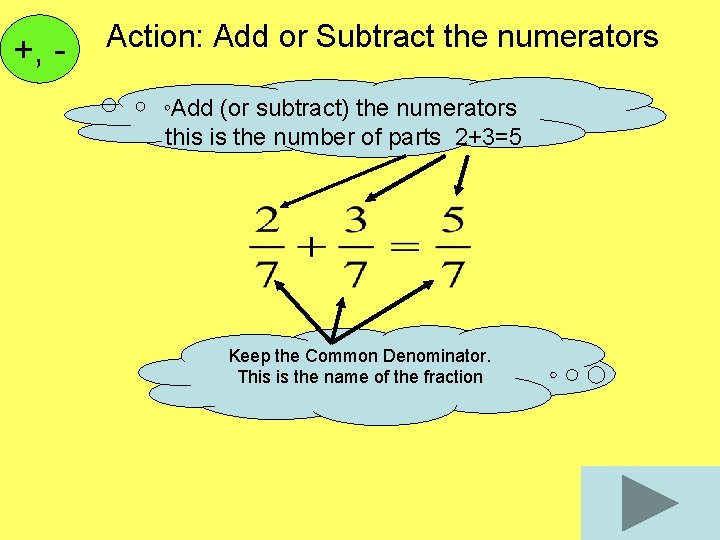
+, - Action: Add or Subtract the numerators Add (or subtract) the numerators this is the number of parts 2+3=5 Keep the Common Denominator. This is the name of the fraction
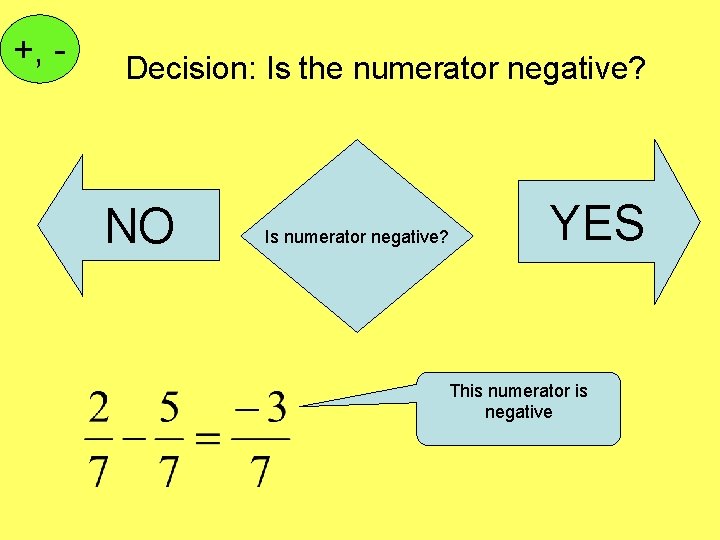
+, - Decision: Is the numerator negative? NO Is numerator negative? YES This numerator is negative
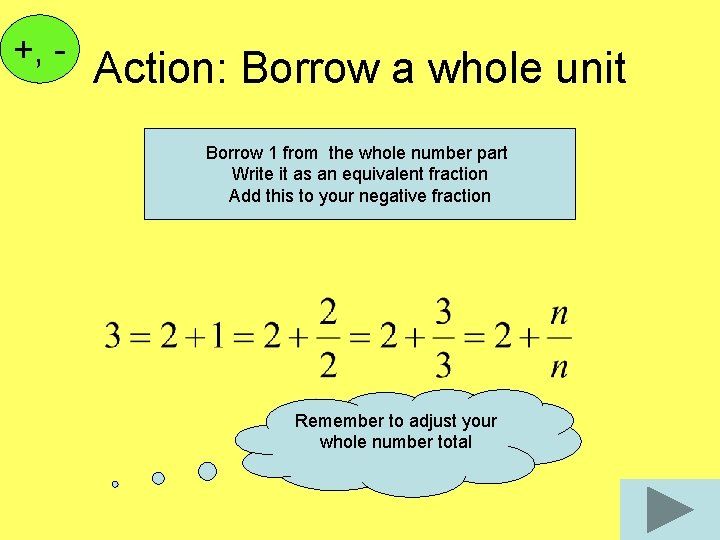
+, - Action: Borrow a whole unit Borrow 1 from the whole number part Write it as an equivalent fraction Add this to your negative fraction Remember to adjust your whole number total
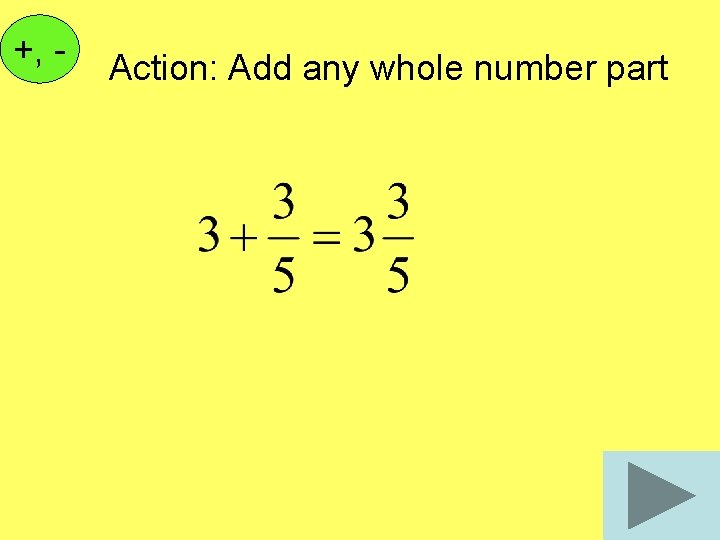
+, - Action: Add any whole number part
+, - That’s All Folks
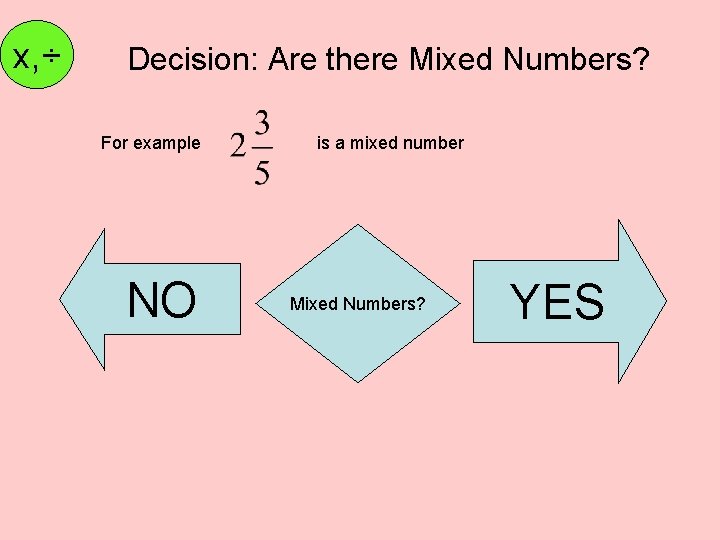
x, ÷ Decision: Are there Mixed Numbers? For example NO is a mixed number Mixed Numbers? YES
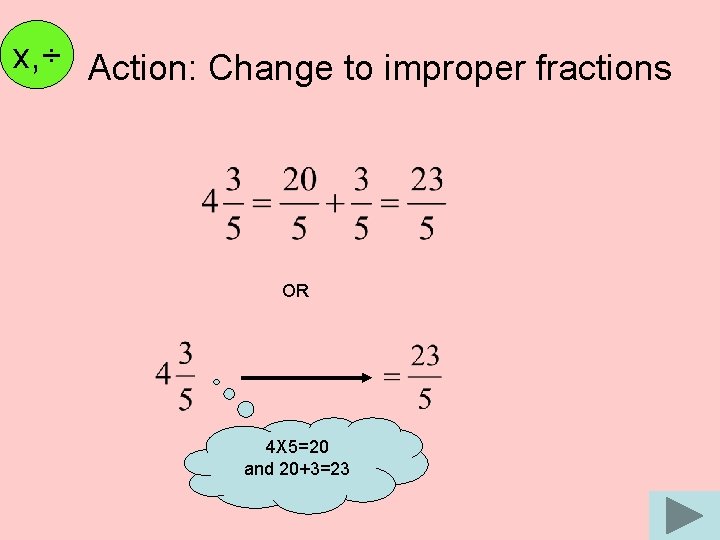
x, ÷ Action: Change to improper fractions OR 4 X 5=20 and 20+3=23
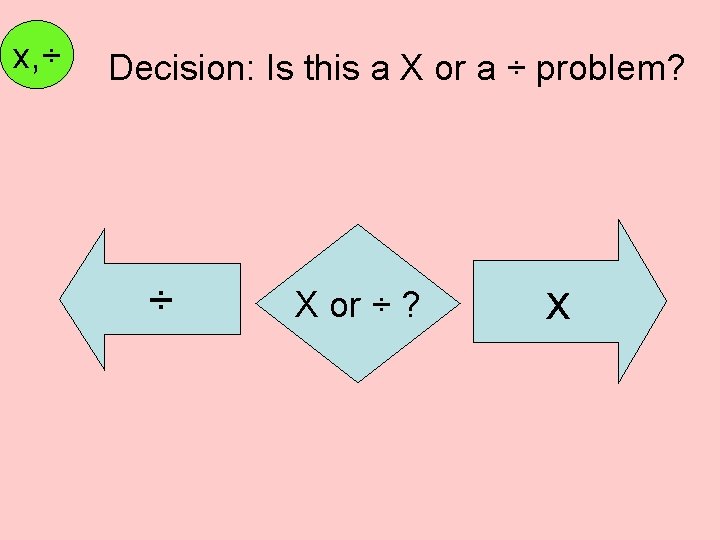
x, ÷ Decision: Is this a X or a ÷ problem? ÷ X or ÷ ? x
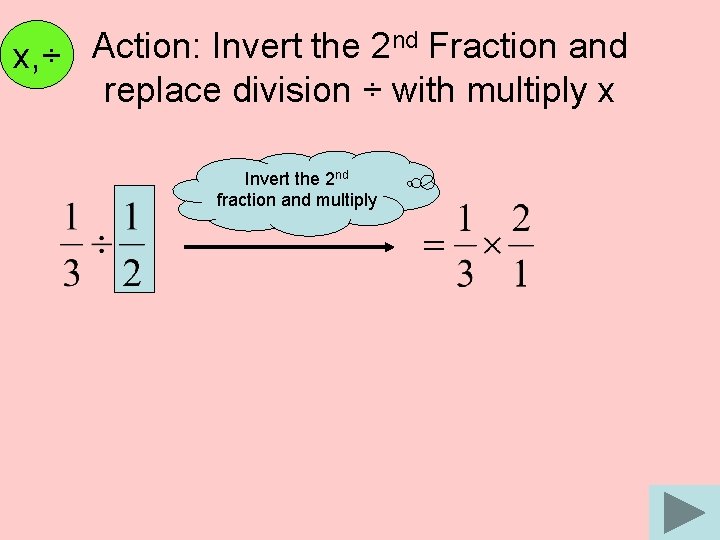
nd Fraction and Action: Invert the 2 x, ÷ replace division ÷ with multiply x Invert the 2 nd fraction and multiply
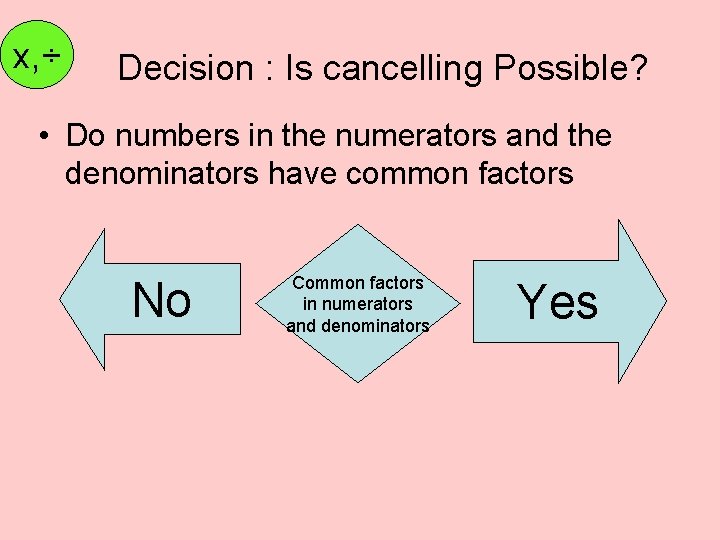
x, ÷ Decision : Is cancelling Possible? • Do numbers in the numerators and the denominators have common factors No Common factors in numerators and denominators Yes
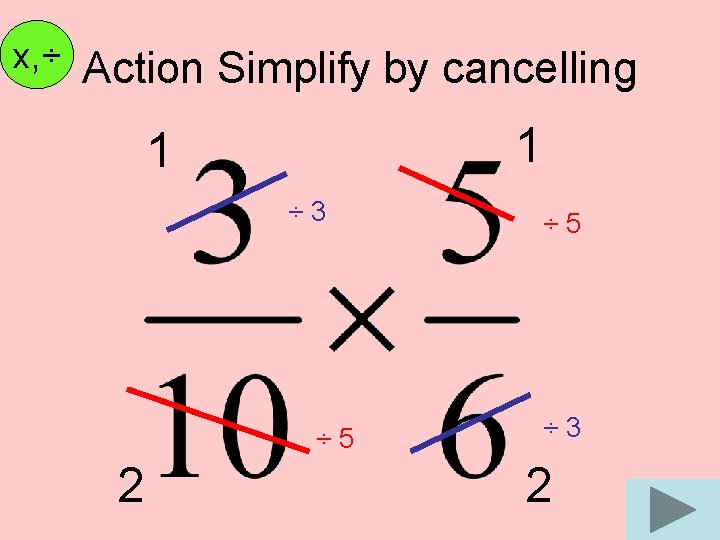
x, ÷ Action Simplify by cancelling 1 1 ÷ 3 ÷ 5 2 ÷ 5 ÷ 3 2
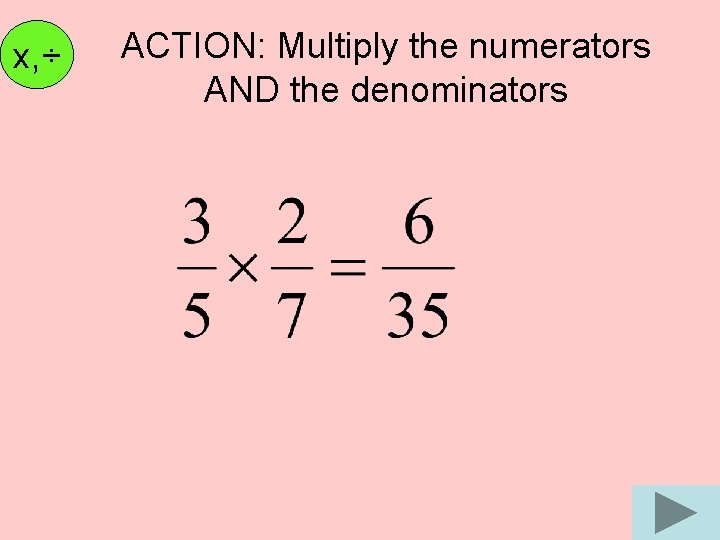
x, ÷ ACTION: Multiply the numerators AND the denominators
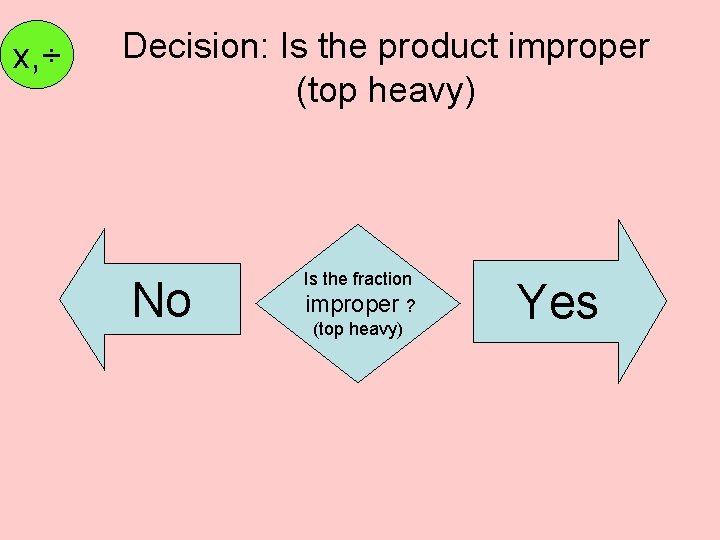
x, ÷ Decision: Is the product improper (top heavy) No Is the fraction improper ? (top heavy) Yes
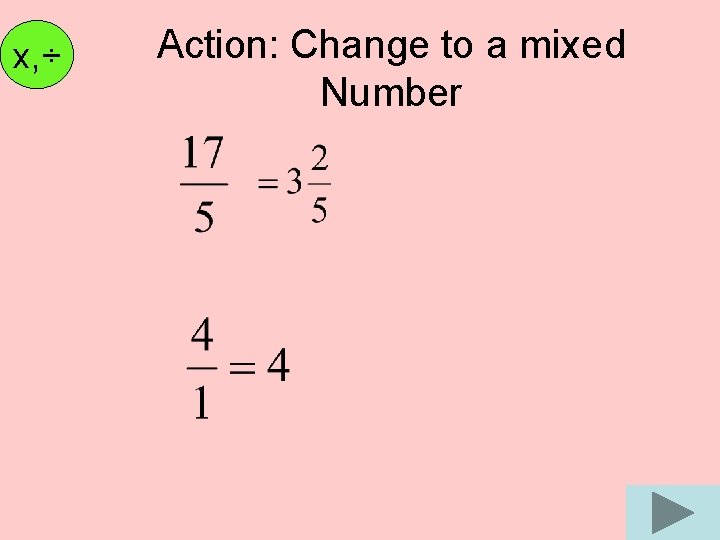
x, ÷ Action: Change to a mixed Number
x, ÷ That’s All Folks