
Fraction Confusion Methane gas Octane found in the
- Slides: 10
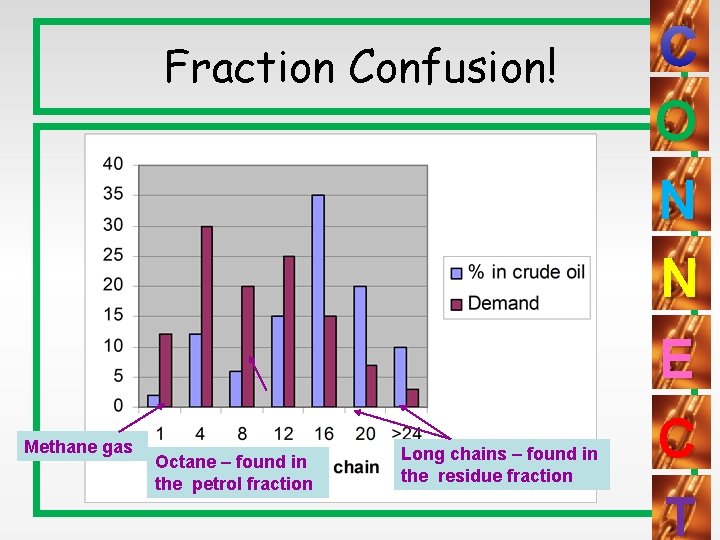
Fraction Confusion! Methane gas Octane – found in the petrol fraction Long chains – found in the residue fraction C O N N E C T
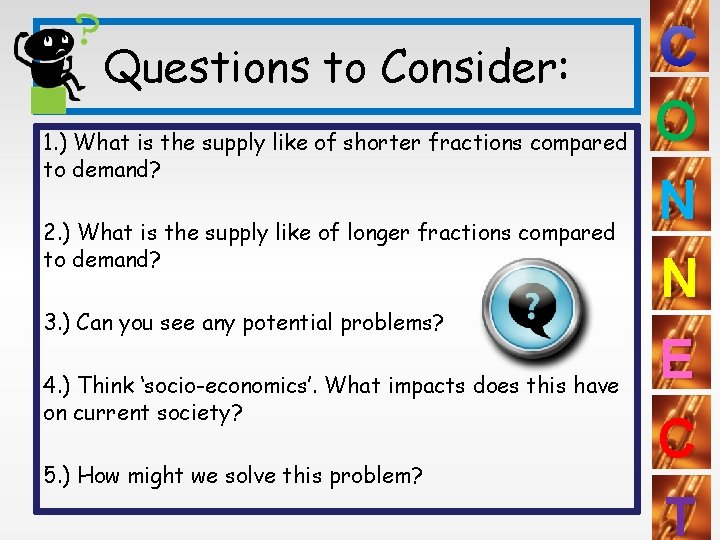
Questions to Consider: 1. ) What is the supply like of shorter fractions compared to demand? 2. ) What is the supply like of longer fractions compared to demand? 3. ) Can you see any potential problems? 4. ) Think ‘socio-economics’. What impacts does this have on current society? 5. ) How might we solve this problem? C O N N E C T
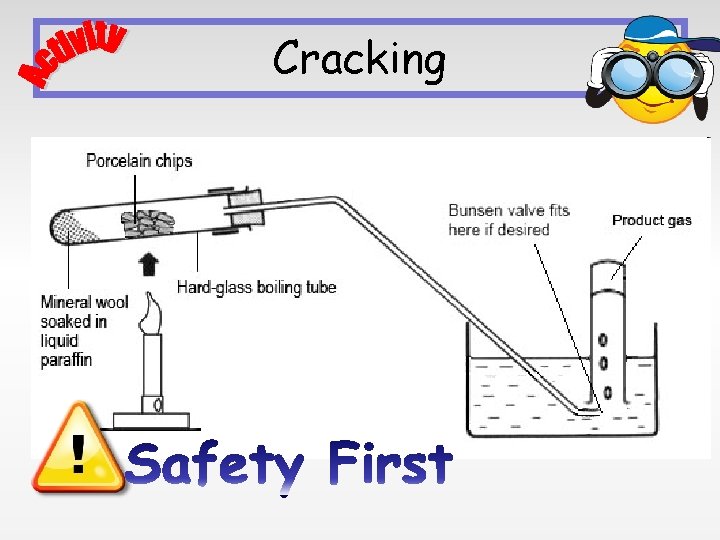
Cracking What To be able to describe how the cracking process is carried out. How To work as an effective participant to explain how demand for petrol is met. Why To be able to describe why the cracking process is necessary. Keywords: Alkanes Hydrocarbons Cracking Alkenes Catalyst
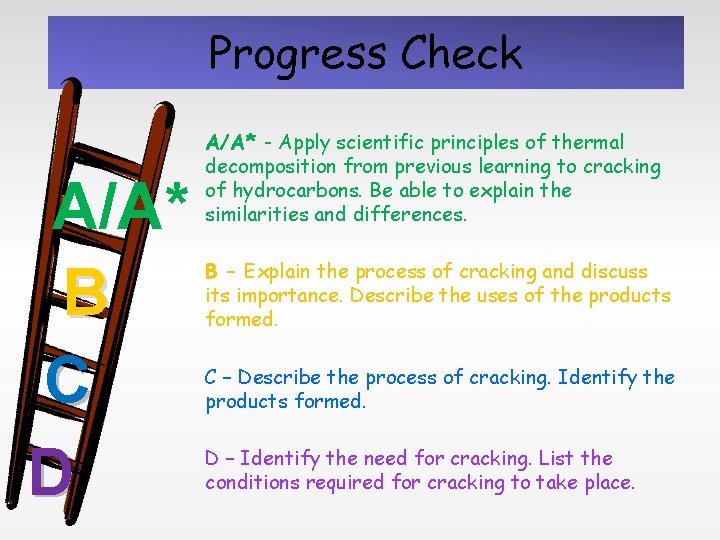
Progress Check A/A* B C D A/A* - Apply scientific principles of thermal decomposition from previous learning to cracking of hydrocarbons. Be able to explain the similarities and differences. B – Explain the process of cracking and discuss its importance. Describe the uses of the products formed. C – Describe the process of cracking. Identify the products formed. D – Identify the need for cracking. List the conditions required for cracking to take place.
Cracking
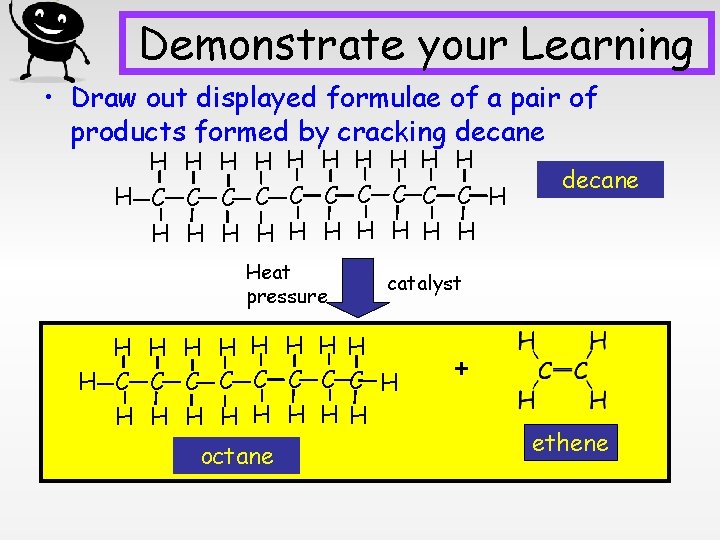
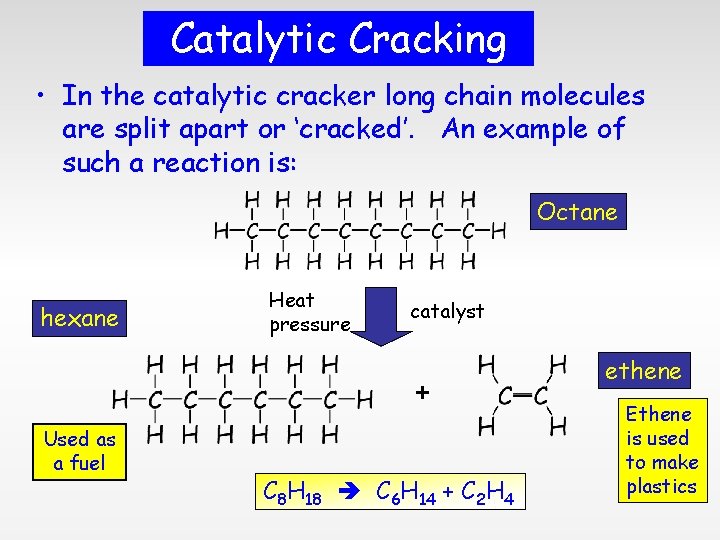
Demonstrate your Learning • Draw out displayed formulae of a pair of products formed by cracking decane H H H C C C C C H H Heat pressure catalyst H H H H H C C C C H H H H H octane decane + ethene
Review and Reflect New learning I already knew Questions I need to ask
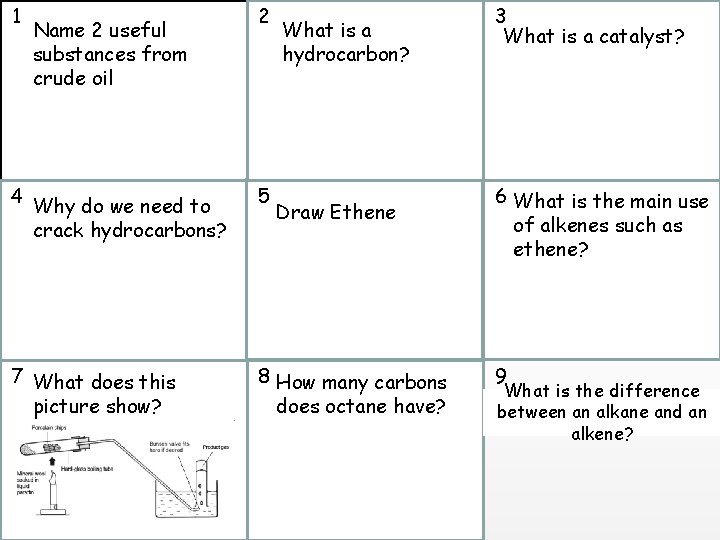
1 4 Name 2 useful substances from crude oil Why do we need to crack hydrocarbons? 7 What does this picture show? 2 5 What is a hydrocarbon? Draw Ethene 8 How many carbons does octane have? 3 What is a catalyst? 6 What is the main use of alkenes such as ethene? 9 What is the difference between an alkane and an alkene?
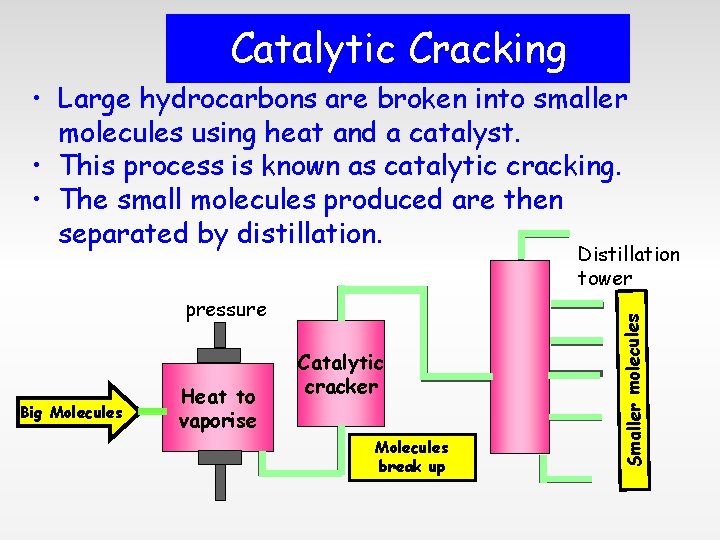
Catalytic Cracking • Large hydrocarbons are broken into smaller molecules using heat and a catalyst. • This process is known as catalytic cracking. • The small molecules produced are then separated by distillation. pressure Big Molecules Heat to vaporise Catalytic cracker Molecules break up Smaller molecules Distillation tower
Catalytic Cracking • In the catalytic cracker long chain molecules are split apart or ‘cracked’. An example of such a reaction is: Octane hexane Heat pressure catalyst + Used as a fuel C 8 H 18 C 6 H 14 + C 2 H 4 ethene Ethene is used to make plastics