
Fracking 101 Shale Gas and Tight Oil What


- Slides: 35
Fracking 101
Shale Gas and Tight Oil What are we talking about? • Shale -- a fine-grained, sedimentary rock characterized by breaks along thin laminae or parallel layering or bedding, with low porosity and permeability • Shale gas -- natural gas found trapped within shale formations • Tight oil (also known as liquids-rich shales) -- light crude oil contained in shales • Important facts: – The permeability of shales is very low – several orders of magnitude lower that construction-grade cement – Tight oil development uses the same technology as that contributing to the recent shale gas boom. – Without stimulation, most shales would not be economic to produce 2
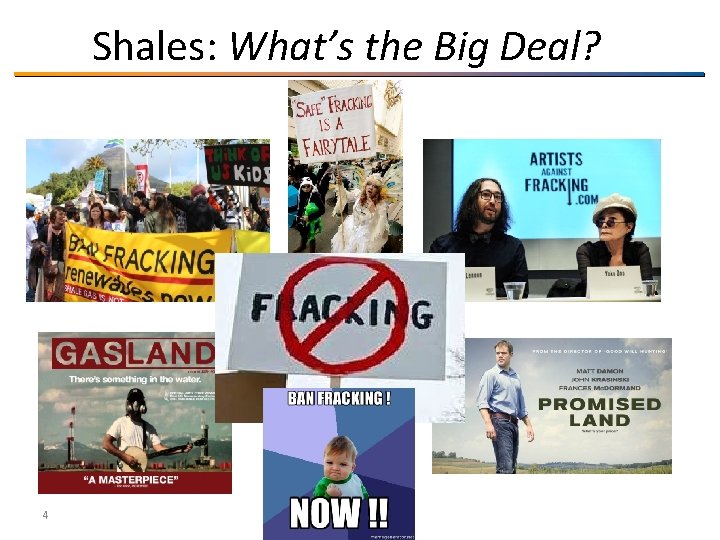
Shales: What’s the Big Deal? “Shale Gas is the most important energy development since the discovery of oil” Fred Julander, CEO of Julander Energy “Mission Critical: Can Shale Gas Save the World? ” ASPO, September 21, 2009 "Ample supplies, robust emerging markets and uncertainty about nuclear power all point to a prominent role for gas in [the] global energy mix. " International Energy Agency, World Energy Outlook 2011 “The United States may be close to self-sufficiency in energy by 2030 because of a "shale revolution" in the country. ” BP CEO Bob Dudley, January 17, 2013 “U. S. crude oil production on track to surpass imports for first time since 1995” Energy Information Administration, March 2013 Short-Term Energy Outlook. 3
Shales: What’s the Big Deal? 4
What is fracking? This is short for “hydrofracturing. ” This is an old technique for increasing oil production from worked-out oil wells, but a new technique for obtaining methane (natural gas).
“Fracking” – Bridging a Language Barrier • Industry defines “fracking” narrowly, to only include the days worth of activity stimulating the well • Opponents define it to include the entire process of shale oil and gas development – from well site identification to production well abandonment • This semantic difference has contributed to many misunderstandings between different stakeholders o Most cited environmental concerns had nothing to do with industry’s definition of “fracking” operations • 6 The characterization of “fracking” sets the terms of the discussion and debate.
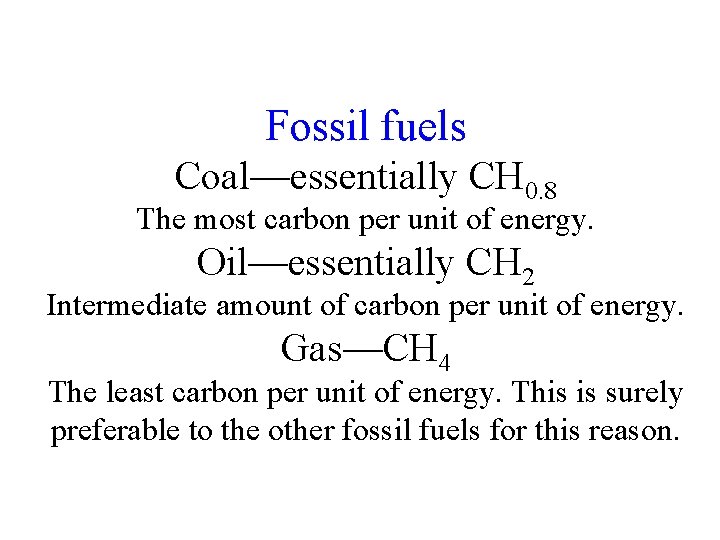
Fossil fuels Coal—essentially CH 0. 8 The most carbon per unit of energy. Oil—essentially CH 2 Intermediate amount of carbon per unit of energy. Gas—CH 4 The least carbon per unit of energy. This is surely preferable to the other fossil fuels for this reason.
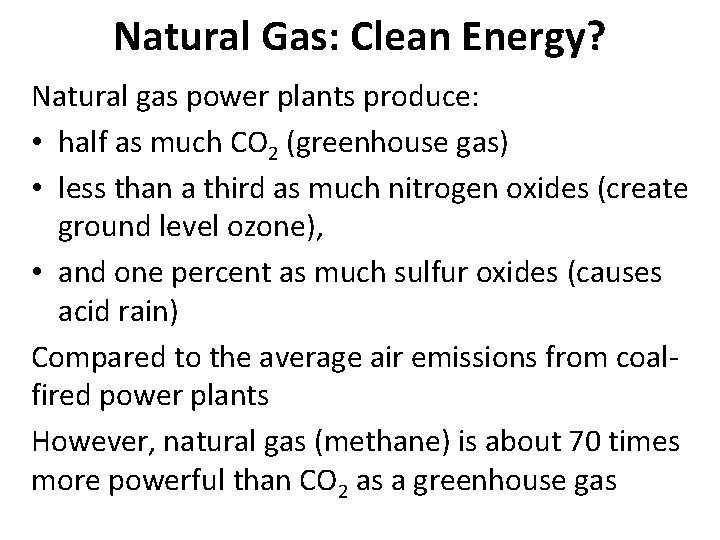
Natural Gas: Clean Energy? Natural gas power plants produce: • half as much CO 2 (greenhouse gas) • less than a third as much nitrogen oxides (create ground level ozone), • and one percent as much sulfur oxides (causes acid rain) Compared to the average air emissions from coalfired power plants However, natural gas (methane) is about 70 times more powerful than CO 2 as a greenhouse gas
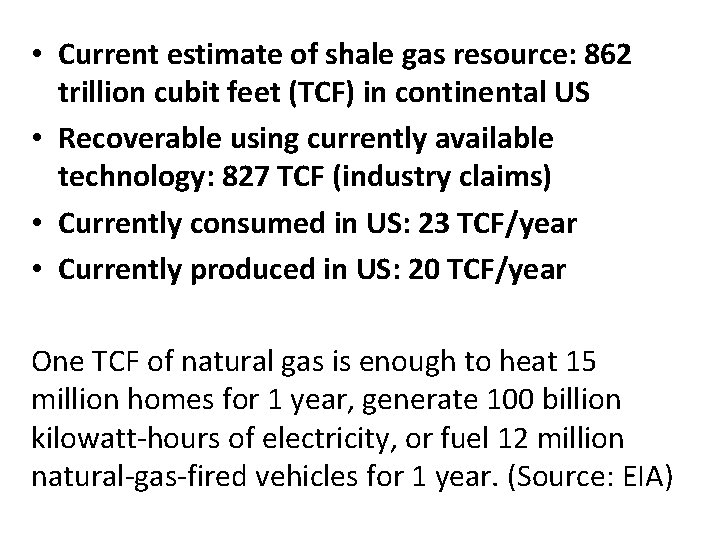
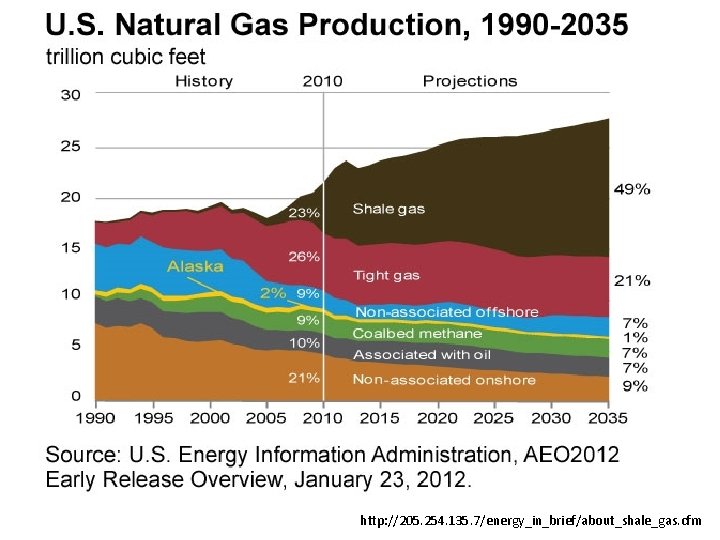
• Current estimate of shale gas resource: 862 trillion cubit feet (TCF) in continental US • Recoverable using currently available technology: 827 TCF (industry claims) • Currently consumed in US: 23 TCF/year • Currently produced in US: 20 TCF/year One TCF of natural gas is enough to heat 15 million homes for 1 year, generate 100 billion kilowatt-hours of electricity, or fuel 12 million natural-gas-fired vehicles for 1 year. (Source: EIA)
http: //205. 254. 135. 7/energy_in_brief/about_shale_gas. cfm
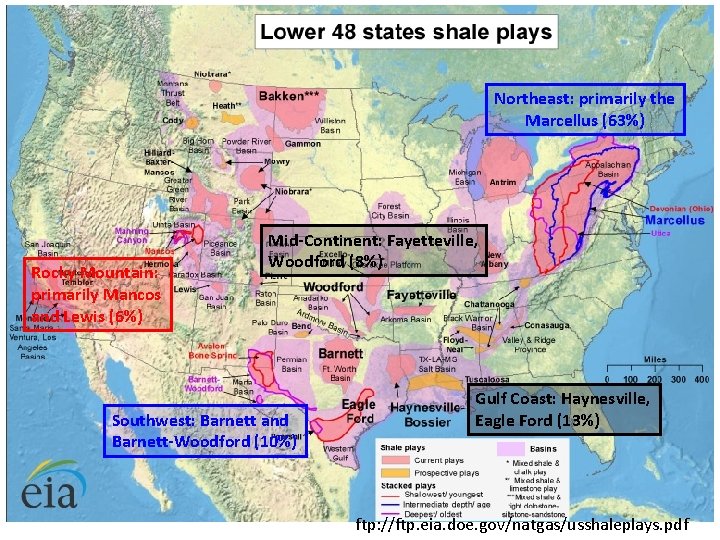
Northeast: primarily the Marcellus (63%) Rocky Mountain: primarily Mancos and Lewis (6%) Mid-Continent: Fayetteville, Woodford (8%) Southwest: Barnett and Barnett-Woodford (10%) Gulf Coast: Haynesville, Eagle Ford (13%) ftp: //ftp. eia. doe. gov/natgas/usshaleplays. pdf
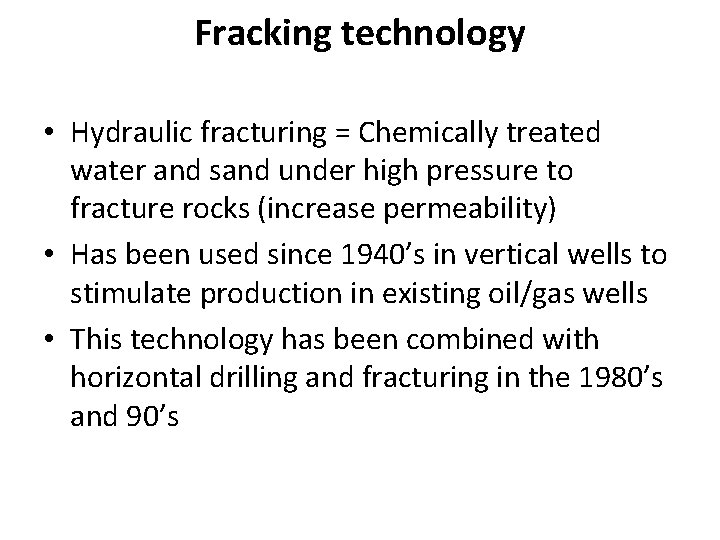
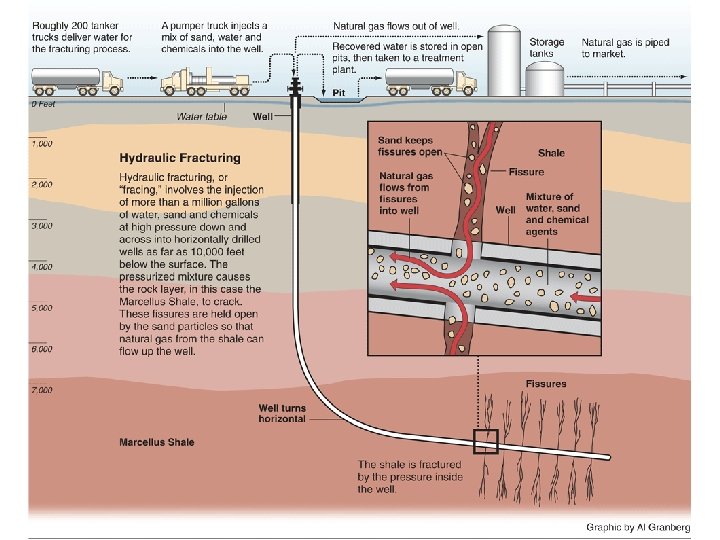
Fracking technology • Hydraulic fracturing = Chemically treated water and sand under high pressure to fracture rocks (increase permeability) • Has been used since 1940’s in vertical wells to stimulate production in existing oil/gas wells • This technology has been combined with horizontal drilling and fracturing in the 1980’s and 90’s
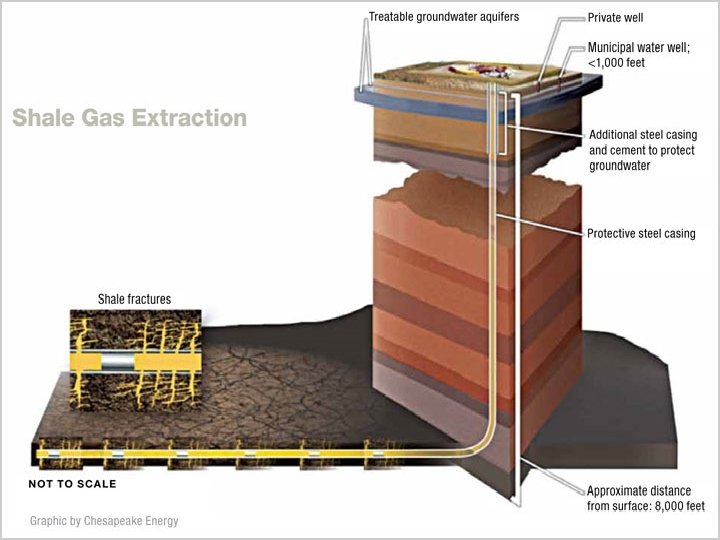
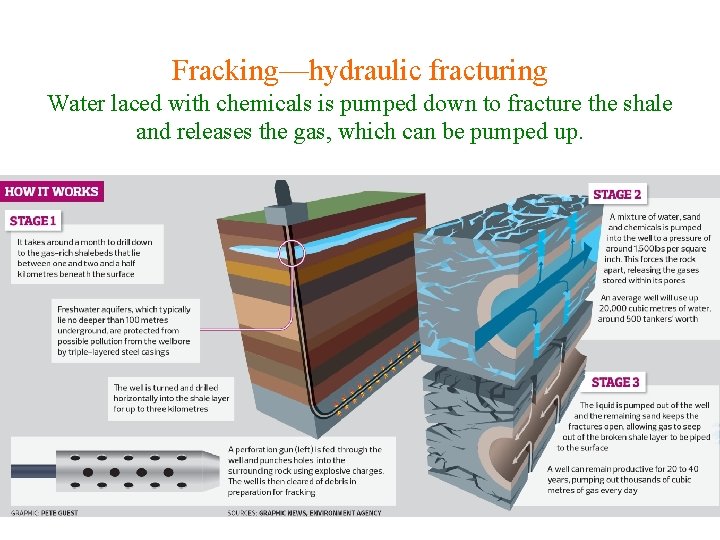
Fracking—hydraulic fracturing Water laced with chemicals is pumped down to fracture the shale and releases the gas, which can be pumped up.
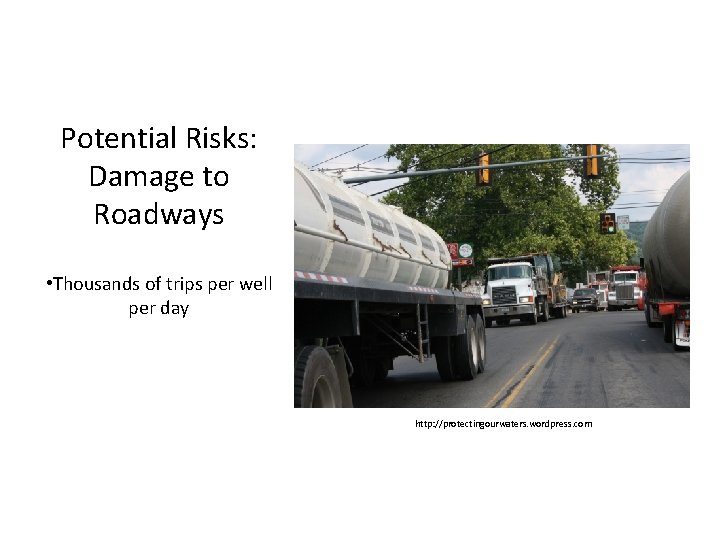
Potential Risks: Damage to Roadways • Thousands of trips per well per day http: //protectingourwaters. wordpress. com
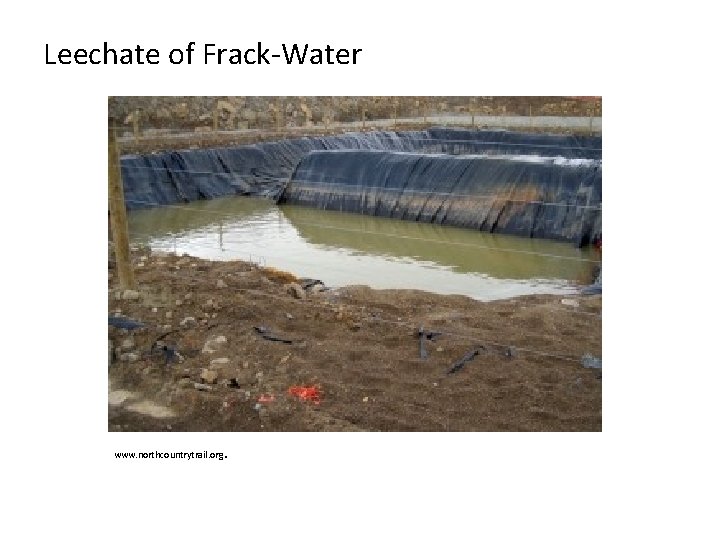
Leechate of Frack-Water . www. northcountrytrail. org
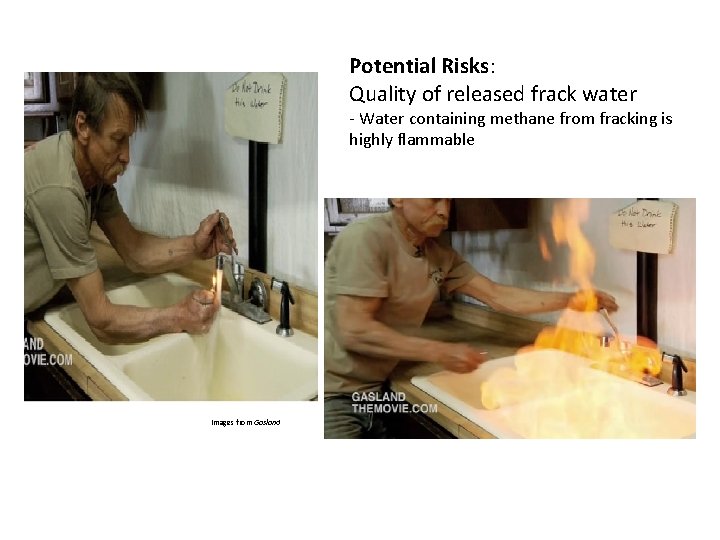
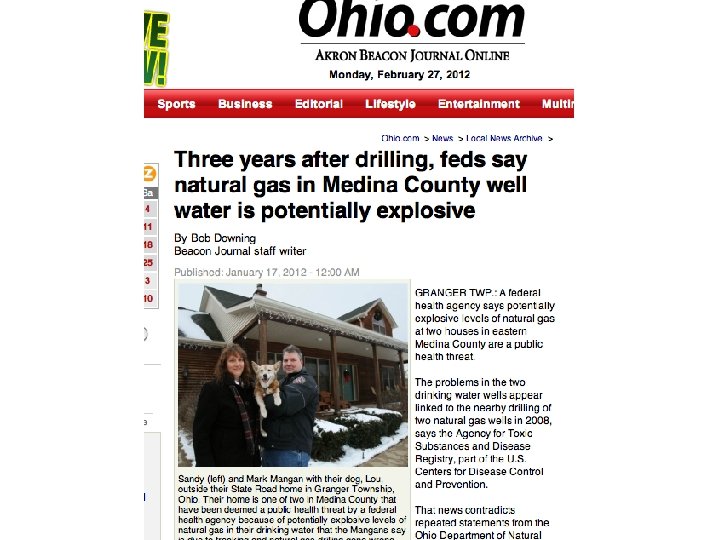
Potential Risks: Quality of released frack water - Water containing methane from fracking is highly flammable Images from Gasland
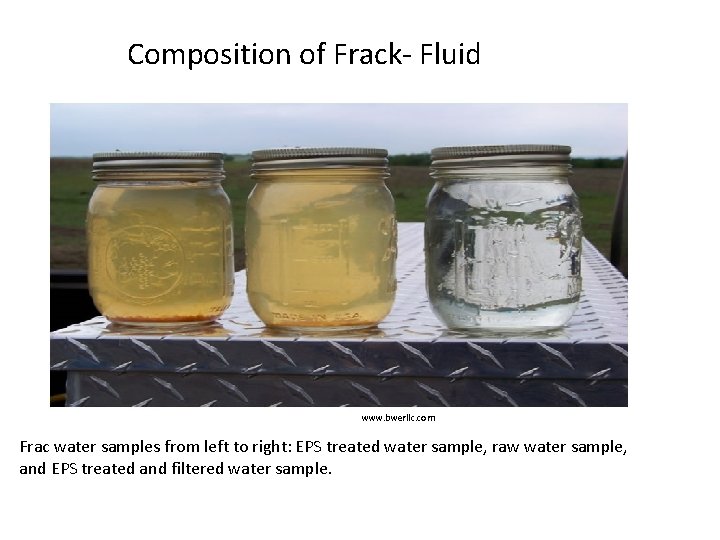
Composition of Frack- Fluid www. bwerllc. com Frac water samples from left to right: EPS treated water sample, raw water sample, and EPS treated and filtered water sample.
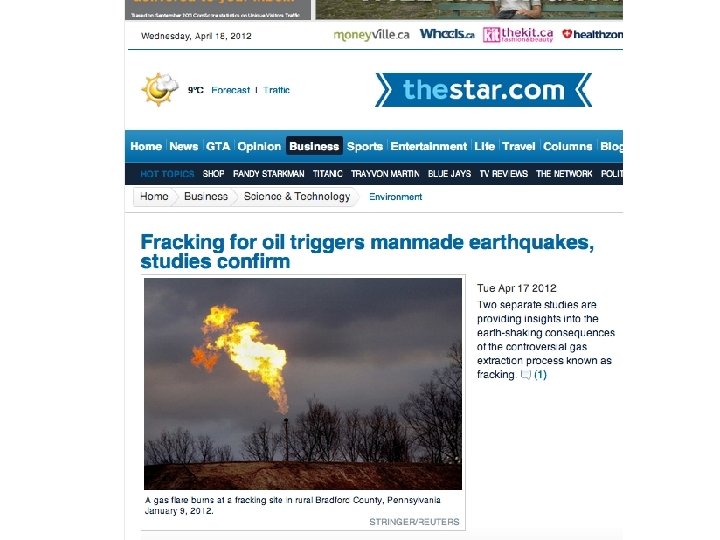
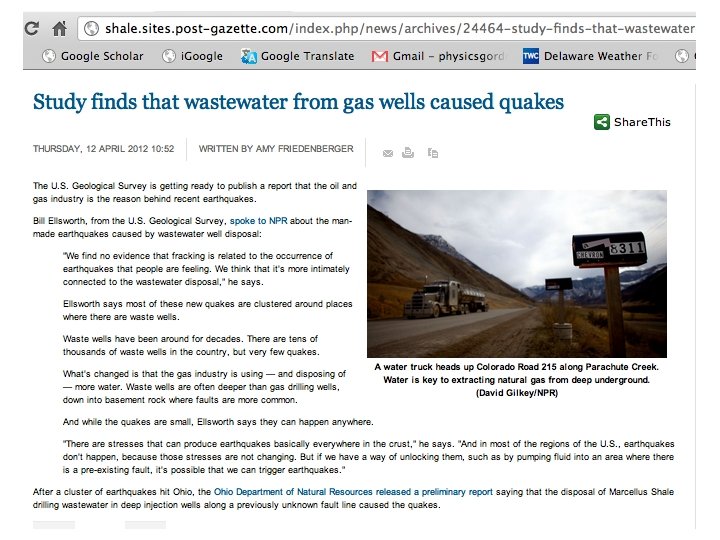
Potential Environmental Impacts of Shale Gas Development • Drill Pad Construction and Operation • Groundwater Contamination (most controversial issue) • Hydraulic Fracturing and Flowback Water Management (another controversial issue) • Blowouts and House Explosions • Water Consumption and Supply • Spill Management and Surface Water Protection • Small earthquakes from injecting fracking wastewaters in deep underground reservoirs (Youngstown, Ohio, December 31, 2011, 2. 7 and 4. 0 Richter Magnitude earthquakes possibly caused by injection fluids)
The controversy issue 1: Migration of fracture fluids (and/or methane) to aquifers • Industry says: No • It is not yet really evidence of fracturing understood how multiple fluids found in aquifers fractures from repeated fracking operations in the • It is highly unlikely/improbable that same site may interact fracture fluids can • How fractures may migrate through the interact with old oil wells, overlying rocks to the and pre-existing natural aquifers faults and fractures
The controversy issue 2: Groundwater contamination from additives in fracture fluids • Industry says: fracturing • fluids contain 90% water, 9. 5% sand or other particles, and less than 1% additives • ALL these additives are used in common • household products. Exposure is not unique to fracking chemicals Additives may include 2 BE (destroys red blood cells among other effects), naphthalene (probable carcinogen), and benzene (known carcinogen) 15, 000 – 60, 000 gallons of additives are needed for a single lateral
Flowback and Produced Water Management • After fracking, the injected fluid plus water from the shale is brought back up on surface for treatment, recycling, and/or disposal • This water contains saline water from the shale formation, fracking fluids, and arsenic • This can cause surface water contamination if not disposed/managed properly (spills) • Primarily disposed in injection wells (can cause earthquakes by lubricating faults) • Recycling and reusing this water will cut down the water consumed by fracking (see next slide)
Water use for fracking operations • Typically 4 to 6 million gallons per well “EPA estimated that if 35, 000 wells are hydraulically fractured annually in the US, the amount of water consumed would be equivalent to that used by 5 million people. ” • Source of water used from fracking operations varies, and is not well documented or monitored
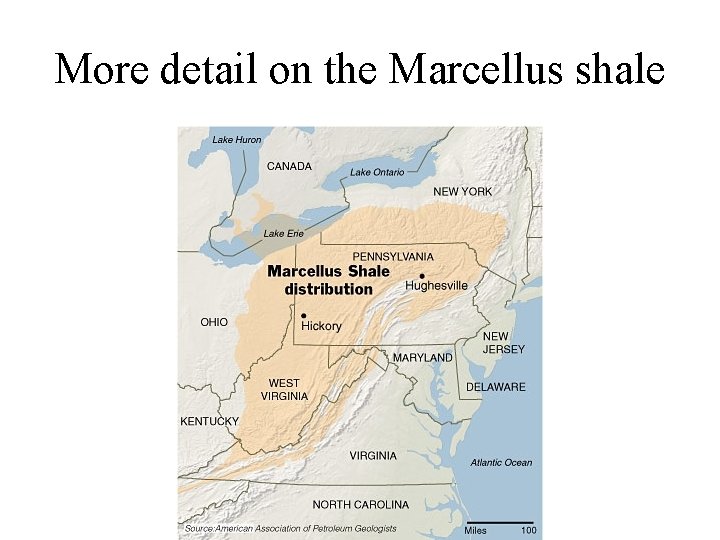
More detail on the Marcellus shale
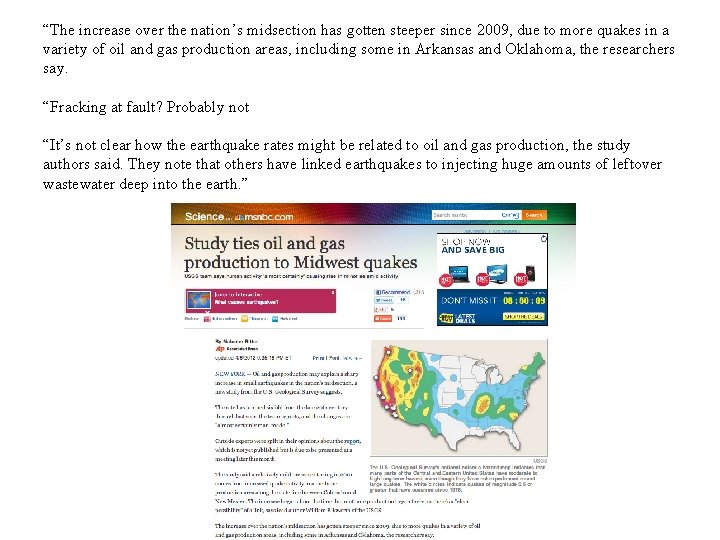
“The increase over the nation’s midsection has gotten steeper since 2009, due to more quakes in a variety of oil and gas production areas, including some in Arkansas and Oklahoma, the researchers say. “Fracking at fault? Probably not “It’s not clear how the earthquake rates might be related to oil and gas production, the study authors said. They note that others have linked earthquakes to injecting huge amounts of leftover wastewater deep into the earth. ”
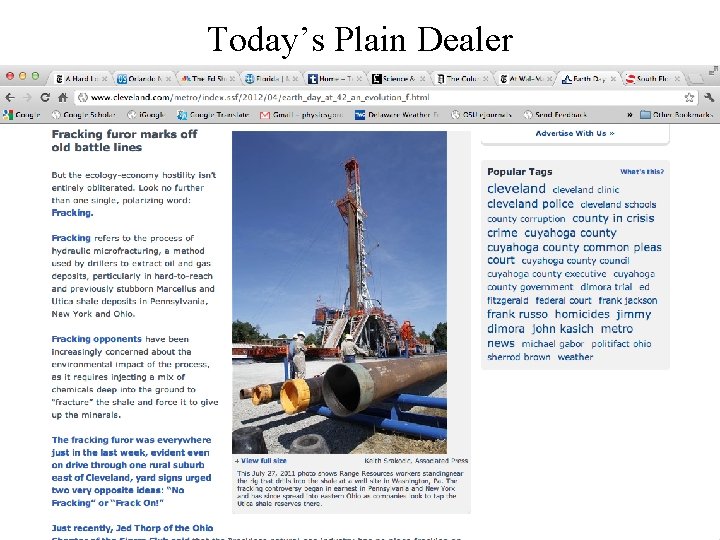
Today’s Plain Dealer
Conclusions • Sorting fact from fiction in the shale gas debate is difficult o This difficulty poses dilemmas for policy-makers and regulators • Conflicting environmental objectives complicate transparency and rational assessment o Reduce fossil fuel dependency at all costs vs. o Developing sound sustainable approaches to shale resource development • Ethical issues abound between and among critical considerations • Individual values can play a critical role in where one stands on this issue o And how they perceive the “facts” 35