
FPO book cover here Operations Management and Quality
FPO book cover here Operations Management and Quality Chapter 7 Copyright©© 2017 2012 Pearson. Education, Ltd. Inc. Copyright Publishing as Prentice Hall 7 -1
Introduction In this chapter we – explore the numerous ways companies align their operations processes with their business plans – discuss how these decisions contribute to a firm’s ability to create a high-quality product – discuss the many steps it takes to bring highquality goods and services to market Copyright©© 2017 2012 Pearson. Education, Ltd. Inc. Copyright Publishing as Prentice Hall 7 -2
Learning Objectives 1. Explain the meaning of operations and discuss the growth in the services and goods sectors of the U. S. economy. 2. Identify the three kinds of utility created by operations and the characteristics that distinguish service operations from goods production. 3. Explain how companies with different business strategies are best served by having different operations capabilities. Copyright©© 2017 2012 Pearson. Education, Ltd. Inc. Copyright Publishing as Prentice Hall 7 -3
Learning Objectives 4. Identify the major factors that are considered in operations planning. 5. Discuss the information contained in four kinds of operations schedules—the master operations schedule, detailed schedule, staff schedule, and project schedule. 6. Discuss the two key activities required for operations control. Copyright©© 2017 2012 Pearson. Education, Ltd. Inc. Copyright Publishing as Prentice Hall 7 -4
Learning Objectives 7. Identify the activities and underlying objectives involved in total quality management. 8. Explain how a supply chain strategy differs from traditional strategies for coordinating operations among firms. Copyright©© 2017 2012 Pearson. Education, Ltd. Inc. Copyright Publishing as Prentice Hall 7 -5
What Does Operations Mean Today? Operations (Production) – activities involved in making products — goods and services — for customers Copyright©© 2017 2012 Pearson. Education, Ltd. Inc. Copyright Publishing as Prentice Hall 7 -6
What Does Operations Mean Today? Service Operations (Service Production) – activities producing intangible and tangible products, such as entertainment, transportation, and education Goods Operations (Goods Production) – activities producing tangible products, such as radios, newspapers, buses, and textbooks Copyright©© 2017 2012 Pearson. Education, Ltd. Inc. Copyright Publishing as Prentice Hall 7 -7
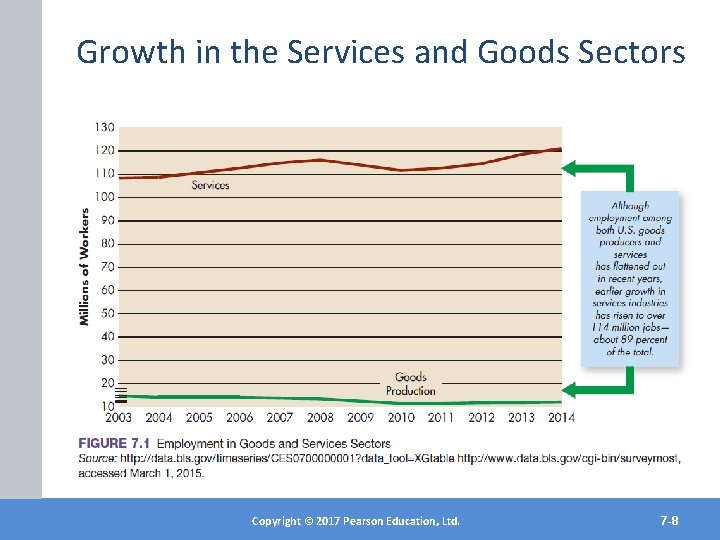
Growth in the Services and Goods Sectors Copyright©© 2017 2012 Pearson. Education, Ltd. Inc. Copyright Publishing as Prentice Hall 7 -8
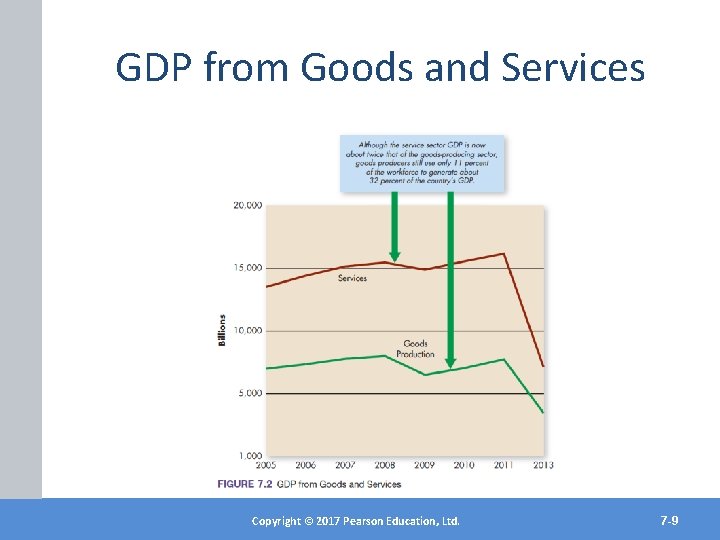
GDP from Goods and Services Copyright©© 2017 2012 Pearson. Education, Ltd. Inc. Copyright Publishing as Prentice Hall 7 -9
Creating Value Through Operations Utility – product’s ability to satisfy a human want or need Operations (Production) Management – systematic direction and control of the activities that transform resources into finished products that create value for and provide benefits to customers Operations (Production) Managers – managers responsible for ensuring that operations activities create value and provide benefits to customers Copyright©© 2017 2012 Pearson. Education, Ltd. Inc. Copyright Publishing as Prentice Hall 7 -10
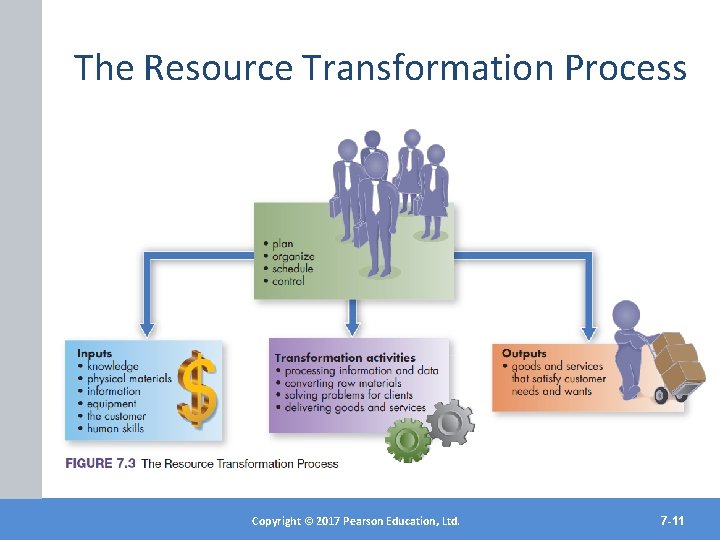
The Resource Transformation Process Copyright©© 2017 2012 Pearson. Education, Ltd. Inc. Copyright Publishing as Prentice Hall 7 -11
Differences between Service and Goods Manufacturing Operations Interacting with customers The intangible and unstorable nature of some services The customer’s presence in the process Service quality considerations Copyright©© 2017 2012 Pearson. Education, Ltd. Inc. Copyright Publishing as Prentice Hall 7 -12

Operations Processes Operations Process – set of methods and technologies used to produce a good or a service Make-to-Order Operations – activities for one-of-a-kind or custom-made production Make-to-Stock Operations – activities for producing standardized products for mass consumption Copyright©© 2017 2012 Pearson. Education, Ltd. Inc. Copyright Publishing as Prentice Hall 7 -13

Service Production Processes: Extent of Customer Contact Low-Contact System – level of customer contact in which the customer need not be part of the system to receive the service High-Contact System – level of customer contact in which the customer is part of the system during service delivery Copyright©© 2017 2012 Pearson. Education, Ltd. Inc. Copyright Publishing as Prentice Hall 7 -14
Business Strategy Determines Operations Capabilities Operations Capability (Production Capability) └ special ability that production does especially well to outperform the competition Excellent firms learn, over time, how to achieve more than just one competence Copyright©© 2017 2012 Pearson. Education, Ltd. Inc. Copyright Publishing as Prentice Hall 7 -15
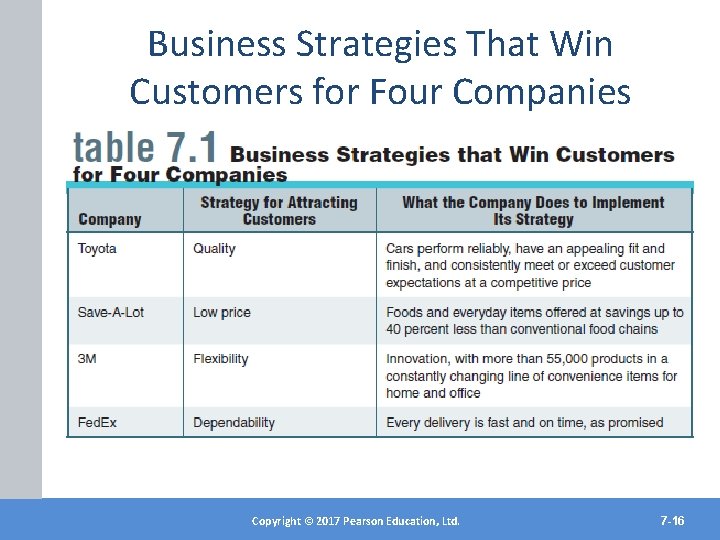
Business Strategies That Win Customers for Four Companies Copyright©© 2017 2012 Pearson. Education, Ltd. Inc. Copyright Publishing as Prentice Hall 7 -16

Operations Capabilities and Characteristics for Four Companies Copyright©© 2017 2012 Pearson. Education, Ltd. Inc. Copyright Publishing as Prentice Hall 7 -17
Operations Planning Capacity Planning – determining the amount of a product that a company can produce under normal conditions Location Planning – determining where production will happen based on costs and flexibility Layout Planning – planning for the layout of machinery, equipment, and supplies Copyright©© 2017 2012 Pearson. Education, Ltd. Inc. Copyright Publishing as Prentice Hall 7 -18
Operations Planning (cont. ) Capacity – amount of a product that a company can produce under normal conditions Capacity Planning – determining the amount of a product that a company can produce under normal conditions Copyright©© 2017 2012 Pearson. Education, Ltd. Inc. Copyright Publishing as Prentice Hall 7 -19
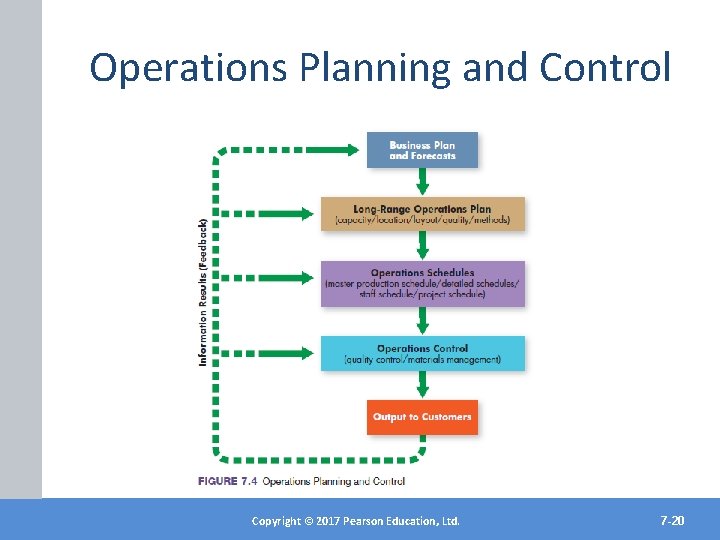
Operations Planning and Control Copyright©© 2017 2012 Pearson. Education, Ltd. Inc. Copyright Publishing as Prentice Hall 7 -20
Layout Planning Process Layout (Custom-Product Layout) – physical arrangement of production activities that groups equipment and people according to function Product Layout (Same-Steps Layout) – physical arrangement of production steps designed to make one type of product in a fixed sequence of activities according to its production requirements Copyright©© 2017 2012 Pearson. Education, Ltd. Inc. Copyright Publishing as Prentice Hall 7 -21
Layout Planning (cont. ) Assembly Line Layout – a same-steps layout in which a product moves step by step through a plant on conveyor belts or other equipment until it is completed Fixed-Position Layout – labor, equipment, materials, and other resources are brought to the geographic location where all production work is done Copyright©© 2017 2012 Pearson. Education, Ltd. Inc. Copyright Publishing as Prentice Hall 7 -22
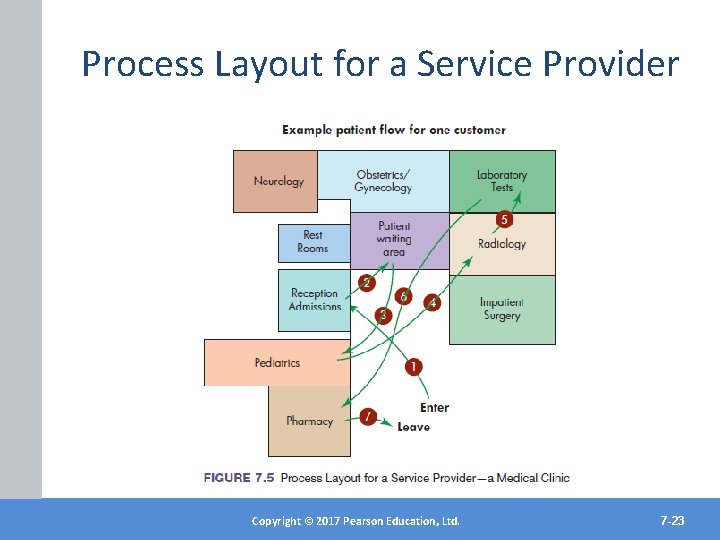
Process Layout for a Service Provider Copyright©© 2017 2012 Pearson. Education, Ltd. Inc. Copyright Publishing as Prentice Hall 7 -23
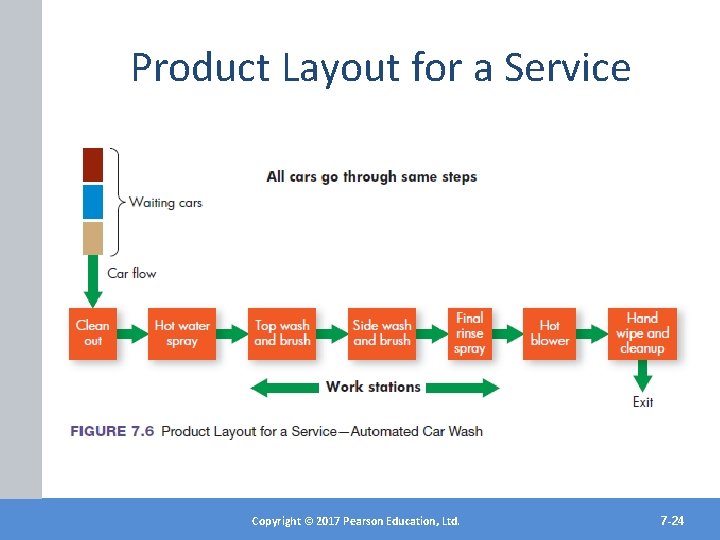
Product Layout for a Service Copyright©© 2017 2012 Pearson. Education, Ltd. Inc. Copyright Publishing as Prentice Hall 7 -24

Product Layout for Goods Production Copyright©© 2017 2012 Pearson. Education, Ltd. Inc. Copyright Publishing as Prentice Hall 7 -25
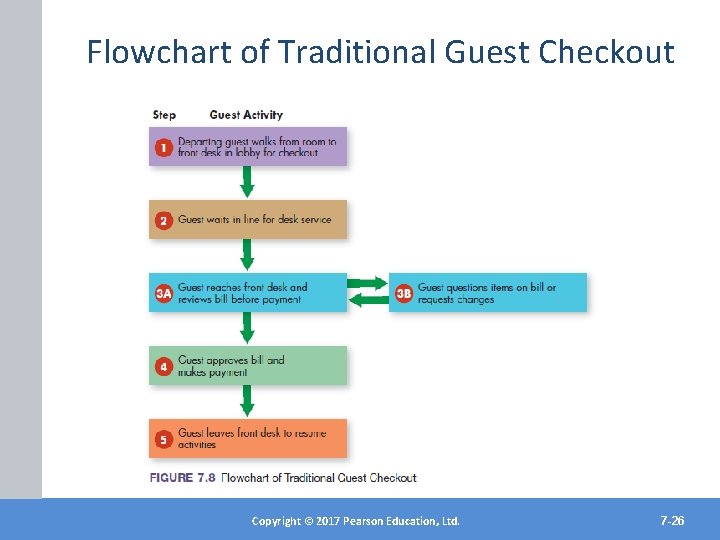
Flowchart of Traditional Guest Checkout Copyright©© 2017 2012 Pearson. Education, Ltd. Inc. Copyright Publishing as Prentice Hall 7 -26

Quality Planning Quality – combination of “characteristics of a product or service that bear on its ability to satisfy stated or implied needs” Performance – dimension of quality that refers to how well a product does what it is supposed to do Consistency – dimension of quality that refers to sameness of product quality from unit to unit Copyright©© 2017 2012 Pearson. Education, Ltd. Inc. Copyright Publishing as Prentice Hall 7 -27
Operations Scheduling Master schedule – “the game plan” for upcoming production Detailed schedules – show day-to-day activities that will occur in production Copyright©© 2017 2012 Pearson. Education, Ltd. Inc. Copyright Publishing as Prentice Hall 7 -28
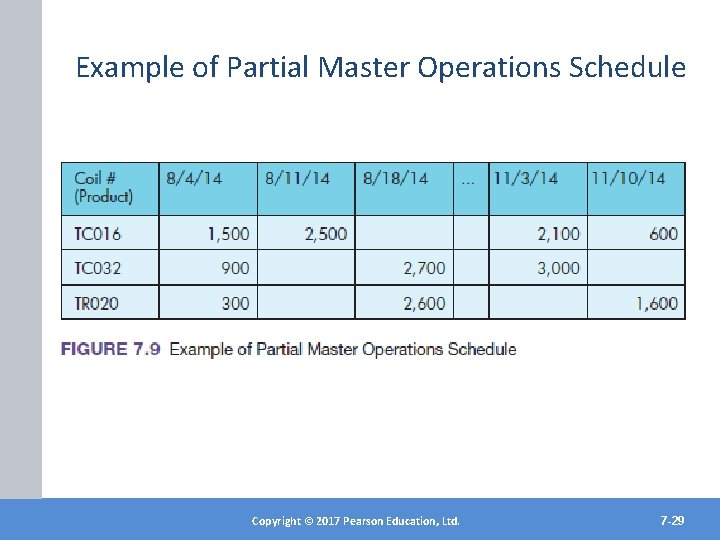
Example of Partial Master Operations Schedule Copyright©© 2017 2012 Pearson. Education, Ltd. Inc. Copyright Publishing as Prentice Hall 7 -29
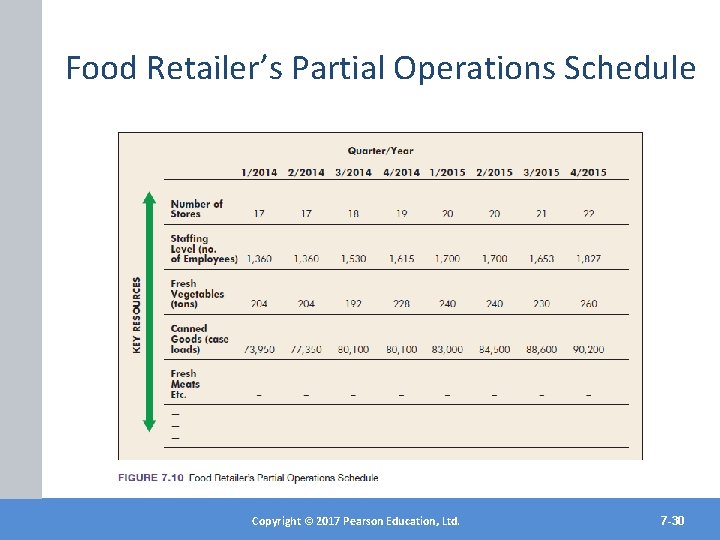
Food Retailer’s Partial Operations Schedule Copyright©© 2017 2012 Pearson. Education, Ltd. Inc. Copyright Publishing as Prentice Hall 7 -30
Operations Scheduling Staff schedules – identify who and how many employees will be working, and when Project schedules – provide coordination for completing large-scale projects Copyright©© 2017 2012 Pearson. Education, Ltd. Inc. Copyright Publishing as Prentice Hall 7 -31
Project Scheduling Gantt Chart – production schedule that breaks down large projects into steps to be performed and specifies the time required to perform each step PERT Chart – production schedule specifying the sequence of activities, time requirements, and critical path for performing the steps in a project Copyright©© 2017 2012 Pearson. Education, Ltd. Inc. Copyright Publishing as Prentice Hall 7 -32
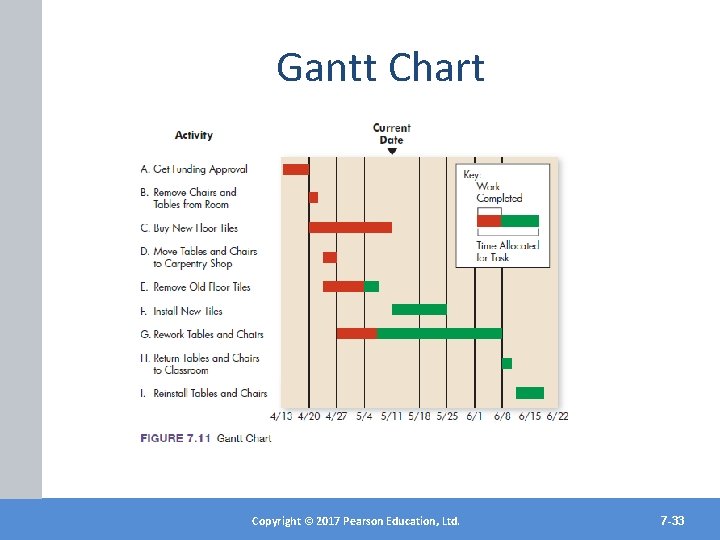
Gantt Chart Copyright©© 2017 2012 Pearson. Education, Ltd. Inc. Copyright Publishing as Prentice Hall 7 -33
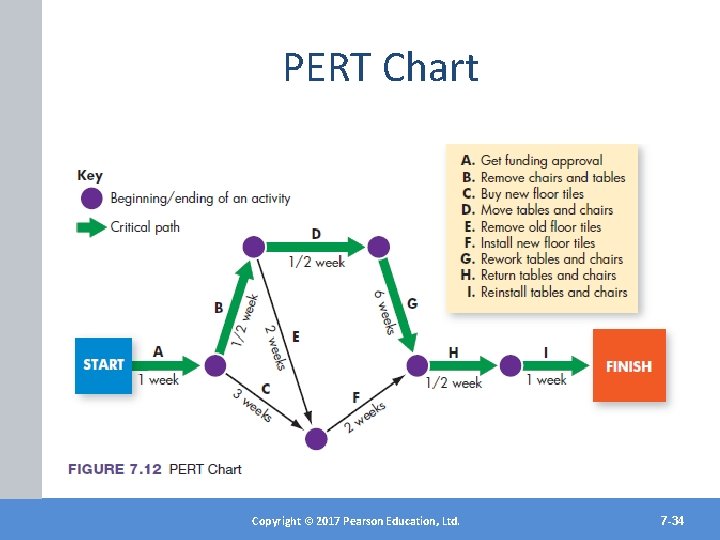
PERT Chart Copyright©© 2017 2012 Pearson. Education, Ltd. Inc. Copyright Publishing as Prentice Hall 7 -34
Materials Management Materials management – the process by which managers plan, organize, and control the flow of materials from sources of supply through distribution of finished goods Copyright©© 2017 2012 Pearson. Education, Ltd. Inc. Copyright Publishing as Prentice Hall 7 -35
Materials Management Activities for Physical Goods Supplier Selection – process of finding and choosing suppliers from whom to buy Purchasing – acquisition of the materials and services that a firm needs to produce its products Copyright©© 2017 2012 Pearson. Education, Ltd. Inc. Copyright Publishing as Prentice Hall 7 -36

Materials Management Activities for Physical Goods (cont. ) Transportation – activities in transporting resources to the producer and finished goods to customers Warehousing – storage of incoming materials for production and finished goods for distribution to customers Inventory Control – process of receiving, storing, handling, and counting of all raw materials, partly finished goods, and finished goods Copyright©© 2017 2012 Pearson. Education, Ltd. Inc. Copyright Publishing as Prentice Hall 7 -37
Materials Management Lean Production System – production system designed for smooth production flows that avoid inefficiencies, eliminate unnecessary inventories, and continuously improve production processes Just-in-Time (JIT) Production – type of lean production system that brings together all materials at the precise time they are required at each production stage Copyright©© 2017 2012 Pearson. Education, Ltd. Inc. Copyright Publishing as Prentice Hall 7 -38
Operations Control – process of monitoring production performance by comparing results with plans and taking corrective action when needed Follow-Up – operations control activity for ensuring that production decisions are being implemented Copyright©© 2017 2012 Pearson. Education, Ltd. Inc. Copyright Publishing as Prentice Hall 7 -39
Quality Control – action of ensuring that operations produce products that meet specific quality standards Copyright©© 2017 2012 Pearson. Education, Ltd. Inc. Copyright Publishing as Prentice Hall 7 -40
The Quality-Productivity Connection Productivity – the amount of output produced compared with the amount of resources used to produce that output Copyright©© 2017 2012 Pearson. Education, Ltd. Inc. Copyright Publishing as Prentice Hall 7 -41

Managing for Quality Total Quality Management (TQM) – all activities involved in getting high-quality goods and services into the marketplace Quality Ownership – principle of total quality management that holds that quality belongs to each person who creates it while performing a job Copyright©© 2017 2012 Pearson. Education, Ltd. Inc. Copyright Publishing as Prentice Hall 7 -42
Tools for Total Quality Management Competitive Product Analysis – process by which a company analyzes a competitor’s products to identify desirable improvements Value-Added Analysis – process of evaluating all work activities, materials flows, and paperwork to determine the value that they add for customers Copyright©© 2017 2012 Pearson. Education, Ltd. Inc. Copyright Publishing as Prentice Hall 7 -43

Tools for Total Quality Management (cont. ) Quality Improvement Team – TQM tool in which collaborative groups of employees from various work areas work together to improve quality by solving common shared production problems ISO 9000 – program certifying that a factory, laboratory, or office has met the quality management standards set by the International Organization for Standardization Copyright©© 2017 2012 Pearson. Education, Ltd. Inc. Copyright Publishing as Prentice Hall 7 -44
Tools for Total Quality Management (cont. ) ISO 14000 – certification program attesting to the fact that a factory, laboratory, or office has improved its environmental performance Business Process Reengineering – rethinking and radical redesign of business processes to improve performance, quality, and productivity Copyright©© 2017 2012 Pearson. Education, Ltd. Inc. Copyright Publishing as Prentice Hall 7 -45
Adding Value Through Supply Chains Supply Chain (Value Chain) – flow of information, materials, and services that starts with raw-materials suppliers and continues adding value through other stages in the network of firms until the product reaches the end customer Supply Chain Management (SCM) – principle of looking at the supply chain as a whole to improve the overall flow through the system Copyright©© 2017 2012 Pearson. Education, Ltd. Inc. Copyright Publishing as Prentice Hall 7 -46
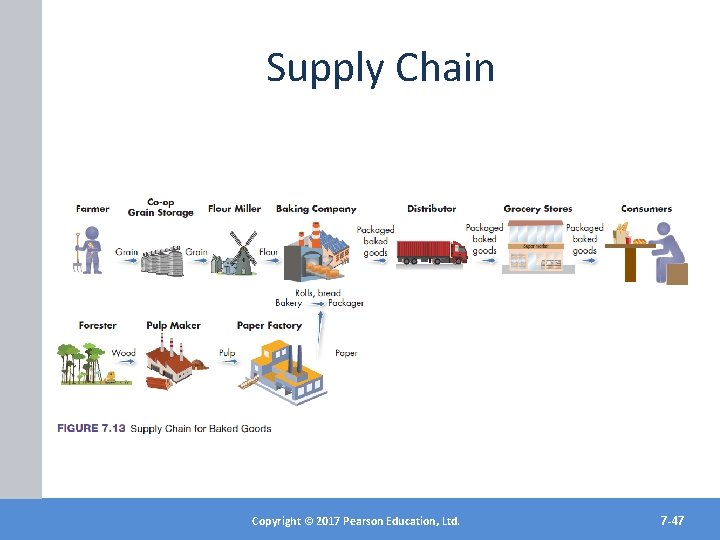
Supply Chain Copyright©© 2017 2012 Pearson. Education, Ltd. Inc. Copyright Publishing as Prentice Hall 7 -47
Outsourcing and Global Supply Chains Outsourcing – replacing internal processes by paying suppliers and distributors to perform business processes or to provide needed materials or services Copyright©© 2017 2012 Pearson. Education, Ltd. Inc. Copyright Publishing as Prentice Hall 7 -48
Applying What You’ve Learned 1. Explain the meaning of operations and discuss the growth in the services and good sectors of the U. S. economy. 2. Identify the three kinds of utility created by operations and the characteristics that distinguish service operations from goods production. 3. Explain how companies with different business strategies are best served by having different operations capabilities. Copyright©© 2017 2012 Pearson. Education, Ltd. Inc. Copyright Publishing as Prentice Hall 7 -49
Applying What You’ve Learned (cont. ) 4. Identify the major factors that are considered in operations planning. 5. Discuss the information contained in four kinds of operations schedules—the master operations schedule, detailed schedule, staff schedule, and project schedule. 6. Discuss the two key activities required for operations control. Copyright©© 2017 2012 Pearson. Education, Ltd. Inc. Copyright Publishing as Prentice Hall 7 -50
Applying What You’ve Learned (cont. ) 7. Identify the activities and underlying objectives involved in total quality management. 8. Explain how a supply chain strategy differs from traditional strategies for coordinating operations among firms. Copyright©© 2017 2012 Pearson. Education, Ltd. Inc. Copyright Publishing as Prentice Hall 7 -51
- Slides: 51